March 20, 202621 min read5 sections
B2B Podcasts for Content Marketing and Thought Leadership
By Fame Team
Key Takeaways
- Establishing thought leadership helps you become the go-to expert in your space.
- To achieve this, you must showcase your expertise through a real strategy and unique point of view.
- Scaling visibility and influence requires nailing your audience and owning your corner of the market.
What if you could become the first person your ideal clients call when they hit a wall?
That’s the whole game with content marketing and thought leadership. It’s not just about churning out content. It's about becoming the go-to educator in your space - the expert everyone wants advice from, way before they're even thinking about buying anything.
Why Thought Leadership Is Your B2B Superpower
Let’s be honest, the B2B world is noisy. Your expertise is the only thing that will cut through. But expertise hidden inside your company is worthless. Thought leadership is how you make that specialized knowledge public, turning your brand into the authority. It’s the difference between being just another option and being the only one that makes sense.
Here's a simple way to think about it: Good content marketing answers your audience's questions. True thought leadership changes the questions they're asking in the first place.
You’re moving beyond "how-to" guides and into territory that challenges the status quo, introduces fresh ideas, and calls out future trends before anyone else. That’s how you build deep, unshakable trust and make your brand the obvious choice when it’s finally time to sign a contract. For some great thought leadership examples, you can see how other brands are putting these ideas into action.
From In-House Expert To Industry Influencer
Every company has its experts, but very few turn them into recognized leaders. This is a journey of scaling visibility and influence. Our own research shows there are clear levels to this game - from being the smart person in the office to becoming an industry superstar whose opinions move markets.
The first step? You have to stop just having expertise and start showing it. That requires a real strategy.
- Nail Your Audience: Who are you really trying to reach? Get specific. "CFOs in the SaaS world" is a target. "Businesses" is not. A tight focus gets you noticed much faster.
- Own Your Corner: You can't be the expert on everything. Find that sweet spot where your unique knowledge smashes right into your audience's biggest problems. That's your territory.
- Have a Real Point of View: Don't just regurgitate what everyone else is saying. Offer a new angle. Take a contrarian stance. Connect dots no one else sees. This is what creates those "aha" moments that people remember.
A real thought leader doesn't just join the conversation - they start it. You have to be willing to put a new, maybe even controversial, idea on the table and watch it become tomorrow's best practice. That's the core of how to become a thought leader.
At the end of the day, building this kind of authority isn’t a fluffy marketing play; it's a core business strategy. For any B2B company, a solid plan for strategic thought leadership is the clearest path to sustained growth, charging higher rates, and pulling in the best clients and talent. It’s about building a brand that people don't just buy from, but look up to.
If you want to be a thought leader, you have to do more than just say you're an expert. You need to prove it.
And that's where content marketing comes in. It’s the engine that takes your goal of "being an authority" and turns it into real, tangible proof that you know your stuff.
This isn’t about throwing random blog posts at the wall to see what sticks. It's about systematically educating your audience, earning their trust with every piece of content you ship. Each article, post, or webinar is a chance to move from being just another vendor to becoming the go-to advisor. A powerful B2B content marketing strategy is the vehicle for your expertise.
That shift is everything. It's how you build a brand that pulls in ideal clients long before they even think about buying.
Turning Expertise into a Content Engine
The smartest way to do this is by building a content engine.
The idea is simple: you create one massive, high-value piece of content and use it to fuel everything else. Instead of scrambling to create one-off pieces for every channel, you start with a central pillar and slice it up into dozens of different formats.
This approach keeps your message consistent and makes you ridiculously efficient.
For example, a single deep-dive webinar can be repurposed into:
- A series of blog posts exploring the key topics.
- Dozens of short video clips for LinkedIn and YouTube.
- Quote graphics with powerful insights for social media.
- The main topic for your next email newsletter.
Think of it like this: A content engine is an investment that pays dividends across your entire marketing strategy. You create one powerful asset and then distribute its value everywhere, maximizing your reach and impact without reinventing the wheel each week.
For any B2B marketer trying to scale their content marketing and thought leadership, this model is a game-changer. It’s also why we’re so big on unifying your brand’s voice and message across every platform. You can learn more about how to nail this in our guide on the connection between branding and content marketing.
The Business Case for Content
Putting money into a content engine isn't just a nice idea; it's a solid business decision. The numbers don't lie.
In fact, most B2B marketers say content marketing built brand awareness for them last year. Even better, it generates more than three times the leads of outbound marketing while costing 62% less.
It's hard to argue with that.
This isn't about just making noise. It’s about building a library of valuable assets that works for you 24/7, constantly attracting and nurturing potential customers. This system is the perfect setup for what we believe is the ultimate content engine: the B2B podcast. And that's where things get really interesting.
The B2B Podcast: Your Ultimate Content Engine
If you're building a content engine, you have a lot of formats to choose from. But one stands out as the holy grail for modern B2B marketers. The B2B podcast isn't just another piece of content; it's the most powerful engine for your entire content marketing and thought leadership strategy.
Hosting a show is the fastest way to elevate your brand positioning in the market. It gives you a platform to educate potential customers and your peers, establishing you as a leading voice. When your ideal clients are finally in-market, they'll think of you first because you've already spent weeks or months building trust and proving your expertise.
It all comes down to a simple, powerful relationship between content, trust, and authority.
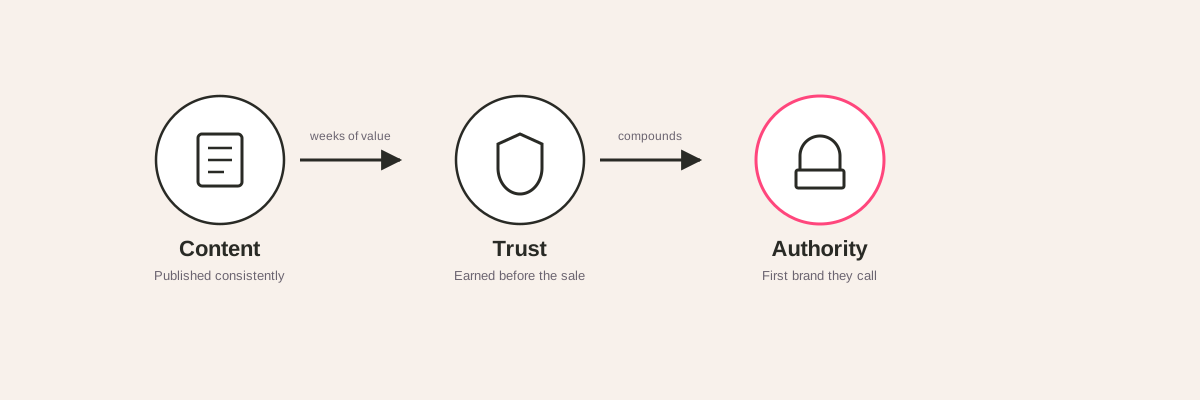
This is the core principle in action: consistent, valuable content is the most direct path to earning the trust you need to be seen as a true authority. A podcast just puts that entire process on hyperdrive.
The Content Flywheel Effect in Action
The real magic of a podcast is what we call the ‘content flywheel’ effect. A single 30-minute episode can become a goldmine of marketing assets. Instead of feeling like you're on a content treadmill, constantly churning out one-off pieces, you create a system that feeds itself.
This flips your marketing from a series of disconnected tasks into a scalable machine that builds authority almost on autopilot.
Let’s look at the assets you can spin out from just one episode:
- Full-Length Blog Post: Turn the episode transcript into a high-quality, SEO-optimized article to capture organic search traffic.
- Social Media Video Clips: Pull 5-10 engaging, short video clips for platforms like LinkedIn, showcasing key moments and insights from the conversation.
- Quote Graphics: Design shareable graphics with powerful quotes from you or your guest. These are perfect for building your brand presence on social media.
- Newsletter Content: Use the episode's main themes as the core material for your B2B email newsletter to nurture your subscriber base.
This repurposing model completely transforms your efficiency. You can dive deeper into how this works in our guide on podcasting as a growth engine. It’s the key to building a sustainable system that consistently fuels all of your marketing channels.
The table below breaks down how this flywheel turns a single podcast recording into a full-blown marketing campaign.
The Podcast Content Repurposing Flywheel
| Podcast Asset | Repurposed Content Format | Distribution Channel | Primary Goal |
|---|---|---|---|
| Full Audio/Video | Full-length blog post | Website Blog, Medium | SEO, Organic Traffic |
| Video Clips (1-3 min) | LinkedIn/X posts | LinkedIn, X (Twitter) | Audience Engagement, Reach |
| Audio Clips (30-60s) | Audiograms for social | Instagram, Facebook | Brand Awareness, Teasers |
| Guest Quotes | Quote graphics, text posts | LinkedIn, Instagram, X | Authority Building, Shareability |
| Key Takeaways | Email newsletter content | Email List | Nurturing Leads, Audience Value |
| Full Transcript | Gated PDF/Resource | Landing Page | Lead Generation |
As you can see, the effort from one recording session gets multiplied across every channel that matters, making your marketing both more effective and more efficient.
Why Podcasting Is the Ultimate Authority Play
A B2B podcast is the best way to build thought leadership because it offers a unique combination of depth, personality, and authenticity. Written content is valuable, of course, but audio and video create a much deeper connection.
Listeners hear the conviction in your voice and see the passion in your expressions. This builds a level of trust that articles alone just can't match.
As our founder, Tom Hunt, often notes, "A podcast is the only marketing channel where you get to spend 30-60 minutes in your ideal customers' ears every single week." That consistent, intimate access is unmatched.
On top of that, having a multimedia presence is becoming a key differentiator. Video content is exploding, with YouTube citations now appearing in nearly 30% of all AI Overviews. This means video podcasts on platforms like YouTube directly influence how AI systems serve up information to your potential customers.
At the same time, blog posts - often derived from podcast transcripts - are still one of the best-performing content formats for ROI. A podcast sits right at the intersection of these trends, feeding both the video and written assets you need for a modern B2B brand strategy.
A Practical Blueprint for Your Podcast Content Engine
Turning all this theory into reality requires a clear plan. Launching a podcast can feel like a huge task, but it becomes much more manageable when you see it as the core of your content system, not just another channel.
Here’s a practical blueprint to get started:
- Strategize and Plan: Before you even think about hitting record, you need a clear thought leadership content strategy. Define your show's unique angle and exactly who you're trying to reach.
- Equip and Record: You don't need a Hollywood studio to get started. High-quality audio is the most important thing, and it's achievable with some basic, affordable gear.
- Produce and Polish: For a B2B audience, a professional sound is non-negotiable. A streamlined production workflow ensures every episode sounds clean, crisp, and ready to represent your brand.
- Repurpose and Distribute: This is where the engine really roars to life. Use tools and processes to slice your episodes into clips, articles, and graphics, and get them in front of the right people using proven content distribution strategies.
To make sure your engine is actually driving results, you have to measure what matters. This is where effective Content Marketing Analytics comes in. Tracking the right metrics proves your podcast is driving tangible business outcomes and demonstrates the ROI of your efforts.
Follow this blueprint, and your podcast will become more than just a show - it'll be the strategic center of your entire brand-building operation.
How to Launch Your B2B Podcast for Maximum Impact
Launching a B2B podcast is the single most powerful move you can make to build a real content engine and cement yourself as a thought leader. It feels like a monster of a task, I get it. But if you break it down into the right steps, you can roll out a show that builds authority from day one.
This is your playbook.
The whole thing becomes way less daunting when you stop thinking about "launching a show" and start thinking about building the strategic core of your entire content marketing and thought leadership machine.
Strategic Planning: The Foundation of a Great Show
Before you even look at a microphone, you need a plan. A podcast without a strategy is just adding to the noise. The shows that actually make an impact are built on a deep understanding of their audience and a point of view nobody else has.
Nail this part, and everything else is just execution.
- Define Your Niche and Angle: What specific corner of your industry are you going to own? Don't be everything to everyone. Your angle needs to be that unique spot where your expertise smashes right into your audience's biggest headaches.
- Identify Your Ideal Listener: Seriously, who are you talking to? Build a persona. What’s their job title? What keeps them up at night? Knowing this person inside and out will dictate every single decision you make.
- Choose Your Format: Are you going solo to drop knowledge bombs directly? Interviewing other industry pros? A mix of both? Each format has a different strategic job to do.
A successful B2B podcast isn’t about just having conversations; it's about starting the right conversations. Your strategic plan ensures every episode is a deliberate move to reinforce your authority and deliver immense value to a clearly defined audience.
Once you have that clarity, you can get into the technical stuff. If you want to go even deeper on this first phase, our full guide on how to start a business podcast has you covered.
Assembling Your Podcast Launch Kit
You don’t need a six-figure recording studio to sound legit. But you absolutely have to invest in some basic gear. Bad audio is the quickest way to get someone to tune out and never come back. It instantly kills your credibility.
Here’s a simple checklist to get you started:
- A Quality USB Microphone: Something like the Blue Yeti or Rode NT-USB+ is perfect. They give you crisp, clean audio and are plug-and-play. Simple. For a complete breakdown, check out this podcast equipment guide.
- Headphones: Get a good pair of closed-back headphones. They stop your speaker audio from bleeding into the mic and let you hear exactly what your audience will hear.
- Recording & Editing Software: You can start with Audacity (it's free) or jump right to a tool like Descript, which makes editing audio as easy as editing a text document.
- A Quiet Recording Space: This is the most underrated piece of equipment you have. Find a small room with soft surfaces - carpets, curtains, even a closet full of clothes works wonders to kill echo and background noise.
Since everyone is working from anywhere, mastering how to record podcasts remotely is a must. Platforms like Riverside.fm or Zencastr are lifesavers, recording separate high-quality audio and video for everyone involved. It makes putting it all together in post-production a breeze.
Building Your Production Workflow
Consistency is everything in podcasting. A repeatable production workflow is what separates the shows that last from the ones that burn out after ten episodes. This is how you turn a creative hobby into a real marketing process.
Think of it as your show's assembly line.
A solid podcast production workflow usually has a few key stages. It kicks off with guest outreach and scheduling, then moves into pre-interview prep to make sure the conversation flows smoothly. Giving your guests clear instructions on how to prepare for a podcast appearance can make a night-and-day difference in the final product.
After you hit record, the raw files go to editing to clean up mistakes and enhance the audio. Finally, the episode gets mixed, mastered, and scheduled for release with show notes and a transcript. You can do this all in-house, but many B2B brands wisely decide to partner with B2B podcast production services. This frees them up to do the one thing that really matters: creating killer content.
Amplifying Your Voice with Strategic Podcast Marketing
Recording a powerful, authority-building podcast is a great start. But if nobody hears it, did it even happen? A great podcast deserves a great audience, and that means you need to get strategic about distribution. This is how you win the game of content marketing and thought leadership.
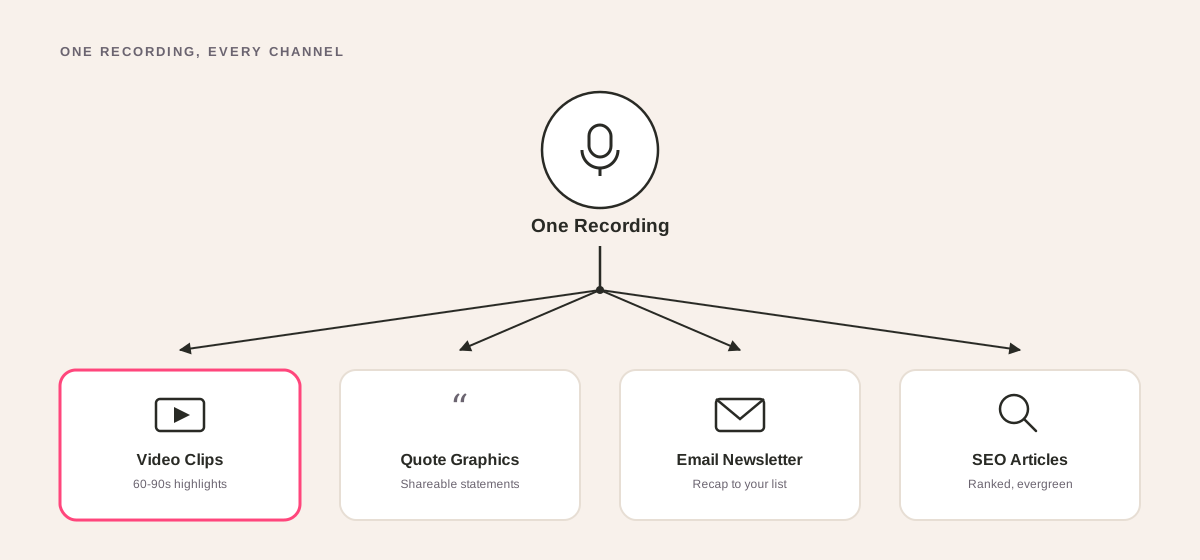
This is where you turn your podcast from a single audio file into a full-blown content operation. It’s about taking that core recording and making it absolutely impossible for your ideal customers to ignore. One recording session can fuel a dominant presence across every channel your audience actually uses.
Turn Your Podcast into a Social Media Magnet
Your podcast is a goldmine of shareable moments just waiting to be dug up. The goal is to make your show the go-to source for industry insights on platforms like LinkedIn. Using a B2B social media agency can help take episode highlights and turn them into a steady stream of must-see content.
Here are the formats that hit the hardest:
- Compelling Video Clips: Isolate the 3-5 most powerful moments from each episode. These 60–90 second clips, decked out with branded captions, are perfect for stopping the scroll in a crowded feed.
- Powerful Quote Graphics: Pull out the most potent, thought-provoking statements from your guests or yourself. A well-designed quote graphic is insanely shareable and cements your authority with every post.
- Audiograms: For those audio-only snippets, an audiogram with a moving waveform and a transcript is a classic way to tease your content and push listeners to the full episode.
Your social media strategy shouldn't just be a series of "new episode" announcements. It needs to extend the conversation, pulling key insights out from behind the "play" button and putting them directly in front of your audience.
This approach transforms your social feed from a simple broadcast channel into a living, breathing extension of your thought leadership, constantly delivering value and building curiosity for the main event.
Nurture Your Audience with a Dedicated Newsletter
Social media is for reach, but email is where you build real relationships with your most dedicated fans. A dedicated newsletter, managed by a B2B email newsletter agency if needed, is the perfect place to nurture that audience and drive consistent listens. Your podcast becomes the beating heart of your newsletter.
Don't just drop a link and call it a day. Frame the episode around a key problem your audience is facing. Share a personal takeaway, pose a question, or list a few bullet points on exactly what they’ll learn. This gives people a real reason to click play, turning your email list into a loyal listener base.
Dominate Search with SEO-Optimized Transcripts
One of the most criminally underused assets from any podcast is the transcript. Every single episode is a dense, keyword-rich piece of content just begging to be repurposed into a long-form blog post. This is the essence of podcast content marketing. By optimizing these transcripts for SEO, you can start capturing organic traffic and building your website's authority on topics that matter.
But just dumping the raw text onto a page isn't enough. A solid transcript-to-blog process involves a few key steps:
- Cleaning and Formatting: Edit the text for readability. Break it into short paragraphs with clear headings and subheadings. No one wants to read a wall of text.
- Adding Context and Visuals: Insert your own explanations, add relevant images, and pull out key quotes to make the content far more engaging.
- Keyword Optimization: Figure out the primary and secondary keywords for the topic. Then, make sure they’re woven naturally into your title, headings, and the body of the post.
By following a proven podcast marketing strategy, you ensure your podcast isn’t just an audio file. It becomes a strategic asset that fuels your entire marketing machine - from social engagement and audience nurturing all the way to long-term organic growth.
Measuring the Real ROI of Your Podcast
So, how do you actually prove your B2B podcast is moving the needle? If you want to get buy-in from leadership, you have to talk their language. That means moving past vanity metrics like download counts and focusing on what they really care about: business impact.
The true value of your content marketing and thought leadership isn't just about how many people are listening. It's about how that listening turns into growth.
Proving podcast ROI means looking at two types of signals: leading and lagging indicators. Think of leading indicators as the early signs you're on the right path. Lagging indicators are the home runs that tie your podcast directly to revenue.
Tracking Leading Indicators
Leading indicators are your early warning system for success. They tell you that your show is picking up steam and building the right kind of audience. These are the metrics that prove your content is hitting the mark and your authority is growing.
Here are the key ones to watch:
- Audience Growth: Is your show growing month-over-month? A steady increase in downloads or views is a sign of a healthy, growing podcast. At Fame, we actually guarantee 10% monthly download growth for our clients because it's such a vital sign of momentum.
- Share of Voice: Are people talking about you more online? Keep an eye on social media mentions. When your brand's share of voice goes up, it shows your podcast is making you a central player in your industry's conversation.
- Website Traffic from Podcast Pages: Are listeners checking out your show notes or transcript pages? This is a great sign. It means they're actively looking for more information and taking a step deeper into your world.
- Newsletter Subscribers from the Show: When you drop a call-to-action on the podcast and people actually sign up for your email list, that's pure gold. It’s a huge signal of trust and engagement.
Connecting Your Podcast to Revenue
This is where the rubber meets the road. Lagging indicators are the bottom-line metrics that draw a straight line from your podcast to your sales numbers. This is how you connect your expertise to real, tangible business results.
The most powerful ROI story isn’t just about the numbers; it’s about influence. When your sales team starts hearing prospects say, "I feel like I already know you guys, I listen to the podcast," you've struck gold. This is the kind of qualitative data that proves your podcast is building trust and warming up leads long before that first sales call ever happens.
Here are the key lagging indicators to measure:
- Pipeline Influence: It's as simple as adding a "How did you hear about us?" field to your lead forms. When prospects choose "Podcast," you can directly credit that lead to your show. No guessing required.
- Sales Cycle Velocity: Are leads who listen to your podcast closing faster? Track the time it takes for a lead to move through your sales funnel. If podcast listeners are quicker, it means your show is doing the heavy lifting of educating and qualifying them for you.
- Customer Feedback: Just ask. When a new customer signs on, make it a point to ask if the podcast influenced their decision. These testimonials are incredibly powerful proof of ROI.
If you really want to dig into the financial side and build a bulletproof business case, checking out a comprehensive guide to the ROI of content marketing can give you some incredible insights.
By tracking both the early signals and the bottom-line results, you can build a rock-solid case for your podcast as a non-negotiable driver of business growth.
Got a few questions that pop up all the time? You're not alone.
Here are the answers to some of the most common things we get asked about building a B2B podcast that actually drives results.
| question | answer |
|---|---|
| How Long Does It Take to See Results from a B2B Podcast? | Look, brand awareness can start building in the first couple of months. But if you’re talking about a real, direct impact on qualified leads, you need to give it 6-12 months of consistent work. Think of content marketing and thought leadership like a flywheel; the trust you build now creates compounding returns down the line. It's a long game, but it's the one worth playing. |
| Should We Do Solo Episodes or Interviews? | The killer strategy? A mix of both. Solo episodes are your chance to plant your flag and establish your unique point of view. No one else can do that for you. Interviews, on the other hand, let you tap into the authority and audience of other industry players. It positions you as the hub where the important conversations are happening. The right balance really comes down to your goals. Launching a new category? Lean into solo episodes. Building a community? More interviews will get you there faster. |
| Can One Podcast Really Fuel All Our Content Marketing? | One hundred percent. A single 30-minute podcast is a content goldmine just waiting to be excavated. From just one episode, you can easily pull: A full-length SEO blog post using the transcript. 5-10 video clips perfect for LinkedIn. A stack of shareable quote graphics for all your social channels. The core material for your weekly B2B newsletter. This isn't about working harder; it's about working smarter. Repurposing like this is the secret to building a content engine that runs on its own fumes. |
Hopefully, that clears a few things up. The bottom line is that a podcast isn't just another channel - it's the engine that can power your entire marketing strategy.
Ready to turn your expertise into the ultimate content engine? At Fame, we help B2B brands launch and grow podcasts that build authority and drive real business results. Learn how our B2B podcast production services can transform your marketing.
Want us to run this for you?
Fame starts and grows B2B podcasts that generate pipeline. Tell us who you are trying to reach and we will send a costed proposal within 48 hours.
Related content
- Read moreFame Team · July 16, 2026
10 Account Based Marketing Tactics For B2B Growth In 2026
Discover 10 actionable account based marketing tactics for B2B tech. Learn to use podcasts, data, and targeted content to close high-value accounts. - Read moreFame Team · July 16, 2026
The 8 Best Brighton Podcast Agency Picks For 2026
Find the best Brighton podcast agency for your B2B brand. Our 2026 guide reviews top 8 agencies for production, growth & ROI. Expert analysis here - Read moreJune 10, 2026
20 Best Podcast Production Agencies For 2026 (And Why Should You Hire One)
Global podcast and vodcast ad revenues are on track to hit $5 billion in 2026 , up 20% year-on-year. - Read moreApril 13, 2026
Leadership In Marketing: The B2B Podcast Playbook
Most companies still confuse leadership in marketing with job titles, org charts, and budget control. That's outdated.