June 14, 202621 min read12 sections
10 Account Based Marketing Tactics For B2B Growth In 2026
By Fame Team
Key Takeaways
- The best ABM tactics prioritize quality over quantity.
- Personalized outreach drives stronger engagement and conversions.
- Combine multiple tactics to build lasting relationships with target accounts.
Your SDR finally gets a reply from a dream account. Then the thread stalls the moment the conversation sounds like a meeting request. That pattern shows up in ABM programs all the time. Teams build target lists, run polished outreach, add retargeting, and still struggle to create real access with senior buyers.
Podcast-driven ABM changes the opening move. It gives your team a credible reason to contact high-value accounts without leading with a demo, a deck, or a sales sequence. Done well, it transforms outreach into a relationship-building asset, gives sales a warmer path into the account, and creates audio content you can reuse across the entire buying committee.
ABM has already moved past the test phase for serious B2B teams. The issue now is execution. Plenty of account based marketing tactics sound right in a strategy deck and fall flat in the field. “Personalize outreach” is direction, not a play. “Align sales and marketing” is required, but it does not tell the team what to do on Tuesday morning.
Podcast-led ABM gives them something concrete to run. We've seen it open conversations that cold outbound could not get, especially with senior operators who are willing to share expertise but have no interest in another vendor pitch. It also creates a stronger value exchange. The buyer gets visibility and a thoughtful platform. Your team gets access, insight, and content with a long shelf life.
One example comes from Fame's write-up of Yellowbird's approach. In the Yellowbird podcast ABM case study, the company used podcasting as part of its ABM motion and reported a 20% conversion rate for that program. That result is why strong production and outreach support matter. Teams that want to run this well usually need a repeatable guest ops process, not a scrappy one-off attempt, which is why many use a podcast guest booking service to keep target-account outreach sharp and consistent.
This article focuses on the plays that make podcasting work inside ABM. The angle is practical. Use audio to start conversations, build authority around the account, and connect content activity to pipeline with clear orchestration and measurement.
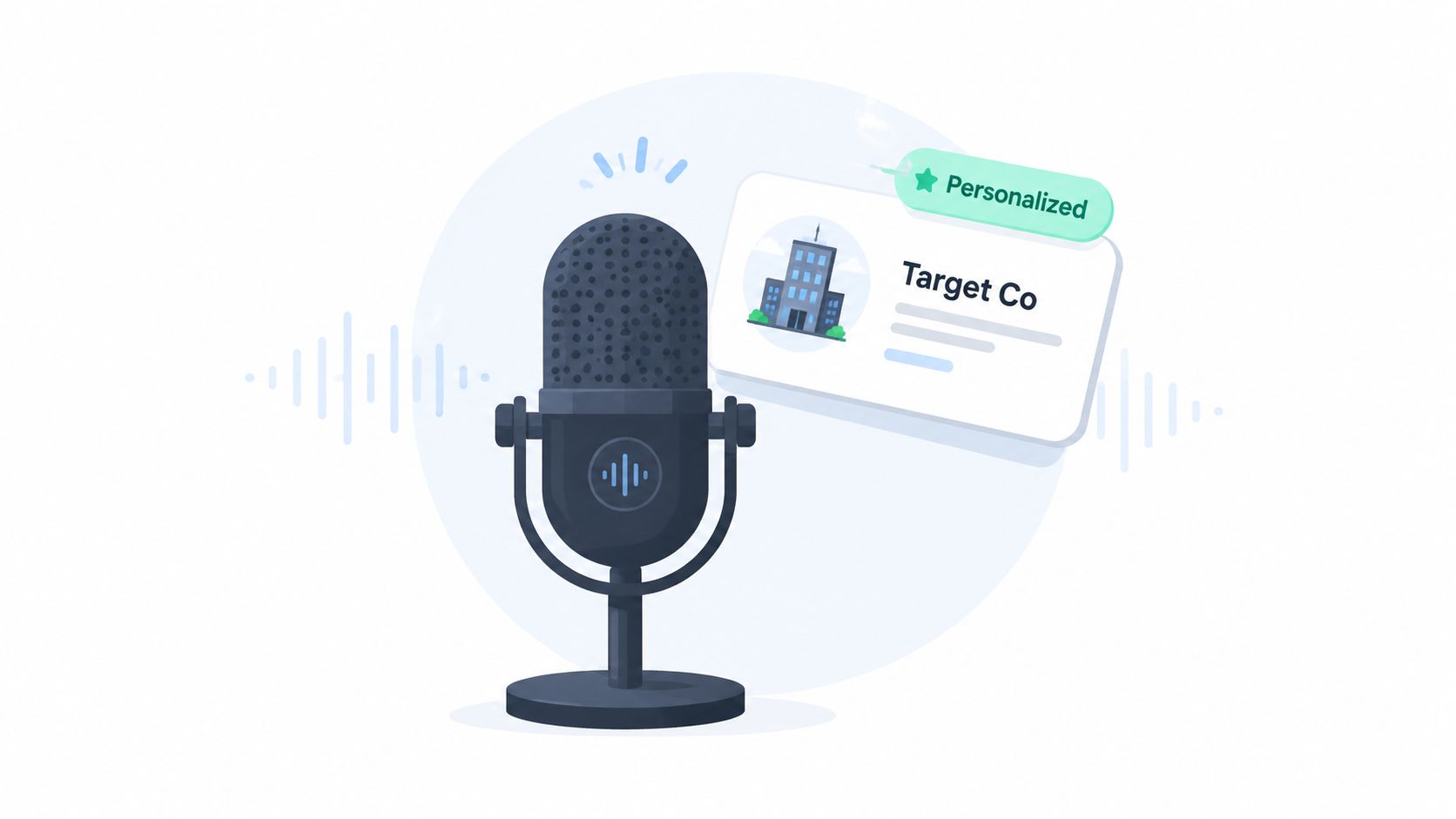
1. The Ultimate ABM Play: Invite Target Accounts as Podcast Guests
This is the cleanest podcast-driven ABM move because it changes the entire dynamic. Instead of asking for time to sell, you offer time to showcase their expertise. Senior buyers ignore most pitches. Many will say yes to a well-positioned invitation that helps them build their own brand.
A cybersecurity company, for example, can invite the CISO from a dream account to discuss how threat detection is changing. A fintech platform can host finance leaders from a short list of strategic accounts and build a series around operational change inside finance teams. The conversation starts around insight, not software.
Make the guest look smart, not marketed to
The invitation has to be about them. If your outreach reads like disguised demand gen, it dies fast. Research their recent interviews, earnings commentary, product launches, hiring trends, or public point of view. Then pitch a sharp angle they'd want to discuss.
A few things separate effective guest outreach from filler:
- Lead with relevance: Name the topic, why they're a fit, and why your audience would care.
- Remove friction: Offer scheduling flexibility, prep support, and a professional production flow.
- Think past the recording: Send polished clips, a thank-you note, and useful intros after the episode goes live.
Practical rule: If the guest can't explain why appearing helps their reputation, your invitation isn't ready.
This works because a podcast creates a real working session. You prep together. You record together. You follow up afterward. That relationship is stronger than a dozen automated touches. If you need help operationalizing the outreach side, a podcast guest booking service can make the process more consistent.
The trade-off is effort. This is one-to-one ABM, not volume marketing. But for top-tier accounts, that's exactly the point.
2. Hyper-Personalized Private Podcast Series for Top-Tier Accounts
Some accounts are too valuable for a public broad-audience show. They need something narrower, more direct, and clearly tied to the problems they're solving right now. That's where a private podcast series works.
Think of it as an audio briefing designed for a handful of named accounts. An enterprise security vendor can build a short series on compliance change for banking leaders and share it only with a tight group of target institutions. A consulting firm can create a custom audio series for one strategic manufacturing account focused on operational modernization.
Keep the scope tight
The biggest mistake here is trying to make the series feel like a normal branded podcast. Don't. This format works because it's specific.
Structure it around one business problem that matters to the account. Keep episodes concise. Use a mix of outside experts and your internal subject matter experts. Then have the account executive send each episode personally, with a note about why that installment matters right now.
What tends to work:
- One defined theme: Pick a problem the account already feels, not a broad category you want to own.
- Short release cycle: Publish on a predictable cadence so the series feels intentional.
- Direct distribution: Deliver it through personalized email and sales outreach, not generic promotion.
Private audio also lowers the barrier to consumption. Executives will often listen to something focused during commutes or between meetings when they'd never read a ten-page PDF.
The downside is obvious. Production per account cluster takes real time, and you won't get public reach from it. That's fine. This is not a brand play first. It's a relationship and deal progression play.
3. Strategic Influencer and Analyst Features to Borrow Credibility
A target account goes quiet. Your rep has already sent the case study, the follow-up note, and the calendar link. Then an industry analyst or respected operator joins your podcast and addresses the exact objection stalling the deal. That gives your team a credible reason to reopen the conversation without sounding like they are forcing another pitch.
That is the actual use case for influencer and analyst features in ABM. The goal is not reach for its own sake. The goal is to attach your brand to a trusted voice your buyers already respect, then turn that conversation into sales-ready assets for named accounts.
A cloud infrastructure company might feature an enterprise architect known for large-scale migrations. A vertical SaaS firm might bring on an operator who has run the function your buyers lead every day. A company selling into private equity-backed businesses might interview an advisor who works with portfolio teams and can speak candidly about value creation pressure.
Borrowed credibility depends on relevance, not fame
Big names can create the wrong kind of attention. If the guest is popular but not trusted by your target accounts, the episode may generate vanity metrics and still have no effect on pipeline.
Start with your account list. Identify whose opinions shape buying discussions inside those companies. Then build the episode around one live issue, not a broad trend. Good topics include failed implementations, category confusion, regulatory pressure, operating model changes, or build-versus-buy decisions.
The best guests help your team answer an objection with outside authority.
That is why I like this format for late-stage and mid-funnel ABM. A strong guest gives sales a useful reason to reconnect with accounts that have stalled, and it gives marketing a credible asset that can be clipped, quoted, and distributed across channels. Fame has used this approach to turn one expert conversation into multiple ABM touchpoints through podcast content repurposing strategies, including role-specific clips for outreach and short social proof assets for retargeting.
Keep control where it counts. Brief the guest well, agree on the angle in advance, and prepare questions that surface useful points for your buyers. Then leave enough room for honest opinions. If the conversation sounds overly managed, you lose the trust you were trying to borrow in the first place.
There is a trade-off. Influential guests will not always validate your positioning line for line. Good. Independent language carries more weight than polished messaging, especially with senior buyers who can spot brand scripting immediately.
4. The Surround Sound Play for Direct Outreach
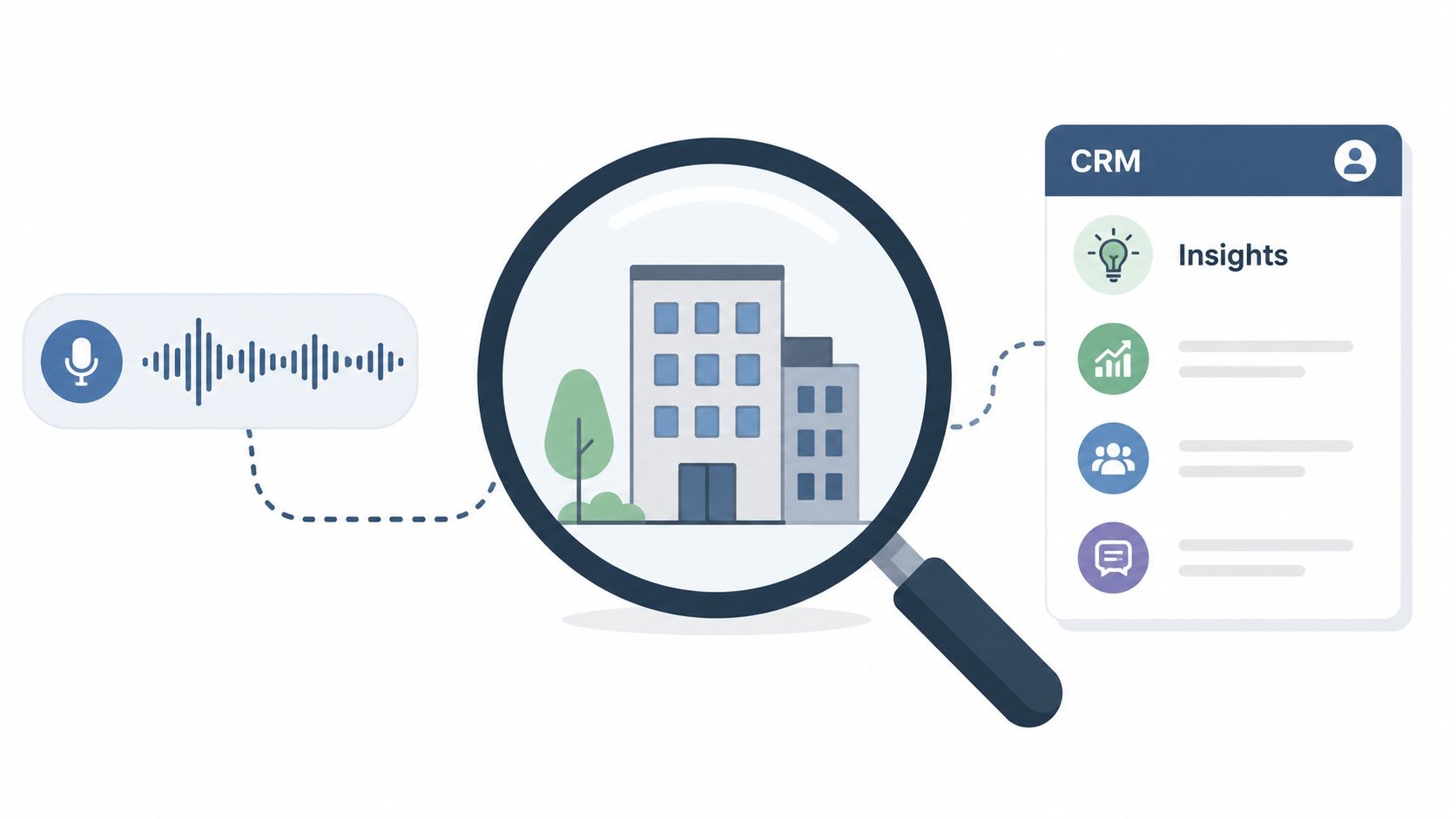
Most podcast content dies because it's treated as a finished asset instead of a sales tool. The better move is to break episodes into pieces your SDRs, AEs, and marketers can use in live account work.
A one-minute clip about supply chain risk can power a LinkedIn message to operations leaders. A timestamped segment on M&A integration can become the centerpiece of an email to an account that just announced an acquisition. A quote card can support retargeting creative and executive social posts at the same time.
Build a usable content library
Sales won't use your podcast if they have to hunt through full episodes. Organize clips by industry, use case, buyer role, objection, and sales stage. That turns the show into a real ABM asset instead of a branding side project.
A practical library should include:
- Role-based snippets: Content for CFOs, CISOs, RevOps leaders, and technical evaluators.
- Trigger-based assets: Episodes matched to funding, hiring, expansion, compliance changes, or product launches.
- Stage-specific selections: Early education, problem framing, differentiation, and late-stage validation.
Outreach lands better when the rep explains why this exact clip matters to this exact account. Not “thought you'd enjoy this episode.” More like, “You're expanding into a new region. The section at this timestamp covers the common operational mistake in that transition.”
If your team wants to stretch one recording across channels, these content repurposing strategies are directly relevant.
This approach works because it turns content into context. It fails when teams send episodes as generic collateral with no point of view attached.
5. Account-Based Podcast Advertising and Sponsorships
Not every podcast ABM tactic requires you to own the show. Sometimes the smartest move is to place your message inside a niche podcast your target accounts already trust.
That's especially useful when your buyers gather around a well-defined professional media ecosystem. Healthcare operators listen to one set of shows. Security leaders listen to another. Enterprise architects, CFOs, and founders each have their own pockets of attention. Sponsoring the right show can put your brand in front of exactly the people you're trying to reach.
Buy trust, not just inventory
The wrong way to do this is broad category buying. The right way is selecting podcasts whose host, audience, and topic overlap tightly with your ICP.
Look for fit in three places:
- Audience alignment: The show reaches the roles and industries on your target list.
- Host credibility: The host has earned enough trust that listeners pay attention to recommendations.
- Campaign coordination: Sales and marketing are already running outreach to overlapping accounts.
Host-read ads usually feel stronger than stiff script reads because they carry more native trust. Multi-episode sponsorships also tend to work better than one-off placements because ABM needs repetition. Buyers rarely act on a single touch.
If you're exploring paid placements, this guide on how to advertise on podcasts is a practical starting point.
One caution. Sponsorships can create false confidence because they look polished and are easy to launch. But if you're not pairing them with account-level follow-up, they stay in the “nice awareness” bucket. In ABM, awareness without orchestration is usually wasted.
6. Your Executive's Guesting Tour for Top-of-Funnel Reach
There's a big difference between saying your leadership team has strong market insight and letting the market hear it directly. A strategic guesting tour puts your CEO, CTO, or category lead into conversations your target accounts already pay attention to.
This is one of the more scalable account based marketing tactics because one strong interview can influence many accounts at once. It's still targeted if the show selection is disciplined.
A SaaS CEO can appear on growth-focused podcasts that buyers in their ecosystem follow. A CTO can go deep on technical trade-offs in category podcasts. A services founder can speak to operational change, not just firm capabilities.
Prep your executive like a media product
Too many executive appearances sound like a conference keynote with the slides removed. Buyers tune that out. Strong guesting starts with sharp stories, a clear point of view, and examples that show pattern recognition.
What helps most:
- Pick a lane: One executive should own one or two repeatable themes, not every topic under the sun.
- Teach, don't posture: Buyers respond to practical lessons and mistakes, not polished self-promotion.
- Capture the afterlife: Cut the appearance into clips, posts, email assets, and talking points for sales.
This tactic is especially useful when you need more category authority around named accounts before direct outreach begins. It warms the market without looking like a campaign.
The trade-off is consistency. One decent interview won't change much. A sustained tour, with good host selection and strong distribution afterward, compounds over time.
7. Competitive Differentiation Episodes Done Right
Most “competitive content” is bad because it sounds defensive. The better version doesn't attack competitors. It explains why your approach fits the buyer's problem better than common alternatives.
A cybersecurity vendor can record an episode on where legacy prevention models break down. A data platform can explore why a CRM isn't the same thing as a customer data platform. A recruiting technology company can discuss why automation without human judgment creates downstream hiring problems.
Use the category's fault lines
Differentiation gets sharp when you frame the conversation around trade-offs. Buyers don't need another episode listing product features. They need help understanding where common approaches fail, where implementation gets messy, and what hidden costs show up later.
The strongest differentiation content names the decision, the risk, and the consequence of choosing the wrong path.
This is where podcasting shines. Audio lets you handle nuance better than a comparison page. You can walk through why one route feels attractive at first, where it breaks down in practice, and what operators should ask before committing. That sounds like guidance, not propaganda.
A sales team can use these episodes in active deals when a competitor enters the conversation. Marketing can also run them earlier in the buying cycle to shape evaluation criteria before the shortlist is set.
Just don't turn the show into a smear campaign. If your content needs direct competitor attacks to make your case, the positioning probably isn't strong enough yet.
8. The Data Foundation with ABM Intelligence Integration
A target account shows fresh interest in cloud governance on Monday. By Thursday, your AE is still sending a generic episode about revenue growth. That gap is where podcast ABM loses force.
Strong podcast-led ABM starts with account intelligence, then maps audio content to the account's actual priorities. If a buying group is researching compliance workflows, data integration, sales efficiency, or AI governance, your episode strategy, clip distribution, and follow-up should reflect that signal.
I have seen this go wrong in two predictable ways. Teams either produce a show with broad themes and hope the right accounts care, or they collect intent data and never turn it into usable content for sales. Neither approach helps pipeline. The win comes from connecting the signal, the story, and the send.
Match audio to account context
The workflow is straightforward. Define the ICP. Build the target account list. Map the likely stakeholders. Then assign podcast assets to the questions each person is likely trying to answer.
That sounds simple because it is. The hard part is operational discipline.
A few patterns work especially well:
- Intent-led promotion: When an account spikes on a topic, send the episode or clip that matches that topic instead of another generic call for a meeting.
- Stakeholder-specific distribution: A CFO gets the risk, cost, and timing angle. An operator gets process impact. A technical evaluator gets architecture, integration, and implementation trade-offs.
- CRM visibility: Push episode plays, clip views, and replies into the same system sales already works from, so reps can act on engagement instead of guessing.
This is also where podcast ABM separates itself from generic content marketing. Audio gives you room to explain trade-offs clearly. A two-minute clip can prep an executive for a call. A full episode can help a champion inside the account sell the problem internally.
At Fame, we treat this as part of the broader demand generation strategy for B2B teams, not as a side project for the content team. The podcast only earns budget if it improves account selection, outreach timing, and sales conversations.
Good personalization depends on good data inputs. Regional nuance matters too, especially for teams selling across different buying environments. This breakdown of personalization techniques for UAE tech businesses is a useful example of how market context changes what relevant outreach looks like.
Measurement still gets messy in ABM. ZoomInfo's overview of ABM measurement challenges explains why proving impact across large buying committees and long sales cycles is difficult. That is exactly why podcast engagement should sit alongside firmographic fit, intent data, and opportunity progress, not in a separate content dashboard.
The practical rule is simple. Produce episodes for patterns you can see in target accounts. Distribute them to the right stakeholders at the right moment. Feed engagement back into your account scoring. That is the data foundation that turns a podcast from branded content into an ABM asset.
9. The Orchestration Through Multi-Touch Campaign Integration
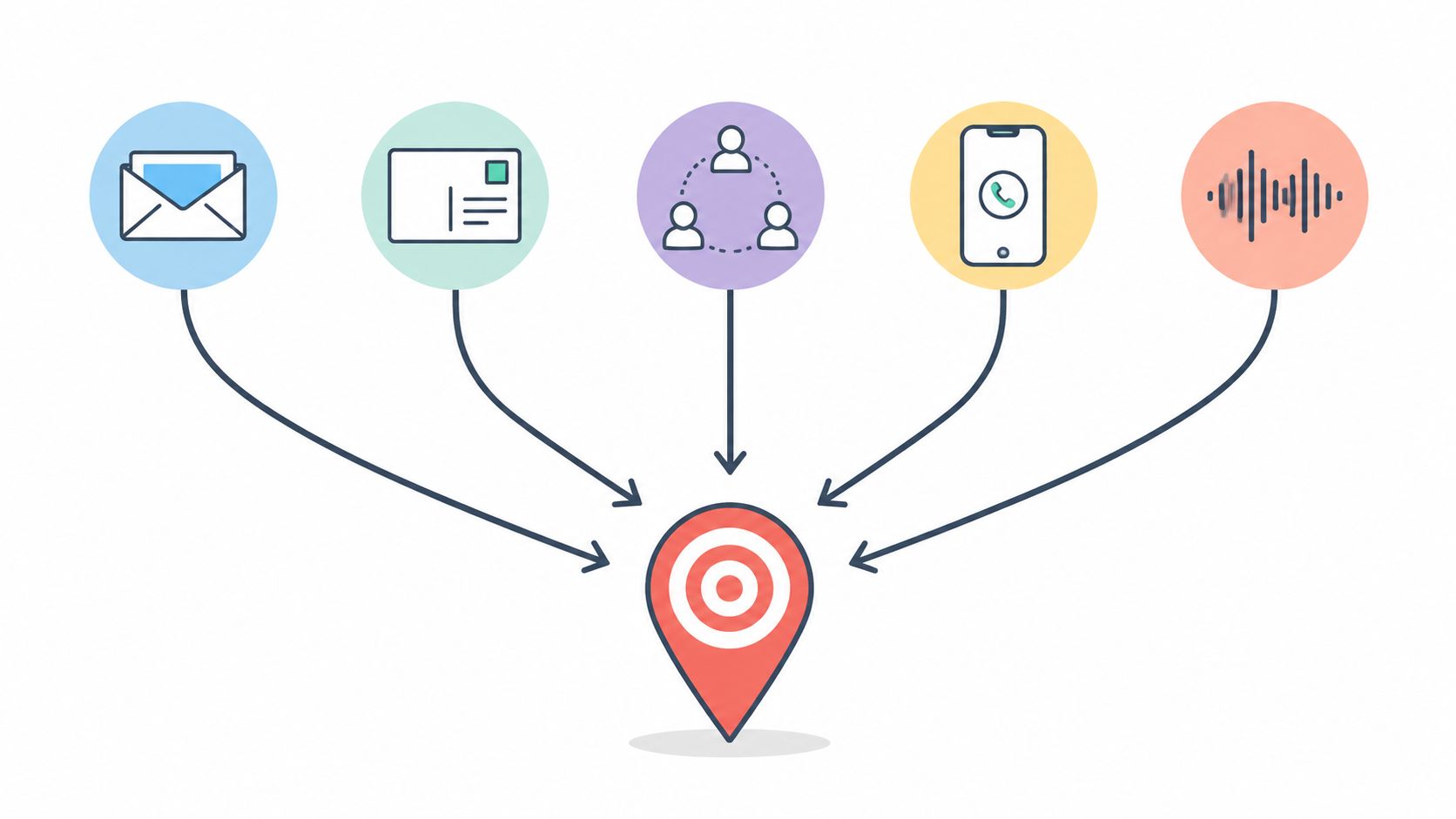
Podcast content is strongest when it acts as one touch inside a coordinated campaign. On its own, an episode can create awareness or goodwill. Combined with email, direct mail, paid social, executive outreach, and sales follow-up, it becomes momentum.
That's the difference between content marketing and ABM orchestration. Content marketing publishes. ABM coordinates.
A practical campaign might start with a personalized email from the AE, followed by a LinkedIn ad featuring a short clip, then a direct mail package that references the same business issue, then a follow-up message linking to a relevant episode. Every touch reinforces the same point of view.
Build one message spine across channels
Many account based marketing tactics fall apart. Marketing says one thing. Sales says another. Paid media introduces a third angle. The account hears noise instead of a coherent argument.
Keep the campaign tighter by aligning on:
- One core account problem: Not five, not a messaging matrix stuffed into one sequence.
- One proof narrative: The same idea should appear in the episode, ad copy, AE follow-up, and direct mail note.
- One response path: Make it obvious what the account should do next.
For teams combining channels, this broader demand generation strategy is useful context, especially if you want podcast content to support rather than replace existing motions. Some teams also borrow ideas from adjacent ABM execution models, including these personalization techniques for UAE tech businesses, because the discipline of role-based relevance travels well across markets.
The trade-off is coordination overhead. Multi-touch campaigns require more planning, more sales involvement, and tighter messaging governance. They're worth it when the account list is small enough to justify the effort.
10. Measuring What Matters with Podcast-to-Pipeline Attribution
An enterprise AE opens Salesforce after a quarter of steady work on a target account. The opportunity finally moves to proposal. The turning point was not a demo request. It was a sequence of podcast touches: one director listened to an episode, the VP was sent a clip in outbound, and the CFO later referenced a guest conversation your team had published weeks earlier.
That is how podcast-driven ABM shows up in pipeline. It rarely arrives as a neat last-click conversion. It shows up as influence across an account, over time, across multiple people.
So measure it that way.
Start by marking podcast exposure at both the contact and account level. Then compare exposed vs. unexposed accounts on opportunity creation, stage progression, deal velocity, and closed-won contribution. The goal is not perfect attribution. The goal is a model your marketing and sales leaders will trust enough to use in planning and budget reviews.
Measure account progression, stakeholder reach, and revenue influence
The strongest podcast attribution setups answer four questions:
- Did the account engage? Track episode listens, clip views, page visits, reply rates, and direct shares into named accounts.
- Who engaged? Map consumption by role, buying committee coverage, and account penetration.
- What changed after exposure? Look for meeting creation, opportunity progression, stakeholder expansion, and reactivation.
- Did revenue outcomes improve? Review influenced pipeline, sales cycle length, win rate trends, and average deal size for podcast-touched accounts.
ABM is expected to prove commercial impact. Analysts at ITSMA found that 60% of companies that had used ABM for at least one year attributed a revenue increase to it. If podcast is part of your ABM motion, it should be measured against the same standard.
In practice, the stack is usually simple. Podcast hosting data. CRM fields. Campaign UTMs. Self-reported attribution from sales calls. AE notes often matter more than teams expect, especially in high-value deals where a buyer says, "I heard your interview with X," long before they ever fill out a form.
If your team publishes through Apple, this guide to Apple Podcasts analytics and listener reporting is a useful starting point for understanding what you can track.
For podcast-led ABM programs, I recommend one operating rule: measure influence first, precision second. Teams that overbuild attribution too early usually end up with dashboards nobody believes and reps never reference. Teams that start with a clear "podcast-touched account" definition and a short list of pipeline metrics get useful signal faster.
For a deeper walkthrough, this video adds useful context:
ABM Podcast Tactics: 10-Point Comparison
| Tactic | Implementation Complexity 🔄 | Resource Requirements ⚡ | Expected Outcomes / Impact ⭐📊 | Ideal Use Cases 💡 | Key Advantages |
|---|---|---|---|---|---|
| The Ultimate ABM Play: Invite Target Accounts as Podcast Guests | High, highly personalized outreach and coordination | High, senior executive time, bespoke production, and account research | Very high engagement and conversion with strong relationship building | One-to-one outreach to strategic enterprise target accounts | Authentic rapport, exclusive content, and direct access to decision-makers |
| Hyper-Personalized "Private" Podcast Series for Top-Tier Accounts | Very High, custom series planning with secure delivery | Very High, dedicated production, targeted promotion, and account research | High account relevance with exceptional conversion potential per account | Single-account or small-cluster conversion and expansion campaigns | White-glove experience, deep personalization, and alignment with buyer outcomes |
| Strategic Influencer & Analyst Features to Borrow Credibility | Medium–High, guest sourcing and strategic alignment | Medium, PR outreach, guest management, and content repurposing | Medium–High credibility growth with expanded trust-based reach | Building awareness and authority within target industries | Borrowed credibility, cross-promotion, and amplified audience reach |
| The "Surround Sound" Play: Podcast Content for Direct Outreach | Medium, content mapping and personalized sales outreach | Medium, content library, SDR enablement, and clip creation | Medium improvement in response rates and nurture effectiveness | Outbound sequences and personalized SDR or AE outreach | Provides valuable educational content before the sales conversation |
| Account-Based Podcast Advertising & Sponsorships | Medium, media planning and targeted buying strategy | Medium–High, advertising budget, audience targeting, and campaign tracking | Medium awareness lift within highly relevant audiences | Top-of-funnel targeting where decision-makers already consume podcasts | High-attention placements with trusted host-read endorsements |
| Your Executive's "Guesting" Tour for Top-of-Funnel Reach | Medium, podcast booking, coaching, and amplification | Medium, executive time, PR support, and content repurposing | Medium increase in authority, visibility, and thought leadership | Executive branding and sector positioning at scale | Builds executive credibility while generating reusable marketing assets |
| Competitive Differentiation Episodes (Done Right) | Medium, competitive research and careful editorial planning | Low–Medium, production resources and customer case studies | Medium–High influence throughout competitive sales cycles | Deals involving frequent competitive comparisons and buyer objections | Educates prospects while reinforcing competitive differentiation |
| The Data Foundation: ABM Intelligence Integration | High, systems integration and account-level data mapping | High, intelligence platforms, CRM synchronization, and analytics | High targeting precision with stronger content relevance | Data-driven ABM programs leveraging account-level buying signals | Improves personalization and surfaces early engagement insights |
| The Orchestration: Multi-Touch Campaign Integration | Very High, cross-channel planning and campaign sequencing | Very High, marketing automation, creative resources, and operations support | High campaign effectiveness through coordinated messaging | Enterprise ABM programs with multiple stakeholders and long sales cycles | Consistent messaging that compounds engagement across channels |
| Measuring What Matters: Podcast-to-Pipeline Attribution | High, attribution modeling and platform integration | High, analytics stack, engineering support, and CRM/BI resources | High visibility into ROI with data-driven optimization opportunities | Organizations requiring executive reporting and revenue attribution | Demonstrates business impact while informing future investment decisions |
Stop Selling, Start Partnering: Your Next ABM Move
A target account finally replies after weeks of silence. It is not because they clicked another cold email. It is because their VP joined your show, shared a sharp point of view, and your team kept that conversation going across sales, content, and follow-up. That is what podcast-driven ABM does well. It turns outreach into a relationship and content into deal momentum.
The strongest account based marketing tactics feel useful to the buyer from the first touch. Podcast-led ABM fits that standard because it creates credibility before a rep asks for time, gives champions content they can share internally, and keeps your brand present across a long buying cycle. In complex B2B sales, that combination matters more than another sequence or another ad set.
As noted earlier, ABM is widely used now. The gap is not adoption. The gap is execution. Plenty of teams have target account lists, intent data, and automation. Far fewer have a repeatable way to get senior buyers into meaningful conversations and turn those conversations into pipeline influence.
That is where podcasting stands apart, especially if you run it like an operator instead of a brand team chasing vanity metrics. Start with a small list of accounts your sales team already cares about. Pick one motion. Guest interviews usually win first because they open doors fast. Build a prep workflow, record conversations that are worth sharing, and turn each episode into clips, follow-up emails, sales enablement, and retargeting assets. Then watch for account movement. Replies, second meetings, new stakeholders, faster progression.
Start small.
If I were building this from scratch, I would not launch all ten tactics at once. I would pick three accounts, one format, and one clear outcome. Fame case studies have shown this pattern repeatedly. Focused podcast plays outperform broader content programs when the goal is influence inside named accounts, because the content starts with a relationship instead of trying to attract one later.
Once that first motion works, expand with discipline. Add influencer or analyst voices when you need borrowed credibility in a category. Use private podcast feeds for top-tier accounts that need personalized education. Layer in sponsorships when you want repeated exposure around a narrow set of buyers. Send reps into outreach with clips, quotes, and episodes that make the next message easier to answer. The value comes from orchestration, not volume.
What fails is easy to spot. A polished show with vague topics, random guests, and no connection to sales usually becomes another content expense. Buyers do not care that a company launched a podcast. They care whether the episode helps them make a decision, defend a budget, avoid a mistake, or explain the category internally.
The shift is practical. Treat ABM as relationship design with commercial intent. Podcasting is one of the few formats that lets a team build trust, create reusable assets, and open executive-level conversations in the same program.
If you want outside support, Fame is one option for B2B teams building podcasts around pipeline and authority, especially when the goal is to turn episodes into a working ABM system instead of a standalone content asset.
Want us to run this for you?
Fame starts and grows B2B podcasts that generate pipeline. Tell us who you are trying to reach and we will send a costed proposal within 1 working day.
Related content
- Read moreFame Team · July 16, 2026
The 8 Best Brighton Podcast Agency Picks For 2026
Find the best Brighton podcast agency for your B2B brand. Our 2026 guide reviews top 8 agencies for production, growth & ROI. Expert analysis here - Read moreFame Team · July 16, 2026
The 9 Best Southampton Podcast Agency Picks For 2026
Find the best Southampton podcast agency for your B2B brand. We review the top 9 local and remote agencies for production, growth, and ROI in 2026. - Read moreJune 10, 2026
20 Best Podcast Production Agencies For 2026 (And Why Should You Hire One)
Global podcast and vodcast ad revenues are on track to hit $5 billion in 2026 , up 20% year-on-year. - Read moreApril 13, 2026
Leadership In Marketing: The B2B Podcast Playbook
Most companies still confuse leadership in marketing with job titles, org charts, and budget control. That's outdated.