June 13, 202615 min read10 sections
Best Brighton Podcast Production Company: 8 Agencies Ranked (2026)
By Michael Twiddy, Head of Growth, Fame
Michael leads Fame's growth efforts, including sales and marketing. LinkedIn
Key Takeaways
- Choose a Brighton podcast agency that supports your business goals.
- The best agencies combine strategy, production, and audience growth.
- The right partner helps build authority and drive measurable results.
Choosing a Brighton podcast agency in 2026 is less about finding someone with microphones and more about finding the right operating model. A quick search for the best Brighton podcast agency brings up a mix of studios, video teams, remote production companies, and full-service growth partners. Those aren't the same thing, and buyers often lose time by comparing them as if they are.
That matters because the market is crowded with small specialist teams. CoHost's annual agency report found that 76% of podcast agencies operate with fewer than 10 employees. In practice, that means brand size tells you less than process quality, strategic depth, and whether the agency can tie podcast work back to business outcomes.
If you're a Brighton B2B company, the key question isn't just who can produce a polished show. It's who can help you build authority, attract the right audience, and turn the podcast into a repeatable marketing asset. Some options below are strong end-to-end partners. Others are better used as studios or specialist production vendors inside a larger in-house workflow.
This guide is part of Fame’s wider directory of B2B podcast agencies - see the full 20 best podcast production agencies if Brighton isn’t a hard requirement and you want the broader field.
How we researched this list: every agency below was checked for an active, reachable website and evidence of current podcast production work as of August 21, 2026. Last reviewed and updated August 21, 2026.
Brighton’s economy leans hard into independent creative and digital agencies - the city has one of the UK’s densest concentrations of small design, media and tech studios outside London, fed by two universities and a strong freelance and startup culture. That mix produces a podcast market comfortable with bold creative direction, but B2B buyers here still need to push past style toward a show built for pipeline, not just polish.
1. Fame
- Agency: Fame
- Market: Brighton
- Best for: Fame is the strongest fit for Brighton companies that treat podcasting as a demand generation channel, not a side project.
- Website: fame.so
Fame is the strongest fit for Brighton companies that treat podcasting as a demand generation channel, not a side project. It isn't Brighton-based, but that doesn't matter much if your buyers, guests, and growth targets aren't limited to Brighton either. For B2B teams selling nationally or internationally, the remote-first model is often an advantage.
What separates Fame is the commercial framing. In a category where many agencies still emphasize production polish first, Fame positions itself around marketing outcomes. In its own agency comparison, the company says it's marketer-led, offers a 10% month-on-month download growth guarantee, and cites outcomes such as 20% guest-to-customer conversion and 3.5x ROI in 6 months. If you want a better sense of how to evaluate that kind of commercial lens, their guide to B2B podcast agency ROI is worth reading.
Why it ranks first
Fame handles strategy, guest sourcing, recording support, editing, distribution, and repurposing. It also uses proprietary systems like Fame Host and the Production Engine, which is the kind of operational detail I look for when judging whether a small specialist team can scale cleanly across many clients.
A fragmented agency market rewards process discipline. Fame's model is built for that.
Practical rule: If your CFO or leadership team will ask how the podcast influences pipeline, shortlist agencies that talk about attribution, guest quality, and distribution systems before they talk about intro music.
Best for: B2B SaaS, professional services, and enterprise brands that want executive thought leadership tied to audience growth and pipeline influence.
Watch out for: It's a premium full-service engagement, so it won't suit hobby shows or companies that only need a room and an editor.
Visit Fame.
2. Lower Street
- Agency: Lower Street
- Market: Brighton
- Best for: Lower Street is a premium option for brands that want a podcast to sound editorially ambitious from day one.
- Website: lowerstreet.co
Lower Street is a premium option for brands that want a podcast to sound editorially ambitious from day one. Their work leans toward narrative structure, strong story development, and a more crafted listening experience than the standard founder-interview format.
That makes them a strong choice for B2B companies with a clear brand story, customer journey, or industry angle worth shaping into something more documentary-like. If your internal team keeps saying "we want this to feel like a real show, not branded content," Lower Street is the kind of agency you bring in.
Where they fit best
Their value is storytelling craft. They're well suited to thought leadership series, branded narrative podcasts, and category shows where pacing, scripting, and sound design matter as much as the guest list.
Strengths
- Narrative production: Strong fit for story-led branded podcasts.
- End-to-end support: Helpful for teams that need concept development as much as execution.
- Premium finish: Best when audio identity is part of the brand strategy.
Trade-offs
- Higher complexity: If you're launching a simple interview show, this can be more production than you need.
- Less direct-response oriented: They're a better fit for brand authority than for heavily pipeline-tracked execution.
A beautifully produced show can still underperform commercially if no one owns audience growth. That's the main question I'd ask before signing.
Best for: B2B brands that want a flagship podcast with strong editorial feel and are willing to invest in story development.
Visit Lower Street.
3. Quill
- Agency: Quill
- Market: Brighton
- Best for: Quill makes the most sense for larger organizations that need structure, governance, and a platform layer alongside production.
- Website: quillpodcasting.com
Quill makes the most sense for larger organizations that need structure, governance, and a platform layer alongside production. If you're a bigger Brighton business with multiple stakeholders, legal review, internal comms use cases, or a need for secure workflows, Quill belongs on the shortlist.
They're not just a production shop. They operate more like a corporate podcasting partner, which matters when the project sits inside a broader communications or brand program.
Why enterprise teams choose them
Podcasting is no longer an experimental corner of digital media. Measurement has matured enough that major publishers and advertisers now expect trackable performance, and Triton Digital describes its system as “census-level podcast measurement” backed by over 10 years of industry expertise. That broader measurement maturity is part of why enterprise buyers increasingly want agencies that can support analytics, reporting discipline, and scale.
If you're comparing Quill against leaner agencies, the key distinction is operational complexity.
Best for: Enterprise brands, regulated industries, and organizations running multiple shows or internal plus external audio programs.
Pros
- Corporate-ready workflows: Better suited to large teams and approval chains.
- Integrated platform approach: Useful when hosting, analytics, and security matter.
- Broad content formats: Good fit beyond standard marketing podcasts.
Cons
- Heavier process: Smaller teams may find it more structured than necessary.
- Less SMB-friendly: Best value shows up when the organization is large enough to use the full system. Teams evaluating larger rollouts may also want a separate view on enterprise podcast production.
Visit Quill.
4. Clear Vox
- Agency: Clear Vox
- Market: Brighton
- Best for: Clear Vox is one of the more practical local picks if your podcast sits close to events, webinars, or live audience formats.
- Website: clear-vox.com
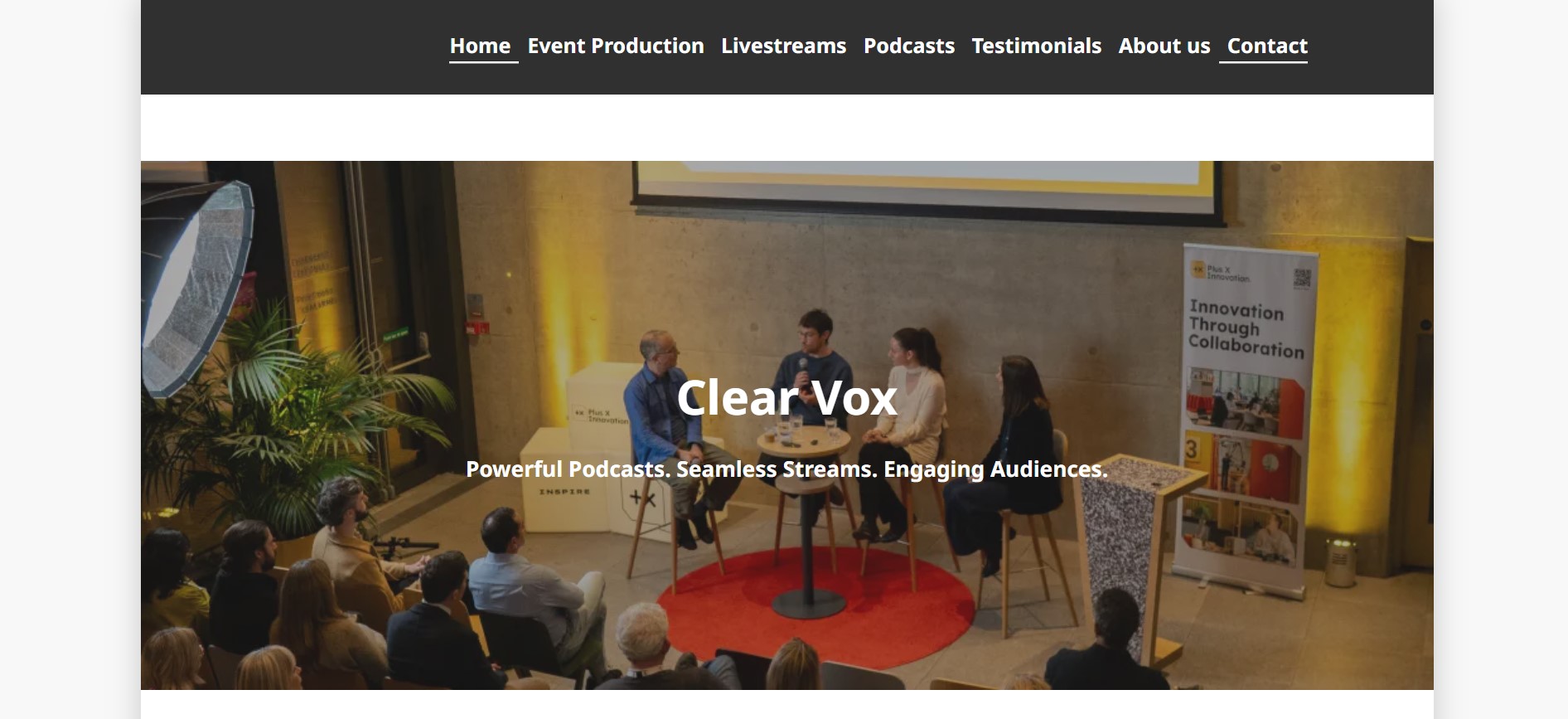
Clear Vox is one of the more practical local picks if your podcast sits close to events, webinars, or live audience formats. For Brighton teams that want on-site support, local logistics, and a partner comfortable with both podcasts and AV-heavy production, they solve a different problem than a remote growth agency.
That difference matters. If your show is recorded at conferences, customer events, or panel sessions, event operations can make or break the result long before post-production starts.
Best use case
Clear Vox is strongest when the podcast is one piece of a wider content capture plan. Think live recordings, hybrid events, webcast support, and session repurposing.
What works well
- Event integration: Strong fit for conferences, partner events, and hybrid recording setups.
- Local convenience: Useful when guests are moving between Brighton and London.
- Flexible production support: Good option for teams that need more than a studio booking.
What doesn't
- Less specialized around B2B demand gen: If pipeline attribution is the core buying criterion, you'll want to probe that directly.
- Budget clarity requires a conversation: Good for custom work, less ideal if you want instant package comparison.
Local access is valuable when the recording setup is operationally messy. It's less important when the main problem is audience growth.
Best for: Brands that need a Brighton-area production partner with event and AV capability, not just podcast editing.
Visit Clear Vox.
5. Brown Bear Studios
- Agency: Brown Bear Studios
- Market: Brighton
- Best for: Brown Bear Studios is one of the strongest local options when visual production quality matters almost as much as the podcast itself.
- Website: brownbearstudios.co.uk
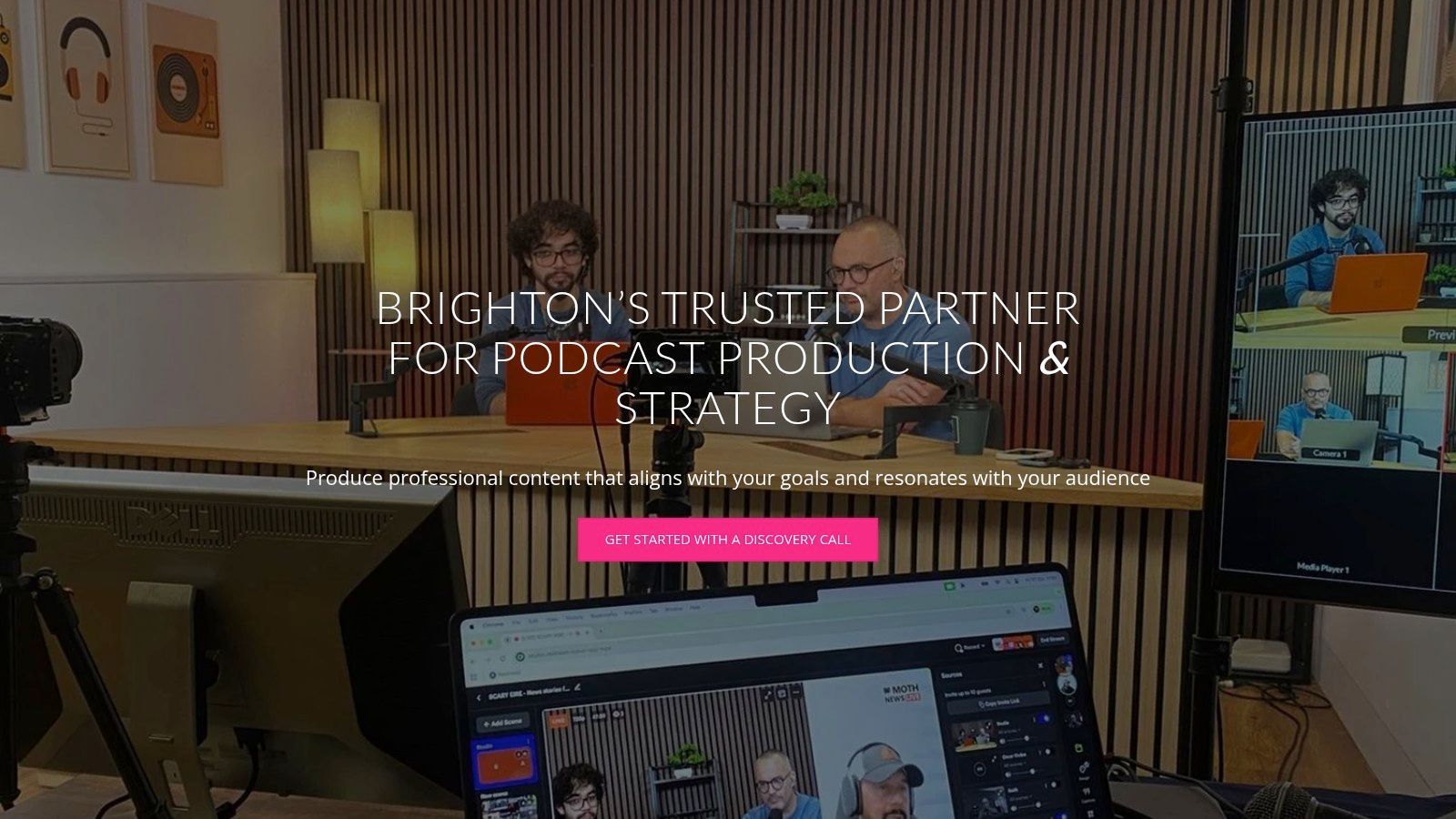
Brown Bear Studios is one of the strongest local options when visual production quality matters almost as much as the podcast itself. If you're planning for YouTube, LinkedIn clips, multi-camera edits, and a studio look that already feels polished, this is the kind of place that saves setup time and raises the floor on output quality.
Their positioning is practical. You get a purpose-built environment, visible kit standards, and a clearer sense of what the session day will look like.
Where Brown Bear stands out
This is a studio-led choice, not a B2B growth-led one. That's not a criticism. It just means the value comes from capture quality, on-site support, and production environment rather than audience strategy.
Good reasons to choose them
- Video-ready setup: Strong for brands prioritizing clips and visual distribution.
- Professional studio environment: Better than trying to retrofit a boardroom.
- Transparent setup thinking: Easier to scope than many local facilities.
If you're designing a physical recording setup, Fame's article on podcast studio design is also useful context for what matters in-room.
Limits to know
- Studio economics can stack up: Especially for longer multi-camera sessions with add-ons.
- Growth still needs an owner: A polished recording day doesn't replace distribution, positioning, or guest strategy.
Best for: Brighton brands that want premium in-person recording with strong video output and already know how the show fits into their marketing plan.
Visit Brown Bear Studios.
6. ON THE SLY
- Agency: ON THE SLY
- Market: Brighton
- Best for: ON THE SLY is a smart pick if your team prioritizes the visual version of the podcast.
- Website: onthesly.studio
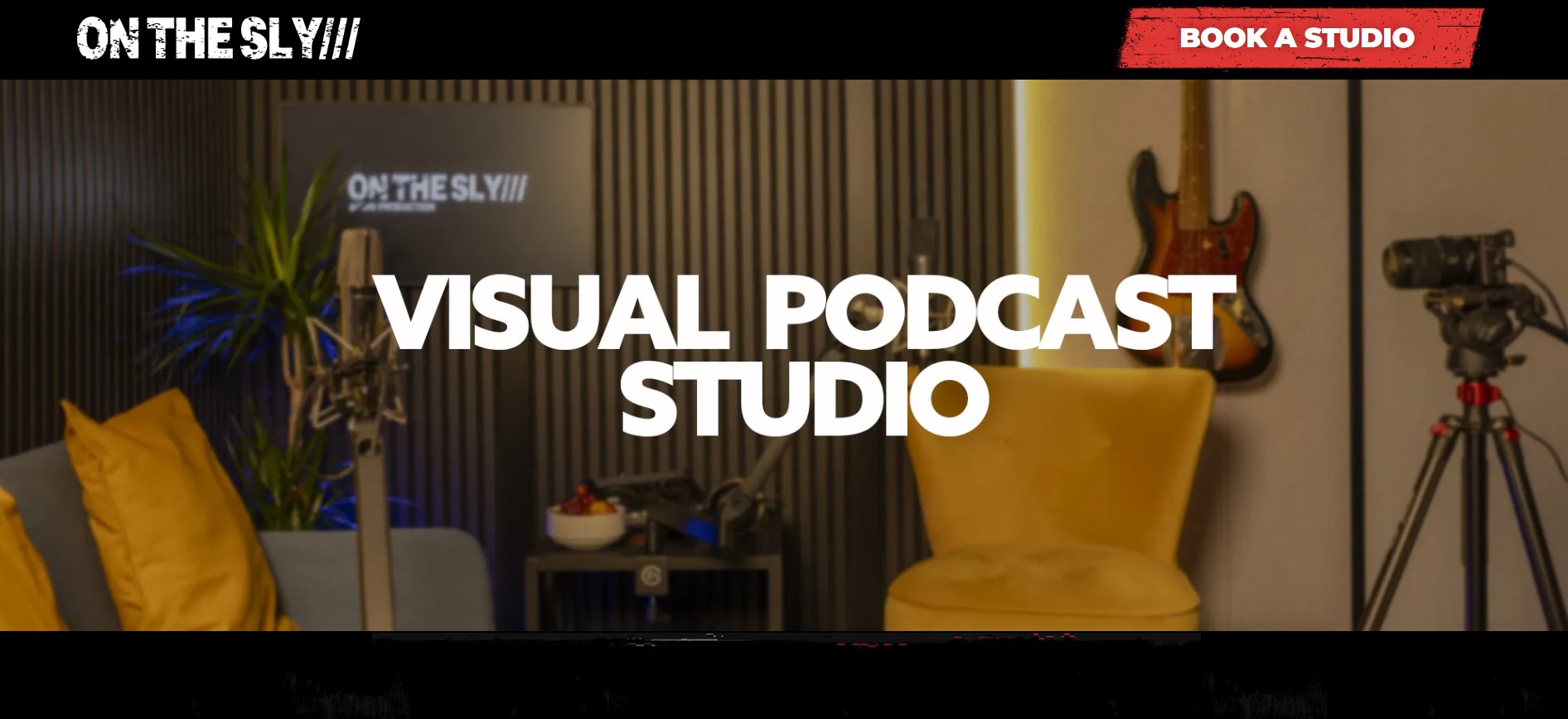
ON THE SLY is a smart pick if your team prioritizes the visual version of the podcast. Based in Eastbourne, it isn't Brighton proper, but it's close enough to be relevant for Sussex-based brands willing to travel for a stronger set and capture workflow.
For teams who say, "The LinkedIn and YouTube cutdowns matter just as much as Spotify or Apple Podcasts," that's a different brief from traditional audio-first production.
Best for visual-first formats
Their strength is studio capture with a polished, broadcast-style feel. That suits founder interviews, leadership roundtables, and branded series that need to look credible on camera from episode one.
You can also review Fame's perspective on video podcast production if you're deciding whether the extra complexity of video is worth it for your distribution mix.
Pros
- Visual quality: Strong fit for camera-first shows.
- Clear session structure: Helpful if you want a predictable recording day.
- Professional audio chain: Important when the room needs to serve both video and audio standards.
Cons
- Travel overhead: Fine for planned batches, less convenient for frequent ad hoc sessions.
- Limited strategic layer: You may still need a separate partner for show positioning, growth, and content ops.
Best for: Teams producing executive interview shows, branded YouTube podcasts, or multi-format episodes where the visual cut is central to the strategy.
Visit ON THE SLY.
7. Plus X Innovation
- Agency: Plus X Innovation
- Market: Brighton
- Best for: Plus X Innovation is not a full-service agency, and that's exactly why it works for some teams.
- Website: plusxinnovation.com
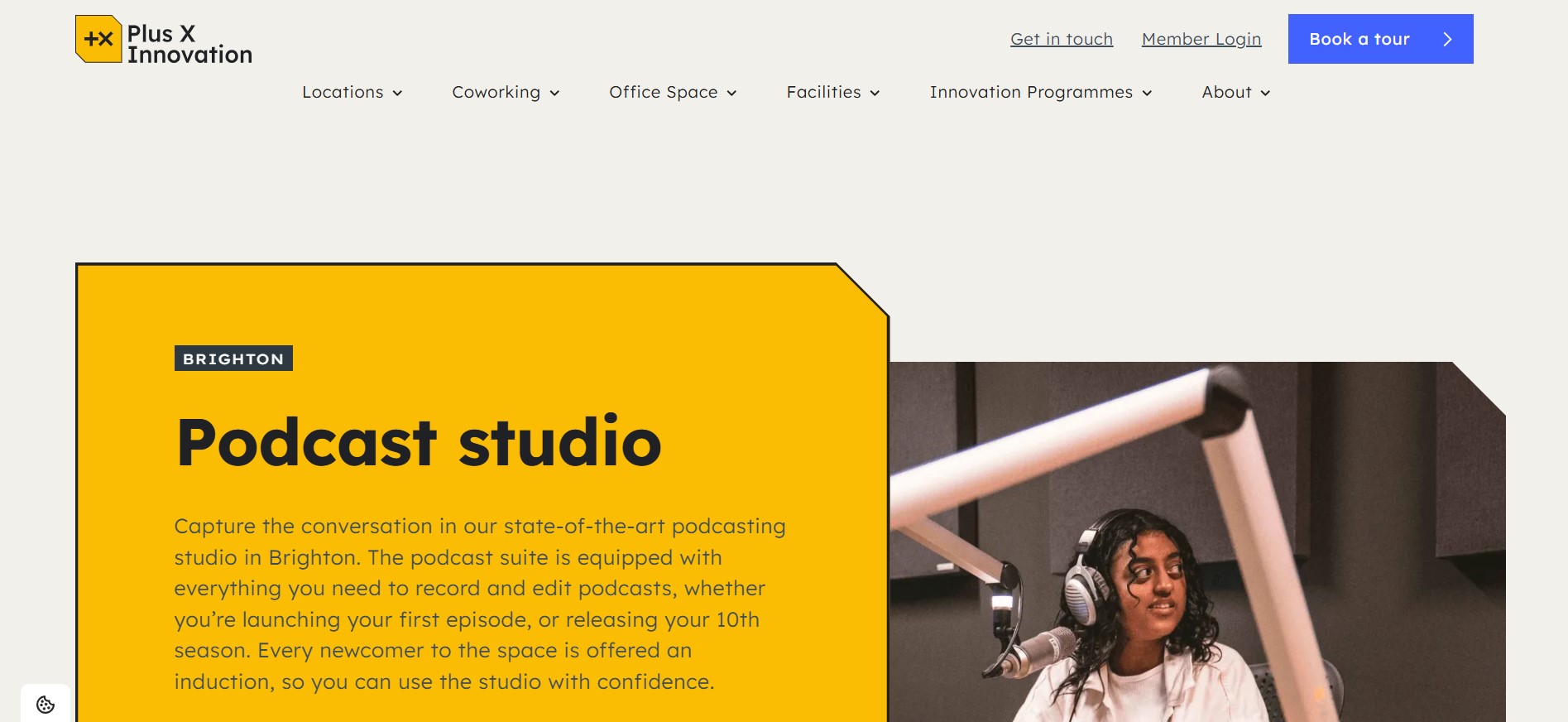
Plus X Innovation is not a full-service agency, and that's exactly why it works for some teams. If you already have an in-house marketer, producer, or editor and need a reliable professional environment to record in Brighton, this is one of the more efficient options.
A lot of companies don't need an agency for every part of the workflow. They need a good room, solid equipment, and a repeatable process their team can run themselves.
When DIY is the smarter move
This option works best when your strategy is clear and your internal team can own booking, scripting, recording logistics, and post-production management. It's especially useful for recurring interview formats with local guests.
Strong fit if you have
- In-house production ownership: Someone on your team can run the process.
- A repeatable format: Less experimentation, more consistency.
- Local guest flow: Brighton-area interviews benefit most from the location.
Less ideal if you need
- Show strategy: The facility won't replace editorial planning.
- Growth execution: Audience building still sits elsewhere.
- Video-heavy production: You'll likely need extra crew or a different setup.
If no one on your team owns the calendar, guest prep, and publishing workflow, a DIY studio usually becomes an underused subscription.
Best for: Startups, innovation teams, and in-house marketers who want a pro recording setup without committing to a full agency relationship.
Visit Plus X Innovation podcast studio.
8. Wafer Audio
- Agency: Wafer Audio
- Market: Brighton
- Best for: Best used as a specialist vendor
- Website: waferaudio.com
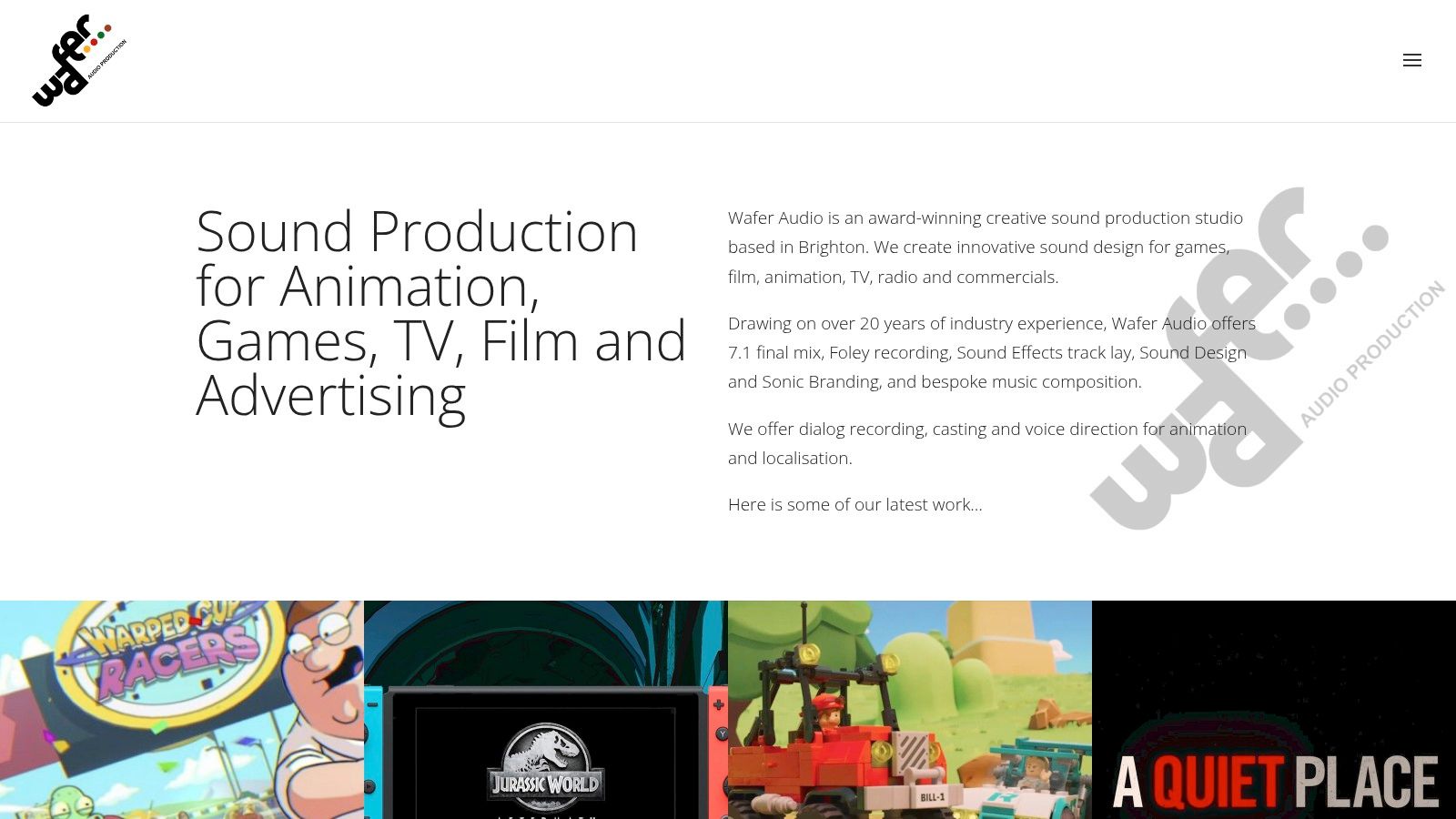
Wafer Audio earns a place on this list for a specific reason. Sometimes the right Brighton podcast partner isn't a podcast agency at all. It's the specialist post-production studio that can make a premium narrative or branded show sound dramatically better.
If your team already owns strategy, recording, and distribution, but the final mix still sounds flat or inconsistent, a sound design specialist can be the missing piece.
Best used as a specialist vendor
Wafer Audio is the local option I'd consider when the project needs advanced sound work, sonic branding, dialogue cleanup, or a more cinematic finish. That's especially relevant for fiction-style branded content, documentary formats, or premium launch series.
Triton Digital's 2026 feature release notes that publishers can now compare performance using industry benchmarks across the top 20 podcast markets worldwide, including download views by country, genre, and release window. As benchmarking gets more advanced, stronger post-production helps, but it still has to sit inside a measurable publishing strategy. If you need the craft side of that equation, Fame's page on podcast editing shows what modern edit workflows often include.
Best for: Narrative podcasts, sonic branding work, premium launch projects, and teams that already have strategy covered.
Not for: Companies looking for guest booking, content marketing, or end-to-end show growth.
Visit Wafer Audio.
Top 8 Brighton Podcast Agencies, Specialty & Capabilities
| Service | Implementation Complexity 🔄 | Resource Requirements ⚡ | Expected Outcomes ⭐📊 | Ideal Use Cases 💡 | Key Advantages |
|---|---|---|---|---|---|
| Fame: Best Overall for B2B Growth & ROI | High, end-to-end, systemized workflows | High, dedicated team with proprietary tools | High, measurable growth with guaranteed ≥10% monthly download growth | B2B companies focused on pipeline generation and measurable ROI | Performance guarantee, proprietary platform, and fully managed service |
| Lower Street: Best for Narrative-Driven B2B Podcasts | High, research-heavy narrative production | High, premium sound design and editorial investment | High, story-led broadcast-quality branded podcasts | Brands seeking documentary-style thought leadership content | Exceptional storytelling with premium audio production |
| Quill: Best for Enterprise-Level Branded Podcasts | High, structured enterprise workflows with compliance processes | High, scalable platform, analytics, and secure hosting | High, scalable branded podcast programs supported by analytics | Large enterprises, internal communications, and multi-show podcast programs | Enterprise-grade hosting, security, analytics, and scalability |
| Clear Vox: Best for Integrating Podcasts with Live Events | Medium, AV and event logistics for hybrid productions | Medium, local AV crew with hybrid-event equipment | Medium, professional live and hybrid recordings with event synergy | Podcasts connected to conferences, livestreams, and hybrid events | Brighton-based AV expertise with hybrid event support |
| Brown Bear Studios: Best for High-End Studio Production | Medium, studio sessions with multicamera production and post workflows | High, purpose-built studios with Dolby Atmos mixing facilities | High, broadcast-level audio, video, and social-ready assets | Video-first brands seeking polished, broadcast-quality production | Transparent pricing with purpose-built podcast and video studios |
| ON THE SLY: Best for Polished Visual Podcast Capture | Low–Medium, studio-focused production with simple booking | Medium, premium microphones, cameras, and optional travel | High, TV-style visual podcasts with polished video quality | Shows prioritizing YouTube, LinkedIn, and premium video podcasts | Transparent pricing with broadcast-quality visual production |
| Plus X Innovation: Best for DIY Recording in a Pro Environment | Low, self-managed recording in a professional studio | Low, published pricing with minimal crew requirements | Medium, reliable professional recordings depending on in-house production | In-house production teams needing access to professional recording space | Clear pricing, central location, and membership benefits |
| Wafer Audio: Best for Specialist Post-Production & Sound Design | Medium–High, advanced mixing, Foley, and ADR workflows | High, expert engineers with studio-grade facilities | Very High, broadcast-caliber mixes and premium sonic branding | Narrative and premium podcasts requiring advanced post-production | Award-winning sound design with 7.1 surround mixing and Foley expertise |
How to Choose Your Brighton Podcast Partner
The best Brighton podcast agency depends on what you're buying. Clients often think they're buying production. In reality, they're buying one of three things: business growth, premium content, or reliable recording infrastructure. Those categories overlap, but they shouldn't be confused.
If your main goal is pipeline, authority, and executive visibility in a B2B market, start with agencies that can talk clearly about commercial outcomes. Podcasting is now large enough to support serious media planning, with 2026 projections putting US podcast ad spend above $3 billion, global spend above $5 billion, and worldwide monthly listeners at roughly 550 million. That scale is one reason buyers now expect more than "we'll make it sound great." They want reporting, growth logic, and a sensible attribution story.
If your goal is a flagship brand show with stronger editorial identity, a studio-plus-storytelling partner like Lower Street may be the better fit. If your priority is local recording, video-first capture, or event integration, Brighton-area providers like Brown Bear Studios and Clear Vox make more sense. They solve practical production problems well.
The wrong choice usually comes from skipping one hard question: who owns growth after the episode is published? Many agencies and studios can record, edit, and deliver files. Fewer can help with show positioning, guest quality, content repurposing, distribution, and the internal reporting that justifies continuing investment.
Here's the simplest way to decide:
- Choose a growth partner if podcasting needs to influence brand authority, demand generation, or pipeline.
- Choose a premium production partner if the show itself is the brand statement.
- Choose a studio or specialist vendor if your team already owns strategy and just needs excellent execution in one part of the workflow.
For many Brighton B2B teams, a remote specialist is often a better fit than a local generalist, especially when the audience is national or international. Fame is one option in that category, particularly for companies that want podcasting run like a measurable marketing channel rather than a standalone media experiment.
If your team wants a podcast that supports B2B growth, not just production output, take a look at Fame. Their model is built for strategy, guest-led authority, distribution, and measurable performance, which is usually what serious buyers are looking for when they search for the best Brighton podcast agency.
Frequently Asked Questions
Pricing varies by scope - a studio-only rental runs far less than a full-service B2B agency handling strategy, guest sourcing, production and promotion end to end. Get a proposal scoped to your specific show before comparing agencies on price alone.
Want us to run this for you?
Fame starts and grows B2B podcasts that generate pipeline. Tell us who you are trying to reach and we will send a costed proposal within 1 working day.
Related content
- Read moreFame Team · July 16, 2026
10 Account Based Marketing Tactics For B2B Growth In 2026
Discover 10 actionable account based marketing tactics for B2B tech. Learn to use podcasts, data, and targeted content to close high-value accounts. - Read moreFame Team · July 16, 2026
The 9 Best Southampton Podcast Agency Picks For 2026
Find the best Southampton podcast agency for your B2B brand. We review the top 9 local and remote agencies for production, growth, and ROI in 2026. - Read moreJune 10, 2026
20 Best Podcast Production Agencies For 2026 (And Why Should You Hire One)
Global podcast and vodcast ad revenues are on track to hit $5 billion in 2026 , up 20% year-on-year. - Read moreApril 13, 2026
Leadership In Marketing: The B2B Podcast Playbook
Most companies still confuse leadership in marketing with job titles, org charts, and budget control. That's outdated.