March 25, 202620 min read6 sections
Become a Strategic Thought Leader With a B2B Podcast
By Fame Team
Key Takeaways
- A true strategic thought leader architects the future of their industry.
- Becoming a strategic thought leader means setting the agenda and having influence.
- Modern B2B buyers trust thought leadership more than traditional marketing, with 73% vetting companies through it.
Let's be honest, the term 'thought leader' gets thrown around so much it’s almost lost its meaning. But a true strategic thought leader is a different beast entirely. They don't just share opinions; they architect the future of their industry.
This isn't about shouting from the rooftops. It's a deliberate, long-term play that creates a gravitational pull, drawing your ideal customers and biggest opportunities right to your doorstep. And for modern executives, the most effective tool to achieve this is a B2B podcast.
What It Really Means to Be a Strategic Thought Leader

Becoming a strategic thought leader means you stop just participating in your industry’s conversation and start setting the agenda. It’s way more than just being an expert. It’s about having influence, real foresight, and a point of view so sharp it challenges the status quo. This is a core part of any modern B2B brand strategy.
Think about it: modern B2B buyers are completely over polished marketing slicks. They're starved for authentic expertise and genuine guidance.
The data backs this up. 54% of all decision-makers now spend at least one hour every single week consuming thought leadership. Even more telling, 73% of them say it’s a more trustworthy way to vet a company than their traditional marketing.
This hunger for real insight creates a massive opening for executives who are willing to step up and share what they know.
The Journey From Expert to Influencer
This isn't something that happens by accident. It's a calculated journey.
Just look at our founder, Tom Hunt. A decade ago, he walked away from a corporate consulting job with one simple goal: replace his salary by the end of the year. After grinding through and failing with 17 different business ideas, he finally hit on the formula that became Fame - all by embracing this core principle of strategic leadership.
His journey from a rainy walk in East London to building a company with over 75 team members and amassing more than 200,000 LinkedIn followers wasn't luck. It was built by relentlessly sharing a unique point of view and delivering real value, day in and day out, until he became a recognized voice in B2B marketing. His journey exemplifies how to unify branding and content marketing to build authority.
A strategic thought leader doesn’t just answer questions; they frame the questions everyone else should be asking. They see where the industry is going and guide others there.
Making this leap involves a clear shift in both your mindset and your actions. To really own this role, you have to get good at social media management for thought leaders - it's what makes your insights impossible to ignore.
The Strategic Difference
So, what actually separates a regular expert from a strategic one? It all boils down to your intent and your impact. To make it crystal clear, here’s a quick breakdown:
Thought Leader vs. Strategic Thought Leader Comparison
| Attribute | Traditional Thought Leader | Strategic Thought Leader |
|---|---|---|
| Focus | Answers common questions | Frames new, challenging questions |
| Knowledge | Has deep subject matter expertise | Has a unique point of view on that expertise |
| Action | Reacts to industry trends | Creates and shapes industry trends |
| Goal | To be seen as a helpful resource | To become an indispensable guide |
| Reach | Known within their company or circle | Known throughout the entire industry |
| Impact | Provides information | Drives conversation and change |
That distinction is everything. It's the difference between being a helpful resource people occasionally turn to and being the indispensable guide your ideal clients actively seek out.
By zeroing in on your unique angle and consistently delivering value, you build a brand that attracts clients who are already pre-sold on your expertise before you even speak to them. We go even deeper into this concept in our full guide on developing strategic thought leadership.
The end goal? To become the one voice your ideal clients have to listen to when they're facing their biggest challenges.
Why Your Podcast Is the Ultimate Leadership Platform
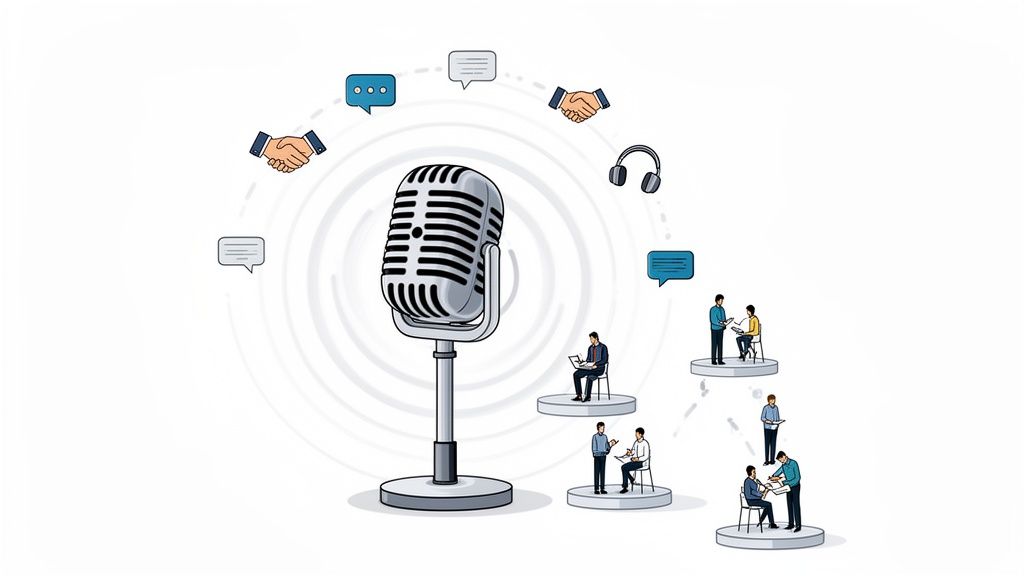
Forget the old advice about needing to be everywhere at once. The most powerful way for an executive to build a personal brand and elevate their market position is through a B2B podcast. It is the single best platform for a strategic thought leader to achieve depth and build real influence.
A podcast isn't just another marketing channel to check off your list. It's a leadership platform. It’s where you graduate from 280-character hot takes to nuanced, real conversations that build unshakable trust and loyalty. Wondering how to become a thought leader? This is the most direct path.
In a world absolutely drowning in content, the human voice cuts through. Your listeners feel like they're right there in the room with you, getting insights straight from the source. A blog post or a social update simply can't touch that level of intimacy.
Build Real Connections, At Scale
Think about it this way. When you read a great article, you respect the author's ideas. But when you listen to a great podcast, you feel like you know the host. That's the game-changer.
Podcasting creates a unique bond where listeners feel a genuine, personal connection to you. By consistently showing up in their ears with valuable insights, you become their trusted guide on the inside.
This isn't just a feel-good exercise. It has a powerful, cascading effect:
- You educate your potential customers and your peers. You're not selling; you're teaching. This positions you as the leading voice in the industry.
- You elevate your standing among peers. By hosting conversations with other industry leaders, you create a network effect that cements your place at the center of the conversation.
- You build top-of-mind awareness. When your ideal clients are finally in the market, your name is the first one that comes to mind. You've already earned their trust, long before they needed a solution.
Your podcast transforms you from just another voice in your industry’s conversation to the person leading it. It’s the most direct path to being seen as the authority in your space.
By focusing your energy on this one powerful medium, you create a halo effect that lifts your entire personal brand. You can dig into the wider benefits of a podcast for your B2B brand to see just how massive the impact can be.
Your Podcast as a Central Content Engine
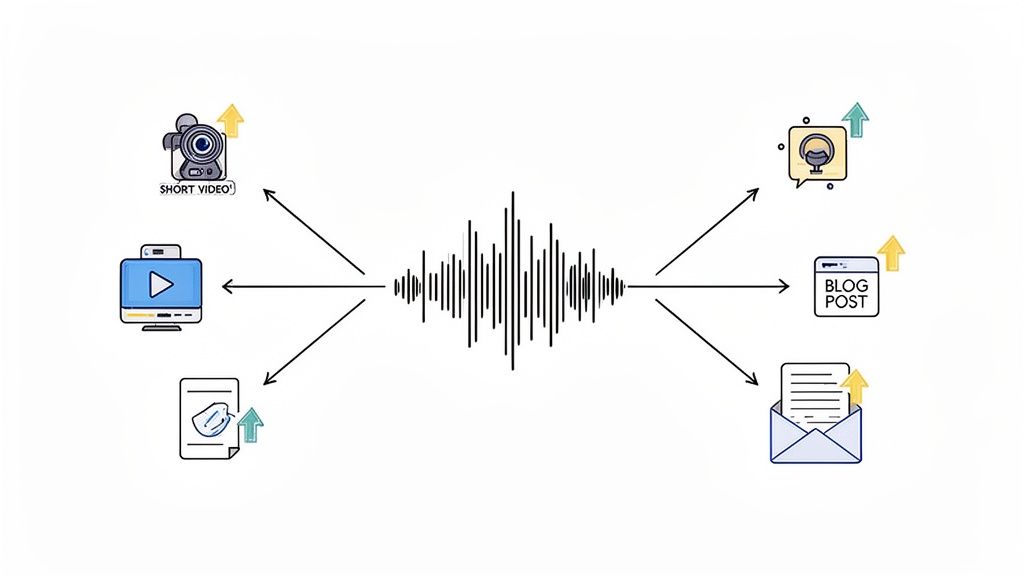
Here's where it gets really powerful. Podcasting isn’t just about the audio; it’s a content engine. A single one-hour conversation can be systematically chopped up and repurposed into dozens of other high-value assets. This isn't about working harder - it's about making your core effort work for you across every single channel.
Our founder, Tom Hunt, uses his podcast, Cash Machines, as the wellspring for a massive amount of his content. It's how he fuels a LinkedIn presence with over 200,000 followers. The gold from his show is sliced into videos, quote cards, and deep-dive articles.
A single episode can easily become:
- Short video clips for LinkedIn and YouTube Shorts that pull out the best moments.
- Quote graphics for social media that share your most potent takeaways.
- A detailed blog post that expands on the episode's main topic.
- An engaging email newsletter giving subscribers your exclusive commentary.
This system turns your podcast into the central pillar of a unified brand strategy. The authority you build in one place gets amplified everywhere else. It's how you achieve maximum influence with minimal extra work. This is marketing thought leadership in action.
Defining Your Niche and Content Pillars
This is where most aspiring thought leaders get it wrong. They get excited, buy a fancy mic, and hit "record" without a shred of strategy. A great podcast isn't built on random bursts of inspiration; it's built on a rock-solid, deliberate foundation.
Before you even think about editing software, you need to define your territory. This is the work that separates a show that fizzles out after ten episodes from one that defines an entire industry. You have to carve out a specific, defensible spot in the market using proven brand positioning strategies.
Identify Your Hyper-Specific Audience
First things first: this isn't about choosing topics. It's about choosing your listener. And "B2B professionals" is not an audience - it's a vague demographic. You need to go much, much deeper.
Ask yourself:
- Who is the one person I'm trying to reach?
- What’s their exact job title? Think "VP of Demand Gen at a Series B SaaS company," not just "a marketer."
- What's the single biggest problem that keeps them up at night?
- What's the one outcome they're desperate to hit in their role?
When you try to speak to everyone, you end up speaking to no one. Defining your ideal listener this granularly makes every episode feel like a one-on-one conversation, building the kind of loyalty that other creators only dream of.
Define Your Unique Perspective and Promise
Once you know who you're talking to, you have to figure out what you're going to give them that nobody else can. This is your unique angle, your competitive edge. It isn't just about what you know; it's about the unique spin you put on it.
Take our founder, Tom Hunt. He didn't just start another "marketing podcast." He launched Cash Machines with a brutally honest angle: sharing the unfiltered stories of building businesses, including the 17 that failed before one finally took off. That raw transparency was his unique selling point.
Your promise to the listener is the tangible outcome they get from tuning in. Will they learn to scale their team, close bigger deals, or navigate a complex industry shift? Be explicit about the value you deliver.
This is a step people constantly skip, and the data shows it. B2B marketers recently upped their thought leadership budgets by 53%, and over 56% plan to produce even more content. The problem? Only 26% feel their efforts are highly successful. That's a huge gap between investment and impact, and a clear promise is what bridges it. You can find more data on the importance of strategy in these thought leadership statistics.
Establish Your Core Content Pillars
With your audience and angle locked in, it’s time to build your content pillars. These are the 3-5 core themes your show will return to again and again. Think of them as the foundational columns holding up your entire content strategy.
Every single episode idea must tie back to at least one of these pillars. This simple framework keeps your content focused, reinforces your authority, and stops you from drifting into random topics that dilute your brand.
For a podcast targeting B2B tech founders, your pillars could be:
- Securing Early-Stage Funding: Real tactics for seed and Series A rounds.
- Building a Product-Led Growth Engine: Strategies for user acquisition and retention.
- Scaling a Remote Team Culture: Actionable advice on hiring and managing global talent.
- Go-to-Market Strategy for Niche Verticals: How to dominate a specific industry segment.
These pillars become the backbone of your show. They guarantee every conversation you have is another brick in the wall of your reputation as a strategic thought leader. For a deeper dive, check out our guide on how to find your niche to build B2B podcast authority.
An Actionable Podcast Production Workflow
Alright, let's get into the nuts and bolts. This is where your strategy moves from a document on your desktop to a real, live podcast episode.
Don't let the term "production workflow" scare you. It doesn't have to be some complicated, intimidating beast, even for the busiest executive. We’re just breaking the whole process down into a few manageable stages. The idea is to build a system that turns you into a consistent strategic thought leader, not a stressed-out producer.
The whole point is to remove every technical hurdle so you can do what you do best: have great conversations and share your expertise. Let's pull back the curtain on how to produce a podcast from a raw idea to a polished episode, from planning your first shows to handling post-production like you've been doing it for years.
This all starts before you even think about hitting record. Your foundation - your audience, niche, and content pillars - is what everything else is built on.
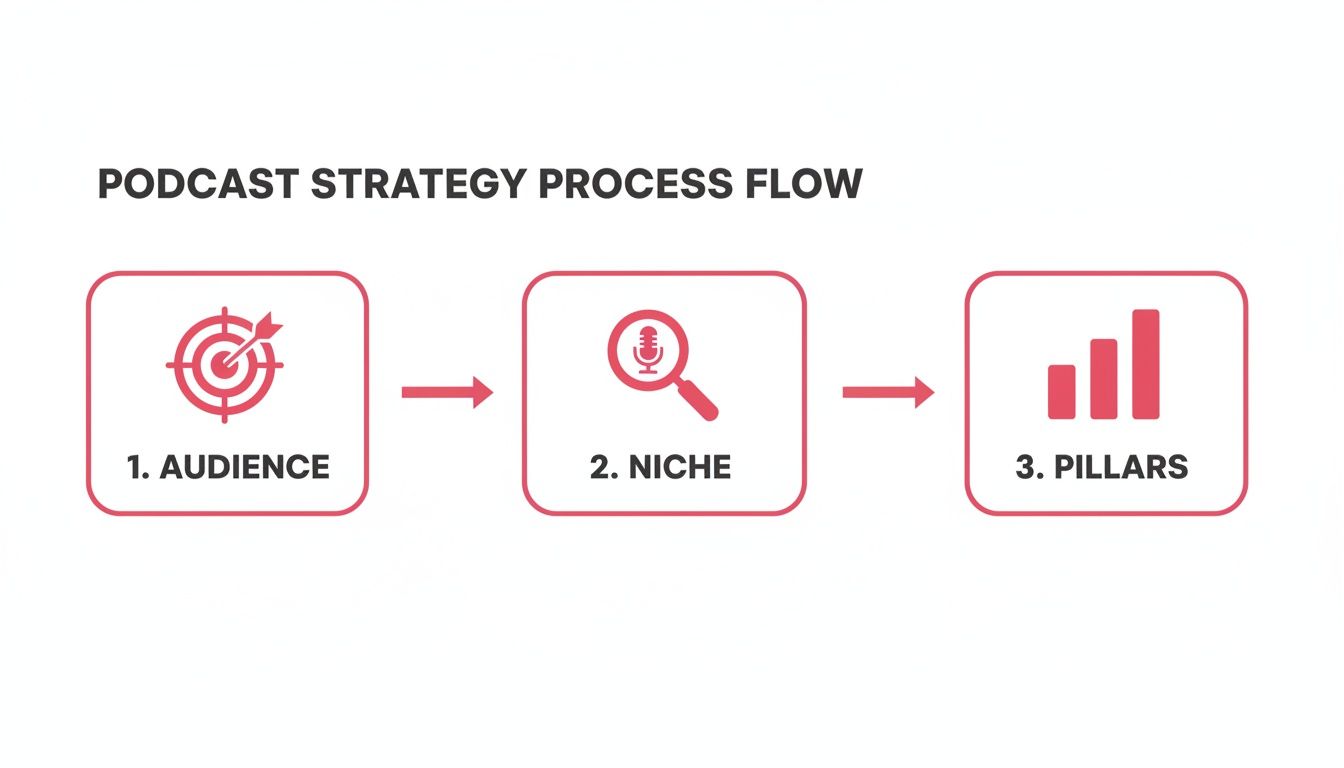
With that strategy locked in, the production process becomes much clearer.
The Pre-Production Blueprint
This is everything that happens before you hit the record button. Honestly, this is where the magic really happens. A little bit of planning here saves you a mountain of headaches down the road.
Your pre-production checklist should look something like this:
- Episode Planning: Get a rough outline of the key talking points for your next 3-5 episodes. This gives you a content buffer and builds momentum so you're never scrambling for ideas. Our guide to planning a podcast is a great resource.
- Guest Management: If you’re interviewing guests, this is your outreach, scheduling, and prep doc system. A solid prep doc should include the episode's main topic, a few potential questions, and some basic technical guidelines. This helps your guests feel comfortable and prepare for their guest appearance.
- Technical Setup: This is non-negotiable. Spend 5 minutes before every single session checking your gear. Test your mic, your headphones, and your recording software. You don't want a technical glitch to derail a fantastic conversation.
Recording with Confidence
The recording session is your time to shine. The goal here isn't to sound like a polished radio host - it's to create an environment where a natural, engaging conversation can happen. Authenticity is what builds a real connection with a B2B audience.
When it comes to gear, you don’t need a six-figure studio. A high-quality USB microphone like the Blue Yeti or Rode NT-USB+ and a decent pair of headphones are more than enough to get started. Just focus on a simple, effective setup you can master quickly by following a B2B podcast equipment guide.
The best B2B podcasts feel like you're eavesdropping on a conversation between two smart people. Your goal as a host is to be driven by curiosity, not a script.
Remote recording is now the standard for B2B podcasts, making it a breeze to record podcasts remotely with guests anywhere on the globe. Platforms like Riverside.fm or SquadCast are fantastic for this because they record separate audio and video tracks for each person locally. This means you get high-quality files even if someone’s internet connection decides to act up mid-sentence.
Streamlining Post-Production
Once you've wrapped up the recording, you're into post-production. This is where you take that raw audio and turn it into a professional episode that's ready for your listeners. It might sound technical, but it’s just a series of repeatable steps.
A standard post-production workflow generally involves:
- Editing: This is where you clean things up. You'll cut out any big mistakes, long, awkward pauses, and the filler words we all use (the "ums" and "ahs"). The aim is to make the conversation flow smoothly without sounding robotic or over-edited.
- Mixing and Mastering: This is the audio engineering side. An engineer will balance sound levels, get rid of background noise, and apply some polish to make the audio sound rich and professional. It’s a crucial step for listenability.
- Creating Show Assets: This isn't just about the audio. You need to write a compelling title and show notes, design episode-specific artwork, and get a full transcript created.
For a busy executive, this can all feel like a bit much. It's why many choose to partner with a specialized agency like Fame. A dedicated team can take over the entire podcast production workflow, from booking guests to distributing the final episode. This frees you up to do the one thing you can't outsource: having brilliant conversations. It makes thought leadership a high-leverage, sustainable part of your strategy.
Scaling Your Influence Beyond the Mic
Hitting "publish" on your podcast isn't the finish line. It’s the starting gun. So many people make the mistake of treating their podcast like just another audio file, but that’s a massive missed opportunity.
In reality, that single hour-long conversation is a content goldmine. It’s packed with insights that can power your entire marketing machine for weeks. This is how you turn one high-effort activity into dozens of brand-building assets.
The real power of a strategic thought leader isn't just about creating a great show. It’s about making sure your message reaches your ideal audience on every channel they live on. Your podcast is the source, but your influence scales through smart repurposing and distribution. It’s the system that turns listeners into followers, and followers into inbound leads who already trust you.
Your Podcast as a Content Creation Engine
Think of each episode as the raw material for a content factory. Your job is to slice, dice, and repackage the best moments to meet your audience wherever they are. This strategy maximizes the return on your time and makes sure your core message blankets the market.
For example, our founder, Tom Hunt, uses his podcast, Cash Machines, as the wellspring for his entire content strategy. It's the engine behind his LinkedIn presence, which has exploded to over 200,000 followers. Insights from his podcast conversations are systematically turned into short video clips, text posts, and quote graphics that his B2B audience loves.
This isn’t about creating more stuff from scratch. It’s about getting maximum mileage out of the valuable conversations you’re already having.
A single podcast episode is not one piece of content. It's the blueprint for at least a dozen pieces of micro-content that can be deployed across social media, email, and your blog.
This system is your playbook for turning a single recording into a full-blown content campaign. It's how you build and sustain momentum, cementing your authority in your niche.
A Practical Playbook for Repurposing Content
Alright, let's get tactical. Here’s exactly how you can break down a 45-minute podcast episode into a suite of assets that build your brand and drive real business results.
- Create Short-Form Video Clips: Find the 3-5 most impactful moments in the episode. These are the sharp insights, surprising stats, or powerful stories. Edit them into 30-90 second vertical videos with captions. They're perfect for LinkedIn, YouTube Shorts, and Instagram Reels.
- Generate Compelling Quote Graphics: Pull out the most memorable one-liners and punchy takeaways. Turn them into simple, visually clean quote cards to share across your social channels. They’re highly shareable and hammer home your key messages.
- Write an Insightful Blog Post: Your episode is a ready-made outline for a detailed article. Use the transcript as your starting point, then flesh out the key topics, add more context, and embed the full episode player. This is a powerful thought leadership content strategy for grabbing search traffic.
- Develop Engaging Newsletter Content: Don’t just email out a link to the new episode. In your newsletter, give some exclusive commentary. Share your personal reflections on the chat, highlight one key takeaway, and maybe ask a question to get a conversation started with your subscribers. Our B2B email newsletter agency has found this adds a ton of value.
- Craft Social Media Posts: Beyond video, use the transcript to create a series of text-based posts for platforms like LinkedIn. You can do a "key takeaways" list, share a surprising statistic from the episode, or tell the story of why you invited that specific guest on. Our B2B social media agency builds entire content calendars from single podcast episodes.
This methodical approach ensures the authority you build on your podcast is seen everywhere. You're creating a consistent, omnichannel presence that makes your expertise impossible to ignore.
Alright, let's talk about the big question: How do you actually prove all this thought leadership effort is paying off?
When you're pouring time, energy, and resources into building a show, you need to connect that work to real business results. Vanity metrics just won't cut it with the finance team.
Downloads are a nice ego boost, but they don't tell you the whole story. You could have a million downloads and zero qualified leads. Instead, we need to track the things that actually demonstrate influence and, more importantly, generate pipeline.
Moving Beyond Vanity Metrics
The only metrics that truly matter are the ones that draw a straight line from your thought leadership to business growth. It's all about tracking the journey from a casual listener to a happy customer.
Forget obsessing over download counts. It's time to start monitoring these far more powerful indicators:
- Attribution in Sales Calls: This is your ground zero for revenue attribution. Train your sales team to ask, "So, how did you first hear about us?" and make sure they log every single time a prospect mentions the podcast.
- Inbound Demo Requests: Add a simple field to your demo request form asking how people found you. When "Podcast" starts showing up consistently, you've got a clear signal that your content is hitting the mark.
- Branded Search Traffic: Keep an eye on Google Search Console. Are more people searching for your personal name, your company name, or your podcast's name? This shows you're not just a search result anymore; you're becoming a destination.
Honestly, this kind of qualitative data is often worth more than any raw number. One high-value lead who tells your sales rep, "I've been listening to your show for six months and feel like I already know you," is worth a thousand anonymous downloads.
The ultimate sign of effective thought leadership isn't just that people are listening - it's that the right people are listening, and they're arriving pre-sold, trusting you before the first sales call ever happens.
Quantifying Influence and Authority
Beyond direct leads, you can measure your growing authority by the opportunities that start coming to you. These are undeniable signs that your status as a strategic thought leader is on the rise.
Start tracking these metrics to see your influence expand in real-time:
- High-Value Speaking Invitations: Are you getting invited to speak at the industry conferences you used to pay to attend? That's a huge win.
- Guest Appearance Requests: Are other respected podcasts in your space reaching out to have you on as a guest?
- Media Mentions & Backlinks: Are industry blogs and publications starting to cite your podcast or quote you as an expert?
Understanding the different strategies for how to monetize a podcast can also be a game-changer for proving ROI. When you can show direct returns from sponsorships or product sales, your podcast shifts from a marketing cost to a potential revenue center.
The goal here is to build a body of evidence that proves your podcast is building a pipeline of best-fit customers. When you can show a clear correlation between your show's growth and a spike in qualified, high-intent leads, you’ve cracked the code. For a much deeper dive on this, check out our ultimate guide to measuring B2B podcast ROI for more tactical advice.
Your Biggest Questions, Answered
Let's tackle the common questions and hesitations that stop smart B2B leaders from launching a podcast. These are the real-talk answers you need to move forward with confidence.
"How Much Time Does This Actually Take?"
With the right system in place, it’s far less than you think.
As the host and strategic thought leader, your job is the conversation. That's it. You show up and talk. For most execs, this means just 1-2 hours a week for recording sessions.
Everything else? A specialized partner like Fame handles it. We're talking guest booking, show prep, production, editing, and spinning off all the marketing assets. This frees you up to focus purely on sharing your expertise - the highest value activity you can do.
"What If I'm a Terrible Speaker or Just Nervous?"
This is probably the #1 fear we hear. And it's completely normal.
Here's the thing: a B2B podcast is a conversation, not a keynote speech. The best hosts aren't radio announcers; they're genuinely curious people.
A great way to build your confidence is to start by interviewing guests. This takes all the pressure off you to "perform." Your only job is to listen and ask smart follow-up questions.
Your confidence will build with every episode. Plus, professional production is a huge safety net. We edit out the "ums," awkward pauses, and any mistakes, ensuring you sound smooth and authoritative right from your very first recording.
"How Long Until I See Real Business Results?"
Strategic thought leadership is a marathon, not a sprint. Anyone who tells you otherwise is selling you something.
You'll start building an audience and a library of valuable content from month one. But the real, tangible business impact - the kind you can point to on a spreadsheet - usually becomes clear around the 6-12 month mark.
This is when you start hearing things like, "I've been listening to your podcast for months," on sales calls with inbound leads. Consistency is everything. Your early episodes don't just disappear; they become a content library that works for you 24/7, compounding returns as your authority in the market grows.
"Can't I Just Write Articles Instead?"
Of course. But a podcast is a massive accelerator.
Think about it. Articles, white papers, and social posts are great, but they often lack the human connection and depth that audio provides. A podcast lets your audience hear the passion and expertise in your voice, building a level of trust that’s nearly impossible to achieve with text alone.
It also becomes the ultimate content engine. One great podcast episode can be repurposed into a dozen other assets - blog posts, LinkedIn carousels, video clips, and quote graphics. It makes all your other marketing efforts more potent and efficient.
Ready to build your authority and drive real business growth with a B2B podcast? Fame can help. We start and grow podcasts for B2B businesses, turning your expertise into a powerful content engine. Learn more about our B2B podcast production services.
Want us to run this for you?
Fame starts and grows B2B podcasts that generate pipeline. Tell us who you are trying to reach and we will send a costed proposal within 48 hours.
Related content
- Read moreFame Team · July 16, 2026
10 Account Based Marketing Tactics For B2B Growth In 2026
Discover 10 actionable account based marketing tactics for B2B tech. Learn to use podcasts, data, and targeted content to close high-value accounts. - Read moreFame Team · July 16, 2026
The 8 Best Brighton Podcast Agency Picks For 2026
Find the best Brighton podcast agency for your B2B brand. Our 2026 guide reviews top 8 agencies for production, growth & ROI. Expert analysis here - Read moreJune 10, 2026
20 Best Podcast Production Agencies For 2026 (And Why Should You Hire One)
Global podcast and vodcast ad revenues are on track to hit $5 billion in 2026 , up 20% year-on-year. - Read moreApril 13, 2026
Leadership In Marketing: The B2B Podcast Playbook
Most companies still confuse leadership in marketing with job titles, org charts, and budget control. That's outdated.