March 23, 202624 min read12 sections
10 Actionable Strategies for the Best Podcast Marketing in 2026
By Fame Team
Key Takeaways
- A clear marketing plan is essential to connect with the target audience and demonstrate ROI.
- Strategic guest placement can elevate a brand's authority and extend its reach by inviting influential industry experts.
- Implementing performance analytics can help justify investment and transform a podcast into a core component of the marketing engine.
Launching a B2B podcast is just the starting line. The real challenge, and opportunity, lies in turning those audio files into a powerful engine for brand authority, lead generation, and measurable growth. When aiming to dominate your niche, understanding how podcasters are redefining global influence provides a powerful framework for what's possible.
Many podcasts fizzle out due to a lack of a clear marketing plan, failing to connect with their target audience or demonstrate ROI. This guide cuts through the noise. It's a direct look into the best podcast marketing strategies we use at Fame to drive consistent growth for over 100 B2B shows. In fact, 98% of our clients see over 10% download growth every month in their first six months with us.
These aren't just theories; they're actionable, data-backed tactics designed to build a listenership that converts. We'll show you exactly how to move beyond simple download numbers and create a strategic business asset. This article provides a blueprint covering everything from strategic guest placements and multi-channel content distribution to implementing performance analytics that justify your investment. Prepare to learn the specific frameworks that will transform your podcast from a content piece into a core component of your marketing engine.
1. Strategic Guest Placement & Thought Leadership Positioning
Instead of booking guests based solely on availability, a strategic guest placement approach focuses on inviting individuals who can directly elevate your brand's authority and extend its reach. This B2B podcast marketing technique involves carefully selecting influential industry experts, high-profile customers, or even leaders from complementary (non-competitor) companies. The core idea is to borrow credibility and tap into an established audience, creating a halo effect for your own brand.
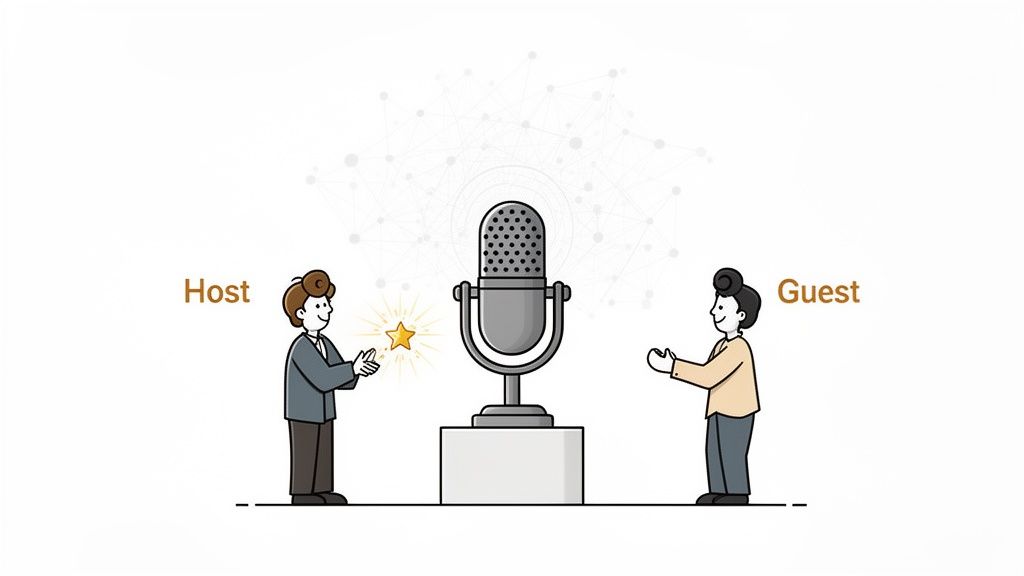
This method positions your company's leaders as peers to recognized thought leaders. When your host interviews a well-respected industry analyst or a successful founder, the audience associates your brand with that same level of expertise. For instance, Gong's "Reveal" podcast frequently features top-tier sales leaders, which reinforces Gong's position as an authority in the revenue intelligence space. Similarly, a B2B SaaS company might feature venture capitalists or prominent integration partners, attracting an audience of decision-makers and investors.
How to Implement This Strategy
- Develop a Tiered Guest List: Create an outreach list segmented into "aspirational," "strategic," and "accessible" tiers. This helps prioritize outreach efforts and ensures a consistent pipeline of quality guests.
- Create Guest Prep Packages: Provide guests with a detailed prep document. Include key talking points, audience demographics, sample questions, and technical guidelines. This ensures a smooth recording and a high-quality conversation.
- Establish Mutual Promotion Agreements: Before recording, agree on a cross-promotion plan. Specify that the guest will share the episode on their LinkedIn profile, in their newsletter, or on other channels.
- Provide Custom Social Assets: Make it easy for guests to share. Send them custom-designed graphics, audiograms, and video clips from the episode featuring their best insights. This simple step dramatically increases the likelihood of them promoting the content.
Key Insight: This strategy isn't just about the interview; it's about the partnership. The most successful shows treat guests as promotion partners, not just content sources. This is a fundamental part of the guest sharing pillar we use at Fame to drive audience growth.
This is a powerful approach for B2B brands aiming to build market authority quickly. It's especially effective for new podcasts that need to establish credibility or for established shows looking to break into a new audience segment. While booking guests is a common tactic, strategically pursuing this for thought leadership and audience acquisition is what makes it one of the best podcast marketing moves you can make. It's a foundational step before you even consider being a guest yourself, which involves a whole other set of skills to get booked on podcasts and represent your brand effectively.
2. Demand Generation Integration & Lead Magnet Sequencing
Beyond building brand awareness, a B2B podcast should be a direct pipeline for qualified leads. This strategy treats each episode as a top-of-funnel asset designed to guide listeners deeper into your marketing ecosystem. It involves embedding clear, valuable calls-to-action (CTAs) that offer episode-specific lead magnets, such as templates, checklists, or research reports, effectively converting passive listeners into active prospects.
This approach aligns your content directly with business objectives, making your podcast a measurable revenue-driving channel rooted in strong Marketing Fundamentals. For example, a podcast discussing sales efficiency could offer a downloadable "Sales Playbook Template" as a lead magnet. Similarly, Calendly’s podcast might offer a free scheduling template, directly connecting their episode's value to their product's core function. This turns your show from a simple content piece into an engine for your entire demand generation funnel.
How to Implement This Strategy
- Create Episode-Specific Landing Pages: Don't send listeners to your generic homepage. Build dedicated landing pages for each episode that summarize the content and feature a prominent sign-up form for the related lead magnet.
- Use Dynamic Ad Insertion for CTAs: For evergreen content, use dynamic ad insertion to update your calls-to-action over time. This allows you to promote current webinars, new reports, or timely offers without re-editing old audio files.
- Develop Automated Nurture Sequences: Once a listener downloads a resource, trigger an automated email sequence. You can manage this with your own tools or work with a B2B email newsletter agency to build sophisticated follow-up campaigns that provide more value and gradually introduce your company’s solutions.
- Measure Downstream Conversions: Look beyond download numbers. Track how many leads generated from your podcast convert into Marketing Qualified Leads (MQLs), Sales Qualified Leads (SQLs), and ultimately, customers. This provides a clear picture of your podcast's ROI.
Key Insight: The best podcast marketing moves are those that tie content directly to business outcomes. Listeners who engage with a 30-minute episode show high intent; failing to provide a clear next step is a massive missed opportunity to capture that interest.
This strategy is perfect for B2B companies focused on measurable ROI and lead generation. It transforms the podcast from a brand-building exercise into a core component of your marketing machine. By methodically sequencing content and offers, you create a self-sustaining system for attracting and qualifying potential customers, which is a fundamental part of building a complete demand gen strategy.
3. Data-Driven Iteration & Performance Analytics Dashboard
Effective podcast marketing moves beyond guesswork and into the realm of measurable results. This is where a data-driven approach, powered by a central performance analytics dashboard, becomes essential. Instead of relying solely on download numbers, this strategy involves implementing comprehensive tracking across all channels to measure episode performance, audience behavior, and conversion metrics. This allows you to continuously optimize your content and distribution, ensuring your podcast directly supports key business objectives.

This method transforms your podcast from a content-only initiative into a quantifiable marketing engine. For instance, a B2B company like Drift tracks its podcast's contribution to its sales pipeline, directly tying audio content to revenue generation. Similarly, HubSpot publishes detailed podcast analytics to inform its broader content strategy. The core idea is to establish a direct line of sight between your podcasting efforts and tangible business outcomes like lead generation, pipeline influence, or customer acquisition cost reduction.
How to Implement This Strategy
- Select Core KPIs: Focus on 5-7 key performance indicators instead of getting lost in vanity metrics. Include leading indicators like engagement rate and completion rate, alongside lagging indicators like lead conversion and pipeline contribution.
- Build a Central Dashboard: Aggregate data from your podcast host, website analytics, social media channels, and CRM into a single view. This provides a complete picture of performance without having to jump between platforms.
- Connect to Your CRM: Implement tracking to connect podcast listeners to your CRM. Use unique URLs, form fields ("How did you hear about us?"), or attribution software to monitor how many listeners convert into leads and customers.
- Establish a Review Cadence: Create a monthly or quarterly performance review process. Involve both the content and marketing teams to analyze trends, identify high-performing topics, and use the data to inform your content calendar 60-90 days in advance.
Key Insight: The goal isn't just to collect data; it's to create a feedback loop. At Fame, we set 10% month-on-month download goals for our clients and report on them monthly. If we miss, we analyze the data to understand why and adjust our strategy, ensuring continuous improvement.
This is a critical strategy for B2B brands that need to demonstrate clear ROI from their marketing investments. It's particularly useful for established podcasts looking to scale their impact or for any company that wants to make smarter, data-backed decisions about its content and promotion. To get started, it's important to understand how to measure podcast performance with the right metrics.
4. Niche Audience Targeting & Vertical-Specific Positioning
Instead of creating a broad-appeal show, this strategy involves focusing your podcast content on a specific B2B vertical, such as healthcare tech, fintech, or enterprise security. The goal is to become the definitive, authoritative audio resource for a clearly defined professional segment. By narrowing your focus, you attract a smaller but much higher-intent audience of ideal customers, making listener engagement and conversion far more effective.
This approach transforms your podcast from a general marketing channel into a specialized community hub. For example, a legal tech company could create a podcast exclusively for law firm partners, discussing topics like practice management and client acquisition. This immediately positions them as an insider resource, not just another vendor. Similarly, an enterprise security firm producing a show for CISOs builds direct trust and credibility with key decision-makers by speaking their language and addressing their unique challenges.
How to Implement This Strategy
- Research Vertical-Specific Channels: Identify and engage with the communities where your target audience already congregates. This includes industry associations (like CHIME for healthcare IT leaders), vertical-specific forums, and niche LinkedIn groups.
- Feature Vertical-Specific Guests & Case Studies: Invite successful customers and known experts from within the vertical to share their stories. Discuss ROI metrics and case studies that are directly relevant to the challenges and goals of that specific industry.
- Partner with Industry Associations: Collaborate with established industry bodies for cross-promotion. This lends your podcast instant credibility and provides direct access to a highly qualified audience.
- Use Vertical-Specific Language: Naturally incorporate the jargon, acronyms, and frameworks used by professionals in that field. This demonstrates authentic expertise and builds a stronger connection with listeners.
Key Insight: A vertical-specific podcast is a magnet for your ideal customer profile. It pre-qualifies your audience, ensuring that every download is from a listener who is highly relevant to your business, which is a core part of effective B2B podcast marketing.
This is a powerful strategy for B2B companies operating in well-defined markets. It’s especially effective for brands that want to dominate a niche rather than compete in a crowded, generalist space. A crucial first step is to accurately define who you're targeting, a process you can refine by learning how to identify a target audience for maximum impact.
5. Content Repurposing & Multi-Channel Distribution Strategy
Recording a podcast episode is only the first step; the real marketing power comes from atomizing that single asset into dozens of micro-content pieces. A content repurposing strategy involves transforming one long-form audio or video episode into a multitude of formats, such as blog posts, social media clips, quote graphics, and newsletter snippets. This multi-channel approach maximizes the return on your initial content investment by meeting your audience where they are, on the platforms they prefer.
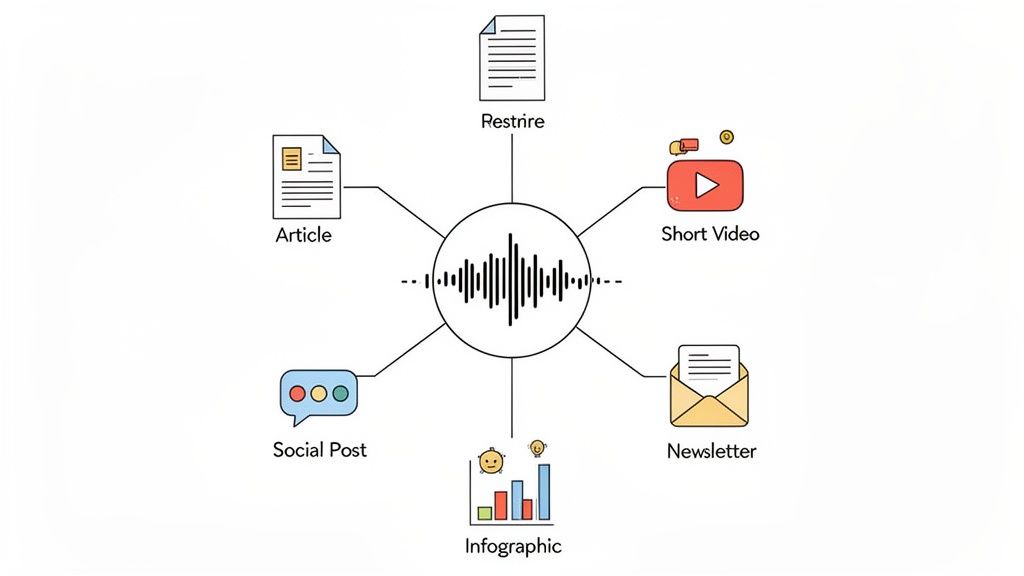
This method ensures you capture attention from prospects with varied content consumption habits. While one person might listen to the full 45-minute episode on Spotify, another might discover your brand through a 60-second video clip on YouTube Shorts, and a third might read a detailed LinkedIn article summarizing the key takeaways. For instance, HubSpot frequently turns its podcast episodes into multi-part LinkedIn article series, while Loom distributes key moments as short YouTube videos, effectively reaching different segments of their target audience with the same core message. This is a fundamental part of the best podcast marketing playbooks because it multiplies your reach without multiplying your production efforts.
How to Implement This Strategy
- Create a Distribution Matrix: Map each podcast episode to a checklist of repurposed assets and distribution channels. For example, one episode becomes one blog post, five video clips for LinkedIn/YouTube, three quote graphics, and a newsletter summary.
- Extract ‘Quotable Moments’: Identify 3-5 of the most impactful, concise, and shareable insights from each episode. These become the foundation for audiograms, video clips, and text-based social media posts.
- Batch Your Repurposing Work: Dedicate a specific block of time each week or month solely to content repurposing. This creates an efficient podcast production workflow rather than trying to create assets ad-hoc for every episode.
- Use AI for Efficiency: Employ tools like Fame AI to auto-generate accurate transcripts, show notes, and key takeaways. This drastically cuts down the manual effort required to identify and extract valuable content snippets.
Key Insight: The goal is to create a content ecosystem, not just a podcast. Every repurposed asset should act as an on-ramp, guiding audiences back to the full-length episode and your brand's website.
This strategy is perfect for B2B brands that need to maintain a consistent presence across multiple channels without a massive content creation budget. By mastering various content repurposing strategies, you can ensure every episode works harder for you, driving brand awareness, engagement, and listener growth long after its initial publication date. It's a cornerstone of sustainable audience building.
6. LinkedIn Native Audio & LinkedIn Events Integration
More than just a professional networking site, LinkedIn has become a primary content consumption platform for B2B decision-makers. Integrating your podcast directly into this ecosystem using its native audio and event features places your content exactly where your target audience is already engaged. This approach goes beyond simply sharing a link; it involves creating an immersive, platform-specific experience that captures attention within the LinkedIn feed.
This method transforms your podcast from an external asset into a central piece of your LinkedIn content strategy. When executives from companies like Salesforce or Microsoft host LinkedIn Audio events, they aren't just repurposing content; they are creating a live, interactive forum that reinforces their thought leadership. For B2B brands, this means you can reach executive buyers and key stakeholders in a professional context where they are actively looking for industry insights, making it a highly effective form of podcast marketing.
How to Implement This Strategy
- Publish Native Audio Clips: Post 30-60 second high-impact audio clips directly to your LinkedIn feed. These native snippets auto-play and are more likely to be favored by the algorithm than external links.
- Create LinkedIn Audio Events: Schedule live, audio-only Q&A sessions or episode discussions using LinkedIn Events. This creates a sense of community and allows for direct interaction with your audience.
- Develop Quote Carousels: Design carousel posts featuring 3-5 of the most insightful quotes from an episode. Each slide should be visually engaging and encourage users to swipe through, increasing dwell time.
- Drive Employee Advocacy: Encourage your team, especially the host and guests, to share episode content on their personal LinkedIn profiles. Provide them with pre-written copy and assets to make sharing simple. As our founder, Tom Hunt, has shown, a leader's active presence on LinkedIn can be a significant amplifier for a company's content.
Key Insight: The goal is to make your podcast a native LinkedIn experience. When users can consume valuable audio insights without leaving the platform, you reduce friction and significantly increase engagement and brand recall.
This is a powerful tactic for B2B podcasts aiming to build a concentrated audience of industry professionals. It's particularly effective for establishing the host's personal brand and positioning your company as an accessible, authoritative voice within your niche. By meeting your audience where they work and learn, you integrate your show into their daily professional routine.
7. Performance-Based Sponsorship Model & Revenue Diversification
Moving beyond traditional flat-rate sponsorships, a performance-based model ties revenue directly to measurable outcomes like cost-per-lead (CPL) or cost-per-acquisition (CPA). This B2B podcast marketing approach aligns your financial success with your sponsors' goals, turning advertisements into true performance partnerships. Instead of just selling airtime, you're selling results, which is a far more compelling proposition for data-driven B2B brands.
This method transforms your podcast from a brand awareness channel into a direct revenue driver for your partners. The focus shifts from estimated impressions (CPM) to tangible actions like demo requests, trial sign-ups, or direct sales attributed to your show. For instance, a sales enablement podcast could partner with a training vendor on a commission-based model for every course sold, or a marketing podcast could work with an agency on a CPL basis for every qualified lead generated through a special offer. This is a core part of a paid podcast promotion strategy that delivers tangible results.
How to Implement This Strategy
- Establish Robust Tracking: Use unique promo codes, dedicated landing pages, and specific UTM parameters for each sponsor. This is critical for accurately attributing conversions and demonstrating ROI.
- Start Small and Build Trust: Begin with one or two trusted sponsors to pilot the model. Provide them with detailed monthly performance reports, including suggestions for improving conversion rates.
- Negotiate a Hybrid Model: To ensure predictable cash flow, negotiate a small flat fee combined with performance commissions. This provides a baseline income while still incentivizing performance.
- Position Host-Reads as Premium: Host-read ads feel authentic and often convert at a higher rate. Position these as premium placements within your performance packages to command better commission rates.
Key Insight: This model makes your podcast an indispensable part of your sponsor's marketing engine. When you can directly prove your show generates qualified leads or sales, you create long-term, high-value partnerships that are far more stable than traditional ad buys.
This strategy is perfect for established B2B podcasts with a loyal, niche audience that trusts the host's recommendations. It requires more setup and tracking than CPM deals, but it creates a powerful, defensible revenue stream that scales with your show's influence. By proving tangible value, you shift the conversation from cost to investment, which is a fundamental principle of the best podcast marketing available today.
8. Buyer Persona Research & Audience Intelligence Integration
The best podcast marketing isn't just about reaching a large audience; it's about reaching the right audience. This strategy moves beyond generic content by merging listener analytics with first-party data to build hyper-detailed buyer personas. By understanding who your listeners are, their roles, their challenges, and where they are in the buying journey, you can create episodes that speak directly to their needs, effectively turning your podcast into a qualified pipeline generation engine.
This method involves actively collecting data and using it to inform your content strategy. For example, Drift's podcast is finely tuned to attract its Ideal Customer Profile (ICP) of mid-market B2B SaaS leaders by focusing on topics relevant to that specific segment. Similarly, Salesforce's marketing podcast creates distinct episodes for different buyer roles like CMOs or Demand Gen Managers, ensuring maximum relevance for each listener profile. The goal is to make every episode feel like it was created specifically for a high-value listener. A fundamental step in this process is to first understand how to create buyer personas that accurately reflect your target market.
How to Implement This Strategy
- Run Listener Surveys: Create short, 5-10 question surveys and promote them at the end of episodes. Ask about job titles, industry, primary challenges, and buying stage. Offer a small incentive, like bonus content, for completion.
- Map Personas to the Sales Funnel: Segment your listeners into awareness, consideration, and decision stages. Create content tailored for each stage, such as high-level trend discussions for awareness or deep-dive case studies for decision-makers.
- Track High-Value Engagement: Monitor which episode topics or downloadable assets generate the most engagement from your target personas. Use this data to double down on content that attracts qualified leads.
- Share Insights with Sales: The intelligence you gather is gold for your sales team. Share persona data with them to validate and refine your company's overall ICP assumptions and improve sales messaging.
Key Insight: A podcast isn't just a top-of-funnel brand play; it's a powerful audience intelligence tool. The data you collect from your most engaged listeners can inform your entire go-to-market strategy, from product marketing to sales enablement.
This approach is perfect for B2B brands focused on generating measurable ROI from their content marketing. By aligning your podcast directly with your ideal buyer, you stop broadcasting to a generic audience and start building relationships with future customers. It’s a sophisticated tactic that ensures your podcast marketing efforts contribute directly to the bottom line.
9. Strategic Partnerships & Co-Marketing Alliances
Beyond individual guest features, forming strategic co-marketing alliances creates a powerful and sustained engine for audience growth. This approach involves building mutually beneficial relationships with complementary B2B companies, industry associations, or media partners to share audiences and amplify credibility. Instead of one-off promotions, these partnerships create an ongoing promotional flywheel where both parties consistently drive qualified listeners to each other's platforms.
This method is about finding non-competing businesses that serve the same ideal customer profile. For example, a B2B SaaS company focused on project management could partner with a firm specializing in productivity software. ServiceTitan effectively does this by collaborating with contractor associations, gaining direct access to their target audience. This is a core component of the "Partnerships/Communities" pillar we use at Fame, connecting shows with established audiences for mutual promotion and explosive growth.
How to Implement This Strategy
- Identify 2-3 Core Partners: Start small. Focus on building deep relationships with a few key partners rather than many shallow ones. Look for companies with a similar audience size and engagement level.
- Establish Clear Promotion Agreements: Formalize the partnership. Define specific commitments, such as the number of newsletter swaps per quarter, social media mentions, and expectations for co-hosted events.
- Create Joint Content: Co-create an episode featuring leaders from both companies to introduce your respective audiences to each other. This provides immediate, high-value content for both sides.
- Co-Host Webinars: Use a webinar or virtual event to cross-promote the podcasts. This captures leads and provides another channel to direct attendees toward subscribing to both shows.
- Track Partner-Sourced Growth: Set up unique links or survey questions to attribute downloads and leads from each partner. This helps you measure the ROI and double down on the most effective alliances.
Key Insight: The most successful partnerships are built on a foundation of clear expectations and mutual value. It's not just about asking for a promotion; it's about creating a plan where both brands win by systematically sharing access to their hard-won audiences.
This is an exceptional strategy for B2B brands looking for efficient and scalable audience acquisition. It taps into the trust and credibility that your partners have already built, offering a warm introduction to a highly relevant listener base. This makes it one of the best podcast marketing tactics for achieving consistent, long-term growth.
10. Exclusive Community & VIP Listener Program Development
Beyond simple listenership, building an exclusive community or VIP program transforms passive listeners into active, invested brand advocates. This strategy involves creating a premium tier for your most dedicated audience, offering exclusive content, early access, and direct interaction with hosts and guests. The goal is to cultivate a loyal core following that not only provides a potential revenue stream but also acts as a powerful feedback loop for your content strategy.
This approach creates a powerful sense of belonging and exclusivity, deepening the relationship between your brand and its audience. For a B2B audience, this isn't just about bonus content; it's about providing premium networking opportunities and access to high-level insights not available to the general public. For instance, a research firm like Gartner could offer its podcast community early access to industry reports, while a SaaS company might provide member-only Q&A sessions with its product leaders and top-tier guests.
How to Implement This Strategy
- Define Your Value Proposition: Start by offering a few high-value exclusives, like one or two bonus episodes per month or early access to regular episodes. This keeps the offering manageable while testing audience interest.
- Choose the Right Platform: Use tools like Patreon, Circle, or Substack to manage memberships, process payments, and host your private community. This removes the technical burden of building a system from scratch.
- Create a Member-Only Space: Establish a private Slack or Discord channel for direct communication, networking, and real-time discussions. This is where the community truly comes to life.
- Offer Tangible Perks: Beyond content, provide member-only discounts on products, services, or even exclusive deals from partners and sponsors. Featuring member companies in public episodes is another powerful incentive.
Key Insight: The primary goal of a VIP program isn't immediate revenue; it's about identifying and nurturing your super-fans. This core group will become your most reliable source for promotion, feedback, and future customer relationships.
This is an advanced but highly effective form of podcast marketing for shows with an established and engaged audience. It’s ideal for brands looking to create deeper connections, generate qualitative feedback, and build a defensible moat around their content. While the majority of your content should remain free to maintain broad reach, a well-executed VIP program can create unparalleled loyalty and long-term value.
Top 10 Podcast Marketing Strategies Comparison
Strategy🔄 Implementation Complexity⚡ Resource Requirements📊 Expected Outcomes⭐ Ideal Use Cases💡 Key AdvantagesStrategic Guest Placement & Thought Leadership PositioningHigh - requires sustained outreach, relationship management and scheduling lead timesModerate–High - outreach team, guest prep packages, PR/cross-promo assetsHigher credibility and reach; guest-driven episodes typically 30–50% higher engagementBrand authority building, IPO/exit narratives, B2B leadership positioningInstant credibility transfer, audience amplification via guest networks, natural link-buildingDemand Generation Integration & Lead Magnet SequencingHigh - needs CTA strategy, attribution design and continuous testingHigh - landing pages, CRM/marketing automation, tracking (UTMs)Directly attributable leads; 2–3x higher conversion vs. no CTAs; higher intent leadsLead-gen focused podcasts, SaaS trial signups, gated content funnelsMeasurable conversions, reduced CAC vs. paid ads, aligns marketing and salesData-Driven Iteration & Performance Analytics DashboardHigh - multi-platform integration, attribution modeling, KPI governanceHigh - analytics tools, dashboarding, dedicated analyst/timeImproves podcast ROI by ~40–60% within 6–12 months through optimizationScale and sponsorship-driven shows, teams needing ROI proofActionable KPIs, identifies winning formats, justifies investmentNiche Audience Targeting & Vertical-Specific PositioningModerate - requires vertical expertise and targeted researchModerate - subject-matter guests, vertical partnerships, tailored contentHigher retention (25–40%) and ~3x sponsorship rates; more qualified leadsVertical-focused products (healthcare, fintech, enterprise SaaS)Higher listener intent, premium sponsorship, faster authority in nicheContent Repurposing & Multi-Channel Distribution StrategyModerate - set up workflows, quality controls and editorial calendarModerate - transcription, design, video editing, scheduling tools400–600% uplift in total reach vs. podcast-only; improved SEO and impressionsTeams maximizing limited episodic content for broad reachMultiplies impressions per episode, efficient ROI, cross-channel discoveryLinkedIn Native Audio & LinkedIn Events IntegrationLow–Moderate - parallel distribution strategy and event cadenceLow–Moderate - clip editing, community moderation, employee advocacyDrives ~25–40% of podcast-sourced site traffic and qualified leadsB2B targeting professionals and executive personal brandingReaches buyers where they research, enables real-time engagement and networkingPerformance-Based Sponsorship Model & Revenue DiversificationHigh - requires tight tracking, contracts and performance reportingModerate - tracking/landing pages, sales effort, billing systemsHigher sponsor retention (2–4x) and predictable, scalable revenue when workingMonetization-focused podcasts with measurable sponsor offersAligns sponsor ROI with podcast success, incentivizes sponsor promotionBuyer Persona Research & Audience Intelligence IntegrationHigh - data capture, privacy compliance, CRM mapping and analysisHigh - surveys, integrations, analytics resources and ongoing refinementPersona-focused shows see 35–50% higher conversion and +45% LTVTeams aiming for targeted pipeline and sales enablement alignmentDeeply relevant content, improved lead quality, targeted sponsorshipsStrategic Partnerships & Co-Marketing AlliancesModerate - partner selection, agreements and coordination requiredLow–Moderate - shared production/promotional effort, partner managementIncreases audience reach 50–150% with minimal increment in acquisition spendExpanding into adjacent markets or leveraging complementary audiencesAccess partner audiences, shared costs, credibility boost via associationExclusive Community & VIP Listener Program DevelopmentModerate–High - membership infrastructure, content gating and moderationModerate - member content production, community platform, support/moderationGenerates 15–25% additional revenue and 3–5x higher member engagementShows with loyal audiences seeking recurring revenue and deeper engagementRecurring revenue, stronger audience loyalty, direct access to top leads
From Downloads to Dollars: Partnering for Predictable Podcast Growth
The journey from launching a B2B podcast to building a reliable demand generation engine can feel disjointed. Many marketers start strong, only to see their efforts stall as they struggle to connect download numbers to actual business outcomes. The strategies we've explored in this guide are designed to bridge that gap, transforming your podcast from a simple content asset into a strategic growth driver. Mastering the best podcast marketing isn't about applying a single tactic; it's about building a connected, repeatable system.
This system starts by rejecting the "if we build it, they will come" mentality. True podcast marketing is an active, ongoing process. It involves everything from strategically placing your host on other shows to establish authority, to meticulously repurposing every episode into a web of distributable content. It’s about integrating your show directly into your demand generation funnel with targeted lead magnets and understanding your audience on a deep, data-informed level through buyer persona research. The most successful shows don't just produce great content; they engineer its discovery and impact across multiple channels.
The Power of an Integrated System
Individually, each tactic, from LinkedIn Events integration to developing a VIP listener community, adds value. But their real power is unlocked when they operate in concert. Your guest placement strategy should inform your co-marketing alliances. Your content repurposing plan must feed your organic social media and paid promotion efforts. Your performance analytics dashboard is the central nervous system, providing the feedback needed to iterate and refine every other component.
This is the exact operational framework we've refined at Fame, and it's how we've become the largest producer of B2B podcasts in the world. Our approach is built on eight core promotion pillars:
- Pillar 1: SEO: We ground our strategy in SEO for podcasts to build a long-term organic discovery engine for audio, video, and written content.
- Pillar 2: Organic Social: We amplify reach by turning key episode moments into native content for LinkedIn, YouTube, and other relevant platforms.
- Pillar 3: Guest Sharing: We equip guests with ready-to-share assets, turning their networks into an extension of our own.
- Pillar 4: Partnerships: We actively seek collaborations with other shows, influencers, and communities to tap into new, relevant audiences.
- Pillar 5 & 6: Paid Platforms & Podcasts: We use targeted paid ads on social platforms and other podcasts to accelerate audience growth with precision.
- Pillar 7: Cold Email: We build and nurture an email list, driving direct engagement and downloads with compelling outreach.
- Pillar 8: Existing Client Assets: We ensure the podcast is woven into all existing marketing assets, from blog posts to website content, for maximum visibility.
This integrated system is what creates predictable growth. We've seen it work for over 100 clients, with 98% achieving over 10% month-on-month download growth in their first six months. The average Fame client reaches 18,957 downloads within six months and 68,524 in the first year. This isn't accidental; it's the result of a disciplined, multi-pillar marketing approach.
Your Next Step: From Strategy to Execution
The difference between a podcast that generates brand awareness and one that generates revenue lies in execution. The best podcast marketing is not a theoretical exercise; it’s a commitment to a process of continuous promotion, measurement, and optimization. We're so confident in our system that if we don’t hit an average of 10% monthly download growth over your first six months, you get the seventh month of services for free. By implementing these strategies, you can move beyond chasing vanity metrics and start building a podcast that reliably contributes to your pipeline and positions your brand as a definitive thought leader. Your show has the potential to become a cornerstone of your marketing, but only if you give its promotion the same level of strategic focus you give its creation.
Ready to stop guessing and start building a B2B podcast that delivers predictable ROI? At Fame, we implement this exact multi-pillar growth framework, guaranteeing 10% month-on-month download growth for the first six months. Learn how our team can turn your podcast into a powerful demand generation engine by visiting Fame today.
Want us to run this for you?
Fame starts and grows B2B podcasts that generate pipeline. Tell us who you are trying to reach and we will send a costed proposal within 48 hours.
Related content
- Read moreFame Team · July 16, 2026
10 Account Based Marketing Tactics For B2B Growth In 2026
Discover 10 actionable account based marketing tactics for B2B tech. Learn to use podcasts, data, and targeted content to close high-value accounts. - Read moreFame Team · July 16, 2026
The 8 Best Brighton Podcast Agency Picks For 2026
Find the best Brighton podcast agency for your B2B brand. Our 2026 guide reviews top 8 agencies for production, growth & ROI. Expert analysis here - Read moreJune 10, 2026
20 Best Podcast Production Agencies For 2026 (And Why Should You Hire One)
Global podcast and vodcast ad revenues are on track to hit $5 billion in 2026 , up 20% year-on-year. - Read moreApril 13, 2026
Leadership In Marketing: The B2B Podcast Playbook
Most companies still confuse leadership in marketing with job titles, org charts, and budget control. That's outdated.