January 30, 202621 min read7 sections
Podcasting For Small Businesses: A Guide To Grow Leads
By Fame Team
Key Takeaways
- A well-produced B2B podcast can elevate a small business's position in the market and create a marketing engine that generates leads 24/7.
- A podcast can help establish a business as the leading voice in its industry by educating the audience, building trust, and showcasing expertise.
- Podcasting can also act as a sales and networking tool, allowing businesses to build genuine rapport with clients and turn satisfied customers into brand advocates.
Imagine having a direct line to the ears of your ideal customers. A way to build your brand into the go-to expert in your field and create a marketing engine that pulls in leads for you 24/7. This isn't some far-off dream; it's the reality for small businesses that get strategic with podcasting.
A well-produced B2B podcast is the best way to elevate your position in the market. It’s no longer just a 'nice-to-have', it's a seriously powerful tool for growth.
Why Your Small Business Needs A Podcast
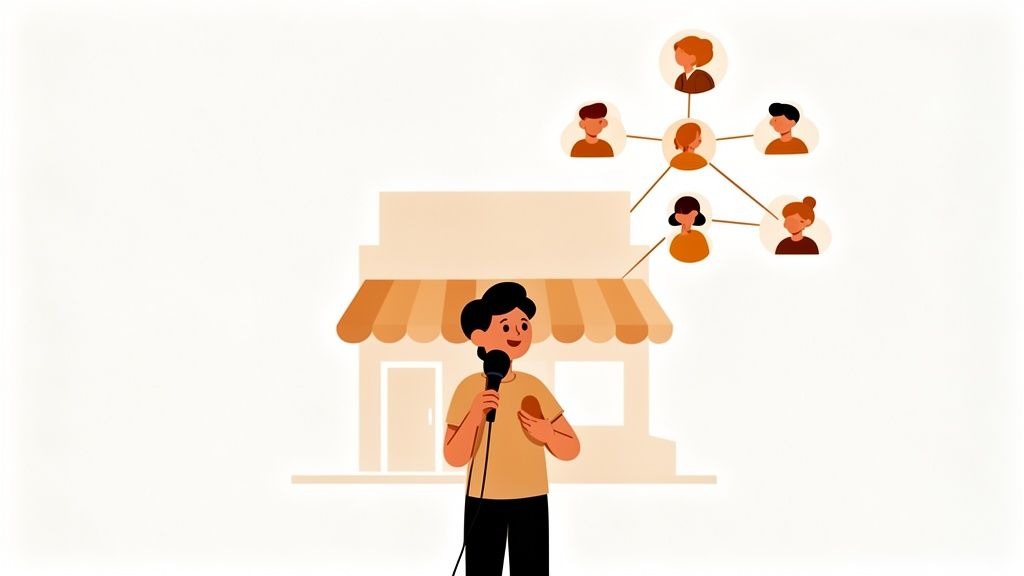
For a small business, a podcast lets you punch way above your weight class. It’s your platform to consistently educate your audience and peers, build unshakable trust, and stake your claim as the leading voice in your industry.
When a potential customer is finally ready to buy, you’ll be the first name they think of. It's as simple as that.
But this direct line to your audience isn't just about brand building. It’s also a surprisingly effective sales and networking tool. By inviting your ideal clients to be guests on your show, you create a natural, low-pressure space to build genuine rapport. It's the perfect Trojan horse for offering preferential deals and, ultimately, signing them as clients.
Your content creation suddenly becomes a direct pipeline for highly qualified leads.
Deepen Relationships And Drive Growth
Podcasting is also brilliant for strengthening ties with the customers you already have. Inviting current clients onto your show not only deepens the relationship but also showcases their success, which often leads to more business together through referrals and upsells.
It’s how you turn satisfied customers into your most vocal brand advocates.
A well-respected podcast helps you fight above your weight class. Even smaller businesses can get guests from massive players in their industry if they are talking about the most relevant issues.
The growth potential here is huge. With global podcast listenership projected to hit 584.1 million by 2025, you can tap into a massive, engaged audience without needing a massive marketing budget to match.
This is exactly why 36% of B2B marketers are now bringing podcasts into their strategy. They see audio's unique ability to connect and generate real demand.
We've put together this quick summary table to show you the tangible outcomes a small business can expect from launching a strategic podcast.
Key Benefits of Podcasting For Your Small Business
| Benefit | Actionable Outcome |
|---|---|
| Authority Building | Become the recognized expert your audience trusts. |
| Lead Generation | Turn guest interviews into a direct sales pipeline. |
| Relationship Deepening | Convert existing customers into vocal brand advocates. |
| Content Repurposing | Create dozens of marketing assets from a single episode. |
| Networking Power | Gain access to industry leaders and ideal clients. |
| Revenue Diversification | Open up new income streams through sponsorships and direct sales. |
As you can see, the benefits go far beyond just "getting your name out there." A podcast becomes a central pillar of your entire marketing and sales operation.
Become A Content Engine
One of the most valuable aspects of podcasting for small businesses is its power as a content engine. A single one-hour conversation can be sliced, diced, and repurposed into dozens of other marketing assets.
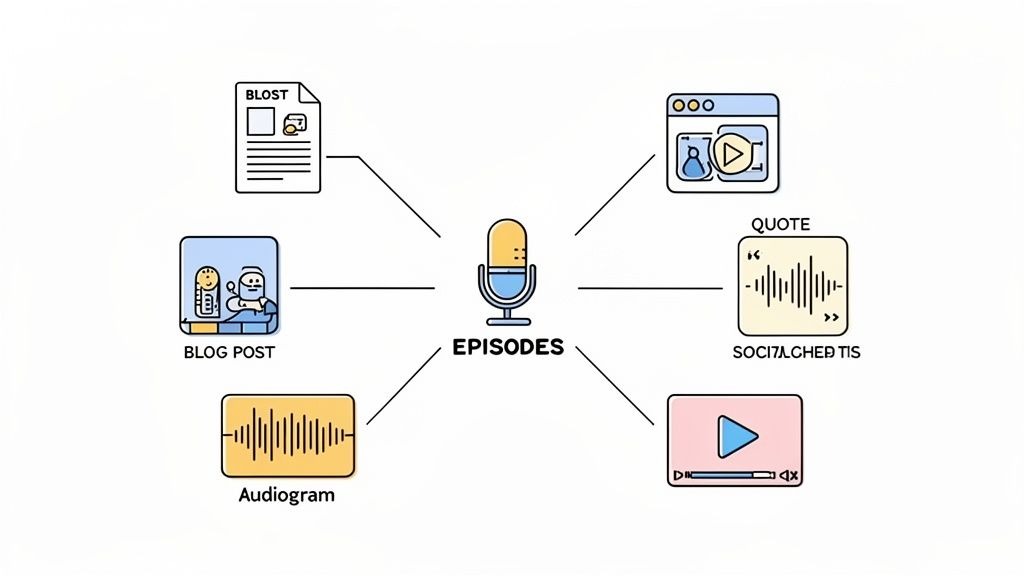
Think blog posts, social media video clips for your B2B social media agency to use, quote graphics for LinkedIn, and entire editions for your B2B email newsletter agency, all stemming from one recording. This approach maximizes your effort and ensures your message stays consistent across every channel.
And after about six months of consistent production, your show can even become a new revenue stream. It becomes an attractive platform for sponsors and gives you a direct way to sell your own services to a loyal subscriber base, often through exclusive listener-only deals.
To explore these advantages in more detail, check out our guide on the actionable benefits of podcasting.
Building Your Podcast Strategy From The Ground Up
A great podcast doesn't just happen by accident. It's the direct result of a rock-solid strategy, one that’s bolted directly onto your business goals. Before you even think about buying a microphone, you have to answer the one question every potential listener has: "Why should I care?"
Without a plan, your show is just more noise. A well-defined strategy, on the other hand, turns your podcast from a simple audio file into a powerful engine for building authority and generating leads. This foundational work makes sure every single episode you create actually serves a purpose.
This all starts by looking inward. Your podcast strategy should be a natural extension of your marketing and sales objectives, creating a smooth path for your audience to go from casual listener to loyal customer.
Define Your Ideal Listener
First things first: get brutally clear on who you're talking to. Don't just aim for a "broad audience." That’s a recipe for mediocrity. Instead, laser-focus on your Ideal Customer Profile (ICP). Who are the decision-makers you absolutely need to reach? What are their biggest headaches, professional anxieties, and career ambitions?
Think about their day-to-day grind, the industry slang they use, and the questions they're secretly typing into Google at 10 PM. Your podcast should feel like it was made just for them, because it was. This is what separates a forgettable show from one that builds a cult following.
To take this a step further, actually write this stuff down:
- Job Title and Industry: Are you talking to a CTO in the SaaS world or a marketing manager in manufacturing? Get specific.
- Primary Goals: What does a "win" look like for them in their role?
- Key Frustrations: What obstacles are making their life harder than it needs to be?
- Information Sources: Where are they already hanging out to get industry news and advice?
Answering these questions ensures your content will hit home, making listeners feel like you're reading their minds.
Carve Out Your Niche
Once you know who you're talking to, you have to decide what you're going to talk about. The B2B world is massive. Trying to be everything to everyone will make you nothing to anyone. The goal is to find a specific, underserved niche where you can become the undisputed champ.
Instead of a generic "marketing" podcast, you could launch a show on "Demand Generation for Series B FinTech Startups." Instead of "business leadership," you could focus on "Scaling Operations for Remote-First Agencies."
The more specific your niche, the easier it is to dominate. You're not just creating content; you're creating a category that you own. This focus makes you the obvious choice for your ideal listener and a magnet for high-profile guests in that space.
This targeted approach doesn't just attract the right audience; it actively repels the wrong one. This is a good thing. It means your listener base is packed with people who could actually become customers.
Choose Your Show Format
With your audience and niche locked in, it’s time to pick a format that fits your brand and, just as importantly, your available resources. Different formats achieve different things, and there's no single "best" option. It's all about what works for you.
Here are a few popular formats that work wonders in B2B:
- Expert Interviews: This is a fantastic format for networking and, frankly, a bit of sneaky lead gen. You invite industry leaders, including folks who fit your ICP, to share their expertise. This positions your brand as a central hub of knowledge.
- Solo Deep Dives: This format puts you squarely in the thought-leader spotlight. It's perfect for unpacking complex topics where you have a unique perspective or proprietary knowledge.
- Panel Discussions: Bring a few experts together, and you can facilitate some seriously high-level conversations. This allows you to explore topics from multiple angles, creating incredibly valuable and shareable content.
- Case Study/Success Story: Put your own customers on a pedestal. Feature their success stories to demonstrate the real-world impact of what you do. There's no better social proof.
Your choice of format will shape your entire production workflow. The key is to pick one that you can execute consistently without burning out, and that delivers maximum value to that listener you've so carefully defined. For a deeper dive into this planning phase, check out our guide on creating a comprehensive business plan for your podcast.
Your Step-By-Step Guide To A Successful Launch
Let's be honest, launching a podcast can feel like a massive technical headache. But it's far more doable than you might think. With a clear plan, you can sidestep the overwhelm and focus on what actually matters, creating content that connects with your ideal customers. This is your practical roadmap to getting your show recorded, produced, and live.
We'll walk through the essential gear you need (for any budget), a simple production workflow, and the final steps to get your show listed where people can actually find it. Forget the fancy studio; your journey to a successful launch starts with just a few key, actionable steps.
Choosing Your Podcasting Gear
The good news? You don't need to spend thousands to get professional-sounding audio. The market is packed with high-quality, budget-friendly equipment perfect for a small business just starting. Your only real goal here is clear, crisp audio that's easy for your audience to listen to.
You can hit that mark with a surprisingly simple setup. As your show grows, you can always upgrade, but the tools below are more than enough to produce a fantastic-sounding B2B podcast right from day one.
I've put together a quick comparison to help you figure out which starter kit makes the most sense for your budget and goals.
Podcast Starter Kit Comparison
| Level | Microphone | Headphones | Software | Estimated Cost |
|---|---|---|---|---|
| Budget Friendly | USB Mic (e.g., Rode Mini USB) | Any over-ear headphones | Audacity (Free) | $100 - $150 |
| Mid-Range | XLR Mic (e.g., Rode PodMic) | Audio-Technica ATH-M20x | Descript or Hindenburg | $250 - $400 |
| Professional | Shure SM7B | Beyerdynamic DT 770 PRO | Adobe Audition | $600+ |
This simple breakdown shows you can get started with a solid setup for not a lot of cash. The key takeaway is that great sound is accessible at any budget.
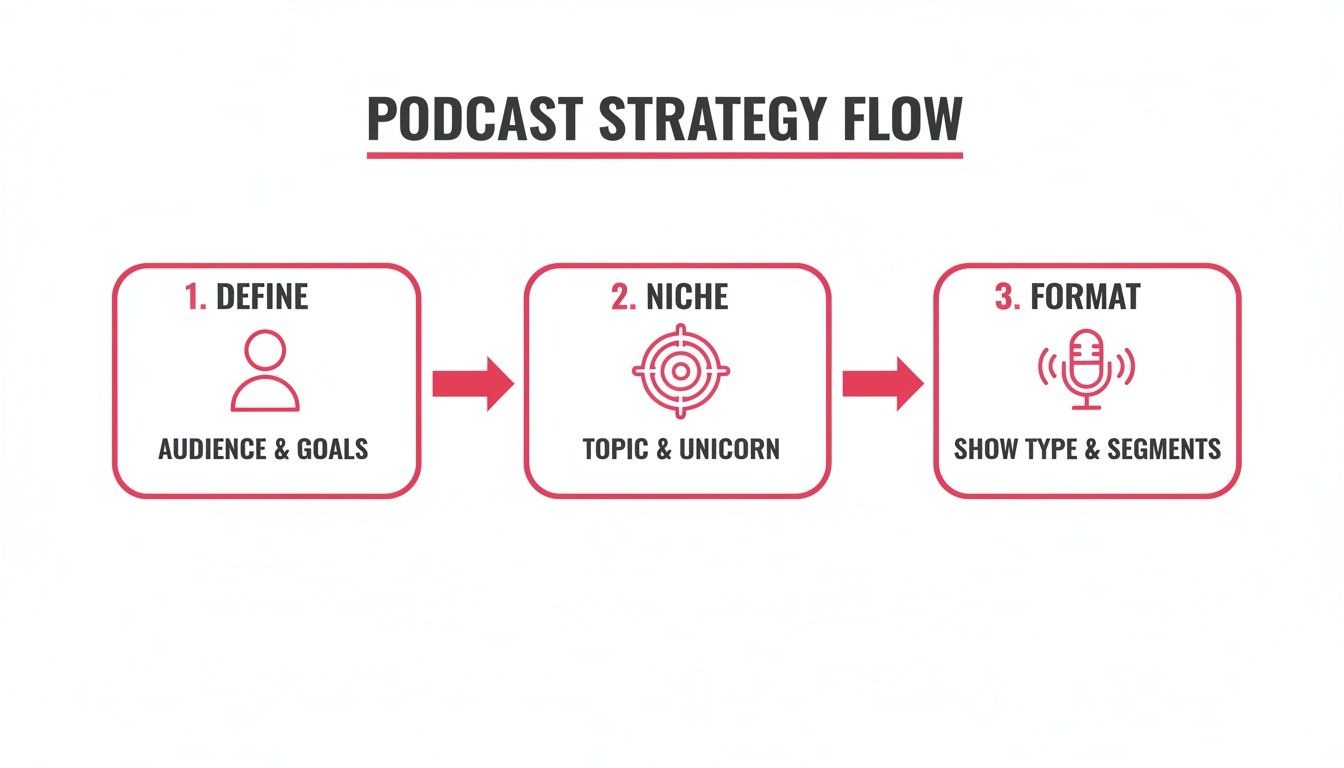
This just hammers home the point that the technical stuff comes after you've nailed down the strategy. Knowing your audience, topic, and format is the real first step to a successful launch.
Mastering Remote Recording
These days, most B2B podcasts are recorded remotely, which is fantastic news for small businesses. It means you can interview top-tier guests from literally anywhere in the world without spending a dime on travel. The whole trick is just using the right platform to make sure the recordings are high-quality and stable.
While tools like Zoom are convenient, they compress audio pretty heavily, which can make your show sound amateurish. For the best results, you'll want to use a dedicated remote recording platform.
- Riverside.fm: This is a game-changer. It records separate audio and video tracks for each person locally on their own computer. That means even if someone's internet connection drops, their recording stays crystal-clear.
- SquadCast: Very similar to Riverside, SquadCast is all about high-fidelity audio and video. It also captures local recordings to sidestep any quality loss from a spotty internet connection.
- Zencastr: One of the pioneers in this space, Zencastr is another excellent and reliable option for capturing high-quality audio for remote interviews.
Using one of these tools is probably the single easiest way to immediately level up the production value of your show.
Your Production Workflow Checklist
Once you've wrapped up your recording, it's time for post-production. This is where you polish the audio, add your branding, and get the final file ready to go live. A repeatable workflow makes this whole process smooth and efficient, not a chaotic scramble.
Here’s a step-by-step checklist to guide you from raw recording to a published episode:
- Edit the Audio: First things first, cut out any big mistakes, long pauses, or rabbit trails that don't add value. Software like Descript is amazing for this; it lets you edit the audio just by editing a text transcript.
- Mix and Master: This is where the magic happens. You’ll balance the volume levels between speakers, clean up background noise, and apply some light EQ to make the vocals sound rich and clear. It’s a crucial step for that professional feel.
- Add Intro and Outro: Slap your pre-recorded intro/outro music and voiceover at the beginning and end of the episode. This gives your show a consistent, branded sound.
- Export the Final MP3: Export the finished episode as an MP3. A standard setting is 128kbps mono for voice-only shows or 192kbps stereo if you have a lot of music.
- Create Your Assets: Design some eye-catching cover art (3000x3000 pixels is the standard) and write a compelling show description and episode title. Make sure to include relevant keywords!
- Upload to Your Host: Now, upload the final MP3 and all your show info to a podcast hosting provider like Fame Host. Your host is what generates your show's RSS feed.
- Submit to Directories: The last step! You'll submit that RSS feed to all the major directories like Apple Podcasts, Spotify, and Google Podcasts. The great thing is, this is a one-time setup for your entire show.
Sticking to this checklist will create a predictable process that saves you a ton of time and ensures you're putting out a high-quality episode every single week. To dive even deeper into this whole process, check out our complete guide on how to start a business podcast over on our blog.
How To Squeeze Every Last Drop Of Value From A Single Episode
Hitting ‘publish’ on a new episode and just… stopping? For a small business, that’s a massive waste of time and money. It’s like cooking an incredible meal and then only letting one person taste it.
You need to think of each episode as the sun in its own solar system. It’s the powerhouse that fuels your entire marketing strategy for days, sometimes even weeks.
This is the magic of content repurposing, and it’s the secret to getting a real ROI from your podcasting efforts for small businesses. You take one audio recording and slice it, dice it, and rebuild it into a dozen different assets. Suddenly, a single hour of recording gives you a full week’s worth of marketing material.
Your Repurposing Blueprint
Everything kicks off with your core asset: the full-length audio episode. From there, you can systematically break it down into smaller, bite-sized pieces of content, each one tailored for different platforms and how people consume content there.
A crucial first step in this process is knowing how to transcribe a podcast. That text file is the raw material for almost everything else. It makes pulling quotes, writing articles, and crafting social media copy a breeze.
Here’s a simple, practical blueprint to turn one conversation into a multi-channel campaign:
- Full-Length Video: If you’re recording video, get the whole thing up on YouTube. You’re instantly tapping into the world’s second-biggest search engine and grabbing the attention of people who’d rather watch than listen.
- Detailed Blog Post: Use your transcript to write up a comprehensive blog post or show notes. This is a huge win for SEO because it makes your audio content completely discoverable by Google.
- B2B Email Newsletter: Fire off an email to your subscribers letting them know a new episode is live. Pull out one killer insight or a juicy quote from your guest to get them clicking.
- Short Video Clips: Edit the best moments from your video into punchy 1-2 minute clips. These are absolute gold for LinkedIn, Instagram Reels, and even TikTok.
- Audiograms: Create those slick, shareable audio snippets with animated waveforms and captions. They’re incredibly effective for promoting your podcast on visual platforms like Instagram and LinkedIn.
Once you get this process running, it creates a powerful feedback loop. All these repurposed assets drive traffic back to the main episode, which gives you even more material to work with.
Spreading Your Message Far And Wide
The real power here is consistency. When you’re constantly feeding your social media, email list, and blog with content pulled from your podcast, you build a unified brand message that screams authority and builds trust. All your marketing channels start rowing in the same direction, powered by the expert conversations happening on your show.
Think of it this way: your podcast is the recording studio where you create the hit song. Content repurposing is how you get that song playing on every radio station, TV show, and streaming platform in the world.
Ready to take things even further? We've got a whole guide on how to turn your podcast into a content machine that goes even deeper. By making your podcast the true centerpiece of your marketing, it stops being just another task on your to-do list and starts being the engine for your entire growth strategy.
Growing And Monetizing Your Podcast
So, your podcast is live. Congratulations. Now the real work begins.
Launching is just the first domino. Now you have to grow your audience and, most importantly, get a real return on your investment. For a small business, this isn't about vanity metrics or chasing downloads for the sake of it. It's about turning your show into a reliable engine for qualified leads and revenue.
This means you need to stop thinking like a simple promoter and start acting like a strategic marketer. Your podcast is a powerful channel for direct sales, deep relationship-building, and, eventually, brand monetization. Get the approach right, and you’ll build a direct path from a listener's earbuds to them becoming a loyal, paying client.
Turning Listeners Into Leads
The most direct way to get a return from your podcast is by selling your own services. A B2B podcast is the perfect stage to educate potential customers, build up trust, and put your expertise on full display. When you’ve spent episode after episode delivering genuine value, making an offer feels like a natural next step, not a sleazy sales pitch.
Here’s how to make this work:
- Create Exclusive Offers: Give your listeners a special deal. Think of a discount, a free consultation, or a bonus service. Mention it clearly in your intro and outro, and set up a simple, memorable URL for them to use (like yourcompany.com/podcastoffer).
- Use a Clear Call-to-Action (CTA): Don't be vague. Tell your listeners exactly what you want them to do. A direct "If you're struggling with X, book a free strategy call with me at..." cuts right through the noise.
- Solve a Problem: Frame your offer around a pain point you've just unpacked in the episode. If you spent 30 minutes talking about the headaches of remote team management, your CTA to try your project management software will hit with maximum impact.
This approach flips your show from a simple branding exercise into a consistent lead-generation machine.
The Guest Strategy Sales Funnel
One of the most powerful and criminally underused strategies in podcasting for small businesses is using guest appearances as a direct sales tool. Instead of cold calling your ideal clients, you invite them onto your show for an expert interview. This move completely flips the dynamic.
You’re not a salesperson begging for a meeting; you’re a media platform offering them a stage. This simple shift in positioning builds immediate rapport and opens doors that would otherwise be slammed shut.
The process is straightforward but wildly effective. You identify a key decision-maker at a company you want to work with, invite them on as a guest to share their expertise, and conduct a thoughtful interview. Through the whole process, you're building a genuine relationship. After the episode airs, you have the perfect excuse to follow up, offer them a great deal on your services as a thank-you, and turn them into a client. It's a sales funnel powered by authentic conversation. To really get the most out of this, integrate your podcast with broader, effective small business lead generation strategies.
Exploring Sponsorships and Direct Monetization
Once your show starts to mature and builds a dedicated listenership, usually around the six-month mark, other monetization avenues will start to open up. A consistent and engaged audience makes your podcast an attractive platform for sponsors dying to reach your specific niche.
You can kick this off by reaching out to non-competing companies that serve the same audience you do. Offer them a simple sponsorship package, like a pre-roll or mid-roll ad spot where you read a short message about their product. This doesn't just create a new revenue stream; it also validates your show's authority in the industry. The key is to only partner with brands you genuinely believe will bring value to your audience. You've worked too hard to build that trust to squander it.
For a deeper dive, our guide on monetizing a podcast has more detailed tactics.
Podcast Guesting: The Smart Shortcut To Authority
Look, launching and managing your own show is a massive commitment. If the thought of juggling production, scheduling, and promotion makes you want to lie down in a dark room, there's another way. A powerful alternative that gives you many of the same perks with a tiny fraction of the work: podcast guesting.
Being an expert guest on other people's podcasts is the ultimate shortcut to building authority. It lets you plug directly into established, relevant audiences, show off your expertise, and bring in leads without ever touching a piece of editing software. Think of it as your perfect entry point into the world of audio.
Why Guesting Works So Damn Well
When you show up as a guest, you're essentially borrowing the trust and credibility the host has spent months, or even years, building with their listeners. You're not some random person pitching a service; you're a vetted expert, introduced by a voice they already trust. That simple introduction instantly elevates your status and makes the audience lean in.
This strategy is an absolute goldmine for B2B businesses. It puts you right in the middle of high-level conversations, directly in front of your ideal customer profile. You get to demonstrate your unique take on the industry's biggest problems. Every single appearance is a chance to build your personal brand and drive genuinely qualified traffic back to your website.
The real beauty of guesting is that it builds relationships. My friendship with Liz Mosley started because I invited her onto my podcast! It's a natural way to connect with peers and potential clients.
A Practical Approach To Getting Booked
Here's the key: you can't just sit back and wait for the invitations to magically appear. A successful guesting strategy is proactive and professional.
- Target the Right Shows: First, make a hit list of 10-20 podcasts your ideal customers are already hooked on. Don't just spray and pray. Focus on shows where your expertise would be genuinely valuable to their audience.
- Craft a Killer Pitch: Your pitch needs to be short, sharp, and all about the value you can bring to their listeners. Stop talking about yourself. Instead, suggest 2-3 specific, intriguing topics you could cover that would really hit home with their crowd.
- Do Your Homework: Once you're booked, prepare. Listen to a few recent episodes to get the vibe of the show's format and tone. Jot down your key talking points, but for goodness' sake, don't script your answers. The goal is a real, engaging conversation, not a stilted monologue.
This methodical approach turns guesting from a scattered tactic into a predictable, lead-generating machine. It’s an incredibly efficient way to get all the benefits of podcasting without having to launch a show from scratch.
And if you're looking to put this whole process on the fast track, our Fame Connect service specializes in landing high-value guest spots for B2B leaders. We get you on the industry's most respected platforms to build your authority, fast.
Common Questions About Podcasting For Businesses
Jumping into podcasting can feel like a huge leap, and it’s totally normal to have questions. Most business owners I talk to run into the same handful of concerns when they're weighing the decision to launch a show.
We’ve pulled together the most common ones right here to give you direct, no-fluff answers. Let's clear these hurdles so you can get on with creating a show that actually moves the needle.
How Much Time Does It Really Take To Run A Weekly Podcast?
This is always the first question, and the honest answer is: it depends entirely on your process.
If you're a small team doing everything yourselves, you can expect to spend 4-8 hours on a single weekly episode. That time typically breaks down into planning (1 hour), recording (1 hour), editing (a hefty 2-4 hours), and then promotion (1-2 hours).
But that’s not the only way. Partnering with a specialist B2B podcast agency like Fame can shrink your time commitment down to just 1-2 hours a week. We handle all the technical heavy lifting and marketing, so you can focus on what you're best at, having great conversations and connecting with your audience.
What Kind Of ROI Can I Realistically Expect?
The return you get from a B2B podcast really splits into two buckets: brand authority and genuine pipeline growth. The brand side is about becoming the name in your niche and building a level of trust you just can't buy. It's a massive long-term asset.
The pipeline ROI is much more direct and comes from three places:
- Listeners who turn into leads: They hear your expertise week after week and eventually reach out because they already know, like, and trust you.
- Guests who become clients: The interview itself is an incredible relationship-building tool. It’s not uncommon at all for a guest to be so impressed that they end up doing business with you.
- Strengthening customer relationships: The podcast deepens your connection with existing customers, which leads to more upsells, cross-sells, and valuable referrals.
Some B2B companies have pointed to their podcast as the direct source for over 40% of their enterprise deals, generating millions in new pipeline in the first year alone.
How Do I Find High-Quality Guests When I'm Just Starting?
You don't need a massive audience to land great guests. What you need is a sharp, well-defined niche.
Start with your "warm" network, think respected clients, partners, and industry friends you already know. From there, use LinkedIn to pinpoint experts whose knowledge would be a perfect fit for your specific audience.
When you're new, the pitch isn't about audience numbers. It's about offering them a platform to share their story with a hyper-relevant, targeted group of listeners. A professional, well-positioned podcast is an attractive offer for top-tier guests, even if you’re a small business, because you're giving them direct access to the right people.
Should My Podcast Also Be On YouTube?
Yes. 100%.
YouTube isn't just for cat videos; it's the world's second-biggest search engine. A huge slice of your potential audience lives there and prefers to watch content, not just listen. Recording video is non-negotiable if you want maximum reach.
By publishing full video episodes, you unlock a massive new distribution channel. Plus, you can slice up the video into short, shareable clips for social media (think Reels, Shorts, and LinkedIn posts). This effectively turns one recording session into a whole suite of marketing assets that will pull in an entirely new audience.
Ready to turn your expertise into a lead-generating asset without the production headaches? Fame is a specialized B2B podcast agency that handles everything from recording and editing to promotion, so you can focus on growing your business.
Want us to run this for you?
Fame starts and grows B2B podcasts that generate pipeline. Tell us who you are trying to reach and we will send a costed proposal within 48 hours.
Related content
- Read moreFame Team · July 16, 2026
10 Account Based Marketing Tactics For B2B Growth In 2026
Discover 10 actionable account based marketing tactics for B2B tech. Learn to use podcasts, data, and targeted content to close high-value accounts. - Read moreFame Team · July 16, 2026
The 8 Best Brighton Podcast Agency Picks For 2026
Find the best Brighton podcast agency for your B2B brand. Our 2026 guide reviews top 8 agencies for production, growth & ROI. Expert analysis here - Read moreJune 10, 2026
20 Best Podcast Production Agencies For 2026 (And Why Should You Hire One)
Global podcast and vodcast ad revenues are on track to hit $5 billion in 2026 , up 20% year-on-year. - Read moreApril 13, 2026
Leadership In Marketing: The B2B Podcast Playbook
Most companies still confuse leadership in marketing with job titles, org charts, and budget control. That's outdated.