November 5, 20268 min read9 sections
How The Right Web Hosting Drives Sustainable B2B Podcast Growth
By Fame Team
Key Takeaways
- Downloads alone are a vanity metric. B2B podcast growth depends on owning the audience relationship and the data behind it.
- Give every episode a permanent page on your own site, with the player, show notes, a transcript and a clear next step.
- Judge a web host on publishing workflow, page performance, maintenance, and capacity and support, tested with a real episode page.
- Connect consent-aware website activity to your CRM, and treat it as context for follow-up, never as proof of purchase intent.
- Repurpose every episode and invite guests who match your ideal customer profile, so each recording works as distribution and relationship-building.
- Keep the website host and the podcast platform separate, and review each one against its own job.
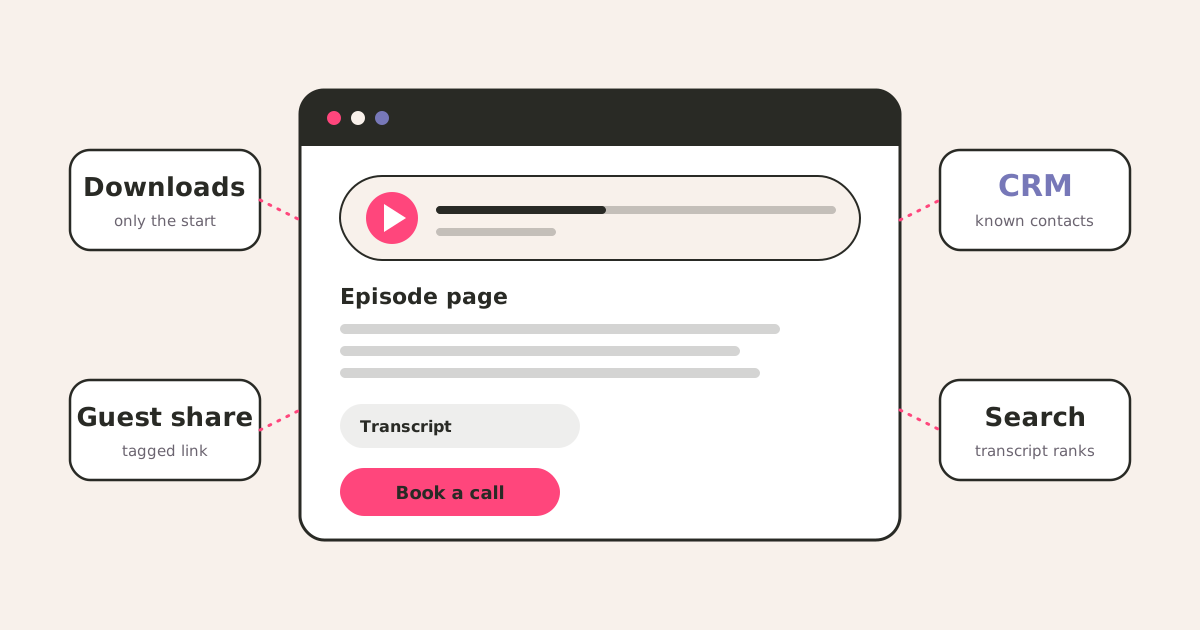
Most B2B shows do not stall because the content is weak. The trouble appears after publication, when a team watches the download count rise but cannot connect that attention with website visits, inquiries, or sales conversations. The podcast platform distributes the audio and maintains the feed. The company website has a different job. It gives each episode a searchable page with show notes, a transcript, related resources, and a clear next step. Reliable web hosting supports those pages and keeps them available when visitors arrive. This guide explains how the website can support sustainable B2B podcast growth alongside careful measurement, repurposing, and guest outreach.
Why B2B Podcast Growth Depends On Infrastructure, Not Downloads
Downloads feel like progress, but on their own they are a vanity metric. A show can add thousands of downloads and still produce zero qualified conversations. What separates a podcast that compounds from one that plateaus is whether you own the audience relationship and the data behind it.
Relying only on the big listening apps puts your reach at the mercy of someone else's algorithm. You get a download number and little else: no company names, no sense of which accounts are listening, and no direct line to the people who matter. When a platform changes its rules, your visibility can drop overnight, and you have no way to reach those listeners again.
An owned home base changes the equation. When your episodes live on a site you control, you decide how they are presented, what data you collect, and how a listener moves from an episode to a conversation with your team. That ownership is the foundation of durable B2B podcast growth, because it compounds instead of resetting every time a third party shifts the rules.
Build An Owned Home Base On Reliable Hosting
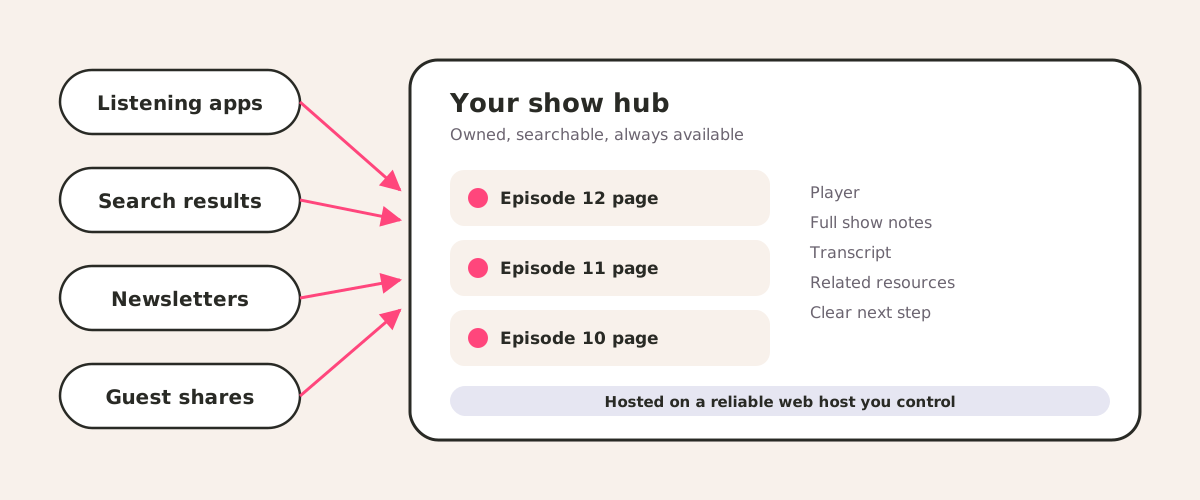
Your website is the center of gravity for the whole show. Every episode deserves its own page, with the player, full show notes, a transcript, and a clear next step for the reader. A dedicated show hub turns scattered audio into a searchable library that works for you around the clock.
Listening apps help people find the show, but they give the publisher limited control over what happens next. A website fills that gap by giving each episode a permanent page with related resources and a clear route to the business. If the show hub runs on WordPress, a reliable WordPress host can help keep those pages available when visitors arrive from a directory, search result, newsletter, or guest share. The podcast platform still handles the audio and RSS feed.
Give every episode a permanent, optimized page, keep load times low, and confirm your host can absorb sudden surges when a well-known guest shares an episode with their network. The site should feel effortless to update, because a hub you dread touching is a hub that goes stale.
A Short Hosting Check for the Website
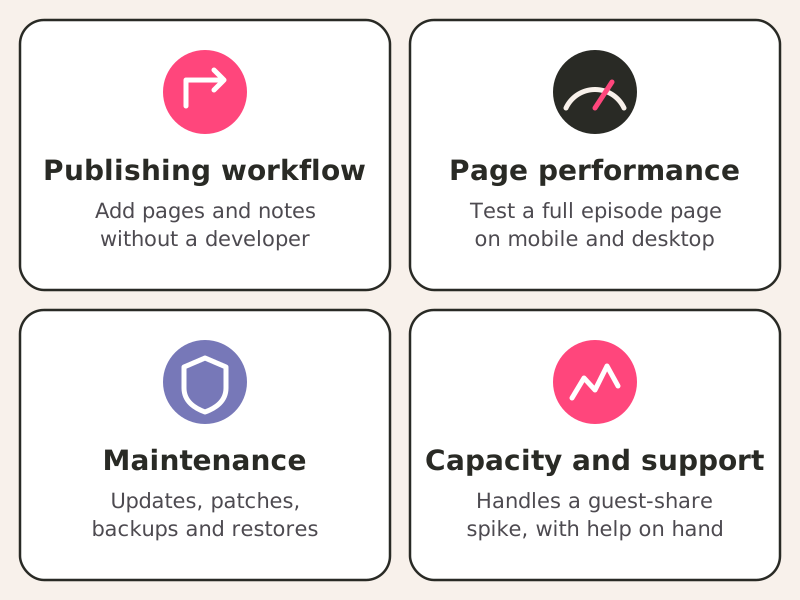
Keep the checklist focused on the company website. The podcast platform remains responsible for the audio files and RSS feed.
- Publishing workflow: The dashboard should make it straightforward to add an episode page, update show notes, and publish a transcript without developer help for routine changes.
- Page performance: Test a complete episode page on mobile and desktop. Check the embedded player, transcript, and images, rather than relying on a host's headline speed claim.
- Maintenance: Confirm who handles WordPress updates, security patches, backups, and restores. A backup has little value until the team knows it can recover the site.
- Capacity and support: Ask how the plan handles a short traffic spike from a guest share and when technical support is available if an episode page stops loading.
These checks keep the focus on a dependable website for episode pages and related content. The podcast platform continues to handle the feed and audio, so it needs a separate review based on a different set of criteria.
Turn Listening Into Pipeline With Data And CRM Sync
Attention becomes useful when a team can connect it with a meaningful action. Podcast apps tend to provide aggregated listening figures instead of the identities of individual listeners. The company website can add context when people follow tagged episode links, visit related pages, sign up for a newsletter, or complete a form. Those consent-aware website events can be recorded in a CRM and reviewed alongside other account activity. They do not prove purchase intent. They can, however, show which episodes lead known contacts to take a measurable next step.
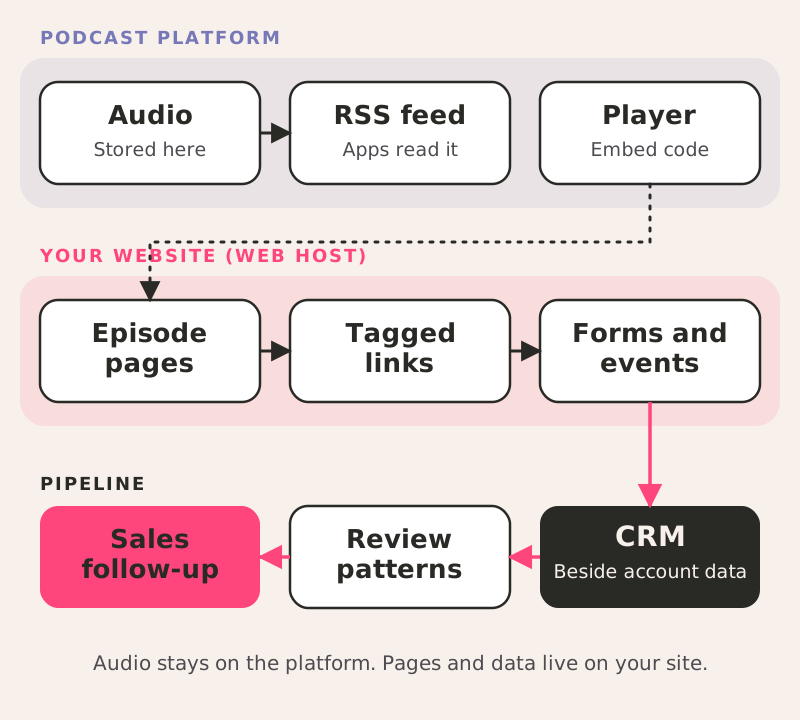
When a known contact returns to several episode pages, a salesperson can view that activity alongside other account signals and decide whether follow-up is appropriate. Listening or browsing behavior should never be treated as proof that a person is ready to buy. Without a clear connection between the website and CRM, a show can maintain a steady publishing schedule while leaving the team unable to attribute any pipeline to it.
Put this into practice by tagging links from show notes, using consistent campaign names, and deciding which website events deserve a CRM entry. A resource download or completed form carries more meaning than a single page view. Review the pattern across several episodes before changing outreach, because one visit can be accidental, and repeated activity still needs context. Keep consent, retention rules, and internal data policies in view throughout the process.
Build A Repurposing Engine That Compounds Reach
A single episode is raw material for a week of content. High-performing teams treat audio as the top of a content engine, not the finished product. One recorded conversation can become short video clips, a search-optimized blog post, an email sequence, and a handful of social posts, each one a fresh entry point back to the show.
This matters because much of B2B podcast discovery now happens off the listening apps, on the professional and video networks where buyers already spend their day. If you only publish audio to the directories, you miss the places where new listeners actually find you. Repurposing also feeds your owned site with text, which is what search engines can read and rank.
Make it a routine. For every episode, plan the clips and the written post before you record, then publish a transcript, a structured show-notes page, and the social and email follow-ups. If building and running this engine in-house stretches your team, a specialist podcast agency can operate the whole workflow for you while you focus on the conversations.
Make Guests Your Distribution And Pipeline Engine
The guest list is one of the most underused growth levers in B2B podcasting. When you invite the buyers, partners, and target-account leaders you want relationships with, the show becomes a reason to open a conversation that would otherwise be a cold email. The interview builds trust, and trust shortens sales cycles.
Then make it easy for guests to share. A dependable setup starts with suitable podcast studio equipment, so guests look and sound clear on camera and in audio, which makes them more likely to post the finished episode. Give each guest a clean landing page, ready-to-post clips, and suggested copy. When they share with their network, the show reaches more people with similar professional interests at no media cost.
Build a simple guest kit that includes the episode link, two or three vertical clips, and a short promo message. Prioritize guests who match your ideal customer profile, so every recording doubles as relationship-building with an account you actually want to win. Over a year, a steady cadence of the right guests quietly builds a bank of warm relationships that no cold outreach campaign can match.
Keep the Website and Podcast Feed Separate
The website and podcast feed do different jobs. In a typical setup, a podcast hosting platform stores the audio, generates the RSS feed that listening apps read, and supplies the embedded player used on episode pages. The web host keeps the public website available, including transcripts, show notes, related resources, and the pages that contain those players. If the website goes down, the pages and their search traffic disappear. The RSS feed and audio may remain available through the podcast platform. Keeping that distinction clear helps the team troubleshoot the right system and avoid blaming one provider for a problem that sits elsewhere.
On the website side, routine backups and security updates protect the episode archive, while clean transcripts make the content easier to search and more accessible to people who rely on text. Page speed and uptime support discovery through search results, shared links, and newsletters. They do not control whether the audio reaches listening apps. The podcast platform should be monitored separately for feed validation, media availability, and distribution status.
Your Next Steps Toward Sustainable B2B Podcast Growth
Steady B2B podcast growth comes from useful conversations, consistent publishing, episode pages people can find, and a sensible way to measure what happens next. The website supports that work by giving the series a stable home within the company's wider content. Reliable web hosting keeps that home available. It does not replace the podcast platform, editorial planning, or audience development.
Start with the pieces you can control this quarter. Give every episode a clear page on the company site, then check that it loads well on mobile and offers a useful next step. Connect measurable website activity to the CRM where consent and internal policies allow. Build a repeatable repurposing routine, and invite guests whose experience will help the audience. Review the website host for page performance and support. Review the podcast platform separately for the feed, audio files, and distribution.
Conclusion
Downloads show that people listened. Owned, reliable infrastructure shows what they did next. A show hub with a permanent page for every episode, measurable website activity connected to the CRM, a routine that turns each recording into more content, and guests chosen for the accounts you want to win together turn a podcast from a publishing habit into a pipeline you can see.
Keep the roles clear. The website host keeps your episode pages fast and available, and the podcast platform keeps the audio and feed flowing. Review each against its own job, and your show can keep compounding long after any single platform changes its rules.
Want us to run this for you?
Fame starts and grows B2B podcasts that generate pipeline. Tell us who you are trying to reach and we will send a costed proposal within 1 working day.
Related content
- Read moreNovember 4, 2026
LinkedIn Engagement Pods: What They Are and Why Brands Should Care
A LinkedIn engagement pod is a group of people who agree to like, comment on or share each other's posts to make those posts reach more people. LinkedIn does not allow them. - Read moreNovember 3, 2026
The 90-day AI search plan for a B2B marketing team of one
A solo B2B marketer can run AI search in 90 days with about five hours a week: spend two weeks on a baseline and crawl fixes, six weeks publishing one answer page weekly, and the… - Read moreNovember 3, 2026
AEO vs GEO vs SEO: what each term means and which one you are buying
SEO aims to rank your pages in search results. AEO aims to make your content the direct answer to a question. GEO aims to get your content included in AI-written responses. - Read moreNovember 3, 2026
AI visibility tool or AI search agency: which one does a B2B team need first?
Most B2B teams should choose based on who will do the work. If you have someone with time to fix pages and write content, start with a tool, since tools show the gaps cheaply.