






Key Takeaways
- The traditional B2B sales funnel is broken and should be replaced with a more flexible ecosystem approach.
- A content engine that prioritizes value can help build trust and attract warm, qualified leads.
- A podcast-centric funnel can guide potential customers from awareness to conversion through targeted nurturing and high-intent conversion stages.
Let's be honest, the old-school B2B sales funnel is broken. It treats people like cogs in a machine, pushing them from one rigid stage to the next. But today’s B2B buyer is smarter and more skeptical than ever. They don't want a transaction; they want a relationship built on real trust.
This means we need to stop thinking about funnels as a one-way street and start building ecosystems. Instead of pushing prospects through gates, we need to pull them in with genuine expertise—long before a sales call is even on the table.
Reimagining The B2B Sales Funnel For Today's Buyer
The secret to this modern approach? A content engine that puts value first, with a B2B podcast as the ultimate trust-building tool. This isn't about just generating leads; it's about creating a pipeline of warm, qualified people who are already bought into your way of thinking.
When you do this right, your sales team's job becomes exponentially easier because leads are already warm to your company, having listened to your content and agreed with your point of view.
A Podcast-Centric Funnel
Our model uses specific channels for each part of the journey, guiding people from casual social media scrollers to high-intent listeners ready to buy.
Here’s how it breaks down:
Broad Awareness (Top of Funnel): We start on high-reach platforms like LinkedIn. This is where you share bite-sized gold: video clips from your podcast, insightful quote graphics, and posts that tackle your audience's biggest headaches. The goal here is simple: start conversations and plant the first seeds of authority.
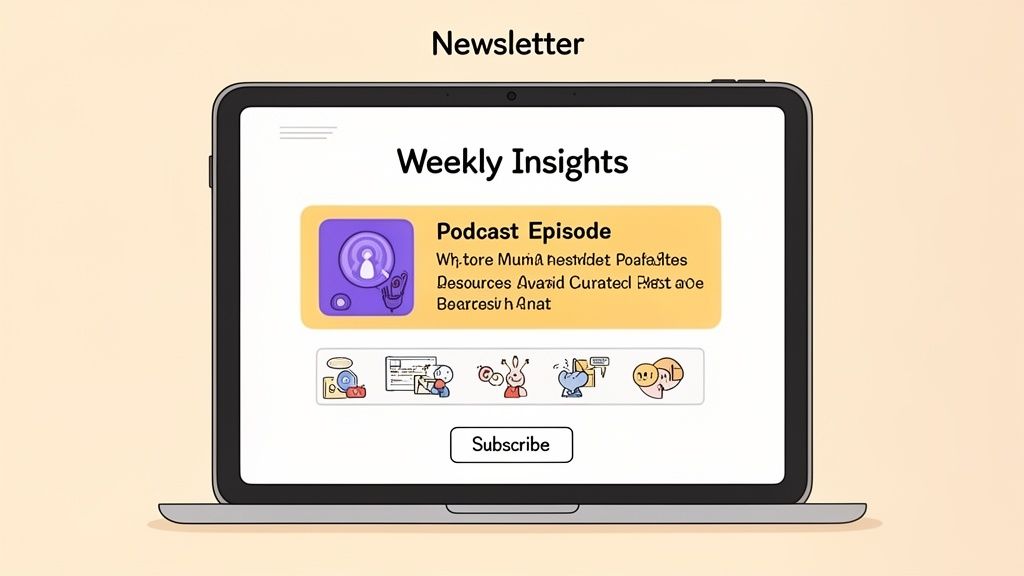
Targeted Nurturing (Middle of Funnel): Next, you need to move those followers from a rented audience (social media) to an owned one. The best way to do this is by driving them to a high-value email newsletter. This is where you can share deeper insights, like curated highlights from a recent podcast episode or exclusive commentary you won't find anywhere else.
High-Intent Conversion (Bottom of Funnel): The B2B podcast itself is actually at the bottom of our funnel. Why? Because it’s reserved for your most dedicated audience—the people willing to spend hours listening to you. That level of engagement signals deep trust, making them perfect future customers. Podcast fans may consume hours of content and really trust the hosts, making them ideal prospects.
This simple, three-stage hierarchy is the core of our modern B2B funnel.
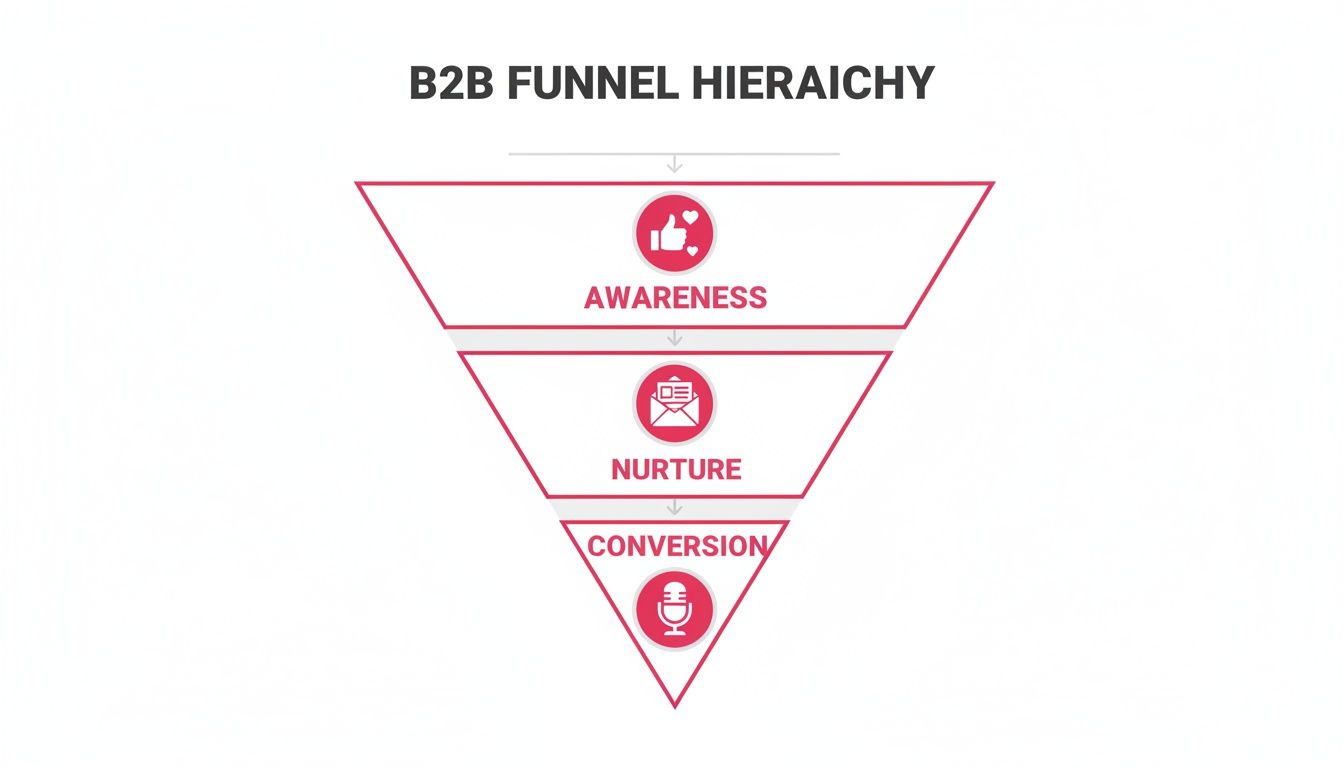
As you can see, it's a natural progression. Broad social content feeds a more focused newsletter, which then nurtures the dedicated audience you need for a conversion-focused podcast.
To get the most out of this, you'll need a modern playbook for finding prospects that complements this content-first strategy.
The Podcast-Driven B2B Funnel At a Glance
By structuring your marketing this way, you create a system where every piece of content has a clear job. You’re not just shouting into the void; you’re gently guiding potential customers through the B2B sales funnel stages.
The end result is a pipeline full of people who don't just know your name, but actively trust your expertise.
This table gives you a scannable overview of how our modern B2B sales funnel works, with a podcast driving the entire process.
Each stage builds on the last, creating a powerful system that turns casual observers into loyal customers who see you as the go-to expert in your space.
Building Awareness With Strategic Social Content
Before you can guide anyone through your sales funnel, you have to earn their attention. Simple as that. This first step, the awareness stage, is all about meeting your ideal customers right where they are—usually scrolling through LinkedIn or X (what used to be Twitter).
The goal here isn't a hard sell. Far from it. It's about starting conversations, planting your flag with a unique point of view, and building that initial layer of brand authority.
This is where your B2B podcast becomes your secret weapon, an engine for broad-reach awareness. Instead of just launching an episode and crossing your fingers, you're going to slice it up into a ton of bite-sized content that’s perfect for social feeds. Think of it as creating dozens of little doorways into your world.

Repurposing Your Podcast For Maximum Reach
A single podcast episode is a goldmine. Seriously. By repurposing one long-form conversation, you can easily create an entire week's worth of social posts that put your brand in front of the right people, day after day.
Here are a few ways to do it that just flat-out work:
- Compelling Video Clips: Find the most potent 30-90 second moments from your interview. Look for a surprising stat, a controversial opinion, or a super practical tip. Slap on some big, bold captions—most people watch with the sound off.
- Insightful Quote Graphics: Turn your guest's smartest soundbites into clean, visually sharp graphics. Always include their headshot and your branding. It builds instant credibility.
- Thought-Provoking Text Posts: Grab a key argument from the episode and summarize it in a text-only post for LinkedIn or X. End with a question to get people talking in the comments. This is how you spark debate.
These tactics turn a one-hour recording into a distributed campaign that grabs attention across different formats. You can get more ideas by exploring these actionable B2B social media strategies that convert leads.
The objective at the awareness stage is not to convert, but to connect. You're building an audience by demonstrating you understand their world and can offer a valuable new perspective. Every like, comment, and share is a small signal of resonance.
Measuring Success At The Top Of The Funnel
Since you’re not focused on direct sales yet, your key performance indicators (KPIs) need to reflect that. You're tracking audience growth and engagement to see if your content is actually landing and building the foundation for what comes next.
Here are the key metrics to watch at the awareness stage:
- Reach and Impressions: How many unique people are seeing your content? If this number is steadily climbing, your message is spreading.
- Engagement Rate: What percentage of people who see your posts actually interact (like, comment, share)? This tells you if your content is hitting the mark or falling flat.
- Audience Growth: Are you gaining followers who fit your ideal customer profile? This is a direct measure of your brand's growing influence in the right circles.
By consistently putting valuable, repurposed content out there, you are effectively warming up the market. So when these prospects finally talk to your sales team, they aren't cold leads. They’ll already know your company, agree with your point of view, and be way more open to a real conversation.
Turn Followers Into Leads With a Newsletter They Actually Want To Read
Getting likes and comments on LinkedIn is great for stroking the ego, but it doesn’t pay the bills. The real move is getting those people off a platform you’re just renting (like LinkedIn or X) and onto a channel you actually own: your email list. This is the moment you turn a casual scroller into a genuine lead.
Your email newsletter is your private line of communication. It’s where you can cut through the noise of the social feed and really start building trust. But here’s the catch—it can’t just be another marketing email. It has to be so good they’d be sad to miss it.
Think of it as the "director's cut" for your podcast. This is where you drop the best highlights from a podcast episode, share your unfiltered thoughts on episode topics, and curate other valuable content.
From Follower to Subscriber
Getting someone to jump from a social feed to your email list has to be a no-brainer for them. Your call-to-action (CTA) on social posts can't just be "sign up for our newsletter." Yawn. You have to spell out exactly what's in it for them.
Try framing your subscription CTA with a clear promise of value:
- Offer the TL;DR: "Loved this clip? We break down the full episode with two extra expert tips in our weekly insights brief. Get it here."
- Promise a Deeper Dive: "We barely scratched the surface in this post. Subscribe to get our full analysis on [Topic] straight to your inbox."
- Give Them Exclusive Access: "Join our newsletter for exclusive host commentary we don't share anywhere else."
This simple shift changes the entire dynamic. It's not a marketing chore; it's the next logical step for anyone who actually cares about what you have to say. Of course, getting them on the list is one thing; keeping them engaged is another. You can dive into more strategies with these 10 B2B lead nurturing best practices.
How to Know If It's Working
At this middle stage of the funnel, your metrics are all about measuring one thing: trust. Are people leaning in? Before you get too hung up on numbers, remember that B2B is a different beast than B2C. The buying journey is longer and more complex.
Benchmarks show the average B2B website-visitor-to-lead conversion is a slim 2-3%. The best channels, email and organic search, only hit around 2.5-3%. So yes, getting someone to subscribe to your newsletter is a pretty big win. If you want to set realistic goals, check out these funnel conversion rate benchmarks.
Here are the KPIs that really matter for your newsletter:
- Subscriber Conversion Rate: What percentage of people who see your CTA actually sign up? This tells you if your offer is hitting the mark.
- Open Rate: Are they opening your emails? This is your most direct signal for brand trust and whether your subject lines are compelling enough.
- Click-Through Rate (CTR): Are they clicking the links to your podcast, blog, or other resources? A high CTR means you've got their active interest, and you're pulling them deeper into your world.
By consistently dropping high-value insights directly into their inbox, you're doing something powerful. You're turning a casual follower into a loyal reader. Every open and every click deepens that relationship, warming them up for the high-commitment stuff waiting at the bottom of the funnel—like your B2B podcast.
Driving High-Intent Conversions with Your Podcast
Let’s talk about the bottom of the funnel. While social posts and newsletters are great for getting your name out there, this is where the real business happens. This is the last and most critical of the b2b sales funnel stages—the point where your most bought-in prospects are ready to become customers.
For a niche B2B podcast, this is its ultimate purpose. It’s not just about content anymore; it’s a finely-tuned conversion engine built on deep trust and proven authority. This is where you convert listeners into revenue. The process breaks down into two distinct phases, each with its own actionable playbook.
Phase One: The First 6 Months (Relationship-Led Sales)
In the first six months, don't sweat your download numbers. You probably won't have a massive audience, and that's completely fine. Your main sales play isn't broadcasting to the masses; it’s about creating strategic, one-on-one connections.
The smartest way to do this? Invite your ideal clients to be guests on your show.
This isn't some shady bait-and-switch. It's a genuine chance to build a relationship in a non-salesy setting. Think about it: you’re spending an hour with a key decision-maker from a target account, asking them smart questions and giving them a stage to showcase their expertise. You're collaborating, not selling.
This single move accomplishes several goals at once:
- Build Real Relationships: You establish authentic rapport that a cold email could never dream of.
- Get Deep Discovery: You uncover invaluable insights into their company's pain points, goals, and even their internal lingo—all without a formal discovery call.
- Establish Peer Authority: By hosting the conversation, you're not a vendor; you're an industry peer and a leader in the space.
This strategy flat-out works. For example, this case study on Yellowbird shows how they used this exact method to hit a 20% conversion rate from the guests they featured on their podcast. Once that relationship is built, you can circle back further down the line with a unique or preferential deal on account of them being a guest. It's a warm, natural next step.
Phase Two: 6 Months and Beyond (Audience-Led Sales)
Fast forward six months. If you’ve been consistently dropping niche episodes for your ideal buyer, you've started to build a real following. These aren’t just random leads; they are people who have willingly spent hours listening to you. They get your perspective and already see you as an expert. Now your audience will consist of your ideal customers.
Now, your strategy flips from outbound guest invites to inbound lead generation. Your podcast transforms into a magnet for highly qualified leads who are already sold on what you do.
Your most loyal listeners—those who tune in episode after episode—are the warmest leads you will ever get. They have invested significant time in your brand, signaling a level of trust and interest that is nearly impossible to replicate through other marketing channels.
The trick is to give them a clear, valuable next step. This is where the lead magnet comes in. It's a simple exchange: you offer a free, high-value resource in the show notes, and they give you their information. The goal is to move them from a passive listener on Spotify into your active marketing funnel.
Here are a few lead magnet ideas that kill it for B2B podcasts:
- Templates or Checklists: Offer a downloadable "Go-to-Market Strategy Checklist" or a "Content Repurposing Template" that directly relates to the episode's topic.
- Exclusive Guides or Reports: Create a deep-dive eBook or an industry report that expands on the conversation.
- Special Discounts or Trials: If you have a product, give listeners an exclusive discount code or an extended free trial.
Make sure to "shout out" your lead magnet at a relevant moment in every episode, usually in the intro or outro. Something like, "We just broke down why X is so important. If you want our free template to do this yourself, head to the show notes to download it now."
The moment someone signs up, they officially become a high-intent lead. They’ve gone from a passive listener to an active prospect in your system, primed for the next step in their journey with you. To see how this all fits into a broader sales effort, check out our guide on how to build a sales pipeline with a B2B podcast.
Weaving Your Podcast into The Sales Process
Your B2B podcast isn't just a shiny marketing asset. It's a sales machine in disguise, ready to be plugged directly into your operations. When you get this right, you close the gap between creating content and generating cash, proving ROI and making your sales team a whole lot sharper.
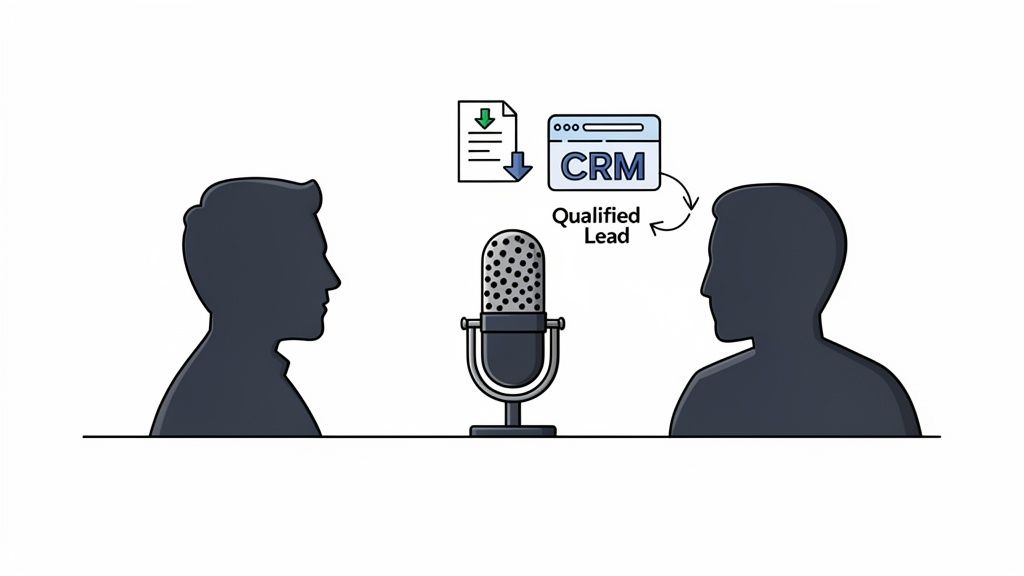
The magic starts the moment a listener is so engaged they actually download a lead magnet from your show notes. This isn't just a click; it's a powerful buying signal. Someone has gone from passively listening to actively looking for solutions. Once they sign up for the lead magnet, you move them into the marketing funnel.
From Lead Magnet to Marketing Funnel
Once a listener gives you their email for a resource, they transform from an audience member into a hot lead in your CRM. This handoff needs to be instant and automated. The mission is to immediately start a structured nurturing sequence that pulls them toward a sales call without losing any of that initial heat.
Your marketing automation platform, whether it's HubSpot or Pardot, should fire off a specific workflow just for these podcast-sourced leads.
This could look something like this:
- A Welcome Sequence: An immediate email delivering the goods, followed by a few more emails with extra, related content that keeps adding value.
- Targeted Nurturing: Segment these leads based on the episode topic or the lead magnet they grabbed. This lets you send hyper-relevant follow-ups that speak directly to their problems.
- Lead Scoring: Give these podcast leads a higher score right out of the gate. They've already spent significant time with your brand, signaling high intent.
Proving ROI with Simple Attribution
If you want to prove your podcast is worth the investment, you need to track its impact on your pipeline. The easiest and most effective way to do this is by adding "Podcast" as an option to the "How did you find us?" field in your usual sales process—especially on your demo request and contact forms.
This tiny change gives you concrete data, directly connecting your show to new business. When a sales-qualified lead pops up and has selected "Podcast," you can better attribute the success of the podcast as a channel.
The B2B sales funnel is a gauntlet. Industry data shows that leads convert to Marketing Qualified Leads (MQLs) at a rate of just 25-35%, and MQLs then become Sales Qualified Leads (SQLs) at a 13-26% clip. Knowing these benchmarks helps you understand just how valuable a high-intent channel like a podcast really is. You can dig into more funnel conversion rates over at Spotio.com.
Arming Your Sales Team with Content
Your podcast episodes are pure gold for your sales team. They can use specific episodes and clips to warm up cold outreach, smash objections, and build instant credibility. Putting great content out there makes it easier for sales teams as the leads will be warm to your company, having listened to your content and agreed with your POV.
For instance, a sales rep could write:
"Was thinking about our chat around scaling your team, and it reminded me of an interview we did with the COO of [Company Name]. At the 15:30 mark, she breaks down exactly how they tackled that same challenge. Thought you'd find it valuable."
This simple move repositions your sales team from pushy sellers to helpful consultants. It rallies the entire company around your core message and uses your best content to make every sales touchpoint more impactful.
On a similar note, you can learn how to win new customers with podcast guesting, which is another killer tactic for your sales arsenal. When you integrate your podcast this deeply, it stops being a "marketing thing" and becomes a critical part of your sales process, generating and nurturing leads across all b2b sales funnel stages.
Turning Customers Into Advocates
A sale isn't the finish line. If you think it is, you're leaving a massive amount of growth on the table.
The final, and frankly most valuable, stage of your funnel is turning those happy customers into your best marketers. This is how you stop chasing one-off deals and start building a self-powering flywheel that drives real, long-term growth.
Your podcast and the content you build around it are the perfect tools for the job. By continuing to deliver value after someone has paid you, you cement your status as a trusted partner. This crushes churn and builds a real community around what you do.
Creating a Customer-Powered Flywheel
The strategy here is deceptively simple: make your customers the heroes.
This isn't just about stroking their ego. It's about rewarding their loyalty while creating incredibly authentic marketing that cuts through the noise and speaks directly to new prospects. The top-performing companies get this—they know nurturing the accounts you have is just as vital as landing new ones.
Here are a few ways to get this flywheel spinning:
- Feature Successful Customers as Guests: Get your best customers on your podcast to tell their own success stories. This gives them a stage to show off their wins and gives you a real-world case study that’s a thousand times more powerful than your slickest sales deck.
- Create Exclusive Content for Your User Base: Host "customer-only" Q&A sessions or record special episodes digging into advanced product features. This makes your customers feel like insiders, and it deepens their connection to your solution.
- Encourage Sharing: Don't be passive. Ask your customers to share episodes with their network. When an episode hits on a common industry headache, a simple prompt like, "Know someone else struggling with this? Send them this episode," can ignite powerful word-of-mouth marketing.
A loyal customer base is your greatest sales asset. When you work collaboratively with accounts to co-create value, you not only grow that account but also generate the word-of-mouth referrals that become your next sale.
This shifts your podcast from being just a lead generation tool to a community-building engine. When you put customer success on display, you're providing social proof at scale. As we break down in our guide on customer-led growth with B2B podcasting, this strategy creates a virtuous cycle where your best customers start attracting your next best customers, fueling a powerful and efficient growth engine.
Frequently Asked Questions
Alright, let's get into the nitty-gritty. Thinking about building your b2b sales funnel stages around a podcast brings up some real-world questions. We hear these a lot from marketing and sales leaders, so let's tackle them head-on.
How Long Does It Take to See Results from a B2B Podcast?
You’ll see this happen in two waves.
In the first six months, your big win is relationship building. When you invite your ideal clients to be guests, you're not selling; you're collaborating. This builds powerful connections that very often turn into direct business through special offers made down the line.
After the six-month mark, things shift. You’ve built up a loyal audience of your ideal buyers. Now, the focus is on inbound lead generation. Listeners who trust your point of view will start grabbing the lead magnets you mention in your show, feeding a steady stream of super-qualified leads right into your funnel.
What If Our Ideal Clients Are Too Busy for Podcasts?
It's a fair point—execs and decision-makers are slammed. But they always find time for content that solves a burning problem. A niche B2B podcast isn't just entertainment; it's professional development on demand.
When you nail your topics and feature guests your audience genuinely looks up to, your show stops being a distraction and becomes an essential resource.
And for those who are seriously strapped for time? Give it to them in bite-sized pieces. Chop up key moments from your episodes into short video clips or text summaries for social media and your newsletter. This way, your expertise finds them in whatever format they have time for.
How Do We Measure the ROI of Top-Funnel Social Media?
At the top of the funnel, you’re not measuring ROI in closed deals. You’re measuring it in audience capture. The one metric that matters most is your conversion rate from social media followers to email newsletter subscribers. This is the moment a passive scroller becomes an active lead.
Tracking how many people click the link in your bio to join your newsletter is a direct measure of your social content's pull. It proves you can move prospects from a platform you're borrowing—like LinkedIn or Twitter—to a channel you own, where the real relationship building happens.
By watching this specific handoff, you can see exactly how well your social media is doing its primary job: feeding qualified people into the next of the b2b sales funnel stages.
Ready to turn your expertise into a high-performance sales engine? At Fame, we specialize in building podcast-driven funnels that generate authority and a qualified pipeline for B2B companies. Learn how we can help you launch a podcast that drives real business results.
