January 25, 202619 min read8 sections
A Practical Guide To B2B Video Production
By Fame Team
Key Takeaways
- Video production is a structured, three-phase process consisting of planning (pre-production), filming (production), and editing (post-production).
- Skipping any of these stages can lead to costly mistakes and a subpar final product, highlighting the importance of a disciplined approach to video production.
- A well-planned video production process ensures alignment with business goals and maximizes the impact of the final video, which is essential in today's rapidly growing video market.
Video production isn't just about hitting "record." It's the entire journey of taking an idea from a spark in your mind to a polished, final video that's ready to go out into the world. Think of it as a structured roadmap with three distinct phases: planning (pre-production), filming (production), and editing (post-production).
This guide will give you an actionable framework to follow, whether you're producing content in-house or looking for a partner to handle it for you.
The Three Pillars of Professional Video Production
You can think of the video production process a lot like building a house. You wouldn't just start pouring a concrete foundation without a detailed blueprint, right? And you definitely wouldn't start picking out furniture for rooms that don't exist yet.
Each stage is absolutely critical. Trying to skip one inevitably leads to costly mistakes and a final product that just doesn't hit the mark. This structured, three-pillar approach is what separates a simple recording from a strategic business asset.
And the demand for this kind of content is exploding. The global film and video market is on track to hit a staggering $417.99 billion by 2029, fueled by the non-stop growth of social media and everyone watching videos on their phones. This massive growth is exactly why a disciplined, professional process is no longer optional for B2B marketers.
A Structured Approach to Impactful Video
Just like a house needs a solid foundation, a great video needs meticulous planning. Following a systematic process ensures every single element, from your core message to the final cut, is perfectly aligned with your business goals.
Here’s a simple way to visualize the workflow, showing how one stage flows directly into the next.
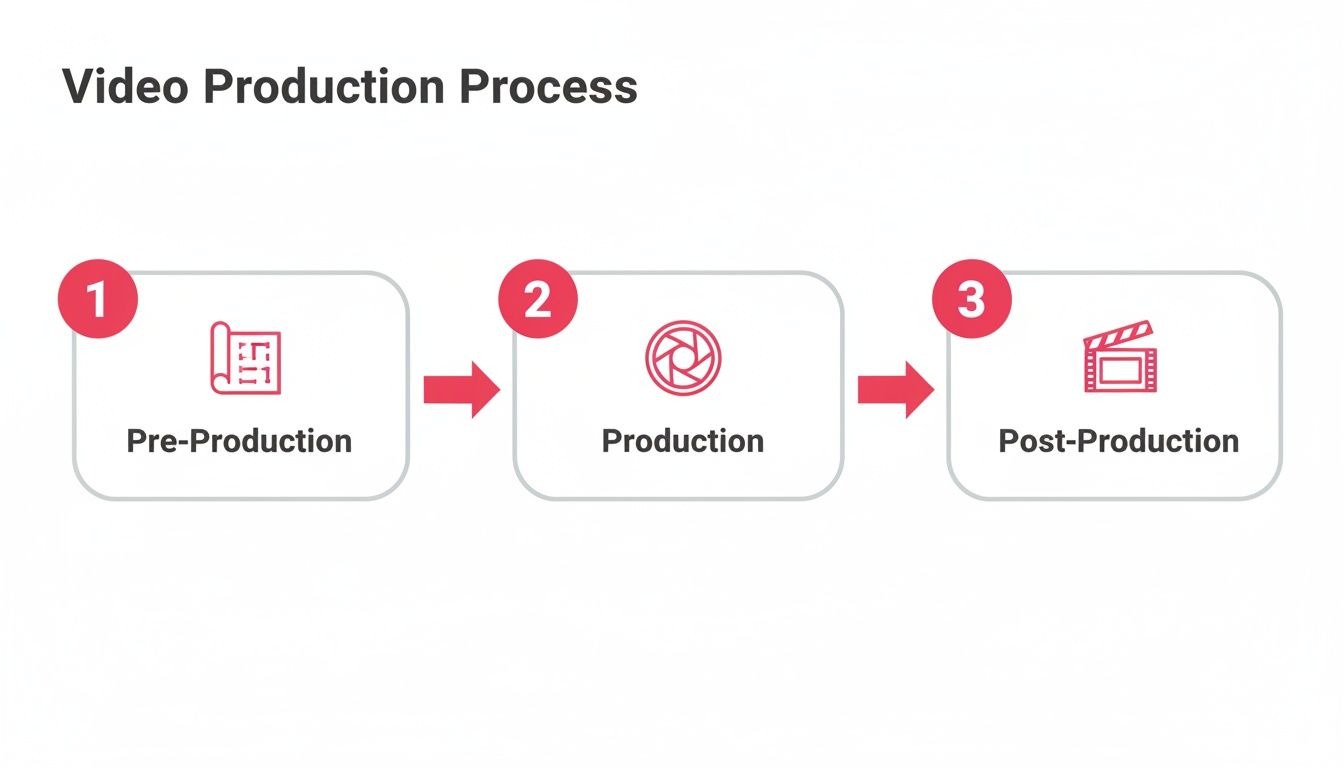
As you can see, each phase builds directly on the one before it. This is why a rock-solid plan in pre-production is non-negotiable. A strong start prevents chaos down the line.
To give you a clearer picture of what happens when, here’s a quick breakdown of the video production lifecycle.
The Video Production Lifecycle at a Glance
This table maps out the main goal and the key tasks you'll tackle in each of the three stages. It’s a handy reference for understanding where your project is at any given moment.
StagePrimary GoalKey ActivitiesPre-ProductionTo plan every detail of the video to ensure a smooth and efficient production phase. Scriptwriting, storyboarding, location scouting, casting, scheduling, and budget finalization. Production: To capture all the visual and audio elements according to the pre-production plan. Filming B-roll footage, recording principal scenes, capturing audio, and directing talent.Post-Production: To assemble, refine, and polish the raw footage into a cohesive and compelling final video. Video editing, color correction, sound mixing, adding graphics, and exporting the final file.
Ultimately, this lifecycle provides the structure needed to move from a great idea to a finished video that actually performs.
Why This Process Matters for B2B Marketers
For B2B companies, video isn't just about flashy visuals; it’s a powerful tool for building authority, educating prospects, and driving revenue. A "winging it" approach doesn't just waste time and money; it can seriously damage your brand's credibility.
"A disciplined video production workflow ensures that your investment translates directly into a high-performing asset that resonates with your target audience and supports your pipeline goals. It’s the difference between creating content and creating results." - Tom Hunt, Founder of Fame.
Whether you're making a customer testimonial, a product demo, or a thought leadership series, sticking to this three-pillar model is your key to success. For instance, the same principles apply to everything from high-level corporate videography to internal projects like creating engaging training videos.
At the end of the day, a structured process gives you the control and foresight needed to produce high-quality, impactful video content every single time.
Pre-Production: How to Plan Your Video for Success
Let's be honest: a great video is made long before you ever hit the record button. Think of pre-production as drawing up the architectural blueprints for a building. Get it right, and you build something incredible. Get it wrong, and you’re looking at costly mistakes and a final product that doesn’t quite hit the mark.
This is the phase where you answer the big, unavoidable questions: Who are we actually trying to talk to? What’s the one single thing we need them to remember? And what do we want them to do after watching?
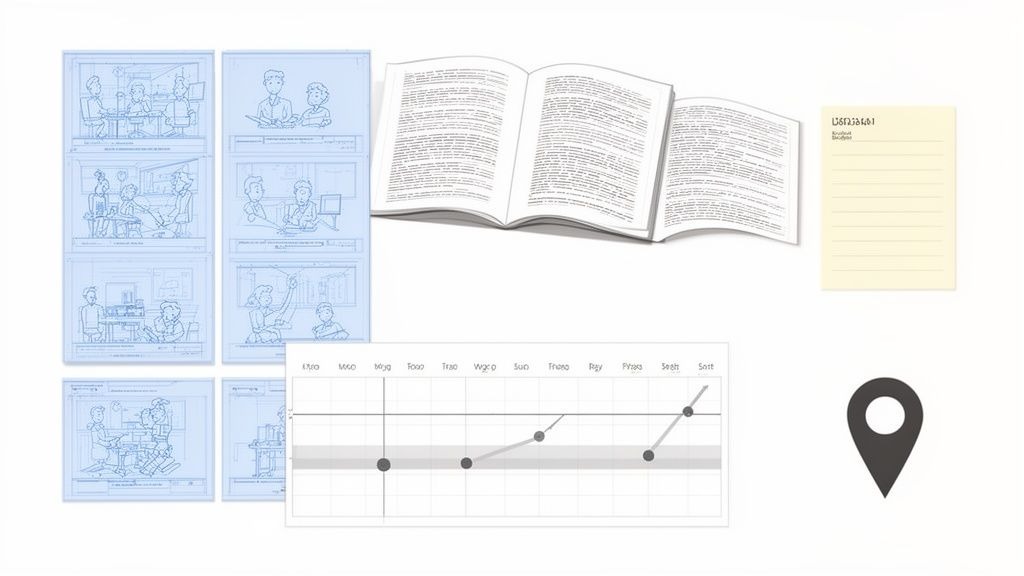
Nailing these details upfront is what separates content that just fills a space from a video that genuinely generates leads, builds authority, and moves the needle for your business. It’s a foundational piece of any B2B marketing effort. If you want to go deeper on this, our guide on how to create a content strategy is a great place to start.
Define Your Objectives and Audience
Before a single word of the script gets written, you need crystal clarity on your goals. Is this video meant to build brand awareness, bring in qualified leads, or maybe educate existing customers on a new feature? Each of these goals requires a totally different creative approach, tone, and call-to-action.
Once you know why you're making the video, get laser-focused on who it's for. Don’t just stop at demographics. Dive into their real-world pain points, what motivates them, and even the specific jargon they use in their day-to-day. A video for a CTO is going to look and sound worlds apart from one aimed at a marketing manager.
Actionable Tip: Pre-production is your best defense against scope creep, budget overruns, and a final video that completely misses the point. Seriously, every hour you spend planning here will save you three hours in filming and editing later.
Craft the Script and Storyboard
With your goals and audience locked in, it's time to get creative. The script is the absolute backbone of your video. It lays out all the dialogue, narration, and any text that will pop up on screen. Keep it sharp, compelling, and relentlessly focused on that key message you defined earlier.
Next, translate that script into a storyboard, which is basically a comic-book version of your video. It doesn't have to be a masterpiece; stick figures and quick sketches work just fine. The whole point of the storyboard is to get everyone on the team to visualize the final product, agreeing on camera angles, scene setups, and how the story will flow from shot to shot.
This visual plan is a lifesaver on production day. It gives the director, camera operator, and any on-screen talent a clear roadmap, making the actual filming process way more efficient.
Assemble Your Production Resources
The last piece of the pre-production puzzle is all about logistics. This is where the plan starts to feel real.
- Location Scouting: Find and book spots that actually look and feel like what you envisioned in the storyboard. Always think about practical things like natural light, potential background noise, and how easy it is to get gear in and out.
- Talent and Crew: Cast your on-screen talent (if any) and pull your crew together. This might be your in-house team, or you might bring in a specialized agency. If your project has a lot of moving parts, working with a partner that offers End-to-End Video Production Services for Businesses can simplify this step significantly.
- Scheduling and Budgeting: Map everything out. Create a detailed production schedule with filming days, crew call times, and deadlines. Your budget needs to be realistic, accounting for everything from renting equipment to paying for post-production editing and music licensing.
Spending the time to get this stage right is what sets your project up for success. It eliminates the guesswork, gets your whole team on the same page, and ensures that when the cameras finally roll, everyone is working toward the same vision.
Production: How to Capture High-Quality Footage
Alright, you've done the hard work in pre-production. Your blueprint is ready. Now for the fun part, bringing it all to life. This is the production phase, the hands-on stage where all that planning pays off, and the cameras finally start rolling.
Whether you're in a slick professional studio or dialing into a remote interview from your home office, the core principles of capturing great footage are the same. Your script is locked, the storyboard is set, and your talent knows their lines. The focus now shifts to the craft of filming: mastering the camera, setting up simple but effective lighting, and, most importantly, capturing audio that's absolutely crystal clear.
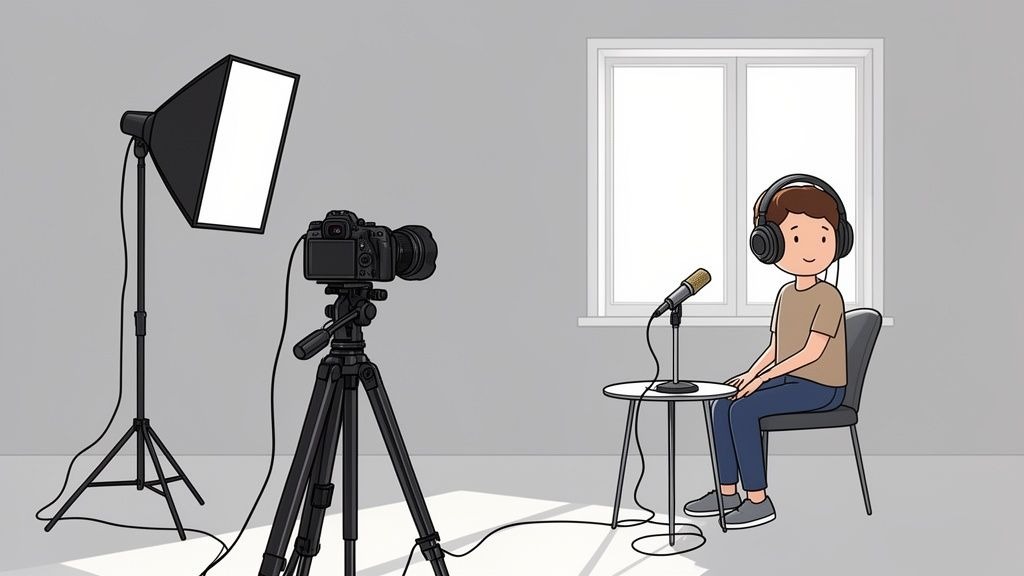
Many B2B marketers get spooked by the technical side of video, but getting a professional look and feel is way more accessible than you think. A few fundamental techniques can make all the difference.
The Unspoken Rule: Audio Trumps Video
Here’s a piece of advice that feels backward but is the absolute truth: great audio is more important than great video.
Think about it. You’ve probably sat through a slightly grainy video call if the conversation was good. But how long do you stick around when the audio is crackling, echoing, or cutting out? Not long.
Audiences will forgive mediocre visuals, but they will instantly abandon content with poor sound. Bad audio is jarring, screams amateur, and completely undermines your message.
This is why your very first investment should be a decent microphone, long before you even think about a fancy camera. A simple USB mic like a Blue Yeti is a fantastic starting point for any B2B brand and will dramatically improve your sound quality. For a deeper dive, check out our guide on video podcasting equipment for B2B brands.
Master the Basics of Lighting and Framing
You don’t need a Hollywood-level lighting rig to make your speakers look good. In fact, one of the best light sources you can use is completely free: a window.
Actionable Tip: Position your subject facing a window. This provides soft, natural, and flattering light that kills harsh shadows. Just place the camera between the window and the subject, and you've got an instantly more professional shot. This one trick is a game-changer for remote recordings.
Beyond lighting, think about composition. Use the "rule of thirds", imagine your screen is split into a 3x3 grid. Placing your subject along one of the vertical lines or at an intersection point creates a much more dynamic and visually engaging shot than just sticking them dead center.
Best Practices for Remote Recordings
Remote recordings have made it easier than ever to feature guests from anywhere in the world. This is incredibly efficient. It cuts out travel costs, scheduling nightmares, and the need for expensive studio time. It also opens up your guest pool to top-tier experts who would never have time for an in-person session.
The most common worry is that guests won't have the right gear. Don't sweat it. You can solve this with a little proactive guidance.
Guest Prep Checklist for Remote Video:
- Use Wired Headphones: Bluetooth can introduce lag or connection issues. A simple pair of wired headphones or earbuds prevents audio feedback and ensures your guest hears you perfectly.
- Find Natural Light: Ask them to sit facing a window. It's the single easiest way to boost their video quality without any special equipment.
- Choose a Quiet Space: A small room with soft furnishings, carpets, curtains, and a bookshelf is perfect. These materials absorb sound and cut down on echo.
- Consider Sending a Mic: If you have the budget, shipping a guest an affordable USB mic is a fantastic touch. It shows you're serious about quality and makes for a great thank-you gift.
These small steps elevate the final product in a big way. When you make the process seamless and professional for your guests, they're far more likely to share the final content with their own networks, extending your reach. It's this attention to detail that separates the good videos from the great ones.
Post-Production: How to Assemble Your Final Masterpiece
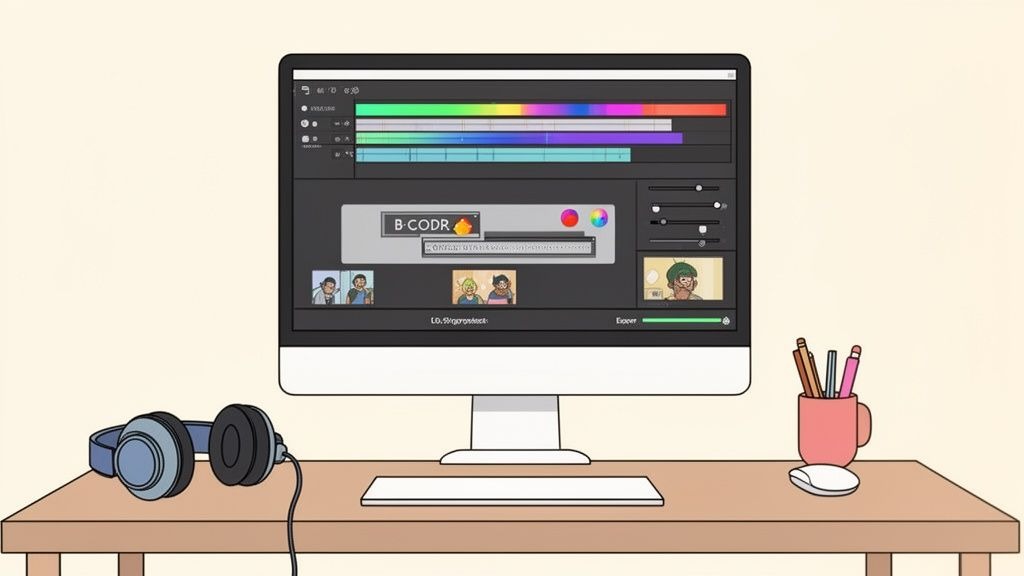
Once the lights go down and the cameras are packed away, the real magic begins. This is post-production, the phase where your raw footage, a jumble of scenes, sounds, and different takes, gets transformed into a cohesive, polished story. It's where you assemble the puzzle, amplify your message, and make sure the final video is ready to grab your audience.
If production is like gathering all the best ingredients, post-production is the art of cooking the meal. It’s a delicate mix of technical skill and creative intuition that brings your vision to life. The global video production market is absolutely booming; it's expected to hit $56.1 billion in 2025, and a huge slice of that is post-production, which tells you just how critical this stage is for creating content that actually gets noticed.
The Art of the Edit: From Rough Cut to Final Polish
It all starts with the video edit, and this is so much more than just trimming clips. An editor's first move is to organize all the footage, sync up the audio, and create what's called a "rough cut." Think of it as a first draft, a basic assembly of the best takes laid out to get a feel for the story's pacing and structure.
From there, the real refinement begins. The editor starts tightening transitions, cutting out awkward pauses, and weaving in B-roll (that's supplemental footage) to add visual context and keep things interesting. A simple, well-placed shot of your team collaborating or a close-up of a product in action can make a standard talking-head video infinitely more dynamic.
Post-production isn't just a technical cleanup; it's the final, crucial act of storytelling. This is where you shape the emotional impact of your video and ensure every single second serves your strategic goals.
Enhance Visuals and Audio
With the edit locked in, the focus shifts to the look and feel of the video. This is where a few key steps can elevate your content from pretty good to truly great:
- Color Correction and Grading: This two-part process is all about visual consistency. Color correction fixes technical issues like exposure and white balance, making all the shots look like they belong together. Color grading then applies a specific stylistic look, maybe it's warm and inviting, or cool and corporate, to match your brand's personality.
- Sound Design and Mixing: Just as important as the visuals, good audio is non-negotiable. Sound design involves cleaning up dialogue, getting rid of distracting background noise, and mixing in music and sound effects. The goal is a perfectly balanced, professional audio track where every element is crystal clear.
- Graphics and Branding: This is where you layer in polished, branded elements. We're talking about things like lower thirds (the text that identifies a speaker), animated logos, and on-screen text that reinforces key takeaways. These small touches make your video look professional and lock in your brand identity.
Prepare Your Video for Every Channel
Your job isn't done when the final video is exported. In fact, a single master video can be spun into dozens of powerful assets. This is where post-production becomes a massive lever for maximizing your ROI. Instead of a one-and-done approach, you should be thinking about how to create multiple versions for different channels.
This means resizing a full-length YouTube video into a vertical clip for Instagram Reels, a square version for a LinkedIn post, or short, punchy snippets for social ads. Each version might need different text overlays or calls-to-action that feel native to the platform. This simple step can dramatically extend the life and reach of your original investment. For a deeper dive, check out our complete guide on content repurposing strategies.
Post-production is a complex but essential process that requires a dedicated skill set. If managing all these moving parts feels overwhelming, partnering with a team that offers end-to-end production can be a total game-changer, ensuring you get a polished, professional result every single time.
Distribution: How to Drive and Measure Your ROI
A perfectly polished video is useless if it never reaches the right audience. Honestly, creating your masterpiece is only half the battle. The other half is rolling out a deliberate, multi-channel distribution strategy designed to drive engagement and deliver a real return on your investment. This is where all that creative effort starts translating into tangible business growth.
Your distribution plan can't be an afterthought. It has to be baked into your pre-production strategy from day one, ensuring the final video is already optimized for the platforms where your target audience actually spends their time. This means thinking way beyond a single YouTube upload.
Create a Multi-Channel Distribution Engine
To really maximize your video's impact, you need to meet your audience where they are. A solid distribution strategy hits multiple touchpoints, with each one serving a specific purpose.
- Your Website: This is your home turf. Host the full-length video on key landing pages, blog posts, or your homepage. This drives organic traffic, keeps people on your site longer, and gives you a central hub for all your content.
- YouTube: As the world's second-largest search engine, YouTube is non-negotiable for discoverability. Optimize your video with a keyword-rich title, a detailed description, and relevant tags to pull in that sweet, sweet search traffic.
- LinkedIn: For B2B, this is prime real estate. Share short, punchy clips or the full video with a compelling text post that sparks conversation among industry pros. This is a core component of how our B2B social media agency helps clients grow.
- Email Campaigns: Nurture your leads and engage existing customers by embedding your video in newsletters or targeted email sequences. As a B2B newsletter agency, we've seen firsthand how video can supercharge open and click-through rates.
Beyond Views: Defining B2B Success Metrics
Vanity metrics like view counts and likes feel good, but they don't tell you much in B2B. You need to be tracking KPIs that connect directly to your business objectives. To really nail the ROI of your video content, you'll also want to get a handle on social listening to pick up on customer insights and track how your brand perception is shifting.
The global hunger for video is massive. In 2023, global film production hit a new high with 9,511 films produced, a staggering 68% rebound from the 2020 slump. For B2B marketers, this is a clear signal: there's a huge opportunity to create high-volume, targeted video content that actually cuts through the noise.
The goal isn't just to get people to watch; it's to get the right people to take a specific, valuable action. Your metrics should reflect that entire journey, from a curious viewer to a happy customer.
Focus on the KPIs that actually matter to your pipeline. For a much deeper dive, check out our guide on measuring content marketing ROI.
Choose Your B2B Video KPIs
When you're trying to figure out which numbers to track, it helps to tie them back to your overarching marketing goals. Not every video has the same job to do, so your metrics shouldn't be one-size-fits-all.
Here’s a quick breakdown to help you connect your goals to the right KPIs:

By tracking these more meaningful metrics, you can clearly show how your video production efforts are contributing to the bottom line. It's how you turn your creative content into a predictable revenue driver.
In-House vs Outsourcing Your Video Production
This is one of the biggest crossroads a B2B marketing leader will face: Do you build your own video team, or do you partner up with an external agency?
There's no single right answer here. The best choice comes down to your company's budget, your goals, and your team's existing capacity. Think of it as a strategic fork in the road that directly impacts your costs, speed, and the final shine on your content.
Going in-house gives you ultimate control. Your team lives and breathes your brand day in and day out, making sure every video is a perfect reflection of your company culture and messaging. But this path isn't cheap; it demands a serious upfront investment in talent, high-end gear, and specialized software.
The Case for an In-House Team
Building an internal video unit means you're hiring for dedicated roles like videographers, editors, and maybe even motion graphics artists. You'll also need to open the wallet for cameras, lighting, microphones, and all those recurring software subscriptions that add up.
While the initial hit is significant, an in-house team can be a hyper-efficient machine for businesses that churn out a high volume of video. They’re right there, ready to film a new customer story, capture the buzz at a company event, or quickly chop up clips for social media.
The Power of Outsourcing to Experts
Outsourcing, on the other hand, is like getting the keys to a fully-equipped professional studio from day one, without the long-term overhead. A pro agency brings years of experience, top-of-the-line tech, and a battle-tested workflow to the table immediately. This is the perfect route for companies that need killer results but don't have the internal bandwidth to juggle the whole production process.
Partnering with an agency frees up your marketing team to focus on big-picture strategy. Meanwhile, a dedicated production crew handles the complex, time-sucking details of planning, shooting, and editing.
This approach is all about flexibility and scale. You can spin up production for a major campaign or dial it back as needed, all without the fixed costs of full-time salaries and gear gathering dust. It's a powerful way to tap into A-list talent for the projects that really matter.
The screenshot below shows how a specialized partner like Fame provides a complete, turn-key solution.
This shows you what a true partnership looks like: a good one manages everything from guest coordination and recording to editing and promotion, completely liberating your team.
For a lot of B2B companies, this model strikes the perfect balance. You get the polish and expertise of a seasoned production house while sidestepping the massive cost and headache of building one from scratch. When you need to create authoritative, high-quality content that actually moves the needle, services like our End-to-End Video Production Services for Businesses are designed to do just that. It turns video production from a daunting operational beast into a simple, effective marketing function.
Your B2B Video Production Questions, Answered
Jumping into video production for the first time? It's totally normal to have a ton of questions. Let's tackle some of the most common ones that pop up for marketers.
How Much Should a B2B Company Budget for Video Production?
Honestly, there’s no magic number. A simple, one-off talking-head video might only run you a few thousand dollars. But if you’re thinking bigger, like a polished brand story or a multi-episode series with slick graphics, you could easily be looking at tens of thousands.
It really boils down to three things: scope, quality, and frequency. The best way to approach it is to figure out your goals first. Once you know what you want to achieve, you can work backward to see what kind of investment it’ll take to get there.
What Is the Single Most Important Piece of Video Equipment?
It’s not the camera. It’s the microphone.
This is the golden rule of video production, and it’s non-negotiable. Your audience might forgive visuals that aren't perfectly crisp, but they will hit the back button in a heartbeat if the audio is scratchy, muffled, or full of echo.
Bad audio just screams unprofessional and completely tanks your message. If you're going to invest in one thing, make it a high-quality microphone. It's the single most powerful way to make your videos feel more premium.
How Long Does a Typical Marketing Video Take to Produce?
Just like budgets, timelines can be all over the map. A straightforward video can be wrapped up in a week. More ambitious projects? Those often take four to six weeks from the first brainstorming session to the final, approved cut.
Here's a rough breakdown of how that time gets spent:
- Pre-production: 1-2 weeks for all the planning, scripting, and logistical heavy lifting.
- Production: 1-3 days for the actual filming.
- Post-production: 1-3 weeks for editing, adding graphics, and going through revisions.
Can We Create Effective Videos with Remote Guests?
Absolutely. In fact, remote recording has become one of the smartest and most efficient ways to create B2B video content. It completely removes the hassle of travel costs and scheduling nightmares.
This opens up the door to landing high-caliber guests who would never have the time for an in-person shoot. With a little bit of guidance on the basics, like using wired headphones and finding some good natural light, you can get a professional result that puts the focus right where it belongs: on your expert guest's brilliant insights.
Feeling a bit overwhelmed by all the moving parts? Fame can take the entire process off your plate. Our End-to-End Video Production Services for Businesses handle everything from strategy and recording to editing and promotion. You focus on running your business; we'll create content that gets you results.
Want us to run this for you?
Fame starts and grows B2B podcasts that generate pipeline. Tell us who you are trying to reach and we will send a costed proposal within 48 hours.
Related content
- Read moreFame Team · July 16, 2026
10 Account Based Marketing Tactics For B2B Growth In 2026
Discover 10 actionable account based marketing tactics for B2B tech. Learn to use podcasts, data, and targeted content to close high-value accounts. - Read moreFame Team · July 16, 2026
The 8 Best Brighton Podcast Agency Picks For 2026
Find the best Brighton podcast agency for your B2B brand. Our 2026 guide reviews top 8 agencies for production, growth & ROI. Expert analysis here - Read moreJune 10, 2026
20 Best Podcast Production Agencies For 2026 (And Why Should You Hire One)
Global podcast and vodcast ad revenues are on track to hit $5 billion in 2026 , up 20% year-on-year. - Read moreApril 13, 2026
Leadership In Marketing: The B2B Podcast Playbook
Most companies still confuse leadership in marketing with job titles, org charts, and budget control. That's outdated.