

Trade show videography is the secret weapon for turning your biggest marketing expense into a content goldmine. It’s not just about hitting record on a few keynote speeches. It's a strategic process for capturing, editing, and distributing video that can fuel your marketing for an entire year, long after the last booth has been packed away.
This guide will show you exactly how to build a year-long content engine from a single event, driving leads and cementing your brand as an authority in your space.
Why Trade Show Videography Is a B2B Growth Multiplier
Let's be honest, most B2B brands see trade shows as a massive line item in their budget with a short-lived impact. It's time to flip that script. Strategic videography transforms that cost into a long-term asset. Stop thinking about it as a one-off task and start seeing it as the foundation for a powerful content library that powers your marketing for months.
This isn't just a hunch; the demand for high-quality visual content is exploding. The global event photography and videography market is on track to hit USD 2,780 million by 2033, growing at a 9.5% clip every year. Why? Because brands need compelling content from their events to share on social media and across all their digital channels.
Turn Event Energy Into Evergreen Assets
A trade show floor has a unique buzz. It’s packed with industry experts, genuinely enthusiastic customers, and your own team's energy. A professional video crew knows how to bottle that lightning, creating assets that feel authentic and alive in a way studio-shot content just can't replicate.
Here's how to turn that energy into actionable marketing assets:
- Generate Leads: Use short, impactful videos from the floor in your follow-up email campaigns and on landing pages. A good video is a cornerstone of modern B2B Lead Generation Best Practices, and event content is as real as it gets.
- Build Brand Authority: Capture quick, on-the-fly interviews with industry leaders, partners, or your own executives to instantly position your brand at the center of the conversation.
- Enable Your Sales Team: Record crisp product demos or candid client testimonials on-site. This gives your sales team powerful, real-world proof to share with prospects. To dive deeper into making video work for your business, check out our guide on videography for business.
A Content Engine For The Entire Year
The real magic of trade show videography is repurposing the footage. The content from one event can be sliced, diced, and repackaged to fuel multiple channels for months.
A three-day trade show can generate enough raw material to power your social media calendars, populate your blog, and even launch a new podcast series for the next six months. It’s about maximizing every moment and every conversation.
Building this content engine isn't accidental. It relies on a simple but powerful structure: strategic pre-show planning, flawless on-site execution, and a smart post-show distribution plan. Get these three pillars right, and you'll ensure every video clip serves a specific business goal, turning your event investment into measurable, long-term growth.
Building Your Pre-Show Video Playbook
The secret to incredible trade show video has almost nothing to do with what happens on the chaotic show floor. The real magic happens weeks beforehand, through obsessive, meticulous planning. Your pre-show playbook is what separates a random collection of clips from a strategic content engine. This plan becomes your bible, ensuring every second of footage serves a purpose and hits a business goal.
First, move past a generic shot list. “Get footage of the booth” is not a goal; it’s a vague wish. Get specific and measurable with your objectives.
For example, set a goal to generate 25 marketing qualified leads (MQLs) by capturing snappy product demos you can use in a follow-up email sequence. Or, aim to secure 5 executive interviews to fuel your company's podcast for the next quarter. When you tie video objectives to real business outcomes, your trade show video stops being an expense and starts generating revenue.
This whole process, from planning to the final content push, is a chain reaction.
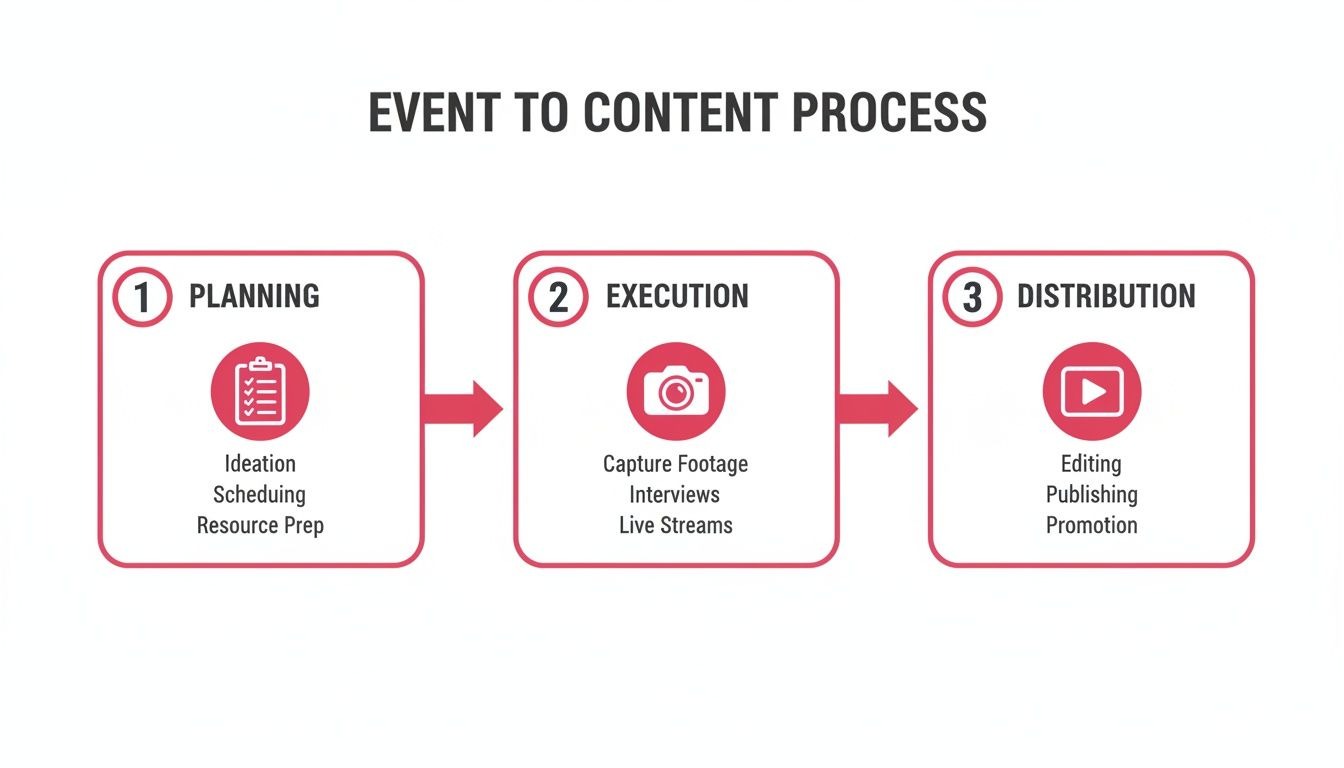
The takeaway here is simple: your on-site execution and post-show distribution are only ever as good as your initial plan. Nail the pre-show phase, and everything else falls into place.
Define Your Key Video Deliverables
Once you know your goals, map out the actual videos you need to create. And no, this isn't just about a single, all-encompassing "sizzle reel." Think bigger. Plan a portfolio of content you can slice, dice, and deploy across different channels for months to come.
Build your plan around these high-value formats:
- Customer Testimonials: Identify which key clients are attending and schedule a quick, 5-minute interview at your booth. There's no social proof more powerful than a happy customer on camera.
- Product Demos: Keep these short, punchy, and under 60 seconds. Focus on showing your product solving one specific, painful problem. They're absolute gold for social media and sales enablement.
- Thought Leadership Interviews: Line up conversations with industry partners, event speakers, or even your own execs. Discuss key trends to establish your brand as an authority.
- Behind-the-Scenes Content: Capture the raw energy. Your team setting up the booth, the buzz of the crowd, the candid interactions, the post-show celebration. This content humanizes your brand like nothing else.
To make this concrete, create a detailed shot list. This is a critical communication tool for your entire team and video crew, ensuring everyone is on the same page about what needs to be captured and why.
Your Essential Trade Show Videography Shot List
Use this template to plan the specific shots needed to achieve your content goals and communicate clearly with your video crew.
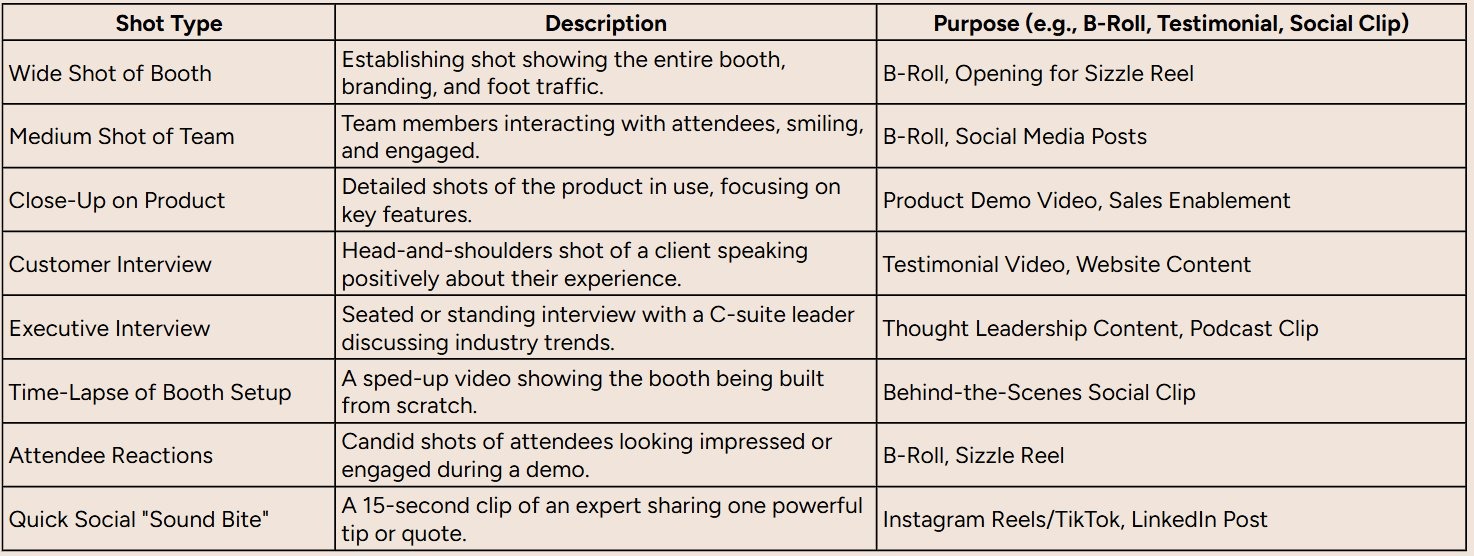
This isn't exhaustive, but it's a solid framework. Flesh it out with specific names, questions, and desired outcomes for each shot.
Scout Your Location and Schedule Strategically
Trade show halls are a nightmare for video production. The lighting is usually terrible, the background noise is deafening, and it's always crowded. Get ahead of these problems by doing virtual reconnaissance. Pull up the floor plans and look at photos from last year's event.
Where is your booth? Are you right next to the booming main stage or stuck in a dimly lit corner? Figuring this out ahead of time means your crew can come prepared with the right gear, like directional mics to isolate audio or portable LEDs to ensure your subjects don't look like they're in a cave.
Scheduling is just as important as the gear. Block out dedicated times for your big-ticket interviews. This ensures your key people are actually available and gives you a chance to find a relatively quiet spot. Trying to grab your CEO for an "on-the-fly" interview during peak floor hours is a classic rookie mistake and a recipe for unusable footage.
Right-Sizing Your Production Crew
Finally, you have to decide who is actually going to shoot all this stuff. This decision should flow directly from your goals and shot list, not just what's left in the budget.
A lean, one-person "run-and-gun" videographer is perfect if you're mainly focused on capturing B-roll and quick social clips. They're agile, can weave through crowds, and are cost-effective.
But if your playbook calls for high-quality, multi-camera interviews with execs or polished product demos, you need to scale up. A more robust team might look like this:
- A dedicated camera operator focused purely on framing and capturing the shot.
- An audio technician to manage mics, mixers, and eliminate that dreaded background hum.
- A producer or director who can conduct the interviews and keep the entire train on the tracks, schedule-wise.
Investing in the right crew is an investment in the final product. It might feel like a higher upfront cost, but a professional team delivers assets that provide value long after the event wraps. If you're looking for a crew that gets the unique demands of B2B events, exploring End-to-End Video Production Services for Businesses can connect you with the expertise needed to turn that strategic plan into a killer video.
Capturing High-Quality Content On The Show Floor
The trade show floor is sensory overload. It's a chaotic mix of booming speakers, harsh overhead lighting, and a constant river of foot traffic. This is probably one of the most challenging environments for any kind of trade show videography.
But with the right approach, you can cut through the noise and capture polished, professional content that looks and sounds incredible. It all comes down to controlling the two biggest variables: audio and lighting.
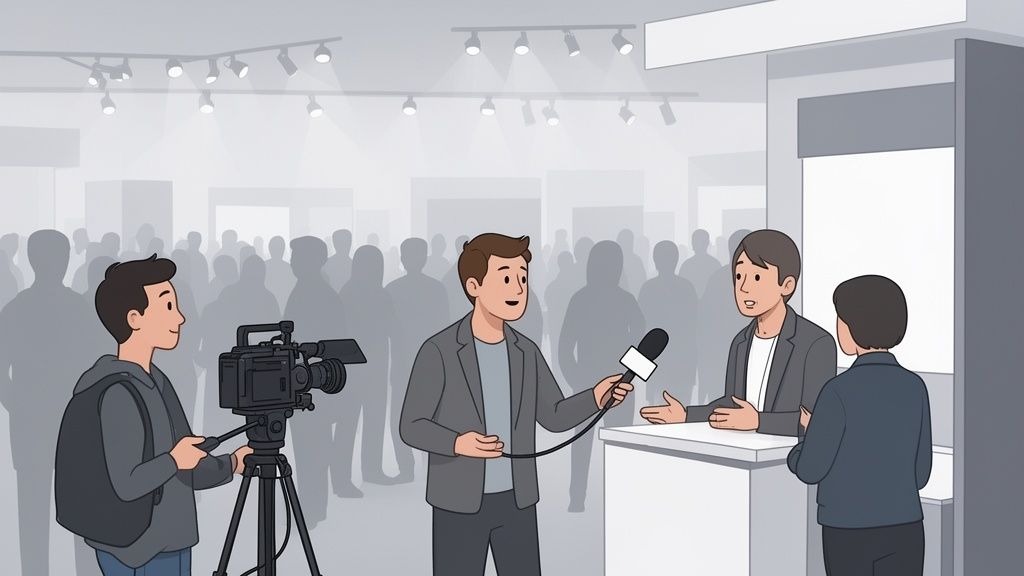
Rule number one: the camera's built-in microphone is your enemy here. It will pick up everything: the announcements from the PA system, the chatter from the booth next door, the rolling luggage in the aisle. To get crisp, clear audio, you absolutely must use external microphones.
Conquering Terrible Audio and Lighting
Your primary goal is to isolate your subject's voice from the surrounding chaos. This isn't just a "nice-to-have"; it's the difference between usable footage and a wasted interview.
Implement these microphone setups to make a difference:
- Lavalier (Lapel) Mics: These small, clip-on mics are fantastic for interviews. They capture the speaker's voice directly, which is exactly what you need to cut out the ambient noise.
- Directional (Shotgun) Mics: Usually mounted on the camera or a boom pole, these mics are designed to capture sound from a specific direction. They're great for run-and-gun shooting when you need to quickly grab audio from someone you're pointing the camera at.
For a deeper dive into audio gear, our guide on video podcasting equipment offers some great insights that apply here, too.
Lighting in expo halls is notoriously unflattering. You're dealing with a weird mix of fluorescent overheads that cast strange shadows and create harsh glares. Don't even try to rely on it.
A simple, portable LED light panel can dramatically improve your footage. Position the light source to softly illuminate your subject's face, creating a much more professional and engaging look. This one simple step can elevate a casual interview into something that feels like a high-quality production.
Conducting Authentic On-the-Fly Interviews
The best interviews on the show floor feel like genuine conversations, not stiff, scripted Q&As. The secret is making your subject feel comfortable and at ease, even with a camera pointed at them.
Here's a simple process to follow:
- Find a Quiet Spot: Start by finding a relatively quiet corner of your booth.
- Build Rapport First: Have a brief, friendly chat before you hit record. Instead of jumping straight into business, ask them about their experience at the event so far. This simple warm-up helps them relax and speak much more naturally.
- Ask Open-Ended Questions: Keep your questions focused on their experiences and insights, not just your product.
"What's the most interesting trend you've seen at this show?" is a much better opener than "Can you tell us why you love our product?" The first question sparks a real conversation; the second one sounds like you're fishing for a soundbite.
This approach ensures the final video feels authentic. It also provides valuable insights for your audience, positioning your brand as a thoughtful industry leader.
Mastering B-Roll and Workflow Efficiency
While interviews are the backbone of your story, B-roll is what brings it to life. This is all the supplemental footage, shots of your booth in action, attendees engaging with your product, keynote speakers on stage, and wide shots of the bustling crowd. It provides visual context and makes your final videos far more dynamic.
Dedicate specific time blocks for your videographer to focus solely on capturing B-roll. A good strategy is to shoot for 15 minutes at the top of every hour. This ensures you get a variety of shots as the crowd ebbs and flows throughout the day.
This is where a media wrangler becomes invaluable. This person’s sole job is to manage the footage as it's being shot. Their responsibilities include:
- Backing up footage: Transferring files from camera cards to multiple hard drives. You can't risk data loss.
- Logging key moments: Taking notes with timestamps of great quotes or powerful visual moments.
- Organizing files: Creating a clear folder structure that will make the editor's job infinitely easier down the line.
Without a dedicated media wrangler, you're just asking for a post-production nightmare. This role is the unsung hero of efficient on-site videography, ensuring every great moment you capture makes it safely to the editing suite. When every piece is in place, from clean audio to organized footage, you're set up to create content that delivers real business impact.
Turning Raw Footage Into Measurable ROI
The lights have dimmed, the booth is packed away, and your team is finally back in the office. For a lot of marketers, this is the end of the trade show. But for you, this is where the real work begins, and where the value of your trade show videography truly comes to life.
You’re sitting on hours of raw footage. Think of it as a digital goldmine, just waiting to be shaped into content that drives real business results. This isn't about slapping together a single sizzle reel and calling it a day. It’s about having a multi-layered post-production plan to squeeze every last drop of value out of the clips you captured. Your mission is to turn that investment into a content engine that fuels your marketing for months, not just days.
The Three-Tier Editing Plan
To make sense of the mountain of footage, break down your post-production workflow into three distinct tiers, each with its own timeline and purpose. This structure lets you jump on the immediate buzz while building a library of long-lasting assets.
- Tier 1: The Social Blitz (24-48 Hours). Speed is everything here. Your goal is to get quick, punchy clips out on LinkedIn, Instagram, and X while the event is still fresh in everyone's mind. These aren't polished masterpieces; they're authentic, high-energy soundbites meant to capture the moment.
- Tier 2: The Post-Show Sizzle Reel (3-5 Business Days). This is your official event recap. Create a 60-90 second, high-energy sizzle reel that is perfect for follow-up emails to leads and attendees. It should bottle up the vibe of the event, show off your booth, and flash through the best moments you captured.
- Tier 3: The Evergreen Content Library (1-4 Weeks). This is where you create long-term value. Take the time to edit full customer testimonials, in-depth interviews with industry experts, and detailed product demos. These become powerful assets your sales and marketing teams can pull from for months.
Unlock the Magic of Repurposing
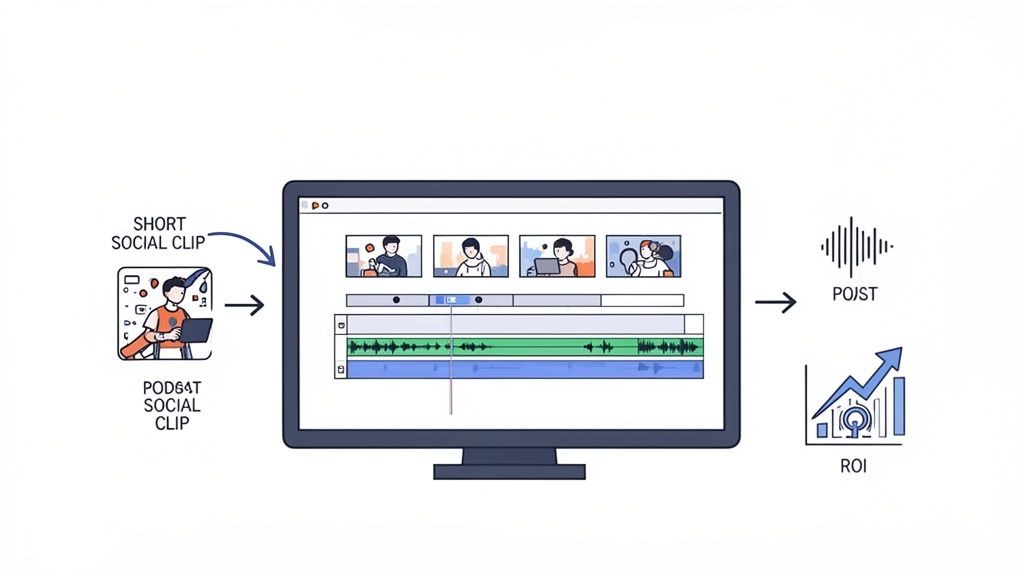
The real ROI from trade show video comes from getting aggressive with content repurposing. A single long-form video can be atomized, broken down into dozens of smaller content assets, which dramatically extends its reach and lifespan.
Take a 30-minute panel discussion you recorded. Don't just upload the whole thing to YouTube and hope for the best. Instead, execute a repurposing strategy:
A single 30-minute panel can become five short thought leadership clips for LinkedIn, an audio file for a podcast episode, a dozen quote graphics for social media, and a summary blog post embedded with the best video clips. That's nearly 20 pieces of content from one recording.
This is how you get maximum mileage from your production budget. To prove it, connect your content's performance directly to business outcomes. A good first step is to learn how to calculate your marketing ROI. And for a deeper dive into atomizing content, our guide on content repurposing strategies is a great resource.
A Framework for Distribution and Measurement
Creating a great video is only half the battle. You have to get it in front of the right people. Every single video asset you produce should have a designated distribution channel and a clear set of metrics for success.
Use this framework to guide your efforts:
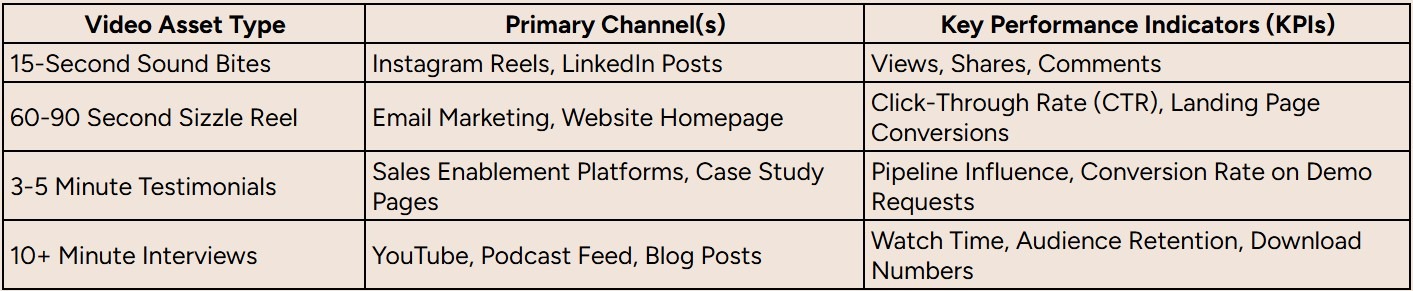
When you define these parameters upfront, you stop "just posting videos" and start executing a strategic distribution plan. You can see which assets are driving engagement, generating leads, and actually contributing to revenue. This is what turns raw footage into an undeniable ROI and proves the value of your trade show video investment.
Deciding Between Your In-House Crew And A Production Partner
So, you’ve got your video playbook dialled in. The next big question is: who’s actually going to film everything? Do you send your internal marketing team into the fray, or do you bring in a specialized production partner?
This decision goes way beyond the budget. It’s a strategic choice that will directly shape the quality, scope, and ultimate ROI of the videos you come away with.
The pull to keep it all in-house is strong. I get it. Your team lives and breathes your brand, knows the product inside out, and can recite your messaging in their sleep. But a trade show floor is a different beast entirely, a chaotic, unpredictable production environment that demands a very specific skill set, one that goes far beyond just knowing how to point a camera.
Can Your In-House Team Really Handle It?
Before you default to your internal crew, have an honest conversation.
Does your team have real-world experience shooting in loud, poorly lit halls packed with thousands of people? Do they have the pro-grade audio gear to isolate a speaker's voice from the cacophony of the expo floor? And maybe the most critical question: do they truly have the bandwidth to manage a shot list on top of their main job of running the booth and talking to prospects?
What often starts as a cost-saving move can quickly turn into a massive wasted opportunity, leaving you with shaky, unusable footage. If your goal is a polished sizzle reel or a series of crisp executive interviews, banking on an overstretched internal team is a huge gamble.
The Strategic Value Of A Production Partner
Hiring an external crew isn't just about outsourcing a task; it's about bringing on a strategic partner. A professional trade show videography crew doesn’t just show up and hit record. They bring years of muscle memory from navigating the unique chaos of live events.
Think of them as a true extension of your team, armed with these key advantages:
- Specialized Expertise: They know the tricks to manage harsh lighting, capture clean audio in a noisy hall, and get the perfect shot without disrupting your booth.
- Dedicated Focus: Their one and only job is to execute your video plan. They won't get roped into booth conversations or get distracted, ensuring nothing on your shot list gets missed.
- Professional Equipment: They arrive with a full kit, cameras, lenses, lighting, and audio gear that’s built for the specific challenges of this environment.
This level of professionalism isn't just a "nice-to-have" anymore. Corporate video production has been exploding, growing by 15% annually, with B2B spending projected to hit over $30 billion by 2026. This isn't just a trend; it's a clear signal that high-quality video is now a critical pillar of business communication. You can explore more on these corporate video trends.
A seasoned production partner understands more than just the technical stuff. They get corporate messaging, know how to make camera-shy executives feel comfortable, and can execute flawlessly under the intense pressure of a live event.
Making the right choice between building an in-house team and hiring a professional agency is a pivotal decision for B2B marketers. To help you weigh your options, here's a direct comparison of the key factors you should consider.
In-House vs. Agency Videography: A Comparison for B2B Marketers
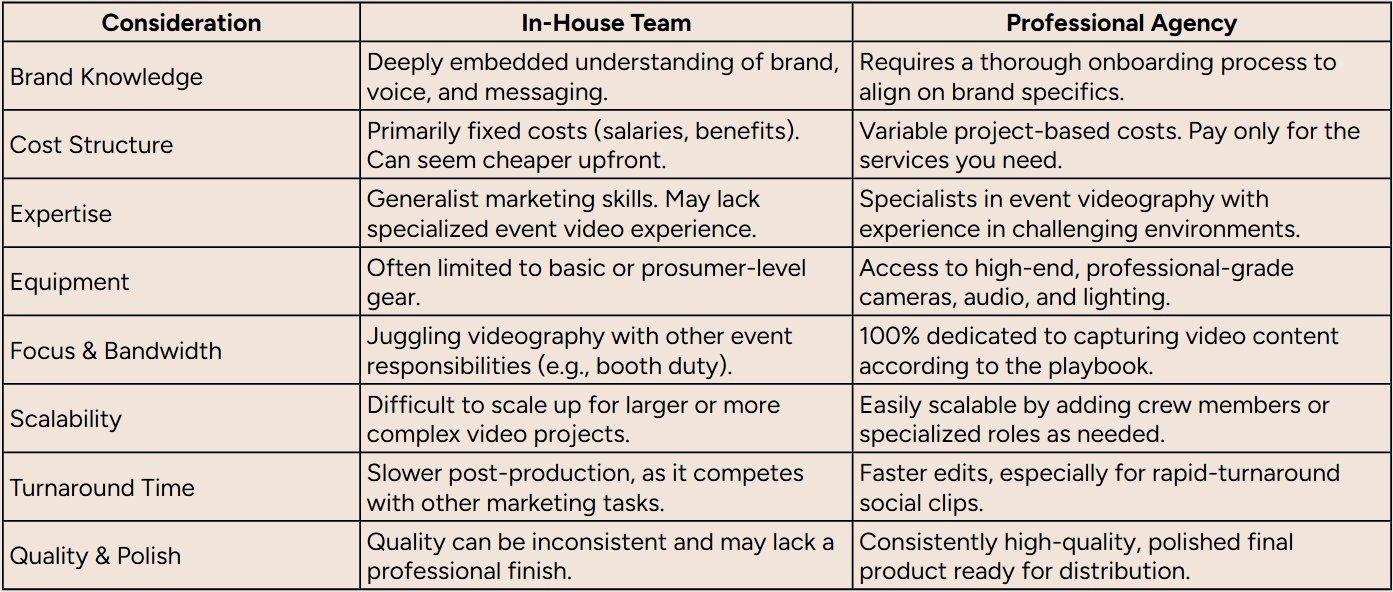
Ultimately, the decision hinges on your specific goals and resources. For simple, internal-facing content, an in-house team might suffice. But for high-stakes, brand-defining video that needs to drive real business results, the expertise and focus of a professional agency are often indispensable.
How To Vet A Potential Video Crew
When you’re ready to look for an agency, you need to dig deeper than their highlight reel. You're searching for a partner who genuinely understands the pressures and goals of B2B event marketing.
Use this checklist during your vetting process:
- Check Their B2B Portfolio: Ask for specific examples of trade show work they've done for companies in your industry. Look for sizzle reels, product demos, and client testimonials from other corporate events.
- Gauge Their Strategic Input: A great partner won't just take orders. They'll ask sharp questions about your goals, audience, and distribution strategy, and they should be bringing fresh ideas to the table.
- Confirm Their On-Site Process: How do they work on the ground? Ask about their data backup workflow, who the main point of contact is, and what happens if a scheduled interview cancels last minute.
- Discuss Post-Production Timelines: Nail down firm turnaround times for different video assets. Getting those social clips edited and posted while the event is still happening is key to maximizing buzz.
For B2B companies looking for a seamless, end-to-end solution, dedicated services are designed to manage this entire process. An integrated approach, like the one offered by our event videography services, ensures your video content is perfectly woven into your broader thought leadership and demand gen strategy. This elevates your video production from a one-off task to a core engine of your marketing, delivering real impact long after the expo hall is empty.
Frequently Asked Questions About Trade Show Videography
Even with the best-laid plans, jumping into trade show videography for the first time will kick up a bunch of questions. So, let's get straight to it. Here are some of the most common things B2B marketers ask, with practical, no-fluff answers to help you navigate your next event.
Think of this as the cheat sheet to help you set realistic expectations, put your budget where it counts, and build a video strategy that actually works.
How Much Does Trade Show Videography Typically Cost?
Honestly, costs are all over the map. It really depends on what you’re trying to accomplish, the size of the crew you need, and how polished you want the final videos to be.
For a simple setup, say, a single videographer for one day, you might be looking at a range of $1,500 to $3,000. But if you're thinking bigger, like a multi-person crew with top-tier audio gear and a bunch of complex editing, that number could easily jump to $10,000 or more.
The right investment is always tied to your goals. If you just need a handful of raw, energetic clips for social media, you can keep things lean. If you’re gunning for a slick brand video that’s going to live on your homepage for the next year, you’ll need to invest more.
Always, always insist on a detailed quote. It should clearly break down the costs for pre-production (planning), on-site filming (crew and gear), and post-production (editing). That transparency is the only way to know exactly where your money is going.
What Is A Realistic Turnaround Time For A Sizzle Reel?
Speed is everything if you want to capitalize on that post-event buzz. For a high-energy sizzle reel, a realistic and effective turnaround time is 3 to 5 business days after the show wraps up. This hits the sweet spot; it’s fast enough that the event is still fresh in everyone's minds and perfect for dropping into your follow-up email campaigns.
But for social media clips, you need to think even faster. For those quick, punchy soundbites or behind-the-scenes moments, you should be pushing your video partner for a 24-hour or even same-day turnaround. This is how you join the real-time conversation and get the most out of the event's momentum.
What Are The Most Important Videos To Capture?
It's so easy to get caught up trying to film everything. Don't fall into that trap. The key to getting a real ROI is to prioritize. Focus your crew on capturing the assets with the longest shelf life and the most value for your sales and marketing teams.
Here are the three big ones to nail down:
- Client Testimonials: These are pure gold. Getting a happy customer on camera at a major industry event feels so much more authentic than a polished, studio-shot testimonial ever could.
- Product Demos: Show, don't just tell. A clean, clear video of your product in action, solving a real problem for a real person, is one of the most powerful sales tools you can walk away with.
- Thought Leadership Interviews: Grab your execs, key partners, or any industry experts you have access to for a sit-down interview. These conversations position you as an authority and can be chopped up into a mountain of content for months to come.
These three assets deliver far more lasting business value than just another montage of a crowded show floor.
How Can I Measure The ROI Of My Event Videos?
Measuring the return on your video investment must start with the business goals you set in your pre-show playbook. Forget vanity metrics like total views; they don't tell you much. To really understand the impact, you must connect video performance to actual business outcomes.
Start with the basics, like watch time and engagement rates on social, to see what content is actually resonating. Then, go deeper. If a video is on a landing page, what’s its conversion rate? By adding UTM parameters to the links you share, you can see exactly how much website traffic your event content is driving. You can learn more about this by exploring different approaches to calculating marketing ROI.
Ultimately, the best measure of success is connecting video engagement directly to your pipeline. Keep track of which leads watched your event videos and see how that correlates with closed deals down the road. That’s where the real story is.
Executing a high-impact trade show video strategy requires specialized expertise, from pre-production planning to rapid-turnaround editing. If you're looking for a partner to manage the entire process and deliver polished, on-brand video content, Fame can help. Explore our End-to-End Video Production Services for Businesses to learn how we help B2B brands turn live events into a year-long content engine.
