March 13, 202623 min read9 sections
7 Best Podcast Website Examples B2B Marketers Can Learn From In 2026
By Fame Team
Key Takeaways
- A dedicated podcast website acts as a central marketing hub to turn listeners into leads and build brand authority.
- An effective podcast website is more than just a playlist, it's an SEO engine and lead generation tool.
- Selecting the right foundation, such as a content management system, is crucial when developing a podcast website.
A great podcast is only half the battle. To turn listeners into leads and build true brand authority, you need a dedicated podcast website that acts as a central marketing hub. An effective site isn't just a playlist; it's an SEO engine, a lead generation tool, and the ultimate home for your show's content. Too many B2B brands treat their podcast website as an afterthought, leaving pipeline and authority on the table.
This breakdown moves beyond simple audio players to analyze high-performing podcast website examples from shows like Acquired, Masters of Scale, and HBR IdeaCast. We will dissect the specific tactics they use to convert audience engagement into measurable business outcomes. You will get a behind-the-scenes look at their homepage designs, SEO-friendly episode pages, and strategic lead-generation CTAs.
To get started quickly, a basic hosting service like Fame Host can provide a simple, functional website for your podcast. However, if you need more advanced features, customization, and control, a dedicated podcast website builder like Podpage is a powerful next step. When developing your podcast website, selecting the right foundation is crucial. You'll need to explore the available options and choose from the best content management systems to support your long-term goals.
Each example in this listicle includes screenshots, direct links, and an actionable checklist. You'll gain a clear blueprint for transforming your audio content into a strategic business asset.
1. Acquired
The website for the Acquired podcast is a masterclass in turning a content-rich show into a multi-channel media brand. It serves as an excellent reference point for B2B marketers who want their podcast to function as a collection of evergreen, searchable content assets rather than just a fleeting audio stream. The homepage immediately presents clear conversion paths, prioritizing actions that grow the show's owned audience.
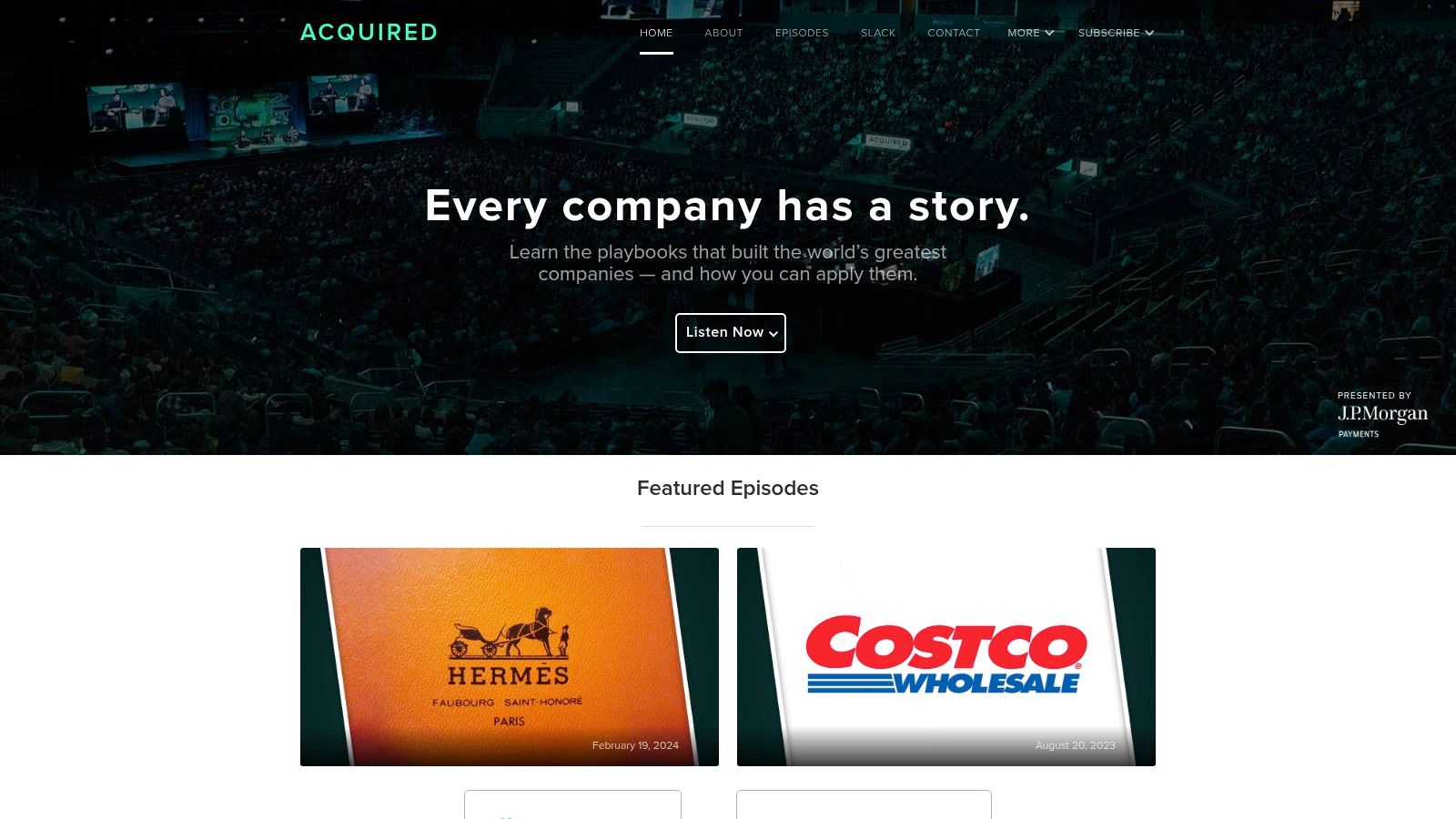
From the moment a visitor lands, they are met with prominent "Listen Now" and "Subscribe" buttons. These CTAs are not buried; they are positioned above the fold and offer one-click access to every major podcast player. This multi-platform approach removes friction and caters to listener preferences, maximizing the chances of securing a new subscriber.
Strategic Breakdown
Acquired stands out by creating a central hub for its entire ecosystem. It’s more than just an episode list; it's a strategic asset designed for audience growth and monetization.
- Conversion-Focused Design: The site prioritizes three key actions: subscribing to the podcast, joining the newsletter, and engaging with the Slack community. This creates a powerful flywheel where listeners are drawn deeper into the brand's orbit.
- Monetization Hub: A dedicated "Sponsors" page and clear "Speaking" request section centralize business operations. This professional approach makes it easy for potential advertisers and event organizers to connect, turning the website into a direct revenue-generation tool.
- Content Discovery: Featured episodes and a clean, searchable archive make it simple for new visitors to discover the show’s deep dives into business and technology history. This encourages binge-listening and showcases the breadth of their content library.
Key Insight: The Acquired website demonstrates how to build a brand destination, not just a podcast player. It treats every visitor as a potential subscriber, community member, or business partner.
How to Replicate This Strategy
While a custom build like Acquired's offers maximum flexibility, you can achieve a similar strategic focus. For B2B podcasters seeking a simple, effective site, a service like Fame Host provides a solid foundation.
Here is an actionable checklist to apply these ideas:
- Prioritize Above-the-Fold CTAs: Place your primary "Subscribe" and "Listen" buttons at the very top of your homepage. Use direct links to popular platforms like Apple Podcasts, Spotify, and YouTube.
- Build Your Email List: Integrate a simple, high-visibility newsletter signup form. Offer a clear value proposition, such as exclusive content or early access to episodes.
- Create a Sponsor Page: Even if you don't have sponsors yet, create a page outlining your audience demographics and potential partnership opportunities. This signals professionalism and readiness for monetization.
- Showcase Your Best Work: Hand-pick 3-5 of your most impactful or popular episodes and feature them prominently. This serves as a curated starting point for new listeners.
- Invest in Your Gear: A professional website deserves professional audio quality. Reviewing the best podcast setup options ensures your sound matches your site's quality, creating a cohesive and impressive brand experience.
2. Masters of Scale
The website for Masters of Scale is a prime example of how a B2B podcast can be positioned as a high-end, executive-level media brand. Created by WaitWhat, the site's polished, magazine-style design signals authority and moves beyond a simple episode feed. It integrates the core podcast with events, a newsletter, and a network of sister shows, creating a complete content ecosystem. This is a powerful model for brands targeting a C-suite or enterprise audience.
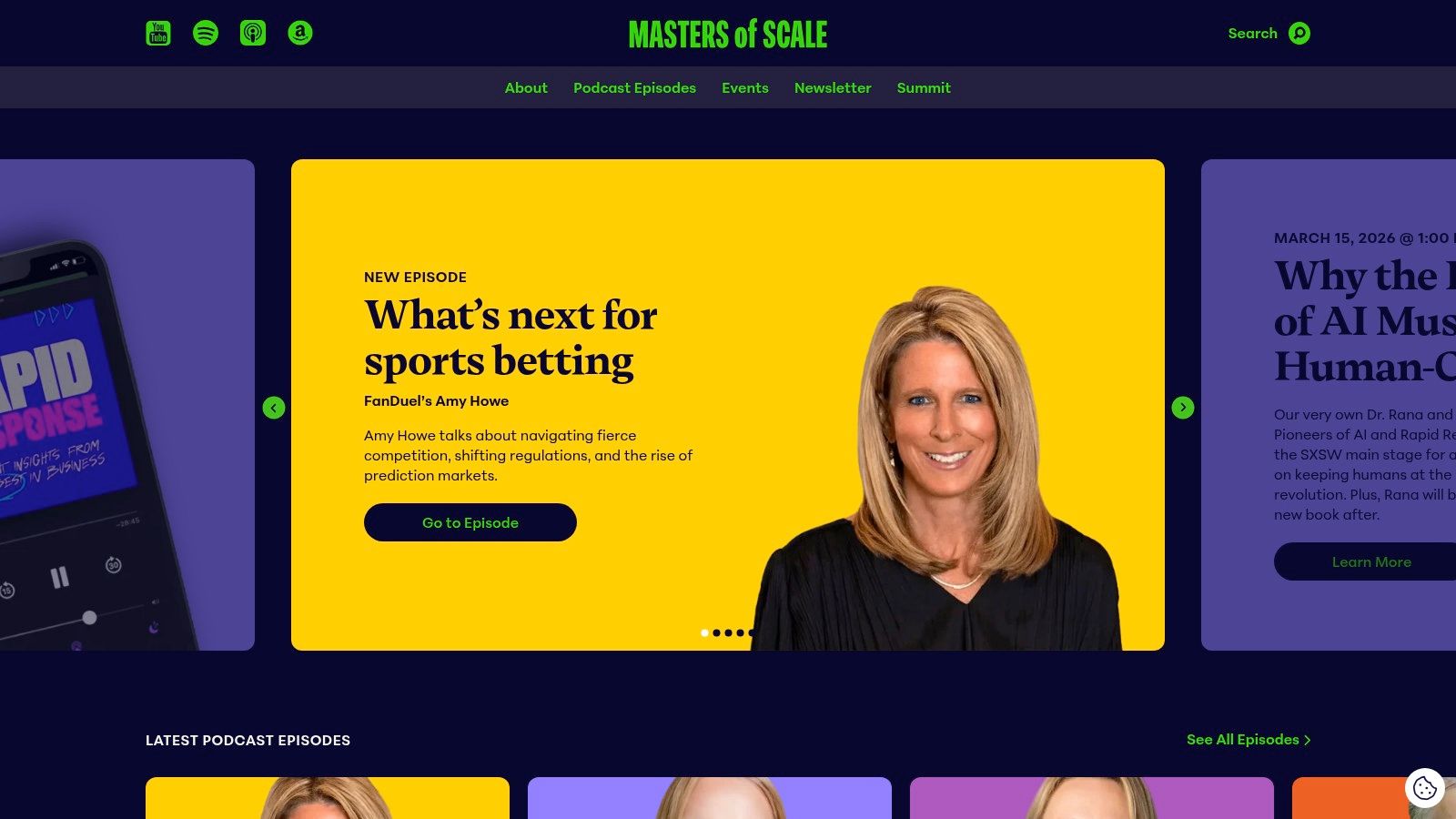
The global navigation immediately establishes the breadth of the brand with clear links to "Episodes," "Events," "Newsletter," and "Summit." This structure encourages users to explore beyond just the latest audio, positioning the podcast as one part of a larger, authoritative content universe. Episode cards provide guest and company context, which is excellent for SEO and helps new listeners find topics relevant to their interests.
Strategic Breakdown
Masters of Scale treats its website as a central hub for a multi-faceted brand, designed to capture and engage a high-value audience through various channels. It's a strategic asset for brand building and audience expansion.
- Executive-Level Branding: The site's clean, professional design speaks directly to a business-leader audience. The high-quality visuals and organized layout project an image of credibility and seriousness, which is crucial for B2B brands aiming to establish thought leadership. Consistent visual elements, from the podcast artwork to banner design, can further reinforce this polished brand identity across the website and promotional channels.
- Integrated Content Network: The website effectively cross-promotes other shows within the WaitWhat network. This creates a powerful discovery engine, keeping listeners engaged within the brand's ecosystem and increasing the total audience size across multiple properties.
- Multi-Channel Conversion: Every page presents opportunities for conversion, whether it's listening to an episode, subscribing to the newsletter, or registering for an event. The newsletter capture form, for example, previews its value proposition, increasing signup rates.
Key Insight: The Masters of Scale site shows how to build a portfolio brand around a podcast. It’s not just a show; it’s a content destination that signals authority and provides multiple avenues for audience engagement and monetization.
How to Replicate This Strategy
While a custom, high-end design like this requires significant resources, you can apply the core principles of brand extension and audience engagement to your own site. The key is to think beyond the episode list and build a true home for your brand.
For a professional-looking site without a massive budget, a basic service like Fame Host offers a straightforward way to create a central hub.
Here is an actionable checklist to apply these ideas:
- Establish Clear Navigation: Organize your site with a global menu that highlights key parts of your brand beyond episodes, such as a "Resources" section, "Events," or a "Contact Us" page for business inquiries.
- Cross-Promote Your Assets: If you have a newsletter, blog, or YouTube channel, feature them prominently on your homepage. Create an interconnected content web.
- Optimize Episode Pages: Don't just post an audio player. Add guest bios, company links, and topical tags to each episode page to improve SEO and user discovery.
- Signal Your Target Audience: Use design elements, imagery, and language that resonate with your ideal listener. If you target executives, your site should look and feel professional and polished.
- Build Your Marketing Funnel: Ensure your website is a core part of your strategy by connecting it to professional podcast marketing services that can drive targeted traffic and convert listeners into leads.
3. a16z Podcast Network
The a16z Podcast Network website serves as a powerful model for B2B brands that manage multiple audio series or content verticals. Instead of a single show focus, it functions as a centralized hub, elegantly organizing a portfolio of podcasts under one corporate umbrella. This approach is ideal for enterprises aiming to capture distinct audience segments-from AI to fintech-without fragmenting their brand presence.
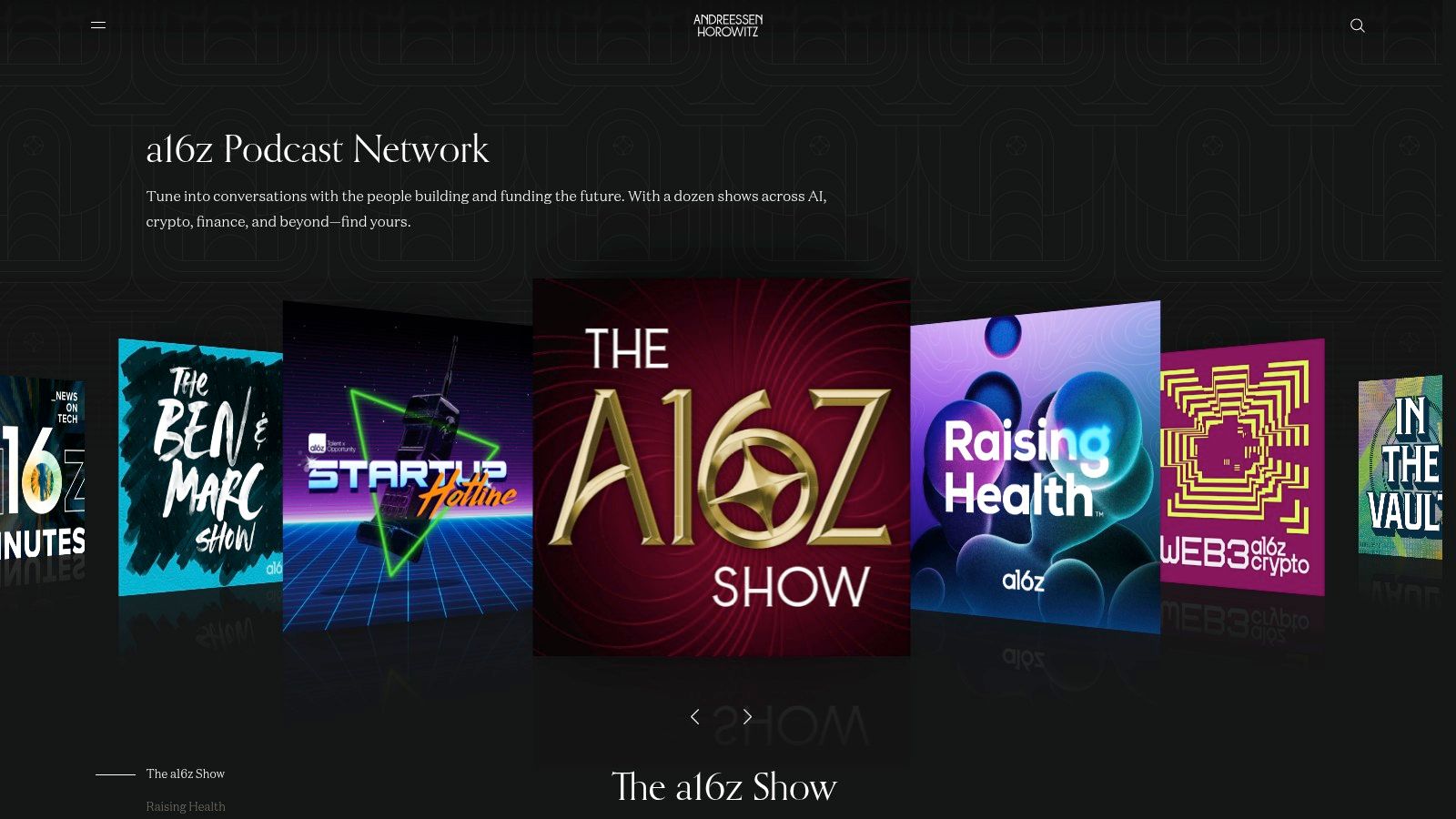
The landing page immediately presents a clear directory of their shows, each with a concise value proposition. This allows visitors to self-select the content most relevant to their interests, such as "Future of AI" or "The American Dynamism Show." The design prioritizes discovery and cross-promotion, guiding users to relevant series and deeper content funnels like articles and newsletters.
Strategic Breakdown
a16z’s website excels at information architecture, turning a potentially confusing collection of shows into an intuitive and cohesive brand experience. It's a strategic asset for audience segmentation and corporate thought leadership.
- Unified Brand Hub: The site successfully brings multiple distinct podcasts together, reinforcing the authority of the parent brand (Andreesen Horowitz) while allowing each show to maintain its unique identity. This is a key strategy for any B2B company operating different content pillars.
- Audience Self-Segmentation: By clearly labeling each podcast by topic (e.g., AI, crypto, health), the site empowers visitors to find their niche. This reduces drop-off and ensures listeners connect with the most relevant content, increasing engagement.
- Deeper Content Funnels: The website doesn't just promote podcasts; it integrates them with the firm's broader content ecosystem. Visitors are guided toward related articles and newsletters, moving them further down the marketing funnel and capturing their interest beyond just audio.
Key Insight: The a16z website proves that a podcast network hub can be more effective than scattered, individual show sites. It centralizes brand authority and maximizes cross-show discovery.
How to Replicate This Strategy
While a16z's site is a custom build, you can create a similar network hub experience for your brand's podcasts. The key is choosing a tool that allows for clear categorization and multiple content feeds.
For those just starting with one show but with plans to expand, a simpler solution like Fame Host can establish a professional foundation that you can build upon later.
Here is an actionable checklist to apply these ideas:
- Create a "Network" Homepage: Design a main landing page that lists all your podcasts. For each show, include the cover art, a one-sentence pitch, and a clear "Learn More" or "Listen Now" button.
- Segment by Topic: Group your shows by their core themes or target audiences. This helps new visitors quickly identify the content that is right for them.
- Build Individual Show Pages: Each link from the main hub should lead to a dedicated page for that specific podcast, complete with its own episode archive, show notes, and subscription links.
- Integrate Other Content: On each show page, link to relevant blog posts, whitepapers, or case studies that align with the podcast's topic. This creates a richer content experience.
- Cross-Promote in Audio: Use your podcast episodes to mention other shows in your network. For example, at the end of a marketing podcast, you could say, "If you're interested in sales, check out our other show, The Deal Closer."
4. HBR IdeaCast
The HBR IdeaCast website is a prime example of how to seamlessly integrate a podcast into a larger, established media brand. For B2B companies with existing content operations, it shows how to use the credibility and domain authority of a parent site to elevate a podcast. Instead of building a standalone site, HBR embeds IdeaCast directly into its ecosystem, making it a natural extension of its core editorial content.
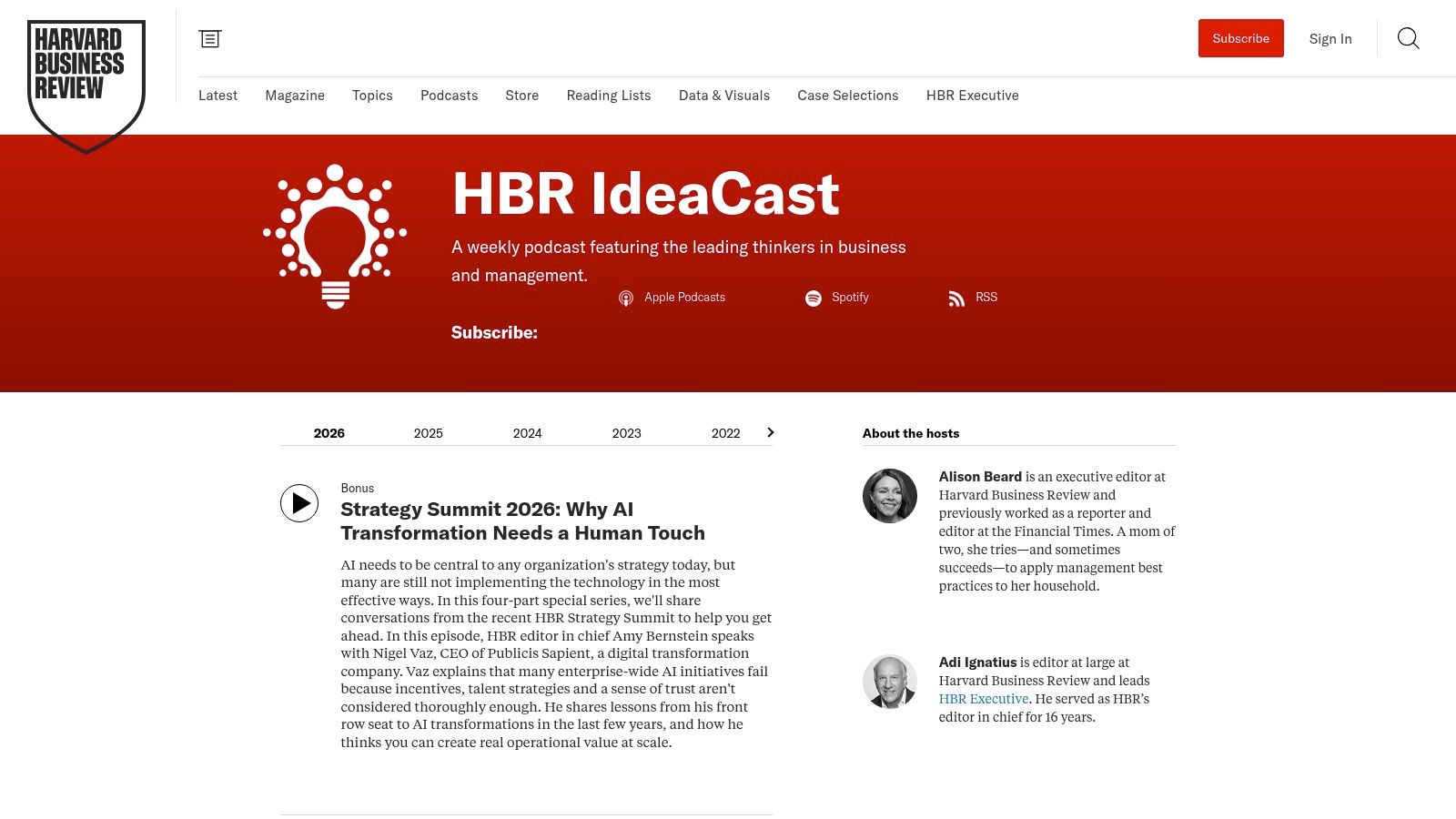
The landing page is clean, professional, and directly supports the podcast’s mission: delivering expert management insights. Clear subscribe buttons for Apple Podcasts, Spotify, and RSS are immediately visible, catering to listeners on major platforms. By placing the podcast within the main HBR.org domain, every episode benefits from the site's immense SEO strength and built-in audience of business professionals.
Strategic Breakdown
HBR IdeaCast's strength lies in its deep integration with Harvard Business Review's content universe, which creates a powerful discovery loop. This is a model for B2B marketers looking to position their podcast as an authoritative voice within their industry.
- Borrowed Authority: By living on HBR.org, the podcast instantly gains credibility and trust. The association with a world-renowned business publication signals quality and authority before a visitor even presses play.
- Content Cross-Pollination: The site connects podcast episodes with related HBR articles, case studies, and topic pages. This encourages listeners to explore more content, increasing time on site and exposing them to HBR's paid offerings and subscriptions.
- Clean, Corporate-Friendly Design: The minimalist, on-brand design makes it easy for executives and internal teams to share episodes. Its professional presentation aligns with corporate communication standards, making it a shareable asset. Note that while some HBR content is paywalled, the podcast itself remains freely accessible.
Key Insight: Integrate your podcast with your primary business website to transfer brand authority and create a unified content experience. This turns your podcast from a siloed project into an integral part of your marketing engine.
How to Replicate This Strategy
You don't need to be a global media entity to apply this thinking. The core principle is to treat your podcast as a key piece of your company's thought leadership, not a separate hobby. The goal is to create a central hub for your brand's expertise.
If you’re looking for a simple way to create a professional podcast page that lives on your domain, a service like Fame Host can help you get started quickly.
Here is an actionable checklist to apply these ideas:
- Host on Your Main Domain: If possible, create your podcast page as a section of your company’s main website (e.g.,
yourcompany.com/podcast). This consolidates SEO authority. - Cross-Link Content: For every episode page, add a section that links to related blog posts, white papers, or webinars on your site. This creates a "content web" that keeps visitors engaged.
- Feature Your Hosts: Create a bio page for your podcast hosts that highlights their expertise and credentials. This helps listeners connect with the personalities behind the microphone and can improve an executive’s online presence.
- Maintain Brand Consistency: Ensure your podcast page’s design, fonts, and colors match your corporate brand guidelines. This creates a cohesive and trustworthy user experience.
5. Planet Money (NPR)
The website for NPR's Planet Money serves as a powerful model for established brands looking to add a premium layer to a mass-reach show. It is a clean, trusted hub that prioritizes content discovery while clearly signposting a path to its membership program, NPR+. This approach is particularly relevant for B2B brands considering freemium content models to segment their audience and create new revenue streams.
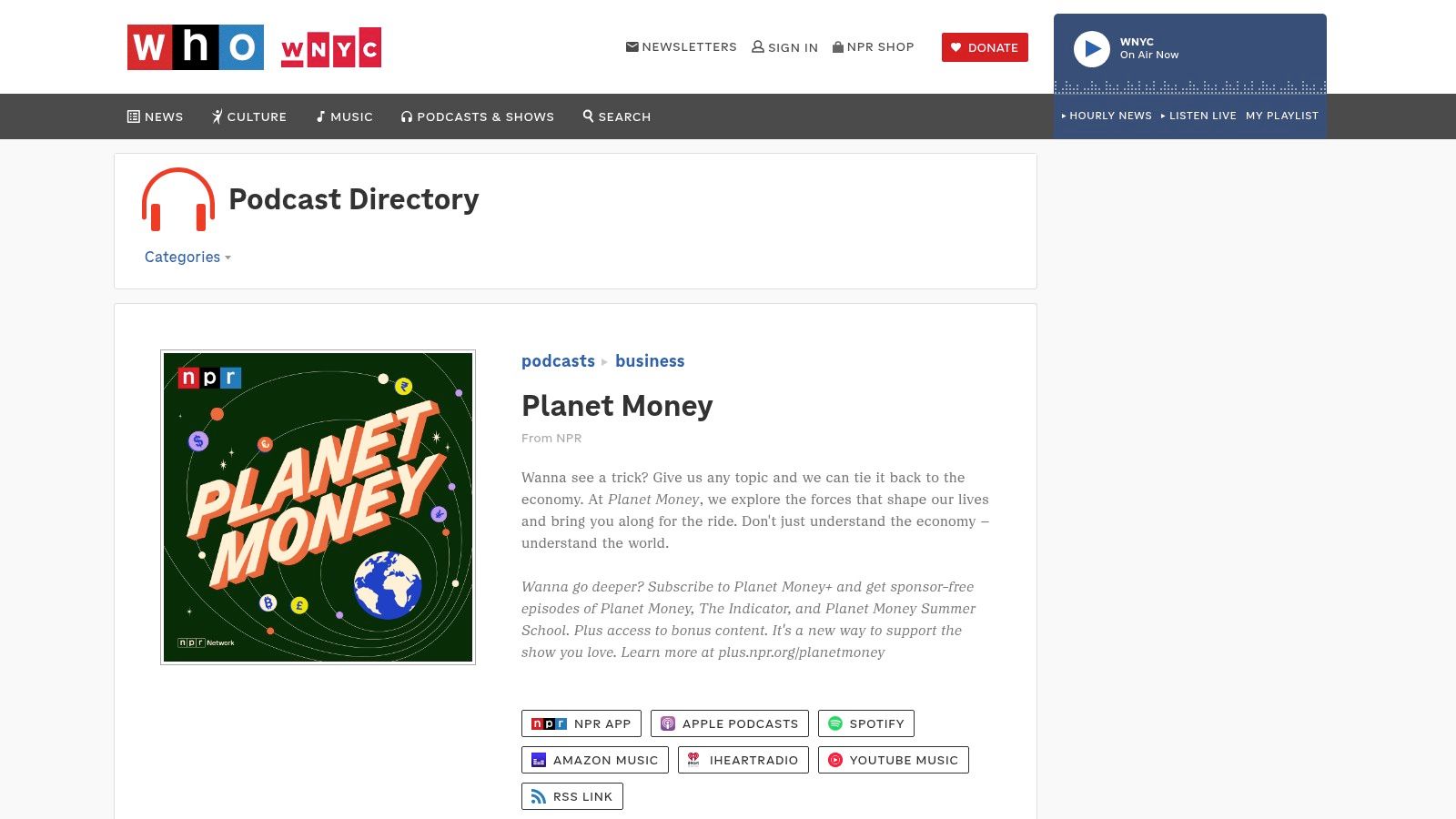
As part of the larger NPR ecosystem, the page benefits from a high-authority domain and a simple, user-friendly layout. It presents a straightforward chronological feed of episodes, making it easy for listeners to browse the back catalog. The core value lies in its integration with NPR+, a transparent monetization strategy that offers bonus episodes and sponsor-free listening in exchange for listener support.
Strategic Breakdown
Planet Money's site is less a standalone destination and more a critical node in the vast NPR network. Its strength comes from this integration, demonstrating how a podcast can successfully live within a larger media brand's digital property.
- Clear Membership Funnel: The site consistently promotes the NPR+ offering, providing a clear call-to-action for dedicated listeners to upgrade. This "freemium" approach allows the show to maintain its broad reach while monetizing its most engaged audience segment.
- Trusted Brand Association: By being hosted on NPR.org, the podcast inherits immense credibility and authority. This structure shows how B2B companies can position their podcasts within their main corporate website to lend the show instant legitimacy.
- Frictionless Distribution: The page provides prominent links to listen on major platforms. This focus on making the content accessible wherever the listener prefers is a key lesson in audience growth, a topic central to choosing the best podcast distribution platforms.
Key Insight: The Planet Money page shows that you don't need a complex, standalone website to build a successful membership program. A clean episode hub on a high-authority domain can effectively convert casual listeners into paying members.
How to Replicate This Strategy
While you may not have NPR's domain authority, you can replicate the core strategy of a simple content hub with a premium upsell. The key is to keep the public-facing site clean and focused on discovery, while making the premium offer clear and compelling.
For a basic but effective site, a service like Fame Host is an excellent starting point.
Here is an actionable checklist to apply these ideas:
- Develop a Freemium Model: Offer the majority of your episodes for free, but create exclusive bonus content (e.g., ad-free episodes, extended interviews, Q&A sessions) for paying members.
- Integrate with Your Main Brand Site: House your podcast on a subpage of your primary business website (e.g.,
yourcompany.com/podcast). This transfers brand trust and SEO authority to your show. - Prominently Feature the "Upgrade" CTA: Place clear, consistent banners and links that explain the benefits of your premium tier and guide users to the sign-up page.
- Use a Simple, Clean Layout: An endlessly scrolling list of episodes with clear titles and short descriptions is often more effective than a busy, feature-heavy design.
- Choose a Scalable Platform: Start with a simple solution like Fame Host if you're on a budget. If your goal is a custom membership program, plan to use a more robust platform like Podpage that can handle the complexity.
6. 99% Invisible
The website for 99% Invisible is a premier example of how to build a content library that is both deeply engaging and highly discoverable. For any podcaster with a substantial back catalog, this site serves as a blueprint for organizing content in a way that encourages exploration and boosts episode-level SEO. It prioritizes accessibility and user experience, making its vast archive feel approachable rather than overwhelming.
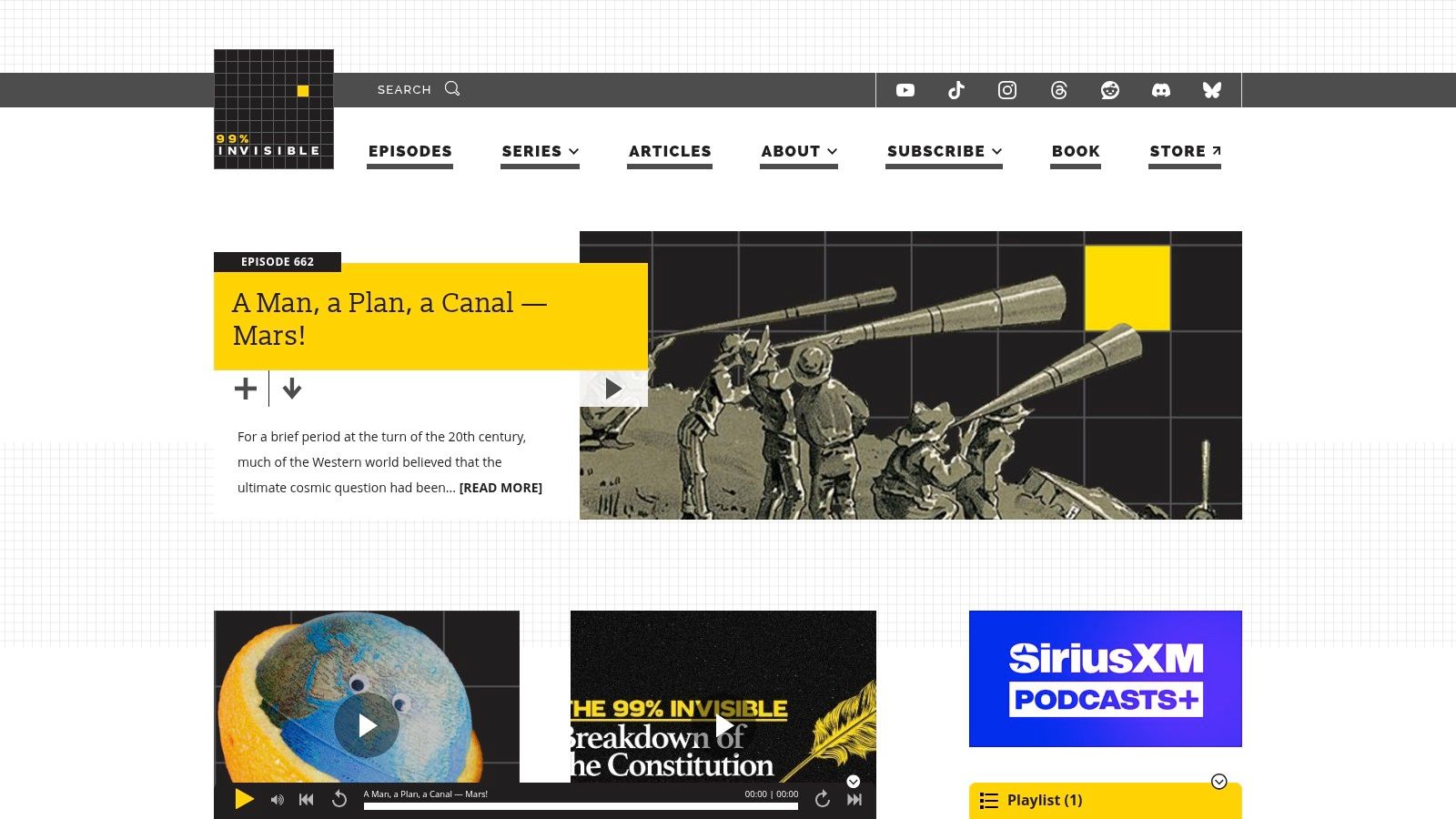
The design places a strong emphasis on content discovery. The homepage immediately presents a grid of recent episodes, complete with a powerful search bar and clear category filters like "Architecture," "Infrastructure," and "Graphic Design." This taxonomy allows listeners to navigate the hundreds of episodes based on their specific interests, turning a passive listener into an active explorer of the show's content.
Strategic Breakdown
99% Invisible treats its website as a public-facing archive, built for longevity and search engine visibility. It’s less about immediate conversion and more about providing a durable, high-quality home for its journalism.
- Content-First Organization: The site's primary function is to surface episodes. The use of a robust category system, combined with a powerful search function, makes the entire back catalog accessible. This is a critical strategy for shows with evergreen content.
- Accessibility as a Priority: Every episode page includes an on-site audio player, a link to the full transcript, and options for downloading the audio file. This commitment to accessibility not only serves a wider audience but also provides search engines with a trove of indexable text content.
- Clear Support Pathways: The website features distinct "Donate" and "Newsletter" modules. While the monetization is softer than a B2B podcast's lead-gen form, the principle is the same: create clear, persistent calls-to-action that support the show's growth and sustainability.
Key Insight: The 99% Invisible website proves that a rich content archive can be your greatest asset. By investing in taxonomy and accessibility, you turn your back catalog into a powerful tool for audience engagement and organic discovery.
How to Replicate This Strategy
Achieving this level of archival organization is possible with modern website builders. For a straightforward site, a platform like Fame Host provides the core features to launch and manage your show.
Here is an actionable checklist to apply these ideas:
- Develop a Content Taxonomy: Before you have hundreds of episodes, start categorizing them. Use 5-7 broad tags that reflect your main content pillars and apply them consistently.
- Publish Full Transcripts: Use a transcription service for every episode and publish the full text on its corresponding page. This is a massive SEO win and an accessibility must-have.
- Feature a Prominent Search Bar: Place a search bar in your website header or at the top of your episode archive page. Ensure it searches episode titles, show notes, and transcripts.
- Offer Multiple Listening Options: On each episode page, include an embedded player, a direct download link, and buttons to major podcast apps.
- Focus on Production Quality: A well-organized site needs audio that holds up to scrutiny. Learning how to produce a podcast with professional sound ensures the user experience is excellent from start to finish.
7. The Journal (WSJ and Spotify Studios)
The Journal’s presence on the Wall Street Journal website is a prime example of how a high-cadence podcast can be seamlessly integrated into a massive media publisher’s digital ecosystem. For B2B brands that are part of a larger corporate structure, this model shows how to use the parent company's domain authority and brand credibility to give a podcast immediate lift and an established home. The page functions as an authoritative archive and a discovery point within a trusted news environment.
Unlike standalone podcast sites, The Journal's page is designed for an audience already engaged with the WSJ brand. It prioritizes content consumption directly on the page with a clean, reverse-chronological episode feed. Each entry includes a concise, news-style summary and a prominent play button, reinforcing its role as a core piece of WSJ's daily content offering, just like an article.
Strategic Breakdown
The Journal’s website strategy is about deep integration and brand halo, not standalone audience building. It uses the power of the WSJ platform to confer authority and reach a built-in audience of business professionals.
- Borrowed Authority: By living on the wsj.com domain, the podcast immediately benefits from the site's high domain authority and brand trust. This is a powerful advantage for discoverability and credibility, especially when targeting senior decision-makers.
- Frictionless Internal Discovery: The podcast is treated as a primary content category within the WSJ navigation. This makes it easily discoverable for millions of existing readers, turning a loyal readership into a potential listenership without needing external marketing.
- Content-First Layout: The design is minimal and functional. It focuses entirely on presenting the episodes, their descriptions, and the transcript. There are no distracting CTAs for newsletters or communities, as the primary goal is content consumption within the publisher’s environment.
Key Insight: A podcast can be a powerful extension of an existing content engine. By hosting it on your main corporate domain, you can transfer brand equity and SEO authority directly to your show.
How to Replicate This Strategy
While most B2B brands don't have the reach of the Wall Street Journal, the core principle of integration is highly replicable. Instead of building a separate microsite, consider housing your podcast within a dedicated section of your main corporate website. This consolidates your SEO efforts and keeps your audience in one place.
For a simple, integrated approach, a service like Fame Host can create a clean podcast page that can be linked from your main site's navigation.
Here is an actionable checklist to apply these ideas:
- Create a "/podcast" Subdirectory: Host your podcast on your main domain (e.g.,
yourcompany.com/podcast) to consolidate SEO authority. - Integrate with Main Navigation: Add "Podcast" as a primary item in your website's main navigation bar to signal its importance and improve discoverability.
- Provide Full Transcripts: For every episode, post a full, machine-readable transcript. This makes your audio content indexable by search engines and accessible to a wider audience.
- Use a Consistent Brand Style: Ensure the podcast page's design, fonts, and colors match your corporate brand guidelines to create a seamless user experience.
- Cross-Promote with Written Content: Link to relevant podcast episodes from your blog posts, case studies, and white papers, and vice versa. This creates a web of internal links that boosts SEO and keeps users engaged with your content ecosystem.
7 Podcast Websites: Side-by-Side Comparison
| Example | Implementation Complexity 🔄 | Resource Requirements ⚡ | Expected Outcomes ⭐📊 | Ideal Use Cases 💡 | Key Advantages |
|---|---|---|---|---|---|
| Acquired | Medium - homepage with episode archive and community workflows | Moderate - podcast production, email platform, community management, sponsor pages | ⭐ Evergreen episode assets 📊 Consistent subscriber and email conversion growth |
B2B long-form podcasts that want searchable content libraries | Strong on-site conversion paths with a centralized sponsor hub |
| Masters of Scale | High - magazine-style website with multiple content sections and events | High - editorial team, premium design, event operations, cross-promotion | ⭐ Executive-level authority 📊 Scalable audience and brand growth |
B2B podcasts expanding into media brands, newsletters, and live events | Enterprise-quality design with multiple conversion opportunities throughout the site |
| a16z Podcast Network | Medium - unified navigation and structured multi-show architecture | Moderate - content management for multiple shows and information architecture planning | ⭐ Better cross-show discovery 📊 Improved audience segmentation and engagement |
Organizations managing several podcast series under one brand | Excellent information architecture with consistent brand identity |
| HBR IdeaCast | Low-Medium - integrated into an existing editorial website | Low-Moderate - existing CMS, editorial workflows, and content distribution | ⭐ Strong credibility 📊 Access to an established executive audience |
Companies aligning podcasts with blogs, research, or editorial publications | Benefits from high domain authority and seamless editorial integration |
| Planet Money (NPR) | Medium - traditional podcast hub with premium membership features | Moderate-High - membership platform, bonus content, subscriber management | ⭐ Broad audience reach 📊 Membership revenue and stronger listener loyalty |
Established podcasts exploring premium subscriptions and memberships | Trusted editorial reputation with transparent membership monetization |
| 99% Invisible | Medium-High - extensive searchable archives, transcripts, and taxonomy | High - transcription, SEO optimization, archive management, UX maintenance | ⭐ Exceptional SEO visibility 📊 Long-term discovery across a large content library |
Storytelling podcasts prioritizing evergreen traffic and accessibility | Comprehensive archive experience with highly searchable transcripts |
| The Journal (WSJ & Spotify) | Low-Medium - publisher-integrated website supporting a daily release schedule | Low-Moderate - daily production team and publisher collaboration | ⭐ Strong brand credibility 📊 Habit-forming daily audience engagement |
Business news podcasts published alongside established media brands | Benefits from trusted publisher authority and broad distribution |
Your Blueprint for a High-Performance Podcast Website
Across the spectrum of podcast website examples we've analyzed, from the deep-dive content of Acquired to the polished media presentation of The Journal, a clear pattern emerges. A high-performance podcast website is not a passive archive; it's an active, strategic hub designed to achieve specific business outcomes. It serves as the central point of gravity for your audio content, transforming casual listeners into a dedicated audience and, for B2B brands, into qualified leads.
The most effective sites we examined share a common DNA. They prioritize user experience, making it effortless for visitors to find, consume, and share content. They also function as powerful marketing engines, built with clear conversion goals in mind. Your primary takeaway should be that every pixel on your podcast's website must have a purpose.
From Analysis to Action: Core Principles to Implement
To move from inspiration to execution, focus on replicating the core strategies demonstrated by these leading shows. The goal is to build a digital home for your podcast that works as hard as you do.
- Homepage as a Value Proposition: Your homepage isn't just a welcome mat. As seen with Masters of Scale, it must immediately answer "What's in it for me?" for the visitor. A strong headline, a concise show summary, and a prominent email capture form are non-negotiable.
- Episode Pages as SEO Powerhouses: Don't just embed a player. Follow the lead of 99% Invisible and HBR IdeaCast by creating rich episode pages. Include detailed, SEO-friendly show notes, full transcripts, key takeaways, and links to guest profiles or resources. This content is what search engines index, making your show discoverable to new audiences.
- Strategic Calls-to-Action (CTAs): Every page should guide the user toward a next step. Whether it’s subscribing to your newsletter, following on social media, or exploring a related product or service, your CTAs should be visible, clear, and relevant to the content on the page.
- Beyond the Episode: Build a resource library. The a16z podcast network excels at this by organizing content around themes and industries, creating an evergreen content moat. This turns your site from a simple show feed into a true thought leadership platform.
Choosing the Right Tools for the Job
With a clear strategy, the next step is implementation. The tool you choose should align with your technical resources, budget, and long-term goals. To lay a solid foundation for your online presence, consult a practical guide to website design and development.
- For a Basic, Quick Start: If you need a professional, functional website quickly without a heavy technical lift, a managed solution like Fame Host is an excellent starting point. It provides a clean, well-designed site that covers all the essentials, allowing you to focus on creating great content.
- For Advanced Customization: If your goals include deeper customization, advanced integrations, or unique design elements, a more flexible platform like Podpage is a superior choice. It offers robust features specifically for podcasters, giving you the control to build a site that truly reflects your brand and incorporates the advanced strategies we’ve discussed.
Ultimately, the best podcast website examples demonstrate that success is not about having the biggest budget; it's about having the smartest strategy. By focusing on creating value for your listener at every digital touchpoint, you can build a website that not only hosts your show but becomes a primary driver of your brand's growth and authority.
Ready to stop just hosting your podcast and start growing your business with it? Fame is the B2B podcast marketing agency that turns your show into a pipeline-driving machine. From production and promotion to building a high-performance website that converts, we handle the entire process so you can see a real return on your audio investment. Learn more about how Fame can build your B2B podcasting engine.
Want us to run this for you?
Fame starts and grows B2B podcasts that generate pipeline. Tell us who you are trying to reach and we will send a costed proposal within 48 hours.
Related content
- Read moreFame Team · July 16, 2026
10 Account Based Marketing Tactics For B2B Growth In 2026
Discover 10 actionable account based marketing tactics for B2B tech. Learn to use podcasts, data, and targeted content to close high-value accounts. - Read moreFame Team · July 16, 2026
The 8 Best Brighton Podcast Agency Picks For 2026
Find the best Brighton podcast agency for your B2B brand. Our 2026 guide reviews top 8 agencies for production, growth & ROI. Expert analysis here - Read moreJune 10, 2026
20 Best Podcast Production Agencies For 2026 (And Why Should You Hire One)
Global podcast and vodcast ad revenues are on track to hit $5 billion in 2026 , up 20% year-on-year. - Read moreApril 13, 2026
Leadership In Marketing: The B2B Podcast Playbook
Most companies still confuse leadership in marketing with job titles, org charts, and budget control. That's outdated.