March 19, 202622 min read6 sections
A Guide to Spotify Podcast Hosting for B2B Growth
By Fame Team
Key Takeaways
- A strategic Spotify hosting service is necessary for B2B brands to drive business outcomes.
- The right hosting platform connects a podcast to concrete business goals and provides analytics to measure performance.
- A B2B-focused host is essential for measuring ROI and proving the effectiveness of audio content.
Getting your podcast on Spotify isn't just about uploading an audio file. It's about strategically placing your show on the planet's biggest audio stage to drive real business outcomes. For any B2B brand, this means using a specialized service like Fame Host is the only way to turn a podcast into a reliable demand gen machine.
Why Strategic Spotify Hosting Is A Must For B2B
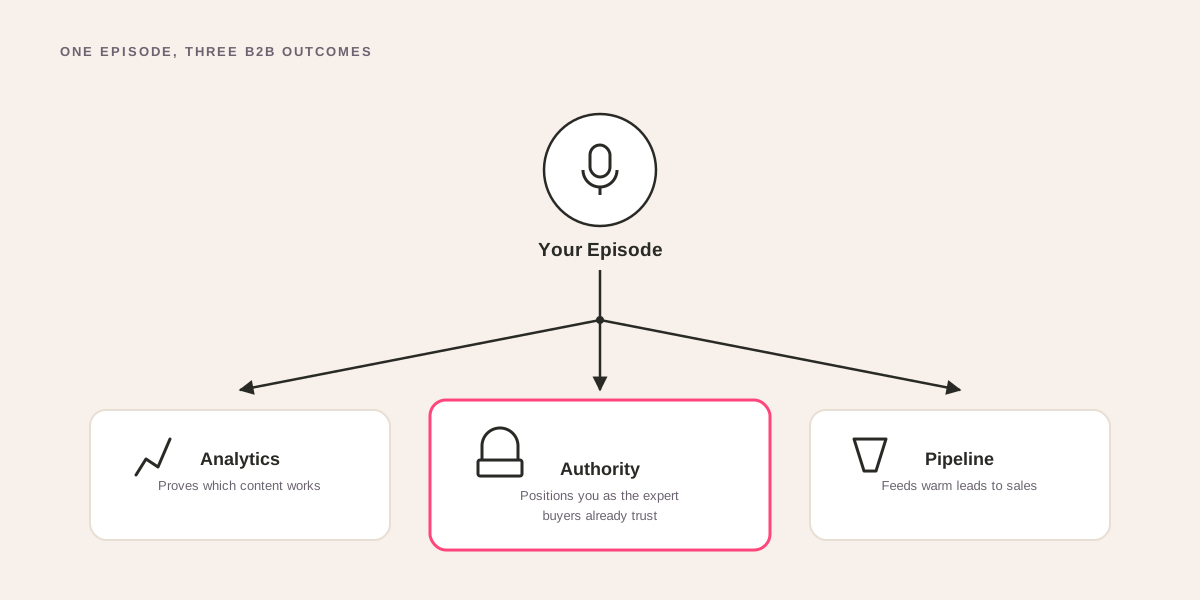
Let's be clear: for a B2B company, a podcast isn't a passion project. It’s a powerful marketing asset. But that potential is completely wasted without a distribution strategy to match. Just getting your show listed on Spotify won't fill your pipeline. Success starts with your hosting provider.
Your choice of a spotify podcast hosting platform is a core marketing decision, not an IT one. A generic host gets your files online, sure. But a B2B-focused host connects your podcast to concrete business goals, whether that’s owning a niche, establishing thought leadership, or supporting a massive funding announcement.
This difference is everything. The right host does way more than just handle the submission. It gives your demand gen team the analytics and workflow they need to actually measure performance and prove the ROI of your audio content.
The Raw Power Of Spotify For B2B Brands
Spotify has absolutely dominated the global audio market. The growth is insane, and its powerful discovery engine makes it a non-negotiable channel for any serious B2B brand. To really win, you first have to nail your audience with smart B2B segmentation.
The sheer scale of the platform is a goldmine for B2B marketers. Projections show Spotify hitting around 7 million podcast titles by late 2026, blowing past Apple Podcasts' 2.7 million. Its listener share is on track to hit 37.5% in early 2025, a massive jump from 29.4% in 2021. For you, those numbers represent a huge, engaged audience of decision-makers actively searching for expertise.
Spotify’s algorithm is a discovery machine. For a niche B2B podcast, this is huge. It means your specific expertise can get surfaced to the exact professionals you want to reach, turning listeners into qualified leads.
Just for some context, the top 1% of all podcasts pull in over 4,615 downloads per episode. The top 10% see more than 472. These aren't just vanity numbers; they’re benchmarks. A strategic host gives you the data-driven insights to aim for that level of brand recognition and authority.
Hosting Options Compared: Dedicated Host vs. Direct Management
You have a choice to make: use a dedicated host or try to manage everything yourself. For B2B marketers who need results, this decision directly impacts your workflow, reach, and ability to measure anything meaningful.
This table breaks down the real-world differences.
| Feature | Dedicated Host (e.g., Fame Host) | Direct Management |
|---|---|---|
| Distribution | One-click submission to Spotify and all major directories. Your feed is always compliant and optimized. | A manual, error-prone mess. You need technical know-how and have to constantly monitor every platform's changing rules. |
| Analytics | Advanced, B2B-focused metrics. You can track listener engagement and audience data to actually prove ROI. | You get basic download counts, which tell you almost nothing about business impact or how to improve your content. |
| Workflow | Slips right into your content process. It saves a ton of time and removes friction for your team. | A clunky, fragmented workflow that leads to inconsistent publishing and missed opportunities. |
| Support | Expert support is on standby to fix feed errors and technical glitches, keeping your show live and accessible. | You’re on your own. Diagnosing and fixing problems is your responsibility, which is a massive time sink. |
For any marketing team focused on outcomes, the choice is pretty obvious. A dedicated host stops your podcast from being a logistical nightmare and turns it into a streamlined, measurable part of your demand generation strategy. Digging into the benefits of a podcast makes it even clearer how this medium drives tangible growth - but only when you have the right infrastructure behind it.
Choosing a Hosting Hub Built for B2B Podcasting
For a B2B brand, your podcast host is so much more than a digital garage for your audio files. Think of it as the central nervous system for your entire audio strategy.
A generic host might get your show listed, sure. But a specialized B2B hosting hub like Fame Host is built from the ground up to turn your podcast into a measurable demand generation engine. Not all hosting platforms are built equal, especially when real business results are on the line.
Beyond the Basic Hosting Checklist
Most hosting services will throw a long list of features at you, but let's be honest - most are completely irrelevant for a B2B brand trying to build authority and pipeline. The only things that matter are the features that save your team time, deliver data you can actually use, and make distribution a non-issue.
Think about the classic podcasting headaches: tedious submission processes for every single platform, analytics that give you zero business insight, and a workflow that’s totally disconnected from the rest of your marketing. A top-tier B2B host solves these problems by design.
Picture a B2B tech company gearing up for a big funding round. Their goal isn't just to "have a podcast." They need to build market authority and get in front of investors and enterprise clients. A generic host offers them a file repository. A B2B host gives them a launchpad.
What to Look for in a B2B Host
When you're vetting a spotify podcast hosting provider, you have to filter every feature through the lens of your business goals. Here are the absolute non-negotiables:
- One-Click Distribution: Your team doesn't have time to manually submit your show to a dozen different platforms. A platform like Fame Host should blast your show out to Spotify, Apple Podcasts, and every other major directory with a single click. Your show needs to be everywhere your audience is, instantly.
- B2B-Centric Analytics: Forget vanity metrics like raw downloads. You need data that actually matters to your CFO. This means tracking listener demographics, geographic reach, and engagement rates - metrics that help you prove the podcast's impact on brand awareness and lead gen.
- Seamless Workflow Integration: Your podcast host should feel like a natural part of your production process. Fame Host is designed this way, plugging directly into production services to make the journey from recording to a live Spotify episode completely frictionless.
The right hosting platform does more than just publish your episodes. It amplifies them. It ensures that when you land that influential industry guest, their episode gets out flawlessly and its performance is tracked with meaningful business metrics.
Imagine you've just landed a dream guest - a well-known CEO in your space. Your host should make it dead simple to get that episode live on Spotify minutes after it's approved. It should then feed you data showing where that CEO's audience is tuning in from, giving your sales team valuable geographic insights. This is how a host becomes a strategic partner.
If you want a deeper look at how different platforms compare, our analysis of the best podcast distribution platforms breaks it all down to help you make the right call.
Solving Real-World B2B Podcasting Pains
Let's run through another common scenario. A professional services firm wants to scale its brand recognition to support an upcoming IPO. Their marketing team is lean, and every hour is precious.
With a standard host, they’d be burning hours every week formatting RSS feeds, manually checking directory listings, and trying to patch together data from multiple sources. It’s a logistical nightmare that pulls them away from creating great content.
By using Fame Host, the entire distribution process is automated. The RSS feed is always compliant with Spotify's latest tech specs, which means you don't have to worry about your show getting delisted over a technical error. The analytics dashboard gives them a single source of truth to report on audience growth, directly backing up their IPO narrative.
This is the difference between simply doing a podcast and executing a strategic podcasting program that drives real, tangible business value.
Your Step-by-Step Guide to Getting a Podcast on Spotify
Alright, you've got your B2B-focused hosting platform locked in. Now comes the exciting part: submitting your show to Spotify.
This isn't just a technical box to check. It’s the moment your new demand-gen asset goes live on the world's biggest audio stage. The whole process is actually pretty simple once you know the lay of the land, and I’m going to walk you through it so you can sidestep the common mistakes that trip people up.
First, you have to understand that the entire podcasting world - from recording to distribution - revolves around your RSS feed. It’s the single most important link between your hosting provider and the directories where people will find your show.
This visual breaks down how it all connects.
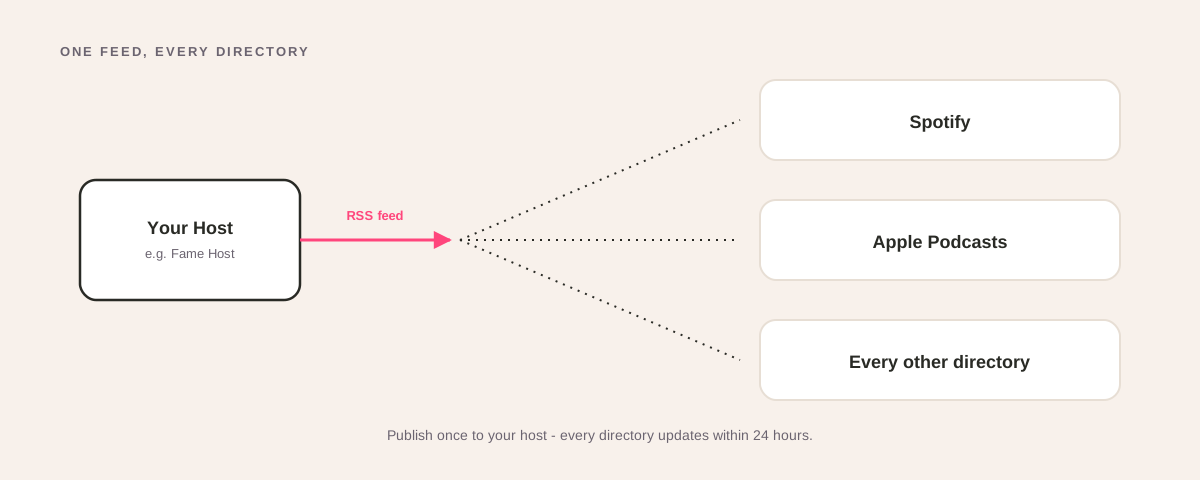
Think of your host as the central hub. A good one, like Fame Host, takes care of the complicated backend stuff and makes pushing your content to platforms like Spotify feel almost effortless.
Generating Your Spotify-Compliant RSS Feed
Your podcast host is responsible for creating and updating your RSS feed. This is non-negotiable. A dedicated B2B platform like Fame Host will automatically generate a feed that meets all of Spotify's technical specs, so you don't have to sweat the details.
Before you even think about copying that feed URL, you need to do a quick pre-flight check in your hosting dashboard. Make sure these foundational pieces are in place:
- Show Title and Description: These need to be packed with keywords relevant to your B2B audience.
- Podcast Cover Art: This is your show's first impression. It must be a square image (1:1 ratio), high-res (at least 1400x1400 pixels), and saved as a JPEG or PNG.
- At Least One Published Episode: Spotify won't list an empty feed. You absolutely must have your first episode uploaded and published before you submit.
Once you’ve ticked those boxes, just head to your host’s distribution section and copy your RSS feed URL. That one link holds everything Spotify needs - all the metadata, episode info, and audio file locations.
Navigating Spotify for Podcasters
RSS feed in hand, it's time to head over to Spotify for Podcasters. This is the official front door for getting your show on the platform.
First, you'll need an account. My advice? Use a shared team or company email, not your personal one. This saves a massive headache down the line if team members change roles.
Once you're logged in, look for the "Add your podcast" button. This is where the magic happens. Paste the RSS feed URL you just copied from your host. Spotify will pull in the data and show you a preview of your podcast. Your title, artwork, and description should all pop up exactly as you entered them.
Pro Tip: If you spot an error or something looks off in the preview, stop right there. Don't click submit. Head back to your podcast host, fix the problem (like updating the description or re-uploading the right artwork), and give the RSS feed a few minutes to refresh before trying again.
After submitting the feed, you'll have to verify that you actually own the podcast. Spotify sends a verification code to the email address listed in your RSS feed (which you set up in your hosting account). This is their way of making sure you're the real deal. Just grab that code, pop it into Spotify for Podcasters, and you're good to go.
This is a crucial hand-off. From this moment on, your host handles all the content (your episodes), while Spotify for Podcasters becomes your go-to for analytics and managing your show's presence on their platform. For a more granular breakdown of this process, check out our complete step-by-step guide on how to put a podcast on Spotify.
Understanding the Review and Approval Process
Once you're verified, your show goes into a short review queue. A real person at Spotify will take a look to make sure your podcast meets their content policies and technical requirements. This is usually pretty quick - often just a few hours - but they say it can take up to five business days.
That waiting period is exactly why having a compliant spotify podcast hosting provider is so important. When you use a host built for this, like Fame, your feed is virtually guaranteed to be technically perfect, which slashes the risk of getting rejected or stuck in review limbo.
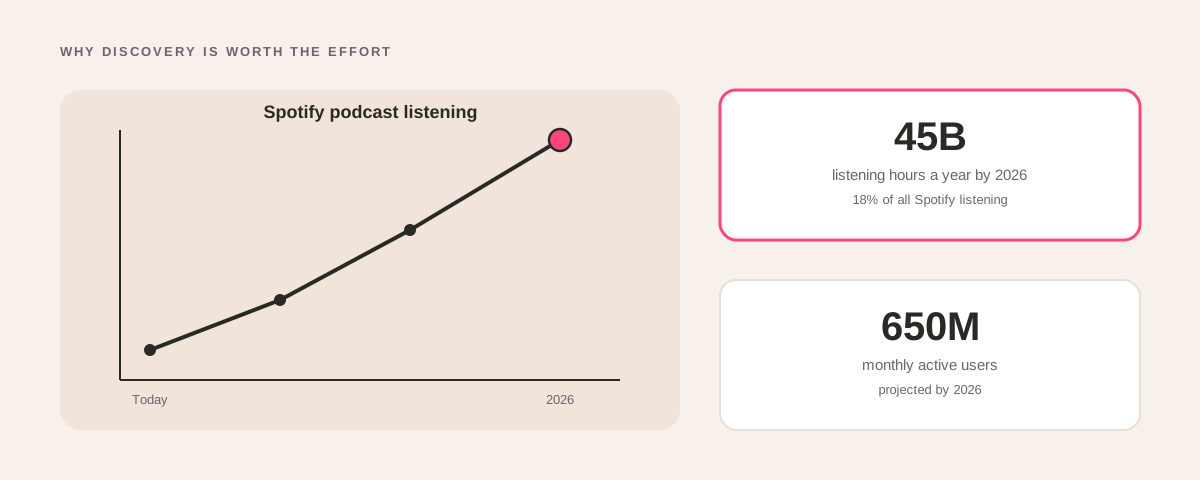
The potential reward makes this tiny bit of admin totally worth it. Podcast listening on Spotify is projected to hit an incredible 45 billion hours a year by 2026, which is 18% of all listening on the platform. And with their user base expected to hit 650 million MAUs, getting your B2B show in front of that audience is a no-brainer. You can discover more insights about Spotify's growth on orionpromotion.com.
As soon as you're approved, you’ll get an email, and your podcast will be live on Spotify for the world to hear. Now, any new episode you publish on your host will automatically show up on Spotify, usually within 24 hours. Your launch blueprint is complete, and your show is officially open for business.
Optimizing Your Show for Discovery on Spotify
Getting your podcast listed on Spotify is the starting line, not the finish. If you’re a B2B brand, the real win comes from discovery - making sure the right industry decision-makers actually find your content. This means you have to get your hands dirty and actively optimize your show for Spotify's unique world.
You can't just push episodes live and hope for the best. You need to understand how Spotify’s algorithm thinks and feed it the right signals. This touches everything, from the way you craft your metadata to the very format of your content.
Crafting Titles and Descriptions for Spotify Search
Think of Spotify's search bar as your secret weapon for organic discovery. Unlike a clunky old podcast directory, Spotify users are in the app, actively hunting for topics, experts, and solutions to their problems. Your job is to show up when they do.
Put yourself in your ideal customer's shoes. What specific pains are they trying to solve? What jargon or expert names would they punch into that search bar? Your episode titles and descriptions have to mirror that search intent, plain and simple.
Here’s a game plan for every single episode:
- Front-load Keywords in Titles: Don't bury the lead. Jam your most important keywords and guest names right at the beginning of your episode title. Instead of "Episode 57: A Conversation with Jane Doe," go with "Jane Doe on AI-Powered Martech Stacks | Episode 57." See the difference?
- Use Descriptions Like Mini-Blog Posts: Your show notes are prime real estate for search. Use them to summarize the gold nuggets, list out the topics you covered, and name-drop any tools, companies, or thought leaders from the episode. This gives Spotify's algorithm way more to work with.
- Write for Humans, Optimize for Robots: Keyword stuffing is a huge turn-off. Yes, the algorithm needs keywords, but a human has to actually read the thing. Structure your notes with clear headings and bullet points so they're scannable and engaging.
Treating your metadata with the same attention you give your on-page SEO creates a powerful flywheel for discovery. For an even deeper dive, check out our guide on podcast SEO best practices for explosive growth.
The Strategic Importance of Video Podcasts for B2B
Video isn't a "nice-to-have" on Spotify anymore. It's a critical tool for grabbing attention and building authority. For B2B brands, seeing the faces behind the voices creates a level of trust and connection that audio alone just can't match. It turns a passive listen into an active viewing session.
Spotify has poured a ton of cash into making video a core part of its platform. And they're not messing around - the company has invested over $10 billion in the podcasting industry between 2021 and 2026. That firehose of money is expected to help grow the number of video podcasts to nearly half a million shows. If you’re not already planning to start a podcast on YouTube, now is the time to consider how video can play a role across all your distribution channels.
For a B2B audience, professionalism is everything. Your audio quality has to be flawless. Even if you start with great raw recordings, a B2B podcast needs meticulous post-production to polish out any little imperfections and boost clarity. You need a crisp, professional sound that commands respect.
Formatting Content to Win the Algorithm
At the end of the day, Spotify’s algorithm cares about one thing more than anything else: listener engagement. Signals like listen-through rate, follows, and playlist additions are like votes of confidence. They tell the platform your content is valuable, which makes Spotify want to show it to more people.
You can actually format your content to nudge listeners toward these behaviors.
- Beg for Playlist Adds: Seriously. Adding a show to a playlist is a huge green flag for the algorithm. Verbally ask your listeners to add your episode to their "Learning" or "Work Commute" playlist if they're getting value from it.
- Use Open Loops: Keep people hooked by teasing what's coming up later in the episode or even in the next episode. If you mention a killer tip or a big reveal is on the way, you give them a reason to stick around and boost your completion rate.
- Create Killer Intros: The first few minutes are make-or-break. Hook them immediately with a juicy takeaway or a quick summary of what they're about to learn. Don't give them a chance to get bored and drop off.
Your spotify podcast hosting provider is the foundation, but how you optimize on the platform is what builds the skyscraper. By focusing on search, leaning into video, and formatting for engagement, you can turn your B2B podcast from a content piece into a discovery engine that consistently gets in front of your target market.
Measuring Podcast Performance and Troubleshooting Issues
So you've launched your B2B podcast. You've picked a great spotify podcast hosting provider and your show is live. High five. But the real work starts now. For a demand-gen team, launching is just the starting line; winning the race is all about the data.
Success isn't about chasing huge download numbers that look good in a slide deck. It's about figuring out if your podcast is actually driving business results.
This is where you need to get smart. Your podcast has to speak the language of demand generation, and that language is data. While a B2B-focused host like Fame Host gives you a ton of analytics, you need to pair that with the insights you get directly from Spotify for Podcasters. When you blend these two data sources, you get the full story of your audience and what they really think of your content.
Moving Beyond Simple Downloads
Let's be honest, raw download numbers are mostly a vanity metric. A big number feels good, but it doesn't tell you if anyone actually listened or if you're reaching the people who might one day buy from you. To make your podcast a true B2B asset, you need to track the metrics that signal real engagement.
Start digging into these KPIs instead:
- Listener Retention: This is the big one. Spotify for Podcasters gives you a drop-off graph for every single episode. See a massive nosedive in the first 5 minutes? Your intro is probably weak. If the line stays relatively flat, you’ve got them hooked.
- Audience Demographics: Spotify gives you a peek into your listeners' age, gender, and location (all anonymized, of course). This is pure gold for B2B. If your SaaS tool is for US-based finance directors and you’re suddenly trending in Southeast Asia, it’s time to rethink your content or promotion strategy.
- Follower Growth: A "follow" is a massive vote of confidence on Spotify. It means someone has actively chosen to get notified about your new episodes. They’ve gone from a casual listener to a potential fan. Keep a close eye on this number week-over-week.
For B2B brands, geographic data is a goldmine. Seeing a cluster of listeners in a specific city or region can inform your sales team's outreach or help you plan targeted ad campaigns and regional events.
By combining your host's data (like total downloads) with Spotify's deep listener insights, you can finally start to build a real narrative around your podcast's ROI. If you really want to go deep on this, check out our guide on how to measure podcast performance.
Practical Troubleshooting for Common Issues
Even with a bulletproof setup, tech glitches happen. The key is not to panic. A fast, professional fix keeps your show looking sharp and protects your brand. Most of the time, the solution is surprisingly simple.
Here’s a quick rundown of the problems you’ll most likely face and how to solve them.
| Common Problem | Likely Cause | Actionable Solution |
|---|---|---|
| New Episode Not on Spotify | RSS Feed Lag: It can take up to 24 hours for Spotify to check your RSS feed and pull in a new episode. It’s not instant. | Wait it out. Seriously, give it a full day. If it’s still MIA, log into Spotify for Podcasters and look for feed errors. Double-check you actually published the episode in your host and didn't just save it as a draft. |
| Artwork Not Updating | Aggressive Caching: Spotify and other apps cache images like crazy to save bandwidth. New artwork can take several days to show up everywhere. | Check the source. Paste your RSS feed URL into your browser and search for the <itunes:image> tag. If the link in your feed is correct, you just have to wait for the cache to clear. |
| RSS Feed Errors | Manual Edits or Host Issue: You either tried to edit the XML file yourself (don't do this!) or your hosting provider is having a moment. | Do not touch the feed. Ever. Immediately contact your host's support team. A solid provider like Fame will jump on this and get it sorted for you, no sweat. |
Ultimately, most technical headaches come down to the communication between your host and Spotify. Using a reliable spotify podcast hosting service is the best way to prevent these problems from happening in the first place. And when they do pop up, having expert support on call is the difference between a minor hiccup and a full-blown crisis.
A Few Common Questions About Spotify Podcast Hosting
As you get your B2B podcast off the ground, a few questions always pop up, especially around a massive platform like Spotify. I've heard them all, so let's clear up some of the most common ones B2B marketers run into.
Can I Submit My Podcast Directly to Spotify Without a Host?
Technically, yes. But for any serious B2B show? I’d strongly advise against it.
Using a dedicated host like Fame Host is like having a central command center for your show. It's where you'll manage your files, distribute to all the podcast platforms (not just Spotify), and get the detailed analytics you need to prove ROI. A host handles the technical headaches and simplifies your workflow, which is everything when you're trying to publish consistently and build authority.
If you try to go it alone, you're on the hook for generating and maintaining a compliant RSS feed. That's a technical, time-sucking nightmare. You also miss out on easy-to-read analytics and the support you'll wish you had when something inevitably breaks.
How Long Does It Take for My Podcast to Appear on Spotify?
Once you submit your RSS feed through Spotify for Podcasters, the review is usually pretty quick - often just a few hours. That said, Spotify's official line is that it can take up to five business days. This is why getting the submission right the first time is so crucial.
To sidestep any frustrating delays, make sure your show is ready before you hit submit. Here's your pre-flight checklist:
- High-Resolution Cover Art: Your artwork needs to be a square and at least 1400x1400 pixels.
- Complete Metadata: Make sure your show's title, description, and category are all filled out in your hosting platform.
- At Least One Episode: You can't submit an empty feed. You need something for people to listen to!
Using a B2B-focused platform like Fame Host makes this part easy, as it ensures your feed is compliant right out of the gate.
What Is the Difference Between Spotify for Podcasters and a Podcast Host?
This one trips a lot of people up. The best way I've found to explain it is with a restaurant analogy.
Your podcast host (like Fame Host) is the kitchen. It's where you store all your ingredients (metadata) and prepare your final product (the audio files). The host then creates and manages your RSS feed - think of this as the menu that lists all your episodes for the world. If you want a deeper dive, check out our guide to the podcast RSS feed for B2B growth.
Spotify for Podcasters, on the other hand, is the front-of-house. It's the portal you use to give your menu (your RSS feed) to Spotify. It also acts as the manager's office, giving you Spotify-specific data on how your listeners are interacting with your show.
You need a host to store your files and build the feed. You use Spotify for Podcasters to get that feed onto the platform and see how it's performing there. For a professional show, you absolutely need both.
Does Spotify Change My Audio or Video Content?
Nope. Spotify doesn't edit or alter your audio or video files at all. It streams them exactly as they're delivered from your podcast host's RSS feed. The quality of your show is 100% on you - it all comes down to your production and the file you upload.
The one thing Spotify might do is normalize the loudness of your episode. This is a standard practice across the platform to make sure listeners aren't constantly fiddling with their volume as they jump between different podcasts. It's just an adjustment for a better user experience and doesn't change your actual content.
Ready to stop sweating the technical stuff and start building your brand? Fame makes it simple. With Fame Host, you get a dedicated B2B podcasting platform that handles all the distribution headaches, letting you focus on creating content that actually drives business.
Want us to run this for you?
Fame starts and grows B2B podcasts that generate pipeline. Tell us who you are trying to reach and we will send a costed proposal within 48 hours.
Related content
- Read moreFame Team · July 16, 2026
10 Account Based Marketing Tactics For B2B Growth In 2026
Discover 10 actionable account based marketing tactics for B2B tech. Learn to use podcasts, data, and targeted content to close high-value accounts. - Read moreFame Team · July 16, 2026
The 8 Best Brighton Podcast Agency Picks For 2026
Find the best Brighton podcast agency for your B2B brand. Our 2026 guide reviews top 8 agencies for production, growth & ROI. Expert analysis here - Read moreJune 10, 2026
20 Best Podcast Production Agencies For 2026 (And Why Should You Hire One)
Global podcast and vodcast ad revenues are on track to hit $5 billion in 2026 , up 20% year-on-year. - Read moreApril 13, 2026
Leadership In Marketing: The B2B Podcast Playbook
Most companies still confuse leadership in marketing with job titles, org charts, and budget control. That's outdated.