March 21, 202621 min read13 sections
12 Actionable Types of Content for Content Marketing to Drive B2B Growth
By Fame Team
Key Takeaways
- A multi-format approach is necessary for building authority and driving a qualified pipeline in B2B content marketing.
- Creating a content ecosystem where each piece supports the others is crucial for capturing audience attention.
- A branded B2B podcast can act as a central pillar, serving as the primary source for various content formats and multiplying ROI.
Content marketing has evolved far beyond publishing a weekly blog. Today, building authority and driving a qualified pipeline requires a multi-format approach. To succeed, B2B brands must create a content ecosystem where each piece supports the others, capturing audience attention across different channels and stages of the buyer journey. To truly build a robust B2B content marketing engine, it's essential to have a deep understanding of content marketing as a whole.
This guide moves beyond theory to provide a practical playbook. We will explore the 12 most effective types of content for content marketing, providing actionable frameworks for implementation that B2B technology firms, professional services companies, and enterprise brands can use to elevate their market presence. You will learn not just what to create, but how to execute, measure, and distribute each format for maximum impact on lead generation and brand authority.
We'll cover everything from foundational blog posts and detailed whitepapers to dynamic webinars and strategic guest appearances. More importantly, we’ll reveal how to structure these assets into a cohesive system. The goal isn't just to produce more content; it's to create a central pillar that feeds every other channel. We will demonstrate how a branded B2B podcast can act as this force multiplier, serving as the primary source for social clips, articles, newsletters, and more. This approach allows you to multiply your ROI without exponentially increasing your team's workload, turning disparate content pieces into a unified, demand-generating machine.
1. Blog Posts and Long-Form Articles
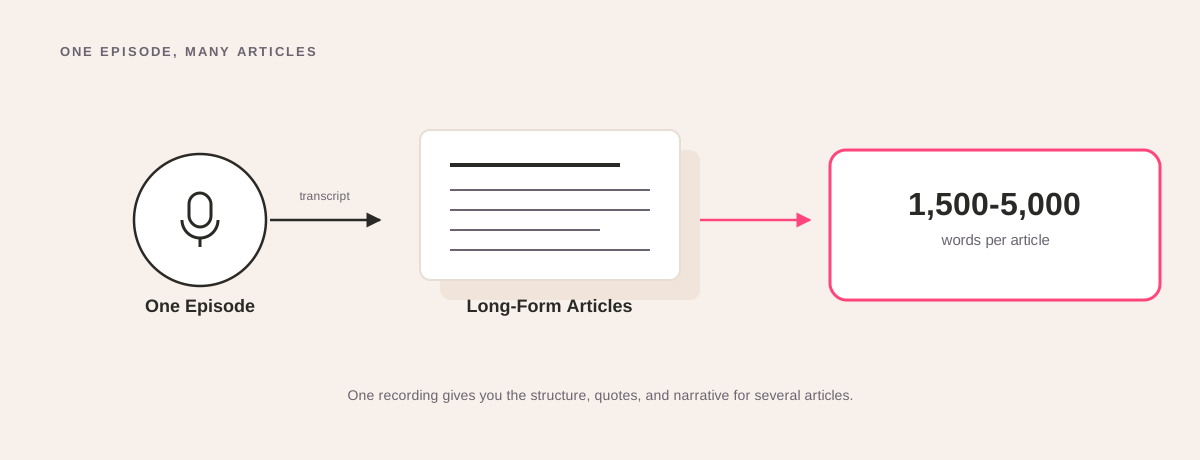
Blog posts and long-form articles are the foundational pillars of many successful B2B content programs. These detailed written pieces, typically ranging from 1,500 to over 5,000 words, serve as powerful SEO anchors that attract organic traffic from potential buyers actively researching solutions. They address specific pain points and search queries, positioning your brand as a credible expert and are one of the key types of content for content marketing. Much of that material now starts as an AI draft, and the tells are easy to spot: evenly paced sentences, abstract subjects, and the same handful of transitions. Passing the draft through an AI humanizer restructures those sentences rather than swapping synonyms, and the detection score shown under each result tells you whether a piece still reads like a template before it goes live.
Unlike shorter formats, long-form content allows you to explore topics with the depth required to build trust with a technical or executive audience. Companies like HubSpot and Salesforce built their authority by publishing comprehensive guides and research-backed articles that became go-to resources. These assets are not just about explaining a concept; they are about proving your expertise through original data, unique perspectives, and actionable advice.
A highly actionable way to generate this material is by repurposing a B2B podcast. A single episode transcript provides the structure, expert quotes, and narrative for multiple in-depth articles, making it an efficient content engine.
Implementation Tips
To get the most from this content type, focus on precision and value.
- Target High-Intent Keywords: Use keyword research to identify long-tail phrases (e.g., "b2b saas churn reduction tactics") that indicate a user is close to making a decision.
- Incorporate Original Data: Stand out by including proprietary research, survey results, or unique insights from your company’s experience.
- Structure for Skimmability: Use H3s, bullet points, and bold text to make your article easy to navigate. This is a critical step when building a solid content marketing strategy.
- Repurpose Podcast Transcripts: Start your draft with a cleaned-up transcript from a relevant podcast episode. This provides an instant outline and expert commentary, cutting your writing time in half.
- Update Regularly: Review and refresh your top-performing articles quarterly to ensure they remain accurate and maintain their search rankings.
2. Whitepapers and Research Reports
Whitepapers and research reports are authoritative, data-driven documents that establish your company as a research-backed expert. These premium assets, typically gated behind a form, serve as powerful lead magnets by offering original analysis on critical industry challenges. They provide the depth and credibility needed to influence high-level decision-makers.
Firms like McKinsey and Gartner have built their reputations on publishing definitive research, such as the "State of AI" reports or Magic Quadrants. These documents go beyond explaining trends; they create them by presenting proprietary data and offering a distinct point of view. This makes them one of the most effective types of content for content marketing when the goal is to generate qualified leads and build market authority.
The findings from a single, well-executed research report can fuel an entire quarter's worth of content. The data can be dissected in podcast episodes, visualized for social media, debated in webinars, and expanded upon in blog posts, creating a cohesive and high-impact campaign from one central asset.
Implementation Tips
To maximize the impact of your research, focus on originality and strategic distribution.
- Base it on Original Research: Conduct your own surveys using tools like SurveyMonkey or Google Forms to gather unique data that no one else has. This provides the foundation for genuine thought leadership.
- Lead with Insights, Not Sales: The primary focus should be on presenting your findings and their implications. A brief mention of your solution at the end is sufficient.
- Design for Credibility: Invest in professional design to create a polished, brand-aligned document that reflects the quality of the research inside.
- Create a Compelling Executive Summary: Many executives will only read the summary. Make sure it clearly articulates the key problems and findings to draw them in.
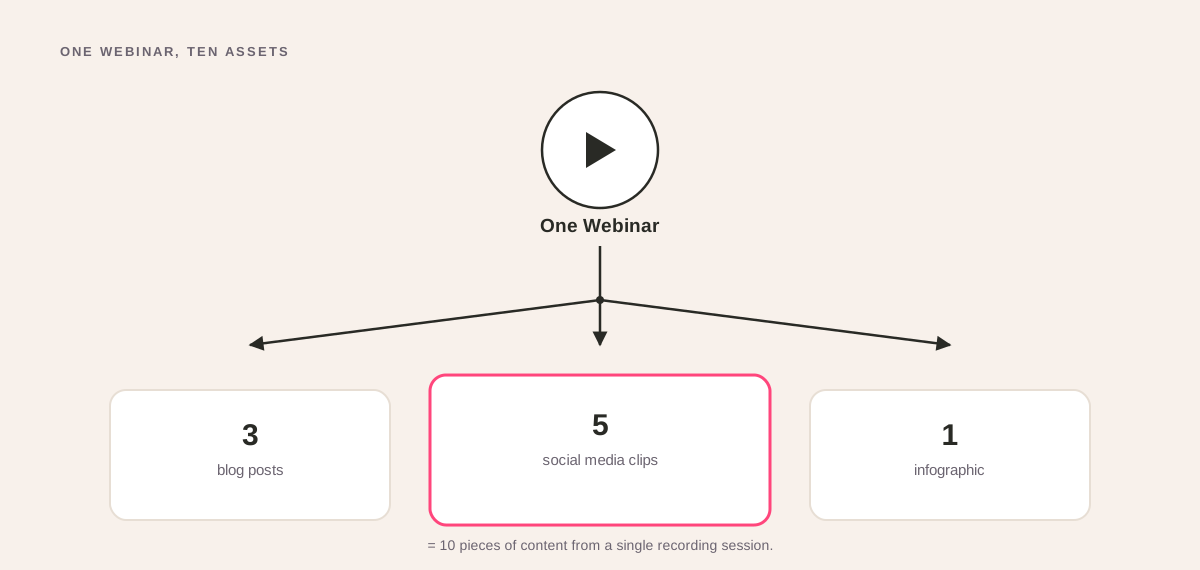
- Atomize the Report: Plan to break the report down into at least 10 other pieces of content: 1 webinar, 3 blog posts, 5 social media clips, and 1 infographic.
3. Video Content, Webinars, and Live Virtual Events
Video content, webinars, and live virtual events bring visual storytelling and direct interaction to the forefront of a B2B content marketing strategy. These formats drive high engagement by allowing audiences to see products in action, learn from experts in real-time, and participate in discussions. They are exceptionally effective for building relationships at scale, capturing high-intent leads, and establishing authority through dynamic presentations.
Companies like Drift and HubSpot built their brands on the back of engaging live events and educational video series that demystified complex topics. A well-executed webinar is not just a presentation; it's an interactive experience that provides direct feedback and fosters a sense of community. The real-time nature of these events creates urgency and makes the content feel exclusive and valuable.
Your company’s podcast is the most efficient source for this content. An expert interview from a podcast can be repurposed into a panel-style webinar, or a deep-dive topic can become a standalone educational video. This approach makes your video production process more efficient by building on existing conversations and proven expertise.
Implementation Tips
To maximize the impact of your visual and live content, focus on engagement and strategic repurposing.
- Promote Extensively: Begin promoting live events at least three weeks in advance through email, social media, and paid channels to maximize registration.
- Structure for Engagement: Keep on-demand videos concise (5-7 minutes). For webinars, use polls, Q&A sessions, and interactive elements to maintain audience attention.
- Repurpose Strategically: Turn a single webinar recording into multiple assets: short clips for LinkedIn, a summary blog post with key takeaways, and quote graphics for Twitter.
- Follow Up Promptly: Send a follow-up email within 24 hours of a live event, including a link to the recording, slides, and a clear call-to-action to book a demo or download a related resource.
4. Case Studies and Success Stories
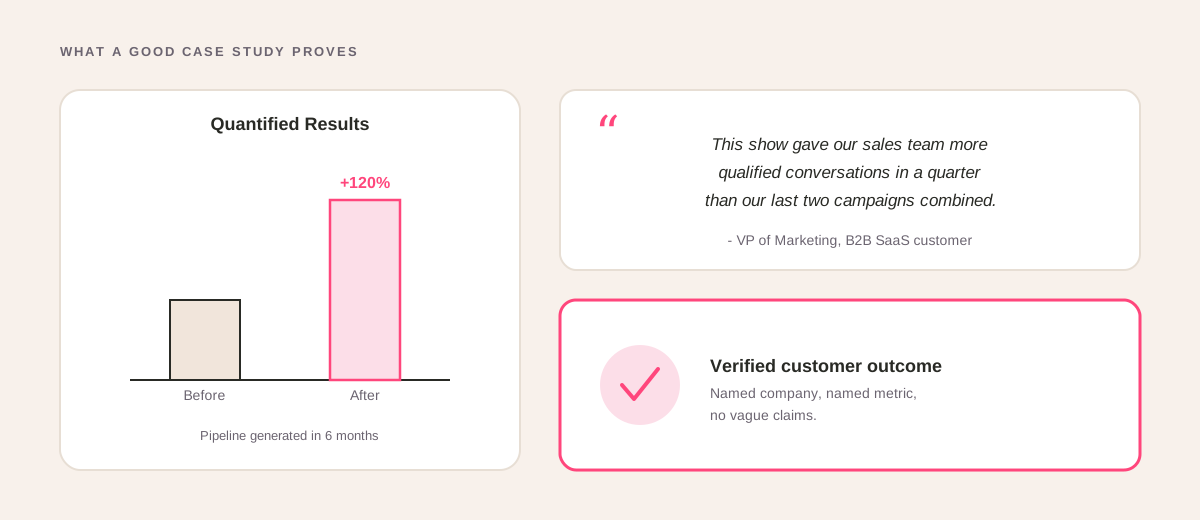
Case studies are detailed narratives that prove your product’s value by documenting how real customers solved specific problems. They combine quantified results, customer testimonials, and before-and-after scenarios to build social proof and credibility, making them one of the most persuasive types of content for content marketing during the consideration stage of a buyer's journey.
These success stories move beyond abstract claims by providing concrete evidence of your impact. Companies like Salesforce and Slack built their market leadership by showcasing customer wins, complete with logos and specific metrics that resonate with prospective buyers. The goal is to help a prospect see themselves in the story, making your solution feel like a proven and low-risk choice.
The most actionable way to create these assets is by inviting satisfied customers as guests on your B2B podcast. This provides a natural, conversational format for a compelling story and gives you an audio testimonial you can repurpose into written case studies, short video clips, and quote graphics. The conversation itself becomes a rich source of authentic, powerful marketing material. You can see how this was applied by learning more about the strategy that led to 1.2M downloads in under six months for one company.
Implementation Tips
To create case studies that convert, focus on authenticity and measurable outcomes.
- Follow a "Problem-Solution-Result" Framework: Structure your narrative clearly: what challenge did the customer face? How did your solution help? What specific, quantified outcome was achieved?
- Include Quantified Metrics: Prioritize hard numbers like percentage increases in revenue, hours saved per week, or cost reductions. Data builds trust.
- Segment by Vertical and Size: Create a library of case studies segmented by industry, company size, and use case so sales teams can share the most relevant stories with prospects.
- Feature Executive Quotes: Include testimonials from decision-makers to add credibility and speak directly to others in similar roles.
5. Ebooks and Lead Magnets
Ebooks and lead magnets are downloadable, high-value resources offered in exchange for a prospect's contact information. These gated assets, such as guides, templates, and checklists, are crucial for converting website traffic into qualified leads. They directly address a specific buyer pain point, providing an immediate solution while signaling a user's intent to your sales and marketing teams.
Unlike a blog post, which is designed for broad discovery, an ebook is a tool for targeted lead capture. Companies like Drift built their brand authority with deep-dive guides on conversational marketing, capturing thousands of leads who were actively looking to implement new strategies. The goal is to provide enough practical value that a prospect feels confident trading their email address for the content, kicking off a nurture sequence.
A great source for ebook content is a B2B podcast series. One deep conversation with an industry expert can be distilled into a focused playbook or guide, complete with actionable frameworks and direct quotes. This makes your content creation process more efficient and ensures the material is grounded in real-world expertise, not just theory.
Implementation Tips
To create effective ebooks that drive conversions, concentrate on providing a specific, tangible solution.
- Focus on a Single Problem: Create narrow ebooks that solve one distinct pain point (e.g., "A 10-Step Checklist for Your First B2B Podcast Launch") instead of broad, generic topics.
- Design for Professionalism: Invest in clean, on-brand design for your PDF. A well-structured layout with clear headings and visuals makes the content feel more valuable.
- Write Compelling Landing Page Copy: Use a benefit-driven headline (e.g., "Learn the Framework to Double Your Pipeline") and bullet points outlining the takeaways.
- Optimize the Capture Process: Ensure the user experience is smooth. Using dedicated Lead Magnet Download Forms can reduce friction and improve conversion rates.
- Activate a Nurture Sequence: Immediately follow up with a series of emails that deliver the asset and provide additional related content to guide the lead further down the funnel.
6. Infographics and Data Visualizations
Infographics and data visualizations are some of the most shareable types of content for content marketing, translating complex data and processes into compelling, easy-to-understand visuals. In a B2B context, they cut through the noise by presenting key statistics, industry trends, or intricate workflows in a format that is both digestible and memorable, boosting brand awareness and engagement.
These visual assets make your expertise accessible. Companies like Statista and LinkedIn have become authorities by consistently publishing visual reports, like the 'State of Sales', that distill massive datasets into clear, actionable takeaways. An effective infographic does more than just present numbers; it tells a story, guiding the viewer to a specific conclusion and reinforcing your brand’s point of view on a topic.
A highly effective way to create unique infographics is by sourcing data directly from your B2B podcast conversations. A guest's proprietary research, a surprising statistic from a case study, or a breakdown of a complex process can all be transformed into a powerful visual asset. This not only creates standout content but also amplifies your podcast's key messages.
Implementation Tips
To ensure your infographics drive results, focus on clarity, originality, and strategic distribution.
- Base on a Single, Striking Statistic: Find the most surprising data point from your research or podcast and build the entire visual around that "aha" moment.
- Keep the Design Clean: Focus on one core message. Use a clean layout, brand colors, and clear typography to avoid overwhelming the viewer.
- Optimize for Social Sharing: Create different versions for each platform: a tall format for Pinterest and a square or vertical one for LinkedIn and Instagram. Include an embed code.
- Embed and Promote: Place the infographic within a relevant blog post, but also promote it as a standalone visual on social media and in email newsletters to maximize reach.
7. Guest Expert Interviews and Thought Leadership Features
Guest expert interviews are a powerful shortcut to credibility and audience growth. By featuring respected industry leaders, executives, and subject matter experts in formats like podcasts, webinars, or blog Q&As, you borrow their authority and gain access to their audience. This is one of the most efficient types of content for content marketing because it provides fresh, authoritative perspectives with minimal internal content creation.
This strategy hinges on association. When you host a well-known expert, their credibility rubs off on your brand, positioning you as a key player and convener of important industry conversations. Shows like Reid Hoffman's 'Masters of Scale' built their entire brand on this model, using interviews to explore complex topics. The guest provides the core insights, and your brand provides the platform, creating a win-win scenario.
A single B2B podcast interview is an incredibly fertile asset. That one conversation can be repurposed into dozens of other content pieces: a detailed long-form article, short video clips for social media, quote graphics, and key takeaways for your email newsletter. This turns one recording session into a full-funnel content engine.
Implementation Tips
To maximize the value of guest features, focus on preparation and promotion.
- Create Target Guest Profiles: Identify 2-3 specific personas (e.g., "Series B SaaS CFO," "Head of Demand Gen at a Fortune 500") that align with your audience's interests and your ideal customer profile.
- Send Pre-Interview Briefings: Provide guests with talking points, questions, and logistical details beforehand to ensure a smooth, high-value conversation. This shows professionalism and respect for their time.
- Provide a "Promotion Package": Make it easy for guests to share. Send them an email with pre-written social copy, short video clips, custom graphics with their quotes, and direct links.
- Feature Guest Credentials: Prominently display the guest's name, title, and company in all promotional materials to immediately establish the interview's authority and attract their followers.
8. Email Newsletters and Nurture Campaigns
Email remains a critical, direct line of communication to your opted-in audience, offering one of the highest returns of any digital marketing channel. Newsletters and automated nurture campaigns are essential types of content for content marketing that build relationships, drive engagement, and guide prospects through the buying journey with curated information and offers. They keep your brand top-of-mind between major purchases or interactions.
Unlike public-facing content, email is a personal conversation. Successful newsletters like Morning Brew and The Hustle deliver business insights with a distinct voice, while B2B companies like HubSpot use segmented sends to deliver hyper-relevant content. Effective email marketing isn't about blasting promotions; it's about consistently delivering value that makes your audience look forward to hearing from you.
A B2B podcast is an excellent source for newsletter content. You can feature key takeaways, expert quotes, or links to the latest episode directly in your emails. This provides fresh, engaging material for your subscribers while promoting your core thought leadership asset and driving listeners to new episodes.
Implementation Tips
To maximize the impact of your email strategy, focus on segmentation and value delivery.
- Segment Your List: Group contacts by persona, lifecycle stage, or engagement level to send highly relevant content. A new lead should get a different email than a long-time customer.
- A/B Test Subject Lines: Continuously test subject lines, send times, and content variations to optimize open and click-through rates. A good subject line can double your engagement.
- Automate Nurture Sequences: Create automated email workflows triggered by a user downloading a whitepaper. Send 3-5 follow-up emails with related content to guide them down the funnel.
- Prioritize Scannability: Use short paragraphs, clear headings, and a single, obvious call-to-action (CTA) to make your emails easy to read.
- Maintain List Hygiene: Regularly clean your email list by removing unengaged subscribers to protect your sender reputation and improve deliverability.
9. Social Media Content and LinkedIn Strategy
Social media content is no longer just for brand awareness; it's a critical channel for direct engagement, thought leadership, and demand generation, especially in B2B. This format includes platform-specific posts, industry commentary, and short-form video designed to capture attention in a fast-scrolling environment. For B2B marketers, LinkedIn is the epicenter, offering direct access to decision-makers and professionals actively seeking industry insights.
Effective social content moves beyond promotion and focuses on starting conversations and delivering value. Leaders at companies like Salesforce and HubSpot use their personal LinkedIn profiles to share perspectives on industry trends, company culture, and leadership philosophies. This humanizes the brand and builds a loyal following that is more receptive to other types of content for content marketing.
A B2B podcast is an exceptional source for generating high-performing social media content. A single episode can be sliced into dozens of short video clips, quote cards, and text-based posts with expert insights. These micro-assets drive traffic back to the full episode and position your brand as a consistent source of valuable information right in your audience's feed.
Implementation Tips
To turn social feeds into a reliable engagement channel, focus on authenticity and strategic distribution.
- Focus on One Platform: Master LinkedIn first. Post consistently (3-5 times a week) and engage with others in your industry before expanding to other platforms.
- Encourage Employee Advocacy: Provide your team with pre-approved content, key talking points, and thought-starters from your core content to share on their personal networks.
- Create Short-Form Video: Produce 30-90 second videos with strong hooks and clear captions, perfect for capturing attention on LinkedIn and other platforms. A single podcast can yield 5-10 of these clips.
- Engage Authentically: Don't just post and ghost. Actively participate in comment sections on your posts and other relevant industry conversations to build community.
10. Podcasting (Guest Appearances and Sponsorships)
Guest appearances and sponsorships on established podcasts allow your brand to tap into existing, engaged audiences. Instead of building a listenership from scratch, you place your company's experts on third-party shows, borrowing their credibility and reach to build authority. This approach requires less production effort than a branded podcast but can deliver significant brand awareness and demand generation.
This tactic places your thought leaders directly in the ears of a highly relevant audience. When a Salesforce executive appears on 'Masters of Scale' or a startup founder joins 'Lenny's Podcast', they aren't just sharing expertise; they are associating their brand with the trusted voice of the host. This method is a fast-track to building influence within a specific niche.
A single guest appearance serves as a powerful content engine. The conversation can be repurposed into multiple assets, including blog posts, short video clips for social media, and quote graphics. This makes it a very efficient tactic for generating diverse types of content for content marketing while building personal brands for your key executives.
Implementation tips
To maximize the return from podcast appearances, focus on strategic outreach and content amplification.
- Build a Target Show List: Identify 20-30 podcasts your ideal customers listen to. Prioritize shows with an engaged audience over sheer download numbers.
- Craft a Personalized Pitch: Send a concise email to the host explaining why your expert is a good fit and suggest 2-3 specific topics they can discuss that would provide value to their audience.
- Track Performance: Provide hosts with a unique link (e.g., yoursite.com/podcast-name) or offer code to measure direct conversions and attribute revenue to the appearance.
- Amplify and Repurpose: Once the episode is live, promote it across all company channels. Turn the audio into clips, articles, and social posts to extend its reach and get maximum value from the appearance.
11. Community Building and User-Generated Content
Building an engaged community is one of the most powerful forms of content marketing, transforming passive audiences into active brand advocates. Instead of solely pushing out content, this approach creates a space-like a dedicated forum, Slack group, or user event-where customers and prospects can connect, share insights, and support each other. This fosters deep relationships and generates a steady stream of authentic, user-generated content (UGC).
Effective community building turns your brand into a hub for industry conversation. Companies like Salesforce with its Trailblazer Community and HubSpot with its Partner Community have created ecosystems where users not only get peer support but also build their own professional credibility. The content that emerges-from forum answers to customer testimonials and success stories-is highly credible because it comes directly from the people who use your product.
A B2B podcast is an excellent catalyst for community. Guests and listeners often represent the ideal members of a future community. You can create an exclusive group for podcast listeners to discuss episodes, ask questions to upcoming guests, and network with peers, effectively seeding a vibrant community from an already engaged audience.
Implementation Tips
To cultivate a thriving community that produces valuable UGC, focus on member value.
- Establish a Clear Mission: Define the community's purpose beyond your product (e.g., "A space for B2B marketers to master content strategy"). This ensures it aligns with member interests, not just your brand's promotional goals.
- Seed the Conversation: Don't wait for users to post. Have your team start discussions, ask questions, and share valuable resources daily to set the tone.
- Showcase Member Contributions: Regularly feature top contributors, community-sourced tips, and success stories across your main marketing channels (social media, newsletter).
- Host Regular Events: Drive consistent engagement with monthly Q&A webinars, expert AMAs, or quarterly virtual meetups to keep the conversation active.
- Amplify Customer Stories: Actively encourage and promote user-generated testimonials and case studies, as they provide powerful social proof for your brand.
12. Branded B2B Podcasts
While guesting on podcasts is powerful, hosting your own branded B2B podcast is the ultimate content engine. It positions your company not just as a participant in industry conversations but as the convener of them. A branded podcast establishes you as a definitive authority, builds deep audience relationships through a recurring format, and, most importantly, serves as the central pillar that fuels nearly every other type of content for your marketing strategy.
A branded podcast is the "holy grail" of B2B content marketing because of its unparalleled repurposing potential. It’s not just one piece of content; it’s the source material for an entire content ecosystem. By recording a single high-value conversation, you create the raw material for social media clips, in-depth blog posts, newsletter content, infographics, and even lead magnets.
This "create once, distribute forever" model is the key to escaping the content hamster wheel. Instead of brainstorming new ideas for every blog, social post, and email, you draw from a consistent well of expert-driven audio. This makes your content marketing more efficient, cohesive, and authoritative.
Implementation Tips
To launch a podcast that becomes a true content engine, focus on strategy and systems.
- Define a Niche Focus: Don't create a general marketing podcast. Create "The SaaS CFO," a show about financial strategy for software companies. A narrow focus attracts a dedicated, high-value audience.
- Systematize Your Production: Create a repeatable workflow for every episode: guest booking, pre-interview prep, recording, post-production, and promotion.
- Plan for Repurposing from the Start: During recording, actively listen for moments that would make great 60-second video clips, compelling quotes, or a key framework for a blog post.
- Promote Guests, Not Just Episodes: Your guests are your biggest marketing channel. Create a "promotion package" for them with pre-written social copy and assets to make sharing effortless.
The Holy Grail: Why a B2B Podcast Is Your Content Engine
We’ve explored many powerful types of content for content marketing, from the authority-building depth of whitepapers to the quick-hit engagement of social media. Each format serves a distinct purpose. You could build a respectable strategy by selecting a few of these, like blog posts and webinars, and executing them well. But this approach often leads to a constant, grinding cycle where each asset is a separate project, demanding its own resources, research, and creative energy. This is the content hamster wheel.
The real goal isn't just to create content; it's to build a system where your efforts compound. You need a central pillar - a "content engine" - that fuels every other channel with high-quality material. For modern B2B companies, that engine is a branded podcast. It is the holy grail because it not only serves as a powerful piece of content itself but also feeds into all of your other content marketing efforts.
From Disconnected Assets to a Unified Content Flywheel
Think of a single podcast episode. On the surface, it's a 30-minute audio file. But when viewed as the core of a content ecosystem, it becomes the ultimate force multiplier. This is the "create once, distribute forever" model in practice.
Here’s how a single podcast episode powers your entire content marketing strategy:
- Primary Content: The full audio episode builds deep connections with your audience during commutes or focused work, establishing your brand as a trusted voice.
- SEO & Written Content: The episode transcript, once optimized, becomes a keyword-rich, long-form blog post that captures audiences who prefer to read and ranks on Google.
- Lead Generation: The episode's theme is expanded into a gated resource. An interview on financial planning becomes "The CFO's Q4 Planning Checklist," capturing high-intent leads.
- Social Media & Micro-Content: The episode is deconstructed into dozens of micro-assets: short video clips for LinkedIn, compelling quote graphics for Twitter, and audiograms for Instagram.
- Email Marketing: Your weekly newsletter is instantly elevated. Feature the new episode, embed an audio player, and include key takeaways, making your emails far more engaging.
- Relationship Building: The guests you host are industry leaders. These interviews provide incredible content and build valuable relationships, and promoting the episode with your guest doubles your distribution reach.
By placing a branded podcast at the center of your operations, you stop thinking in terms of individual types of content for content marketing. Instead, you begin to operate a content flywheel. The initial effort of producing one high-quality episode creates a cascade of assets, making your team more efficient, your brand message more consistent, and your market authority more pronounced. This integrated system is what separates brands that simply do content marketing from those that truly own their category.
Ready to stop chasing disconnected content assets and build a true content engine for your B2B brand? At Fame, we specialize in launching and growing authority-building podcasts that fuel your entire marketing strategy, from demand generation to thought leadership. See how we help over 100 B2B companies create once and distribute forever by visiting Fame.
Want us to run this for you?
Fame starts and grows B2B podcasts that generate pipeline. Tell us who you are trying to reach and we will send a costed proposal within 48 hours.
Related content
- Read moreFame Team · July 16, 2026
10 Account Based Marketing Tactics For B2B Growth In 2026
Discover 10 actionable account based marketing tactics for B2B tech. Learn to use podcasts, data, and targeted content to close high-value accounts. - Read moreFame Team · July 16, 2026
The 8 Best Brighton Podcast Agency Picks For 2026
Find the best Brighton podcast agency for your B2B brand. Our 2026 guide reviews top 8 agencies for production, growth & ROI. Expert analysis here - Read moreJune 10, 2026
20 Best Podcast Production Agencies For 2026 (And Why Should You Hire One)
Global podcast and vodcast ad revenues are on track to hit $5 billion in 2026 , up 20% year-on-year. - Read moreApril 13, 2026
Leadership In Marketing: The B2B Podcast Playbook
Most companies still confuse leadership in marketing with job titles, org charts, and budget control. That's outdated.