November 18, 20268 min read16 sections
15 Enterprise AI Companies Bringing Intelligence Into Everyday Work In 2027
By Fame Team
Key Takeaways
- An AI system becomes useful when someone can put its output to work, which depends on data, accountability and fit with existing ways of working.
- The 15 companies include software suppliers and providers of specialist data, research and implementation services.
- The list is alphabetical and not a ranking or a prediction of commercial performance; each profile ends with a question for 2027.
- Start an evaluation with a named workflow and its owners: where the data comes from, how an output is checked and what happens when the system is wrong.
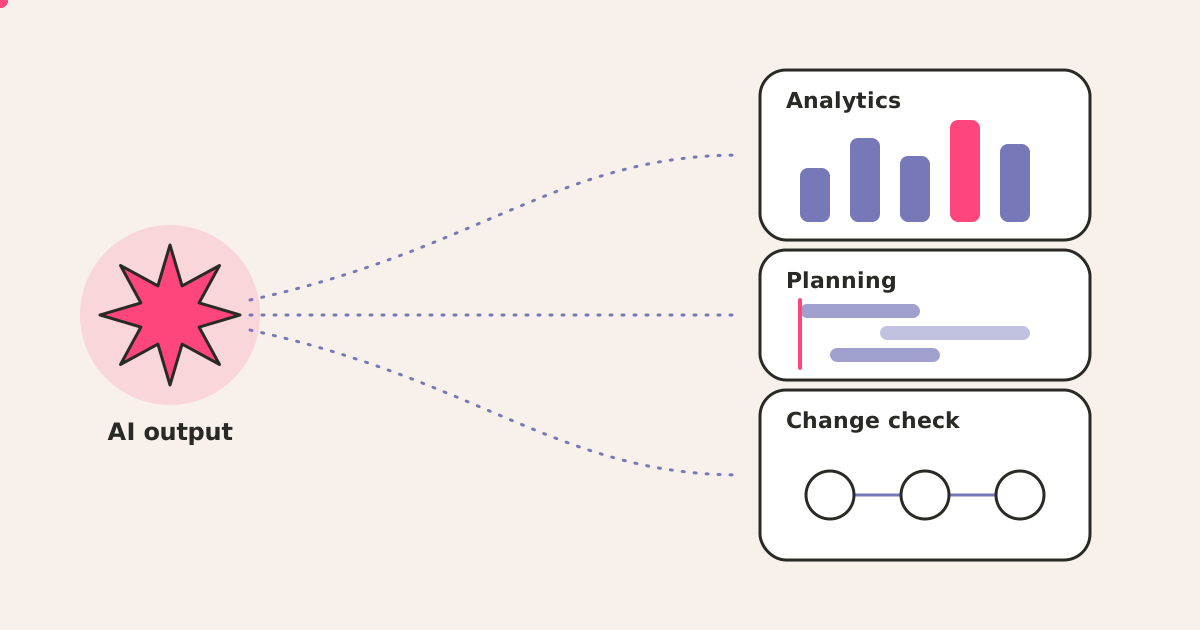
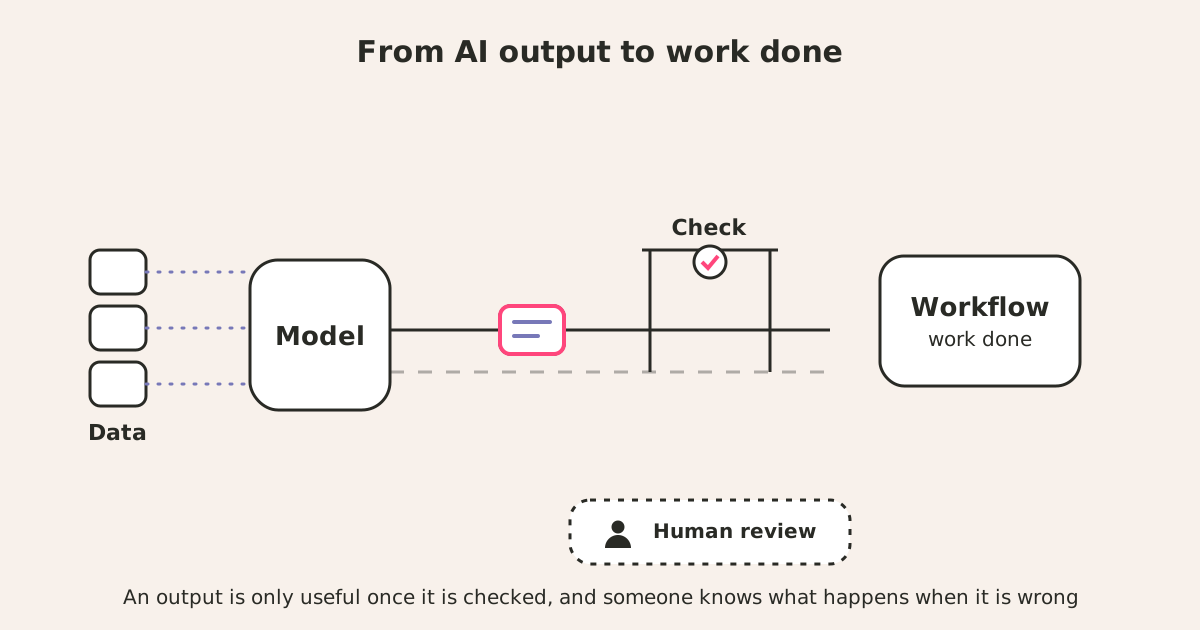
An AI system becomes useful when someone can put its output to work. That can mean helping a product team deliver analytics, enabling a planner to evaluate alternatives, or checking whether a software change will disrupt a business process. The practical questions concern data, accountability and how the technology fits the way people already work.
These 15 companies approach that challenge from different directions. Some supply software; others bring specialist data, research or implementation services. This is an alphabetical editorial selection, not a ranking or a prediction of commercial performance. Each profile pairs a description of the company’s work with a question for enterprise teams planning for 2027.
1. Capgemini
Capgemini combines consulting, technology services and engineering capabilities to help organisations change how they operate. Its enterprise AI work sits within that broader implementation context: the systems, processes and skills around a model matter alongside the model itself. For a business moving beyond an isolated experiment, this raises a practical issue about who can carry an initiative through integration and adoption. It also makes the relationship between an AI project and the organisation’s existing technology programme worth examining.
Question for 2027 How should an enterprise divide responsibility for an AI programme between its internal teams and an implementation partner?
2. Filevine
Filevine develops software for legal work, connecting matters, documents and team workflows with AI capabilities. Legal operations illustrate why context matters: an answer needs to relate to the appropriate case, source material and professional responsibilities. A useful discussion therefore extends beyond generating text to how a team organises the underlying work. For legal organisations, the questions include where staff should review an output and how information moves between the people involved in a matter.
Question for 2027 Where should a legal team require source review and human approval when AI becomes part of its everyday workflow?
3. Findability Sciences
Findability Sciences applies AI to enterprise problems through its platform, industry applications and agentic workflows. Its work includes agriculture and manufacturing, where decisions depend on operational information rather than a general conversation interface alone. That focus opens a discussion about translating domain knowledge into a repeatable system. Teams evaluating applied AI can use these settings to examine data collection, changing conditions and how an operational recommendation will reach the person able to act on it.
Question for 2027 Which operational decision has sufficiently reliable data and a clear owner to justify an applied AI deployment?
4. Gurobi Optimization
Gurobi develops mathematical optimisation software for decisions involving objectives, constraints and competing choices. This is a distinct part of the AI landscape: a forecast can describe a likely outcome, while an optimisation model evaluates what to do within a defined set of rules. The useful business discussion concerns how those rules are represented. Scheduling, allocation and planning teams need to understand which constraints are essential, which are preferences and how the resulting tradeoffs will be explained.
Question for 2027 Who should own the objectives and constraints in an optimisation model when different departments want different outcomes?
5. iMerit
iMerit provides specialist training data and model evaluation services, including human expertise for complex AI tasks. Its website now identifies the business as part of EXL. The work puts attention on an important implementation detail: defining quality requires knowledge of the task, not simply a large volume of examples. For enterprise teams, expert review can be relevant when testing unusual cases, assessing model behaviour and deciding whether a system is suitable for a particular operating environment.
Question for 2027 How will a team define and test the difficult cases that matter most before releasing an AI system into production?
6. Infosys
Infosys provides technology and consulting services, with AI and cloud capabilities forming part of its enterprise transformation work. The scale of an established organisation can make adoption a coordination problem: applications, data, controls and staff practices may all need to change together. That context makes it useful to ask how an AI initiative connects to the wider technology estate. An enterprise buyer also needs a clear view of what it will retain and operate after an implementation partner’s work is complete.
Question for 2027 What capabilities must an organisation keep internally so it can operate and improve an AI system after implementation?
7. InstaDeep
InstaDeep develops decision-making AI systems, drawing on research in areas including deep learning and reinforcement learning. Its work spans scientific and enterprise applications, and the company is part of BioNTech. That combination makes the translation from research to a usable system an interesting subject. Teams exploring advanced AI need to distinguish a method that performs in a controlled evaluation from one that can handle the constraints and changing conditions of their own application.
Question for 2027 What evidence would show that a research-led AI approach is ready for the conditions of a real business deployment?
8. Jitterbit
Jitterbit offers integration and automation software that connects applications, data and AI agents. Its role is relevant wherever a useful result has to move between systems rather than remain in a chat window. That makes integration design part of the AI conversation. Teams need to consider access permissions, the quality of incoming information and what happens when an automated action fails halfway through a process. The surrounding workflow deserves the same attention as the individual agent.
Question for 2027 How will an organisation recover and explain a failed action when an AI workflow crosses several business systems?
9. Markup AI
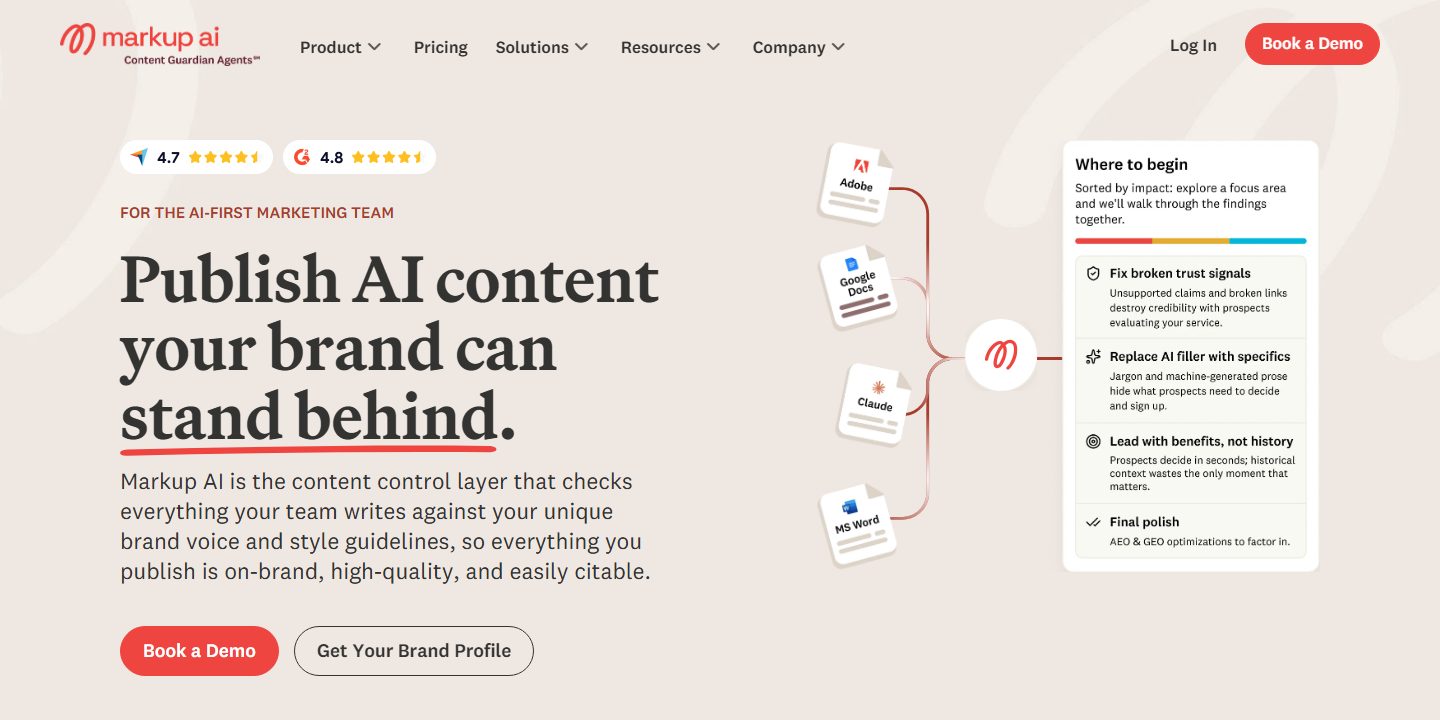
Markup AI is the current brand of Acrolinx, whose work has focused on enterprise content governance. Its Content Guardian Agents scan, score and rewrite content against standards for brand, quality and compliance. The relevant enterprise question is how to keep those standards usable as content creation spreads across more tools and teams. A written style guide alone may be difficult to apply consistently; the design of review, correction and approval processes becomes part of the operating model.
Question for 2027 Which content standards should be enforced automatically, and which decisions still need an editor or subject specialist?
10. Panaya
Panaya provides change impact analysis and testing software for enterprise applications, including SAP, Oracle and Salesforce environments. Its work addresses a familiar problem: a change in one place can affect a process used elsewhere in the business. That makes testing priorities a discussion about operational risk as well as engineering effort. Teams planning changes need a way to connect technical dependencies with the business processes that must continue to work, and to record what has actually been tested.
Question for 2027 How should a team decide which business processes need testing when an enterprise application changes?
11. Quantiphi
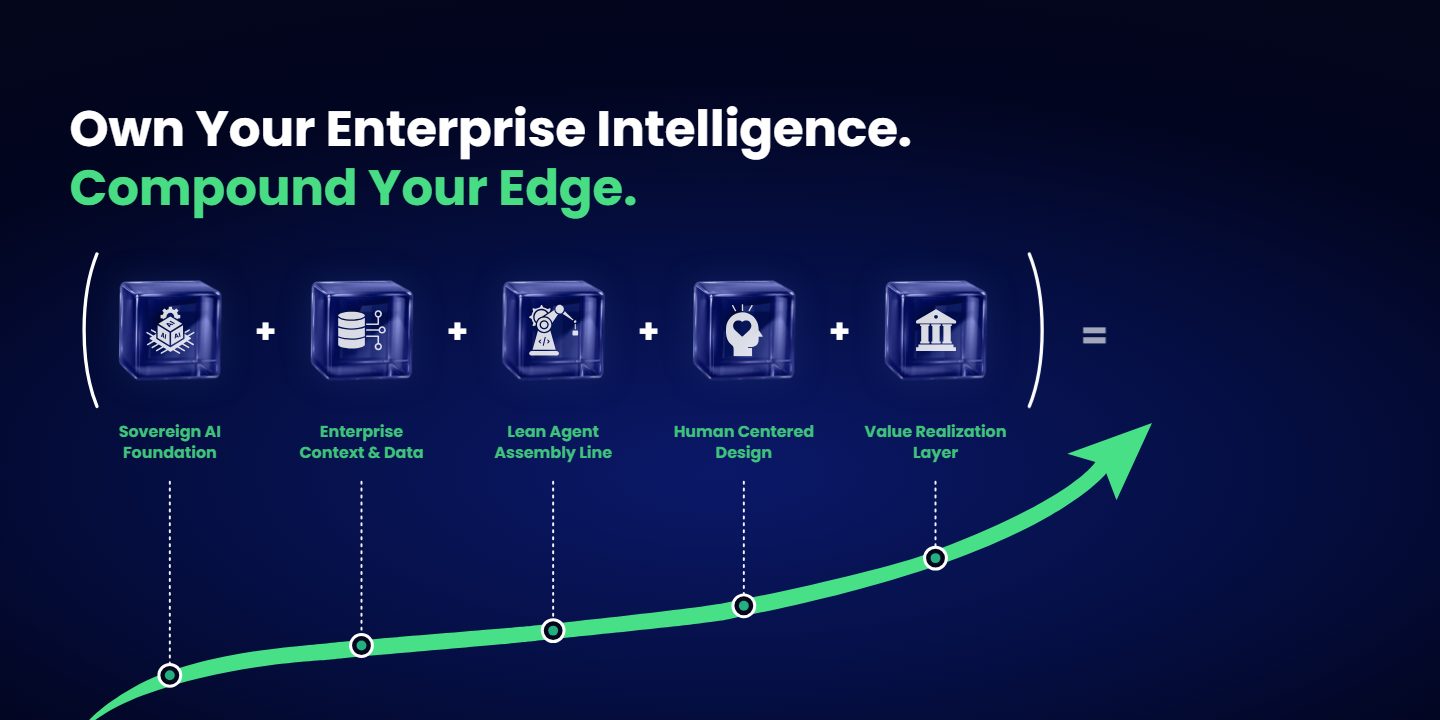
Quantiphi is an AI-native services company working across enterprise AI, data, applications and cloud infrastructure. Its delivery role places it between a business objective and the technical work needed to support it. That is a useful position from which to discuss deployment choices: adapting an application, building a new workflow and preparing its data may require different work. For enterprise buyers, the important conversation concerns the intended operating capability and how the organisation will know it has been delivered.
Question for 2027 What would a useful business acceptance test look like for an AI project before the team starts building?
12. Sisense
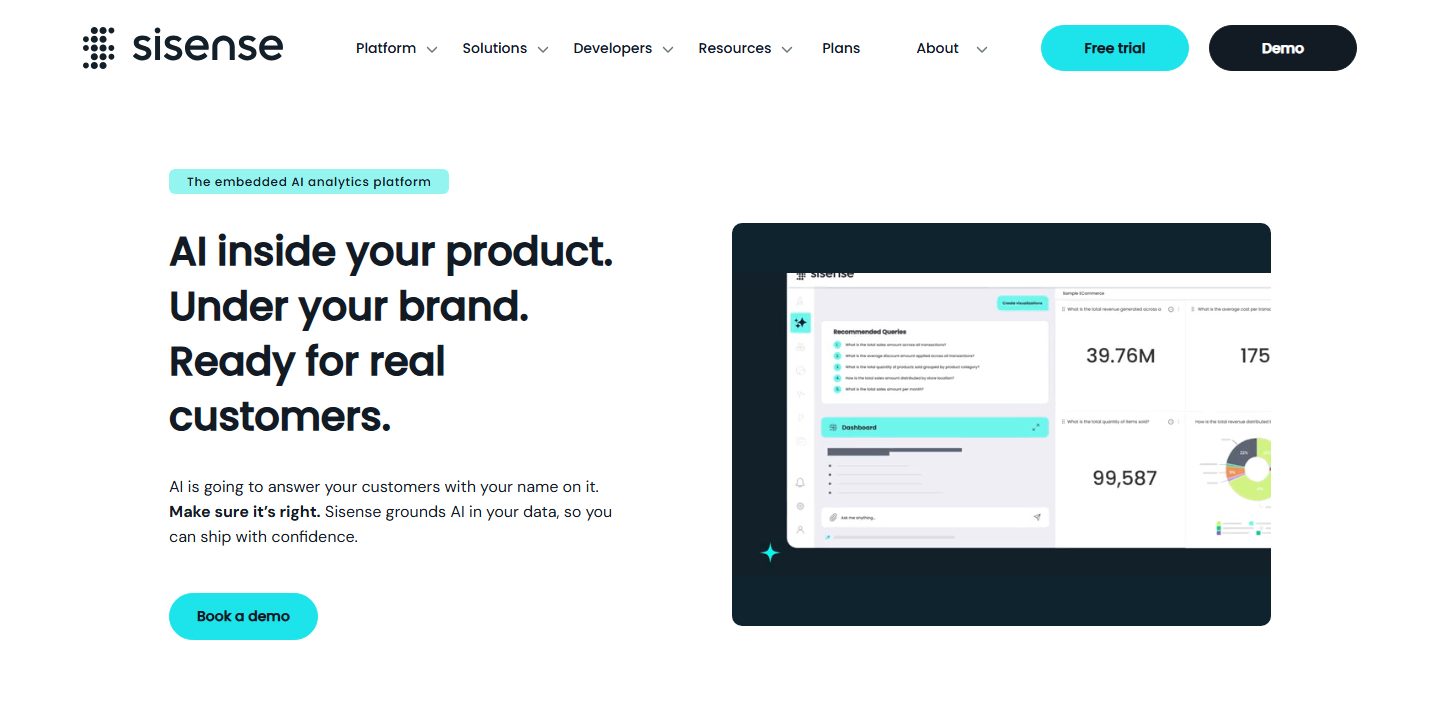
Sisense supplies embedded analytics and AI capabilities for software products. Rather than asking users to move into a separate reporting environment, embedded analytics places information within the product they already use. This creates a specific responsibility for the product team: the answer appears under its own brand. Data permissions, meaning and presentation therefore matter together. A useful evaluation asks whether an insight will be understandable and appropriate for the particular customer using the application.
Question for 2027 How can a software product make an AI-generated insight understandable without hiding its assumptions or access boundaries?
13. SymphonyAI
SymphonyAI builds industry-specific AI applications across areas including retail, financial services, industrial operations and media. The common thread is the use of domain knowledge within operational workflows. This gives enterprise buyers a way to examine the balance between a prebuilt application and local requirements. A system may reflect common industry processes while still needing to accommodate a company’s data, policies and exceptions. Understanding that boundary is a useful starting point for an implementation discussion.
Question for 2027 Which parts of a workflow benefit from an industry-specific application, and which need to remain configurable by the business?
14. ThoughtSpot
ThoughtSpot develops AI-powered analytics for business users and embedded experiences. Its platform brings governed data into the questions people ask during their work. That approach makes the definition of a trusted answer central: a result can be technically correct while still being misunderstood if the metric or business context is unclear. For data and business teams, the useful conversation concerns shared definitions, permissions and how a user can investigate the information behind an answer.
Question for 2027 What must an analytics answer show so a business user can understand its meaning and decide whether to act?
15. Tredence
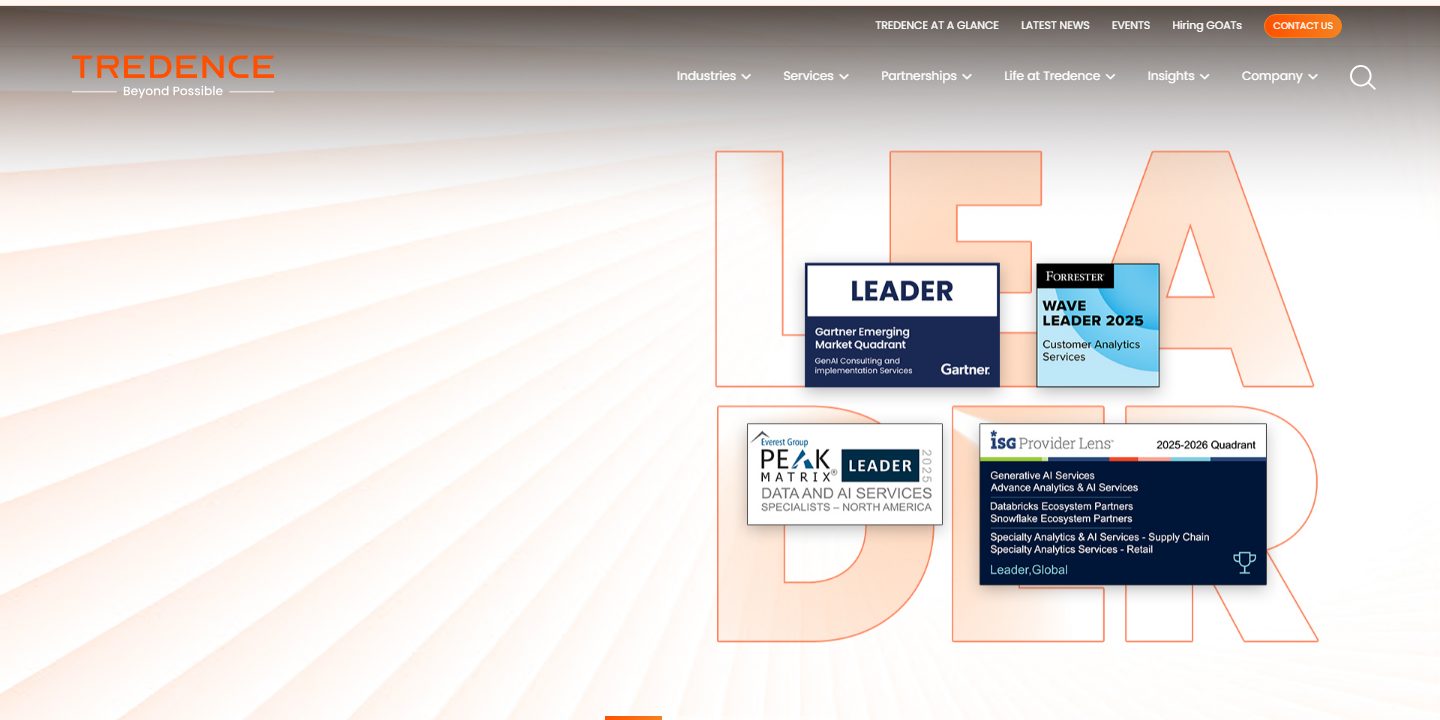
Tredence provides data, analytics and AI services with an emphasis on turning analysis into operational use. Its work makes the final part of an initiative worth examining: an insight has to reach a workflow, with someone able and willing to act on it. That can involve changes to data preparation, applications and team responsibilities. For enterprise leaders, the question is how to evaluate adoption and ongoing use alongside the technical quality of what has been built.
Question for 2027 How will a business measure whether an AI-enabled workflow is being used effectively after the initial deployment?
Questions to carry into the next implementation
A useful evaluation starts with a named workflow and the people responsible for it. Ask where the data comes from, how an output will be checked, and what happens when the system is wrong. The companies here offer different ways into that conversation; the appropriate starting point depends on the organisation’s problem and operating constraints.
Want to turn your team’s expertise into regular conversations with your buyers? Explore Fame’s B2B podcast services.
Want us to run this for you?
Fame starts and grows B2B podcasts that generate pipeline. Tell us who you are trying to reach and we will send a costed proposal within 1 working day.