December 29, 202519 min read6 sections
What Is Owned Media? A Simple Guide To Brand Control
By Fame Team
Key Takeaways
- Owned media is digital channels entirely controlled by a company, including its website, blog, email list, and branded podcast.
- Owning these digital real estate assets provides stability and control in a world where rented media options, like social media, are unpredictable.
- A portfolio of owned assets is the foundation of a smart marketing plan, enabling a direct and unfiltered line of communication with the audience.
Owned media is simple: it's the digital channels your company completely, 100% controls.
Think of your website, your blog, your email list, and your branded podcast as your brand's digital real estate. These are assets you own outright. You build them, you manage them, and you never have to ask a third-party platform for permission to use them.
What Is Owned Media Explained for B2B Marketers
To make this tangible, imagine the difference between owning a home and renting an apartment.
Your home (owned media) is a long-term asset where you build equity. You decide the layout, the paint colors, and who gets invited over. In contrast, rented media, like your social media profiles or the ad space you buy, is just like that apartment. You’re stuck with the landlord's rules, your rent can go up without warning, and you could get kicked out at any time.
For B2B marketers, this distinction is critical. Your owned media provides stability and control in a digital world that feels anything but predictable.
The Foundation of Digital Ownership
The core power of owned media is the direct, unfiltered line of communication you build with your audience. When a prospect subscribes to your newsletter or follows your podcast, they have explicitly permitted you to contact them.
You’re no longer fighting an algorithm to get your message seen. You’re building a genuine relationship, completely on your own terms. That level of control is non-negotiable if your goal is to build a lasting brand.
Actionable Tip: Audit your current marketing. How much of it relies on platforms you don't control? Your goal should be to use rented channels (like social media) to drive traffic back to assets you own (like your newsletter or website), turning fleeting attention into a long-term relationship.
This foundation is the bedrock of any smart marketing plan. Before you can even begin to figure out how to create a content strategy that gets results, you must have a solid portfolio of owned assets to build it on.
The Four Core Types of Digital Media
To put owned media in context, you need to see how it fits with the other channels you're likely using. Each type, Owned, Paid, Earned, and Shared, plays a unique role. The magic happens when you get them working together.
Here’s a quick breakdown to guide your strategy:
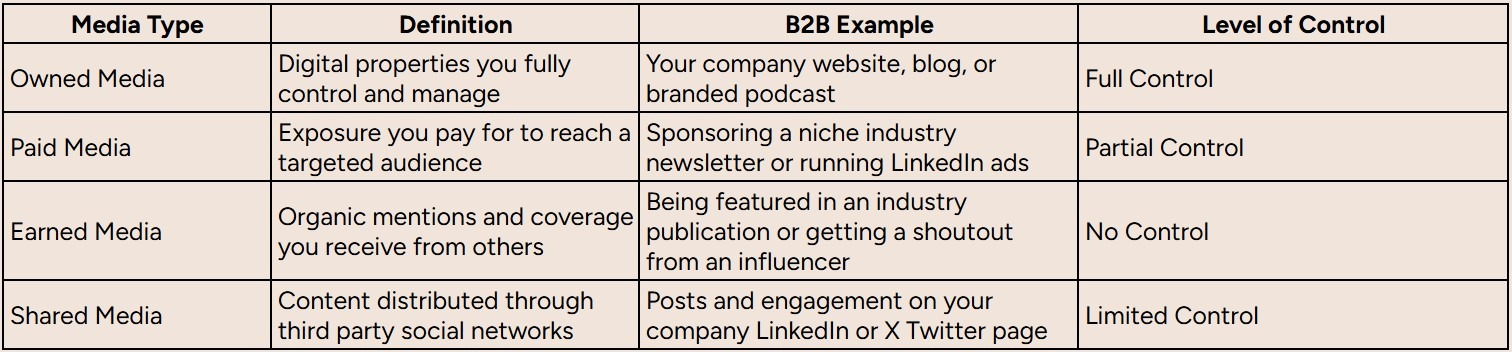
Understanding these distinctions is key. While paid, earned, and shared media are great for discovery and amplification, your primary objective should be to use them to point back to the channels you own. That's the tactical shift that turns rented attention into a long-term asset.
Core Examples of Owned Media
While the concept is broad, most B2B brands should focus on a handful of key owned media channels to build authority and drive demand. These are the platforms where you call the shots.
Your owned media assets should include:
- Your Website and Blog: This is your digital headquarters. Make it the central hub for all your content, product information, and company messaging.
- Branded Podcast: This is your secret weapon for building deep, personal connections with decision-makers by delivering expertise directly to their ears.
- Email Newsletters: This is your direct line to nurture leads, share valuable insights, and announce updates to an audience that has actively opted in.
- Webinars and Ebooks: These are your in-depth educational resources, hosted on your site to teach your audience and capture high-quality leads.
Each of these works together to create a powerful ecosystem that you command. By focusing your energy here, you build a sustainable growth engine that doesn't depend on renting space from someone else.
Why Owned Media Is Your Most Valuable Marketing Asset
Knowing what owned media is is the first step. But truly understanding why it’s your single most powerful marketing asset? That’s what separates the brands that win from everyone else.
In a world where ad costs are constantly climbing, and algorithms change on a whim, your owned channels are your fortress. They’re a direct, unfiltered line to your audience, shielding you from the unpredictable nature of third-party gatekeepers.
When you post on social media, you’re a guest in someone else’s house, playing by their rules. With your own assets, you’re the host. Prioritizing owned media is one of the smartest, most actionable moves any B2B brand can make.
Building Compounding Value Over Time
Think about this: paid advertising stops working the second you stop paying. Owned media is the polar opposite. It’s an investment that compounds over time.
A single, deeply researched blog post or a standout podcast episode can continue to attract leads, build authority, and drive traffic for years. No extra ad spend required.
Each piece of content you create on your own channels is another brick in your brand's foundation. This creates a powerful flywheel. Your existing assets make every new piece of content more effective, amplifying your reach without demanding more budget.
The real magic of owned media is its ability to turn fleeting attention into a long-term, predictable asset. It becomes the central hub that makes all your other marketing, paid, earned, and shared, work harder and smarter.
This digital footprint is growing within a massive global market. The total media market is on track to hit $2,833.1 billion by the end of 2025, with North America making up $1,121.62 billion of that. In this space, B2B companies are leaning on owned assets like podcasts to carve out their niche as thought leaders and fuel their demand gen engines directly.
The Power of Direct Audience Relationships
One of the biggest wins with owned media is the chance to build genuine, direct relationships with your customers and prospects. When someone subscribes to your newsletter or your podcast, they've invited you into their world.
This is permission-based marketing, and it’s incredibly powerful. You get to nurture leads, gather feedback, and build a loyal community without an algorithm standing in your way. These direct connections are the bedrock of predictable, sustainable growth.
- Action Step 1: Mitigate Platform Risk. Your top priority should be converting social media followers into email or podcast subscribers. You're no longer at the mercy of an algorithm change tanking your reach overnight.
- Action Step 2: Gather Deeper Audience Insights. Use your owned channels (like email surveys or podcast listener feedback) to collect first-party data. This gives you an unfiltered look into your audience’s biggest challenges and needs.
- Action Step 3: Enhance Trust and Credibility. Commit to a consistent publishing schedule on your blog or podcast. Consistently delivering value on your own turf establishes your brand as a trusted authority.
Of course, tracking the return on these efforts is key. For a deeper look into how to connect these activities to real business results, you can learn more about measuring content marketing ROI.
Full Control Over Brand and Message
Finally, owned media gives you total control over your brand’s story. You decide what to say, how to say it, and when to say it. There are no gatekeepers, no character limits you didn't set, and no platform policies watering down your message.
This control isn't just for digital platforms, either.
Think about physical assets like custom signage. That’s also a powerful form of owned media. It gives you direct brand control and visibility in the real world. This ensures your message stays consistent, authentic, and perfectly aligned with your goals across every single touchpoint.
Your Podcast Is Your Ultimate Owned Media Channel
Sure, your website and blog are the foundation of your owned media strategy. They're essential. But there’s another channel that’s quickly becoming the ultimate tool for B2B brands looking to build real authority and forge deep connections: the branded podcast.
Think about it. A prospect might skim your latest blog post for 90 seconds. But a podcast? That's an entirely different beast. You're delivering your expertise directly into the ears of decision-makers while they commute, work out, or walk the dog. This creates a level of intimacy and trust that a wall of text just can't compete with.
The Strategic Edge of Owning the Mic
The real magic of a branded podcast is its ability to cut through the noise. In a world of endless distractions, listeners are actively choosing to spend 30-60 minutes with your brand, absorbing your unique perspective and insights.
This direct-to-ear pipeline is priceless. It completely bypasses social media algorithms, ad blockers, and inbox clutter, giving you an unfiltered connection to your ideal customer. It’s your stage to demonstrate expertise, share powerful customer stories, and ultimately shape the conversation in your industry, all on a platform you own and control.
Actionable Tip: Launch a podcast focused on solving your ideal customer's biggest problems, not on pitching your product. When a listener subscribes, they are giving you a weekly or monthly appointment to be their trusted advisor, cementing your brand's authority in their mind.
This is exactly why a B2B podcast isn't just "content." It's a strategically owned asset. It acts as a powerful relationship-building engine, systematically nurturing prospects from casual listeners into passionate advocates for your brand.
Turn One Conversation Into a Content Machine
One of the most powerful arguments for investing in a podcast is its sheer efficiency. A single episode isn’t just one asset; it’s a content engine that can fuel your entire marketing strategy for weeks on end.
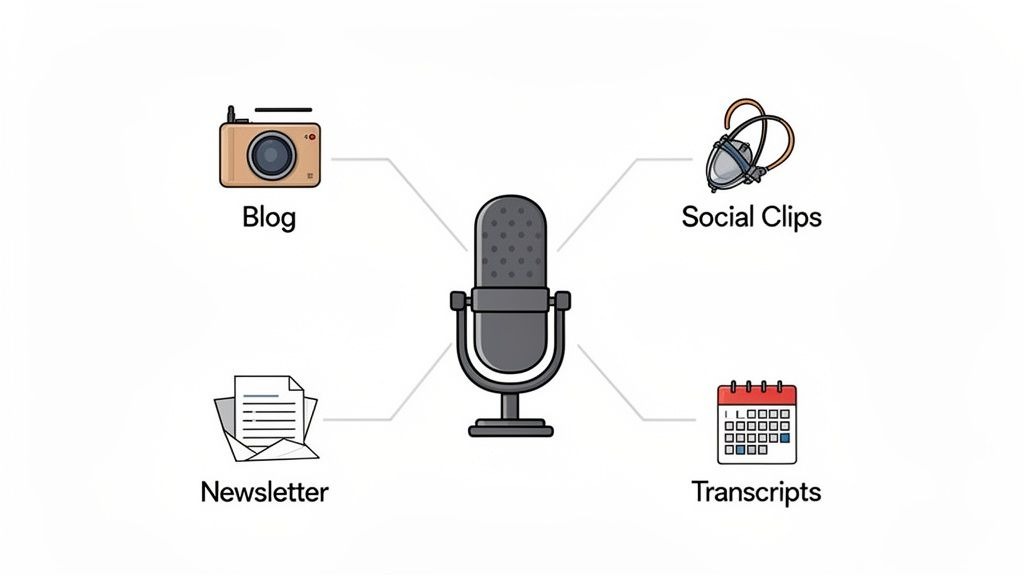
Seriously, just one 45-minute conversation can be sliced, diced, and repurposed into dozens of smaller assets. This maximizes your ROI and ensures your message hits your audience on every channel they use.
Here is a practical workflow you can implement immediately:
- Full-Length Blog Post: Transform the episode transcript into a detailed, SEO-optimized article that captures organic search traffic.
- Social Media Clips: Pull the most punchy 60-second soundbites and turn them into video snippets or audiograms for LinkedIn, X (Twitter), and anywhere else your audience hangs out.
- Newsletter Content: Use the episode's key takeaways to craft a valuable, must-read email for your subscribers, driving them right back to your owned channels.
- Guest Promotion Assets: Equip your guest with pre-made clips and graphics, making it a no-brainer for them to share the episode with their network and amplify your reach.
This "create once, distribute forever" approach makes podcasting one of the most resourceful owned media plays available. For a step-by-step breakdown, check out our complete B2B branded podcast framework.
The Business Case for Branded Podcasts
As rising ad costs make renting an audience more expensive, the value of owned media has skyrocketed. B2B firms are realizing that company-controlled channels like podcasts are goldmines for building authority and a predictable pipeline. Just look at the explosive growth of retail media networks, projected to hit $153.3 billion in 2024, which underscores the immense power of owned channels that don't depend on third parties.
For B2B marketers, especially those with big goals like an IPO or acquisition, a strategic podcast delivers measurable returns. It's a scalable way to convert expert insights into lasting brand authority and tangible business growth. The focus here is on marketing outcomes, not just pristine audio quality, ensuring your podcast directly contributes to the bottom line.
Real-World Examples of B2B Brands Winning with Podcasts
Theory is great, but seeing how real brands apply these principles is what makes it click. Let's move from concept to concrete proof and look at a few B2B companies that are turning their owned media podcasts into growth engines.
These mini case studies show how smart marketers are turning conversations into customers, building authority, and getting in front of C-suite execs.
Gong Creates a New Category with Reveal
Gong, the revenue intelligence platform, didn't just build a product; they built an entire category. Their podcast, Reveal: The Revenue Intelligence Podcast, was a central pillar in that strategy, cementing them as the go-to experts.
Instead of a show about them, Reveal brings on top sales leaders to share unfiltered, actionable advice. By focusing on their audience's problems, not their product, Gong built an invaluable owned media asset that naturally attracts their ideal customer: sales VPs and CROs.
The actionable takeaways:
- Define Your Category: Use your podcast to define the problem your product solves, establishing your brand as the leader in that space.
- Attract Your ICP: Feature guests your ideal customers already admire and trust, building a loyal following of high-level decision-makers.
- Reinforce Expertise: Every episode should reinforce your unique perspective, making future sales conversations easier and more effective.
Refine Labs Redefines Demand Generation with State of Demand Gen
Refine Labs, a B2B marketing firm, used its podcast, State of Demand Gen, to challenge the status quo and build a massive following. The show became the voice of a new movement, championing a different approach to B2B marketing that resonated with frustrated practitioners.
Hosted by CEO Chris Walker, the podcast offers a direct, no-BS look at what's actually working in demand gen today. This owned media channel gave Refine Labs a platform to share its unique point of view, completely unfiltered.
Actionable Tip: Don't be afraid to have a strong, contrarian point of view. Refine Labs built a community of evangelists because they weren't afraid to challenge old marketing playbooks. Their podcast became required listening for any B2B marketer looking to get ahead, directly fueling their pipeline with highly qualified, inbound leads who were already sold on their philosophy.
This demonstrates the power of a strong perspective. Refine Labs didn't just create content; they created a new conversation and put their brand at the center of it.
Datadog Builds a Technical Moat with The Business of Cloud Native
Datadog, a monitoring platform for cloud apps, operates in a highly technical and crowded space. To stand out, they launched The Business of Cloud Native, a podcast that goes deep into the strategic challenges of building and scaling cloud infrastructure.
This isn't a show for beginners. It's an owned media asset precision-engineered to engage senior engineering leaders and architects, the exact people who buy their product. The podcast features conversations with experts from top-tier tech companies, digging into complex topics with a business-first lens.
The actionable takeaways:
- Go Niche: Don't be afraid to create highly technical content for a sophisticated audience. Datadog cemented its reputation by speaking its language.
- Engage the C-Suite: Use your podcast as a unique way to build relationships with key decision-makers at your target accounts.
- Build Technical Credibility: Showcase your deep understanding of your customers' biggest problems to build immense trust.
Deloitte Drives Executive Conversations with CFO Weekly
For a professional services giant like Deloitte, building relationships with the C-suite is the entire game. Their podcast, CFO Weekly, is a masterclass in using owned media to do just that. The show tackles the biggest issues on the minds of modern finance leaders, from digital transformation to risk management.
Each episode features insightful conversations with Deloitte's own experts and other industry leaders. This format doesn't just put Deloitte's deep expertise on display; it also creates a powerful networking and business development tool. It's a perfect example of turning intellectual capital into a tangible asset.
The strategic value here is undeniable. It helps them build credibility and open doors with their most important audience. For a closer look at the strategy behind a successful C-suite-focused show, you can explore the journey of elevating the CFO Weekly podcast to new heights with Fame.
How to Build Your Owned Media Strategy from Scratch
Building a powerful owned media strategy isn't as complicated as it sounds. At its core, it’s a deliberate, step-by-step plan. By centering that strategy around a B2B podcast, you get a hyper-focused way to build authority and open a direct line to your audience. This playbook breaks down exactly how to do it.
We're not just talking about creating content; we're talking about building a sustainable growth engine. This simple workflow shows how a clear strategy flows into real results and long-term growth.
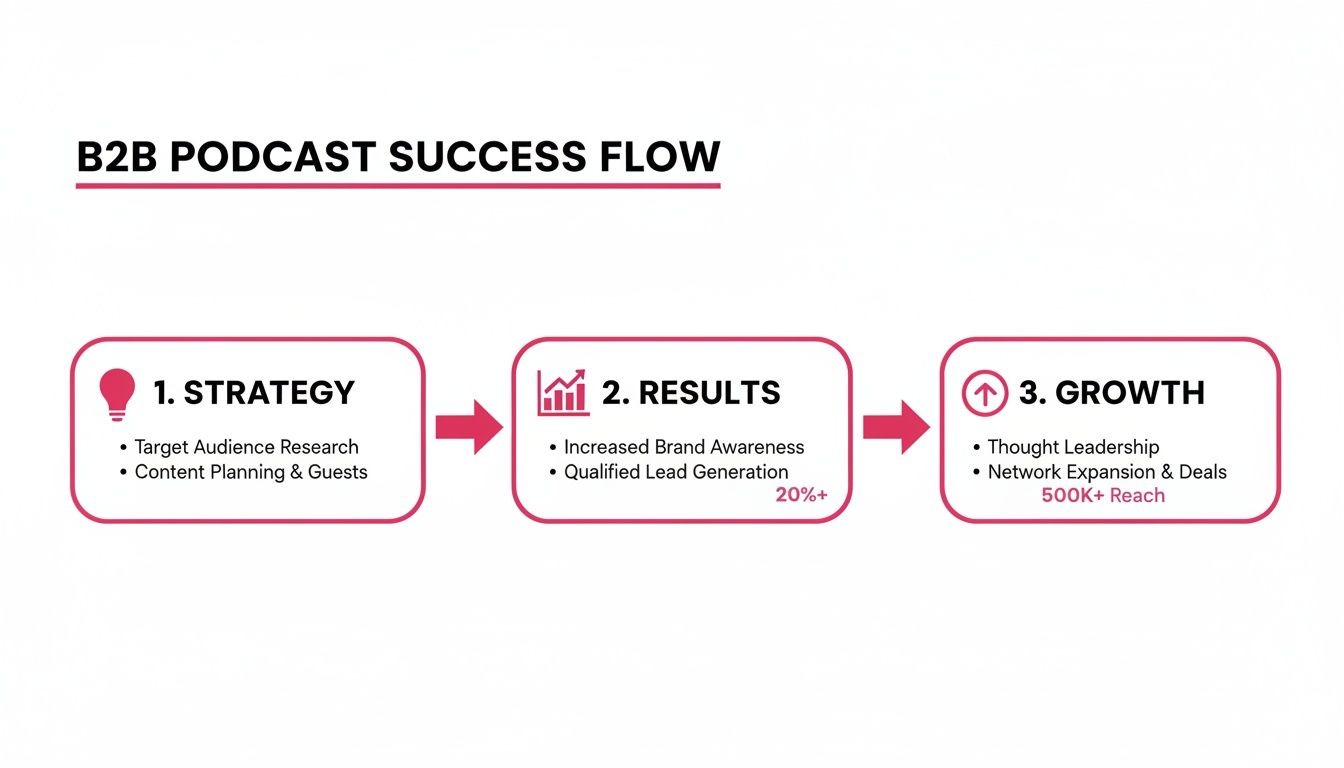
This flow drives home a key point: a great owned media channel starts with a solid plan, moves to measurable outcomes, and ultimately fuels your brand’s growth for the long haul.
Stage 1: Define Your Audience and Objectives
Before you even think about hitting record, get crystal clarity on two things: who you’re talking to and what you want to accomplish. Nailing this stage is what separates a podcast that drives business from a vanity project.
Start by creating a highly specific Ideal Customer Profile (ICP). Go beyond basic demographics. Dig into their biggest pain points, career goals, and the questions they're secretly typing into Google. What industry events are on their calendar? Who do they already see as an authority?
Then, set clear, measurable goals for your show. Are you trying to generate qualified leads? Build brand awareness in a new market? Shorten your sales cycle? These objectives will guide every decision you make, from topics to promotion.
Your Actionable Goal: Don't just measure downloads. Measure how well the podcast attracts and engages your ICP. Tie every episode back to a tangible business objective, like driving demo requests or newsletter sign-ups.
Stage 2: Establish Your Content Pillars
Now that you know your audience and goals, what will you actually talk about? This is where your content pillars come in, the 3-5 core themes your show will own. These are the big-picture topics that address your ICP's challenges head-on and showcase your unique expertise.
Think of these pillars as the foundational columns holding up your show. They keep your content focused, consistent, and genuinely valuable.
- Pillar 1 Example (for a cybersecurity firm): "Threat Intelligence for CISOs" – This pillar would cover new threats, risk management strategies, and interviews with other security leaders.
- Pillar 2 Example (for a fintech company): "The Future of B2B Payments" – Here, you could explore embedded finance, cross-border payments, and API-driven banking.
Once your pillars are set, you can easily brainstorm dozens of specific episode ideas under each one. This framework ensures you never run out of ideas and cements your brand as the go-to authority on these key subjects.
Stage 3: Choose a Format That Fits
Not all podcasts are created equal. The format you choose must align with your brand's personality, your team's resources, and, most importantly, what will resonate with your audience. There's no one "best" format, only the format that’s best for you.
Here are a few popular B2B-friendly options:
- The Interview Show: Host and bring on different guests. This is an incredible way to network and borrow authority from established experts.
- The Solo Show: A single host (often a founder or in-house expert) shares their insights directly. This is a powerful method for building a personal brand and delivering concentrated expertise.
- The Co-Hosted Show: Two hosts share the mic, creating a more dynamic, conversational vibe. This works wonders for showcasing different perspectives and creating engaging banter.
The key is to choose a format you can realistically produce at a high quality, week in and week out. Consistency is far more important than a complex format you can't maintain.
Stage 4: Develop Your Promotion Plan
Creating a great podcast is only half the battle. Getting it in front of the right people is the other, equally important half. Your promotion plan must be as strategic as your content plan. It's not enough to publish an episode and hope for the best.
Your promotion should leverage your owned channels while also tapping into paid and earned media opportunities. When you have a strong start-to-finish process, from idea to promotion, your podcast becomes a true demand-generation machine. This is becoming more critical as owned media networks gain ground. By 2025, U.S. retail media alone is projected to grow 20%, blowing past the 4.3% growth for total ads. That’s a massive signal that B2B teams need to be paying attention to their owned channels.
For B2B marketers who run events, your owned media strategy has a secret weapon. Your podcast is a fantastic tool for promoting upcoming webinars or live events, and you can explore more strategies for event marketing and promotion to see how it all fits together. The bottom line? Build a promotion checklist you can execute for every single episode to maximize its reach and impact.
The Nitty-Gritty: Your Owned Media Questions Answered
Alright, you understand the theory. But as you start mapping this out, the practical questions always emerge. Let's tackle the most common ones head-on so you can move from idea to action.
How Much Does It Cost to Build an Owned Media Channel?
People often get tripped up here, but the cost isn't what you think. Unlike paid media, where you're constantly feeding a machine, owned media is about a smart, upfront investment in assets that pay you back for years.
Your biggest line item is usually time and talent, not a check to Google or LinkedIn. A great blog post or a standout podcast episode requires expertise and effort. But its power to pull in traffic and leads for months, or even years, makes that initial cost incredibly efficient. A single podcast episode might run you anywhere from a few hundred to a few thousand dollars, but its value compounds every time someone discovers it.
How Long Until I See Results from My Owned Media?
Owned media is a long game, not a quick hit. If you need leads tomorrow, run a paid ad campaign. If you want to build a sustainable growth engine, invest in owned assets. Think of it as planting an orchard versus buying a bouquet.
You’ll likely see early signs of traction within the first 3-6 months. This looks like a bump in website traffic, a growing email list, or more social engagement. But the real payoff, a predictable, steady stream of inbound leads, usually starts to materialize after 9-12 months of consistent effort.
Actionable Mindset: The goal of owned media isn’t a one-off win; it’s building an asset that grows in value over time. Patience and consistency are your most critical tools. Commit to a 12-month plan before evaluating its success.
What’s the Best Owned Media Channel to Start With?
For most B2B brands, the killer starting combo is a blog and a branded podcast. Don't try to be everywhere at once. Start here. This duo works together to create a powerful, self-sustaining content engine.
Your blog becomes your home base. It’s the library where all your deep, written content lives, perfectly optimized to capture search traffic. The podcast is where you build the relationship; it creates a personal, human connection with your audience and cements your authority in a way that plain text can't.
- Your Podcast: This is where you have expert-driven conversations that build trust and an intimate audience relationship.
- Your Blog: This is the home for your repurposed podcast content, turned into SEO-friendly articles that attract brand-new visitors.
Nail this pair, and you’ll have a rock-solid foundation for capturing an audience and keeping their attention.
How Do I Create Enough Content Consistently?
This is the hurdle that trips up so many teams. The secret isn't to work harder; it's to build a smarter system. Stop thinking about content as a list of one-off tasks and start seeing it as an engine.
A branded podcast is the ultimate content engine. One 45-minute conversation with an expert can be systematically broken down and repurposed into a dozen different assets that will fuel your entire marketing strategy for weeks. Want to see exactly how this works? We wrote a detailed playbook on what is content repurposing that will help you build an efficient workflow.
This approach flips the script. You’re no longer stuck on the content treadmill, desperately trying to create something new. Instead, your focus shifts from endless creation to strategic distribution.
How Can a Small Team Manage an Owned Media Strategy?
You don’t need a massive department to win at owned media. You need a tight strategy and the right partners. A small, focused team can easily outperform a larger, unfocused one by doing one or two things exceptionally well.
Prioritize ruthless consistency over sheer quantity. Instead of trying to have a presence everywhere, pick the channels that matter most to your audience and absolutely own them. For specialized, technical tasks, like podcast production, audio engineering, or video editing, bringing in a dedicated agency can provide the polish and expertise you lack in-house. This frees up your team to do what they do best: focus on strategy and creating killer content.
Ready to build an owned media asset that actually moves the needle? At Fame, we help B2B brands launch and grow authority-building podcasts that generate a real, qualified pipeline. Learn how we can help you own the mic in your industry.
Want us to run this for you?
Fame starts and grows B2B podcasts that generate pipeline. Tell us who you are trying to reach and we will send a costed proposal within 1 working day.
Related content
- Read moreFame Team · July 16, 2026
10 Account Based Marketing Tactics For B2B Growth In 2026
Discover 10 actionable account based marketing tactics for B2B tech. Learn to use podcasts, data, and targeted content to close high-value accounts. - Read moreFame Team · July 16, 2026
The 8 Best Brighton Podcast Agency Picks For 2026
Find the best Brighton podcast agency for your B2B brand. Our 2026 guide reviews top 8 agencies for production, growth & ROI. Expert analysis here - Read moreJune 10, 2026
20 Best Podcast Production Agencies For 2026 (And Why Should You Hire One)
Global podcast and vodcast ad revenues are on track to hit $5 billion in 2026 , up 20% year-on-year. - Read moreApril 13, 2026
Leadership In Marketing: The B2B Podcast Playbook
Most companies still confuse leadership in marketing with job titles, org charts, and budget control. That's outdated.