

So, you're wondering what is needed to start a podcast? It takes a lot more than just a good microphone and an idea—especially in the B2B world. To create a show that grows your brand, you need a rock-solid, actionable blueprint.
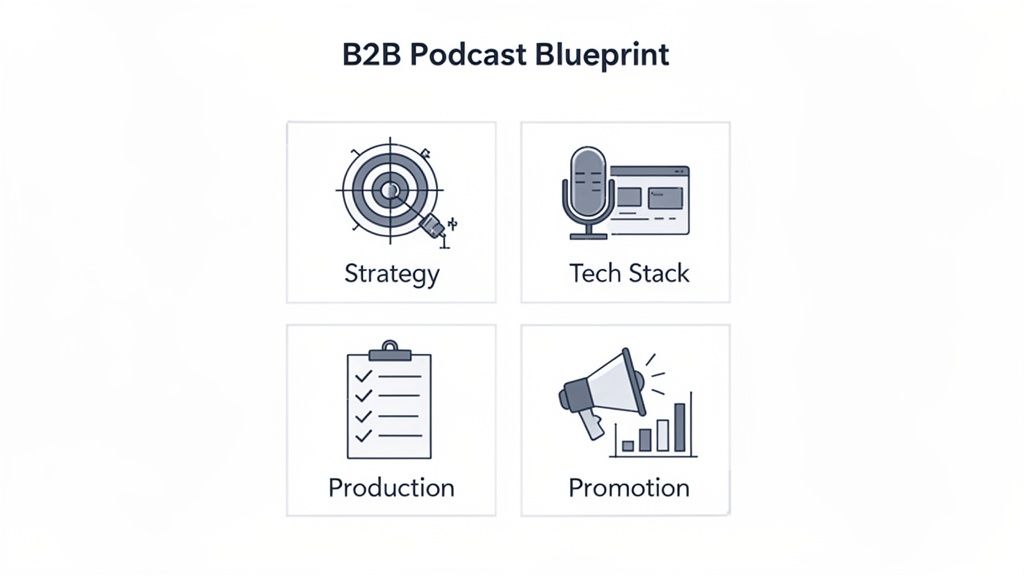
For a show to truly connect with a business audience and deliver results, it has to stand on four essential pillars: a goal-oriented strategy, the right tech stack, a repeatable production system, and a powerful promotion engine. We’re going to break down exactly what goes into each one.
Your B2B Podcast Launch Blueprint
Let's get one thing straight: a B2B podcast isn't a hobby or a personal project. It's a powerful marketing asset, purpose-built to establish your brand as an authority and fill your pipeline with qualified leads. It’s an engine for growth, not just another piece of content. Getting this mindset right from day one will shape every decision you make, from who you invite as a guest to how you promote each episode.
This means you need to stop thinking like a broadcaster and start thinking like a marketer. Every single episode should tie back to a specific business goal. Are you trying to educate your ideal customer? Build relationships with industry heavyweights? Or plant your flag as the definitive thought leader in your space?
The Four Pillars of B2B Podcasting
To build a show that actually delivers a measurable return, you have to nail four distinct areas. If you let even one of them slide, you risk undermining all your hard work and falling victim to the dreaded "podfade"—where a once-promising show just quietly disappears after a few episodes.
Here’s a bird's-eye view of the foundational elements we’ll dig into:
Strategy: This is your "why." It all starts with defining your target audience, setting crystal-clear business goals (like lead generation or brand awareness), and picking a format that actually helps you hit those targets. To really flesh this out, you’ll want to develop a comprehensive business plan for a podcast.
Technology: This pillar is all about your equipment and software. We'll get into the specifics of microphones, recording platforms, and editing tools, but the key takeaway is this: for a professional audience, great audio quality is non-negotiable.
Production: This is where we map out a repeatable workflow that keeps your show running like a well-oiled machine. It covers everything from sourcing and prepping guests to recording, editing, and creating show notes. Consistency is king.
Promotion: A brilliant podcast is worthless if nobody hears it. The final pillar is all about creating a multi-channel launch plan and an ongoing marketing strategy to grow your audience and turn listeners into future customers.
When you approach your podcast with this structured blueprint, you're not just creating audio content. You're building a strategic asset that will fuel your company's growth for years to come.
To give you a clearer picture, here's a quick checklist summarizing what you'll need, whether you're just starting out or aiming for a top-tier production.
B2B Podcast Quick Start Checklist
This checklist isn't exhaustive, but it highlights the key decision points you'll face. The "Beginner" column gives you a reliable, cost-effective starting point, while the "Pro-Level" column shows where you can invest as your show grows and proves its value.
Laying Your Strategic Foundation
Before you even think about buying a microphone or signing up for software, we need to talk strategy. This isn't just a box-ticking exercise; it's the most critical part of creating a B2B podcast that actually drives business results. Skipping this is like building a house without a blueprint—it might look okay for a minute, but it’s going to fall apart, fast.
Your strategy is your "why." It's the reason the show exists, and it has to be tied to real business goals. Are you trying to generate demand? Build a loyal following in a tiny, profitable niche? Or maybe you want to become the undisputed thought leader in your category. Nailing this down ensures every single decision—from the guests you book to the topics you cover—is pulling in the same direction.
Define Your Ideal Listener Persona
You are not making a podcast for everyone. You're making it for someone. The most successful B2B shows are aimed at a hyper-specific ideal listener. We need to go way beyond broad demographics and get into their heads.
- Role and Title: Are you talking to VPs of Operations, front-line SDRs, or CFOs?
- Industry: Are they at enterprise SaaS companies, manufacturing firms, or financial institutions?
- Challenges: What’s the biggest problem they're trying to solve at work this quarter? What keeps them up at night?
- Goals: What does a "win" look like for them? What are they trying to accomplish in their career?
For example, instead of "marketers," you might target a "VP of Marketing at a Series B FinTech company who's struggling with rising customer acquisition costs." Getting this specific dictates everything—your show’s tone, how deep you go on certain topics, and the kinds of questions you ask.
Choose a Format That Serves Your Goals
Once you know who you're talking to and why, picking a format gets a whole lot easier. This isn't just a creative choice; it’s a strategic one that depends on your goals, your resources, and what your specific audience actually wants to listen to.
- Expert Interviews: This is the heavyweight champion of B2B podcasting for a reason. You get to borrow authority from industry leaders, build incredible relationships, and deliver massive value to your listeners.
- Solo Deep Dives: Perfect for establishing your own expertise. You can break down complex topics, share your unique frameworks, and position yourself as the person with the answers.
- Panel Discussions: Getting a few experts together can spark some really dynamic, unscripted conversations. This format is great for tackling broad industry trends from multiple angles.
Be realistic about your team's bandwidth here. Solo shows are the lightest lift. Interviews and panels, on the other hand, require a serious time investment in sourcing, scheduling, and prepping guests. Pick a format you can pull off consistently without burning out.
Set KPIs That Actually Matter
Downloads are a vanity metric. Seriously. It’s cool to watch the number climb, but it tells you almost nothing about the podcast's impact on your business. If you want to prove ROI, you need to track Key Performance Indicators (KPIs) that connect directly back to your business goals.
Your podcast should function as a precision marketing tool, not a megaphone shouting into the void. The goal isn't to be the biggest show, but the most impactful one for your specific niche.
Focus on metrics that prove you're building influence and generating business:
- Qualified Website Traffic: How many people are visiting specific landing pages or blog posts you mention in your show notes?
- Guest-Influenced Pipeline: Are the guests you're hosting (or their companies) turning into sales opportunities?
- Positive Brand Mentions: Is your show getting name-dropped on social media, in other industry content, or by influencers?
- Lead Generation: How many MQLs are you getting from calls-to-action or content offers you promote in your episodes?
By getting this strategic foundation right from the jump, you're setting your podcast up for success. It stops being just another piece of content and becomes a powerful, revenue-driving asset.
Assembling Your Podcast Tech Stack
So, what do you actually need to start a podcast? This is where the rubber meets the road.
For a B2B audience, incredible audio quality isn't just a nice-to-have; it's a non-negotiable sign of professionalism. Your listeners might forgive a slightly grainy video, but they will instantly tune out if your audio is scratchy, distant, or full of distracting background noise.
The good news? You don't need a Hollywood-level studio to sound fantastic. It’s all about making smart investments in the right places, and that starts with your microphone. Your laptop's built-in mic simply won't cut it.
Choosing Your Core Equipment
To stand out, you need to sound professional from day one. Estimates peg the podcast gear market at a whopping $285-300 million annually, with industry giants like Sennheiser getting 15% of their sales just from podcasters. That tells you something.
Investing in a solid USB microphone, finding a quiet place to record, and picking user-friendly editing software is the baseline. This ensures your show avoids the low completion rates that plague poorly produced content. For a deep dive into the numbers shaping the podcasting world, check out the latest stats from ourownbrand.co.
Let's break down your gear options into three practical tiers:
- Good (The Reliable Starter): A high-quality USB microphone like the Blue Yeti or Rode NT-USB+ is the perfect entry point. These mics plug directly into your computer, are a breeze to set up, and deliver crisp, clear audio that's a massive leap forward from any built-in device.
- Better (The Step-Up): As you get more serious, an XLR microphone like the Rode PodMic connected to a simple audio interface like the Focusrite Scarlett 2i2 offers more control and a warmer, richer sound. This setup separates your microphone from your computer's internal sound card, which is a big deal for reducing potential electronic interference.
- Best (The Pro-Level): The industry standard for a reason. A setup featuring a Shure SM7B microphone paired with a quality interface or a dedicated production console like the RØDECaster Duo delivers broadcast-quality sound. For a complete overview of different options, check out our guide on the best podcasting setup.
As Fame's founder Tom Hunt often says, "Great audio is more important than great video." You can compensate for average video with good lighting and a sharp outfit, but jarring, low-quality audio is an instant dealbreaker for your listeners.
Essential Software for a Seamless Workflow
Your hardware is only half the equation. The right software will streamline your entire process—recording, editing, and distribution—making your workflow efficient and repeatable.
- Remote Recording Platform: For B2B podcasts, remote recording is the standard. It lets you book high-profile guests from anywhere in the world without worrying about travel costs or studio time. Platforms like Riverside.fm, one of our trusted partners, are a game-changer. They record separate, high-fidelity audio and video tracks locally for each person, which means a guest's spotty internet connection won't tank the final recording quality.
- Editing Software (DAW): A Digital Audio Workstation (DAW) is where you'll assemble and polish your recordings. For beginners, AI-powered tools like Descript offer an intuitive, text-based editing experience that feels like editing a Word doc. More advanced users might prefer professional-grade software like Adobe Audition or the fantastic free, open-source option, Audacity.
- Transcription Service: Transcribing your episodes is non-negotiable for accessibility and content repurposing. Many recording platforms offer built-in transcription, or you can use dedicated services to create full transcripts for your show notes, blog content, and social media clips.
Ensuring Your Guests Sound Great
One of the biggest anxieties for any host is that a guest's bad audio will ruin an otherwise brilliant episode. You're not powerless here. Sending a simple prep checklist ahead of the recording can make a world of difference.
We always recommend guests follow these simple steps:
- Use Wired Headphones: Bluetooth headphones can introduce lag and weird connectivity issues. Simple wired earbuds are far more reliable for preventing echo and feedback.
- Find a Quiet Space: A small, carpeted room with soft furniture is ideal for absorbing sound and reducing echo. A walk-in closet is a surprisingly effective makeshift vocal booth.
- Use an External Microphone: If they have one, fantastic. If not, and you have the budget, sending an affordable USB mic like a Blue Yeti can be a great investment and a memorable gift for a high-value guest.
- Leverage Natural Light: For video podcasts, ask the guest to sit facing a window. Natural light provides the best and most flattering video quality without requiring any special equipment.
To help you get a clearer picture of what it takes to get started, we've put together some sample budgets.
Sample B2B Podcast Starter Budgets
This table breaks down the typical costs for getting a B2B podcast off the ground. These are just estimates, but they give you a realistic idea of where your investment will go at different levels of commitment.
As you can see, you don't have to break the bank to achieve professional-quality sound. Start where you're comfortable, and you can always upgrade your gear as your show gains traction and starts delivering real business results.
Designing a Repeatable Production Workflow
Great audio and a smart strategy are table stakes, but you know what really keeps a B2B podcast alive? Consistency.
So many shows burn bright and then fizzle out after a few episodes. Why? Because the creators totally underestimated the sheer grind involved. To dodge this dreaded "podfade," you need a production workflow that’s repeatable and, most importantly, written down.
This isn't about stifling creativity; it’s about building a reliable system. Think of it as your show's operating system—a predictable, manageable process that ensures you ship high-quality content on schedule, every single time. It gives your team clarity, sets expectations for guests, and frees you up to focus on what actually matters: having a killer conversation.
We can break the whole operation down into three clean phases: pre-production, production, and post-production.
Pre-Production: The Foundation for a Great Episode
Honestly, this is where the real magic happens. A smooth pre-production phase means your recording session will be focused, efficient, and packed with value. If you rush this part, you'll end up with a disorganized interview and a massive headache for your post-production team.
Key pre-production tasks look like this:
- Guest Research & Outreach: This isn't just about finding experts. It's about finding the right experts who perfectly match your episode's topic and your audience's needs. Outreach has to be personal, clearly spelling out what's in it for them and their brand.
- Scheduling & Coordination: Trying to find a slot in a busy executive's calendar can feel like a game of Tetris. Using scheduling tools saves everyone a ton of back-and-forth emails.
- Creating the Run-of-Show: This is way more than a simple list of questions. It's a shared blueprint for the episode, outlining the flow, key talking points, and logistics. It gets the host and guest on the exact same page before you ever hit record.
Production: Capturing High-Quality Audio
The production phase is simply the act of recording. With remote recording being the default for most B2B podcasts now, the game is all about creating a controlled environment to capture the best audio and video possible, no matter where your guest is.
"Remote recordings make it easier for guests to show up (they don't need to travel), means you can get a higher quality of guest too, don't have to reimburse travel, hotels, etc. Don't need to pay for studio time." - Tom Hunt, Founder of Fame
As our founder Tom points out, the convenience of recording remotely opens up a global talent pool. To make sure the quality stays high, send guests a simple one-pager with best practices: use wired headphones, face a window for good lighting, and find a quiet room. If you have the budget, shipping an affordable USB mic is a fantastic touch that guarantees better sound.
At its core, the tech behind your production workflow is incredibly simple. It all boils down to three things: a microphone, software, and headphones.
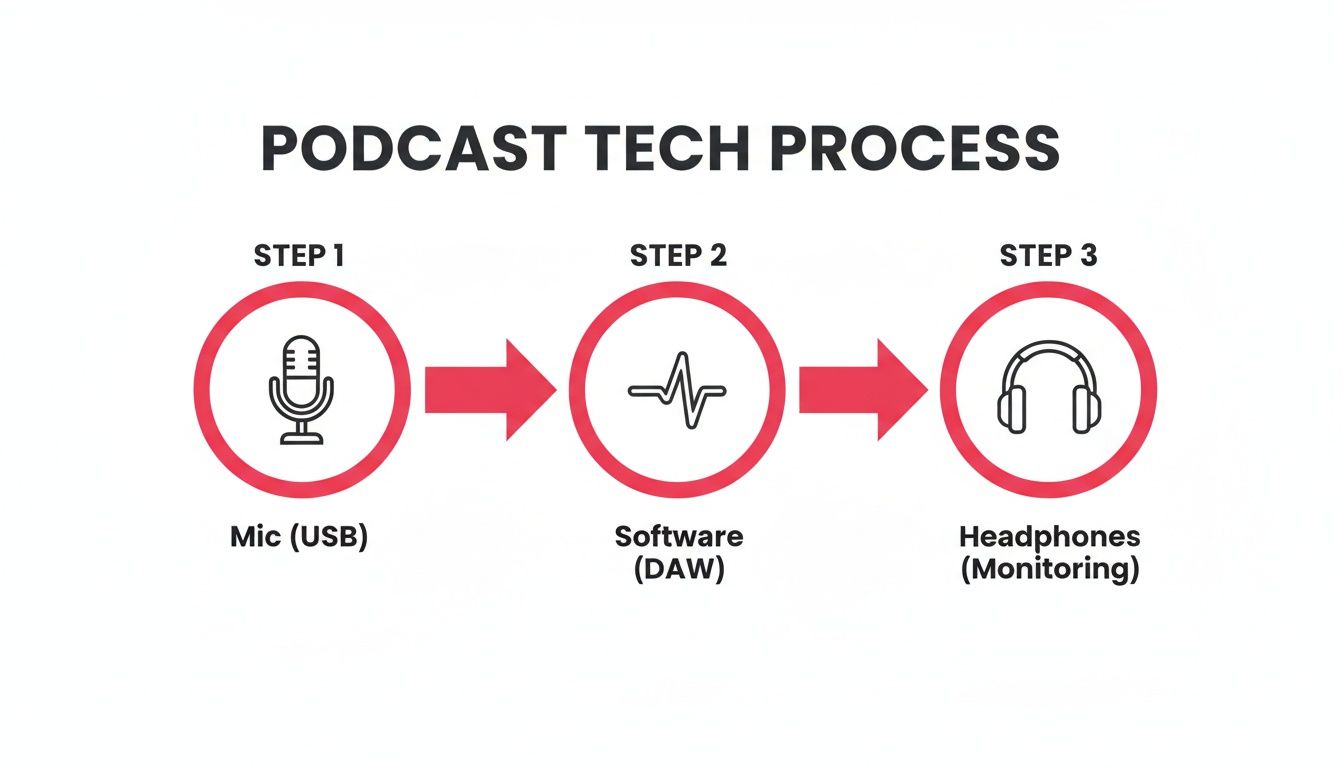
This simple flow—your voice into a mic, processed by software, and monitored with headphones—is the technical heartbeat of every great podcast episode.
Post-Production: Polishing and Publishing Your Episode
Once you’ve got the raw recording, the post-production crew takes the baton. Their job is to transform that raw audio into a polished, professional episode ready for the world. Be warned: this is often the most time-consuming part of the whole shebang.
Here’s what’s involved:
- Editing & Mixing: This is where you clean everything up—chopping out mistakes, "ums," and awkward pauses. You'll also balance the audio levels and weave in your intro and outro music.
- Transcription: Creating a full text version of the conversation is non-negotiable. It’s critical for accessibility and makes it a breeze to repurpose your content later. Exploring tools like free transcription software can be a huge time-saver here.
- Show Notes & Assets: You'll need to write a compelling summary, pull out some juicy quotes, and create promotional graphics or audiograms for social media.
Trying to handle all of this in-house is a serious commitment of time and people. This is the point where many businesses decide to partner with a B2B podcast agency, offloading the entire operational lift so their marketing team can stay focused on strategy.
For a much deeper dive, check out our complete guide to building a podcast production workflow.
Choosing a Host and Distributing Your Show
Alright, you’ve recorded and edited a fantastic episode. It’s polished, it sounds incredible, and you’re ready to share it with the world. Now what?
This is where you hit one of the most critical forks in the road: where will your podcast actually live? This isn’t just a technical detail; it’s the step that determines if anyone will ever hear your show.
What a Podcast Host Actually Does
Think of a podcast host as a specialized warehouse for your audio files. You upload your finished MP3, and the host does a few magical things: it stores the file securely, gives you detailed analytics on who’s listening, and most importantly, it generates your unique RSS feed.
That RSS feed is everything. It's the skeleton key that unlocks your podcast's entire distribution.
Here's a common misconception: you don't actually upload your audio files to Apple Podcasts or Spotify. Instead, you give them your RSS feed. Their platforms read that feed to pull in your new episodes, show notes, and artwork automatically, making them available to millions of listeners.
Picking the Right Hosting Platform
Choosing a host isn’t just about finding a place to dump your files; it’s a foundational investment in your show’s future. The podcast hosting industry itself pulls in $100-150 million annually, with major players like Libsyn and Acast leading the charge. Without a solid host, you have no way to reach the 584.1 million listeners projected for 2025. You can dig into more stats like this over at podcastindustry.org.
For a B2B show, your host needs to be more than just a storage locker. It has to be a marketing tool.
Look for a platform that offers:
- Deep Analytics: Go way beyond simple download numbers. You need to see where your listeners are, what apps they use to tune in, and which segments of your episodes they find most engaging.
- A Sleek Web Player: You'll want an embeddable player that looks professional on your company website and blog posts, making it dead simple for site visitors to become listeners.
- Smart Integrations: Your host should play nice with the other tools in your marketing stack. This makes it easier to automate workflows, like sending an email to your subscribers every time a new episode drops.
A reliable host isn't an expense; it's a strategic asset. The data it provides turns raw download numbers into actionable audience intelligence, helping you refine your content and prove the show's value to the rest of the business.
Getting Your Show into the Directories
So, you’ve picked a host, uploaded your first few episodes, and filled out all the necessary details like your show title, description, and cover art. Now for the final piece of the puzzle: distribution.
Thankfully, this part is surprisingly easy.
Your hosting platform will have a "Distribution" or "Directories" tab right in your dashboard. From there, it's usually just a one-click submission to get your RSS feed sent out to all the major podcast platforms.
At a minimum, you absolutely need to be on these three:
- Apple Podcasts: Still the 800-pound gorilla in the podcasting world. Being listed here is non-negotiable.
- Spotify: It's growing at a staggering pace and has become a primary discovery engine for new listeners.
- Google Podcasts: This is a big one for discoverability, as it’s baked directly into Google Search.
Most hosts make this process painless, providing direct links and step-by-step instructions for these platforms and others like Amazon Music and iHeartRadio. There’s a short approval window—sometimes a few hours, sometimes a few days—but once you’re in, your podcast is officially live and available to a global audience.
Launching and Promoting Your Podcast for Maximum Impact
Hitting "publish" on your first episode isn't the finish line—it's the starting gun. A brilliant B2B podcast that nobody ever hears is just an expensive hobby. To build real authority and fill your pipeline, you need a smart launch strategy and a relentless, multi-channel promotion plan.
Think of it like this: every single episode is a valuable asset. Your job is to make sure that asset is out there working for your brand 24/7. This whole process kicks off long before your first episode ever sees the light of day.
Building Your Launchpad
A powerful launch sets the entire tone for your show. One of the most common mistakes I see is people rushing this part, which can kill your momentum before you even get started. Sure, you could do a "soft launch" and publish quietly for a few weeks to get your bearings, but a big, coordinated grand opening almost always delivers a bigger initial punch.
Before you even think about going live, get these assets in your back pocket:
- A Compelling Trailer: Put together a short, snappy audio trailer—think 60-90 seconds. This is your show's elevator pitch. It needs to introduce the host, nail the core value for the listener, and tease the kind of guests and topics they can expect.
- A Batch of Launch Episodes: Don't just launch with one episode. I can't stress this enough. Have 3 to 5 full episodes ready to go on day one. This gives new listeners a backlog to binge, which is the fastest way to get them to hit "subscribe" and shows you're serious about consistency.
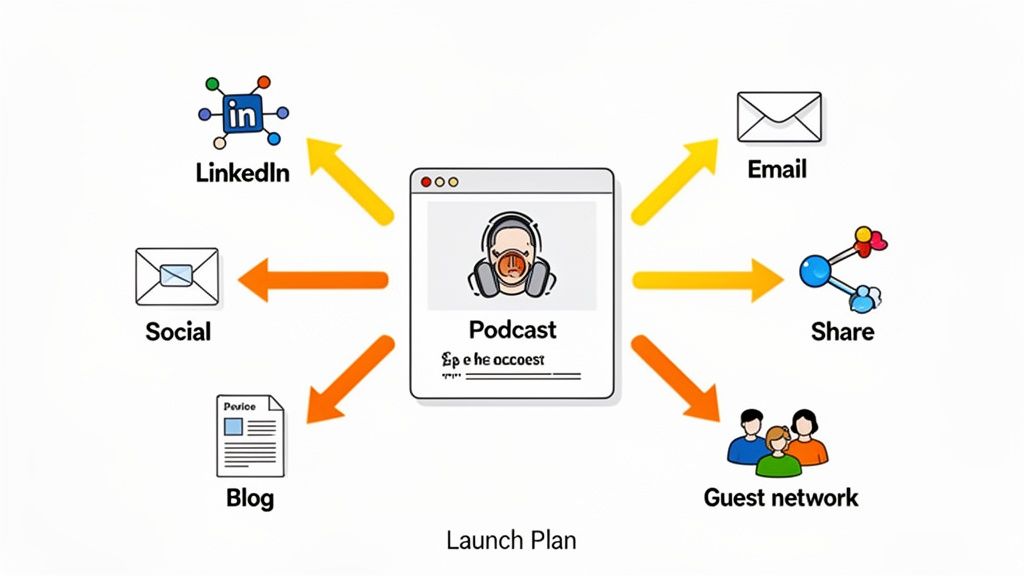
- A Pre-Launch Buzz Campaign: Start teasing the show on social media and to your email list a couple of weeks before the big day. Drop some behind-the-scenes clips, reveal your first few guests, and get people excited about what's coming.
Your Post-Launch Promotion Playbook
Okay, your podcast is live. Now the real marketing work begins. The goal here is to build a repeatable promotion system that you can run for every single episode you publish.
A great podcast episode is a pillar piece of content. Your promotional strategy should treat it as such, systematically repurposing it into dozens of micro-assets to fuel your marketing channels for weeks.
Start by creating slick audiograms—those short video clips with a killer quote from the episode, a waveform animation, and captions. They're absolute gold for grabbing attention on LinkedIn and other social feeds. To really dial in your approach, dig into some effective social media strategies for podcasters and build a plan that fits your show.
Every episode should also trigger a dedicated email to your subscriber list. And don't just announce it; sell it. Pull out the most valuable, must-hear insights and tell them exactly why they need to drop what they're doing and listen. If you're looking for support, leveraging a B2B email newsletter agency can ensure this part of your promotion is always top-notch.
Finally, you have to leverage your guest's network. It's a non-negotiable. Put together a simple promo kit for them with pre-made audiograms, quote graphics, and suggested social copy. By making it dead simple for them to share the episode, you can instantly tap into their audience and expand your reach.
Your Top Questions About Starting a B2B Podcast
Even when you've got a solid plan mapped out, a few specific questions always seem to surface. We get it. Let's tackle some of the most common hurdles we see B2B marketers face when they're figuring out exactly what it takes to start a podcast.
How Long Should a B2B Podcast Episode Be?
Let value be your guide, not a stopwatch. We’ve found the sweet spot for a busy B2B listener is right around 25-45 minutes. That's just long enough to fit into a commute or a lunch break, offering a meaty conversation without asking too much of an executive’s packed schedule.
The real answer, though, lies with your ideal listener. Are they looking for quick, punchy tactical advice, or are they hungry for a deep-dive technical discussion? A powerful 20-minute episode will always beat a rambling 60-minute one. Once you're live, keep an eye on your podcast analytics to see where listeners drop off and don't be afraid to tweak your format based on that data.
How Many Episodes Should I Have Ready at Launch?
Aim to launch with a batch of 3 to 5 episodes ready to go on day one. This is a game-changer. It gives new listeners a backlog to binge on, which is a huge signal for them to hit "subscribe" and shows you're committed to a consistent schedule.
Having a few episodes in the can also gives your production team some much-needed breathing room. Instead of scrambling to finish the next episode during that critical launch week, your team can pour all their energy into promotion. A strong start builds momentum that's incredibly hard to replicate with a single-episode drop.
Can I Really Record a High-Quality Podcast Remotely?
Absolutely. Not only can you, but you should. Remote recording has become the standard for modern B2B podcasts, and for good reason. It blows the doors open, letting you book high-profile guests from anywhere in the world without a travel budget in sight. The quality all comes down to your preparation, not the location.
As Fame's founder Tom Hunt advises, "Great audio is more important than great video. People can put up with lower quality video, but low quality audio is jarring and they will tune out."
Your secret weapon here is a dedicated remote recording platform that captures a separate, high-fidelity audio track for each person. Then, just send your guests a simple instruction sheet: use a USB mic if you have one, wear wired headphones to kill any echo, and find a quiet room. That’s 90% of the battle won.
How Do I Find and Book Great Guests for My Podcast?
Start with the low-hanging fruit: your immediate network. Think customers, partners, and industry friends you've connected with on LinkedIn. From there, build out a "dream 100" list of the top thought leaders you'd love to have on your show.
When you reach out, make it personal. Don't send a generic template. Explain exactly why they are the perfect guest for your specific audience and what's in it for them. Putting together a professional one-sheet that outlines your podcast's mission, audience, and reach can make a huge difference in your booking success rate. Of course, working with a B2B podcast agency can fast-track this whole process, since they can tap into their existing relationships to get you in the door with top-tier guests.
Ready to build a B2B podcast that drives real business results? At Fame, we handle the entire process, from strategy and guest booking to production and promotion, so you can focus on building authority. Learn more about our B2B podcast production services.
