February 18, 202620 min read7 sections
What Is Corporate Video Production?
By Fame Team
Key Takeaways
- Corporate video production is a strategic process for creating video content with a specific business goal in mind.
- It goes beyond marketing to solve various business challenges, such as simplifying complex products or showcasing company culture.
- Corporate video production is a key investment in communication, delivering a measurable return and used by 89% of businesses as a core part of their marketing.
Let’s be honest, "corporate video production" sounds a bit... stuffy. It probably brings to mind those bland, boardroom-style videos from a decade ago. But that's not what we're talking about here.
This isn't just about hitting record; it's about creating a powerful communication tool for your business-one designed to educate your audience, build rock-solid trust, and actually drive growth.
What Is Corporate Video Production Anyway?
Let's cut right to it. Corporate video production is the whole process of creating video content with a specific business goal in mind. We're not chasing viral trends or making flashy Super Bowl ads. We're using video to communicate with purpose.
Think of it as your best salesperson, working 24/7. It's your most patient trainer and your most compelling brand ambassador, all rolled into one. It’s a strategic asset built to hit real business targets, whether that's generating qualified leads or making your internal comms more engaging.
More Than Just Marketing
While marketing is a huge piece of the puzzle, corporate video goes way beyond just promotional content. Smart companies are using it to solve all sorts of business challenges. A well-made video can make a complex product suddenly feel simple, forge an emotional connection with stakeholders, or show off your company culture to attract the best talent.
For any business serious about its visual storytelling, looking into professional corporate videography services is usually the first real step toward making content that gets results.
At its heart, corporate video production is about turning a business objective into a compelling story you can see and feel. It's a strategic investment in communication, built to deliver a measurable return.
This move toward strategic video is no longer a niche trend; it's mainstream. A staggering 89% of businesses are now using video as a core part of their marketing, with formats like explainers and tutorials leading the charge in B2B. Video isn't a "nice-to-have" anymore-it's fundamental. You can see just how deep this trend runs in this comprehensive report.
A Strategic Business Driver
When you get right down to it, corporate video production is about creating assets that work for you long after the shoot is over. Every single video should be a carefully considered piece of a much larger plan.
Before you even think about cameras and scripts, you need to understand where video fits into your overall content marketing strategy. This is what ensures every video you create has a clear purpose and a direct path to delivering results.
When you approach it this way, video stops being a creative expense and becomes a powerful engine for your business that can:
- Educate Complex Markets: Break down your complicated product or service into something anyone can understand.
- Build Unshakable Trust: Use authentic customer stories, case studies, and testimonials to show you're the real deal.
- Drive Meaningful Growth: Turn viewers into leads, help shorten your sales cycle, and give your teams the content they need to succeed.
With this foundation, you can start to see how video goes from being a simple idea to a valuable, revenue-generating asset for your B2B brand.
Let Fame Crew Handle Your Corporate Video Needs
Ready to turn your vision into a professional video that drives results? Fame Crew connects you with elite, pre-vetted production teams around the world. Whether you need a brand film, a product demo, or an internal training series, we make finding the perfect crew simple.
Find Your Perfect Production Crew Today
The Different Types Of Corporate Videos
Not all corporate videos are created equal. Far from it. A video designed to snag top-tier talent looks and feels completely different from one built to get a sales deal across the finish line. Getting this distinction right is the first step toward a video strategy that actually drives business outcomes instead of just racking up vanity views.
The whole game is about matching the right video format to a specific, tangible goal. Think of it like a toolkit: you wouldn’t use a hammer to turn a screw. In the same way, a big, splashy brand video is the wrong tool for detailed product training. Each type of video has a unique job to do for a very specific audience.
Brand And Awareness Videos
Brand videos are your storytellers. Their primary mission is to forge an emotional connection and get your company's "why" across-your mission, your values, what makes you different. These aren't about a hard sell; they’re about making a lasting impression.
- Primary Goal: Build brand recognition and carve out a presence in your market.
- Target Audience: Top-of-funnel prospects, potential partners, and new talent who might not have a clue who you are yet.
- Key Ingredients: High-production visuals, a compelling narrative, and a focus on feeling over features.
Think of these videos as the foundation of your brand's identity. Get them right, and all your other marketing efforts become that much more effective.
Product And Explainer Videos
When a prospect is scratching their head trying to figure out exactly what you do and how you solve their problem, product and explainer videos are your go-to. These videos slice through the complexity, making your solution feel tangible and easy to understand.
They’re workhorses for shortening the sales cycle. By answering critical questions upfront, you empower your sales team with a consistent and powerful asset. A well-crafted explainer can often communicate in 90 seconds what might take a 30-minute phone call to unpack.
An effective product demo doesn't just list features; it shows the transformation. It walks the viewer from their current pain point to a future where that problem is completely solved by your product.
Case Study And Testimonial Videos
Nothing builds trust faster than social proof. You can tell prospects how great you are all day long, but it’s 10x more powerful when a happy customer does it for you. Case study and testimonial videos are your most authentic and persuasive assets, period.
These videos put a human face on your success stories, turning abstract results into relatable narratives. They work wonders on middle-of-the-funnel prospects who are weighing you against competitors and just need that final nudge of confidence to make a decision. For a deeper look at how to leverage this kind of visual proof, our post on the essentials of business videography breaks it down.
Internal Communications And Training Videos
Some of the most valuable videos you'll ever produce are the ones your customers will never see. Internal videos are mission-critical for building a cohesive, well-informed, and engaged team.
A few ways they make a huge impact:
- Onboarding New Hires: Make sure every new team member gets consistent, high-quality training from day one, not a watered-down version that changes with each manager.
- Company-Wide Announcements: Share important updates from leadership in a personal, engaging way that a boring all-hands email simply can't match.
- Skills Training: Create a library of content to help employees level up their skills and stay current on internal processes without pulling senior members away from their work.
Investing in internal videos saves a ton of time, drives consistency, and shows your team you're serious about their success. It transforms video from a simple marketing tool into a core part of your operational engine and company culture.
Choosing The Right Video For Your Business Goal
To bring it all together, think about your specific business objective first, then pick the video format that's best suited for the job. This table breaks down how each video type aligns with different goals, audiences, and success metrics.
| Video Type | Primary Business Goal | Target Audience | Key Performance Indicator (KPI) |
|---|---|---|---|
| Brand / Awareness | Build brand recognition and create an emotional connection | Top-of-funnel prospects, potential hires, and partners | Views, reach, brand recall, and website traffic |
| Product / Explainer | Generate qualified leads and shorten sales cycles | Mid-funnel prospects evaluating solutions | Demo requests, conversion rates, and time on page |
| Case Study / Testimonial | Build trust and credibility while overcoming objections | Bottom-of-funnel prospects making a purchasing decision | Conversion rates and lead-to-customer rate |
| Internal Communications | Improve employee engagement and training consistency | Current employees and new hires | Completion rates, employee feedback, and time-to-productivity |
Ultimately, a smart B2B video strategy isn't about creating one type of video; it's about building a portfolio of assets. Each piece plays a specific role, contributing to a holistic approach that drives both external growth and internal strength.
Your Guide To The Video Production Process
Turning a simple idea into a polished, professional video can feel like a complex puzzle. But when you break it down, the journey follows a clear and logical path, typically split into three core phases. Getting a handle on this roadmap is key, whether you’re managing an in-house team or bringing in an outside agency.
Think of it like building a house. You wouldn't start hammering boards together without a blueprint, and you wouldn't move furniture in before the walls are painted. Each stage builds on the last, ensuring the final product is strong, strategic, and ready for its audience.
This visual shows how different videos align with the customer journey, from that first point of awareness all the way to the final decision.
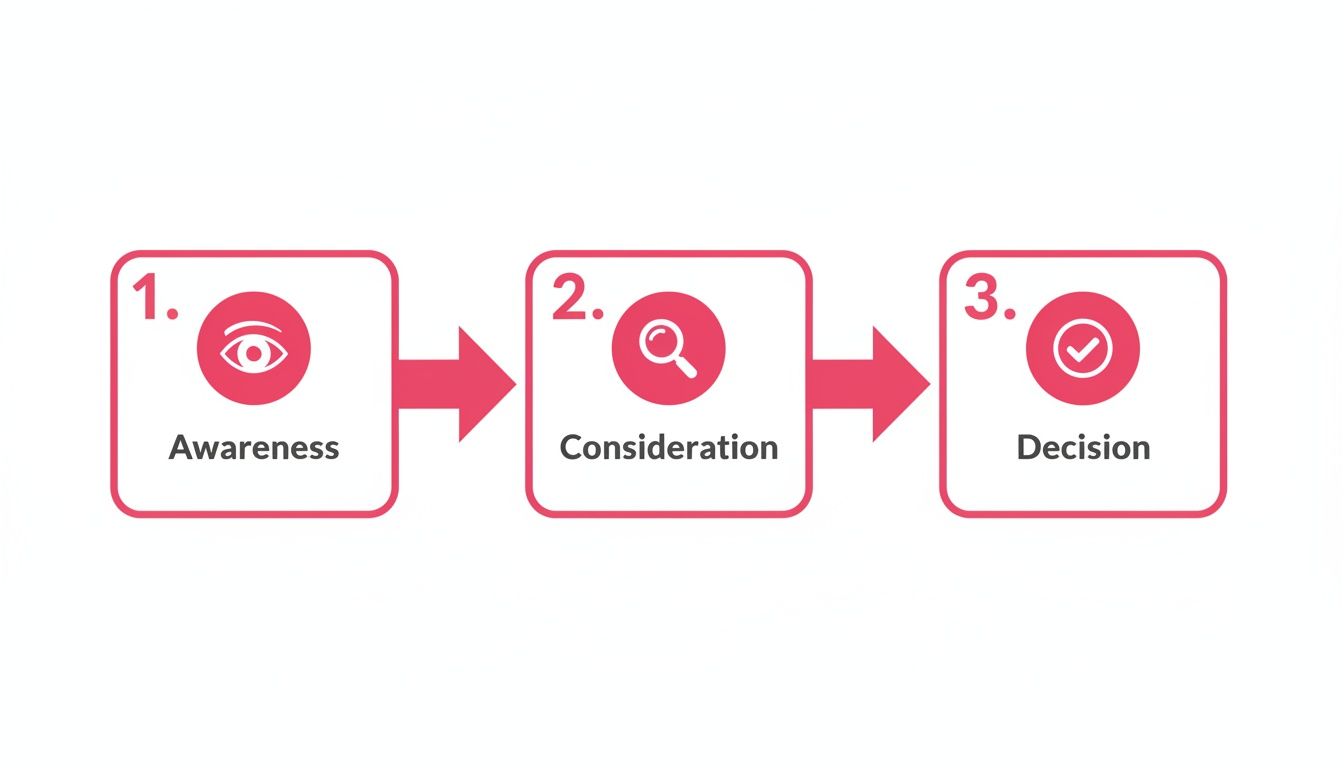
It’s a simple but powerful reminder that you need specific videos tailored to each stage of your marketing funnel.
Phase 1: Pre-Production
This is where the magic really begins-long before any cameras start rolling. Pre-production is the strategic heart of the entire project. It's all the planning, scripting, and logistical work that prevents costly mistakes and gets everyone aligned on the final vision.
Rushing this stage is a recipe for disaster. A solid pre-production phase means the actual filming day runs smoothly and the final edit comes together without any major headaches.
Here’s what goes down during pre-production:
- Strategy & Goal Setting: Define the video's purpose, target audience, and key message. What action do you want the viewer to take?
- Scripting & Storyboarding: Write the narrative and create a visual shot-by-shot plan. This ensures the story flows logically and powerfully.
- Casting & Location Scouting: Find the right on-screen talent (if needed) and secure the perfect backdrop for your story.
- Scheduling & Logistics: Coordinate the crew, equipment, and locations to create a detailed, minute-by-minute production schedule.
Phase 2: Production
This is the phase most people picture when they think of video production-the lights, the camera, the action. During production, the plan from pre-production is brought to life as the crew captures all the visual and audio elements needed to tell the story.
The goal here is pure efficiency and execution. With a strong blueprint from the first phase, the director and crew can focus entirely on capturing high-quality footage that nails the project's creative vision.
For a deep dive into what this phase entails, from the first setup to the final wrap, our guide on the end-to-end video production workflow offers a detailed look.
A successful production day is often a boring one. It means the pre-production was so thorough that there are no surprises, allowing the creative team to focus on performance and artistry rather than putting out fires.
Phase 3: Post-Production
Once filming wraps, all the raw footage, audio clips, and other assets move into post-production. This is where the story is truly assembled and refined. Editors, sound designers, and motion graphics artists work together to transform those raw materials into a cohesive and compelling final video.
This stage is so much more than just cutting clips together. It involves color correction to set the mood, sound mixing for clarity and impact, and adding graphics or animations to punch up key points.
Key tasks in post-production include:
- Editing: Assemble the best takes into a sequence that tells a compelling story.
- Color Grading: Adjust the color and tone of the footage to create a consistent, professional look.
- Sound Design & Mixing: Clean up audio, add music, and ensure dialogue is crisp and clear.
- Motion Graphics & Effects: Add animated text, logos, or visual effects to elevate the final product.
- Final Review & Delivery: Export the finished video in all the right formats for distribution.
The post-production phase is every bit as vital as the shoot itself, especially when dealing with unique footage. Discover the best drone video editing software to see how specialized tools can transform raw aerial shots into something truly cinematic. Each phase is a critical link in the chain, and mastering all three is the secret to producing corporate videos that consistently deliver results.
How To Budget For Corporate Video Production
Let's get straight to the part everyone really wants to know about: the money. Budgeting for corporate video production can feel like trying to hit a moving target, but it really doesn't have to be a mystery. The final price tag isn't some arbitrary number pulled out of thin air; it’s a direct reflection of the creative scope, the resources needed, and the time it takes to bring your vision to life.
Think of it like buying a car. You could get a reliable sedan that gets you from A to B just fine. Or, you could opt for a luxury SUV loaded with all the bells and whistles. Both are cars, sure, but the components, craftsmanship, and what they can do are worlds apart-and the price tag shows it. Understanding the key cost drivers is the first step toward making a smart investment.
Unpacking The Core Cost Drivers
Your final video budget is basically built on three core pillars. Each one is a lever you can pull, scaling up or down depending on the complexity and quality you’re aiming for. Get a handle on these, and you'll have a much better grip on your spending.
Here are the key factors that will shape your budget:
- Crew and Talent: A simple interview might only need a two-person crew. A sprawling brand film, on the other hand, could require a director, multiple camera operators, a sound engineer, a lighting specialist, and professional actors. The more people on set, the higher the cost.
- Equipment and Gear: Are we shooting on a standard 4K camera, or do you need a high-end cinema camera for that really polished, cinematic look? Does the project call for specialized gear like drones for aerial shots, gimbals for buttery-smooth movement, or a complex lighting setup?
- Post-Production Complexity: This is a huge one. A basic edit with some simple graphics is pretty straightforward. But if your video needs detailed color grading, custom motion graphics, 3D animation, or intricate sound design, the hours-and the level of expertise-required in post-production will climb significantly.
The In-House Versus Agency Decision
One of the biggest financial forks in the road is deciding whether to build an in-house video team or partner with an external agency. This isn't just about comparing costs; it's a strategic choice about control, scale, and access to specialized skills. Each path comes with its own set of trade-offs.
Going in-house gives you total creative control and can be more cost-effective if you're churning out a high volume of simple, repeatable videos, like social media clips. The catch? The upfront investment in gear and salaries is substantial, and you might find yourself lacking the niche expertise needed for a high-stakes brand film.
An agency, on the other hand, brings a ton of experience, high-end equipment, and a strategic eye from working across different industries. While the per-project cost is higher, you're paying for battle-tested efficiency and a level of quality that's incredibly difficult to replicate internally without a massive investment.
The decision to go in-house or outsource often boils down to this: Are you producing a consistent stream of similar content, or are you creating a few high-impact projects that demand specialized expertise? Your answer will usually point you in the right direction.
It's interesting to see how the industry is moving. There's been a major shift toward bringing video capabilities in-house. Today, about 55% of marketers produce their video content entirely on their own, with only 14% outsourcing everything. A significant 31% are using a hybrid model, mixing their internal team with outside vendors for specific projects. This trend is backed up by the fact that nearly three-quarters of companies now have dedicated video staff. If you want to dig into the numbers, you can explore more data on how companies are structuring their video teams.
Ultimately, choosing between an in-house team and an agency isn't about which one is "better." It's about what's the right fit for your company’s resources, goals, and ambition. This choice directly shapes how you turn your budget into a calculated investment that actually delivers.
Getting Real Returns From Your Video Content
Making a great corporate video is just the start. If that brilliant piece of content just sits on a server somewhere, gathering digital dust, it's a wasted investment. The real magic happens after the final render-it all comes down to a smart, aggressive distribution and measurement plan.
Think of your finished video as a high-performance engine. It’s got a ton of potential, but it needs the right fuel (distribution) and a dashboard (measurement) to show you how fast you're going. Without them, you're just burning budget with no destination in mind.
Activating Your Content Across The Right Channels
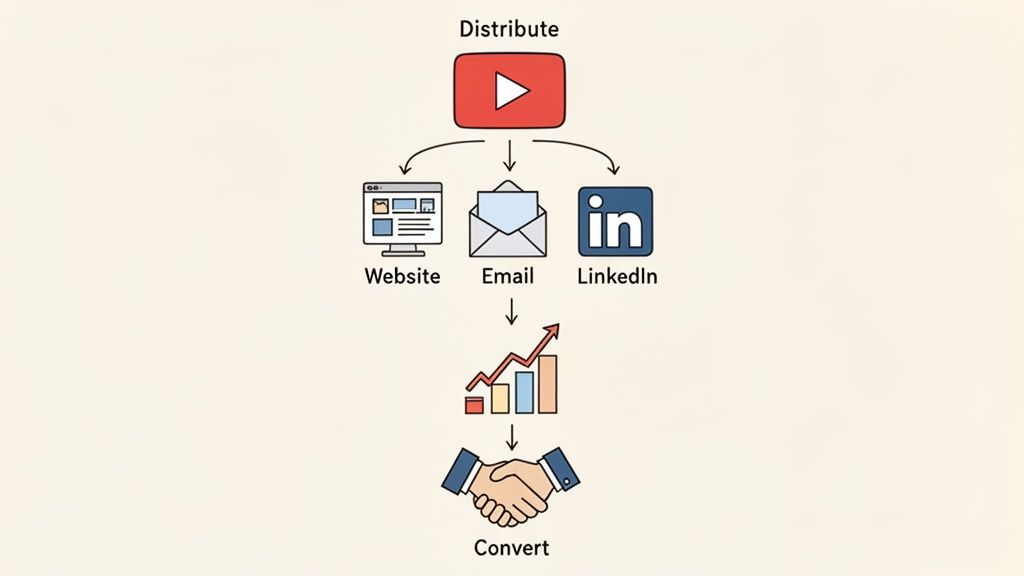
Getting your video in front of the right B2B audience means thinking beyond a single channel. Just uploading to YouTube and crossing your fingers won't cut it. A solid distribution plan uses a mix of owned, earned, and paid channels to make sure your message actually lands.
Your game plan should look something like this:
- Owned Channels: Put the video front and center on your website's homepage, relevant product pages, or key blog posts. Don't forget to send it to your most engaged audience-your email list.
- Social Platforms: For B2B, LinkedIn is king. Share the full video, but also chop it up into shorter, punchier clips designed for the feed to kick off conversations and get people in your industry talking.
- Paid Media: Guarantee visibility with the right people by using targeted ads on platforms like LinkedIn to place your video directly in front of decision-makers who match your ideal customer profile.
The goal isn't just to get views; it's to get the right views. A strategic distribution plan is all about precision, making sure your video reaches the people who actually have the power to make a purchase.
Moving Beyond Vanity Metrics
For too long, video success was all about view count. A big number feels good, but it tells you almost nothing about the actual business impact. Did those viewers take action? Were they even the right people? Did the video help close a single deal?
To prove your video investment was worth it, you have to track metrics that connect directly to business goals. That means shifting your focus from views to engagement and, ultimately, conversion.
Here are the metrics that actually move the needle:
- Audience Retention: What percentage of people are sticking around to watch the whole thing? A big drop-off at the 30-second mark means your message isn't hitting home.
- Click-Through Rate (CTR): How many viewers clicked your call-to-action to visit a landing page or book a demo? This directly measures how compelling your video was.
- Lead Conversions: Of the people who clicked through from the video, how many actually filled out a form? This is where you tie your video directly to lead generation.
- Sales Pipeline Influence: Use marketing automation and CRM tools to see which leads watched specific videos on their journey to becoming a customer. Now you can prove video's role in the sales cycle.
By focusing on these performance indicators, you can change the conversation from "How many people saw our video?" to "How much revenue did our video help generate?" That’s how you really understand what's working. For a deeper look, check out our guide on measuring content marketing ROI to build a solid framework.
How To Find The Right Video Production Partner
Deciding to bring in an outside team for your corporate video production can be a massive unlock for your marketing. But here's the catch: it only works if you find the right partner.
A great production company doesn’t just show up with a camera and a shot list. They should feel like a true extension of your team, digging into your business goals and figuring out how to translate them into a story that actually connects with your audience. This decision is far too important to just pick the first flashy demo reel you see.
While high-quality work is obviously a must-have, the best partners bring a strategic mind and deep industry experience to the table. They should be just as obsessed with your business objectives as they are with the creative side of things.
Vetting Potential Production Agencies
To find a partner who genuinely understands your world, you need a clear way to evaluate them. This isn't about hunting for the lowest bidder; it's about finding the agency that delivers the most value and understands the B2B landscape. A structured process helps you cut through the noise and find the specialists who can drive real results.
You need to ask the right questions-ones that get at their ability to deliver on business outcomes, not just pretty videos.
Here’s a simple checklist to get you started:
- Do they have B2B experience? A partner who gets the nuances of B2B-longer sales cycles, complex buying committees, sophisticated audiences-is lightyears ahead of a generalist agency.
- How transparent is their process? A solid agency will walk you through their entire workflow, from the first discovery call to final delivery. You should never be left wondering what’s next.
- Can they show relevant case studies? Ask to see work they’ve done for companies like yours and, even better, the results they helped that company achieve.
- What do their clients say? Don't skip this. Strong, verifiable testimonials are non-negotiable, giving you an unfiltered look at what it’s actually like to work with them.
Essential Questions to Ask
Once you’ve got a shortlist, it’s time to go a level deeper. These questions will tell you if a potential partner can think strategically and truly integrate with your team.
A production partner's value isn't just in the final video; it's in their ability to understand your audience, challenge your assumptions, and guide you toward a better outcome. Look for a strategist, not just a service provider.
Before you sign a contract, make sure you get clear, confident answers to these questions:
- How will you measure the success of this project against our business goals?
- Who will be our main point of contact, and what does your communication process look like?
- What is your approach to scriptwriting and ensuring our brand voice is captured accurately?
Picking the right partner is a make-or-break moment. To help you nail this, we’ve put together a more detailed guide on finding the right B2B video production agency for growth. With the right framework, you can confidently choose a partner who will help you create video content that actually moves the needle.
Got Questions About Corporate Video? We've Got Answers.
Even with a solid plan, you've probably got some practical questions buzzing around. Let's tackle the ones we hear most often from B2B marketers, clearing up those final hurdles so you can get started.
How Long Does The Production Process Usually Take?
One of the biggest myths is that video production is a massive, months-long saga. The reality? It all comes down to complexity. A simple talking-head video or a customer testimonial could be in your hands in just one to two weeks.
On the other hand, a big brand film with multiple locations, a cast of actors, and slick motion graphics will have a more involved timeline, maybe four to eight weeks. A thorough pre-production phase is what makes the actual shoot days and editing process run like a well-oiled machine.
What's A Reasonable Starting Budget For A Professional Video?
There's no single price tag for "a video," but we can give you a realistic ballpark. For a professionally produced corporate video, a good starting point is usually in the $3,000 to $7,000 range. That'll get you a fantastic, high-quality case study or a straightforward product demo with a nimble, expert crew.
As you layer in more complexity-like multiple shoot days, custom animation, or professional actors-the costs will naturally go up. You’re not just paying for someone to point a camera; you're investing in strategy, scripting, editing, and all the specialized skills it takes to create a polished asset that moves the needle for your business.
The single best way to manage your budget is to get crystal clear on your goals from day one. When a production partner knows exactly what you need that video to do, they can map out the most efficient way to get there-no overspending on flashy extras you don't need.
Can We Use Our Own Employees In Our Videos?
Absolutely! In fact, you should. Putting your own team members on camera is a killer way to inject real authenticity into your brand. It’s perfect for recruitment videos, explaining your company culture, or for internal communications. When your own subject matter experts are the ones breaking down a complex topic, it builds instant credibility that you just can't buy.
The key is making sure they feel comfortable and prepared. A great production partner won’t just show up and hit record; they'll provide on-set coaching and create a relaxed, supportive environment to help non-actors deliver their message with genuine confidence.
Ready to create high-impact corporate video content without the hassle? Fame Crew connects you with a global network of elite, pre-vetted production professionals who are experts in B2B storytelling. We handle the logistics so you can focus on the results.
Want us to run this for you?
Fame starts and grows B2B podcasts that generate pipeline. Tell us who you are trying to reach and we will send a costed proposal within 1 working day.
Related content
- Read moreFame Team · July 16, 2026
10 Account Based Marketing Tactics For B2B Growth In 2026
Discover 10 actionable account based marketing tactics for B2B tech. Learn to use podcasts, data, and targeted content to close high-value accounts. - Read moreFame Team · July 16, 2026
The 8 Best Brighton Podcast Agency Picks For 2026
Find the best Brighton podcast agency for your B2B brand. Our 2026 guide reviews top 8 agencies for production, growth & ROI. Expert analysis here - Read moreJune 10, 2026
20 Best Podcast Production Agencies For 2026 (And Why Should You Hire One)
Global podcast and vodcast ad revenues are on track to hit $5 billion in 2026 , up 20% year-on-year. - Read moreApril 13, 2026
Leadership In Marketing: The B2B Podcast Playbook
Most companies still confuse leadership in marketing with job titles, org charts, and budget control. That's outdated.