February 14, 202621 min read6 sections
Finding The Right B2B Video Production Agency For Growth
By Fame Team
Key Takeaways
- A video production agency acts as a general contractor for your brand's story, managing the entire process from planning to execution.
- A top video production agency brings together specialized talents, including scriptwriters, cinematographers, and editors, to create a cohesive and polished final product.
- Partnering with a video production agency can drive B2B growth by producing a professional video that builds authority and drives demand, freeing up your team to focus on high-level strategy.
Think of a top video production agency as the general contractor for your brand's story. They're the ones who manage the entire, often chaotic, process from the initial blueprint all the way to the finished masterpiece. For B2B companies, this kind of partnership is a serious engine for growth, guaranteeing a polished, professional video that builds authority and, frankly, drives demand.
Why a Video Production Agency Is Your B2B Growth Partner
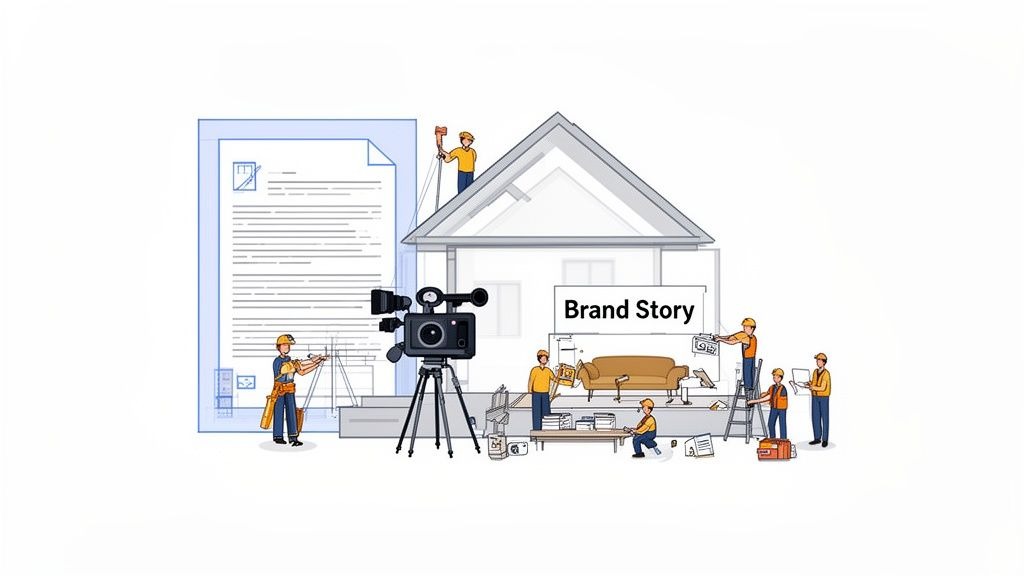
Let's stick with that construction idea for a second. Imagine you're building a custom home. You wouldn’t ask the plumber to frame the walls or the electrician to pour the foundation. Of course not. You’d bring in a general contractor to manage all the specialists, making sure the final house is cohesive, safe, and exactly what you envisioned.
A video production agency plays that exact role for your brand’s narrative. They are the strategic partner who wrangles the entire ecosystem of creative and technical talent required to bring your vision to life.
The General Contractor Analogy
Creating a B2B video that actually works is a symphony of specialized skills. A good agency acts as the conductor, making sure every instrument plays in perfect harmony.
- The Architects (Scriptwriters & Strategists): They're drawing up the blueprints. Before a single camera rolls, they’re defining the core message, nailing down the target audience, and setting the strategic goals.
- The Builders (Cinematographers & Directors): These are your on-the-ground crew. They're the experts constructing the visual story, managing cameras, tweaking lights, and capturing crystal-clear audio to get all the high-quality raw material.
- The Interior Designers (Editors & Motion Graphics Artists): They take the raw footage and transform it into something compelling. This is where editing, color grading, sound design, and slick graphics come together to create the final, polished product.
Trying to manage all those moving parts yourself is a recipe for a logistical nightmare. An agency handles the project management, ensures quality control, and maintains creative direction. It frees up your team to focus on high-level strategy instead of getting bogged down in the technical weeds. If you want to dig deeper into the actual on-set components, our guide on corporate videography is a great place to start.
A professional agency's real job is to eliminate the biggest risk in B2B video: creating something that looks amateur and undermines your brand's credibility. They deliver a polished asset that not only looks professional but is engineered to hit a specific business goal.
Beyond Production to Strategic Partnership
Here’s the thing: the best video production agencies don't just take orders. They offer strategic counsel. They get that for B2B companies, video isn't just about looking cool; it's about generating qualified leads, establishing thought leadership, and speeding up your sales cycle.
They bring a valuable outside perspective, helping you sidestep internal biases and connect with your audience in a way that truly resonates. That kind of partnership is what turns a simple video into a piece of content that delivers measurable returns. To really see what's possible, it's worth checking out how B2B SaaS teams scale demand with video production services.
In today's market, professional video isn't a luxury. It's a fundamental piece of any solid B2B growth strategy.
From Concept to Completion: The Three Pillars of Production
Every great video project, no matter how big or small, follows the same fundamental path. A professional video production agency guides you along this journey, which is broken down into three distinct, but tightly connected, phases. Getting your head around these three pillars, Pre-production, Production, and Post-production, is the secret to a smooth collaboration and a final video that actually works.
Think of it like building a house. You wouldn’t just show up with a hammer and some nails and hope for the best. You'd need a detailed architectural blueprint first. It's the same with video; you can't just hit record and expect magic to happen. Success is all about a methodical process where each stage builds on the one before it.
Pre-Production: The Strategic Blueprint
This is, without a doubt, the most critical part of the whole shebang. Pre-production is where you figure out the why behind your video and map out every single detail. It’s the strategic foundation for everything that follows, and honestly, about 80% of a project's success is locked in before a camera is even turned on.
During this stage, your agency partner works side-by-side with you to get your vision down on paper. Key activities include:
- Concept Development and Strategy: This is where we align on the core message, who we're trying to reach, and what specific business goal this video needs to hit.
- Scriptwriting: We’ll craft a narrative that gets your message across clearly and powerfully, making sure it’s a perfect fit for the platform and the audience you're targeting.
- Storyboarding and Shot Lists: Here, we visually map out the entire video, scene by scene. This makes sure everyone is on the same page creatively and gives the production crew a clear roadmap to follow.
- Logistics Planning: This covers all the unglamorous but essential stuff, scouting locations, getting permits, casting talent, and scheduling the entire crew.
A rock-solid pre-production phase kills surprises before they happen, keeps the budget in check, and makes the actual shoot day incredibly efficient. Rushing this stage is the single biggest mistake you can make.
The demand for these services is huge. The global film and video production market, which includes all the B2B content that drives brand growth, is on track to hit USD 383.23 billion by 2030. That growth is being powered by marketing and ad agencies creating things like demand-gen series and thought leadership videos, content that regularly sees 20-30% higher engagement rates than other formats. You can dig into the numbers in the full film and video production market report.
Production: The Construction Phase
Alright, the blueprint is done. Now it's time for the production phase, the actual shoot. This is the "construction" part of our house-building analogy. The crew, talent, and all the gear come together on location to capture the raw footage that will eventually become your story.
This is a highly technical process that requires a whole team of specialists working in sync: a director, a cinematographer, a sound engineer, lighting technicians, you name it. The agency's job here is to run the set, direct the talent, and execute the plan we meticulously laid out in the storyboard. For clients, this is usually the most exciting part, but thanks to all that prep work, it should run like a well-oiled machine.
Post-Production: Where the Magic Happens
Once every shot has been captured and all the audio is recorded, the project heads into post-production. This is where all those raw materials are pieced together, refined, and polished into the final story. If production is the construction, think of post-production as the interior design, the painting, and all the finishing touches that turn a building into a home.
This phase is a mix of creative and technical steps:
- Editing: The editor takes all the best takes and starts weaving them together, shaping the story's pace, rhythm, and flow.
- Sound Design and Mixing: Audio is cleaned up, sound effects are added, and music is layered in to create a truly immersive experience.
- Color Grading: The colorist tweaks the color and tone of the footage to create a specific mood and make sure everything looks consistent from start to finish.
- Motion Graphics and VFX: Finally, titles, animations, and other visual effects are added to punch up the story and call out key bits of information.
This final pillar is what turns a folder full of video clips into a powerful tool that makes people feel something and, ultimately, drives them to act. You can get a more granular look at what goes into a successful project by checking out our breakdown of professional video production services.
The Top 17 Video Production Agencies for B2B Growth
Let's be honest: hunting for the right video production agency can feel like digging through a haystack for a very specific, very expensive needle. With a sea of options out there, how do you find a real strategic partner, one that actually gets B2B and cares about results, not just pretty visuals?
The trick is to look past the flashy demo reels and find an agency with a proven track record in your space. You need a team whose value proposition clicks perfectly with your goals. To save you the headache, we've put together a list of the agencies that are consistently crushing it for B2B brands, covering everything from podcast-to-video systems to stunning brand films.
1. Fame Crew
- Key Strength: Fame Crew has a killer specialization: they turn B2B podcasts into a full-blown video content machine. They're masters at spinning audio-first thought leadership into a high-volume stream of video assets perfect for social media, sales teams, and brand building.
- Ideal For: B2B tech and SaaS companies already bought into podcasting and want to squeeze every last drop of ROI from their audio. If you want to build authority and generate demand without reinventing the wheel, they're your team.
- Value Proposition: Fame Crew isn't just making videos; they’re building a content repurposing and distribution engine. They solve the "one-and-done" content problem by creating a sustainable system that fuels your entire marketing funnel.
2. Sandwich
- Key Strength: These guys are legends, famous for their quirky, story-driven tech explainers and launch videos. They have an uncanny ability to make complicated B2B products feel simple, human, and something you desperately need.
- Ideal For: Well-funded startups and big-name tech companies (especially SaaS) about to launch a new product or feature that needs to make a splash.
- Value Proposition: Sandwich basically sells virality and brand buzz. Their signature style is instantly recognizable and incredibly good at getting the entire tech world to pay attention.
3. Epipheo
- Key Strength: They are the undisputed masters of the animated explainer video. Epipheo specializes in boiling down complex B2B services or software into short, sharp, and engaging animated stories.
- Ideal For: Any company with a complex or intangible product that’s a nightmare to show off with live-action video.
- Value Proposition: Epipheo delivers that "aha!" moment. They take a prospect from "Wait, what do you do again?" to "Oh, I get it!" in about 90 seconds. That kind of clarity is gold for lead generation.
Mastering the Production Workflow
No matter who you pick, any great agency will walk you through a structured production process. This isn't just red tape; it's the roadmap that ensures what's in your head ends up on the screen, without chaos.
This graphic breaks down the three core phases every professional video project moves through.
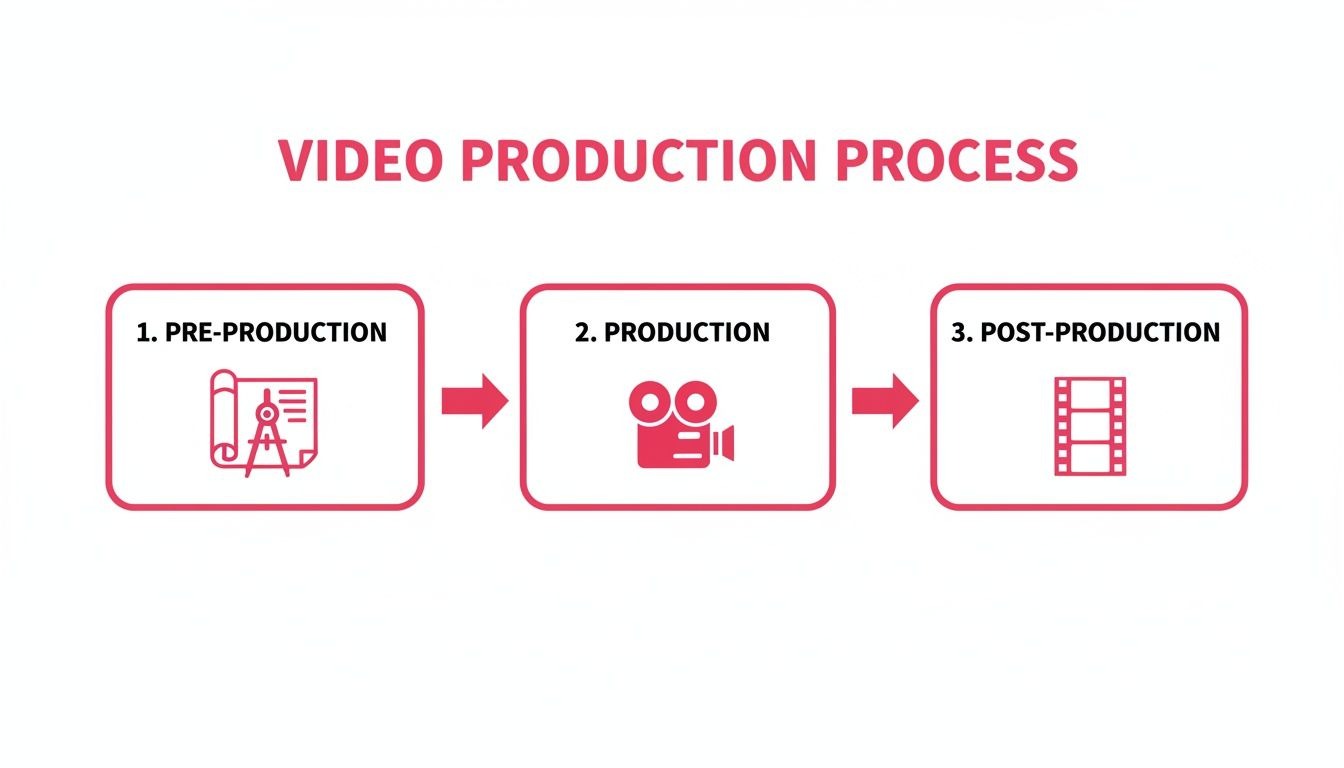
As you can see, success is built in stages. A solid plan in pre-production is what makes everything else possible.
4. Lemonlight
- Key Strength: They deliver high-quality, scalable video production thanks to a nationwide network of creators. Lemonlight makes it surprisingly easy to produce a ton of content, from customer testimonials to brand videos, across dozens of locations.
- Ideal For: Mid-market and enterprise businesses that need a reliable partner for ongoing video work but don't want the logistical nightmare.
- Value Proposition: Lemonlight is all about performance-driven video at scale. Their platform simplifies the entire production process, making them a super cost-effective choice for consistent content creation.
5. Demo Duck
- Key Strength: Creative and educational animated videos for B2B, with a sweet spot in healthcare and ed-tech. Their work is known for being charming, smart, and crystal clear.
- Ideal For: B2B companies in dense or highly regulated industries that need to educate their audience without putting them to sleep.
- Value Proposition: Demo Duck makes learning genuinely enjoyable. They can take a bone-dry technical topic and transform it into something engaging and memorable.
6. Sparkhouse
- Key Strength: Think cinematic brand storytelling and corporate documentaries. They excel at crafting emotionally resonant videos that forge a real connection between a brand and its audience.
- Ideal For: Brands ready for a flagship "brand anthem" film or a documentary-style series that puts their company culture and values in the spotlight.
- Value Proposition: Sparkhouse builds brand love through powerful storytelling. They elevate a company beyond just its products or services.
7. Quill
- Key Strength: Quill is a full-service branded podcast agency that blends strategy, production, distribution, and analytics all under one roof. From audience research and scripting to high-end video recording, editing, distribution, and in-depth reporting, their team ensures every show is built to drive measurable marketing impact.
- Ideal For: Enterprise brands looking to extend thought leadership, increase brand reach, and build new relationships through high-quality video podcasts. They work with some of the largest brands in North America, like Expedia, Walmart, and PwC, to captivate audiences through innovative storytelling.
- Value Proposition: Quill blends top-tier production quality with data-driven decision-making, powered by their in-house podcast hosting and analytics platform, CoHost. That means brands don’t just launch a great-looking show, they understand how it’s performing and how it connects back to business goals.
Additional Top-Tier Agencies
The B2B video market is absolutely booming, and for good reason. The corporate video production space is projected to be worth USD 7.73 billion in 2025 and is on a trajectory to hit USD 12.73 billion by 2032. In North America, where B2B tech is king, these videos make up over 40% of agency revenues. It’s all driven by the relentless need for polished content that builds trust and drives sales.
Here are a few more agencies worth a look:
- 8. VeracityColab: A strategy-first video agency for tech and B2B.
- 9. Indigo Productions: Full-service NYC agency known for high-end corporate and commercial work.
- 10. Thinkmojo: True experts in creating product videos for SaaS and tech companies.
- 11. Kasra Design: An award-winning animation studio that specializes in 2D and 3D explainers.
- 12. BX Films: A story-focused agency creating brand films for purpose-driven companies.
- 13. LAI Video: D.C.-based agency with deep expertise in advocacy and corporate comms.
- 14. Basetwo: Specializes in cinematic, documentary-style content for industrial and tech B2B.
- 15. Umault: Zeroed in on creating videos that drive action, especially for so-called "boring" industries.
- 16. Wyzowl: A major player in animated explainer videos, famous for their fixed-price packages.
- 17. Casual: A global agency with offices everywhere, perfectly suited for large-scale enterprise video projects.
By checking out the work from these top players, you'll get a much clearer picture of what's possible and find a partner that really gets your vision. And while you're at it, check out our portfolio to see how B2B podcasting can become the engine for your entire video strategy.
How to Choose the Right Video Production Partner
Picking the right video production partner is probably the most important call you'll make for your entire video strategy. Get it right, and the agency becomes a true extension of your team, a strategic arm that just gets it and pushes your brand forward.
Get it wrong? You're looking at blown budgets, missed deadlines, and a final video that just doesn't land. Ouch.
To nail this decision, you need a solid game plan. This isn't about being wowed by the flashiest demo reel. It’s about finding a partner whose process, expertise, and even culture click with your business goals. That means digging deeper and asking the kinds of questions that reveal whether you're truly a good fit.
Key Evaluation Criteria
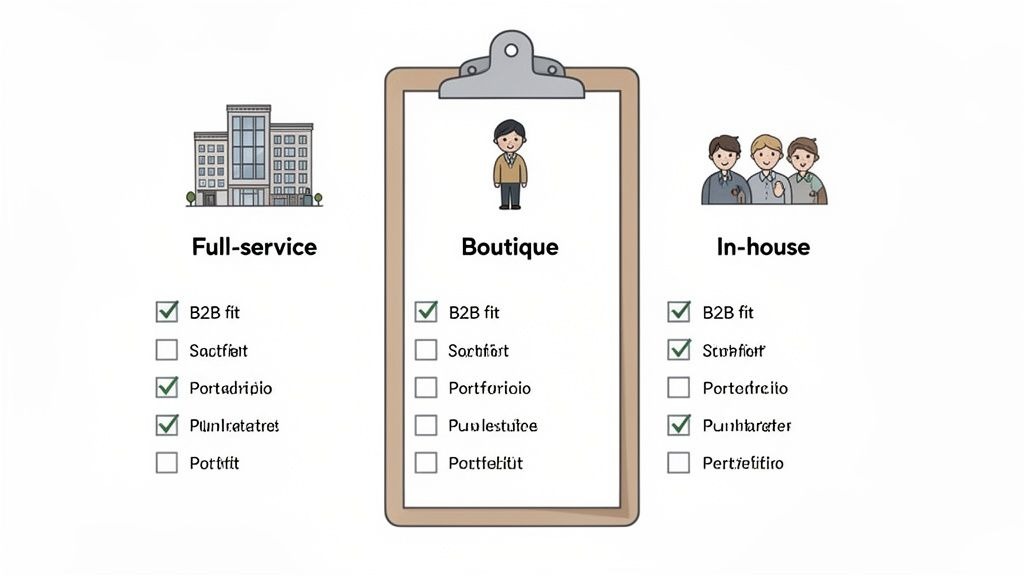
Before you even think about hopping on a discovery call, build a scorecard for any potential partner. Having a structured approach keeps you grounded and focused on what really matters for your B2B goals, so you don't get sidetracked by a slick sales pitch.
Your checklist should zero in on a few key areas:
- Portfolio Relevance: Don't just look for cool videos. Have they actually done work for B2B companies? Even better, have they worked in your industry or a similar one? They need to prove they can handle the nuances of B2B communication.
- Client Testimonials & Case Studies: Look for tangible proof of their impact. Testimonials are nice, but real case studies are gold. You want to see the business problem, the video solution they developed, and the actual, measurable results.
- Team Expertise: Find out who will really be working on your project. Do a little digging on the strategist, the director, and the lead editor. Do they have the B2B chops your project needs?
- Communication & Workflow: How do they actually run a project? Ask them to walk you through their process for feedback, revisions, and status updates. A transparent, collaborative workflow is an absolute must-have.
It's also smart to think about the bigger picture, like the key operational aspects for agencies that allow them to deliver great work consistently, not just once.
Comparing Agency Models
Not all video production agencies are created equal. Knowing the differences between the common models is crucial for finding the right fit for your budget, timeline, and what you’re trying to achieve.
Deciding between building an in-house team, hiring a specialized agency, or going with a generalist is a big decision. This table breaks down what you can expect from each.
Agency Model Comparison: In-House vs. Specialist Agency vs. Generalist Agency
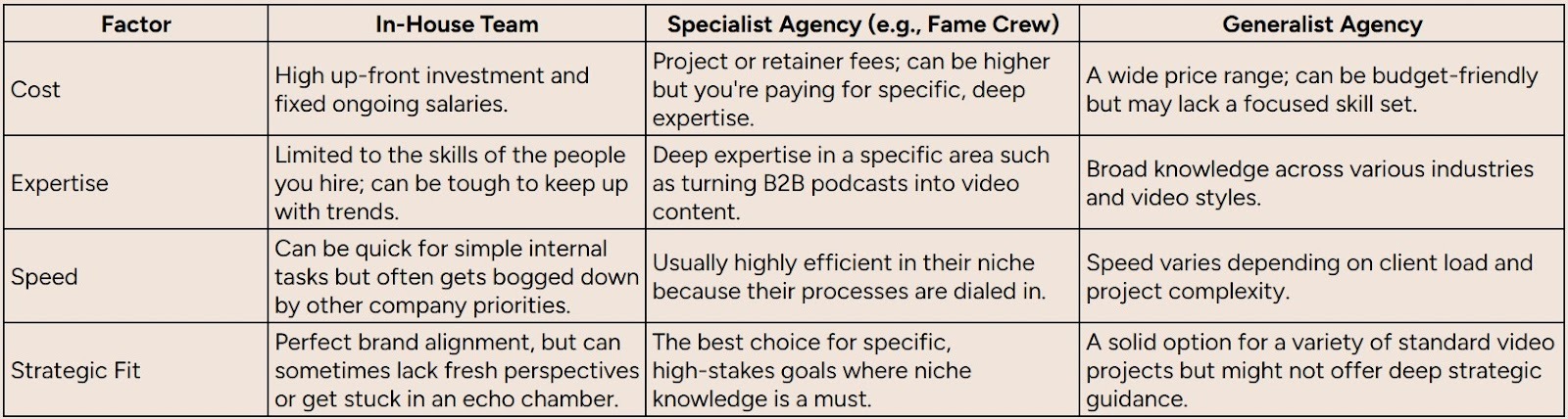
For many B2B companies, a specialist agency hits that sweet spot. For instance, if your main goal is building a thought leadership platform and creating a steady stream of content, an audio-first approach might be the smartest move.
An agency like Fame Crew, which lives and breathes turning B2B podcasts into a full-blown video content machine, offers a focused solution that a generalist simply can't match. You can see how our specialized services are built specifically to drive B2B growth.
Critical Questions for Your Discovery Call
Once you have a shortlist, the discovery call is where you separate the contenders from the pretenders. Think of it less like a sales call and more like an interview; you're the one in charge here.
Your goal is to move past the sales pitch and understand their strategic thinking. How they answer these questions will tell you everything you need to know about their ability to be a true partner.
Go into that call armed with questions that get to the heart of their process and philosophy:
- How will you measure the success of this project against our actual business goals?
- Can you walk me through a similar project you've done for another B2B client? What were the big challenges, and how did you solve them?
- What's your process for feedback and revisions? How many rounds are typically included in a project?
- Who would be my main point of contact, and what does the rest of the project team look like?
With this framework, you can confidently narrow down your list from a sea of potential vendors to a handful of genuine strategic partners. It’s the best way to set your video projects up for success right from the start.
Understanding Pricing and Measuring Video ROI
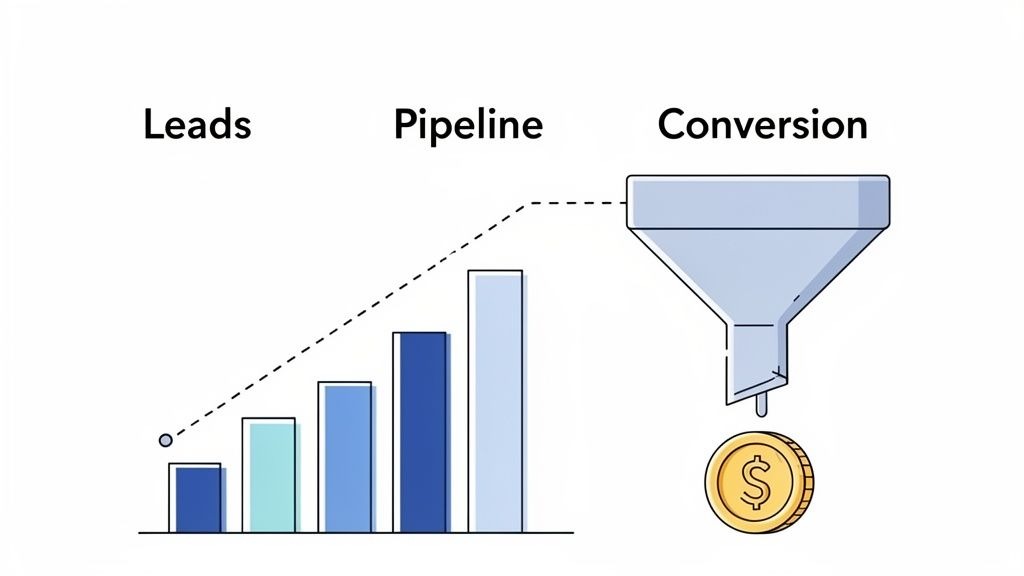
This is where the rubber meets the road. Before you sign on with any video production agency, you need to get crystal clear on two things: how they’ll charge you and, more importantly, how you’ll know the investment is actually paying off.
Let’s pull back the curtain on both sides of this crucial equation.
Most agencies run on a few standard pricing models. Getting your head around them will help you match your budget to the project and find a structure that works for your company’s financial planning.
Common Video Production Pricing Models
There's no such thing as a one-size-fits-all price tag for a video. The final cost depends on the complexity, the size of the crew, and how much heavy lifting is needed in post-production. But the way an agency bills for those services usually falls into one of three buckets.
- Project-Based Fees: This is the most straightforward and common model. You get a single, fixed price for a specific project, like an animated explainer video or a set of customer testimonials. It's predictable, which is fantastic for budgeting, but it offers less flexibility if the scope starts to creep.
- Retainers: If you have ongoing video needs, a monthly retainer is your best friend. You pay a set fee each month for an agreed-upon amount of work. This model builds a much deeper partnership and is perfect for creating a consistent stream of content, like social media videos or a weekly video podcast series.
- Day Rates: This is common when you just need the crew for a shoot. You're hiring a production team for a specific number of days. It's transparent, but be aware that it typically doesn't include the strategic pre-production work or the post-production editing unless you spell it out.
The right model really just depends on what you're trying to do. A one-off brand film is a perfect fit for a project fee. A demand gen strategy fueled by a weekly video series practically screams for a retainer.
Moving Beyond Vanity Metrics
Once you’ve got the price sorted, the real work begins: proving the video was worth the spend. For way too long, marketers got stuck on vanity metrics like views and likes. These numbers give you a quick pulse check, but they don't tell your CFO what they really want to know: how did this move the needle on revenue?
To show real business value, you have to track key performance indicators (KPIs) that connect directly to the bottom line. This is the shift that turns marketing from a cost center into a profit center. We go deep on this in our guide on how to measure content marketing ROI.
KPIs That Actually Matter to the C-Suite
Your leadership team doesn’t care about views; they care about the sales pipeline. That means you need to track metrics that show exactly how your video content is turning strangers into customers.
Focus your reporting on these business-critical KPIs:
- Lead Conversion Rate: Of the people who watched your video, how many took the next step? Did they fill out a demo request form or download a guide? Use unique tracking links and dedicated landing pages to get a clean read on this.
- Pipeline Influence: Tag contacts in your CRM whenever they engage with your video content. This lets you track how many opportunities in your pipeline were "touched" by your video strategy, proving its role in nurturing leads down the funnel.
- Sales Cycle Acceleration: Figure out the average time it takes for a lead to become a customer. Then, compare the sales cycle for leads who engaged with video versus those who didn’t. If you can show that the video is shortening that cycle, you're showing a direct cost saving.
- Engagement on Key Platforms: On a platform like LinkedIn, clicks and comments are more than just ego boosters. High engagement is a signal to the algorithm that your content is valuable, which earns you more organic reach and puts your brand in front of more potential buyers without spending another dime.
This laser focus on ROI is non-negotiable, especially when you look at where the market is headed. The global video production market is set to explode, growing from USD 70.40 billion in 2022 to an eye-watering USD 746.88 billion by 2030.
This growth is being driven by the majority of marketers who say video gives them a better return on investment. For B2B brands, this makes professional video an urgent priority for building authority and driving sales, especially when LinkedIn videos get 5x more engagement than plain text posts. You can explore more insights into video production market trends to see the full picture.
When you can connect your video work to tangible business outcomes like these, you can confidently prove the value of your investment and make a rock-solid case for going even bigger with your video strategy.
Common Questions About Working with a Video Agency
Choosing to bring in a video agency is a big move, and it's totally normal to have a few questions swirling around. Let's get those sorted out right now. Nailing down these details upfront is the best way to make sure you and your new partner are on the same page from day one.
Here are the straight-up answers to the questions we hear most often from B2B marketers.
How Long Does a Typical B2B Video Project Take?
Look, every project has its own quirks, but a good rule of thumb for a standard B2B video is 4 to 8 weeks from the kickoff call to the final files hitting your inbox.
It’s not just one big block of time, though. Here’s how that usually breaks down:
- Pre-production (1-3 weeks): This is the brains of the operation. We're talking strategy, scripting, storyboarding, and locking down all the logistics. Getting this part right makes everything else run smoothly.
- Production (1-3 days): The actual shoot is almost always the shortest part of the whole process. When the planning is solid, the filming days are all about efficient execution.
- Post-production (2-4 weeks): This is where it all comes together. Editing, adding motion graphics, sound design, and color grading, this stuff takes time. We'll also build in a few rounds for your team to give feedback.
Of course, a complex animation or a project with a dozen stakeholders who need to sign off might stretch this out. But a clear brief and quick communication can work wonders for keeping things on schedule.
What Should I Prepare Before Contacting an Agency?
The more you bring to that first conversation, the faster an agency can get what you're trying to do and give you a proposal that actually makes sense. You'll get to the good stuff way quicker.
Your most important tool is a solid project brief. It doesn't have to be a novel, but it should clearly lay out:
- What business goal is this video supposed to achieve?
- Who, specifically, are you trying to reach?
- What is the one thing you need them to walk away remembering?
- What's the vibe? Professional and polished? Scrappy and authentic?
- What's a realistic budget range you're working with?
If you can also hand over your brand guidelines (logos, fonts, colors), a few links to videos you love (or hate!), and point them to the right subject matter experts on your team, you’ll be off to a flying start.
How Involved Will My Team Need to Be?
The best agency relationships are true partnerships. Your team's input is absolutely critical at the beginning (pre-production) and at the end (final reviews). That's where your strategic vision and brand knowledge are irreplaceable.
A good video agency doesn't need you to babysit the technical stuff. They need your strategic brain. Your job is to be the expert on your brand and your business goals; their job is to handle the creative and technical execution.
Your team will be the one giving the final thumbs-up on the core concept, the script, and the storyboard. During the shoot, it’s helpful to have someone on set to be the brand's eyes and ears. Then, in post-production, your role is to provide clear, consolidated feedback on the edits. Pro tip: Assign a single point person on your team to streamline communication. It saves everyone a lot of headaches.
Do Agencies Help with Video Distribution?
This is a big one, and you need to ask it upfront because the answer really depends on the agency. Some shops are pure production houses; they make a beautiful video, hand you the files, and their work is done.
But many modern, ROI-focused agencies know that a great video nobody sees is a waste of money. They build a distribution strategy right into the process. This could mean developing a launch plan, chopping up the main video into clips for social media, setting up performance tracking, or even running the paid ad campaigns for you.
An agency that asks about distribution from the very first call is a partner who cares about business results, not just a cool-looking video.
At Fame, we don't just create content; we build authority engines. We specialize in turning B2B podcasts into a stream of high-impact video that drives your sales pipeline, and distribution is at the heart of everything we do. See how it works at Fame.
Want us to run this for you?
Fame starts and grows B2B podcasts that generate pipeline. Tell us who you are trying to reach and we will send a costed proposal within 1 working day.
Related content
- Read moreFame Team · July 16, 2026
10 Account Based Marketing Tactics For B2B Growth In 2026
Discover 10 actionable account based marketing tactics for B2B tech. Learn to use podcasts, data, and targeted content to close high-value accounts. - Read moreFame Team · July 16, 2026
The 8 Best Brighton Podcast Agency Picks For 2026
Find the best Brighton podcast agency for your B2B brand. Our 2026 guide reviews top 8 agencies for production, growth & ROI. Expert analysis here - Read moreJune 10, 2026
20 Best Podcast Production Agencies For 2026 (And Why Should You Hire One)
Global podcast and vodcast ad revenues are on track to hit $5 billion in 2026 , up 20% year-on-year. - Read moreApril 13, 2026
Leadership In Marketing: The B2B Podcast Playbook
Most companies still confuse leadership in marketing with job titles, org charts, and budget control. That's outdated.