
Find Your B2B Podcasting Partner in Montreal
It's Q3 planning season, and “launch a podcast” is back on the marketing wishlist. The logic is sound. A strong show can build category authority, create repeat touchpoints with buyers, and give your team a better reason to talk to customers, prospects, and industry voices than another cold outbound sequence.
The problem is execution. Montreal has no shortage of creative studios, recording spaces, and branded-content shops. But if you're a B2B team, the best-montreal-podcast-agency choice usually has less to do with studio aesthetics and more to do with whether the partner can tie content decisions to reach, audience quality, and business impact.
That matters even more in Montreal because this is a serious audio market, not a niche one. In the Fall 2025 PPM ratings, Radio-Canada Première led French A12+ with a 23.8% share, while CJAD 800 led English A12+ with a 33.1% share, according to Broadcast Dialogue's Montreal radio ratings coverage. If you're publishing in this city, you're operating in a bilingual market with established listening habits and clear language segmentation.
This guide gets to the point. It ranks Montreal podcast agencies and studios through a B2B lens, with emphasis on strategy, production depth, distribution support, and whether the team looks built to help a business show perform, not just ship.
1. Fame
Fame sits at the top of this list because it operates like a B2B growth partner first and a production agency second. That distinction matters. Plenty of Montreal providers can record, edit, and publish a clean show. Far fewer are built around audience growth, guest operations, repurposing, and performance accountability.
Its Montreal positioning is explicitly ROI-focused, and Fame says it's the largest producer of B2B podcasts in the world, with over 100 active shows at any one time and accountability for 10% month-on-month download growth on client shows, according to Fame's Montreal podcast agency page. If you're hiring for pipeline-adjacent outcomes rather than pure production support, that framing is much closer to how a demand gen team evaluates partners.
Why it ranks first
Fame's main advantage is operational maturity. The service model covers strategy, guest outreach, recording, production, and promotion, which means fewer handoffs and fewer points where momentum dies after launch.
That matters in B2B podcasting because the hard part usually isn't episode one. It's sustaining cadence, booking the right guests, turning episodes into social, email, and video assets, and keeping the show connected to revenue-facing goals.
- Best for B2B teams: SaaS, tech, and professional services companies that want a podcast tied to authority building and pipeline influence.
- Strongest differentiator: A growth-oriented model instead of a studio-rental model.
- Main trade-off: If your team insists on frequent in-person recording in a local Montreal studio, a remote-first agency won't feel as convenient.
Practical rule: If your internal team keeps asking, “Who will actually own promotion, guest booking, and post-launch growth?” you probably need an agency built like Fame, not just a recording vendor.
2. Virage Sonore
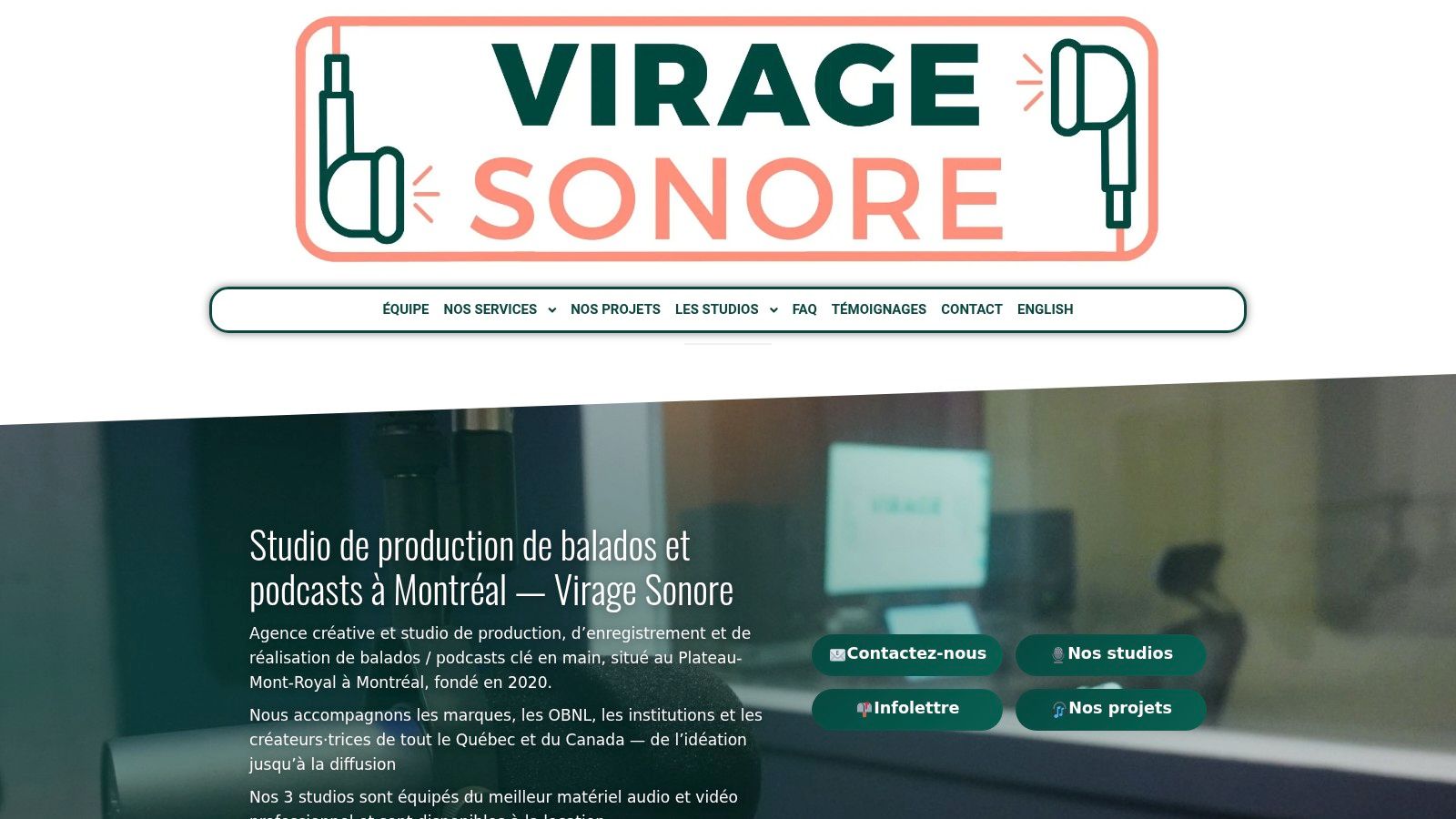
Virage Sonore is one of the more complete local options if you want a Montreal-based partner with strong production infrastructure. The company combines podcast production, in-house studios, mobile recording, original music, sound design, video capture, and distribution support under one roof.
For institutional brands, nonprofits, associations, and enterprise teams, that integrated setup is useful. You don't need to coordinate separate vendors for recording, editing, music, and video. That reduces friction, especially when multiple stakeholders need approvals in both French and English.
Where Virage Sonore fits best
Virage Sonore makes sense when production complexity is high and local execution matters. If your show includes on-location recording, bilingual hosts, executive interviews, or companion video content, this kind of setup is practical.
It's less clearly positioned as a B2B growth engine than a specialist agency. That doesn't make it weaker. It just means buyers should be explicit about what they need measured and owned after recording wraps.
For teams comparing local vendors against broader strategic partners, reading guides on podcast agencies and agency models is helpful. Not every “podcast company” is solving the same problem.
- Best for: Institutions, public organizations, and brands needing bilingual production depth.
- Strength: Strong local studio infrastructure and broader audio-video capabilities.
- Watch-out: Ask upfront who owns promotion, reporting, and audience growth once the episodes are live.
3. Magnéto
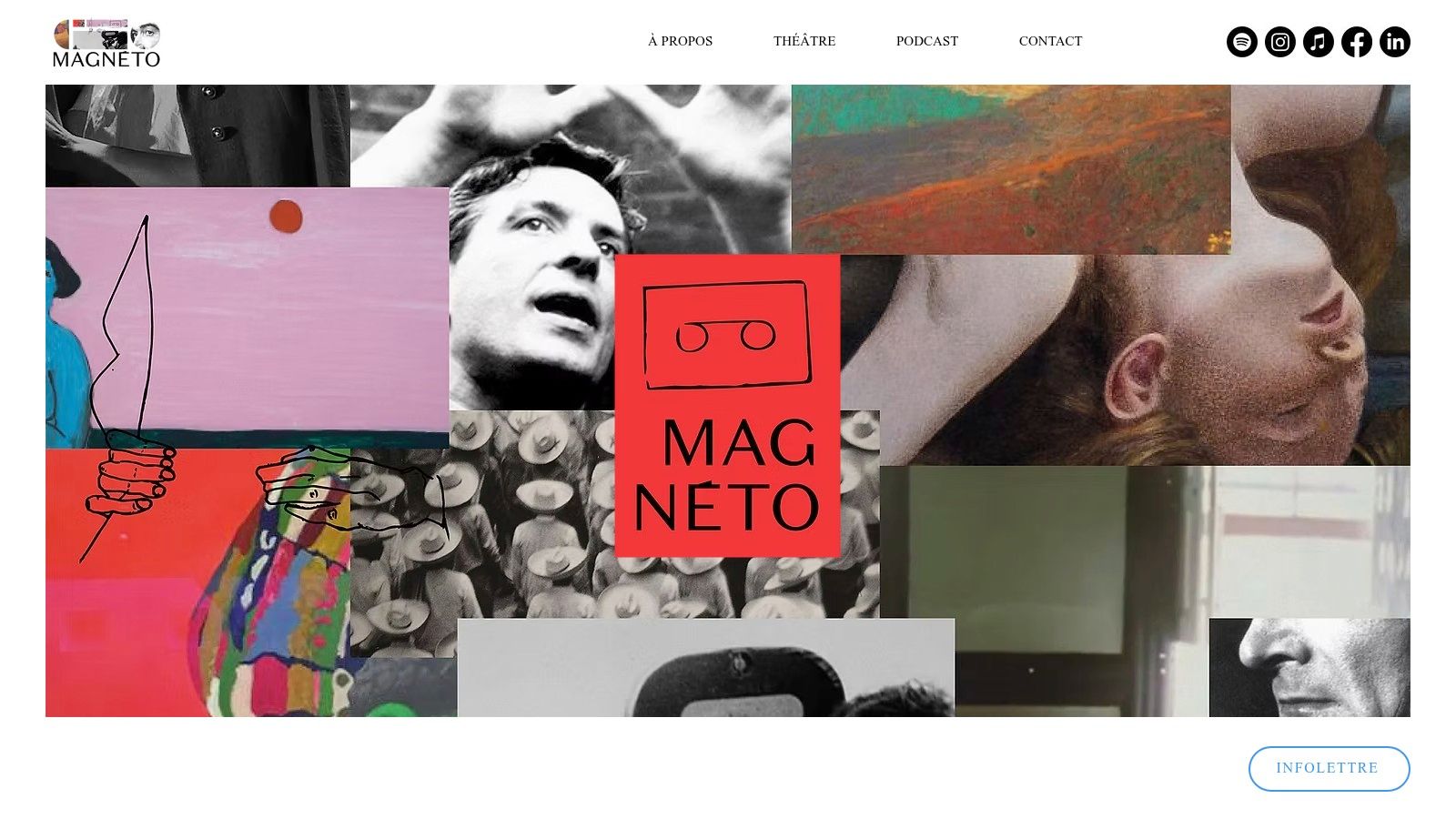
Magnéto is a good pick for brands that care as much about editorial shape as they do about recording quality. Its positioning leans toward branded storytelling, documentary-style podcasts, coaching, sound identity, and polished narrative execution.
That makes it a strong fit for companies producing thought-leadership series, employer-brand content, or branded podcasts where tone and story architecture matter. If you want a host-led interview show with stronger editorial framing than “two people on mics talking,” Magnéto is worth a close look.
Best use case
Magnéto is strongest when the podcast itself is part of the brand asset. That includes launches tied to reputation, investor communications, public-facing storytelling, or category education.
If your needs are more tactical, such as guest booking at scale, distribution systems, and demand-gen style promotion, you'll want to compare it against firms with a stronger performance operating model. If you're still sorting those differences out, this breakdown of podcast production services is a useful frame.
A polished story can elevate a brand. It won't fix weak distribution or unclear business goals.
- Best for: Branded narrative series and editorially ambitious podcast concepts.
- Strength: Story craft, coaching, and strong creative packaging.
- Trade-off: The site positioning feels more editorial than revenue-ops driven, so B2B buyers should ask sharper KPI questions.
4. Studio SF

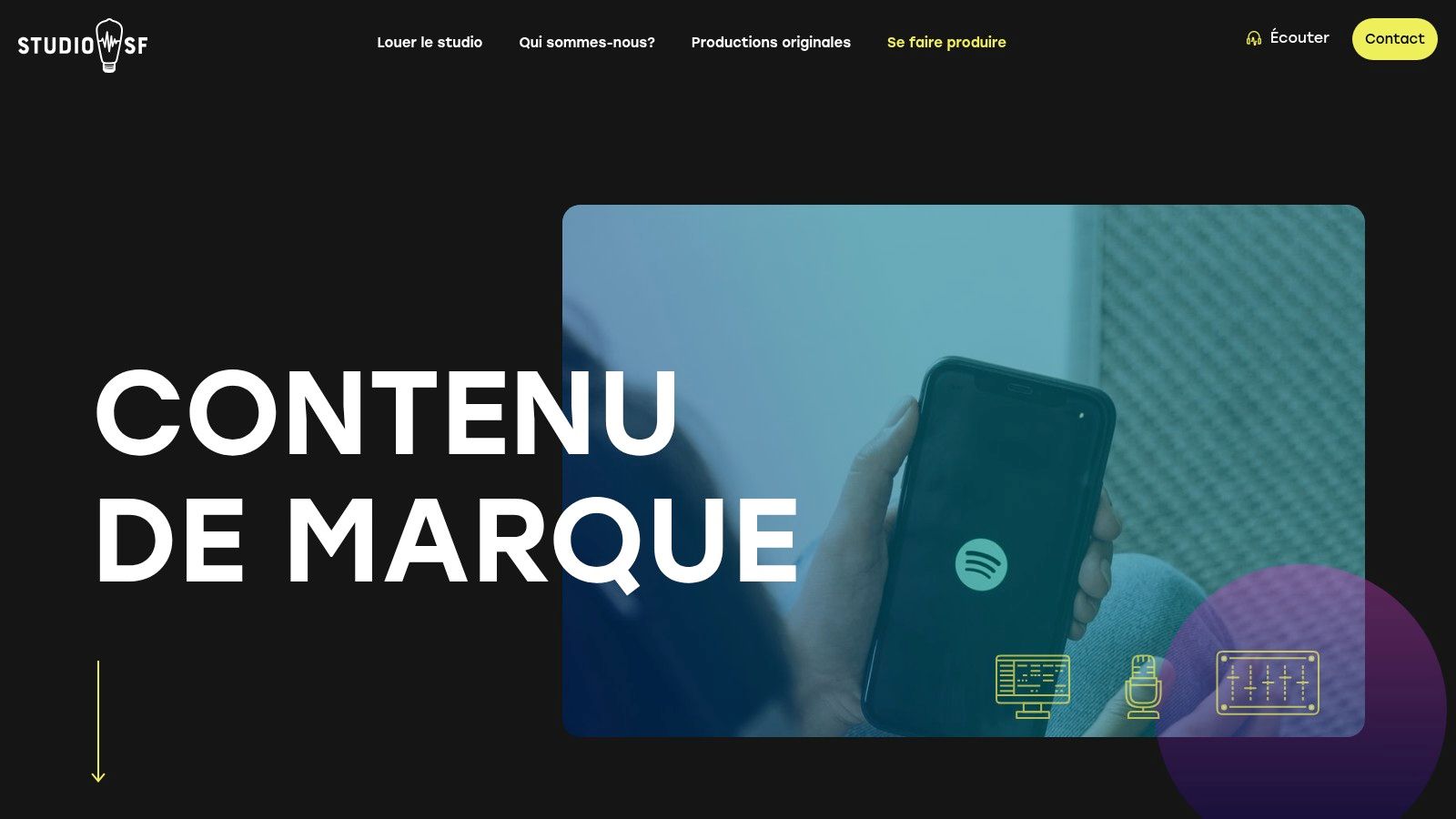
Studio SF is one of the cleaner fits for brands that want a video-first podcast workflow. Its offering covers concept development, set design, recording, launch support, distribution setup, SEO optimization, thumbnails, and social cutdowns.
That package structure is useful because many B2B teams don't just need a podcast. They need a recurring content engine that feeds LinkedIn, YouTube, newsletters, and sales enablement. Studio SF appears to understand that the recording session is only one part of the asset pipeline.
Why marketers like this model
Video-first podcasting works when you know how the footage will be reused before you hit record. Studio SF's appeal is that it looks designed for that reality. The workflow fits marketing teams that want a single production day to generate multiple downstream assets.
The main caveat is strategic depth. If you already know your show concept, host format, and audience, this type of partner can be highly efficient. If you still need help validating audience strategy and growth mechanics, you may need more than a production-led relationship.
- Best for: Brands prioritizing video podcasts and social repurposing.
- Strength: Strong content packaging around launch and distribution assets.
- Trade-off: Better for execution than for full-funnel B2B growth planning.
5. Phonique
Phonique stands out because it balances craft and promotion better than many studio-led providers. The service mix includes writing, recording, editing, mixing, distribution, promotion, and host coaching, with options for studio, mobile, or virtual capture.
That flexibility is valuable for B2B teams. Executive hosts often need coaching more than they need a better microphone, and distributed guest interviews are common even for Montreal-based companies.
Practical fit
Phonique is a sensible option for teams that already know why they're launching a show and want a partner who can keep the process moving without forcing every recording into the same setup.
I like the presence of promotion and coaching in the offer. Too many agencies stop at delivery. The weaker point is measurement visibility. Buyers should ask what “promotion” means in practice, which channels the team supports, and what post-launch reporting looks like.
- Best for: Mid-market teams that need a guided, turnkey process.
- Strength: Flexible recording modes plus host support.
- Trade-off: More clarity is needed on how business outcomes are measured after launch.
6. Parenthèse Studio
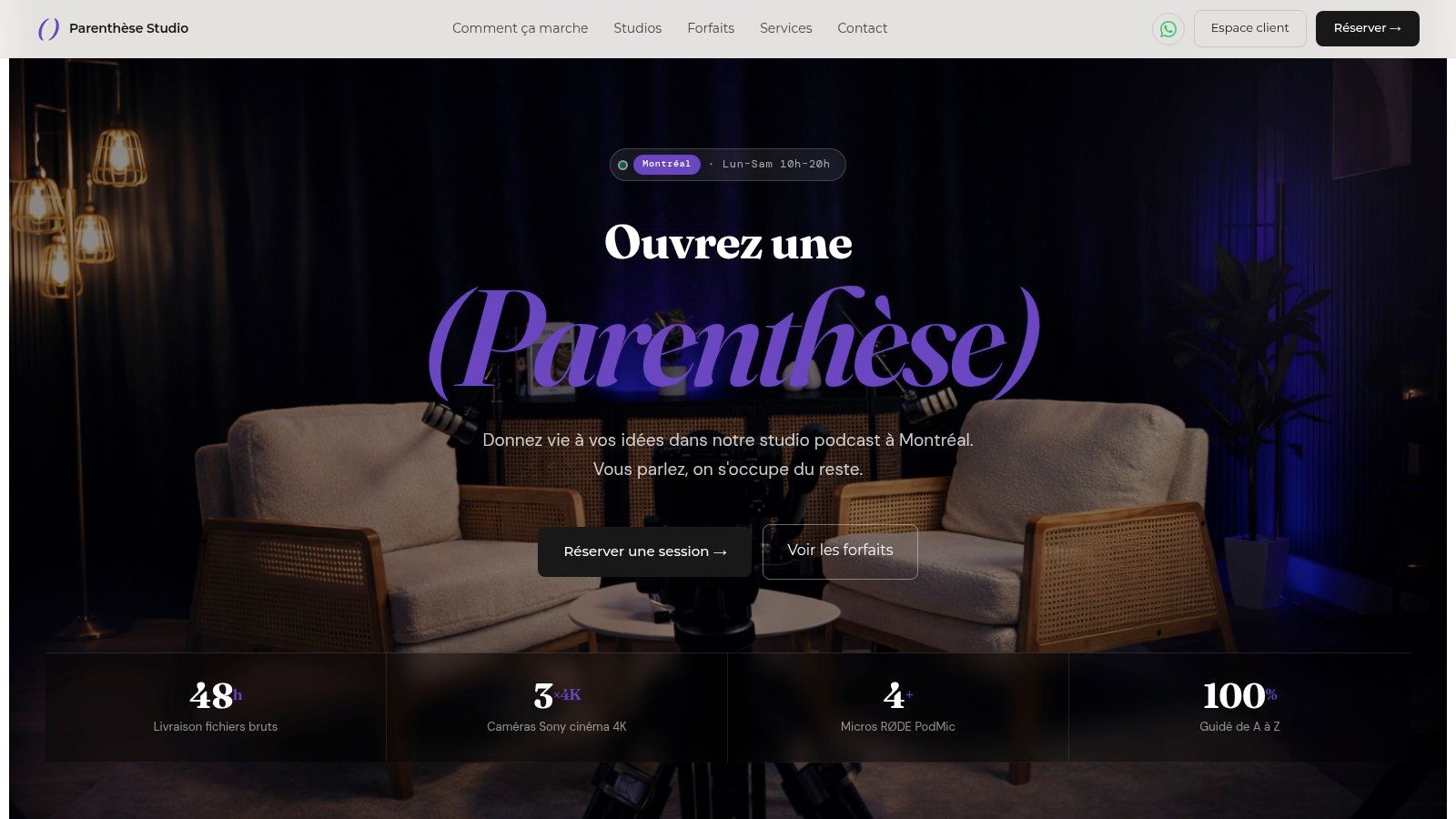
Parenthèse Studio is a strong operational choice if you want predictable in-studio production. The appeal here is simple. Clear packages, operator-led sessions, multicam video capture, editing options, and practical add-ons like reels, captions, SEO support, and jingles.
That transparency is useful for marketing teams managing calendars and budgets. If you're booking recurring interview days with executives or customers, fast turnarounds and a defined workflow often matter more than a grand creative promise.
When this works well
Parenthèse fits teams that already have internal ownership of strategy and distribution. If your content lead knows the show format, guest list, and publishing cadence, a dependable studio partner can be the right move.
If you still need help turning the show into an audience-growth channel, this won't replace specialized podcast marketing services. It solves production reliability better than growth orchestration.
The fastest way to waste a good recording studio is to arrive without a clear episode structure, clip strategy, and publishing plan.
- Best for: Companies with an existing strategy that need smooth in-person production.
- Strength: Predictable workflows and practical add-ons.
- Trade-off: More studio partner than strategic growth partner.
7. Makeshift Digital
Makeshift Digital belongs on this list because some brands don't need a pure podcast shop. They need a content agency that can fold audio into a broader editorial program. That's Makeshift's real advantage.
If your podcast is one lane inside a wider content strategy that includes written pieces, social distribution, and brand storytelling, that integrated approach can work well. It keeps the show from becoming an isolated side project with no connection to your other channels.
The trade-off to understand
The upside is alignment across formats. The downside is specialization. A broader content agency usually won't bring the same podcast-specific operating rhythm as a dedicated production and growth partner.
That's fine if your team has strong internal ownership. It's less fine if you're still figuring out how to start a B2B podcast and need someone to drive the whole machine.
- Best for: Brands treating podcasting as one part of a larger content system.
- Strength: Good editorial alignment across channels.
- Trade-off: Less specialized in podcast growth than focused agencies.
8. REC Studios
REC Studios is a production-first option for teams that prioritize sound quality and want a professional in-person recording environment. Located in Saint-Henri, it offers podcast services ranging from studio sessions with a technician to fuller post-production support.
This is the kind of partner I'd shortlist when the internal team already owns strategy, guest booking, and publishing. In that setup, REC gives you reliable engineering and a polished recording experience without pretending to be your demand-gen team.
What it does well
For executive interviews, customer conversations, and branded series with local guests, a strong studio environment can improve consistency fast. Good engineers remove a lot of friction from the room. Hosts can focus on the conversation instead of levels, acoustics, and technical troubleshooting.
Where buyers get this wrong is expecting studio quality to substitute for audience strategy. It doesn't. Great audio helps retention. It doesn't automatically create discovery.
- Best for: Montreal companies with a clear content strategy and a need for premium recording.
- Strength: Professional studio environment and engineering support.
- Trade-off: Limited evidence of full-service growth or distribution ownership.
9. OK Studio
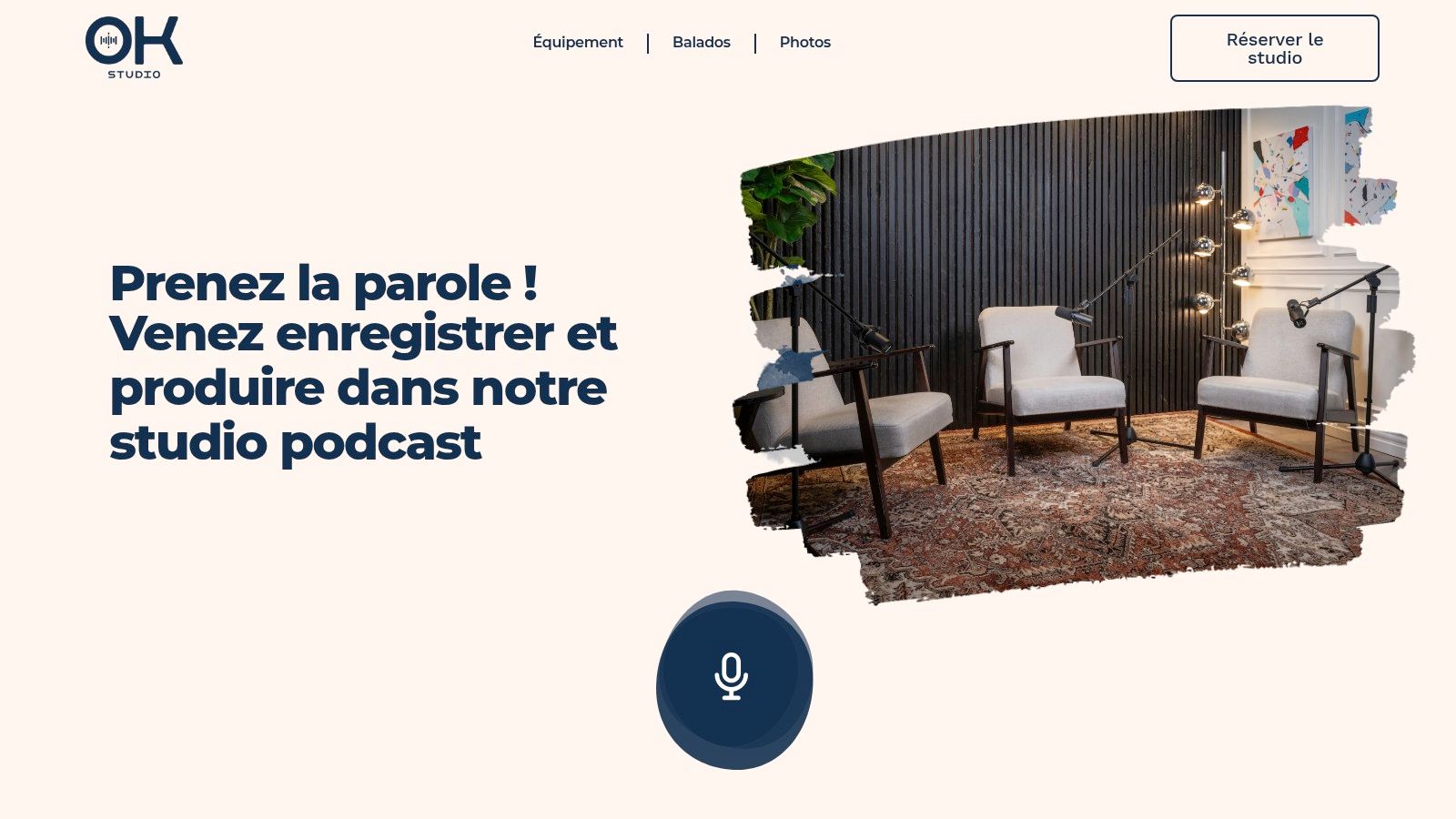
OK Studio is a practical choice for businesses that want turnkey podcast and video sessions without self-managing the technical side. Its Longueuil setup includes technician-supported recording, multiple set styles, and multicam capture for teams that want a polished visual output.
That's a good fit for video podcasts, founder interviews, and recurring brand content that needs to look consistent on YouTube and social. If your host isn't especially technical, technician-led sessions reduce friction.
Where it lands in the stack
OK Studio sits closer to the studio end of the market than the agency end. That isn't a knock. For many companies, that's exactly the right buy. You may already have a content strategist, an internal social team, and a clear distribution plan.
In that case, you don't need a full agency retainer. You need a reliable recording partner who can help your team capture good source material.
- Best for: Companies producing recurring video-led podcast episodes.
- Strength: Hands-on production support during recording.
- Trade-off: Less attractive if you need strategy, guest sourcing, and growth ownership.
10. BokaStudio
BokaStudio is a smart option for teams that value fast handoff and simple scheduling. Its offering centers on podcast recording, turnkey support, webinar production, and a pre-edit workflow that helps clients leave with more usable material sooner.
That operational detail matters more than it sounds. For internal marketing teams, delays between recording and usable assets are one of the biggest reasons podcasts lose momentum.
Why some teams will prefer it
If your main challenge is publishing consistency, BokaStudio's workflow can help. A faster pre-edit process makes it easier to maintain cadence and get clips into the hands of your social team without waiting on a longer post-production queue.
The caveat is familiar by now. This is more production utility than strategic growth support. That's not a weakness if your team already knows what it's doing.
- Best for: Busy teams that want efficient session scheduling and quick asset turnaround.
- Strength: Speed and recording-day efficiency.
- Trade-off: Better for execution than for high-level B2B podcast strategy.
11. CHOQ Studio
A Montreal team needs a clean place to record, a technician who can keep sessions on track, and enough post-production support to get a show launched without building everything in-house. CHOQ Studio fits that brief well. CHOQ Studio offers recording facilities, technical support, mobile kits, post-production help, and training for teams that need reliable execution more than a full content growth program.
Its roots in radio are the differentiator here. That usually shows up in the basics that matter on recording day: better mic technique, tighter host coaching, and fewer avoidable production mistakes. For universities, nonprofits, associations, and early-stage brand teams, that foundation can be enough to get a credible show off the ground.
The trade-off is strategic range. CHOQ is better suited to production support than to the kind of B2B podcast program that needs audience research, distribution planning, repurposing systems, and pipeline measurement. If your team is comparing local studios with a more strategy-led option such as Fame's Montreal podcast agency service, the core question is what you expect the podcast to do for the business.
If the goal is to publish polished episodes, CHOQ is a practical choice. If the goal is revenue influence, sales enablement, and measurable B2B growth, you will likely need more than studio support.
- Best for: Nonprofits, education teams, and budget-conscious organizations that need dependable production help.
- Strength: Strong recording fundamentals and accessible technical support.
- Trade-off: Limited fit for B2B marketers who need strategy, distribution, and ROI accountability.
Top 11 Montreal Podcast Agencies: Quick Comparison
A Montreal B2B team comparing podcast agencies usually hits the same problem fast. One firm offers strong studio execution, another sells branded storytelling, and a smaller group can connect the show to demand generation, sales conversations, and measurable marketing outcomes. That distinction matters more than production polish if the podcast is expected to influence pipeline, not just publish episodes.
This comparison is built for B2B marketers, not general creator searches. The table looks at execution demands, internal lift, likely outcomes, and where each agency tends to fit in a real marketing program.
| Service | 🔄 Implementation complexity | ⚡ Resource requirements | 📊 Expected outcomes | 💡 Ideal use cases | ⭐ Key advantages |
|---|---|---|---|---|---|
| Fame | Moderate, systematized remote workflows 🔄 | Premium budget; marketing input; proprietary platforms | Lead-focused growth; guaranteed ≥10% MoM downloads 📊 | B2B SaaS and services seeking measurable pipeline growth 💡 | Guaranteed growth, end-to-end B2B expertise ⭐ |
| Virage Sonore | High, full in‑studio and on‑location production 🔄 | In‑house studios or mobile kit; enterprise budget; bilingual staff | Polished audio+video; bilingual delivery for institutions 📊 | Enterprises, institutions needing AV integration and live streaming 💡 | Integrated AV production and live-stream capability ⭐ |
| Magnéto | Moderate, editorial, coaching and craft focus 🔄 | Senior producers; scoped budgets; storytelling resources | High storytelling quality; award-level editorial impact 📊 | Branded/documentary series emphasizing narrative craft 💡 | Deep editorial expertise and ability to strengthen a brand's image ⭐ |
| Studio SF | Moderate, package-driven, video-first workflows 🔄 | In-studio sessions; defined package budgets; video capture | Brand-content assets ready for distribution and repurposing 📊 | Brands wanting packaged, process-driven content programs 💡 | Clear packages and strong video repurposing workflow ⭐ |
| Phonique | Low–Moderate, turnkey with intake and coaching 🔄 | Budget tiers; host coaching; studio/mobile/virtual options | Improved host performance and measurable listen growth 📊 | Marketing teams focused on growth with coaching support 💡 | Balanced craft + promotion and host coaching ⭐ |
| Parenthèse Studio | Low, operator-led hourly packages, defined SLAs 🔄 | Hourly pricing; in-studio presence; add-ons available | Predictable turnaround and production-ready deliverables 📊 | Teams needing predictable pricing and fast episodic sessions 💡 | Transparent pricing and fast delivery SLAs ⭐ |
| Makeshift Digital | Moderate, integrated cross-channel strategy 🔄 | Cross-channel content resources; strategic collaboration | Podcast aligned with wider content marketing; community growth 📊 | Brands integrating podcast into broader content programs 💡 | Integrated content strategy and storytelling skills ⭐ |
| REC Studios | Low–Moderate, studio-centric, technical focus 🔄 | In-person studio booking; experienced engineers; high-end gear | Broadcast-quality audio and professional technical fidelity 📊 | Teams prioritizing pristine in-studio audio quality 💡 | High-end equipment and engineering expertise ⭐ |
| OK Studio | Moderate, technician-operated multicam workflows 🔄 | On-site technician; configurable sets; post-production support | Video-forward episodes optimized for social/YouTube 📊 | Clients needing full-service video+audio sessions with tech support 💡 | Hands-on technical support and well-supported video workflows ⭐ |
| BokaStudio | Low, session-length bookings with pre-edit workflow 🔄 | Session-based booking; quick handoffs; in-studio presence | Fast turnaround with pre-assembled multicam files 📊 | Teams needing rapid turnaround and simple scheduling 💡 | Pre-edit workflow and quick deliverables ⭐ |
| CHOQ Studio | Low, accessible studio rental with technician support 🔄 | Affordable rates; technician included; mobile kits; workshops | Reliable production at lower cost; basic post-production 📊 | Non-profits, community projects and emerging brands on budget 💡 | Accessible pricing and radio-broadcast expertise ⭐ |
How to Choose the Right Montreal Agency for Your B2B Goals
The biggest mistake buyers make is shopping for a podcast agency as if every provider solves the same problem. They don't. Some Montreal firms are studios with excellent recording capability. Some are branded-content shops with strong editorial instincts. A smaller group operates more like growth partners.
Start with the business goal. If the show exists to support thought leadership, account-based relationship building, executive visibility, or pipeline influence, you need more than production. You need a partner that can shape the format, recruit the right guests, repurpose episodes into usable assets, and report on whether the show is reaching the audience that matters.
That distinction matters in Montreal's market. In a 2026 Canada-wide Clutch ranking, Toast Studio appears among the top podcasting companies in Canada with a 4.6/5 rating based on 17 reviews, a minimum project size of $25,000+, and an hourly rate of $150 to $199. Clutch also lists its service mix as 50% content marketing, 40% video production, and 10% audio production, with 70% of its focus specifically on podcasting, according to Clutch's Canada podcasting companies ranking. That's a useful benchmark because it shows how serious buyers in this market often end up comparing agencies. Not just by editing quality, but by production depth, strategic breadth, and budget fit.
There's also a practical buyer-side question that generic local roundups often skip. Do you need an agency at all? Many Montreal search results lean toward studios, facilities, and production vendors, according to Clutch's Montreal audio production listings. For some teams, that's enough. If your internal marketing group can own concept, booking, distribution, and attribution, a strong studio partner may be the efficient choice.
If not, push harder in sales calls. Ask who owns guest sourcing. Ask what happens after publishing. Ask how success is measured beyond production quality. Ask whether the partner can connect podcast activity to audience growth, qualified conversations, or executive brand lift.
One more caution. Don't confuse download growth with business impact. Better agencies will talk clearly about measurement and not hide behind production language. A show can look polished and still go nowhere commercially. It can also perform well in audio and do even more when your team learns how to grow your audience on YouTube from the same recording workflow.
For B2B teams that want a specialist model, Fame is one relevant option because it positions its service around ROI, end-to-end execution, and growth accountability. For teams that want a local studio-first relationship, Montreal has several strong production options on this list. The right choice depends on whether you need a room, a producer, or a partner.
If you want a podcast partner built for B2B growth, Fame is worth a closer look. Their team handles strategy, guest outreach, production, and promotion, which makes them a practical fit for companies that want more than a recorded show.
