

Most companies still confuse leadership in marketing with job titles, org charts, and budget control. That's outdated.
Real leadership in marketing means your market listens when you speak. It means buyers, peers, partners, and even competitors treat your team as a reference point. If your company isn't shaping the conversation in your category, you don't have leadership. You have a department.
That distinction matters more now because the formal role is still important, but the market decides who leads. In 2024, 66% of Fortune 500 companies (329 out of 500) had a C-suite marketing leader, down from 357 in 2023 and up from 320 in 2022, while average tenure was 4.3 years, according to Spencer Stuart's CMO Tenure Study 2025. The signal is obvious. Companies still need marketing leadership, but title alone doesn't secure authority.
If you want category authority, stop acting like a campaign manager and start acting like the industry's educator.
For B2B, one channel does this better than everything else: the podcast.
Not because it's trendy. Because it forces clarity, creates trust, produces reusable intellectual property, and gives your buyers a reason to spend time with your team before they ever speak to sales.
Redefining Leadership in a Noisy B2B World
The old model of marketing leadership was simple. Control the brand. Launch campaigns. Present slides to the board. Report on pipeline.
That model isn't enough anymore.
Buyers don't need more campaigns. They need someone who helps them think better. The company that teaches the market usually wins the market. That's why leadership in marketing now looks a lot closer to publishing, interviewing, explaining, and challenging accepted wisdom than it does to pushing another gated ebook.
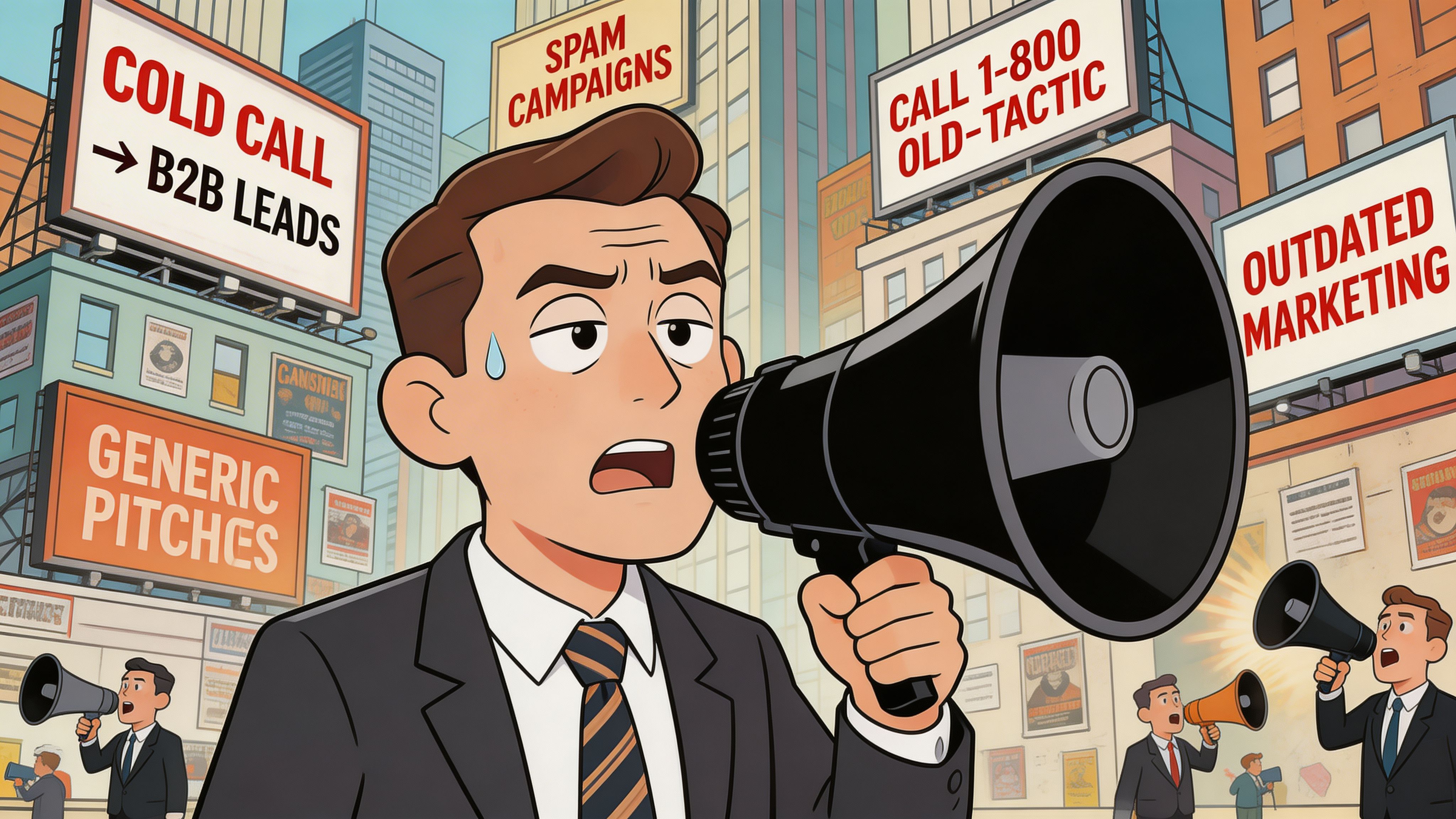
Authority beats visibility
A lot of teams chase attention and call it leadership. That's a mistake.
Visibility without authority is forgettable. Authority changes buyer preference. It also changes how your own company sees marketing. When your team consistently publishes sharp thinking, hosts respected operators, and educates the market, marketing stops looking like support and starts looking strategic.
That's the heart of strategic thought leadership. You're not creating content to stay busy. You're building a public record of expertise.
The modern marketing leader is the educator-in-chief
The strongest B2B brands don't wait for analysts or journalists to define the category for them. They build their own media asset and lead from the front.
A B2B podcast is the cleanest vehicle for that. It gives your subject matter experts a platform. It lets your buyers hear nuance that short-form content can't carry. And it creates a repeated association between your brand and useful thinking.
Leadership in marketing isn't awarded internally. Buyers grant it externally.
If you're serious about market position, stop asking whether podcasting is one tactic among many. Start asking whether your company can afford to let someone else own the microphone in your niche.
Why a B2B Podcast Is Your Unfair Advantage
A B2B podcast isn't just another content format. It's a system for manufacturing trust.
That matters because trust is hard to create with polished ads and easy to create through repeated, intelligent conversation. Buyers can hear whether your host understands the space. They can hear whether your guests respect your point of view. Buyers can hear whether your company has something to say.

A podcast builds depth, not just reach
Many B2B channels are built for interruption. Podcasts are built for attention.
That's why they work so well for leadership in marketing. A good episode gives you space to explain a hard problem, challenge a lazy assumption, and bring in a credible outside voice. You can't do that properly in a banner ad, a landing page headline, or a short LinkedIn post.
A podcast also turns your company into a convener. You stop pitching your market and start hosting it.
The content engine is a strong advantage
One smart conversation can feed your entire marketing machine.
A single episode can become:
- Short-form video clips for LinkedIn and other social channels
- Email newsletter insights with a strong editorial point of view
- Blog posts built from the strongest discussion points
- Sales enablement assets your reps can send to prospects
- Guest relationship follow-up that opens doors to partnerships
- SEO pages built around topics your buyers already care about
If you still think of a podcast as "audio content," you're missing the point. It's a source asset. That's why the benefits of a podcast extend well beyond listeners in a podcast app.
It solves the internal buy-in problem
Many marketing teams don't struggle because they lack ideas. They struggle because sales and executives don't see what marketing is producing.
That's one reason this channel is so effective. An external analysis on the lack of buy-in around marketing argues that chronic C-level and sales leadership misalignment hurts morale, and specifically notes that podcasting creates tangible thought leadership assets that can bridge that divide by demonstrating expertise and generating sales-relevant conversations, as discussed by IMPACT.
A podcast gives sales something concrete to use. It gives leadership something concrete to hear. It turns "brand building" into visible intellectual property.
Practical rule: If sales can't use it, leadership won't respect it for long.
It creates a strategic moat
Any competitor can copy your ad copy. Very few can copy your network, your host chemistry, your recurring editorial angle, and your archive of category conversations.
That's the advantage. Over time, your show becomes a living library of how your company thinks. Buyers binge it. Prospects cite it. Guests remember it. Reps use it. Recruiters point candidates to it.
That isn't channel diversification. That's category control.
The Podcast Playbook Part 1 Strategy and Positioning
Many B2B podcasts fail before the first episode because the team starts with format instead of position.
"Let's launch a show" is not strategy. It's enthusiasm.
A podcast that drives leadership in marketing starts with a sharp answer to one question: what specific conversation will your company own?
Pick a niche narrow enough to matter
Broad shows disappear. Specific shows get remembered.
If you target "B2B growth," you're entering a swamp of generic opinions. If you target a sharply defined audience with a sharply defined problem, the show gets traction faster because listeners know it was made for them.
That matters even more because underserved channels create openings in crowded markets. Coverage of overlooked channels has pointed out that B2B podcasts can build authority with niche audiences such as professional services firms and tech startups, creating an opening for differentiation and loyalty in segments mainstream content often ignores, as noted in this Business of Fashion knowledge report.
Use this filter when choosing your lane:
| Question | Good answer | Bad answer |
|---|---|
| Who is it for? | Revenue leaders at vertical SaaS firms | Anyone in B2B |
| What problem does it cover? | How they build trust in long sales cycles | Growth tips |
| Why now? | Buyers need category education before vendor selection | We want more content |
Define the ideal listener before the show name
Don't start with branding. Start with the listener.
Write down the exact person you want listening every week. Be specific about their role, pressure, blind spots, and buying context. Your Ideal Listener Profile should be detailed enough that your team can reject episode ideas that don't serve that person.
Focus on:
- Role and seniority. Are you speaking to CMOs, founders, demand gen leaders, or consultants?
- Commercial context. Are they in startup mode, enterprise complexity, or pre-exit positioning?
- Pain points. What decisions keep coming back to their desk?
- Aspirations. What would make them look smart internally?
If you can't name the listener clearly, you'll drift toward generic interviews with no commercial value.
Choose a format that fits your authority
Different formats create different kinds of trust.
An interview show works when your brand wants to borrow and curate expertise from respected operators. A solo show works when your internal expert already has a strong point of view and can teach directly. A panel works when your category benefits from debate and multiple perspectives.
The format should match your resources too. If your team has one credible spokesperson and limited scheduling capacity, don't force a guest-heavy model. If your network is strong and your brand needs association with known names, interviews make sense.
A useful framework is the B2B branded podcast framework, which helps teams align audience, format, and business objective before production starts.
Build your show around recurring pillars
Good positioning gets stronger when listeners know what kind of thinking they'll get.
Use a small set of recurring content pillars. For example:
- Market insight episodes that interpret change in the category
- Operator breakdowns where guests explain how they solved a hard problem
- Contrarian episodes that challenge accepted nonsense
- Buyer education episodes that help prospects make better decisions
Many teams tighten up at this point. They realise the podcast isn't a creative side project. It's an editorial product with a point of view.
Your category doesn't need another interview show with polite questions. It needs a show with a defensible angle.
If you get the position right, production gets easier, promotion gets sharper, and the right buyers start recognising your company as the voice worth following.
The Podcast Playbook Part 2 Production and Promotion
Production decides whether your strategy survives contact with reality. Promotion decides whether anyone important notices.
A B2B podcast becomes a leadership asset only when it ships on schedule, sounds credible, and spreads far beyond the podcast apps. That takes an operating system, not creative improvisation. Treat the show like a flagship content product with clear owners, fixed timelines, and strict quality standards.

Production quality has one job
Your production standard should make a serious buyer stay for 30 minutes without irritation.
Clear audio matters. Tight editing matters. So does pacing. Long pauses, clunky intros, weak host preparation, and uneven volume make your brand sound amateur, even if the ideas are strong. Use a decent microphone, closed-back headphones, a quiet room, and a standard recording checklist. If your team needs a repeatable system, this podcast production workflow gives you a practical model for pre-production, recording, editing, and publishing.
Packaging matters too. If you plan to attract sponsors, partners, or high-profile guests, present the show professionally from day one. The guide to Define Media Kit explains what a credible show package should include and how outside buyers assess it.
Guest selection shapes market perception
Every guest either strengthens your position or weakens it.
Pick guests who can teach something specific, challenge stale thinking, or pull your brand into a more valuable network. Senior operators, respected founders, technical specialists, and category builders usually outperform generic thought leaders because they bring scars, not slogans.
Use a simple filter:
- Authority. The guest is known and respected by the buyers you want.
- Usefulness. The guest can explain a hard problem in concrete terms.
- Reach. The guest can expose the episode to an adjacent audience that matters.
Preparation separates strong interviews from forgettable ones. Send a one-page brief. Agree on the episode angle before recording. Build questions around tension, trade-offs, mistakes, and decisions. Polite chats do nothing for market leadership. Sharp conversations do.
Promotion builds authority through repetition
Publishing the episode is the starting line.
Strong B2B podcast teams promote each episode like a product launch. They create multiple entry points so buyers can meet the brand in whatever format they prefer: full episode, clips, quotes, article, email, sales follow-up, or founder post. Repetition builds recognition. Recognition builds category authority.
At minimum, every episode should produce:
| Asset | Purpose | Owner |
|---|---|
| Episode page | Capture search intent and explain why the topic matters | Content team |
| Social clips | Turn strong moments into attention and sharing | Social team |
| Newsletter feature | Reach existing subscribers with a clear takeaway | Email team |
| Sales distribution note | Give reps a reason to send the episode to prospects | Revenue team |
The best promotion connects the podcast to the rest of your marketing engine. A strong episode can become a LinkedIn video series, a blog post, talking points for sales, a webinar topic, and follow-up content for account-based campaigns. That is why podcasting beats scattered content programs. One smart conversation can feed the whole pipeline.
Some teams handle all of this in-house. Others bring in outside help for editing, writing, design, guest management, and distribution. Fame is one example of a B2B podcast production agency that supports companies across strategy, production, and promotion.
Use email hard. Use social hard. Ask guests to share clips that make them look smart. Give sales a short summary and a reason to send it. If an episode does not circulate through the channels your buyers already pay attention to, you are wasting the recording.
A short visual walkthrough can help simplify the process:
Keep the host focused on thinking
The host should prepare, record, and refine the point of view. The host should not chase guests, review five rounds of edits, or rewrite social copy.
Protect that role with process:
- Batch recordings to reduce context switching.
- Use briefing documents with the angle, guest context, and high-value questions.
- Set one post-production workflow so approvals finish quickly.
- Turn each episode into repeatable derivative assets for social, email, and blog distribution.
Drift kills shows. Missed publishing dates kill trust. A disciplined production and promotion system keeps the podcast consistent, and consistency is what turns a smart show into market leadership.
Measuring What Matters KPIs for Marketing Leadership
If you can't measure the show, someone inside your company will eventually call it a vanity project.
They're right to ask. Leadership in marketing has to prove business value.
The mistake is measuring a podcast like entertainment media. B2B podcast performance should be judged in two buckets: brand authority and revenue influence.
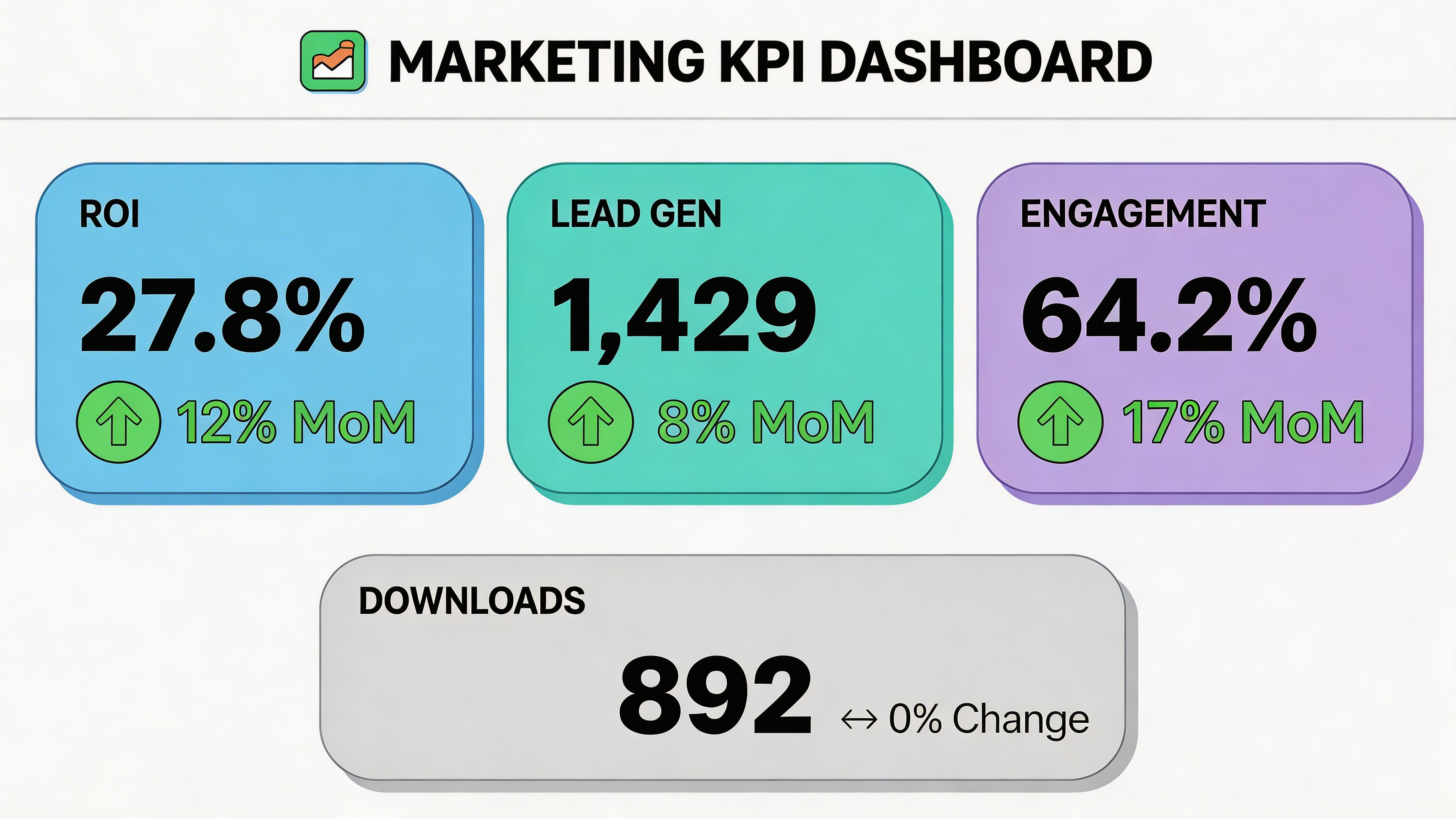
Track brand signals first
Brand leadership usually shows up before pipeline does.
That's why your dashboard should include signals that tell you whether the market is starting to associate your company with useful expertise. Marketing leaders are already moving in this direction. Data-driven decision-making is the primary investment priority for marketing leaders, with 74% of CMOs allocating resources to digital and analytics capabilities, according to Spencer Stuart's analysis of marketing leadership skills.
For podcasting, that means tracking more than downloads. A useful starting point is this guide on how to measure podcast performance.
Look for signals such as:
- Listener growth quality. Are the right buyers subscribing, replying, and sharing?
- Guest quality trend. Are stronger guests saying yes over time?
- Sales team usage. Are reps sending episodes during real deals?
- Audience feedback. Are listeners referencing episodes in conversations?
Then connect it to pipeline
You don't need perfect attribution to prove value. You need disciplined signal capture.
Use a simple system:
- Dedicated landing pages tied to episodes or podcast-specific offers
- Unique CTAs mentioned on the show and repeated on the episode page
- Demo forms that ask how the buyer heard about you
- CRM tagging for opportunities influenced by podcast content
- Sales notes that log when an episode helped progress a conversation
If your company uses meeting conversion tools, embed them directly on podcast-related pages so intent turns into action quickly. This is especially useful when an episode creates demand and a buyer wants to book while interest is still high.
Build one dashboard executives can read fast
Don't bury the signal under a sea of charts.
Use one page with a split view:
| KPI type | What to include |
|---|---|
| Brand | Listener trend, guest quality, branded search movement, sales usage |
| Demand | Demo requests, influenced opportunities, CTA responses, meeting bookings |
Executive filter: If a metric doesn't help you defend budget or improve decisions, remove it.
Downloads matter. They just don't matter on their own. A small audience of the right B2B buyers can outperform a larger audience of irrelevant listeners. The point of the show isn't broad fame. It's commercial authority.
Building Your Internal Case and Getting Started
Getting internal approval usually fails for one reason. Marketing pitches the podcast as content, not as an asset.
That's the wrong framing.
Pitch it as a market leadership system that creates reusable IP, strengthens sales conversations, and gives the brand a durable voice in the category. Decision-makers understand assets. They get nervous about experiments.
The one-page internal case
Your proposal doesn't need to be fancy. It needs to be clear.
Include these five blocks:
- Business problem. Buyers don't see us as the authority in our niche.
- Strategic response. Launch a focused B2B podcast built around category education.
- Output model. Each recording becomes audio, social clips, blog content, and newsletter material.
- Measurement plan. Track authority signals and pipeline influence from day one.
- Pilot scope. Start with a short season and review results before expanding.
Start with a pilot, not a forever promise
Don't ask for a massive commitment upfront.
Ask for approval to test the model with a tightly scoped first season. That keeps the risk manageable and forces your team to stay disciplined about positioning, process, and measurement.
The pilot should answer three questions:
- Can we consistently produce good conversations?
- Does the market respond to the angle?
- Can sales and leadership use the assets?
If the answer is yes, expansion becomes easy to justify.
Consistency is the moat
Tom Hunt has built his career around B2B podcasting, and the most useful takeaway from his approach is simple: consistency compounds. Not because consistency is motivational advice, but because repeated, focused conversations gradually turn your company into a known quantity in the market.
That's how leadership in marketing gets built in practice. Not through one campaign. Through a repeated point of view buyers can return to.
If you're waiting for perfect certainty, you'll lose to a competitor willing to publish and learn faster.
Frequently Asked Questions about Podcast Leadership
Do we need a big internal team to run a B2B podcast
No. You need one committed internal owner, one credible host, and a defined workflow.
The owner keeps the process moving. The host shows up prepared. Everything else can be systemised, delegated, or outsourced. The mistake is assuming your demand gen manager should also chase guests, edit audio, write show notes, cut clips, and distribute content.
How long does it take to see results
You'll usually see early qualitative signals first. Better guest acceptance. Positive listener replies. Sales reps sharing episodes. Prospects mentioning the show.
Pipeline influence takes longer because B2B buying cycles take longer. That's normal. The teams that win don't quit because the first few episodes didn't print leads. They keep publishing until the show becomes part of how the market understands the brand.
A B2B podcast is not a launch stunt. It's an authority compounding machine.
What if nobody on our team sounds like a polished host
That doesn't matter as much as people think.
Buyers don't need a radio voice. They need clarity, curiosity, and competence. A strong host asks sharp questions, listens well, and understands the audience's world. Media polish helps, but insight matters more.
Should we focus on customers, prospects, or peers
Start with prospects. They're the commercial priority.
That said, the best shows often attract all three. Prospects come for insight. Customers stay engaged because the content helps them think. Peers pay attention because good category media earns respect across the industry.
Is video required
No, but visual assets help with promotion.
Audio is still the core product. If you can also capture video clips remotely and cleanly, you'll make distribution easier across social. If video adds production stress and delays publishing, prioritise audio consistency instead.
What should our first episodes cover
Don't open with company history or vague trend talk.
Start with problems your buyers already care about. Use early episodes to prove the show's point of view. Tackle one painful decision, one flawed assumption, or one recurring operational challenge per episode. If the topic would make a prospect say, "we've been dealing with that," it's a good start.
If you want a specialist partner to help turn a B2B podcast into a real authority engine, talk to Fame. They focus on strategy, production, and distribution for B2B shows built to support thought leadership and pipeline, not just publishing.
