April 9, 202625 min read19 sections
17 Best Podcast Production Studios for 2026
By Fame Team
Key Takeaways
- A B2B podcast should be judged on authority, relationships, and contribution to pipeline, not just download charts.
- A studio worth hiring should handle strategy, production, distribution, promotion, and measurement well.
- The right partner operates closer to a content and growth function, helping define the audience and shape the format.
You approve the budget, record a solid first run of episodes, and publish on schedule. A quarter later, the show sounds good, but it has not changed anything that leadership cares about. No clear lift in pipeline. No stronger access to target accounts. No evidence that the podcast is building category authority in a way the rest of the marketing team can use.
That gap usually comes from a bad buying decision, not a bad format.
B2B teams often hire a podcast production studio for editing and polish, then expect growth, audience fit, and revenue impact to show up on their own. They do not. Clean audio helps credibility, but it does not create a sharp show thesis, a guest strategy tied to accounts, or a distribution system that turns interviews into sales enablement and demand gen assets.
The right partner operates much closer to a content and growth function. They help define the audience, position the show, shape the format, prepare the host, source guests with strategic value, publish across channels, and measure performance against business goals. That last part matters. A B2B podcast should be judged on authority, relationships, and contribution to pipeline, not just download charts.
That distinction matters because podcasting now competes for real budget, real executive attention, and real performance scrutiny. Buyers expect more than a well-produced show. They expect a channel with a job to do.
A studio worth hiring should handle six areas well:
First, strategy and planning. The team should clarify who the show is for, what point of view it owns, and how it supports demand generation, brand, or customer marketing.
Second, pre-production and recording. That includes guest research, booking support, host prep, interview structure, and recording workflows that do not waste executive time.
Third, post-production. Editing, cleanup, mixing, music, and mastering belong here, but production quality is only one part of the decision.
Fourth, distribution. Publishing, transcripts, metadata, and show notes need to be handled in a way that improves discoverability and makes repurposing easier.
Fifth, promotion and repurposing. Strong studios turn one interview into clips, social posts, written content, sales follow-up assets, and campaign materials.
Sixth, measurement. Reporting should help a marketing leader decide what to change, where to invest, and whether the show is influencing revenue, reputation, or target-account engagement.
There are three common ways to resource this work. Freelancers fit teams that already own strategy and only need execution. In-house teams fit companies that want podcasting as a long-term internal capability. A podcast production studio fits best when the company needs a proven operating system without hiring a producer, strategist, editor, and distribution lead separately.
That is the lens for this guide. The studios below are not ranked on audio polish alone. They are evaluated on how well they help B2B marketers build a show that earns attention, supports revenue goals, and justifies the investment.
1. Fame
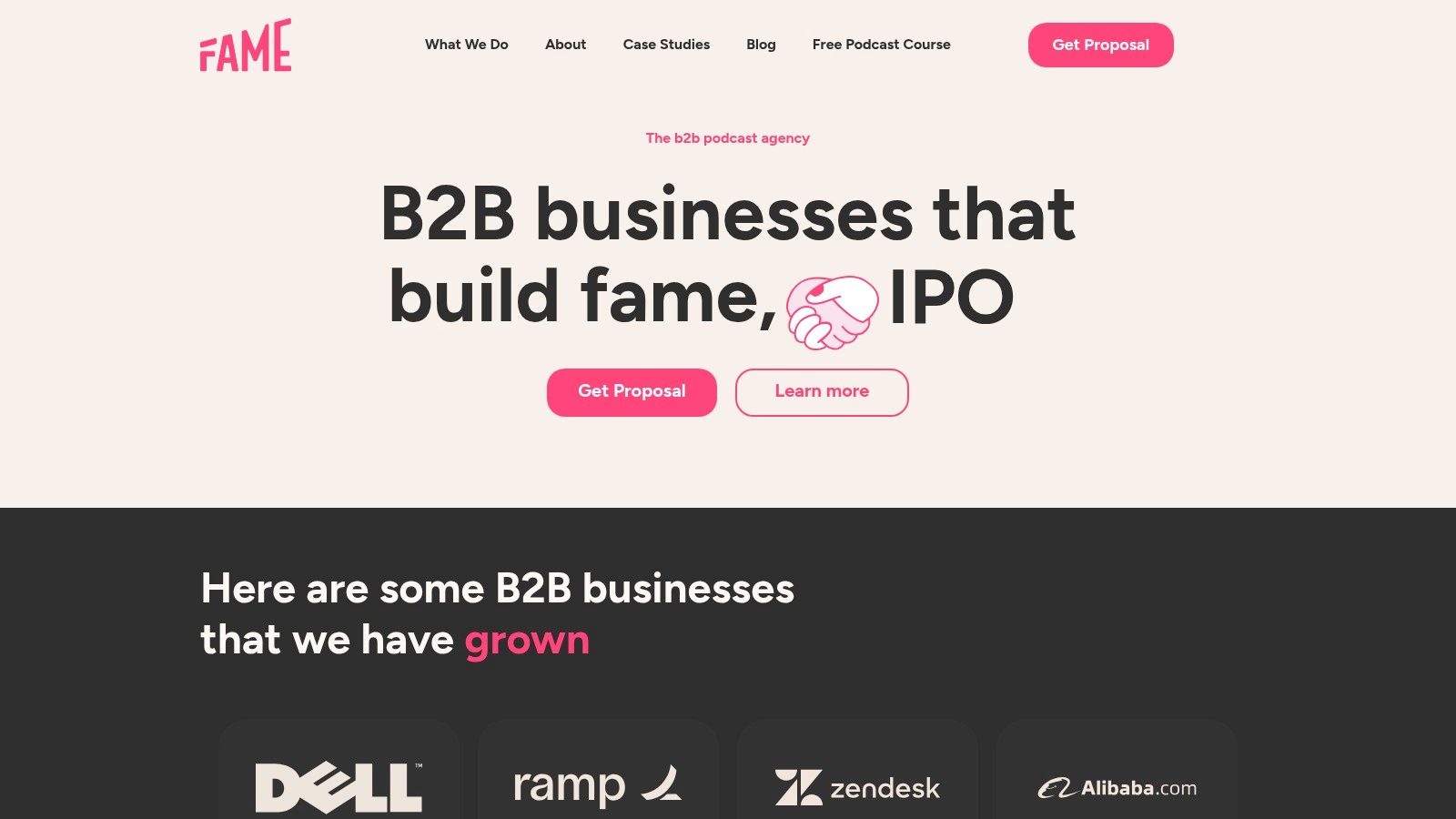
A common B2B scenario looks like this. Marketing wants a show that opens doors with target accounts. The executive host has limited time. Sales wants clips and follow-up assets. Then the team hires a studio that delivers clean audio but no clear path to pipeline, guest strategy, or audience growth.
Fame is built for that gap. Fame focuses on B2B podcast programs where the success criteria are authority, relationships, and revenue influence, not just shipping episodes on schedule.
That specialization changes how the engagement works. The offer goes beyond editing and publishing into show strategy, guest sourcing, host coaching, production, distribution, and promotion. For a team evaluating what a full-service partner should cover, this breakdown of a B2B podcast production company model is a useful benchmark.
Where Fame fits best
Fame makes sense for B2B marketers who need an operating system, not extra hands. That usually includes demand gen teams that want better guests from named accounts, founder-led brands that need executive prep, and lean marketing departments that cannot coordinate strategy, outreach, editing, design, and repurposing across separate vendors.
The practical advantage is alignment. A specialist B2B shop can structure the show around account access, category positioning, and repeatable content outputs from the start. Generalist studios often handle production well, but they may leave the marketing team to figure out guest quality, show positioning, and post-episode activation on its own.
Fame also puts accountability into the engagement. The agency states that if a client does not achieve average monthly download growth over the first six months, the seventh month is free. I would not treat download growth as the only KPI for a B2B show, but I do treat a guarantee like that as a signal. It shows the studio is willing to be measured against outcomes, not activity.
Trade-offs to consider
- Strongest fit for B2B programs: A company that wants a creator-style entertainment show may want a different kind of partner.
- Best value comes from using the full system: Teams that only need editing support may pay for strategy they will not use.
- Growth promise needs the right internal support: Executive responsiveness, guest quality, and clear positioning still affect results.
A simple test helps here. Ask how the studio would turn one recorded interview into sales enablement, social content, partner outreach, and relationship capital with target accounts. The quality of that answer usually tells you whether you are buying production capacity or a B2B growth program.
2. Caspian Studios
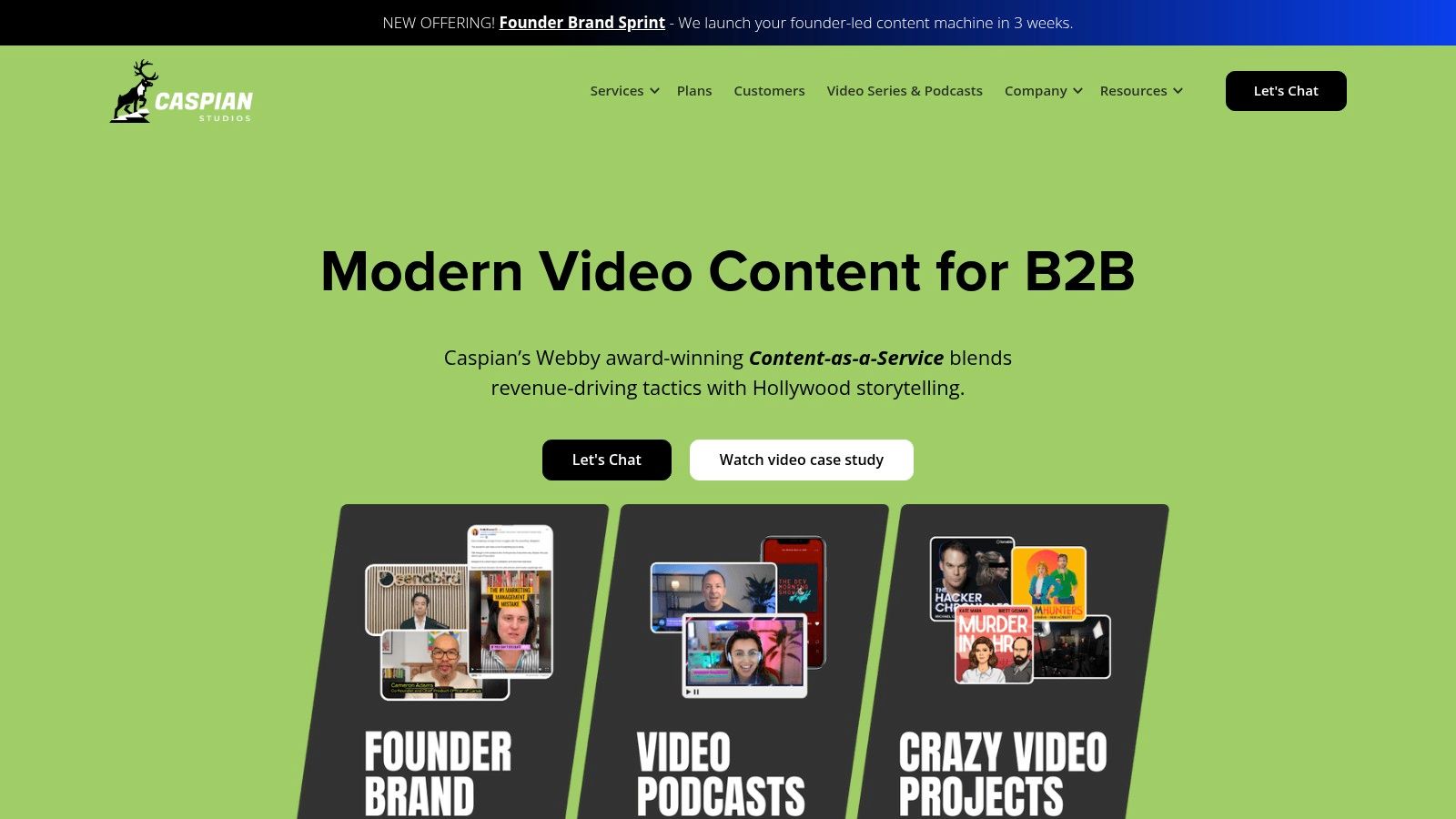
Caspian Studios is for brands that want a podcast to feel like a flagship media product, not a recurring Zoom interview.
Its edge is format range. Caspian can produce classic interview shows, blended narrative series, and scripted concepts that push far beyond the usual B2B playbook. That makes it attractive for category leaders who are tired of the standard “host asks expert five questions” formula.
If you are comparing premium partners, this overview of a podcast production company helps frame what full-service looks like.
Where Caspian fits best
Caspian works well when the show itself is part of the brand strategy. If your team wants a series that sales can share, executives can reference, and prospects remember, this kind of creative partner can be worth the added complexity.
A few practical trade-offs matter:
- Stronger on premium storytelling: Better for ambitious launches than low-cost weekly volume.
- Higher stakeholder load: Creative approvals, scripting, and narrative development require more internal time.
- Good for multi-format brands: Useful if audio and video both matter.
I would not pick Caspian for a simple “book guests and ship episodes” workflow. I would pick it when the format itself is a competitive advantage.
3. Sweet Fish Media
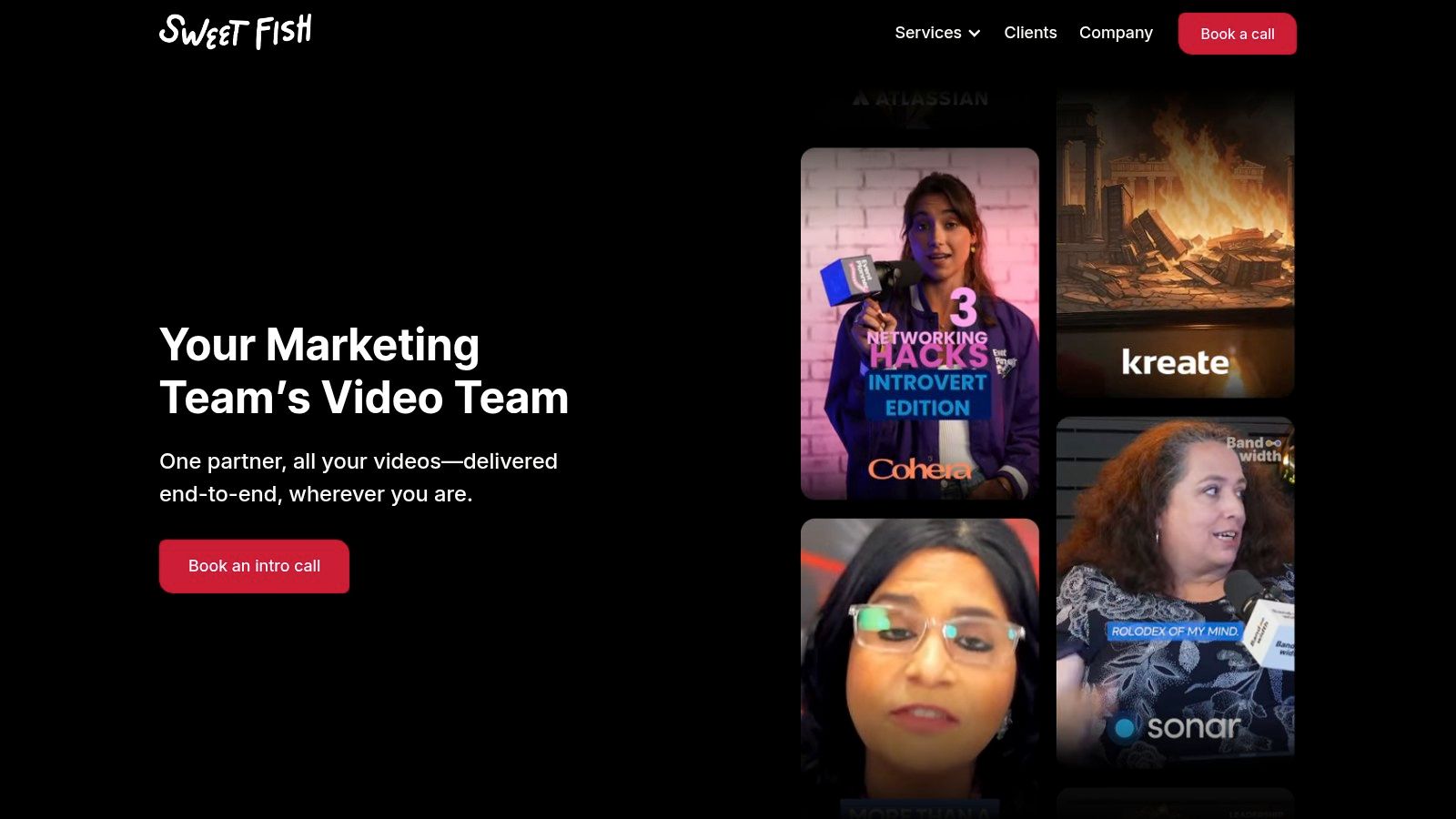
Sweet Fish Media is a fit for B2B teams that judge a podcast by content output and pipeline influence, not by the audio file alone.
A common scenario looks like this: marketing records one executive conversation on Tuesday, sales wants clips by Thursday, and the demand gen team needs assets that support the next campaign. Sweet Fish is built for that environment. Their model centers on turning a single recording into a repeatable stream of video, social, and sales-friendly content.
If your team is still sorting out the production setup behind that workflow, this guide to podcast studio equipment for business shows is useful before you evaluate agencies.
Where Sweet Fish fits best
Sweet Fish works well for companies that already run coordinated marketing programs and want the podcast to plug into them. The value is not only the episode. The value is the system around the episode.
That distinction matters in B2B. A strong partner should help answer questions like: Will this recording give sales something worth sharing? Can the content team turn it into campaign assets without extra meetings? Does the show build authority with buyers who may never open Apple Podcasts?
Trade-offs to consider
- Strong fit for camera-ready hosts: Teams that are comfortable on video will get more value from the model.
- Better for repurposing than pure audio craft: If your main goal is a polished audio-only show for loyal listeners, another studio may be a tighter fit.
- Requires internal coordination: Video clips, approvals, brand review, and distribution plans add production overhead.
I would choose Sweet Fish when the podcast sits inside a larger B2B content engine. I would be more cautious if the team only wants a weekly interview show with minimal internal involvement. The right evaluation question is simple: how does their workflow turn each guest conversation into assets that support revenue, authority, and campaign execution?
4. Content Allies
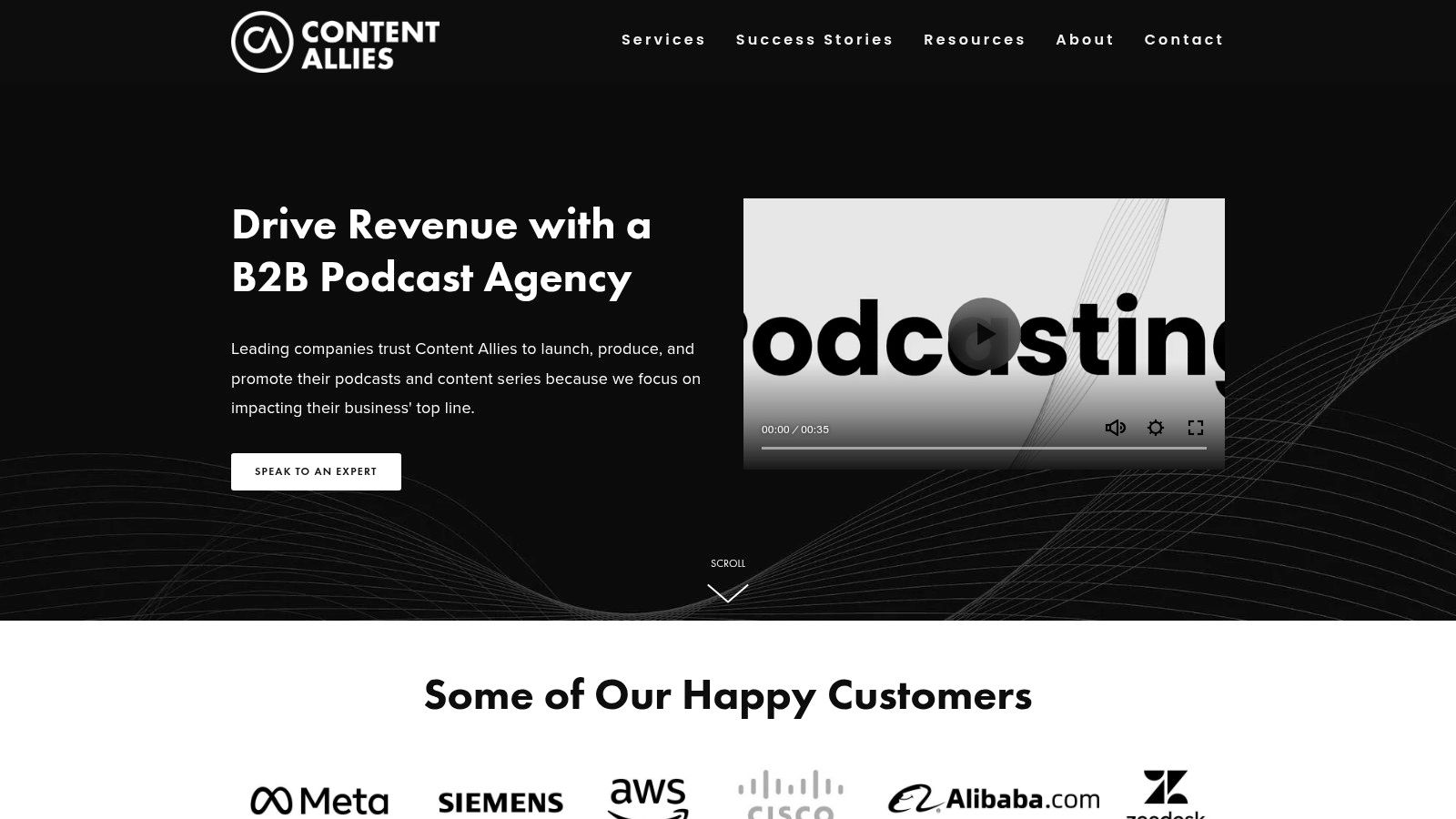
Content Allies is one of the more practical choices for B2B teams that want the podcast to function like an account-based marketing channel.
Its strength is operational discipline. The company is known for handling guest outreach, producer support during recordings, editing, publishing, and promotion with a process-heavy approach that suits revenue teams.
If your internal team is still figuring out the setup side, this guide to podcast studio equipment is useful context before vendor calls.
Why revenue teams like Content Allies
A lot of podcasts stall because no one owns the middle of the workflow. Booking slips. Hosts are underprepared. Guests show up cold. Episodes publish late.
Content Allies reduces that risk by putting structure around the full process.
That is especially useful if your show depends on high-value external guests. In B2B, the guest list often matters as much as the audience list. The right studio understands that a recording can open a sales relationship, a partnership, or a warm introduction.
Best use case
Choose Content Allies if your show is interview-led, sales-adjacent, and built to create consistent executive conversations. Skip it if you want a highly theatrical narrative series.
5. Lower Street
Lower Street has built a reputation around branded podcasts that sound polished, researched, and intentionally crafted.
This is the kind of podcast production studio I would shortlist when brand perception matters as much as demand generation. Lower Street is strong on editorial development, launch structure, and premium storytelling. That makes it a fit for enterprise teams that need a show to feel substantial from day one.
If your team is still learning the production workflow, how to produce a podcast gives a useful baseline.
A key trade-off
Lower Street is not the cheap option, and it should not be. You hire this kind of partner when you want more than throughput.
That usually means:
- Better concept development: Stronger show positioning and story architecture.
- Premium execution: More attention to sonic identity and narrative cohesion.
- Longer lead times: The process tends to involve more discovery and approvals.
I would not use Lower Street for a lightweight founder podcast that just needs editing and clips. I would use it when the show is intended to become part of the brand’s public identity.
6. Quill and CoHost
A common B2B problem looks like this. The show is shipping on schedule, leadership asks what it is doing for the business, and the team has downloads but no clear story behind them.
Quill is built for that situation. Its appeal is not just production support. It is the combination of production services with CoHost, Quill’s hosting and analytics platform, which gives marketing teams tighter control over reporting, distribution, and listener data in one setup.
That matters if the podcast needs to earn budget by proving influence, not just sounding polished. For teams comparing service models, this roundup of best podcast agencies for branded shows and growth is a useful reference point.
Where Quill stands out
Quill makes the strongest case with organizations that already run measurement-driven marketing. If your team tracks campaign performance closely, a unified production and analytics stack removes a lot of the manual stitching that happens when editing lives with one vendor and reporting lives somewhere else.
I would shortlist Quill when the internal buyer is a marketing leader who wants clean reporting for executives, sales, or brand stakeholders. That usually points to a more mature program with clear goals, defined audiences, and pressure to show business relevance.
The trade-off
The upside is better visibility. The trade-off is that this model makes the most sense when your team uses the reporting to shape programming, promotion, or audience strategy.
If you only need basic editing and publishing, Quill may be more system than you need. If you need a partner that helps connect podcast activity to broader B2B marketing decisions, the integrated setup is more compelling.
Best fit
Quill fits brands that want podcast operations and podcast measurement to work as one program. It is a strong option for teams evaluating partners based on reporting clarity, stakeholder confidence, and the ability to connect the show to larger marketing outcomes.
7. The Podglomerate
The Podglomerate is a good option when you want one partner that can handle production, audience development, and monetization thinking.
That mix makes it different from a pure production vendor. Some teams do not need monetization help at all. Others want the option later, especially if the show gains traction and starts attracting sponsorship interest or broader media partnerships.
What it does well
The Podglomerate works best for brands that do not want to assemble multiple vendors. It can support a show from concept through launch and into growth.
That all-in-one setup reduces coordination overhead. It also means you need to be honest about what you need. If your team only needs editing and publishing, a studio like this may be more than necessary.
Best for
- Brands building a media property
- Teams that want growth support beyond editing
- Organizations that may explore monetization later
I would consider The Podglomerate when the show is expected to expand over time rather than stay a narrow content program.
8. Resonate Recordings
Resonate Recordings is one of the more flexible names on this list.
Its tiered model is useful because not every company needs a full strategic engagement on day one. Some teams need a clean editing workflow now and want room to add launch help, video production, or broader support later.
Why flexibility matters
This is a practical choice for companies in transition. Maybe the show started as an executive side project and is now becoming part of the marketing mix. Maybe the team wants to test the format before investing in a more strategic partner.
Resonate lets you do that without rebuilding the operation from scratch.
Where it falls short
The trade-off is strategic depth. A flexible service menu is helpful, but it does not automatically mean B2B positioning, guest strategy, and growth planning are front and center.
If your challenge is operational execution, Resonate is a strong contender. If your challenge is “we have a podcast but no business case,” I would look at a more strategy-led studio first.
9. JAR Audio
JAR Audio is built for brands that care about depth, tone, and emotional engagement.
A lot of B2B podcasts are forgettable because they sound interchangeable. JAR’s style pushes in the opposite direction. The emphasis is on concept quality, narrative craft, and making listeners want to come back.
When JAR is the right call
JAR works well for thought leadership programs where affinity matters more than direct response. If your brand wants to sound distinct and publish something people would choose, not just tolerate, JAR is a credible option.
That does not make it the best fit for every team.
- Good fit: Brand storytelling, leadership positioning, audience loyalty.
- Weak fit: Transactional ABM podcasts or guest-led sales networking shows.
In other words, JAR is a strong creative partner. Just make sure your success criteria match that strength.
10. Pacific Content
Pacific Content is a fit for enterprise brands building a flagship show with real reputational stakes.
A common scenario: the marketing team wants more than a podcast that ships on schedule. They need a program that can hold up in front of customers, executives, partners, and the board. In that situation, Pacific Content stands out because the work is usually shaped like a branded media property, not a production line service.
What makes Pacific different
Pacific tends to be strongest when strategy, editorial development, and production all need to work together. The value is not just cleaner audio. It is the ability to turn a broad brand goal, category authority, executive visibility, brand perception, into a show concept with a clear editorial identity.
That approach has trade-offs.
It usually requires more stakeholder input, more alignment upfront, and a bigger budget than teams expect when they first price "podcast production." For the right company, that effort pays off because the show becomes a serious brand asset. For a lean B2B team that mainly needs consistent publishing and sales-adjacent content, the process can feel heavier than necessary.
Best fit
Pacific Content makes sense when the podcast is meant to elevate brand authority and signal market leadership. This is the kind of partner to evaluate if success looks like stronger perception in the category, better executive positioning, and a show you can confidently put in front of top accounts.
It is a weaker fit if your primary goal is low-friction weekly output, guest volume, or cost-efficient repurposing. In those cases, a more operational studio will usually produce better ROI.
11. Motion
Motion takes a content multiplication approach.
That makes it especially useful for B2B teams that see the podcast as the raw material for LinkedIn, short-form video, executive content, and ongoing distribution. In this model, the episode is not the final asset. It is the source asset.
Why this works
Many B2B podcasts underperform because they publish once and disappear. Motion solves that problem by building repurposing into the service itself.
The appeal is simple. One recording can power a week or more of marketing output if the workflow is tight.
A podcast episode should not end as an audio file. It should become sales enablement, social content, executive thought leadership, and follow-up material for guests.
Trade-offs
Motion’s model is excellent for teams that are already active on social. It is less compelling if your distribution strategy lives almost entirely inside podcast apps and email.
I would also check how specific the repurposing is to your needs. Productized workflows are efficient, but sometimes rigid.
12. FieldCast
FieldCast earns its place on this list because it covers a use case many rankings ignore: Internal and corporate podcasting.
Not every podcast production studio should be judged purely on external growth. Some companies need shows for employee communication, training, culture building, or internal leadership messaging. FieldCast is built for that environment.
Where FieldCast is strongest
If HR, internal communications, or learning teams are involved, the production requirements change. Security matters more. Distribution can look very different. Tone and compliance often require extra care.
FieldCast understands those constraints.
That makes it a better choice than a flashy B2B growth agency if your audience is employees, partners, or closed communities rather than the public market.
Practical note
US teams should confirm collaboration logistics, especially if they want live participation across time zones. But if the brief is internal communications, FieldCast is more specialized than many bigger names.
13. PodcastMotor
PodcastMotor is the budget-conscious operator’s pick.
Its appeal is not strategic complexity. It is predictable production support. Flat-rate monthly plans, core editing, show notes, and publishing are exactly what some businesses need and nothing more.
Best use case
PodcastMotor is useful when your company already owns the strategy and guest process. Maybe marketing writes the briefs. Maybe the founder books guests personally. Maybe the team already knows how it will distribute clips and blog content.
In that scenario, buying a large agency retainer makes little sense.
Where to be careful
PodcastMotor will not solve strategic problems for you. If your podcast lacks positioning, audience clarity, or promotion muscle, a low-friction production service can keep you shipping episodes but not necessarily improve results.
This is a reliable operations choice, not a growth architect.
14. Counterweight Creative
Counterweight Creative is a boutique option for brands that want careful story development and high-touch collaboration.
Its style suits organizations with complex subject matter. Science, technology, education, and research-heavy themes all benefit from a studio that can translate nuance into strong listening.
Why boutique can be better
Small studios often trade scale for attention. That can be a good deal when the show demands more craft than volume.
Counterweight looks strongest when:
- The topic is intellectually dense
- The show format needs script support
- The client wants a close creative relationship
The downside is capacity. Boutique studios are not always ideal for high-output weekly publishing or large multi-show programs.
15. Lemonpie
Lemonpie is one of the more pragmatic B2B-focused names in this space.
Its pitch is straightforward. Use the podcast to build relationships with the right guests, create useful content from those conversations, and turn the show into a business development asset.
Why that matters
In B2B, some of the fastest returns from a podcast come from who you invite, not who downloads. A good guest can become a partner, customer, referral source, or strategic introduction.
Lemonpie’s positioning fits that reality.
Who should shortlist Lemonpie
This is a good option for SaaS companies, service firms, and founder-led B2B brands that want a podcast tied closely to network-building. It is less compelling if your main priority is cinematic storytelling or a highly produced narrative sound.
I like studios that understand the commercial value of guest selection. Lemonpie clearly does.
16. Come Alive Creative
Come Alive Creative is a fit for teams that want the podcast itself to feel like a branded experience, not just a content container.
That distinction matters.
Some B2B shows win because they publish reliably, feature the right guests, and feed sales follow-up. Others need to shape perception at a higher level. If the goal is category authority, executive visibility, or a flagship show that sounds meaningfully different from the usual remote interview format, Come Alive Creative deserves a serious look.
What you are buying here
The value is in concept development, sound design, and a clearer editorial point of view. Done well, that can raise completion rates, make episodes more memorable, and give the brand a stronger identity in a crowded market.
The trade-off is operational simplicity. A highly crafted show usually takes more planning, tighter creative alignment, and more review cycles than a repeatable interview program built for weekly output.
Best fit
Choose Come Alive Creative if your company wants a show with texture, pacing, and a distinct sonic signature. This is a better match for brand-led programs than for a pipeline-first show built around fast guest turnaround and simple repurposing workflows.
I would shortlist them when the question is, “How do we make this show sound like us?” not “How do we publish 40 sales-adjacent interviews with minimal lift?” That is the essential buying decision here.
17. Podfly
Podfly is the veteran generalist on this list.
That can be a strength. Long-running vendors usually have stable processes, broad production experience, and fewer surprises in delivery. If your team wants dependable execution rather than a highly opinionated strategic partner, Podfly deserves a look.
Why some teams still prefer veterans
Newer agencies often come with sharper positioning. Older players often come with more battle-tested systems. Neither is automatically better.
Podfly’s menu appears broad enough to support companies at different maturity levels, from straightforward editing support to more concierge-style service. That flexibility is useful if your needs may change over time.
The catch
Broad service breadth can also mean less specialization. If your company needs a podcast production studio that lives and breathes B2B pipeline, there are stronger niche options higher on this list.
If you need reliability, range, and an established operator, Podfly is still a solid contender.
Comparison of 17 Podcast Production Studios
| Provider | 🔄 Complexity | ⚡ Resource requirements | 📊 Expected outcomes ⭐ | Ideal use cases | 💡 Key advantage |
|---|---|---|---|---|---|
| Fame | Medium: repeatable end-to-end B2B process | Moderate-High ($2.5-5k/mo, global team) | Strong growth focus: clear monthly download growth; substantial overall audience growth over 6 and 12 months ⭐⭐⭐⭐ | B2B marketing, demand-gen, startups prepping for exit/IPO | Performance-first guarantee + proprietary tools |
| Caspian Studios | High: scripted & narrative workflows | High: premium creative resources and stakeholder time | Premium brand storytelling and category-defining shows ⭐⭐⭐ | Enterprises seeking high-concept or scripted formats | Business-fiction and varied premium formats |
| Sweet Fish Media | Medium-High: video-first multi-platform process | High: video production, repurposing, retainer model | Multi-platform reach and social follower growth ⭐⭐⭐ | Brands investing in video/YouTube and social amplification | Strong repurposing & video optimization |
| Content Allies | Medium: ABM-aligned interview workflows | High: producer-per-recording, retainer budgeting | Pipeline-focused outcomes; revenue-aligned KPIs ⭐⭐⭐ | Revenue-driven B2B shows tied to pipeline/ABM | Producer-on-each-session + ROI framing |
| Lower Street | High: research-led, creative-heavy development | High: often >$30k/yr; deep discovery | Award-quality storytelling, PR and sponsorship pickup ⭐⭐⭐⭐ | Brands seeking premium narrative launches & editorial impact | Editorial pedigree and structured launches |
| Quill (and CoHost) | Medium: production plus integrated analytics | High: enterprise scopes; hosted analytics | Measurement-forward outcomes; deeper audience insights ⭐⭐⭐⭐ | Marketing teams needing measurement and reporting | CoHost analytics integrated with production |
| The Podglomerate | Medium-High: includes monetization & growth ops | High: custom-scoped retainers | Integrated production-to-revenue results; audience development ⭐⭐⭐ | Brands wanting single vendor for growth + monetization | End-to-end production + monetization services |
| Resonate Recordings | Low-Medium: tiered, productized services | Variable: transparent pricing for standard plans | Scalable, reliable delivery from editing to enterprise ⭐⭐⭐ | Teams scaling from basic editing to fuller services | Tiered plans with predictable pricing and scaling |
| JAR Audio | High: narrative, research-heavy production | High: premium storytelling resources | Deep engagement and audience loyalty; high production value ⭐⭐⭐⭐ | Brands focused on affinity and thought leadership | High-end narrative craft and sound design |
| Pacific Content | Very High: TV-level audio production | Very High: enterprise budgets and long timelines | Massive scale and category-defining flagship shows ⭐⭐⭐⭐⭐ | Fortune 500s seeking flagship, high-impact series | Best-in-class production for enterprise scale |
| Motion | Medium: systematized repurposing workflow | Moderate-High: video & social asset production | Strong LinkedIn and social demand-generation lift ⭐⭐⭐ | B2B brands using podcast as central social pillar | Systematic repurposing into multi-format social content |
| FieldCast | Medium: corporate/internal comms focus | Moderate: secure hosting, studio facilities | Improved employee engagement and internal communications ⭐⭐⭐ | HR, L&D, internal comms for large orgs | Specialized internal podcasting and secure distribution |
| PodcastMotor | Low: productized editing & publishing | Low: flat-rate monthly plans | Predictable, reliable editing and publishing outcomes ⭐⭐⭐ | Budget-conscious creators and solopreneurs | Transparent flat-rate subscriptions and simple dashboard |
| Counterweight Creative | High: workshop-based narrative development | Moderate: boutique team with limited capacity | Sonically rich, memorable series with high craft ⭐⭐⭐⭐ | Science/tech/educational narrative series | Exceptional storytelling and custom sound design |
| Lemonpie | Medium: guest-driven BD-focused process | Moderate: guest outreach and host coaching | Tangible business development via guest relationships ⭐⭐⭐ | B2B companies using podcasts for networking/BD | Pragmatic guest booking + host training focus |
| Come Alive Creative | High: immersive sound & creative development | High: artful production and bespoke design | Strong emotional engagement and brand affinity ⭐⭐⭐ | Brands seeking unique sonic identity and entertainment | Immersive audio and strong emotional storytelling |
| Podfly | Low-Medium: scalable, veteran processes | Variable: packages for different budgets | Dependable execution and long-term reliability ⭐⭐⭐ | Teams needing reliable, flexible production support | Established workflows and flexible service tiers |
Your Blueprint for Podcast ROI
A common B2B scenario looks like this: the team launches a show, publishes eight polished episodes, gets a few flattering comments internally, then struggles to answer one basic question from leadership. What is this doing for the business?
That usually traces back to the partner selection process. Teams buy production capacity when they need a growth system. Audio quality matters, but clean edits alone do not create pipeline, stronger category authority, or better sales conversations.
A good studio should be able to explain the full chain. Why this show should exist. Which audience it is built for. How guests support the company’s market position. How episodes turn into sales enablement, social content, account-based touchpoints, and follow-up conversations. If a vendor cannot connect production work to those outcomes, the engagement will stay tactical.
The B2B marketer’s selection checklist
Use this before you sign a statement of work.
- B2B specialization: Ask whether the studio regularly works with complex buying committees, subject-matter experts, and executive hosts.
- Strategy before production: Strong partners start with audience, positioning, format, and goals before they talk about editing timelines.
- Full-stack capability: Clarify who owns guest outreach, host prep, publishing, repurposing, and reporting. Many teams assume these are included when they are not.
- Audience growth method: Ask how the show gets in front of the right buyers after launch. "We publish to all major platforms" is not a growth plan.
- Clear reporting model: Download counts have their place, but B2B teams also need visibility into guest quality, content usage, audience fit, and commercial signals.
- Business outcome thinking: Look for language around authority, relationships, influenced pipeline, and content efficiency.
- Proof from similar clients: A studio that understands your sales cycle, deal size, and internal approval process will ramp faster.
- Operational fit: Review turnaround times, revision process, communication cadence, and who runs the account.
This is the key dividing line. Some studios produce episodes. Others help marketing teams build a repeatable engine.
10 questions to ask before hiring any studio
How do you define success for a B2B podcast?
Strong answers include brand authority, guest access, repurposing value, sales alignment, and commercial impact. If the answer starts and ends with downloads, the lens is too narrow.What happens before the first recording?
Ask for the pre-production process. Good partners can walk you through positioning, audience definition, format design, host preparation, and launch planning.Do you help shape the show format?
Format is strategy. It affects guest quality, retention, recording efficiency, internal buy-in, and how easily the episode turns into other content.How do you support guest sourcing and booking?
In B2B, guest selection often matters as much as audience growth. The right guest can open an account, strengthen a partner relationship, or give your brand borrowed authority.What does post-production include?
Get precise. Ask about editing depth, revisions, transcripts, show notes, clips, thumbnails, publishing, and QA.How do you promote each episode after it goes live?
Many vendors are strong in production and weak in distribution. Ask what happens in email, social, paid amplification, creator partnerships, and internal enablement.What content repurposing is included?
A B2B podcast rarely wins on audio alone. It wins when one recording becomes clips, quote graphics, articles, sales follow-up assets, and event content.How do you report performance?
Ask what they track, how often they report, and what decisions those reports are supposed to support. Reporting should help you improve the show, not just summarize it.Who will run our account?
This question saves a lot of pain. Some firms sell with senior strategists, then hand delivery to junior coordinators. That model can work, but you should know what you are buying.What kind of client gets the most value from your service?
Good studios know their fit. If a vendor cannot describe its ideal client clearly, expect fuzzy execution.
The best discovery calls feel like working sessions. You leave with sharper thinking, not just a price range.
Podcasting can produce real returns for B2B brands, but only if the show is designed to do a specific job. For some companies, that job is category authority. For others, it is relationship-building with target accounts, executive visibility, or a content supply chain that feeds demand generation. The mistake is treating every show like a media play and every KPI like a reach metric.
A practical ROI model usually looks more like this:
- Authority ROI: stronger brand association with a category or problem space
- Relationship ROI: warmer access to prospects, partners, and industry voices through guest conversations
- Content ROI: one recording session creates weeks of usable marketing and sales content
- Pipeline ROI: the show influences opportunities through guest-led outreach, deal acceleration, retargeting, and trust-building
That is why the smartest buyer question is not, "Who can produce our podcast?" It is, "Who can help this show drive a business outcome we already care about?"
If you need a useful outside framework for measuring brand visibility around a show, this guide to calculating share of voice is a solid companion read.
Fame is one example of a studio built around B2B execution rather than editing alone. The company combines strategy, production, guest sourcing, host coaching, and promotion in one operating model. That matters for teams that want the podcast tied to authority, pipeline, and repeatable content output instead of treating it as a side project.
Want us to run this for you?
Fame starts and grows B2B podcasts that generate pipeline. Tell us who you are trying to reach and we will send a costed proposal within 1 working day.
Related content
- Read moreFame Team · July 16, 2026
10 Account Based Marketing Tactics For B2B Growth In 2026
Discover 10 actionable account based marketing tactics for B2B tech. Learn to use podcasts, data, and targeted content to close high-value accounts. - Read moreFame Team · July 16, 2026
The 8 Best Brighton Podcast Agency Picks For 2026
Find the best Brighton podcast agency for your B2B brand. Our 2026 guide reviews top 8 agencies for production, growth & ROI. Expert analysis here - Read moreJune 10, 2026
20 Best Podcast Production Agencies For 2026 (And Why Should You Hire One)
Global podcast and vodcast ad revenues are on track to hit $5 billion in 2026 , up 20% year-on-year. - Read moreApril 13, 2026
Leadership In Marketing: The B2B Podcast Playbook
Most companies still confuse leadership in marketing with job titles, org charts, and budget control. That's outdated.