

Struggling to find topics to talk about on a podcast that actually move the needle for your B2B brand? You're not alone. Many companies launch podcasts that generate downloads but fail to produce tangible business results like qualified pipeline or enhanced brand authority. The problem isn't a lack of ideas; it's the absence of a strategic framework that connects content directly to revenue and market influence.
The key isn't just finding any topic; it's about building a content strategy around themes that attract your ideal customer profile, establish deep expertise, and integrate seamlessly into your marketing and sales funnel. Podcasts naturally align with a powerful pull marketing strategy, drawing in high-intent listeners with valuable content rather than interrupting them with ads. This requires moving beyond surface-level interviews and generic industry news. A successful B2B podcast functions like a consultant, not a salesperson; it solves problems and builds trust. As our founder, Tom Hunt, often advises, the core of the show should be dedicated to providing immense value—save the direct selling for your intro, outro, and show notes.
This guide goes beyond obvious advice. We will break down 12 strategic frameworks—complete with actionable episode hooks, recommended formats, and promotion tactics—designed to transform your B2B podcast from a simple audio show into a core pillar of your growth engine. You will learn how to structure conversations that not only engage your target audience but also position your brand as an indispensable industry leader. Whether your goal is generating qualified leads, establishing executive authority, or building a narrative for an IPO, these concepts provide a blueprint for turning your microphone into a measurable business asset. We'll show you how to create content that your sales team can use, that builds a loyal community, and that directly supports your most critical business objectives.
1. Podcast as a Lead Generation Machine: Converting Listeners into Qualified Pipeline
One of the most powerful topics to talk about on a podcast is one that directly fuels business growth. This approach transforms your podcast from a simple content asset into a strategic B2B lead generation engine. By centering episodes on your ideal customer's most pressing pain points, you attract high-intent decision-makers and guide them into your sales funnel with targeted calls-to-action (CTAs).
The key is to align your content with the buyer's journey. Early-stage episodes might address broad industry trends, while later episodes can offer specific solutions to well-defined problems, naturally leading to a CTA for a relevant resource, demo, or consultation. For example, a B2B SaaS company could run an episode titled "How to Reduce Customer Churn by 15% with Proactive Onboarding," with a CTA to download a free onboarding checklist. This provides immediate value while capturing a qualified lead.
How to Implement This Strategy:
- Create Dedicated Landing Pages: For each CTA, build a unique, clutter-free landing page using a tool like Unbounce or Leadpages. This allows for precise conversion tracking and a seamless user experience.
- Segment Content by Funnel Stage: Map out episode topics that align with Awareness, Consideration, and Decision stages. For example, an "Awareness" episode could be "The Future of AI in Marketing," while a "Decision" episode could be "Choosing the Right AI Marketing Platform: A 5-Point Checklist."
- Craft Actionable CTAs: Instead of a generic "visit our website," offer a specific, high-value resource. Use phrases like, "Download our free [Template Name] to solve [Problem]" or "Book a 15-minute strategy call with our team to map out your [Objective]."
- Integrate Your CRM: Ensure your landing page forms feed directly into your CRM (like HubSpot or Salesforce), automatically tagging leads by the specific podcast episode they converted on for clear attribution. To explore more advanced techniques, you can review some B2B lead generation best practices on fame.so.
2. Thought Leadership on Audio: How to Establish Executive Authority Through Podcasting
Another one of the most strategic topics to talk about on a podcast involves positioning your C-suite as definitive industry authorities. This transforms podcasting from a content channel into a high-stakes reputation-building platform. By featuring executives discussing macro trends, future-casting, and sharing high-level insights, you build both personal and corporate brands, attracting investors, top-tier talent, and high-value customers.
This approach is about shaping market narratives, not just participating in them. Executives like Satya Nadella use media appearances to drive Microsoft's cloud narrative, while Reid Hoffman’s "Masters of Scale" solidifies his authority far beyond LinkedIn. The goal is to create content that defines your company’s vision and leadership in the market, making your executives the go-to source for industry commentary.
How to Implement This Strategy:
- Define Executive Talking Points: For each executive, establish 3-5 core message pillars that align with quarterly business goals. For example, a CFO's pillar might be "The Future of SaaS Unit Economics," while a CTO's could be "Navigating AI Governance and Compliance."
- Create a Strategic Guesting Calendar: Don't just host—be a guest. Identify the top 10 industry podcasts your ideal customers listen to and create a targeted outreach plan to secure guest spots for your executives, timed with key company announcements.
- Conduct Pre-Interview Training: Run internal mock interviews to help executives refine their core messages and practice delivering them concisely. Prepare a "one-sheet" with key data points and talking points for them to reference.
- Repurpose Executive Insights: Turn each podcast appearance into a multi-channel campaign. Extract a key insight for a LinkedIn text post from the executive, create a short video clip for social channels, and write a follow-up article on the company blog expanding on their points.
3. Niche Authority: Building Podcasts Around Vertical Expertise to Dominate Specific Markets
Instead of casting a wide net, this strategy involves creating a hyper-focused podcast that serves a specific industry vertical or functional niche. By becoming the go-to audio resource for a narrowly defined audience, you build unparalleled authority and attract high-value, hard-to-reach prospects. This approach creates a defensible market position where your content is seen as essential listening for professionals in that space.
This is one of the most effective topics to talk about on a podcast when your product or service solves a critical problem for a distinct market segment. For instance, a cybersecurity firm might launch a podcast exclusively for CISOs in the financial services industry, with episode titles like "Navigating FINRA Compliance in the Cloud" or "AI-Driven Threat Detection for Banking." This deep focus ensures every episode resonates powerfully, making your brand synonymous with expertise in their world.
How to Implement This Strategy:
- Validate Your Niche: Before launching, survey 10-15 people in your target niche. Ask them what podcasts they currently listen to and what topics they wish were covered more. Check LinkedIn Groups and industry forums for recurring questions.
- Source Niche-Specific Guests: Go beyond the usual suspects. Invite guests who are influential within your target vertical, even if they have smaller overall followings. Look for speakers at niche industry conferences and authors of relevant trade publications.
- Optimize for Niche Search Terms: Use vertical-specific terminology in your podcast title, episode descriptions, and show notes. For a healthcare IT podcast, use terms like "HIPAA compliance," "interoperability," and "EHR integration" to improve discoverability.
- Create a Vertical-Specific Content Plan: Dedicate your first 5-10 episodes to solving the most common and urgent problems for your niche audience. This immediately establishes your podcast as an essential resource.
4. Building Strategic Guest Networks: Using Podcast Appearances for Influencer Partnerships and Co-Marketing
One of the most effective topics to talk about on a podcast involves intentionally designing your show as a relationship-building and partnership engine. This approach treats guest appearances not as one-off content pieces, but as the starting point for strategic co-marketing, influencer partnerships, and network expansion. By inviting leaders from complementary brands, you create valuable content while simultaneously unlocking access to their audiences and building powerful business alliances.
This strategy transforms your podcast into a hub for industry influence. For example, a marketing automation platform might invite a guest from a sales intelligence company like Cognism. This creates an authentic conversation about aligning sales and marketing that resonates with their shared audience and can lead to co-hosted webinars or joint research reports.
How to Implement This Strategy:
- Map Your Partner Ecosystem: Create a list of 20-30 non-competing companies that serve the same ideal customer profile. Prioritize them based on audience size, brand alignment, and potential for deeper partnership.
- Develop a Seamless Guest Experience: Create a "Guest Welcome Kit" PDF that outlines the episode format, sample questions, recording logistics, and what to expect post-recording. A smooth, professional process encourages collaboration.
- Prepare a Co-Marketing "Easy Button": After the episode goes live, send your guest a pre-packaged set of promotional assets. This should include a custom audiogram, a quote graphic, pre-written social media posts for LinkedIn and X, and a shareable link.
- Propose a "Next Step": In your follow-up email after the episode airs, suggest another collaborative activity. This could be a joint webinar, a guest post swap, or an introduction to another relevant contact in their network. For a deeper dive, you can learn more about how to leverage influencer marketing on fame.so.
5. Podcast Analytics & Attribution: Measuring ROI, Downloads, Engagement, and Business Impact
Beyond creating great content, a crucial topic to talk about on a podcast is the very act of measuring its success. Dedicating episodes to analytics and attribution demystifies podcasting ROI for your B2B marketing audience, positioning you as a transparent and data-driven thought leader. This meta-topic attracts sophisticated marketers who are not just looking for content ideas, but for proof that audio is a viable channel for driving measurable business outcomes like pipeline and revenue.
By breaking down how you measure performance, you provide immense value while subtly demonstrating your own program's success. For instance, an episode could be titled "Beyond the Download: How We Attribute 10% of Our Pipeline to Our Podcast." Discussing these topics showcases your strategic maturity and helps your listeners justify their own podcasting investments.
How to Implement This Strategy:
- Establish Baselines in the First 90 Days: Track key metrics from day one. Set initial targets, such as achieving a 50% average completion rate and growing your listener base by 10% month-over-month.
- Use Unique Tracking URLs and Codes: For each major call-to-action, use a dedicated landing page URL (e.g.,
yourwebsite.com/podcast-offer) or a unique discount code (e.g., "PODCAST20"). This enables clean, direct attribution. - Implement a "How Did You Hear About Us?" Field: Add this open-text field to your demo request or contact forms. Manually review responses to catch qualitative mentions of your podcast that automated tracking might miss.
- Connect Podcast Data to Your CRM: Use tools that can pass listener data into your CRM. This allows you to see which of your existing contacts and customers are engaging with your podcast, providing valuable context for your sales and success teams. To dive deeper, you can explore the most critical podcast success metrics on fame.so.
6. Content Frameworks for B2B Podcasts: From Industry Trends to Sales Enablement Topics
One of the best topics to talk about on a podcast is actually a system of topics, not just one. Establishing a set of repeatable content frameworks allows you to maintain quality and consistency while exploring a diverse range of subjects. This approach streamlines production and creates a predictable, valuable experience that keeps your B2B audience engaged episode after episode.
Instead of reinventing the wheel for every recording, you can rotate through proven formats. For example, a B2B podcast could follow a monthly schedule: Week 1 (Expert Interview), Week 2 (Tactical Solo Episode), Week 3 (Customer Success Story), and Week 4 (Industry News Roundtable). This structured variety keeps your content fresh and serves different listener needs.
How to Implement This Strategy:
- Develop 3-5 Core Show Formats: Create templates for your primary formats. An interview template might include standard opening questions and a "rapid-fire" closing segment. A solo episode template could follow a "Problem-Agitate-Solve" structure.
- Plan in Quarterly Themes: Instead of random topics, plan your content around quarterly themes that align with business goals (e.g., Q1: Customer Retention, Q2: AI Integration). Use your different formats to explore each theme from multiple angles.
- Create a "Hero Episode" Each Quarter: Plan one high-production, deeply researched episode per quarter that serves as a cornerstone content piece. This could be an in-depth case study or an interview with a major industry figure.
- Batch Record by Format: Improve production efficiency by recording episodes of the same type together. Schedule two or three expert interviews in a single day to maintain a consistent mindset and workflow. You can find detailed guidance on how to plan your podcast content here.
7. Podcast Production & Distribution: Studio Setup, Recording, Editing, and Multi-Platform Promotion
While not a content topic in itself, dedicating episodes to the process of podcasting is a powerful meta-topic that builds authority and attracts a B2B audience interested in launching their own shows. This "show, don't just tell" approach positions your brand as an expert in the medium, demystifying the operational side of creating a high-quality B2B podcast. By sharing your production and distribution workflow, you provide immense value to aspiring creators who could become future partners or clients.
This topic covers the entire lifecycle of an episode, from initial recording setup to multi-platform promotion. For example, a B2B podcast agency like Fame could run a series breaking down their end-to-end production process, while a hosting platform could create content showcasing how their features simplify distribution. It’s an effective way to attract an audience that is already bought into the value of audio content.
How to Implement This Strategy:
- Invest in Quality Audio: To start, purchase a solid USB condenser microphone like the Rode NT-USB+ or Shure MV7. Good audio is non-negotiable for brand credibility.
- Use High-Fidelity Remote Recording Tools: For remote interviews, use platforms like Riverside.fm or Zencastr to capture separate, high-quality audio and video tracks for each participant.
- Standardize Your Editing Process: Create an editing checklist or template in a tool like Descript or Adobe Audition. This should include steps for intro/outro placement, noise reduction, and leveling audio to a standard LUFS value (typically -16 for stereo).
- Create a Distribution Checklist: Ensure each episode is published to all major platforms (Spotify, Apple Podcasts, Google Podcasts, etc.). Your checklist should also include promoting the episode via your B2B email newsletter and B2B social media agency channels. For a detailed guide, you can explore a complete B2B podcast production workflow on fame.so.
8. Podcast SEO & Discovery: Optimizing Metadata, Keywords, and Algorithm Positioning for Growth
Instead of just creating content, one of the most strategic topics to talk about on a podcast is the content itself, specifically engineered for search engine discovery. This approach treats your podcast as a searchable asset, optimizing every element from titles to transcripts to rank for relevant B2B keywords on platforms like Apple Podcasts, Spotify, and Google. By doing so, you attract a high-intent audience actively searching for solutions you discuss, driving powerful organic growth.
This strategy moves beyond simply producing good content; it ensures that content gets found. For instance, a podcast that consistently ranks for terms like "B2B SaaS scaling strategies" or "enterprise cybersecurity trends" will continuously attract its ideal customer profile without paid promotion. This is how brands turn platform search bars into inbound lead channels.
How to Implement This Strategy:
- Conduct Keyword Research for Your Niche: Use tools like Ahrefs or SEMrush to identify 5-10 core keywords your ideal listeners are searching for. Focus on long-tail keywords with clear intent (e.g., "how to improve sales team productivity").
- Optimize Your Show's Metadata: Your podcast's main title and description are prime real estate. Weave your primary keywords naturally into these fields on your hosting platform.
- Craft Keyword-Driven Episode Titles: Structure your episode titles as answers to questions or solutions to problems. For example, instead of "Interview with Jane Doe," use "How to Build a $10M Pipeline with ABM ft. Jane Doe."
- Publish Full Transcripts on Your Blog: For every episode, publish a full, lightly edited transcript on your website. This makes the entire audio conversation indexable by Google, vastly expanding your keyword footprint.
9. IPO and Exit Narrative Building: Positioning Podcasts in Fundraising and Acquisition Stories
One of the most strategic topics to talk about on a podcast involves shaping the very narrative that defines your company’s market value. For pre-IPO and pre-exit B2B firms, a podcast becomes a powerful tool for narrative building, allowing you to demonstrate category ownership, articulate a clear vision, and ultimately support a premium valuation. This approach moves beyond lead generation to directly influence investors, analysts, and potential acquirers.
The goal is to proactively build and own your market story long before a transactional event. By consistently producing content that defines the problems your industry faces and positions your company as the inevitable solution, you create a public record of thought leadership. Companies like Databricks use their podcasts to strengthen their positioning in the AI and data space, creating a narrative of innovation that is highly attractive during fundraising rounds.
How to Implement This Strategy:
- Define Your Narrative Arc: Start 12-18 months before a target event. Develop a 6-12 month content plan that systematically builds your narrative, moving from identifying a major market problem to showcasing your unique vision and solution.
- Feature Validating Guests: Invite guests who lend credibility to your narrative, such as respected industry analysts, high-profile customers from Fortune 500 companies, and partners from established tech ecosystems.
- Create an "Investor-Ready" Highlight Reel: Compile a 5-10 minute audio reel of the most powerful clips from your podcast that articulate your vision and market position. Include this in your investor relations materials.
- Align Episode Releases with Key Milestones: Time the release of major episodes with press announcements, funding rounds, or product launches to create a cohesive communications strategy that amplifies your narrative across multiple channels.
10. Repurposing and Amplification: Extracting Maximum Value from Each Episode Across Content Channels
One of the most efficient topics to talk about on a podcast is one designed for multichannel distribution from the start. This strategy treats each episode not as a single piece of content but as the source material for dozens of smaller assets. By planning for repurposing, you maximize your ROI, extend the episode's lifespan, and reach different audience segments on their preferred platforms, all from a single recording session.
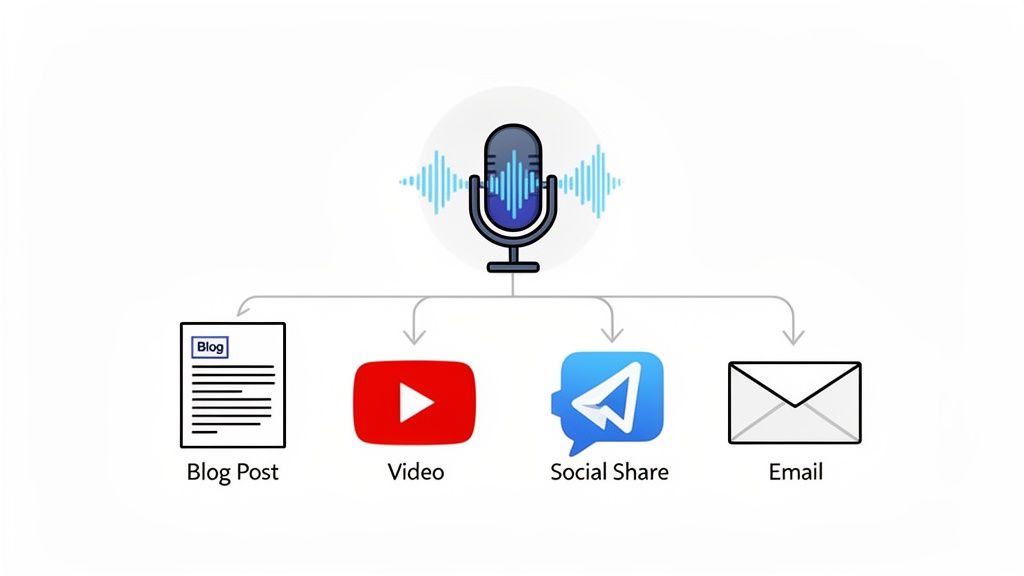
The goal is to create content pillars that can be atomized into various formats. An in-depth interview can become a series of blog posts, a collection of video clips for social media, an audiogram for LinkedIn, and a key theme for a newsletter. This approach multiplies your content output without multiplying your effort.
How to Implement This Strategy:
- Create a Repurposing Checklist: For each episode, create a checklist of 10-15 assets to generate, including: 1 full blog post, 3 short video clips, 5 quote graphics, 1 LinkedIn text post, and 1 audiogram.
- Identify "Golden Nuggets" During Editing: During the editing process, have your editor timestamp 5-7 of the most insightful, controversial, or actionable moments. These become the source for your short-form video and social media clips.
- Develop Thematic Blog Posts: Instead of just publishing a transcript, write a thematic blog post that uses quotes from the episode to support a central argument. This is more valuable and SEO-friendly. To truly extend the reach and impact of your B2B podcast, consider a comprehensive guide to repurposing content that also focuses on maximizing ROI.
- Build an Email Nurture Sequence: For your best-performing episodes, create a 3-part email sequence that expands on the key themes, offers additional resources, and drives traffic back to the original recording.
11. Building Community Through Podcasts: Creating Listener Engagement, Loyalty, and Recurring Revenue Models
Transforming your podcast from a one-way broadcast into a thriving community hub is one of the most powerful topics to talk about on a podcast, especially for fostering long-term brand loyalty. This approach moves beyond passive listening, creating an interactive ecosystem where your audience can connect with you, your guests, and each other. This creates a powerful feedback loop and opens direct monetization channels.
The goal is to build a dedicated space where your podcast acts as the central pillar of conversation. For instance, the Indie Hackers podcast serves as a catalyst for discussions within its highly engaged online community, where listeners share progress and ask questions. This model turns listeners into active, invested members who feel a sense of belonging, significantly increasing retention and advocacy.
How to Implement This Strategy:
- Launch a Dedicated Community Platform: After you have a consistent listener base (around 3-6 months post-launch), create a dedicated community on a platform like Slack, Discord, or a private LinkedIn Group.
- Spark Episode-Specific Discussions: For each new episode, create a dedicated thread or channel in your community. Kickstart the conversation by asking a specific, open-ended question related to the episode's content.
- Host Exclusive Live Q&As: Schedule monthly live "Ask Me Anything" (AMA) sessions or "Office Hours" with you or a popular past guest, exclusively for community members. This provides direct value and strengthens the listener connection.
- Source Future Content from the Community: Pay close attention to the questions and challenges being discussed in your community. Use these insights to generate ideas for future episode topics, making your audience feel heard and co-creators of the show.
12. Sales Enablement Through Podcasts: Arming Sales Teams with Expertise, Credibility, and Conversation Starters
One of the most underutilized topics to talk about on a podcast is one that internally empowers your revenue-generating teams. This strategy repurposes your external thought leadership content into a powerful sales enablement tool, arming your sales representatives with the expertise, credibility, and timely conversation starters needed to close deals faster. By creating content that addresses your buyers' key challenges, you provide your team with a library of shareable proof points.
This approach transforms your podcast from a top-of-funnel marketing asset into a middle-and-bottom-of-funnel sales accelerant. When a prospect raises a specific objection, a sales rep can share a relevant 60-second clip from an expert interview. This not only answers the question but also builds immense credibility. For instance, reps at Gong use insights from their "Reveal" podcast to demonstrate deep market understanding.
How to Implement This Strategy:
- Create a "Sales-Ready" Clip Library: For each episode, identify 2-3 short clips (30-90 seconds) that address a common pain point, objection, or question. Store these in a shared drive or sales enablement platform for easy access.
- Develop an Internal Sales Digest: Send a monthly email to the sales team highlighting the best new episodes and clips. For each, provide context on when and how to use it in the sales process (e.g., "Use this clip when a prospect is concerned about implementation time").
- Integrate Podcast Content into Sales Cadences: Work with sales leadership to build specific podcast clips into their outreach sequences. For example, a follow-up email after a demo could include a link to an episode discussing a relevant case study.
- Tag "Podcast-Influenced" Deals in Your CRM: Create a simple process for sales reps to tag opportunities in your CRM where podcast content was used. This provides a leading indicator of the podcast's influence on revenue and helps you identify which topics deliver the most sales impact.
12 Podcast Topics Comparison
Start Talking: Your Next Steps to a High-Impact B2B Podcast
The journey from a blank slate to a pipeline-driving B2B podcast begins with a single, crucial decision: what to talk about. As we've detailed, the most impactful topics to talk about on a podcast aren't just interesting; they are strategic assets. They are meticulously chosen to build thought leadership, engage niche audiences, and directly support your most critical business objectives, from lead generation to positioning for an IPO.
You've seen how a podcast can be much more than a simple audio file. It can be a sales enablement tool, arming your team with expert insights. It can be a powerful networking engine, connecting you with industry influencers through strategic guest appearances. And with a smart repurposing strategy, a single episode can fuel your content marketing across social media, newsletters, and blogs for weeks. The common thread through all these successful applications is a relentless focus on providing value and a clear understanding of the desired outcome for every single recording.
From Ideas to Action: Your Implementation Blueprint
The difference between a podcast that fades into obscurity and one that becomes a category-defining show is execution. Reading this guide is the first step, but now it's time to build.
Here are your immediate next steps to translate these concepts into a tangible podcasting strategy:
Define Your Primary Goal: Before you think about episode one, get specific. Is your goal to generate 20 qualified leads per month (see section 1)? To secure 5 executive speaking gigs (see section 2)? A clear, measurable goal will be the lens through which you evaluate every topic idea.
Select Your Core Content Pillars: Choose two or three frameworks from this article that directly support your goal. For instance, a startup focused on rapid growth might combine "Niche Authority" with "Building Strategic Guest Networks" to quickly build credibility and partnerships within a target market.
Brainstorm Your First Three Episodes: Don't try to plan a year's worth of content. Outline your first three episodes based on your chosen pillars. For each, define the target listener, the key takeaway, the ideal format (interview, solo, panel), and a list of three potential guests.
Embrace the Value-First Mindset: This is the most critical takeaway. Your podcast is not a 30-minute commercial. The fastest way to lose an audience is to constantly pitch your own products. Your authority comes from the value you give, not the services you sell. Mention your company in the intro, outro, and show notes, but dedicate the core content to solving your audience's problems.
Key Insight: A successful B2B podcast functions like a consultant, not a salesperson. It solves problems, offers new perspectives, and builds trust through expertise. The business growth is a natural byproduct of becoming an indispensable resource for your industry.
The Power of a Strategic Voice
Mastering the art of choosing the right topics to talk about on a podcast transforms your brand's voice from a whisper into a megaphone. It allows you to shape industry conversations, build deep relationships with your ideal customers, and create a marketing asset that compounds in value over time. Each episode you publish is a permanent piece of digital real estate that works to establish your credibility and attract new audiences 24/7.
The path ahead requires commitment, consistency, and a sharp focus on quality. But the potential rewards are immense. You have the knowledge and the frameworks; now it's time to press record and start the conversation that will define your brand.
Ready to turn your industry expertise into your most powerful marketing channel, but need a partner to handle the strategy, production, and growth? At Fame, we specialize exclusively in launching and scaling B2B podcasts that drive measurable business results. We take the guesswork out of finding the right topics and ensure your show reaches the right audience, guaranteed.
