
Creating a standout B2B podcast hinges on one non-negotiable factor: exceptional audio quality. While compelling content and high-profile guests are crucial for building authority, poor sound will cause even the most engaged C-suite listeners to tune out immediately. As Fame founder Tom Hunt emphasizes, "Great audio is more important than great video... People can put up with lower quality video, but low quality audio is jarring and they will tune out." The challenge for marketing and demand-generation teams isn't just about avoiding bad audio; it's about choosing the right recording method to achieve specific business outcomes, whether that's elevating market presence before an IPO or establishing thought leadership in a niche vertical.
The problem is, the single "best" way to record a podcast doesn't exist. The optimal approach is a strategic decision that depends entirely on your show's format, guest logistics, available budget, and overarching business goals. A polished in-studio setup communicates a different brand message than a flexible, remote interview format designed to attract top-tier international guests. This guide cuts through the generic advice to provide a clear, actionable breakdown of the most effective methods for recording a podcast today.
We will move directly into the specific workflows, gear recommendations, and strategic considerations for ten distinct recording scenarios. You'll learn how to implement everything from professional remote multi-track recording using platforms like Riverside to coordinating complex hybrid sessions and even leveraging AI-powered tools for efficiency. This is your blueprint for moving from amateur audio to a broadcast-quality production that not only captures attention but also drives tangible ROI and solidifies your brand's authority in the market. We'll detail the precise steps to ensure your audio consistently meets the high standards your B2B audience expects.
1. Remote Recording: Professional Interfaces + Browser-Based Platforms
For B2B podcasting, the hybrid remote workflow is a powerful and flexible solution, blending professional-grade hardware with the convenience of cloud-based software. This approach is arguably one of the best ways to record a podcast because it captures high-fidelity, uncompressed audio locally from each participant while using a browser platform for easy collaboration and backup. This eliminates the audio artifacts and dropouts common with call conferencing software like Zoom or Teams, which aggressively compress audio for real-time conversation.
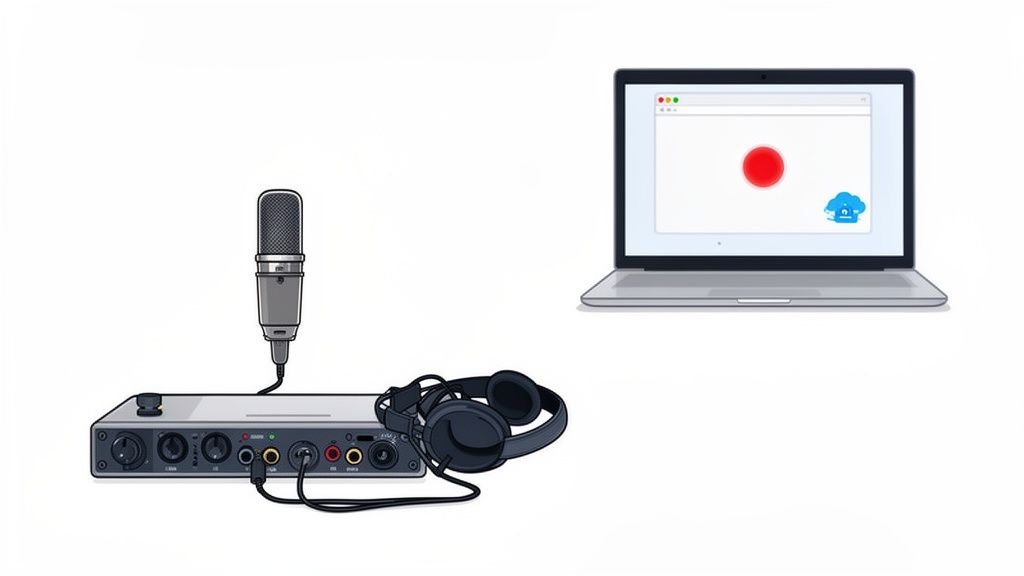
This method involves connecting an XLR microphone to an audio interface like a Focusrite Scarlett or Universal Audio Apollo, which then connects to a computer. All participants join a session on a platform such as Riverside.fm or SquadCast. The platform records each person's audio track directly from their computer, uploading it progressively to the cloud. This ensures that even if someone's internet connection falters, their local recording remains pristine.
Why This Method Excels for B2B
This setup provides studio-level quality without requiring guests to travel, making it easier to book high-profile executives and thought leaders. Remote recordings remove friction; there's no need to reimburse for travel or hotels. For instance, a B2B SaaS company can send a simple recording kit to a C-suite guest (e.g., a Blue Yeti mic), ensuring their contribution sounds as professional as the host's. This model is highly scalable and cost-effective, removing the need for studio rental fees. To explore this setup further, you can find more insights on professional remote podcast recording.
Actionable Implementation Tips
- Standardize Your Stack: Pair a quality XLR microphone (like a Shure SM7B) with a reliable audio interface (Focusrite Scarlett 2i2 is a popular choice). This combination offers significantly better audio than a standard USB microphone.
- Create Guest Guides: Develop a simple, one-page PDF guide for guests. It should include instructions for setting up their equipment, joining the platform, and actionable tips like using wired headphones (Bluetooth can cause issues) and sitting in front of a window for natural light. Our guide on how guests can prepare offers more detail.
- Run Pre-Flight Checks: Always schedule a 15-minute tech check before the official recording time. Use this to test audio levels, camera framing, and internet connectivity, resolving any issues without pressure.
- Enable Dual Backups: Configure your recording platform to save both local and cloud recordings. This redundancy is critical and protects against data loss from an unexpected computer crash or platform glitch.
2. In-Studio Professional Recording with Sound Engineer
For B2B brands aiming to establish market authority, the in-studio recording approach offers unparalleled audio fidelity and production value. This traditional method involves recording in a dedicated, acoustically treated studio with a professional sound engineer managing the entire session. This is one of the best ways to record a podcast when the goal is to create a premium, broadcast-quality flagship series that reflects the highest standards of your brand. An engineer handles microphone placement, mixing board levels, and real-time monitoring, ensuring flawless audio capture that requires minimal post-production.

This setup completely eliminates common audio problems like background noise, echo, and inconsistent levels, which can distract listeners and undermine a brand's credibility. It creates a controlled environment where hosts and guests can focus solely on delivering high-impact content. The result is a polished, professional sound popularized by top-tier productions from NPR, Gimlet Media, and Spotify Studios.
Why This Method Excels for B2B
An in-studio recording signals a significant investment in quality, positioning your podcast as a serious, authoritative voice in your industry. This is the preferred method for Fortune 500 companies with branded studios or professional services firms like Deloitte and McKinsey that operate their own podcasting facilities. The controlled environment is perfect for high-stakes interviews with industry leaders, ensuring a smooth, professional experience for everyone involved. It also provides an excellent opportunity for capturing high-quality video simultaneously.
Actionable Implementation Tips
- Batch-Record Content: Maximize your studio investment by scheduling multiple episode recordings in a single day. This approach significantly reduces the per-episode cost and streamlines your podcast production workflow.
- Book Off-Peak Hours: Many professional studios offer lower rates during weekdays or non-peak hours. Inquire about pricing packages to find a cost-effective slot that fits your schedule.
- Standardize Mic Technique with Your Engineer: Work with the sound engineer before your first session to establish a consistent mic technique for hosts. This ensures uniform audio quality across all episodes, regardless of who is speaking.
- Leverage for Multi-Channel Assets: Use the professional setting to capture high-quality video alongside your audio. This allows you to create engaging video podcasts, social media clips, and other visual assets, extending the reach of your content and making it perfect for a B2B social media strategy.
3. Hybrid Recording: Studio Host + Remote Guests
The hybrid recording model combines the pristine audio of a professional studio for the host with the logistical ease of connecting with guests remotely. This approach is one of the best ways to record a podcast when you want to project ultimate professionalism while maintaining the flexibility to interview experts from anywhere in the world. The host records in a controlled environment, ensuring their audio is flawless, while guests join via high-quality connections like browser-based platforms, VoIP, or even traditional telephone lines.
This method, popularized by broadcast giants like NPR and adopted by B2B thought leaders at firms like McKinsey and Accenture, creates a polished, authoritative listening experience. It elevates the production value significantly, as the host's studio-grade audio anchors the episode, making any minor imperfections in the remote guest's audio less noticeable. This balance is ideal for interview-heavy formats where the host acts as a consistent, professional moderator for a rotating cast of industry leaders.
Why This Method Excels for B2B
This setup is perfect for B2B brands aiming to establish a premium, market-leading presence. Recording your host in a studio signals a serious investment in quality, which reflects positively on your brand. It allows you to host roundtable discussions with distributed subject-matter experts or conduct in-depth interviews with C-suite executives who may not have access to a studio but can easily join from their office. This model blends credibility with practicality, removing the geographical barriers to securing top-tier guests.
Actionable Implementation Tips
- Prioritize Connection Quality: For high-stakes interviews, use stable connections like dedicated VoIP services or browser-based platforms (Riverside.fm, SquadCast) that record separate audio tracks. Always have a backup, such as a phone number, ready to go.
- Conduct Thorough Tech Checks: Schedule a dedicated 15-minute tech check with each remote guest well before the recording. Verify their microphone, headphones, and internet connection to troubleshoot issues without pressure.
- Create a Guest Prep Kit: Equip your guests for success by sending them a simple guide. This should cover mic placement, choosing a quiet recording space, and the importance of using wired headphones to avoid audio lag.
- Isolate Audio Tracks: Always record the host's studio audio and each remote guest's audio on separate tracks. This "multi-track" approach gives your post-production team maximum flexibility to clean up, level, and mix the final episode for a seamless result.
4. Multi-Track Recording with Separate Mic Isolation
Multi-track recording is the process of capturing each speaker or audio source onto its own separate, isolated track. This method is a cornerstone of professional audio production and is arguably one of the best ways to record a podcast for formats with multiple participants, such as co-hosted shows or B2B expert roundtables. By isolating each voice, you gain complete control during post-production to edit, mix, and master each track independently, a level of precision impossible with a single, mixed-down audio file.
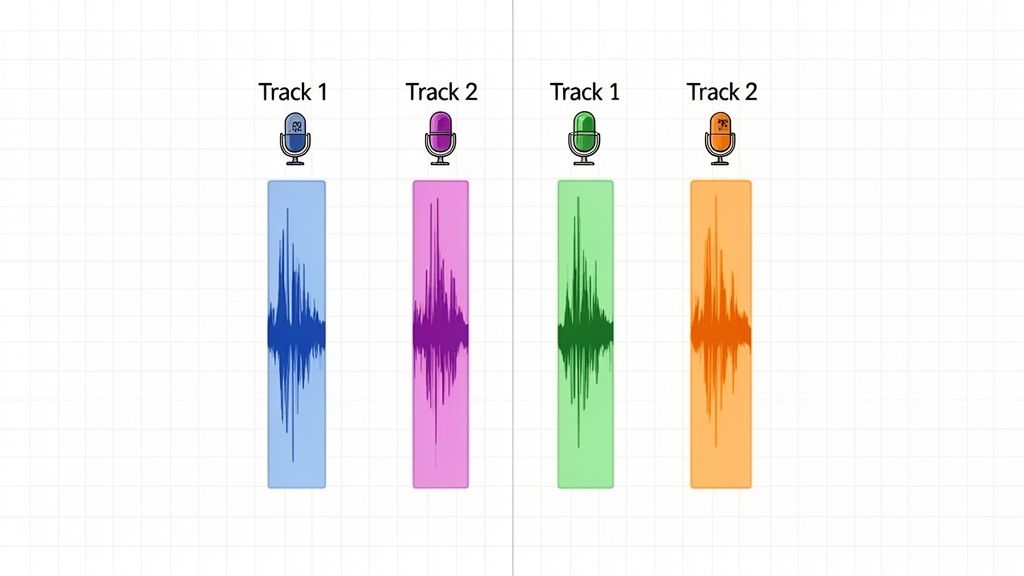
This approach is highly effective for in-person recordings using an audio mixer or a multi-channel interface, where each XLR microphone feeds into a distinct channel. For remote setups, platforms like Riverside.fm and SquadCast automatically handle multi-track recording by capturing each participant's local audio feed as a separate file. This ensures that if one guest coughs while another is speaking, the unwanted sound can be removed without affecting the other person’s dialogue.
Why This Method Excels for B2B
For B2B formats involving multiple experts, such as a panel discussion on industry trends, multi-track recording is non-negotiable. It allows an editor to balance varying audio levels, remove background noise from a single participant's track, and precisely edit out cross-talk. This capability ensures a polished, broadcast-quality final product that enhances the credibility of your brand and the thought leaders you feature. The flexibility to remix and repurpose individual audio clips for marketing assets is another significant advantage.
Actionable Implementation Tips
- Invest in a Multi-Channel Interface: For in-person recordings with two or more hosts, use an interface like the Focusrite Scarlett 4i4 or a dedicated PC audio mixer to manage separate XLR inputs. This is key podcast equipment needed for multi-host shows.
- Label Tracks Immediately: In your Digital Audio Workstation (DAW) like Adobe Audition or Reaper, name each track with the corresponding speaker's name as soon as you import the files. This simple step prevents confusion and streamlines the editing workflow.
- Plan for Increased Post-Production: Editing multiple tracks takes significantly more time than a single-track recording. Account for this in your production schedule. Mastering these techniques is covered in detail when you learn how to edit a podcast.
- Enable Individual Backups: Whether recording locally or remotely, ensure you have a backup for each individual track. Some DAWs and remote platforms offer redundant recording features; always enable them.
5. Mobile and On-Location Recording
For B2B podcasts aiming to capture authentic, documentary-style narratives, mobile and on-location recording is an indispensable technique. This approach moves the podcast out of the controlled studio environment and into dynamic real-world settings like industry conferences, client sites, or factory floors. This is one of the best ways to record a podcast when your goal is to immerse the listener in the story and provide a tangible sense of place, creating highly engaging and memorable thought leadership content.
This method relies on portable equipment like handheld digital recorders (e.g., Zoom H6), lavalier (lapel) microphones for clear dialogue in noisy environments, and shotgun mics to isolate specific sound sources. Instead of a static conversation, you capture the ambient sounds and energy of an event like Dreamforce or document a manufacturing innovation directly on the production line. This adds a layer of authenticity that studio recordings simply cannot replicate.
Why This Method Excels for B2B
Mobile recording is perfect for creating compelling, on-the-ground content that builds authority and tells a story. A consulting firm can visit a client's headquarters to record a success story, capturing the genuine environment where their solution made an impact. This approach transforms a standard case study into a powerful audio narrative. It's also ideal for event marketing, allowing you to capture spontaneous insights from attendees and speakers, extending the value of your event sponsorship.
Actionable Implementation Tips
- Scout Your Location: Arrive early to identify quiet spots for interviews. Listen for distracting background noises like HVAC systems, foot traffic, or announcements. A corner in a hotel lobby might be quieter than the main expo hall.
- Invest in the Right Mics: Use lavalier mics for interviews to ensure clear vocals, even with background noise. Pack windscreens (even foam ones) for any outdoor recording to prevent wind from distorting the audio.
- Bring Redundant Power: Portable recorders and microphones consume batteries quickly. Always carry at least two full sets of backup batteries for all your equipment to avoid losing a valuable interview mid-conversation.
- Leverage Mobile Recording Apps: For less critical recordings or as a backup, your smartphone can be a powerful tool. You can find more information on the best podcast recording apps to turn your phone into a field recorder.
6. AI-Assisted Recording and Transcription Integration
Integrating AI-powered tools into your recording workflow is a game-changing strategy for modern B2B podcasting. This approach leverages platforms like Descript or Otter.ai not just as post-production aids, but as integral parts of the recording and content creation process. This is one of the best ways to record a podcast for teams focused on efficiency and content repurposing, as it automates transcription, speaker identification, and even initial editing directly from the raw audio.
This method streamlines the entire journey from conversation to published content. Instead of manually transcribing audio or searching for key moments, AI tools create a searchable, editable text document synced to your audio and video. This allows you to edit your podcast by simply editing the text, removing filler words with a single click, and instantly identifying powerful quotes for social media or blog content. The process dramatically reduces the post-production burden.
Why This Method Excels for B2B
In B2B marketing, speed and content velocity are critical. This AI-assisted workflow allows marketing teams to rapidly convert a single podcast recording into a multitude of assets: a full transcript for SEO, short video clips for LinkedIn, quote graphics for social media, and key takeaways for a B2B newsletter. For example, a B2B team can use Descript's AI-powered highlight detection to instantly isolate the most impactful soundbites from a CEO interview, preparing them for distribution in minutes rather than hours. This efficiency maximizes the ROI of every episode.
Actionable Implementation Tips
- Prioritize High-Quality Inputs: AI accuracy is directly tied to the quality of your source audio. Ensure you use a high-quality microphone and record in a quiet environment to get clean, reliable transcriptions and speaker labels.
- Pair AI with Human Review: While AI is powerful, it isn't perfect, especially with industry-specific jargon or complex names. Always have a human review the final transcript and edits for accuracy and context before publishing.
- Leverage AI for Clip Generation: Use features like Descript's "Find Good Clips" or Otter.ai's "Conversation Summary" to quickly identify the most valuable segments. This is the fastest way to generate short-form video and audio content for platforms like LinkedIn.
- Integrate Transcripts for SEO: Publish the full, human-reviewed transcript on your episode's webpage. This makes your audio content fully indexable by search engines, helping you rank for relevant B2B keywords discussed in the conversation.
7. Video-First Recording with Simultaneous Audio Extraction
In today's content-saturated B2B landscape, a video-first approach is one of the best ways to record a podcast for maximum asset creation and audience reach. This method involves prioritizing the video capture of your conversation, either with high-quality cameras or screen sharing, while simultaneously recording pristine audio. Afterward, the audio is extracted to serve as the primary podcast episode, leaving you with a complete video asset for platforms like YouTube, LinkedIn, and your website. This strategy transforms a single recording session into a multi-channel content engine.
This workflow is ideal for B2B brands looking to build a strong presence on video-centric platforms. By recording both formats at once, you can repurpose video clips for social media, create a full-length video podcast series on YouTube, and even stream sessions live to LinkedIn to engage your audience in real time. The key is to treat audio and video as equally important during production, ensuring the final audio-only product is never compromised.
Why This Method Excels for B2B
A video-first strategy allows B2B marketers to demonstrate complex products, showcase data through screen sharing, and build a more personal connection with their audience by showing the faces behind the voices. For instance, a tech company can publish a full video interview with an industry expert on YouTube, then promote short, impactful clips of the conversation across LinkedIn and X (formerly Twitter). This maximizes the ROI of every guest appearance and thought leadership discussion, creating a library of repurposable assets. For more guidance on this approach, explore how to start a podcast on YouTube.
Actionable Implementation Tips
- Prioritize Audio Quality: While the focus is "video-first," poor audio will ruin both formats. Ensure every participant uses a high-quality external microphone. Remember, audiences will forgive mediocre video but will abandon content with bad audio instantly.
- Plan Your Visuals: Pay attention to lighting, camera angles, and backgrounds. Instruct guests to sit facing a window for natural light and to ensure their environment is professional and free of distractions.
- Use a Dual-Purpose Platform: Leverage software like Riverside.fm or Descript, which are designed to record high-resolution video (up to 4K) and uncompressed WAV audio locally for each participant, ensuring top quality for both mediums.
- Create a Repurposing Workflow: After recording, immediately plan your edits. Extract the full audio for the podcast, edit the full video for YouTube, and task a team member to identify and clip 3-5 short, compelling moments for social media promotion.
8. Batch Recording and Production Scheduling
Batch recording is a strategic workflow, not just a recording technique. It involves consolidating multiple episode recordings into single, concentrated sessions. For B2B teams, this operational efficiency is one of the best ways to record a podcast because it minimizes disruption and maximizes output. Instead of scheduling weekly recordings that constantly interrupt core business activities, you can dedicate one or two days a month to capture an entire month's worth of content.
This method streamlines the entire production pipeline. By focusing solely on recording for a set period, hosts and production teams can maintain creative energy and consistency. It also greatly simplifies guest scheduling, especially when dealing with high-demand executives or thought leaders. Booking several guests for a single "recording day" is far more efficient than coordinating individual schedules over several weeks.
Why This Method Excels for B2B
For B2B companies, time is a critical resource. Batching transforms podcast production from a constant, low-level operational drain into a predictable, high-impact project. For example, a B2B SaaS company can host quarterly guest batch days, recording a full season of interviews with industry experts in just a few sessions. This approach, popularized by B2B leaders like HubSpot and Atlassian, allows marketing teams to build a significant content buffer, ensuring a consistent publishing schedule even during busy periods. It makes planning a podcast more deliberate and less reactive.
Actionable Implementation Tips
- Plan Production Timelines 2–3 Months Ahead: Lock in your recording dates, guest outreach, and pre-production schedules well in advance. A clear timeline prevents last-minute scrambling and ensures all assets are ready.
- Create a Batch Day Itinerary: Schedule firm start and end times for each guest, but build in 30-minute buffers between sessions. This allows for technical checks, host breaks, and prevents one delay from derailing the entire day.
- Brief Guests on the Process: When booking, inform guests they are part of a scheduled recording day. This manages expectations and reinforces the professionalism of your operation, making them feel like part of an efficient, well-oiled machine.
- Maintain a 2–3 Month Content Buffer: The primary goal of batching is to get ahead. Always aim to have 8-12 episodes recorded and in post-production. This buffer provides immense flexibility for marketing campaigns and protects your schedule from unexpected disruptions.
9. Smartphone and Built-in Device Recording
While professional B2B podcasting demands high-fidelity audio, leveraging a smartphone or built-in laptop microphone offers an ultra-accessible entry point. This method prioritizes speed and convenience over quality, making it suitable for proof-of-concept episodes, capturing on-the-go audio, or as an emergency backup. While not a primary strategy for establishing thought leadership, it is one of the best ways to record a podcast when immediacy is the most critical factor.
This approach uses the hardware already available to nearly everyone: a smartphone's microphone and a native recording app like Voice Memos, or a laptop's built-in mic. The raw audio is captured directly on the device, offering a low-barrier way to test concepts or conduct informal interviews. For instance, a startup founder can record initial episode ideas without any investment, or a consultant can capture a client testimonial on-site. The key is understanding its limitations and using it strategically, not as a long-term solution.
Why This Method Excels for B2B
This method’s strength lies in its agility and zero-cost barrier to entry. It allows a marketing team to quickly test podcast formats and content ideas before committing to a budget for professional gear. It's also invaluable for field reporting or event coverage, where carrying a full recording rig is impractical. Imagine capturing a quick, insightful soundbite from an industry leader on a conference floor; a smartphone makes this possible in seconds. The resulting audio can be used as a supplementary clip in a professionally produced episode.
Actionable Implementation Tips
- Augment with a Lavalier Mic: Drastically improve your smartphone's audio quality by plugging in an inexpensive lavalier (lapel) microphone. This small investment focuses the recording on the speaker's voice and reduces ambient noise.
- Optimize Your Environment: Since device microphones are highly sensitive to background noise, record in a quiet, acoustically treated space. A small room with soft furnishings like carpets, curtains, and a couch is ideal for dampening echo.
- Maintain Proper Mic Distance: Position the phone or laptop 6 to 12 inches from the speaker's mouth. This proximity helps capture a clearer, more present vocal tone while minimizing room reverb.
- Treat as a Backup, Not Primary: Frame this method as a tool for initial validation or emergencies. For your main B2B podcast series, always plan to use a dedicated microphone and recording interface to ensure your brand is represented with professional-grade audio.
10. Specialized B2B Interview Platforms (Fame Host and Similar)
For B2B organizations serious about turning their podcast into a revenue engine, standard recording tools often fall short. Specialized platforms like Fame Host are engineered to manage the entire podcast lifecycle, from guest outreach to measuring ROI. This integrated approach is one of the best ways to record a podcast for business goals because it combines high-quality recording with powerful marketing and analytics features, aligning audio content directly with pipeline growth and thought leadership objectives.
These platforms move beyond simple audio capture, incorporating tools for scheduling, pre-interview briefing, automated transcription, and post-production workflows. They are purpose-built for B2B marketers who need to justify their investment with measurable outcomes. By centralizing every step, these systems streamline production and connect podcasting activities to concrete business metrics, such as lead generation and audience engagement, which is something general recording software cannot do.
Why This Method Excels for B2B
This end-to-end platform approach is designed for scalability and strategic alignment. A professional services firm, for example, can use platform analytics to identify which episode topics or guest profiles generate the most engagement among their ideal customer profile. This data then informs their content strategy and guest selection process, ensuring the podcast consistently supports business development goals. It transforms the podcast from a content piece into a strategic marketing asset with demonstrable ROI.
Actionable Implementation Tips
- Leverage Integrated Analytics: Use the platform’s built-in analytics to track listener demographics, engagement rates, and content performance. Report these ROI-centric metrics to stakeholders to showcase the podcast's value and justify continued investment.
- Use Templates for Batch Recording: Take advantage of platform features like guest briefing templates and standardized run-of-show documents. This allows you to batch-record multiple episodes efficiently while maintaining a consistent and professional experience for every guest.
- Connect Podcast to Pipeline: Integrate the platform with your CRM and marketing automation tools. Use insights to inform your distribution strategy, turning engaged listeners into qualified leads for your B2B newsletter or sales funnel. One of our partners, Leadfeeder, a B2B SaaS that identifies anonymous website visitors, is a perfect example of a tool that can close this loop by tracking which companies are engaging with your podcast content.
- Select Guests Strategically: Use platform data on past episode performance to identify the characteristics of high-impact guests. Focus your outreach on individuals who align with your most successful content themes to maximize audience growth and lead generation.
Top 10 Podcast Recording Methods Comparison
Choosing the Right Method: When to DIY vs. Partnering with an Agency
You've explored the landscape of modern podcast recording, from the high-fidelity control of a professional studio to the unparalleled flexibility of remote multitrack platforms. We've detailed the best ways to record a podcast, covering hybrid models, mobile setups, and even the strategic use of AI. The core takeaway is clear: achieving pristine audio is no longer a luxury reserved for seasoned broadcasters; it's an accessible standard for any B2B brand committed to excellence.
Mastering your recording process is the foundational step in transforming your podcast from a simple audio file into a powerful engine for brand authority and demand generation. Whether you're batch recording to build a content library or leveraging a video-first approach for multi-channel distribution, the methods outlined in this guide provide the technical blueprint for success. Remember, as many seasoned podcasters will attest, your audience will forgive imperfect video, but they will not tolerate poor audio. It's the one non-negotiable element of a professional production.
From Technical Execution to Strategic Growth
The journey doesn't end once you hit "stop record." The real challenge for B2B marketers is translating that perfectly captured audio into a consistent, scalable, and ROI-driven content program. This is where the path diverges into two distinct approaches: a do-it-yourself (DIY) workflow or a strategic partnership with a specialized agency.
The DIY path, armed with the tools and techniques we've discussed, is a fantastic way to start. It offers invaluable learning experiences and allows for complete creative control. However, as your ambitions grow, so do the operational demands. Managing guest scheduling, coordinating across time zones, editing multiple audio and video tracks, and ensuring consistent file management can quickly consume your marketing team's resources.
Key Inflection Point: The moment your team spends more time on production logistics than on content strategy and guest relationships is the signal to evaluate a partnership. The goal is to focus on your core expertise-your industry insights-not on becoming audio engineering experts.
The Agency Advantage: Scaling Your Impact
Partnering with a B2B podcast production service like Fame isn't just about outsourcing tasks; it's about investing in a proven system designed for business outcomes. While you focus on hosting insightful conversations with industry leaders, an agency handles the entire production lifecycle. This includes:
- Effortless Guest Management: Streamlining outreach, scheduling, and technical pre-checks for guests, ensuring they are prepared and sound their best.
- Professional Production: Managing remote recording sessions, handling post-production editing, and delivering polished, ready-to-publish episodes.
- Strategic Promotion: Transforming each episode into a suite of marketing assets, from social media clips to newsletter content, amplifying your message across all relevant channels.
This integrated approach ensures your podcast doesn't just sound professional-it performs professionally. It becomes a reliable source of thought leadership and a measurable contributor to your marketing pipeline. By mastering one of the best ways to record a podcast and aligning it with a robust production and promotion strategy, you unlock the full potential of audio content to elevate your brand and drive meaningful growth. Your voice is your greatest asset; ensuring it's heard clearly and consistently is the key to making an impact.
Ready to transform your B2B podcast from a content project into a strategic growth engine? Fame handles the entire podcasting lifecycle-from guest booking on our proprietary platform to professional recording, editing, and promotion-guaranteeing at least 10% monthly download growth. Schedule a call today to learn how our end-to-end service can help you build authority and drive revenue.
