

Picking the right microphone for your podcast isn't just about gear; it's a direct investment in your brand's credibility.
While a Shure SM7B is the undisputed king for studio quality, something as simple and versatile as the Samson Q2U delivers fantastic plug-and-play performance. For most B2B podcasters, it offers professional sound without the headaches of a complex setup. Your microphone choice has a very real, very immediate impact on listener trust and whether they stick around past that first episode.
Why Your Microphone Is a Strategic Brand Investment
In the world of B2B podcasting, your audio quality is far more than a technical detail. It’s the very foundation of your brand's authority. Think about it: listeners might forgive grainy video, but they will bounce immediately if the audio is bad. Jarring, unclear, or noisy sound screams unprofessionalism and shows a lack of respect for their time, completely undermining the expert insights you’re trying to share.
Investing in the right microphone turns your podcast from just another piece of content into a platform of authority. It's a strategic move that directly builds trust and helps you cultivate a loyal audience. As the podcasting space matures, professional sound quality has become table stakes, making it essential for building your brand and driving real business growth.
The Rising Stakes of Audio Quality
The podcasting microphone market is on a tear, projected to more than double from about $1.1 billion in 2023 to roughly $2.5 billion by 2032. As the industry expands, so do listener expectations for broadcast-quality audio. This shift elevates the search for the "best microphones for podcasting" from a simple gear question into a core strategic decision for any serious B2B show.
Your microphone choice is a direct signal of the quality your brand represents. It reflects your commitment to providing real value, and getting it right is fundamental to your success. At the end of the day, a clear, professional sound ensures your message lands exactly as intended, paving the way for deeper audience engagement.
As our founder, Tom Hunt, puts it, "Great audio is more important than great video. People can put up with lower quality video, but low quality audio is jarring, and they will tune out."
From Technical Detail to Brand Pillar
When you start viewing your microphone as a brand asset, the whole purchasing process changes. It stops being about specs and starts being about choosing a tool that builds your credibility. For B2B companies, this means finding a mic that can reliably produce crisp, clean audio, whether you're in a dedicated studio or conducting an interview remotely.
A high-quality microphone is one of the most effective tools for learning how to increase brand awareness because it makes sure your content is immediately perceived as professional and trustworthy.
Once you’ve nailed the audio quality, you can confidently explore other growth strategies, like viral video marketing for your podcast, to bring in a wider audience. This approach sets the stage for a successful show that doesn't just attract listeners but turns them into leads and customers.
Dynamic vs Condenser: A Situational Showdown
Choosing between a dynamic and condenser microphone isn't about which one is "better." It's about which one is right for your specific situation. This single choice can make or break the clarity and professionalism of your show, so it's a critical first step.
The decision really just boils down to one thing: your recording environment.
A dynamic mic is like a spotlight. It's designed to capture only what's directly in front of it while ignoring almost everything else. This makes it the undisputed champion for most B2B podcasters who record in less-than-perfect spaces, such as home offices, conference rooms, or any untreated area. It's a lifesaver for isolating your voice from background noise like a humming computer fan, keyboard clicks, or street traffic.
In contrast, a condenser mic acts more like a floodlight. It's incredibly sensitive, built to capture every rich, nuanced detail of a sound source. While this can deliver a stunningly crisp, broadcast-quality tone, it also means the microphone picks up everything. The echo in the room, the air conditioning kicking on, even the rustle of your clothes.
When To Choose A Dynamic Microphone
For the vast majority of B2B podcasts, especially those with remote interviews, a dynamic microphone is the safer and more reliable choice. Remote recording is a huge advantage; it makes it easier for guests to show up, lets you book higher-profile experts, and eliminates costs like travel reimbursement or studio rental fees. However, it also means you have zero control over their recording space. A dynamic mic ensures that even if your guest's setup isn't ideal, their audio stays focused and clean.
This resilience is precisely why dynamic microphones are the industry workhorse. The market reflects this, with dynamic mics projected to generate about $1.20 billion in revenue and hold a massive 66.59% of the global podcast microphone market share. You can discover more insights from this Consaissights report on these trends.
This decision tree shows just how crucial good audio is for keeping and growing your audience.
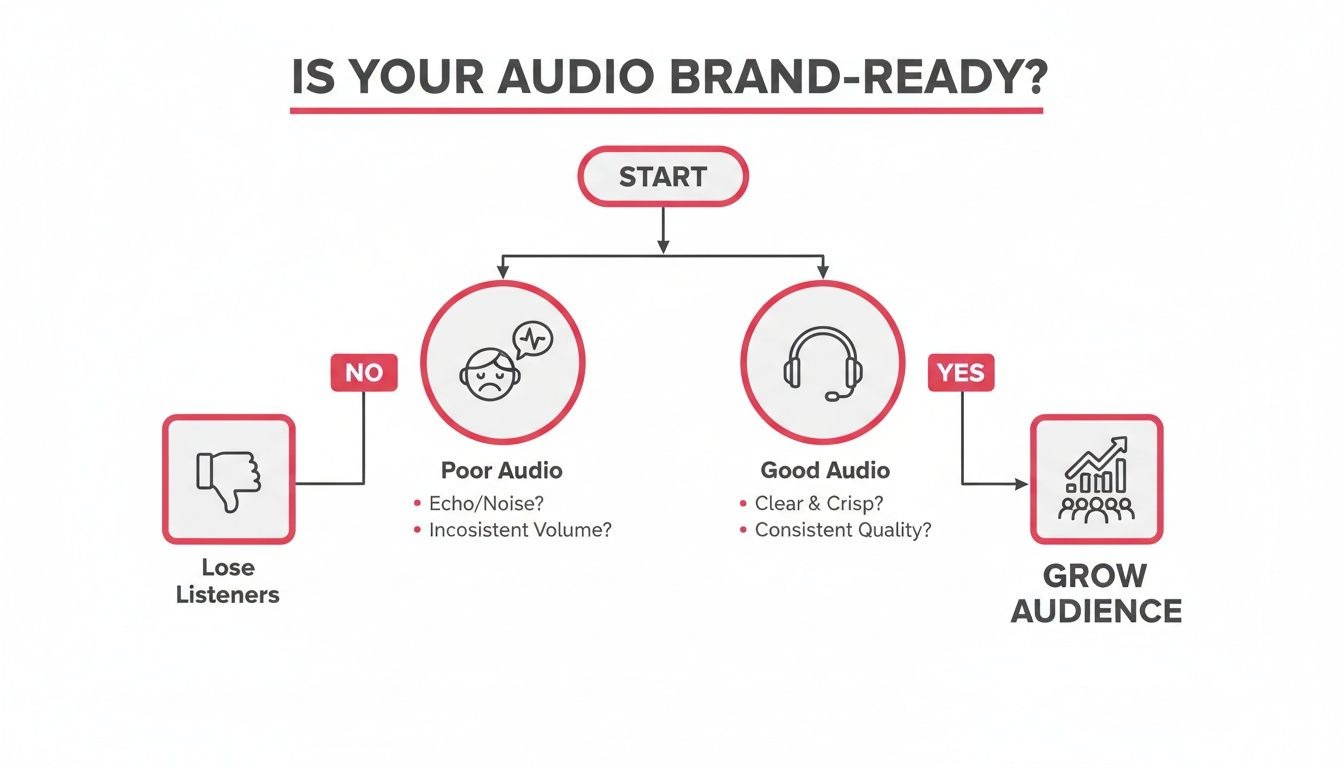
The takeaway is crystal clear. Investing in the right microphone to guarantee good audio is a direct line to growing your show's listenership.
When A Condenser Microphone Makes Sense
A condenser microphone truly shines when you have absolute control over your recording environment. If you're producing a solo-hosted narrative podcast in a sound-treated studio or a well-insulated room with lots of soft surfaces (carpets, curtains, acoustic panels), a condenser will capture a level of vocal detail that a dynamic mic simply can't touch.
The sound is often described as more "open" and "airy," which can lend a powerful sense of intimacy and high production value to your show.
But remember, this sensitivity is a double-edged sword. Without proper room treatment, a condenser mic will make your audio sound distant, echoey, and completely unprofessional, no matter how much you spent on it.
A basic setup in a good recording environment will beat expensive gear in an untreated space every time. Your room is just as important as your microphone.
Making The Right Choice For Your Show
To make the right call, you have to be honest about your podcasting reality. Your microphone is just one piece of the puzzle, and knowing how it fits into your entire setup is essential. To get a better handle on the big picture, check out our guide on building the ideal podcast setup equipment.
Here’s a simple framework to guide your choice, followed by a more detailed table to help you decide.
- You record in a typical home office with hard surfaces and potential background noise. Go with a dynamic mic. It will forgive your room's imperfections and keep your voice front and center.
- You frequently host remote guests who may not have ideal recording spaces. Choose a dynamic microphone for yourself. If you have the budget, send guests an affordable mic like a Samson Q2U; it’s a simple gift that guarantees better audio quality.
- You have a dedicated, sound-treated studio or a very quiet room with soft furnishings. A condenser microphone will reward your well-prepared space with superior audio detail.
- You produce a highly scripted, narrative-style podcast where vocal nuance is paramount. A condenser is the best tool for this job, assuming the environment is dialed in.
To simplify this even further, here's a quick decision framework.
Dynamic vs Condenser Microphone Decision Framework
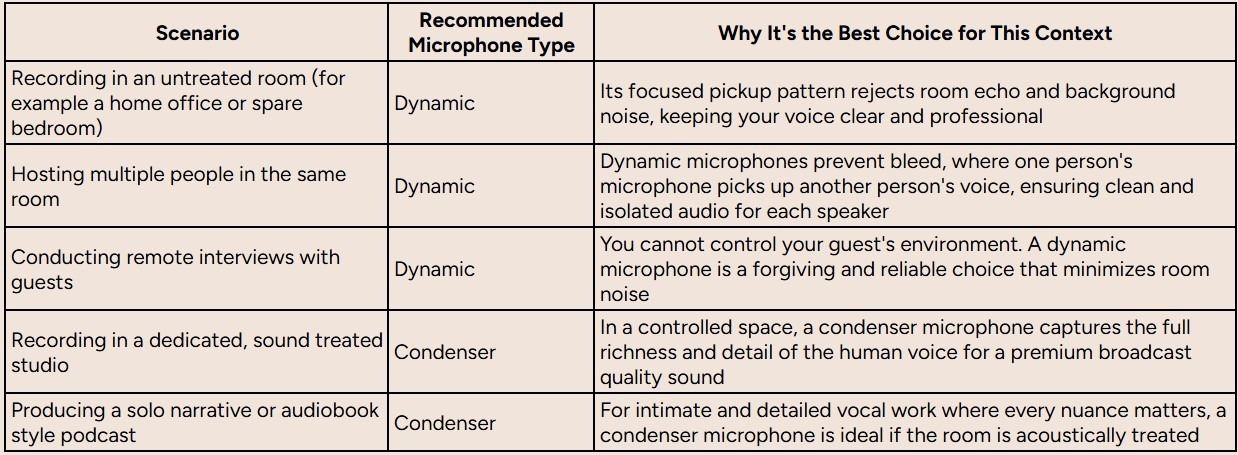
Ultimately, the best microphone for your podcast is the one that aligns with your recording space and content style. Making the right choice here is a foundational step in ensuring your brand always sounds authoritative and professional.
USB vs. XLR: Choosing Simplicity or Scalability
Okay, so you've navigated the dynamic vs. condenser minefield. Your next big decision is the connection: USB or XLR. This isn't just about what cable you use; it's a strategic choice that defines your podcast's growth potential. You're essentially choosing between plug-and-play simplicity and long-term, professional scalability.
For a lot of B2B marketers just getting their sea legs, a USB mic is the path of least resistance. It's the definition of "plug-and-play." You connect it straight to your computer's USB port, select it in your recording software, and you're good to go. No need for extra boxes like an audio interface or mixer, which keeps your initial cost and learning curve refreshingly low.
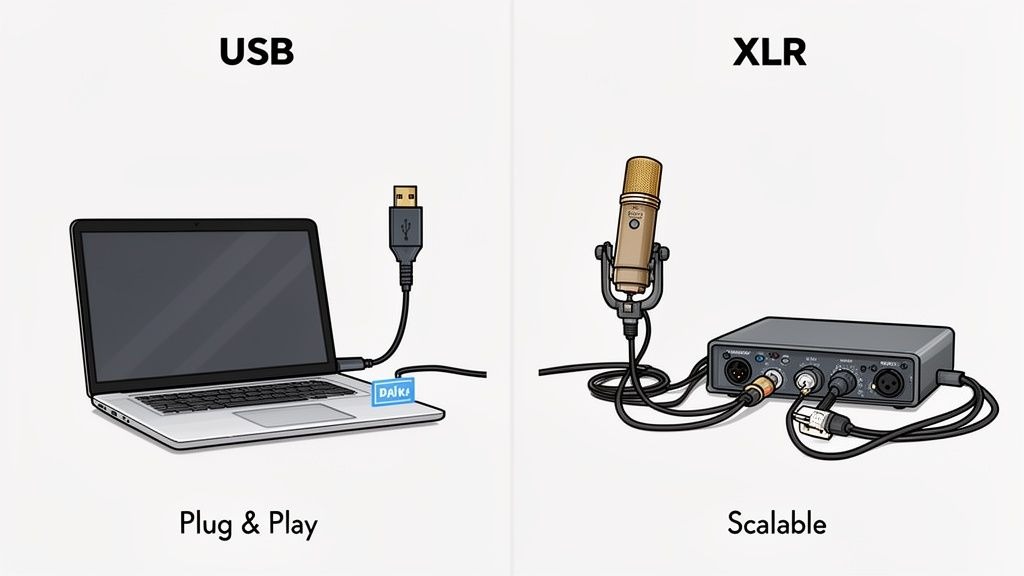
This dead-simple approach makes mics like the classic Blue Yeti or the versatile Samson Q2U a fantastic starting point for solo hosts or anyone just finding their footing.
The Case for USB Simplicity
The magic of a USB mic lies in its all-in-one design. The microphone itself houses all the necessary tech, the preamp and analog-to-digital converter, that you'd normally find in a separate audio interface. It's an incredibly efficient piece of kit.
This simplicity is also a game-changer for remote recordings. One of the biggest concerns for remote shows is guest audio quality. An actionable solution is to ship an affordable but solid USB mic to your guests. This guarantees their audio is crisp and consistent, instantly elevating the entire episode.
Remote recordings make it easier for high-profile guests to appear on your show. You can remove friction by sending them a simple USB microphone and a pair of wired headphones to guarantee solid audio quality without asking them to become audio engineers.
But this convenience has its limits. Most computers can only recognize and record from a single USB audio device at a time. That means if you ever plan on having multiple hosts or guests in the same room, a USB-only setup quickly becomes a clunky, unreliable mess.
Why XLR Is the Professional Standard for Growth
While USB offers a smooth on-ramp, XLR is the industry standard for professional audio for good reason. XLR mics connect to a separate audio interface or mixer, which then connects to your computer. This modular system gives you the scalability and control you need if you have any ambition to grow your show.
A multi-mic setup is non-negotiable for in-person interviews or co-hosted shows. An audio interface lets you record each microphone onto its own track. This is huge. In post-production, you can adjust levels, fix mistakes, and process each voice independently. This granular control is impossible with a typical USB setup and is a true hallmark of a professionally produced podcast.
Plus, an XLR setup lets you upgrade your gear piece by piece. You can swap out your microphone, your interface, or even your cables as your needs evolve and your budget allows. You can start with a solid entry-level XLR mic and interface and gradually work your way up to broadcast-tier equipment without having to scrap your whole setup.
Making the Right Connection for Your Podcast
The choice between USB and XLR really boils down to your immediate needs and plans. Your microphone is a vital part of your setup, but it’s just one piece of the puzzle. To see how it all fits together, check out our deep dive on the best podcasting setup.
Here’s a simple way to think about it:
- You're a solo host or mainly do remote interviews. A high-quality USB mic is the perfect blend of quality and convenience. Job done.
- Your podcast is a key marketing channel, and you expect to grow. Investing in an XLR setup from day one is a strategic move that preps you for expansion.
- You plan to host multiple people in the same room. An XLR setup with a multi-input audio interface isn't just a good idea; it's essential for clean, multitrack recordings.
- You want maximum control over your sound. The modular nature of an XLR system gives you the power to fine-tune every single aspect of your audio quality.
If you’re still on the fence, there are hybrid mics like the Samson Q2U or Shure MV7 that offer both USB and XLR connections. You can start with the simple USB connection today and graduate to an XLR setup with an interface when you're ready to scale. It’s a flexible, future-proof investment.
Curated Microphone Picks for Every B2B Podcaster
Choosing a microphone can feel like a rabbit hole of specs and options, but the right decision always comes back to your budget and your specific recording needs. The real goal is to find a tool that delivers professional, authoritative sound without getting bogged down in complexity or breaking the bank.
We’ve spent countless hours in the field with dozens of mics, and this isn't just a list of what's popular. It's a curated guide built on reliability, sound quality, and real-world performance in the scenarios B2B podcasters face every day, from a solo host recording in a home office to remote interviews with industry leaders. We’ve broken our top picks into three distinct tiers to match your production goals and financial reality.
Entry-Level Excellence (Under $150)
You absolutely do not need a huge budget to get professional-sounding audio. The trick in this price range is to find a reliable, forgiving microphone that’s great at rejecting background noise, a massive challenge when you're not in a treated studio.
Samson Q2U
- Type: Dynamic
- Connection: USB & XLR
- Best For: Beginners, remote guest kits, and podcasters who want maximum flexibility.
There’s a reason the Samson Q2U is probably the most recommended entry-level mic on the planet. It’s a dynamic mic, which makes it fantastic at isolating your voice and minimizing that dreaded room echo. But its killer feature is the dual USB and XLR output.
This gives you a perfect growth path. You can start by plugging it straight into your computer via USB, and when you’re ready to level up with an audio interface, you can switch to the XLR output without buying a new mic. It's built tough, sounds incredible for the price, and is so easy to use that we often tell B2B podcasters to ship one to their remote guests. It’s a simple way to guarantee consistent audio quality and eliminate a huge production headache.
Rode PodMic
- Type: Dynamic
- Connection: XLR
- Best For: B2B podcasters ready to commit to a simple XLR setup from day one.
If you know you want the scalability of an XLR setup from the get-go, the Rode PodMic delivers a rich, broadcast-style sound at an unbelievable value. This thing is built like a tank and is specifically voiced for speech, giving your recordings a warm, professional tone that really commands authority. Just remember, it's an XLR-only mic, so you'll need an audio interface to get it connected to your computer.
The Professional Standard ($150 - $400)
This mid-range tier is the sweet spot for most serious B2B podcasters. These microphones represent a significant jump in build quality and audio fidelity, delivering that polished sound that defines credible, established shows.
Shure MV7
- Type: Dynamic
- Connection: USB & XLR
- Best For: Podcasters wanting that legendary Shure sound with modern flexibility.
Inspired by the icon, the Shure SM7B, the MV7 gives you a taste of that same warm, rich vocal tone in a much more accessible and flexible package. Just like the Q2U, it features both USB and XLR outputs, making it incredibly versatile. When you use it via USB, its companion software unlocks powerful tools like Auto Level Mode, which adjusts your gain in real-time to prevent clipping and keep your volume consistent.
This microphone is a true workhorse. It’s perfectly suited for solo hosts, co-hosted shows, and high-stakes remote interviews where you simply can't compromise on audio quality.
Rode Procaster
- Type: Dynamic
- Connection: XLR
- Best For: Creating a multi-host studio with broadcast-quality sound.
The Rode Procaster is another broadcast-quality dynamic microphone that delivers exceptional vocal clarity. It has a tight polar pattern that does a phenomenal job of rejecting off-axis noise, which makes it the ideal choice for recording multiple people in the same room. Its internal pop filter is also highly effective at taming plosives, giving you a clean, polished sound right out of the box.
For a deeper dive into more top-tier options, take a look at our full guide on recommended microphones for podcasting that sound professional.
Broadcast-Tier Investment ($400+)
For B2B brands looking to create a flagship podcast that competes at the highest level, investing in a broadcast-standard microphone isn't an expense; it's a strategic move. These are the mics you see in professional radio stations and the studios of the world's biggest podcasts.
Shure SM7B
- Type: Dynamic
- Connection: XLR
- Best For: The ultimate, no-compromise studio sound for flagship B2B shows.
The Shure SM7B is, without a doubt, the king of podcasting microphones. It’s been used on countless hit records and is the go-to for top podcasters like Joe Rogan for a good reason. The sound is iconic, impossibly smooth, warm, and incredibly flattering on just about any voice.
The SM7B’s ability to reject background noise is legendary, making it the gold standard for achieving pristine vocal recordings even in less-than-perfect rooms.
This world-class quality does come with a catch, though. The SM7B is a notoriously "gain-hungry" microphone, which means it needs a powerful, clean preamp to drive it. You’ll have to pair it with a quality audio interface and likely a Cloudlifter or FetHead to unlock its best performance. Think of it as an investment in your entire audio chain, not just the mic itself.
Podcast Microphone Recommendations By Budget and Use Case
To make things even simpler, here's a quick-glance table summarizing our top picks. Use this to find the microphone that best fits your budget and the specific needs of your B2B podcast.

Ultimately, any of these microphones will serve you well. The key is to choose the one that aligns with your current setup and future ambitions, ensuring your voice sounds as credible and professional as the insights you're sharing.
Building Your Complete Podcasting Audio Kit
A world-class microphone is the star of your audio setup, but it can’t perform solo. To get that consistently professional sound, you need a strong supporting cast of equipment. Each piece plays a specific role in capturing, monitoring, and refining your audio, turning a great microphone into a complete, broadcast-quality system.
Think of it like the engine in a car. The engine provides the power, but it needs a transmission, wheels, and a steering system to actually get you anywhere. The same logic applies here. Without the right accessories, even the best mics will underperform, leaving you with audio that’s clear but still sounds amateur.
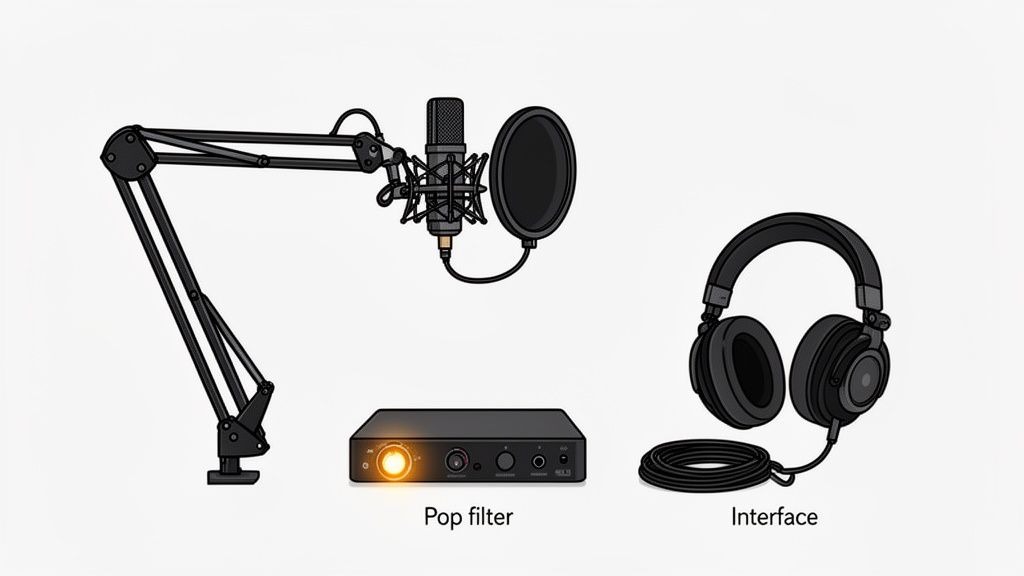
The Unsung Heroes of Your Audio Chain
Building a full kit means looking beyond just the mic. These essential pieces work together to make sure every single recording is polished and pro-level, forming the bedrock of your production workflow.
- Audio Interface: If you’re using an XLR microphone, an audio interface is non-negotiable. This little box acts as the bridge between your microphone's analog signal and your computer's digital world. Models like the popular Focusrite Scarlett series provide clean preamps to boost your mic’s signal and give you physical knobs for level control, critical for quality and in-the-moment adjustments.
- Boom Arm: A boom arm does more than just hold your mic. It lets you position it perfectly for your voice while isolating it from desk vibrations and accidental bumps that can absolutely ruin a take. This consistent positioning is the secret to maintaining a steady, powerful vocal presence throughout an episode.
- Pop Filter or Windscreen: These simple tools are your first line of defense against plosives, those harsh "p" and "b" sounds that cause an ugly burst of air to hit the microphone. A pop filter creates a physical barrier that diffuses this air, resulting in a much smoother and more professional vocal track.
- Shock Mount: This accessory cradles your microphone in an elastic suspension. A shock mount is designed to absorb any vibrations traveling up through your microphone stand or boom arm, stopping low-frequency rumbles from muddying your audio.
Why Wired Headphones Are a Must-Have
One of the most critical, and often overlooked, pieces of gear is a reliable pair of wired headphones. Using them isn't just a suggestion; it's a fundamental practice for anyone serious about audio quality.
Great audio isn’t accidental. It’s the result of actively monitoring what you’re recording, as you’re recording it. Wired headphones are the only way to do this reliably.
Bluetooth headphones introduce latency, a small but maddening delay between when you speak and when you hear yourself. That lag is incredibly distracting and makes it impossible to catch audio issues in real-time. Wired headphones give you a zero-latency feed directly from your interface or mic, letting you hear exactly what's being recorded. This means you can catch background noise, clipping, or a bad connection before you wrap up an entire interview.
Equipping Your Remote Guests for Success
This "complete kit" mindset is especially crucial for remote recordings. You can have the best gear in the world, but if your guest is using their laptop's tinny built-in mic, the whole episode's quality takes a nosedive.
Here’s an actionable checklist to send your guests:
- Use wired headphones. This prevents audio feedback and allows them to monitor their sound. Bluetooth can cause connectivity issues.
- Sit in front of a window. This provides excellent, natural lighting for video without needing extra equipment.
- Choose a quiet room. Pick a space with soft furnishings like carpets or curtains to reduce echo.
If your budget allows, sending them an affordable USB microphone like the Samson Q2U is a brilliant investment in your show's quality. This one small step removes the biggest variable in remote recording and ensures a consistent, professional sound across the board. To learn more about the gear that makes a difference, explore our comprehensive guide on the equipment needed for a podcast.
Beyond the recording hardware, you also need to think about how you'll process your audio for things like show notes or accessibility. This is especially true when you need to choose the best interview transcription software. Building a full kit is about thinking through the entire workflow, from the moment you press record to publishing the final episode.
Common Questions About Podcasting Microphones
Picking the right microphone always seems to spark a dozen follow-up questions. Let's tackle the common hurdles B2B marketers run into, with some straight, actionable answers to help you feel confident in your gear choices.
What Is the Single Most Important Factor When Choosing a Podcast Microphone?
Hands down, it’s your recording environment. Forget brand names, price tags, or tech specs for a second. The room you record in will have a bigger impact on your sound than anything else. An expensive condenser mic in an echoey, untreated room is going to sound awful. In contrast, an affordable dynamic mic in a quiet, furnished room can sound surprisingly professional.
Before you spend a dime, take a hard look at your space. Do you have hard surfaces like wood floors and bare walls? Is there background hum from an AC unit, your computer fan, or traffic outside?
A basic microphone in a good recording environment will beat expensive gear in an untreated space every single time. Your room is an instrument; learn to work with it, not against it.
This is why dynamic microphones are often a safer bet for a typical home office; they're just better at rejecting that unwanted room noise.
Can I Use a Gaming Headset for My B2B Podcast?
You can, but you absolutely shouldn't. Gaming headsets are built for communication, not for creating broadcast-quality audio. The microphones are usually small and highly compressed, which produces a thin, tinny sound that just doesn't have the warmth or authority you need to build credibility with a professional audience.
Remember, your audio quality is a direct reflection of your brand's quality. Using a gaming headset screams "amateur" and can completely undermine the expert content you're sharing. Do yourself a favor and invest in a dedicated microphone. Even an entry-level dynamic like the Samson Q2U will be a massive leap forward.
How Can I Improve My Audio Without Buying a New Microphone?
The biggest gains often come from improving your environment and technique, and they won't cost you a thing. You can get a drastic upgrade in sound by focusing on these three areas:
- Get Closer to the Mic: Position the microphone just 4-6 inches from your mouth. This simple trick maximizes the sound of your voice while minimizing the sound of the room, creating a much more intimate and professional tone.
- Soften Your Space: Record in a room filled with soft surfaces. Things like carpets, curtains, bookshelves, and even a closet full of clothes are great at absorbing sound reflections and cutting down on echo.
- Eliminate Background Noise: This one seems obvious, but it’s crucial. Turn off air conditioners, fans, and any notifications on your computer or phone before you hit record. Every little bit of quiet you can find contributes to a cleaner final track.
Do I Need an XLR Setup If All My Guests Will Be Remote?
Not necessarily. If you're a solo host and every single one of your guests is remote, a high-quality USB microphone like the Shure MV7 is more than enough. It gives you excellent plug-and-play audio that sounds perfectly professional for remote interviews.
The real advantage of an XLR setup is scalability for in-person recordings. It's all about being able to plug multiple microphones into an audio interface and record each person on a separate track. If you're never going to have multiple people in the same room, that core benefit doesn't really apply to you.
Instead, put your budget toward a top-tier USB mic for yourself. You could even consider sending an affordable USB mic to your guests to ensure everyone sounds consistently great. This approach nails high-quality audio across all your recordings without the added complexity of an XLR system.
Ready to produce a B2B podcast that builds authority and drives a real pipeline? At Fame, we handle everything from strategy and production to promotion, guaranteeing results. Get your B2B podcast launched with us.
