December 22, 202519 min read6 sections
A Modern Content Strategy For B2B Growth
By Fame Team
Key Takeaways
- A winning B2B content strategy is a roadmap for becoming the go-to authority in your space and ultimately driving revenue.
- Having a content strategy document is not the same as having one that delivers real, measurable results, with 29% of B2B marketers feeling their strategy is effective.
- Building an integrated, high-impact content engine by creating a single, powerful pillar asset and repurposing it across all channels is key to a successful B2B content marketing strategy.
A winning content strategy for B2B isn't just a plan for creating content. It's a roadmap for becoming the go-to authority in your space, pulling in the right audience, and ultimately, making it a no-brainer for them to buy from you.
Why Your Current B2B Content Strategy Is Broken
Let's be honest. Does your content feel more like a resource drain than a revenue driver? If so, you're not alone. Too many B2B companies are stuck playing an old game, churning out endless blog posts and social updates, praying for traffic that never seems to turn into actual leads.
This scattered approach just doesn't work anymore. You might have a blog, a LinkedIn page, and a newsletter, but if they aren’t all working together, they’re just isolated tactics. They’re noise. This fragmentation is what keeps you from building a recognizable, authoritative voice that people trust.
The Disconnect Between Planning and Performance
It seems like everyone has a plan these days, but making it work is a different story. While 97% of B2B marketers now have a content strategy, a sobering 29% feel it's actually effective. A massive 58% just call their efforts "moderately effective."
That gap is the whole problem. Having a strategy document gathering dust on a server isn't the same as having one that delivers real, measurable results.

From Silos to a Unified Content Engine
The fix isn't about creating more content; it's about being smarter with it. Modern B2B content marketing has moved on from the high-effort, low-return model. The new playbook is about building an integrated, high-impact content engine.
Instead of treating each channel as a separate to-do list item, you build everything around a single, powerful pillar asset. This one core piece of content is then repurposed and atomized across all your channels. For a look at what this looks like when done right, check out these exceptional B2B content marketing examples.
The game has changed. We've moved from a fragmented, often wasteful process to a streamlined engine built for impact.
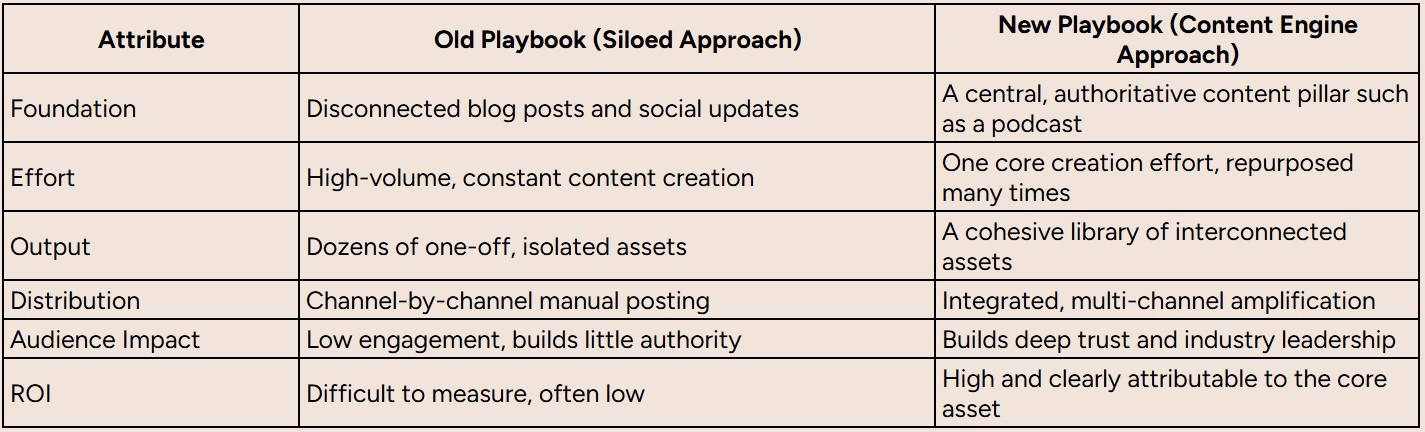
This shift transforms your content from a cost center into a powerful demand generation machine.
"The old playbook of isolated blog posts and random social media updates is broken. A successful modern strategy relies on a central content pillar that fuels every other marketing activity, turning one effort into dozens of assets." - Tom Hunt, Founder of Fame.
Adopting this content engine approach is how you become the definitive voice in your niche, build real relationships, and generate a massive amount of marketing material from one single creative push. If you're ready to build a system like this, you can master your B2B marketing content strategy today.
The rest of this guide will walk you through exactly how to build this engine, starting with the ultimate cornerstone: a B2B podcast.
Using a Podcast as Your Content Engine
Ever feel like you're on a content hamster wheel, constantly churning out disconnected assets? Imagine creating just one high-value piece of content that could fuel your entire marketing plan for weeks.
That's the magic of a B2B podcast. It's the best way to excel with branding and content marketing because it establishes your voice, builds authority, and serves as a content engine for all marketing efforts. Instead of scrambling, a podcast becomes the central engine for a modern content strategy for B2B.
A single, well-produced interview can be strategically sliced, diced, and repurposed into a whole ecosystem of marketing materials. You get audio, video, design, and written assets from one recording session. It’s the ultimate "work smarter, not harder" approach, solving the content creation bottleneck while building a powerful, recognizable brand voice.
From One Episode to a Full Campaign
The real power of a podcast-centric strategy is its insane efficiency. A one-hour chat with an industry expert isn't just an audio file; it's the raw material for a multi-channel campaign.
Here’s how one episode gets atomized:
- Video Gold: The full recording hits YouTube, complete with an SEO-rich description and helpful chapters. Then you chop up the best moments into punchy YouTube Shorts and engaging clips for platforms like LinkedIn.
- Written Authority: That episode transcript? It becomes a comprehensive, SEO-optimized blog post targeting the keywords your audience is actually searching for. This is your long-term organic traffic driver.
- Social Dominance: Pull the most compelling quotes from your host and guest and turn them into eye-catching graphics. You can run polls on LinkedIn related to the episode’s topic to get a conversation started. Our B2B social media agency services can manage this entire process for you.
- Newsletter Fuel: Summarize the key takeaways in your next newsletter, embedding a link to the full audio and video. It's an easy win to drive traffic and re-engage your subscribers, which our B2B newsletter agency can help you scale.
This model creates a self-perpetuating content flywheel. The podcast builds authority, the repurposed assets drive traffic back to the podcast, and the growing audience solidifies your brand’s position in the market.
Of course, before you even hit record, having a solid framework is non-negotiable. Walking through a detailed business plan for a podcast will force you to map out your goals, audience, and monetization strategy from day one.
Building Unmatched Authority and Trust
Beyond the tactical content repurposing, a podcast gives you a unique edge in B2B: it forges genuine authority and a real human connection. Hearing the voices of experts, including your own team, creates a level of trust that a blog post alone struggles to match.
When you feature respected guests from your industry, you don't just give your audience immense value; you also borrow their credibility. This creates a powerful network effect, placing your brand right in the middle of important industry conversations.
A B2B podcast isn't just another content format; it's a strategic asset for building relationships at scale. It transforms your brand from a faceless entity into a trusted voice your audience actively wants to hear from.
As the largest producer of B2B podcasts in the world (with over 100 shows running at any one time), we've seen this model work time and time again. That scale allows us to rapidly iterate new guest outreach, production, and promotion strategies, bringing you better results, faster.
A Growth Engine Backed by Data
At the end of the day, any content strategy has to deliver measurable growth. A podcast provides clear, undeniable metrics that prove its value. At Fame, we are the only podcast agency that will set 10% month-on-month download goals and hold ourselves accountable for hitting them.
The results speak for themselves. 98% of our clients see 10%+ growth every single month in their first six months. The average Fame client hits 18,957 downloads in the first 6 months and an incredible 68,524 downloads in the first 12 months.
This isn't about simply creating content; it's about building a predictable growth engine. We're so committed to this that if we don’t hit an average of 10% monthly download growth over the first six months, the seventh month of service is on us. That's the kind of accountability that turns a podcast from a creative project into a core driver of your business.
Laying the Groundwork for Your B2B Podcast
So, you're sold on the idea of launching a podcast. It can feel like a monster of a project, but if you lay a solid foundation, it shifts from an intimidating task to a seriously powerful piece of your B2B content strategy. This is about more than just hitting record; it's about building a high-quality show that becomes required listening for your ideal customer.
The very first thing you need to do is get ridiculously specific. Your podcast can't be for everybody. Who, exactly, is your ideal listener? What's their job title? What are the biggest headaches they're dealing with at work? What are they already reading or listening to? A razor-sharp niche is what separates a show that gets lost in the static from one that builds a loyal, dedicated following.
Planning Your First Batch of Episodes
Once you know who you're talking to, it's a lot easier to figure out what to talk about. Your first move should be to brainstorm a batch of 5-10 episode topics that hit on the exact pain points of that ideal listener. This gives you a clear runway right out of the gate and makes sure your launch is cohesive.
A well-structured episode is what keeps people from tuning out halfway through. A simple but incredibly effective format looks something like this:
- A Catchy Intro: A quick, high-energy opening with some theme music to set the mood.
- The Hook: Kick things off with a provocative question, a surprising stat, or a bold statement that makes them lean in.
- Main Content: This is the meat of the episode, the conversation or monologue where you deliver the goods.
- Key Takeaways: A quick-fire summary of the most important points you just covered.
- A Clear Call-to-Action: Tell them what to do next. Subscribe, visit your site, connect on LinkedIn, and be specific.
If you want to go deeper on structuring your episodes for maximum impact, check out our guide on creating a B2B podcast outline template that actually works. It’s a repeatable framework you can use for every single recording.
Getting the Right Gear and Guests
You don't need a professional recording studio, but audio quality is non-negotiable. A decent USB mic (think a Blue Yeti or Rode NT-USB) and a quiet place to record are the absolute bare minimum. You can always upgrade your gear later, but clean audio has to be a priority from day one.
And don't forget that your podcast has a visual side, especially in B2B. Video content has been the king of B2B content marketing for four years straight, with 76% of B2B marketers using it. Even more telling, over 51% of B2B buyers use video to research their purchase decisions. That makes a video podcast pretty much essential for meeting your audience where they already are. You can find more stats on the power of video in B2B marketing.
Don't get bogged down by the tech. A good microphone, a quiet room, and a solid webcam are all you really need to get started. Pour your energy into creating genuinely valuable content and booking fantastic guests; that’s what actually gets people to listen and subscribe.
Speaking of guests, finding the right people is what separates a good podcast from a great one. Hunt down industry experts, founders with compelling stories, and practitioners who have unique insights your audience is dying to hear. Your outreach can't be a copy-paste job. Personalize every single invitation. Reference their specific work and explain exactly why they'd be a perfect voice for your listeners. Then, send them a pre-interview brief outlining the topics to make sure the conversation is smooth and packed with value. Getting this foundation right is what turns your podcast into a true content engine.
The Fame Framework for Podcast Promotion
Recording a great podcast episode is a massive accomplishment, but it’s only half the battle. What good is a brilliant episode if no one ever hears it? This is where your promotion strategy becomes the most critical piece of your content strategy for B2B. Getting your show in front of the right audience is what turns a podcast from a simple audio file into a real business growth engine.
Here at Fame, we've launched and scaled over 100 B2B podcasts, making us the largest producer on the planet. That scale gives us a unique testing ground to see what actually works. We've boiled down all those learnings into an eight-pillar promotion framework that we use to guarantee audience growth. We’re so confident in this system that we aim for 10% month-on-month download growth for our clients.
But great promotion is built on a solid foundation. You can’t promote a show that doesn’t have a clear audience, content plan, or guest strategy.
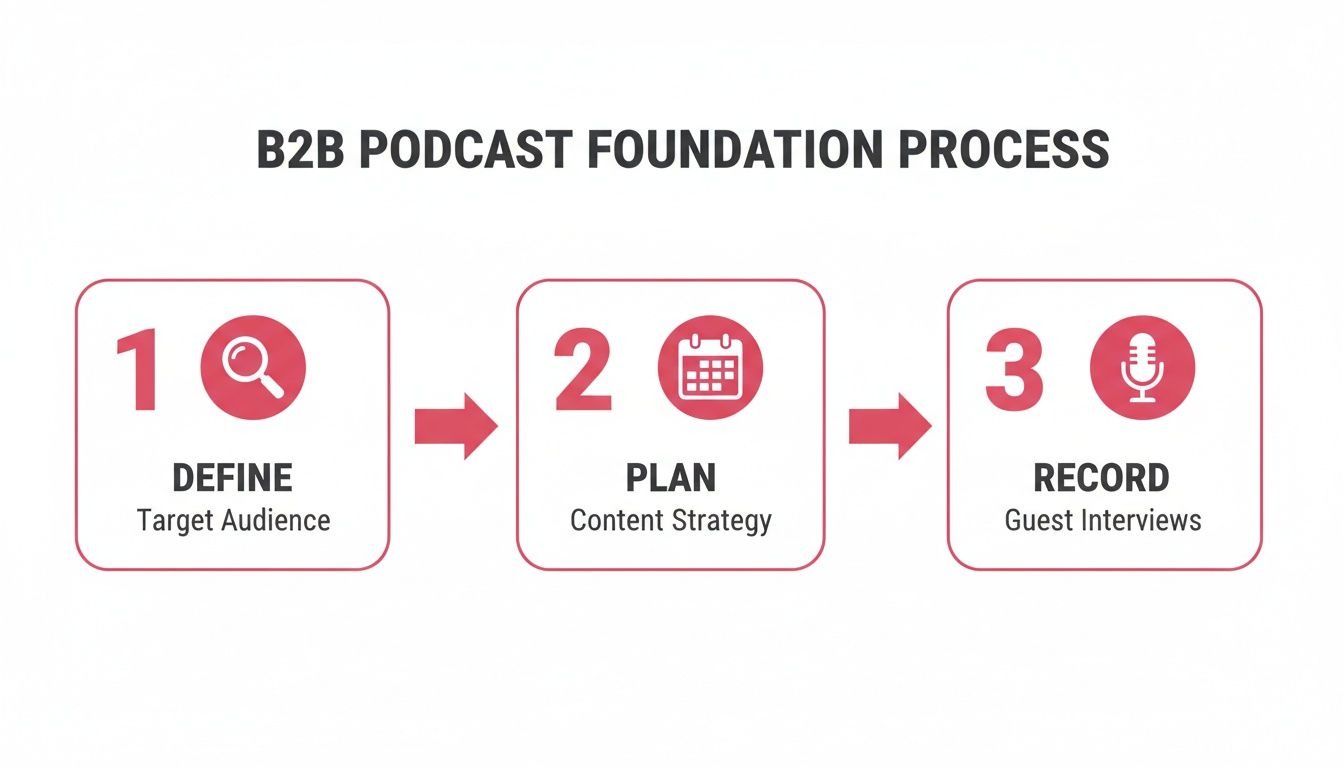
This just hammers home the point: success starts long before you hit publish, with a crystal-clear strategy for who you're talking to and what you're going to say.
With that foundation in place, it’s time to amplify.
Pillar 1: Video, Audio, and Written SEO
When you think of SEO, you probably think of blog posts. But to really maximize your podcast's reach, you need to apply SEO principles to every single asset you create.
Start by using keyword research tools to figure out what your audience is actually searching for. Then, weave those terms into your podcast titles, episode descriptions, show notes, and, crucially, the full written transcripts you publish on your blog. This multi-format approach ensures you’re catching organic traffic from every possible angle.
Pillar 2: Organic Social
Your social channels are your direct line to building a community around your show. The first step is publishing the full video episode on YouTube, making sure it’s optimized with a keyword-stuffed description, chapters, and accurate captions.
From there, you need to identify the gold. Slice up the most valuable moments into short, shareable snippets and YouTube Shorts.
Focus on mastering one channel first; LinkedIn is usually the best bet for B2B, before trying to be everywhere. It's also a smart move to create a dedicated LinkedIn page for the podcast itself. This helps build a focused community of listeners separate from your main company page.
"A great podcast promotion strategy is about meeting your audience where they already are. Atomize your core episode into the native formats of each platform, video clips for LinkedIn, full episodes for YouTube, and insightful quotes for graphics, to maximize your reach and impact."
Pillar 3: Guest Sharing
Your guests are your most powerful promotional partners. Period. But don't just cross your fingers and hope they share the episode. You have to make it absurdly easy for them.
We create a "sharing kit" for every guest with pre-written social posts, slick quote graphics, and ready-to-post video clips. We also encourage them to feature the episode on their own websites by providing a summary and a backlink, which drives high-quality referral traffic right back to the show. Tapping into their established networks can expand your reach exponentially.
Pillar 4: Partnerships and Communities
Look beyond your own audience by teaming up with others who serve the same niche. This could mean collaborating with other podcast hosts for episode swaps, partnering with industry influencers, or co-authoring blog posts.
One of the most effective tactics is arranging for your host to appear as a guest on other relevant shows. It’s a direct line to a brand new, highly engaged audience. You should also be proactively reaching out to writers who cover the top podcasts in your industry to get your show featured in their roundup articles.
Pillar 5: Paid Platforms
Organic efforts are the foundation, but a smart, targeted paid budget can pour gasoline on the fire.
Put some money behind ads on platforms where your ideal customer profile (ICP) hangs out, whether that's LinkedIn, YouTube, or even specific subreddits. Use laser-focused targeting to ensure every dollar is spent reaching the most relevant professionals. Partnering with niche influencers for paid promotions can also lend your show instant credibility. If you want a deeper dive, our guide on how to promote a podcast breaks down even more paid strategies.
To give you a clearer picture of how these pillars fit together, here’s a quick summary of the complete framework we use to guarantee growth for our clients.
The Fame 8-Pillar Promotion Framework
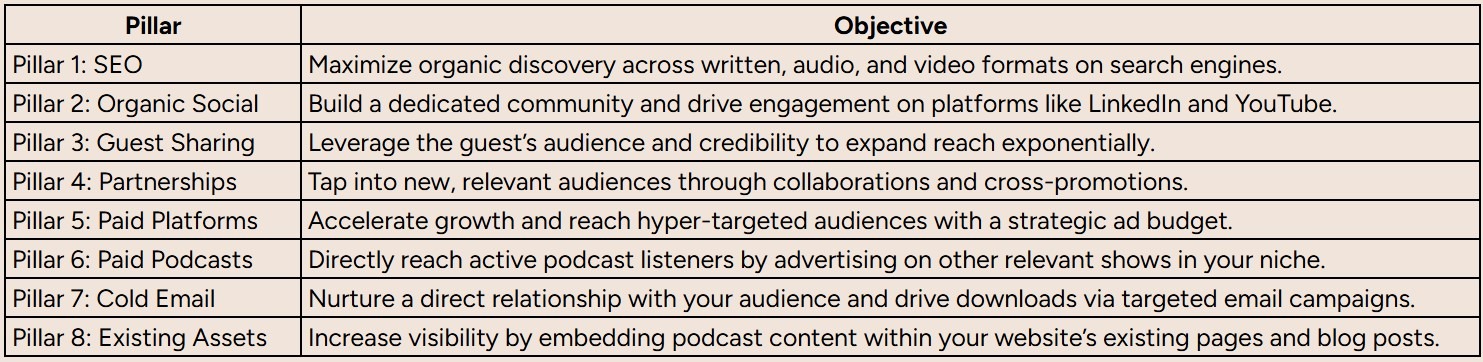
These last three pillars, Paid Podcasts, Cold Email, and leveraging Existing Assets, are what round out the strategy and ensure no stone is left unturned. Advertising on other podcasts is a direct line to a pre-qualified audience, while a segmented email list allows you to deliver new episodes right to your most dedicated fans. Finally, integrating episodes into your existing content is low-hanging fruit that provides more value to your site visitors.
This eight-pillar framework is the engine behind the fact that 98% of our clients see 10%+ growth every single month in their first six months. By executing systematically across all these channels, you turn your podcast into a predictable, scalable growth machine.
How to Measure Content Marketing ROI
Let's be honest: proving that your content strategy for B2B is actually moving the needle is non-negotiable.
You have to show stakeholders that your podcast-centric approach isn’t just some fun, brand-building exercise; it's a legitimate revenue driver. This means looking past vanity metrics like social media likes and zeroing in on what really matters to the business.
The entire B2B content marketing market is projected to grow by $418 billion between 2020 and 2025. That's a massive expansion, and it’s happening for a reason. Top strategies are already generating three times more leads than traditional outbound marketing while costing 62% less.
If you want a piece of that action, you need a rock-solid measurement framework.
Setting Tangible Goals
You can't measure what you don't define. Effective measurement starts with clear, ambitious goals. "Hope" is not a strategy. Instead of a vague target like "grow the show," you need a specific, quantifiable goal that holds you and your team accountable for real progress.
At Fame, we live by this. We are the only podcast agency that sets a tangible goal of 10% month-on-month download growth and reports back on it every single month. If we miss it, we don't hide. We explain what we learned and how we're adapting our approach to crush the next month's target.
This relentless focus on growth is why 98% of our clients see at least 10% monthly growth in their first six months. We're so confident in our process that if we don't hit an average of 10% monthly download growth over those first six months, you get the seventh month of services completely free.
That's the kind of concrete goal that turns a content plan into a performance engine.
Key Performance Indicators for a Podcast Engine
For a podcast-centric content strategy, your KPIs need to track both audience growth and its direct influence on the business pipeline. Here’s what we focus on:
- Download and Listener Trends: Go beyond total downloads. Look at unique listeners and, more importantly, the average consumption rate per episode. Is your audience growing consistently? Are they actually sticking around for the whole show?
- Audience Engagement Metrics: This is where the community comes to life. Monitor comments on YouTube and social media clips, track questions from listeners, and measure newsletter sign-ups driven by your calls-to-action.
- Website Traffic from Podcast Assets: Use your analytics to see exactly how many visitors are landing on your site from your show notes, blog posts spun out of episodes, and links shared on social.
- Lead Quality and Source: This one is gold. When a lead fills out a demo request form, add a simple field: "How did you hear about us?" When "podcast" starts popping up regularly, you've got direct attribution.
Your goal isn't just to get more downloads. It's to connect those downloads to demos, pipeline, and revenue. Every metric you track should help you tell the story of how your podcast is influencing the bottom line.
Connecting Content to Business Outcomes
The ultimate measure of ROI is connecting content consumption to actual sales. This means you have to look further down the funnel. To get a handle on this, it's worth digging into how to measure content marketing ROI to really connect the dots.
For example, you can track how many contacts who downloaded a content upgrade you mentioned in an episode eventually become Marketing Qualified Leads (MQLs).
You can also get creative with your CRM data. Are accounts with multiple contacts listening to your podcast closing at a higher rate? Is their sales cycle shorter than average? For a complete playbook, our guide on measuring content marketing ROI breaks down how to tie these activities directly to business goals.
This level of tracking is what proves your podcast is a strategic asset. It secures the investment you need to keep scaling your B2B content strategy and solidifies your brand’s authority in the market.
Your B2B Podcasting Questions, Answered
Even with a solid game plan, I get it. Shifting your whole B2B content strategy to orbit around a podcast can feel like a massive leap. It's totally normal to have some questions about how this all works in the real world.
Let's get into the nitty-gritty and tackle the most common concerns I hear. We'll talk time commitment, bust the myth of the "boring" niche, and set some real-world expectations for when you can actually expect to see leads.
How Much Time Does This Really Take?
Let's be upfront, this isn't some "set it and forget it" tactic. A high-quality B2B podcast, repurposed correctly, demands a real-time investment, especially if you’re trying to wrangle it all in-house.
For a typical in-house team doing it all, you're likely looking at 10-20 hours per episode. That's not just the recording; it's the whole shebang:
- Strategy & Planning: Digging into topics, figuring out what your audience is searching for, and mapping out the content calendar.
- Guest Wrangling: The surprisingly time-consuming process of finding, vetting, and scheduling great guests.
- Recording & Production: The actual interview, plus all the post-production work to make the audio and video sound and look professional.
- Promotion & Repurposing: This is the big one. Creating clips, writing the blog post, designing graphics, and pushing everything out across all your channels.
But here’s the crucial part: while the initial effort is significant, the repurposing model saves you hundreds of hours down the road. You’re no longer staring at a blank page every week, wondering what to write for the blog or what to post on LinkedIn.
Think of a podcast-centric strategy as an investment, not a shortcut. The upfront time is real, but the ROI comes from the massive volume of quality assets you generate from one recording session. That’s where the efficiency kicks in.
Of course, you don’t have to go it alone. Working with a specialized agency like Fame can take 80-90% of this workload off your plate. We manage everything from guest outreach and production to our full eight-pillar promotion process. This frees your team up to do what only they can do: focus on high-level strategy and have killer conversations.
What if Our Niche Is Too Boring for a Podcast?
I hear this one all the time, and honestly, I love debunking it. There are no boring B2B niches, just uninspired content. The success of your show has nothing to do with how "sexy" your industry is and everything to do with how well you understand your audience's pain points.
If you're in a niche with complex regulations, highly technical software, or specialized manufacturing processes, that’s actually a huge advantage. It means your audience is desperate for clear, expert-led content that helps them do their jobs better.
A podcast is the perfect way to make these topics accessible and engaging. Instead of another dry whitepaper, you're delivering:
- Real conversations with people who have actually solved the problems your listeners are wrestling with right now.
- Practical case studies that break down a specific challenge and its solution, step-by-step.
- Actionable advice from true experts, delivered in a natural, human-to-human way.
Some of the most successful B2B podcasts are in seemingly "dull" industries like supply chain logistics, cybersecurity compliance, and enterprise resource planning. They work because they are relentlessly focused on delivering value, not just entertainment.
How Soon Can We Expect to See Leads?
Setting the right expectations around ROI is absolutely critical. A B2B podcast is a marathon, not a sprint. It’s a powerful tool for building authority and creating long-term demand, not a switch you flip for overnight leads.
Think of it like building any relationship. You wouldn't ask for the sale five minutes after meeting someone. Your podcast is how you show up consistently, deliver value, and earn trust over time.
Here's a realistic timeline for what to expect:
- Months 1-6: Building an Audience. The main goal for the first six months is consistent growth. We're tracking download trends and listener engagement. At Fame, we aim for a minimum of 10% month-over-month download growth in this phase.
- Months 6-12: Influencing the Pipeline. This is when you start to see the magic happen. You'll hear prospects say, "Oh yeah, I listen to your podcast," on sales calls. You'll see "Podcast" show up in the "How did you hear about us?" field on demo requests.
- Months 12+: Driving Inbound Flow. After a solid year of high-value episodes, your podcast graduates to become a real inbound engine. The leads you get from it will be incredibly high-quality because they've been learning from you for months. They're already sold on your expertise.
The leads that come from your podcast are warmer, better educated, and move through your sales cycle faster because you’ve already done the hard work of establishing trust and authority.
A podcast-centric approach is the single most effective way to run a modern content strategy for B2B. It transforms one core piece of content into a powerful engine for building your brand and generating demand. If you're ready to build real authority and see predictable growth, Fame can make it happen. We handle the entire process, from strategy and production to our proven eight-pillar promotion framework that guarantees results.
Want us to run this for you?
Fame starts and grows B2B podcasts that generate pipeline. Tell us who you are trying to reach and we will send a costed proposal within 48 hours.
Related content
- Read moreFame Team · July 16, 2026
10 Account Based Marketing Tactics For B2B Growth In 2026
Discover 10 actionable account based marketing tactics for B2B tech. Learn to use podcasts, data, and targeted content to close high-value accounts. - Read moreFame Team · July 16, 2026
The 8 Best Brighton Podcast Agency Picks For 2026
Find the best Brighton podcast agency for your B2B brand. Our 2026 guide reviews top 8 agencies for production, growth & ROI. Expert analysis here - Read moreJune 10, 2026
20 Best Podcast Production Agencies For 2026 (And Why Should You Hire One)
Global podcast and vodcast ad revenues are on track to hit $5 billion in 2026 , up 20% year-on-year. - Read moreApril 13, 2026
Leadership In Marketing: The B2B Podcast Playbook
Most companies still confuse leadership in marketing with job titles, org charts, and budget control. That's outdated.