






Key Takeaways
- Using a podcast can help build a deep sense of trust with potential customers.
- Inviting ideal clients as guests on a podcast can generate high-intent leads and build relationships.
- A podcast can be a powerful engine for growth when integrated into a cohesive content ecosystem.
Lead nurturing often feels like a puzzle. You’re creating great content and building an audience, but struggling to connect the dots between a casual social media follower and a closed deal. While many guides exist, standard lead nurturing best practices frequently miss the most powerful trust-building medium available to B2B brands today: the podcast. Listeners who consume hours of your content develop a deep sense of trust and familiarity with your point of view, making them ideal future customers.
This article presents a modern, actionable playbook that places your podcast at the strategic heart of your marketing funnel. We’ll show you how to move beyond just tracking downloads and start generating measurable revenue. The approach is straightforward: use social media for broad awareness, funnel engaged followers to your email list, and cultivate your most valuable prospects through your podcast.
Here, you will find 10 specific, actionable strategies designed for B2B tech and professional services firms. You’ll learn how to implement everything from inviting ideal clients on as guests to build pre-sales relationships, to creating segmented email sequences based on listener behavior. We'll provide the tactics to integrate your podcast into a cohesive content ecosystem that warms up leads, making the sales process smoother and more effective than ever. It's time to stop treating your podcast as a simple content asset and start using it as a predictable engine for growth.
1. Launch Your Nurture Funnel with Guest-Led Lead Generation
Instead of waiting for an audience to find you, this B2B podcasting strategy generates high-intent leads from day one by flipping the traditional outreach model. You proactively invite your Ideal Customer Profiles (ICPs) to be expert guests on your show. This approach sidesteps the typical sales pitch, offering value upfront by giving prospects a platform to showcase their expertise and build their personal brand.
This method is one of the most effective lead nurturing best practices for B2B companies in their first six months of podcasting. The interaction builds genuine rapport in a non-sales context. You're not a vendor trying to sell something; you're a media host genuinely interested in their perspective. This establishes a foundation of trust that makes a later business conversation feel natural and welcome.
How it Works in Practice
The process is direct and relationship-focused. After recording an insightful conversation, the guest is already warm to your brand. A follow-up can then introduce a special, preferential offer exclusively for podcast guests. This transforms your podcast from a simple content channel into a powerful relationship-building and lead-generation engine.
For example, a cybersecurity firm could invite Chief Information Security Officers (CISOs) from target accounts to discuss emerging threat landscapes. After the valuable exchange, the firm can follow up with a bespoke offer for a security audit. This strategy has proven highly effective, as seen in a case study with Yellowbird, which achieved a remarkable 20% guest-to-customer conversion rate using this exact method. You can explore a detailed breakdown of their winning strategy here: 20% Conversion Through Podcasting: Yellowbird’s Winning Strategy.
Actionable Implementation Steps
To put this strategy into motion, follow these key steps:
- Build a Target List: Identify and create a list of 50 dream guests who perfectly match your ICP.
- Personalize Your Outreach: Craft a compelling invitation that highlights why their specific expertise is valuable to your audience. Avoid generic templates.
- Listen During Pre-Interview: Use the pre-interview call to understand their challenges and priorities. Listen more than you talk.
- Create an Exclusive Offer: Make the post-interview offer time-sensitive and unique to guests to create a sense of importance and reciprocity.
- Track Your ROI: Add a "Podcast Guest" field in your CRM to monitor guest-to-customer conversions and measure the direct business impact.
2. Thought Leadership Through Expert Positioning Podcasts
This strategy positions company executives and founders as authoritative voices in their industry by featuring them on podcasts, both as hosts of a branded show and as guests on external programs. Instead of direct selling, this approach nurtures leads by consistently sharing valuable insights, frameworks, and unique perspectives on relevant industry topics. This builds personal and brand authority, establishing the credibility and trust that are foundational to B2B relationships.
By becoming a recognized thought leader, your brand is perceived as more reliable, innovative, and worthy of business. This is one of the most effective lead nurturing best practices for warming up a market. When prospects have already consumed hours of your content and align with your point of view, sales conversations become far more productive. They aren't just leads; they are pre-educated, high-intent fans of your brand's philosophy, making it easier for sales teams to close deals.
How it Works in Practice
The goal is to move from being a vendor to being a trusted advisor. This is achieved by creating an "owned" media platform (a branded podcast) and supplementing its reach by appearing on established industry shows. For example, executives from Salesforce regularly appear on B2B podcasts to discuss CRM innovation, reinforcing their market leadership. Similarly, HubSpot’s "The HubSpot Podcast Network" solidifies their position as inbound marketing experts.
This consistent presence creates a flywheel effect. The content shared on podcasts nurtures an audience of potential customers who trust your expertise. These listeners are then more likely to subscribe to your newsletter or download a resource mentioned in an episode, moving them further down the marketing funnel. The content also equips your sales team, as inbound leads are already familiar with and receptive to your company’s core ideas.
Actionable Implementation Steps
To execute this strategy effectively, follow these key steps:
- Develop Core Frameworks: Identify 3-5 core viewpoints or frameworks your leader can discuss repeatedly. This builds recognition and reinforces your unique market position.
- Create a Branded Podcast: Launch a company podcast to serve as the central hub for your expertise. This owned media asset gives you full control over the narrative.
- Secure Guest Appearances: Proactively pitch your executives to appear on podcasts your ideal customers already listen to. Partner with industry publication podcasts for maximum reach.
- Repurpose All Content: Turn every podcast episode into a multi-format content campaign. Create clips for social media, write summary blog posts, and develop LinkedIn articles to extend the reach of your ideas.
- Attribute Your Success: Add "Podcast" as an option in the "How did you find us?" field in your CRM and sales process to directly measure the channel's impact on lead generation.
3. Segmented Email Nurture Sequences Triggered by Podcast Engagement
This technique uses podcast listening behavior as a trigger for automated, segmented email nurture sequences. Once you've built an audience (often starting around the 6-month mark), you can leverage this engagement. When prospects sign up for a lead magnet mentioned on your show, they enter targeted email workflows designed to move them down the sales funnel. The podcast content itself identifies a prospect's interests, which subsequent emails can address with relevant solutions.
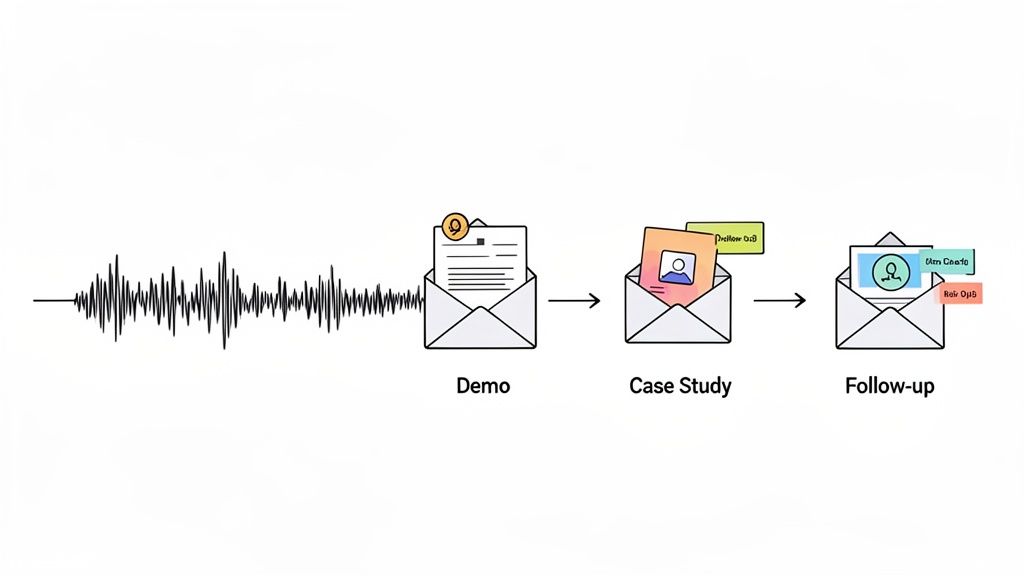
This method creates a coordinated multi-channel nurture experience where your audio and email content reinforce each other. Someone who has voluntarily spent 30-60 minutes listening to your company's perspective is a highly qualified, warm lead. This approach is one of the most effective lead nurturing best practices because it respects the listener's intent, delivering value that directly aligns with the problems they are actively trying to solve. Once they sign up for your lead magnet, you can move them into your marketing funnel.
How it Works in Practice
The process connects your podcast platform to your marketing automation system, such as HubSpot or ActiveCampaign. When a listener signs up for a resource mentioned in an episode (e.g., from the show notes), it triggers a pre-built email sequence focused on a related topic. For instance, after downloading a "Competitor Comparison Guide" offered on a specific episode, a prospect could receive a follow-up email sequence with a migration case study. This moves the relationship from passive listening to active engagement.
For example, a B2B SaaS company could trigger a "product demo" sequence when prospects download a checklist mentioned in a product-focused episode. A consulting firm could send relevant case study emails after a prospect downloads a framework from a show about a specific methodology. This direct line from demonstrated interest to relevant follow-up makes the sales conversation a natural next step.
Actionable Implementation Steps
To deploy this listener-driven nurture strategy, follow these steps:
- Create a High-Value Lead Magnet: Develop a free resource, special discount, or tool that is genuinely useful for your listeners and directly related to your podcast topics.
- Promote the Lead Magnet: Mention your lead magnet in the intro or outro of your podcast episodes, and link to it clearly in your show notes to encourage sign-ups.
- Map Sequences to Topics: Create distinct email sequences that align with the topic of the lead magnet and the corresponding podcast episode.
- Send Prompt Follow-Ups: Ensure the initial email is sent within 24 hours of the opt-in to maintain context. Reference the podcast episode to strengthen the connection.
- Integrate Lead Scoring: Connect your marketing automation to your CRM to increase a lead's score with each engagement, prioritizing highly engaged listeners for sales outreach.
4. Guest-Led Lead Generation Through Strategic Podcast Appearances
Instead of building an audience from scratch, this strategy places your company's experts directly in front of pre-existing, engaged listeners. By securing guest appearances on relevant industry podcasts, you tap into a warm audience that is already in a receptive mindset for learning. This approach positions your brand as a credible authority and is a highly effective lead nurturing best practice.
This method works because podcast listeners are actively consuming long-form content and are predisposed to trust the host and their chosen guests. An appearance allows you to share your unique perspective and build credibility at scale. It’s a direct line to an audience of potential customers, moving them from awareness to consideration within a single episode.
How it Works in Practice
The goal is to get your executives or subject matter experts featured on podcasts your Ideal Customer Profile (ICP) listens to. During the interview, the expert shares valuable insights, tells compelling stories, and subtly introduces a unique framework or methodology specific to your company. This isn't a sales pitch; it's an educational session that builds authority and trust.
For instance, an HR software founder could appear on popular HR tech podcasts to discuss the future of employee engagement. They can then direct listeners to a unique landing page created just for that podcast's audience, offering a free "Employee Engagement Toolkit" as a lead magnet. This tactic gives the audience immediate value and moves interested listeners directly into your marketing funnel. The key is to make the call-to-action specific, valuable, and easy to act upon.
Actionable Implementation Steps
To execute this strategy and generate qualified leads, follow these steps:
- Develop a Speaker Sheet: Create a one-page document for your expert outlining 3-4 core topics, key talking points, and compelling stories that illustrate your company's expertise.
- Target Niche Podcasts: Prioritize relevance over reach. Aim for appearances on 10 highly specific shows in your niche rather than 50 tangential ones for a better-qualified audience.
- Create Custom Landing Pages: For each guest appearance, build a unique landing page (e.g.,
yourcompany.com/podcast-name) with a tailored offer. This improves the user experience and makes tracking ROI simple. - Craft a Clear Call-to-Action: During the interview, clearly state the offer and URL. Avoid a generic "learn more" and instead offer something tangible, like a free tool, a special report, or a webinar registration.
- Track Your Sources: Add a "Podcast Guest Appearance" option to your CRM and marketing analytics to measure which shows are driving the most valuable leads.
5. Micro-Segmentation and Behavioral Trigger Marketing
This advanced approach moves beyond broad audience categories to create hyper-specific nurture campaigns. Instead of grouping leads by general persona, micro-segmentation divides your audience based on detailed behavioral data, such as podcast episode preferences, content download frequency, industry, and company size. These granular segments are then paired with triggers that launch automated, highly relevant messaging when a specific behavior occurs.
This method is one of the most powerful lead nurturing best practices for scaling personalization and converting warm leads who have engaged with your content. A lead who has listened to three podcast episodes about AI in logistics and works for an enterprise-level company is far more qualified than a generic "MQL." By tracking these behaviors, you can deliver messaging that speaks directly to their demonstrated interests, making your follow-up feel less like a sales pitch and more like a helpful next step.
How it Works in Practice
Marketing automation platforms are central to executing this strategy. You define specific behavioral triggers, like a prospect from a target account downloading a case study or a podcast listener from a specific industry visiting your pricing page. When a lead meets these criteria, they are automatically placed into a micro-segment and receive a pre-built nurture sequence tailored to that exact combination of attributes and actions.
For example, a B2B SaaS company could create a micro-segment for prospects at companies with over 500 employees who listened to a podcast episode on "Scaling Data Infrastructure." When this trigger fires, it initiates a short email sequence offering a technical whitepaper on a related topic. If they download it, a second trigger could alert a sales rep to reach out with a personalized message. To deepen your understanding of crafting effective email sequences, explore these powerful email drip campaign examples for high-converting welcome, nurture, and re-engagement campaigns.
Actionable Implementation Steps
To implement this advanced nurturing tactic, follow these key steps:
- Identify Key Variables: Start by selecting 5-7 critical data points for segmentation. This could include job title, company size, industry, specific podcast episodes listened to, and website pages visited.
- Configure Your Automation Platform: Use the segmentation and workflow features in your marketing platform (like Marketo or HubSpot) to build rules that automatically sort contacts based on your chosen variables.
- Map Content to Micro-Segments: Align specific content assets (case studies, webinar invites, podcast clips) with each micro-segment. The goal is to match their demonstrated interest with your most relevant content. For a deeper dive into this, see how to effectively build a B2B customer journey map.
- Define Behavioral Triggers: Create rules that initiate a nurture sequence when a lead performs a key action, such as watching 75% of a webinar or listening to multiple episodes on the same topic.
- Establish a Feedback Loop: Create a process for your sales team to provide insights on lead quality from different micro-segments, allowing you to refine your segmentation criteria over time.
6. Podcast-Integrated Content Ecosystems and Cross-Channel Nurture
Effective lead nurturing doesn't happen in a silo. This strategy moves beyond treating a podcast as a standalone asset and positions it as the central pillar of a comprehensive content ecosystem. Audio, written, video, and social content work together, creating multiple coordinated touchpoints that guide prospects through the buyer's journey. One core podcast episode becomes the foundation for numerous derivative assets.
This approach is one of the most powerful lead nurturing best practices because it amplifies your message and meets buyers on their preferred channels. A prospect might discover a video clip from your podcast on LinkedIn for broad awareness, click through to your newsletter to get more depth, and then subscribe to the full podcast for deeper insights. Each piece reinforces the same core message, building authority and moving them closer to a conversation with your sales team.
How it Works in Practice
The process starts by treating your podcast as the "hero" content. After recording an episode on a specific theme, you systematically break it down into smaller, complementary formats. This creates a surround-sound effect, making your brand's perspective inescapable for your target audience. Your content appears everywhere they look, establishing deep topical authority.
For example, a B2B SaaS company might produce a podcast episode on "The Future of AI in Project Management." This single recording can be repurposed into LinkedIn video clips of key moments, a deep-dive blog post expanding on the discussion, an infographic visualizing the main data points, and a gated whitepaper for those seeking advanced information. This multi-format approach ensures you capture leads at different stages of intent.
Actionable Implementation Steps
To build your own integrated content ecosystem, follow these key steps:
- Map Content to the Buyer's Journey: Align different content formats with specific funnel stages. Use short video clips for top-of-funnel awareness on social media, email newsletters for mid-funnel education, and the full podcast for bottom-of-funnel trust-building.
- Create a Content Multiplication Template: Develop a repeatable process for turning one podcast episode into 5-10 other content pieces. This ensures consistency and efficiency in your content production workflow.
- Coordinate Your Publishing Cadence: Stagger the release of your complementary content. Don't publish everything at once. Space them out over days or weeks to maintain momentum and keep your brand top-of-mind.
- Embed Clear Calls-to-Action: Ensure every piece of content, from a social post to a blog article, has a clear next step. This could be subscribing to your newsletter, the podcast, or downloading a resource.
- Track Cross-Channel Performance: Use your CRM and analytics tools to monitor which content combinations and pathways drive the highest engagement and conversion rates, allowing you to refine your strategy.
7. Community Building and Listener Engagement Nurture
This strategy moves beyond one-way content broadcasting to transform passive podcast listeners into active, invested community members. Instead of simply consuming your episodes, listeners are invited into exclusive online forums, Q&A sessions, or direct communication channels. This approach creates a powerful, two-way relationship where your most engaged audience feels a sense of belonging and connection to your brand, making it one of the most effective lead nurturing best practices for long-term growth.
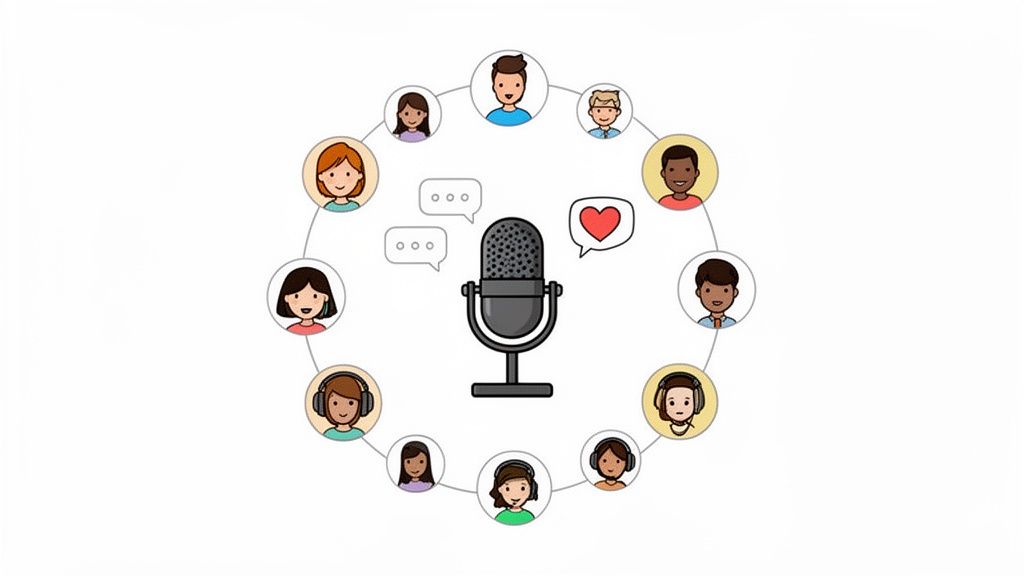
This method deepens the connection with your warmest leads, who are often your most dedicated podcast listeners. By creating a space for them to interact with your brand and each other, you foster a loyal tribe that sees you as a trusted partner, not just a content creator. This investment in relationships generates unparalleled brand advocacy and high-quality, nurtured leads over time.
How it Works in Practice
The goal is to build a vibrant ecosystem around your podcast. You create a dedicated space, like a private Slack channel or a LinkedIn group, and promote it during your episodes as an exclusive benefit for listeners. This isn't just another content channel; it's a place for peer-to-peer learning, direct access to your team's expertise, and shared discussions around the topics covered in your show.
For example, a B2B marketing platform could create an exclusive Slack community for its podcast listeners, offering a forum to share growth strategies and network. A tech sales company might host monthly "Ask Me Anything" calls with its hosts, giving community members a chance to get direct advice and connect. These interactions solidify trust and make any future sales conversations a natural next step, as the community members are already warm to your company's point of view.
Actionable Implementation Steps
To turn your audience into a community, follow these key steps:
- Define a Clear Value Proposition: Why should someone join? Offer exclusive content, direct access to hosts, or networking opportunities that aren't available elsewhere.
- Start Small and Engage: Focus on building genuine connections with your first 100-200 members. Your active presence as the host is critical for fostering engagement.
- Feature Community Members: Acknowledge and feature active members in your podcast episodes. This provides powerful social proof and strengthens their connection to your brand.
- Host Live Events: Organize monthly or quarterly virtual events, like Q&As or workshops, to bring the community together and strengthen personal connections.
- Use Feedback to Shape Content: Let community feedback and discussions directly influence your future podcast topics. This shows you are listening and value their input, closing the loop between content and community.
8. Intent Data Integration and Predictive Lead Scoring
This approach moves beyond basic engagement metrics by combining your first-party podcast data with third-party intent data from platforms like 6sense, Demandbase, or Bombora. It allows you to identify accounts that are not only interested in your content but are also actively researching solutions like yours across the web. This combination creates a powerful, predictive scoring model that surfaces your most sales-ready leads.
By overlaying these data sets, you can pinpoint prospects who demonstrate simultaneous high engagement with your podcast and strong buying signals in your product category. This dual-signal confirmation is one of the most effective lead nurturing best practices for prioritizing sales efforts. Instead of chasing every listener, your team can focus on accounts already in-market, turning your podcast from a brand awareness tool into a precise revenue driver.
How it Works in Practice
The process creates a highly efficient alert system for your sales team. When a lead from a target account listens to a key podcast episode and their company is flagged for intent signals (like visiting competitor sites or searching relevant keywords), they are automatically prioritized. This allows for timely, context-aware outreach that directly addresses their active needs.
For instance, an enterprise software vendor can use this method to combine podcast listener data with technology stack intelligence. If an account using a competitor's product suddenly engages with an episode about migration challenges and also shows high buying intent on Bombora, sales is immediately notified. The outreach can then be hyper-relevant, referencing the pain points discussed in the podcast they just heard.
Actionable Implementation Steps
To put this strategy into motion, follow these key steps:
- Select Your Provider: Choose an intent data provider that offers strong coverage of your specific target industries and accounts.
- Build Your Model: Start by scoring at the account level. Combine multiple signals: podcast engagement, website behavior, and third-party intent data.
- Define Alert Triggers: Set up clear rules in your CRM or marketing automation platform to alert sales when an account meets a specific score threshold.
- Inform Your Content: Use the intent data to see which topics are trending among your target accounts and create podcast episodes that directly address those interests.
- Create a Feedback Loop: Ensure your sales team logs outcomes in the CRM. Use this win/loss data to continuously refine and improve your predictive scoring model.
9. Personalized Lead Nurture Stories and Case Study Podcasting
This strategy moves beyond generic testimonials by creating dedicated podcast episodes that function as audio case studies. Instead of a static PDF, you give prospects an engaging narrative featuring actual customers who share their journey. These stories detail the specific problems they faced, how they used your solution, and the measurable results they achieved, making them a powerful tool in your lead nurturing best practices toolkit.
By segmenting these customer story episodes by industry, company size, or use case, you create hyper-relevant social proof. A prospect in the healthcare sector can listen to a peer from another hospital describe their success, making the value proposition feel tangible and directly applicable. This deepens trust and helps prospects self-identify with the success stories, moving them from passive listeners to engaged, high-intent leads.
How it Works in Practice
The execution involves transforming successful customer relationships into compelling audio content. You interview a happy customer, focusing on the narrative arc of their experience-the initial challenge, the search for a solution, the implementation process, and the final, quantifiable outcomes. This story-driven format is far more memorable and persuasive than a simple list of benefits.
For instance, a SaaS platform could produce a "Customer Spotlight" series with separate episodes for its finance, retail, and manufacturing clients. When a lead from a retail company enters a nurture sequence, they automatically receive a link to the episode featuring a well-known retail brand. This targeted approach proved successful for platforms like HubSpot, which uses podcasts to feature customer success stories, making their marketing more relatable and effective.
Actionable Implementation Steps
To put this strategy into motion, follow these key steps:
- Map a Narrative Arc: Before the interview, plan the story's structure. Start with the "before" state (the pain points), move to the "aha!" moment of finding your solution, and end with the "after" state (the ROI and results).
- Focus on Metrics: Guide your customer to share specific numbers. Instead of "it improved efficiency," aim for "it reduced our project completion time by 30%."
- Segment Your Series: Create distinct case study podcast series for your key verticals or customer segments. This makes it easy to serve the most relevant story to each lead.
- Create Supporting Assets: Repurpose the audio into shareable assets. Use powerful customer quotes as social media graphics, and create one-page summary documents to include in email nurture campaigns.
- Get Proper Approvals: Always secure written permission from customers and their legal teams before publishing any content featuring their brand, name, or data. Consider offering an "anonymous" case study option if they are concerned about visibility.
10. Lead Scoring and Lifecycle Stage Automation Based on Podcast Content
Beyond simply tracking downloads, this advanced lead nurturing best practice turns your B2B podcast into a dynamic source of behavioral data. It involves setting up lead scoring rules based on how your audience engages with your audio content. This allows you to automatically qualify leads and move them through your funnel based on their demonstrated interest level, signaling exactly when they are ready for a sales conversation.
This method connects a listener’s actions directly to their position in the buyer’s journey. Not all engagement is equal; listening to a 30-minute episode on your core methodology shows far more intent than simply downloading a single clip. By assigning point values to different behaviors, you can quantify that intent and automate the handoff from marketing to sales with precision, ensuring your sales team only engages with the most-qualified, podcast-warmed leads.
How it Works in Practice
The system operates by assigning points in your marketing automation platform (like HubSpot or Pardot) for specific podcast-related actions. As a prospect's score crosses predefined thresholds, their lifecycle stage is automatically updated from MQL to SQL, triggering new, more sales-focused nurture sequences or a direct outreach from your sales team.
For instance, a SaaS company could assign 5 points for downloading an episode, but 25 points for listening to an entire episode about a specific product integration. A lead who listens to multiple episodes on advanced features might be scored as an upsell opportunity and added to a specific campaign. This ensures that your follow-up is always relevant to the content the prospect has shown interest in, making the sales process feel more helpful and less intrusive.
Actionable Implementation Steps
To implement this scoring system, follow these key steps:
- Define Key Behaviors: Work with sales to identify 5-10 high-intent podcast behaviors. Examples include episode completion rate, repeat listens on specific topics, or downloading a resource mentioned in the show notes.
- Assign Point Values: Assign higher scores to actions that correlate with purchase intent. A download of a "pricing and ROI" episode should be worth more than a "company culture" episode.
- Set Lifecycle Thresholds: Establish clear score thresholds for when a lead moves from one lifecycle stage to the next (e.g., a score of 100+ qualifies a lead as an SQL).
- Implement Score Decay: Set up rules to reduce a lead's score over time. This ensures that a high score reflects recent, active interest, not engagement from six months ago.
- Ensure Sales Transparency: Create a field in your CRM that shows the sales team why a lead has a certain score. This context is crucial for them to tailor their outreach effectively.
Podcast Lead Nurturing: 10-Point Comparison
Your Next Step: From Plan to Pipeline
We've explored a detailed roadmap of ten podcast-centric lead nurturing best practices designed to move B2B buyers from passive listeners to active sales opportunities. The core message running through each strategy is a fundamental shift in perspective. A B2B podcast is not merely a content format; it's the central nervous system of a modern, relationship-driven marketing funnel.
This approach flips the traditional sales model. Instead of cold outreach, you're building a platform where your ideal customers gather to learn from experts, including your team and their peers. The podcast serves as the ultimate top-of-funnel asset, creating broad awareness through social clips and drawing engaged prospects into your email newsletter. For your most dedicated audience, the podcast itself becomes the bottom-of-funnel destination, where hours of listening builds a deep sense of trust and familiarity that no ad campaign can replicate.
Turning Theory into Tangible Results
The strategies detailed in this article are not theoretical. They represent a clear, actionable system for converting attention into revenue. The initial six months focus on a powerful guest-led strategy: inviting your ideal clients onto your show. This creates a non-salesy environment to build genuine rapport, which naturally evolves into business conversations and preferential deals down the line. It's a proven method for securing early wins and building momentum.
As your podcast gains traction and builds an audience of your ideal customer profiles (typically from 6 months onwards), the focus can shift. By promoting a high-value lead magnet in your show notes and mentioning it in your episodes, you create a direct path for listeners to raise their hands and signal their interest. Once they opt-in, they enter a structured nurture flow, armed with the context and trust they've already built with your brand through your audio content. This makes the sales team's job exponentially easier, as they are engaging with warm, educated leads who already align with your point of view.
Your Action Plan for Implementation
To make these lead nurturing best practices a reality, your immediate next steps should be clear and focused.
- Audit Your Assets: Review your existing content. What topics resonate most? Which experts could you feature? This forms the foundation of your podcast's editorial calendar.
- Define Your "Guest-as-Customer" List: Identify the first 10-15 ideal clients you can invite as guests. This isn't just about content; it's your initial sales pipeline.
- Map the Listener Journey: Outline the exact path from a social media clip to a podcast listen, to an email sign-up, and finally, to a sales conversation. What content and triggers will you use at each stage?
- Integrate with Sales: Update your CRM and sales processes. Add "Podcast" as a lead source in the "How did you find us?" field. This simple step is critical for proving ROI and attributing success directly to your audio efforts.
By systematically implementing these concepts, you move beyond simply creating content and start building a predictable pipeline engine. You are not just nurturing leads; you are cultivating advocates and future customers who are genuinely invested in your brand's mission. The trust you build through hours of authentic audio conversation is the most valuable asset in B2B marketing, creating a durable competitive advantage that is difficult for others to replicate. Your next step is to stop planning and start building.
Ready to build a B2B podcast that drives measurable pipeline and becomes the core of your lead nurturing strategy? At Fame, we specialize in producing authority-building podcasts for B2B companies that deliver real business results. Visit Fame to see how we can help you turn listeners into customers.
