December 4, 202516 min read10 sections
8 Actionable Account Based Marketing Examples For 2025
By Fame Team
Key Takeaways
- Using a B2B podcast as the centerpiece of Account-Based Marketing efforts can be an effective strategy to engage target accounts and build relationships with key decision-makers.
- By inviting prospects to be expert guests on a podcast, companies can transform a potential sales pitch into a value-driven conversation and gain access to strategic priorities, challenges, and internal language.
- Podcast-based ABM can lead to real-world success stories, such as Storemaven and Signify, which used this approach to build strong relationships, gather market intelligence, and turn cold prospects into warm leads and collaborative partners.
Account-Based Marketing (ABM) has shifted from a buzzword to a fundamental B2B growth strategy. But moving from theory to practice can be challenging. Generic advice won't cut it when you need to win over high-value, complex accounts. You need proven, replicable strategies that drive real pipeline and measurable ROI.
This article delivers exactly that. We will break down eight powerful account based marketing examples, detailing the specific tactics, execution, and actionable takeaways you can apply directly to your campaigns. You won't find surface-level descriptions here, only deep strategic analysis of what works and why.
We’ll pay special attention to an innovative and highly effective strategy: using a B2B podcast as the centerpiece of your ABM efforts. Imagine engaging your dream clients by inviting them onto your show as expert guests, turning key decision-makers from cold prospects into collaborative partners. This is just one of the powerful, replicable methods we'll explore.
Forget the hype and theory. Let's dive into real-world campaigns that show you how leading companies are closing bigger deals, faster, by treating their most important accounts as markets of one.
1. Using a Podcast to Engage Target Accounts
One of the most innovative and actionable account based marketing examples involves flipping the traditional sales script entirely. Instead of cold outreach, you create a branded podcast and invite key decision-makers from your target accounts to be expert guests. This "Podcast ABM" strategy transforms a potential sales pitch into a value-driven conversation, offering your ideal prospects a platform to showcase their expertise and build their personal brand.
The core principle is relationship-building at scale. By hosting an insightful discussion, you gain unparalleled access to your prospect's strategic priorities, challenges, and internal language. This approach builds trust and positions your company as a genuine partner long before any product is mentioned. It's a powerful, actionable method for opening doors at high-value accounts that are otherwise difficult to penetrate.
Real-World Success Stories
- Storemaven: The mobile growth company launched their podcast, "Mobile Growth & Pancakes," specifically to connect with VPs of Marketing and C-level executives at major brands. By featuring these leaders as guests, they not only built strong relationships but also gathered deep market intelligence, directly influencing their product development and sales strategy. This approach turned cold prospects into warm leads and collaborative partners.
- Signify: To improve employee relations within target accounts, Signify used its podcast to invite HR leaders and People Operations executives for conversations. This allowed them to understand the specific internal communication challenges these large organizations faced, building rapport and trust that led directly to sales opportunities.
Actionable Takeaways
- Build a "Dream 100" Guest List: Start by defining your Ideal Customer Profile (ICP). Then, identify the top 100 decision-makers at those companies you want to engage with. This list becomes your podcast guest pipeline.
- Craft a Value-First Invitation: Your outreach must focus entirely on the guest's benefit. Highlight the opportunity to share their expertise with a relevant audience and build their personal brand. Explicitly state that it is not a sales call. A simple, direct email often works best.
- Prepare for a Strategic Conversation: Before the recording, research the guest and their company thoroughly. Prepare thoughtful questions that allow them to shine and reveal their key business challenges and priorities. This is your opportunity for deep discovery.
- Repurpose Every Episode for Multi-Threading: A single podcast episode is a content goldmine. Turn the conversation into shareable video clips for the guest and your team to post on LinkedIn. Create a summary blog post. Pull key quotes for social media graphics. Tag the guest and their company to amplify reach within the target account and engage multiple stakeholders.
2. Programmatic Advertising for Target Accounts
One of the most scalable account based marketing examples is using programmatic advertising to surround your target accounts with a consistent, tailored message. This strategy moves beyond broad, impression-based campaigns by using data to serve hyper-targeted digital ads exclusively to employees at specific companies you want to win over. By leveraging IP addresses, cookies, and other identifiers, you can ensure your message appears on the websites and platforms your key decision-makers already visit.
The primary goal is to build brand awareness and influence within the entire buying committee, not just a single contact. This "air cover" warms up accounts, making them more receptive to direct sales outreach and reinforcing key value propositions. It's an efficient way to stay top-of-mind and educate prospects at scale, creating a unified brand experience for everyone at the target company.
Real-World Success Story
A powerful example comes from the B2B tech platform G2. They run sophisticated programmatic campaigns aimed at procurement and software-buying teams within large technology firms. By targeting specific job titles and departments at their enterprise accounts, G2 serves ads that highlight relevant software categories and comparison reports, directly influencing purchase decisions and driving traffic to their most valuable marketplace listings.
Actionable Takeaways
- Segment by Role and Intent: Don't show the same ad to everyone. Create different ad creatives for the CFO (focused on ROI) versus the Head of Engineering (focused on technical features) within the same target account. Use intent data to trigger ads when an account shows interest in a competitor.
- Coordinate with Sales Outreach: Time your ad campaigns to align with your sales team's outreach cadence. An account should see your ads a week before and during the period a sales rep is making calls or sending emails. This multi-channel approach significantly boosts response rates.
- Use Sequential Messaging: Tell a story with your ads. Start with a high-level brand awareness ad, then retarget those who engage with a more specific, solution-focused ad, and finally, follow up with a strong call-to-action like a demo request.
3. Intent-Based Account Targeting
A powerful evolution in account based marketing examples is the shift from static account lists to dynamic, intent-based targeting. Instead of guessing which accounts are ready to buy, this strategy uses third-party intent data to identify companies actively researching solutions like yours. It focuses marketing and sales resources on accounts that are already in-market, dramatically increasing efficiency and conversion rates.
The core principle is timing and relevance. By monitoring signals such as competitor website visits, keyword searches, and content consumption across the web, you can pinpoint the exact moment an account enters a buying cycle. This allows your team to engage with hyper-personalized messaging and advertising when your solution is most relevant to their immediate needs, moving you from a cold outreach to a timely, welcomed solution provider.
Real-World Success Story
A clear example is the B2B intelligence platform ZoomInfo, which leverages its own intent data to fuel its enterprise sales efforts. When their system detects a target account is researching "sales intelligence" or visiting competitor pricing pages, it triggers an alert. Sales teams are then armed with this context to craft highly relevant outreach, referencing the prospect’s likely challenges and positioning ZoomInfo as the immediate solution.
Actionable Takeaways
- Combine Data Sources for a Full Picture: Don't rely solely on third-party intent signals. Integrate them with your first-party data (like website visits and CRM history) to create a comprehensive view of account engagement and buying propensity.
- Create Trigger-Based Plays: Set up automated workflows that activate when an account shows a spike in intent. This could trigger a targeted ad campaign, enroll key contacts into an email nurture sequence, or alert the account owner for immediate, personalized follow-up. To fully grasp the capabilities of this strategy, delve deeper into understanding what programmatic advertising is to understand its nuances for target accounts.
- Personalize Outreach with Intent Context: Equip your sales team with the specific intent topics the account is researching. Instead of a generic "checking in" email, they can open with, "Saw you might be exploring solutions for improving lead data accuracy…" This immediately establishes relevance and builds credibility. You can discover more on how this fits into a wider strategy in this guide to demand generation marketing.
4. Content Syndication and Thought Leadership Campaigns
A powerful ABM strategy involves creating high-value content and strategically placing it where decision-makers at target accounts are already consuming information. This approach uses assets like whitepapers, custom research reports, and executive insights to build credibility and surround key prospects with your brand's expertise. Instead of a direct sales pitch, you're providing solutions to their specific industry challenges, positioning your company as an indispensable thought leader.
The goal is to warm up accounts by demonstrating deep subject matter authority before initiating direct contact. By syndicating this content through respected industry publications, targeted social media campaigns, and exclusive webinars, you engage key stakeholders on their own terms. This method is one of the most effective account based marketing examples for nurturing long-term, high-value relationships and establishing your brand as the go-to resource in your niche.
Real-World Success Story
A classic example of this in action is Forrester Research. They create custom research reports for Fortune 500 companies, addressing the specific technological and market challenges those enterprises face. By co-branding these in-depth reports and distributing them to C-suite executives, Forrester not only generates leads but also solidifies its position as a premier authority, making its consulting and subscription services an easy next step for engaged accounts.
Actionable Takeaways
- Map Content to Pain Points: Before creating anything, deeply research the primary challenges and strategic priorities of your target accounts. Create content that directly addresses these issues, offering unique insights or data.
- Partner for Distribution: Don't just publish content on your own blog. Partner with respected industry publications, influencers, and media outlets to syndicate your content, leveraging their audience to reach your target accounts.
- Gate Strategically: Use high-value assets like comprehensive reports or exclusive webinar recordings as gated content. This allows you to capture contact information from interested individuals within your target companies, turning passive engagement into actionable leads.
5. Account-Based Sales Development (ABSDRs) and Coordinated Sales Plays
Effective account based marketing examples often bridge the gap between marketing engagement and sales execution. This approach aligns marketing campaigns with a specialized sales development team (Account-Based Sales Development Representatives, or ABSDRs) who execute highly coordinated, multi-channel outreach sequences, known as "sales plays," to a specific list of target accounts. Instead of generic outreach, every touchpoint is part of a choreographed effort.
This strategy ensures that marketing's air cover, such as targeted ads or content, is immediately followed by personalized outreach from sales. The ABSDRs use a predetermined cadence of emails, phone calls, social media messages, and even personalized videos to engage multiple stakeholders within the target account, turning marketing insights into direct conversations and qualified meetings. This synchronized motion is critical for breaking into complex enterprise accounts.
Real-World Success Story
Salesforce exemplifies this model with its Enterprise Business Representative program. These specialized reps work in tight pods with Account Executives, focusing exclusively on a small number of high-value target accounts. They utilize detailed playbooks, informed by marketing intelligence and account research, to orchestrate personalized outreach that speaks directly to the challenges and goals of each specific business, ensuring a consistent and relevant message across all channels.
Actionable Takeaways
- Document Repeatable Sales Plays: Create detailed, step-by-step outreach sequences for each account tier. Specify the channel, message, and timing for each touchpoint in the cadence to ensure consistency and scalability.
- Establish Clear Handoff Points: Define the exact criteria for when an account is passed from marketing to the ABSDR team. This is a crucial part of the lead qualification process that ensures sales resources are focused on the most engaged accounts.
- Use a Multi-Channel Approach: Don't rely on a single channel. A modern sales play should integrate email, cold calls, LinkedIn messaging, and personalized video to surround the buying committee and increase the probability of a response.
6. Event-Based and Experiential ABM Campaigns
Among the most powerful account based marketing examples are those that leverage live or virtual events to create high-touch, memorable experiences. This strategy moves beyond generic event sponsorships to build bespoke engagements designed specifically for key decision-makers at target accounts. By creating an exclusive environment, you can foster deep conversations and accelerate relationships in a way that digital outreach cannot replicate.
The core idea is to treat your target accounts as VIPs. Whether it's a major industry conference, a user summit, or a custom-hosted roundtable, the goal is to provide unique value and access. This could be an exclusive dinner with your CEO, a private workshop addressing their specific challenges, or a first look at a new product roadmap. These curated experiences demonstrate a deep investment in the account's success, building significant goodwill and trust.
Real-World Success Story
Salesforce excels at this with its World Tour events. While the main event is open to thousands, Salesforce designs an "event within an event" for its most strategic accounts. C-level executives from target companies are invited to exclusive keynotes, private networking sessions with Salesforce leadership, and one-on-one strategy meetings. This creates a highly personalized journey, ensuring their most valuable prospects feel seen and prioritized amidst the scale of a massive conference.
Actionable Takeaways
- Create a "VIP-Only" Track: Before a major industry event, identify attendees from your target accounts. Reach out with an invitation to an exclusive experience, like a private dinner, a C-level roundtable, or a dedicated lounge, that runs parallel to the main event.
- Personalize the Agenda: Don't offer a one-size-fits-all experience. Research the specific challenges and strategic goals of each target account attending. Tailor breakout sessions or one-on-one meetings to address their direct needs, demonstrating that you’ve done your homework.
- Coordinate Pre- and Post-Event Plays: The event is the main act, but the show starts before and continues after. Your sales and marketing teams must align on pre-event outreach to secure attendance and a structured post-event follow-up plan to continue the conversations started onsite.
7. Vertical-Specific ABM Campaigns
One of the most effective account based marketing examples is tailoring campaigns to the unique needs of a specific industry vertical. Instead of a one-size-fits-all approach, this strategy involves creating highly customized messaging, content, and outreach that addresses the distinct challenges, regulations, and business language of a particular sector, such as healthcare, financial services, or manufacturing.
The core principle is to demonstrate deep domain expertise and show target accounts that you understand their world intimately. By speaking their language and solving their specific problems, you build credibility and differentiate your solution from more generic competitors. This focused approach accelerates the sales cycle because the value proposition is immediately relevant and resonates with the entire buying committee within that industry.
Real-World Success Story
ServiceNow excels at this with its industry-specific solutions. Rather than offering a generic workflow automation platform, they developed targeted offerings like "ServiceNow for Healthcare" and "ServiceNow for Financial Services." Each solution comes with pre-built workflows, compliance features, and marketing campaigns that speak directly to the pain points of that vertical, such as patient data management in healthcare or regulatory reporting in finance. This verticalization has been a key driver of their enterprise growth.
Actionable Takeaways
- Develop Vertical-Specific Personas: Go beyond standard buyer personas. Create detailed profiles for roles within your target industry, understanding their specific KPIs, daily challenges, and regulatory pressures.
- Create Industry-Centric Content: Build a library of content tailored to each vertical. This should include case studies from that industry, whitepapers addressing sector-specific regulations, and blog posts using industry benchmarks and data.
- Build a Specialized Go-to-Market Team: Assign sales and marketing team members to focus exclusively on a single vertical. This allows them to develop deep domain expertise, build relevant networks, and attend industry-specific events and conferences where your target accounts gather.
8. Integrated Marketing and Sales Technology Stack Campaigns
Among the most powerful account based marketing examples is the orchestration of a fully integrated technology stack. This approach moves beyond isolated tools and connects your CRM, marketing automation, intent data platforms, and sales enablement software into a single, cohesive system. By ensuring a seamless flow of data, you can automate sophisticated, multi-channel campaigns that are both personalized and scalable.
As organizations scale these connected systems, many also rely on tools like an all-in-one HR management software to keep internal teams aligned, workflows structured, and operational data centralized across departments.
The core principle is to create a unified view of the target account's journey. When a contact from a target account shows intent on a third-party site, that signal can automatically trigger an ad campaign on LinkedIn, alert the account owner in Salesforce, and enroll the contact in a tailored email nurture sequence via HubSpot or Marketo. This synchronized execution ensures that marketing and sales are always working together with the most current information, delivering the right message at the perfect time.
Real-World Success Story
A prime example is the approach taken by companies using platforms like 6sense, which orchestrates actions across the entire revenue team. By integrating with tools like Salesforce, Outreach, and marketing automation platforms, 6sense identifies accounts showing in-market buying signals. It then automatically pushes these "6sense Qualified Accounts" into targeted ad campaigns and triggers sales plays, ensuring that expensive sales resources are focused exclusively on accounts with the highest propensity to buy, dramatically improving efficiency and pipeline velocity.
Actionable Takeaways
- Start with Core Integrations: Begin by ensuring a seamless, two-way sync between your CRM (like Salesforce) and your marketing automation platform (like HubSpot or Pardot). This is the foundational connection for any ABM tech stack.
- Establish a "Single Source of Truth": Before implementing new tools, dedicate resources to cleaning and standardizing your account and contact data within your CRM. This prevents data duplication and ensures all systems operate from accurate information.
- Create Real-Time Alerts and Feedback Loops: Set up automated alerts that notify account executives in real-time when a target account engages with marketing content or shows a surge in intent. Simultaneously, create a process for sales to feed their on-the-ground insights back into marketing systems to refine targeting.
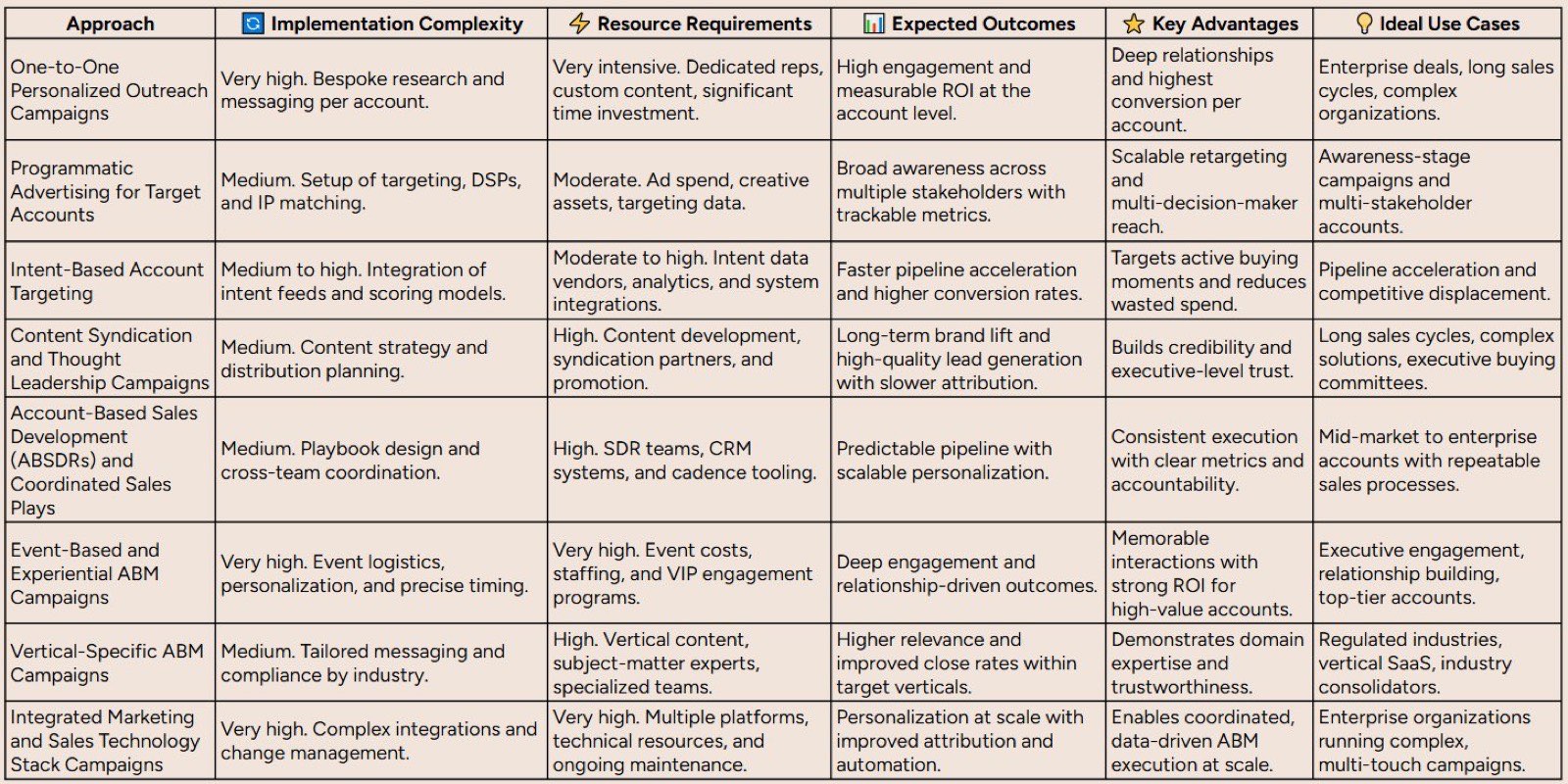
Side-by-Side: 8 ABM Examples
Start Building Your Winning ABM Strategy Today
The diverse range of account based marketing examples we've explored demonstrates a powerful, unifying truth: success isn't born from a single tactic but from a masterfully orchestrated, multi-channel approach. From the deep personalization of one-to-one campaigns to the broad, yet targeted, reach of programmatic advertising, the common thread is an unwavering focus on delivering exceptional value to a select group of high-potential accounts. The most effective strategies are not just marketing campaigns; they are relationship-building initiatives designed to establish trust, demonstrate expertise, and create genuine partnerships.
The case studies prove that whether you're using intent data to time your outreach perfectly, coordinating complex sales plays with your ABSDRs, or creating immersive experiential events, the goal remains the same. You must move beyond generic messaging and treat your target accounts as a market of one. This requires a deep synthesis of data, creativity, and a profound understanding of your ideal customer's challenges and aspirations.
Key Takeaways for Your ABM Program
As you begin to apply these lessons, keep these core principles at the forefront of your planning:
- Orchestration Over Isolation: The strongest ABM programs, like those highlighted, integrate multiple channels. A targeted ad campaign is more effective when supported by personalized sales outreach, which is amplified by relevant thought leadership content. Each touchpoint should build upon the last, creating a cohesive and compelling narrative for the target account.
- Value is the Ultimate Differentiator: Every interaction must provide tangible value. Instead of just pitching your product, educate, inform, and solve a problem for your prospect. A powerful way to do this, as seen in several examples, is by using a podcast to feature key decision-makers from target accounts, giving them a platform while building an authentic connection.
- Personalization Goes Beyond a Name: True personalization means understanding an account's specific business challenges, industry trends, and strategic goals. This level of insight allows you to tailor not just your messaging but your entire engagement strategy, from the content you share to the solutions you propose.
Your Actionable Next Steps
To translate these insights into action, start small and build momentum. Begin by identifying a pilot group of 5-10 high-value accounts where you have the greatest potential for success. Conduct deep research into their organizational structure, recent news, and strategic priorities. Then, map out a multi-touchpoint journey that incorporates at least two or three of the tactics discussed. For example, you could combine an intent-data signal with a hyper-personalized podcast invitation for a key stakeholder, followed by targeted social ads for the wider buying committee. To effectively engage target accounts on social platforms, consider integrating foundational B2B strategies, such as building a modern B2B social media strategy that focuses on authentic engagement and value delivery.
By adopting this strategic, value-first mindset, you shift from being a vendor to a trusted advisor. This transformation is the essence of modern B2B marketing and the key to unlocking sustainable, long-term growth. The journey begins not with a massive budget, but with a commitment to understanding and serving your best-fit customers better than anyone else.
Ready to make podcasting the cornerstone of your ABM strategy? Fame helps B2B brands launch and grow podcasts that connect them directly with their dream customers. See how we turn conversations into customers by visiting Fame today.
Want us to run this for you?
Fame starts and grows B2B podcasts that generate pipeline. Tell us who you are trying to reach and we will send a costed proposal within 48 hours.
Related content
- Read moreFame Team · July 16, 2026
10 Account Based Marketing Tactics For B2B Growth In 2026
Discover 10 actionable account based marketing tactics for B2B tech. Learn to use podcasts, data, and targeted content to close high-value accounts. - Read moreFame Team · July 16, 2026
The 8 Best Brighton Podcast Agency Picks For 2026
Find the best Brighton podcast agency for your B2B brand. Our 2026 guide reviews top 8 agencies for production, growth & ROI. Expert analysis here - Read moreJune 10, 2026
20 Best Podcast Production Agencies For 2026 (And Why Should You Hire One)
Global podcast and vodcast ad revenues are on track to hit $5 billion in 2026 , up 20% year-on-year. - Read moreApril 13, 2026
Leadership In Marketing: The B2B Podcast Playbook
Most companies still confuse leadership in marketing with job titles, org charts, and budget control. That's outdated.