Fame Podcast Host
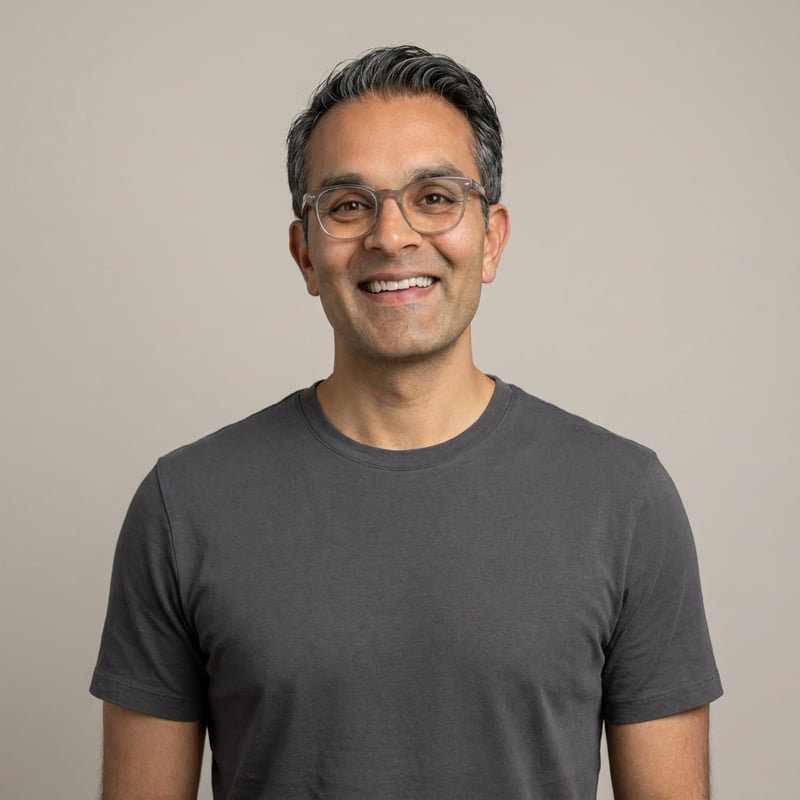
Rahul Jaswa is the CEO of Keystone, where he helps local businesses grow through fully managed sales and marketing systems. After more than a decade scaling venture-backed technology companies, he turned his focus to helping restaurants, home service companies, healthcare practices, retailers, and other local operators attract customers and build sustainable businesses.
Across his career, Rahul has led teams spanning growth, marketing, operations, finance, and strategy, helping scale companies from early stage to hundreds of millions in revenue. As COO/CFO at Portrait, he oversaw sales, marketing, operations, and finance, helped raise more than $25 million, and supported the company's expansion from a small number of clinics to 1,000+ locations across all 50 states.
Previously, at Motive, he served as Chief Growth Officer and SVP Business, helping grow revenue from the low tens of millions into the mid-hundreds of millions while raising significant financing. Rahul holds an MBA from Stanford Graduate School of Business and studied Economics at UC Berkeley, where he completed an honors thesis with Nobel Prize-winning economist Oliver Williamson.
Ask me
- 1
Rahul, you've spent much of your career around technology, but with Keystone you're focusing on businesses that have historically been underserved by tech. What convinced you that local businesses were where you wanted to place your next big bet?
- 2
Keystone is essentially trying to give a local business an entire sales and marketing department powered by AI and human expertise. Where have you found that AI genuinely outperforms the old way of doing things, and where does a human still need to be firmly in the loop?
- 3
There are roughly 100 million real-world businesses globally, yet Keystone argues that many are still juggling phone calls, disconnected software, agencies, and manual processes. Why has technology struggled for so long to serve these businesses well?
- 4
Through Made Locally, you've been sitting down with owners across restaurants, beauty, hospitality, and other local industries. What have those conversations changed your mind about what local businesses actually need from technology?
- 5
If Keystone succeeds at automating much of the work involved in finding and converting customers, does the competitive advantage for a local business shift away from marketing execution? If so, what becomes the new advantage - brand, reputation, customer experience, community, or something else?
Book this host as your guest
This podcast host has been trained by our team of podcast ninjas. They know how to transform a podcast interview into an addictive piece of audio....