
Launching a B2B podcast in Boston usually starts with a simple brief and turns into a harder question fast. You don't just need clean audio. You need a show that sales will use, guests that strengthen your market position, and a production system that keeps publishing without draining your team.
That's why most “best Boston podcast agency” roundups miss the core buying criteria. They compare studios on polish, not on whether the podcast helps build authority, create qualified conversations, and support pipeline. In a market with a broad podcast audience across income segments and enough local content density to sustain serious competition, Boston is clearly established enough for specialized agency demand to make sense, according to Start.io's Boston podcast audience profile.
If you're evaluating partners right now, this guide is built for that moment. It looks at Boston agencies through a B2B operator's lens, not a hobbyist lens. The focus is simple: who can help turn expertise into a repeatable growth asset. If you're planning budget alongside broader channel bets, this guide to 2026 marketing trends for brands is a useful companion read.
1. Fame
A common B2B scenario goes like this. The marketing team launches a podcast to build credibility, books a few strong guests, publishes consistently for a quarter, then realizes nothing in the process ties back to pipeline, repurposing, or sales follow-up. Fame stands out because its model is built to solve that exact operating problem.
If your internal benchmark for a Boston podcast agency is pipeline influence, authority building, and steady audience growth, Fame is one of the clearest fits. Its local positioning is visible on its Boston podcast agency page, but the bigger point is strategic scope. Fame is built for B2B teams that need strategy, production, distribution, and content reuse to work as one system.
Why it ranks first
The strongest argument for Fame is alignment with how B2B podcast ROI gets created. A polished episode matters, but the business return usually comes from the surrounding process: guest selection, audience targeting, repurposed content, and distribution that keeps the show in front of buyers after release day. Fame appears to be structured around that full chain, not just editing and publishing.
That distinction matters in practice. An audio-focused vendor can give you a finished episode. A growth-focused partner should also show how one executive interview becomes social clips, sales collateral, newsletter content, and follow-up assets for account-based outreach. Fame's podcast marketing services are relevant here because they point to a broader operating model, not a studio-only offer.
A practical advantage is accountability. Fame presents itself as a partner with a defined growth process, proprietary workflows, and repurposing built into delivery. For lean B2B teams, that usually beats managing separate freelancers for production, promotion, and content extraction.
Practical rule: If demand generation owns the show, choose a partner that can explain distribution, conversion paths, and sales enablement in plain terms.
Best fit:
- B2B tech companies: Useful for category education, founder visibility, and expert-led demand creation.
- Professional services firms: Strong option when trust and subject-matter authority drive deal velocity.
- Lean marketing teams: Better fit for teams that need an operating system, not just post-production support.
The trade-off is straightforward. Fame makes more sense for companies that want a strategic partner tied to growth outcomes. Teams looking for the lowest-cost editing option will likely find the model broader, and more involved, than they need.
Website: Fame
2. Cramer
Cramer is the pick for enterprise teams that want a branded podcast integrated into a larger campaign machine. If your show needs to connect with executive events, customer conferences, product launches, or internal communications, Cramer brings more range than a podcast-only boutique.
That range is both the upside and the trade-off. You get high production standards and broader campaign thinking. You also get an agency where podcasting is one capability among many, not the sole operating focus.
Where Cramer works best
Cramer makes the most sense when the podcast is one component inside a bigger brand experience strategy. That often means video-first capture, studio-level creative direction, and alignment with a larger content calendar. For some B2B brands, that's exactly right.
If your need is narrower, such as recurring executive interviews plus distribution growth, a specialist may be easier to operationalize. But for large organizations with multiple stakeholders, Cramer can reduce fragmentation.
A useful way to assess them is to ask how they handle post-launch growth, not just launch-day production. If they can map the show into campaign distribution, audience development, and follow-on assets, the engagement becomes much more valuable. That's the same standard I'd use when reviewing any provider of podcast marketing services.
Best fit:
- Enterprise B2B teams: Especially firms with active field marketing or events.
- Brands with high creative standards: Good match when visual identity matters as much as audio.
- Teams needing cross-channel support: Helpful when podcast, video, and event content need one owner.
Website: Cramer
3. Matter Communications
Matter Communications is a strong option for B2B brands that want podcasting connected tightly to PR, media visibility, and content marketing. That matters in Boston because the city has deep concentrations of technology, healthcare, education, and professional services organizations that benefit from authority-led media strategies.
The podcast itself is only part of the value here. Matter can help companies think about how executive voice, guest strategy, and campaign messaging connect across earned and owned channels.
Best use case
Matter is especially compelling when the show is meant to reinforce broader market positioning. For example, a healthcare or tech company might use a podcast to host category-level conversations, then extend those ideas into media outreach, executive content, and digital campaigns.
That integrated model can work well. It can also feel heavier than necessary if all you need is simple production and publishing support. Full-service agencies often perform best when your internal team already knows the role podcasting should play in the broader marketing mix.
The right PR-connected agency should be able to answer one basic question clearly: who needs to hear this show, and what should happen after they hear it?
Best fit:
- B2B tech and healthcare companies: Strong category alignment.
- Teams using executive thought leadership as a growth lever: Podcast plus PR can reinforce each other.
- Brands that want one integrated partner: Useful when separate vendors create bottlenecks.
Website: Matter Communications
4. PRX Productions
PRX Productions stands out for editorial rigor and high-end narrative capability. If your B2B brand wants a show with public-media standards, stronger storytelling craft, and infrastructure that supports distribution, PRX is one of the most credible names in the Boston market.
This is not the choice for companies that want fast-turn, lightly produced founder interviews with minimal review. PRX is better suited to institutional storytelling, multi-stakeholder branded series, and shows where voice, reporting, and structure matter as much as the subject matter.
The real trade-off
The upside is obvious. You're getting a production organization with deep experience in polished, story-driven audio. The downside is that this level of quality often comes with more process. More review, more coordination, and a bigger investment.
For some brands, that's a feature. Especially if the podcast is intended to shape reputation over time, not just fill a content calendar. If you're comparing them against other podcast production services, the differentiator is editorial depth.
Best fit:
- Universities, nonprofits, and institutions: Strong match for mission-led storytelling.
- Enterprise brands: Useful for reputation-focused audio projects.
- Teams producing multi-season narrative shows: Better fit than transactional editing vendors.
Website: PRX Productions
5. Boston Globe Media Branded Podcast Production
Boston Globe Media is a practical choice for brands that want the credibility of a major local publisher behind a branded podcast initiative. That's especially relevant for companies targeting executive, regional, or civic-facing audiences in Boston.
Publisher-backed podcast production changes the equation slightly. You're not only buying production support. You're also buying alignment with a recognized media brand and its commercial content infrastructure.
When publisher alignment matters
This option is strongest when local trust is part of the strategy. A professional services firm, healthcare network, or regional employer brand could benefit from that association more than it would from a boutique shop with lower name recognition.
The limitation is that publisher studios usually aren't built like niche B2B growth agencies. They tend to be excellent at branded storytelling and premium execution, but less centered on demand generation mechanics. If your internal team already has a clear B2B branded podcast framework, that gap becomes easier to manage.
Best fit:
- Regionally focused brands: Strong local authority signal.
- Executive audience campaigns: Helpful where trust and polish are central.
- Teams comfortable leading measurement internally: Better if your marketing ops function can own ROI mapping.
Website: Boston Globe Media
6. WBUR CitySpace Productions
WBUR CitySpace Productions is one of the more interesting options in Boston because it combines custom production with public-radio credibility. For B2B organizations that want thoughtful, editorially careful storytelling tied to live programming or institutional brand building, that can be a strong match.
Its appeal is not aggressive sales messaging. It's trust, quality, and thoughtful narrative execution.
Who should consider WBUR
A university, healthcare brand, or enterprise thought-leadership team could get a lot from WBUR's model. The production quality and editorial standards tend to support serious subject matter well, especially when the goal is to deepen reputation with informed audiences.
That same standard may create friction if your company wants overtly promotional messaging. Public-media style environments are usually strongest when the show leads with insight, not product pushes.
If your executive team says they want a “serious” podcast, ask what they really mean. Usually they mean credible guests, sharper interviews, and less marketing fluff. WBUR fits that brief better than most.
Best fit:
- Institutional brands: Good for universities, healthcare, and civic organizations.
- Thought-leadership teams: Strong for live-event tie-ins and executive conversations.
- Brands prioritizing credibility over direct-response tactics: Better for reputation than hard conversion.
Website: WBUR CitySpace Productions
7. Motif Media
A common B2B problem looks like this. The team records solid interviews, posts the episode, then watches it disappear because nobody built a content system around it. Motif Media is a stronger option when your podcast needs to feed that system, not sit apart from it.
That matters for ROI. A podcast rarely earns its budget from audio production alone. It starts to justify spend when one executive interview turns into sales enablement clips, LinkedIn video, customer nurture content, and assets the demand gen team can use.
Motif's value sits in that conversion layer from recording to usable marketing output. The right evaluation question is not whether they can produce a polished episode. Ask how they turn each session into a repeatable package of video, short-form content, and campaign materials, and how much work still lands back on your internal team.
There is a real trade-off here. Agencies built around multi-format production can be a strong fit for pipeline-focused teams, but only if the content map is clear before recording. Without that planning, repurposing creates volume, not traction.
Where Motif Media fits best
Motif makes sense for companies that already know the podcast is one channel inside a larger B2B content engine. If your marketing team wants every recording day to produce assets for social, email, paid distribution, and executive visibility, that model is practical.
It is less compelling if your primary goal is a highly differentiated show strategy, category authority, or a guest-driven media property with its own editorial identity. In that case, ask whether Motif is shaping the audience and pipeline strategy, or mainly helping you produce more from what you already record.
Best fit:
- Video-forward B2B brands: Strong fit if YouTube, LinkedIn, and short-form clips are part of the distribution plan.
- Lean marketing teams: Useful when one partner needs to cover podcast, video, and campaign asset production.
- Demand gen teams with repurposing discipline: Best results come when each episode already has a clear promotional path.
Website: Motif Media
8. Canova Communications
Canova Communications is a boutique option with a journalistic bent. That gives it a different feel from bigger agencies in this list. If you want executive interviews, business storytelling, or narrative-style brand content handled with editorial care, Canova is worth a look.
Boutiques often win on attention and flexibility. They can lose on scale if your team needs a heavy publishing cadence or lots of parallel content production.
What makes Canova useful
Canova is well suited to companies that need a senior producer mindset more than a broad agency machine. That's valuable for founder-led shows, leadership interviews, or series where the host needs more support shaping conversations.
The trade-off is capacity. If your ambition is a high-volume media engine with aggressive multi-channel distribution, you'll want to probe workflow depth early. If your goal is smarter conversations and polished execution with a local team, that's a better fit.
Best fit:
- Founder-led podcasts: Good when the host needs active editorial support.
- Professional services firms: Useful for credibility-driven interviews.
- Teams that value hands-on partnership: Strong boutique advantage.
Website: Canova Communications
9. POD617 The Boston Podcast Network
POD617 is one of the easier agencies on this list to understand quickly. Its strength is operational clarity. Clear packages, studio access, remote recording options, and practical support for businesses that want to launch and keep showing up consistently.
That's important because consistency is where many internal podcast projects break. Not in strategy decks. In calendars, scheduling, editing, and getting the episode out every week or every other week.
Where POD617 fits
If you're an SMB or mid-market B2B team and you want a practical local partner without a huge strategic engagement, POD617 is appealing. It lowers friction. You can get recording, editing, hosting support, and other production basics without building an in-house process from scratch.
What it doesn't appear to lead with is advanced demand-generation strategy. That's fine if your team owns that function already. Less fine if you want the agency to architect the full growth playbook.
Best fit:
- SMBs and mid-market firms: Strong if ease and consistency are the priority.
- Teams launching a first show: Good lower-complexity entry point.
- Companies that already know their messaging: Better when strategy is handled in-house.
Website: POD617
10. Mix One Studios Audio Post and Podcast Production
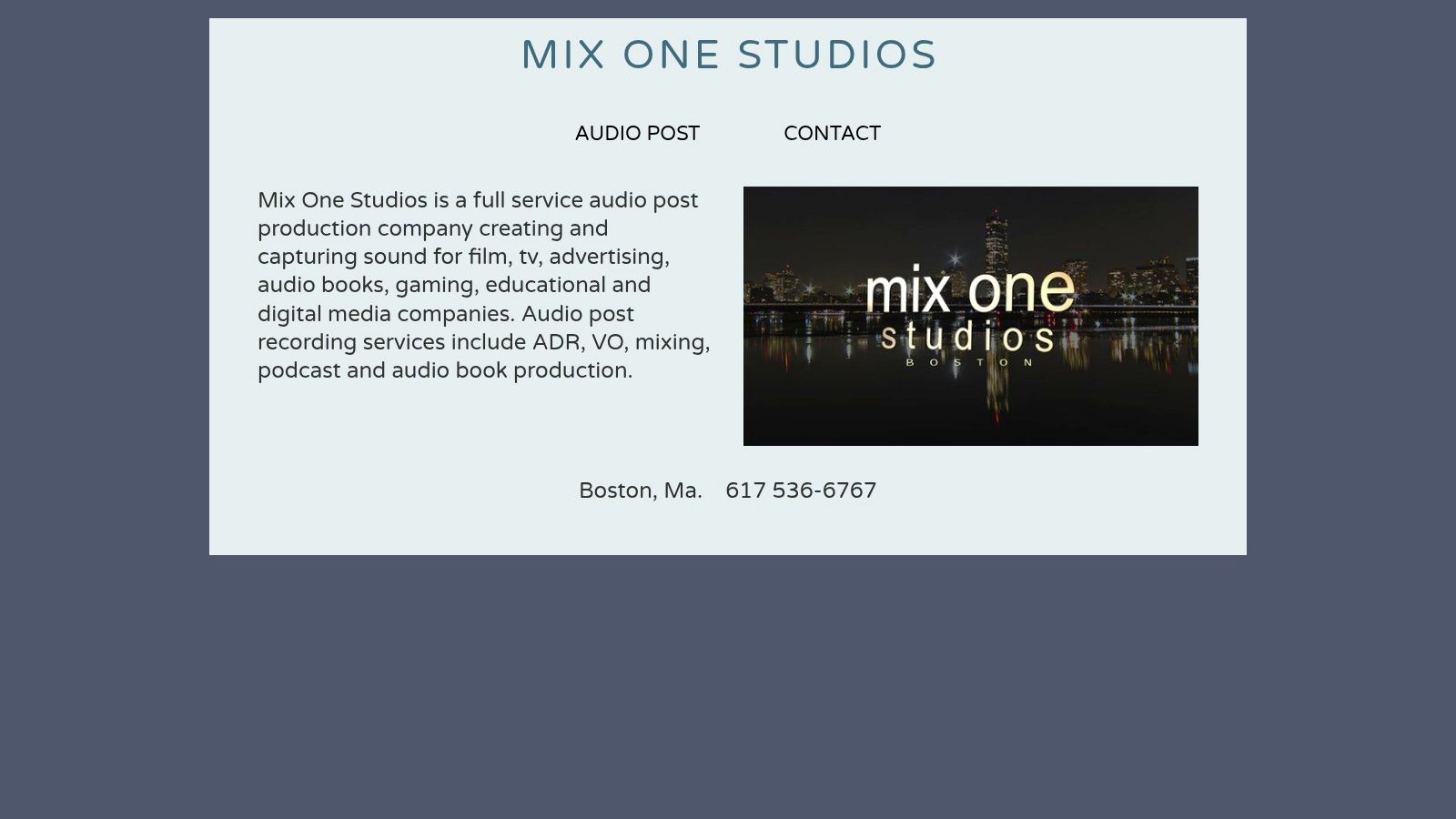
Mix One Studios is the most production-first option in this ranking. If what you need is strong engineering, high-quality recording facilities, and reliable audio post, Mix One deserves consideration.
This is not a knock. Some companies already have the strategy, host, guest flow, and distribution plan handled internally. In that case, a technical specialist can be the smarter buy.
Choose Mix One for technical execution
Mix One is best for teams that prioritize sound quality and want a Boston studio with serious audio chops. It looks more like an audio post house than a B2B growth consultancy, and that's exactly why some buyers will prefer it.
If you're at the stage of comparing tools and workflows internally, it's also a reminder that production quality depends on process as much as software. The best podcast editing software won't replace a disciplined recording and post-production setup.
Strong audio won't create demand by itself. Weak audio can still quietly kill credibility.
Best fit:
- In-house marketing teams with strategy already set: Good for execution support.
- Brands recording in person: Useful when studio quality matters.
- Projects with strict audio standards: Best for technically demanding production.
Website: Mix One Studios
Top 10 Boston Podcast Agencies Comparison
| Provider | Implementation Complexity 🔄 | Resource Requirements ⚡ | Expected Outcomes 📊 | Ideal Use Cases 💡 | Key Advantages ⭐ |
|---|---|---|---|---|---|
| Fame | 🔄 Medium, strategic onboarding & integrated workflow | ⚡ Medium–High, premium retainer + tech integration | 📊 Guaranteed ≥10% monthly downloads; full‑funnel content | 💡 B2B SaaS / niche technical audiences; pipeline generation | ⭐ Specialized B2B focus, growth guarantee, content repurposing |
| Cramer | 🔄 High, enterprise coordination & event integration | ⚡ High, broadcast crews and cross‑team production | 📊 Polished broadcast‑quality shows that support events | 💡 Enterprise launches, major events, internal comms | ⭐ Broadcast‑grade production; ties to event campaigns |
| Matter Communications | 🔄 Medium–High, agency retainer + cross‑team alignment | ⚡ High, PR and marketing resources | 📊 Amplified reach via PR; aligned marketing outcomes | 💡 B2B tech & healthcare seeking PR‑driven podcasts | ⭐ Strong PR distribution and media relationships |
| PRX Productions | 🔄 High, editorial processes & multi‑season scaling | ⚡ High, custom pricing and senior production teams | 📊 National‑caliber storytelling; scalable multi‑season growth | 💡 Enterprise/institutional branded shows; public‑media partners | ⭐ Award‑winning production and PRX distribution tech |
| Boston Globe Media | 🔄 Medium, publisher alignment and editorial review | ⚡ High, publisher channels and integration costs | 📊 Regional reach and credibility with local audiences | 💡 Regionally focused brands seeking media alignment | ⭐ High trust and access to publisher audience network |
| WBUR CitySpace Productions | 🔄 High, NPR editorial standards and review cycles | ⚡ High, bespoke production with top editorial talent | 📊 High editorial quality and thought‑leadership impact | 💡 B2B thought leadership tied to live programming/events | ⭐ NPR‑level talent and strong editorial safeguards |
| Motif Media | 🔄 Medium, integrated video + podcast workflows | ⚡ Medium, studio + video/social production resources | 📊 Multi‑format assets for full‑funnel campaigns | 💡 Brands needing tight video/social repurposing | ⭐ Strong repurposing capability and performance focus |
| Canova Communications | 🔄 Low–Medium, boutique, journalist‑led process | ⚡ Medium, small senior team, flexible engagement | 📊 Journalism‑grade interviews and narrative formats | 💡 Executive interviews, narrative B2B stories, local events | ⭐ Senior editorial sensibility; agile relationship model |
| POD617 (Boston Podcast Network) | 🔄 Low, packaged, repeatable production processes | ⚡ Low–Medium, transparent packages and add‑ons | 📊 Consistent production; easy to trial and scale | 💡 SMBs and mid‑market B2B seeking predictable packages | ⭐ Published pricing and practical logistics focus |
| Mix One Studios | 🔄 Medium, technical post and engineering workflows | ⚡ Medium–High, professional booths and engineers | 📊 Broadcast‑grade audio, mixing and audiobook quality | 💡 High‑fidelity audio projects, ADR, audiobooks | ⭐ Exceptional engineering, in‑person recording facilities |
Your Next Step From Shortlist to Signed
The right choice depends on what you need the podcast to do.
If your team already owns strategy, messaging, guest sourcing, and distribution, then a production-centered partner can work well. Mix One is the cleanest example in this list. If local publisher trust or institutional credibility matters most, Boston Globe Media, WBUR, and PRX are all credible routes with different editorial flavors.
But most B2B teams looking for the best-boston-podcast-agency aren't just buying clean edits. They're trying to solve a harder problem. They need a show that helps the brand sound smarter, creates useful relationships with guests, gives sales better content, and earns attention in a crowded category. That's why agency selection should start with business design, not studio gear.
The broader market context supports that shift. Industry analysis cited in 2026 says the global podcast market was valued at about $23 billion in 2023 and is projected to exceed $130 billion by 2030. In plain terms, podcasting is no longer a side experiment. It's a mature channel where operational quality and growth systems matter more each year.
There's also a practical evaluation gap in this market. Many local roundups list agencies and describe services, but they don't tell buyers how to compare them on qualified conversations, repurposed content output, or guest-to-opportunity conversion. That gap is exactly what B2B teams should fix during procurement. Ask every agency how they define success after publishing. Ask how they support distribution. Ask what sales can reuse. Ask who owns guest quality. If the answers stay stuck at editing and launch logistics, keep looking.
A simple final filter helps. If you want a podcast as a branded media asset, several agencies on this list can help. If you want a podcast as a B2B growth asset, you need a partner built for that operating model. Fame is one relevant option because it's positioned specifically around B2B strategy, production, promotion, and measurable growth.
Before you sign, tighten the brief. Define the audience, the business goal, the role of the guest, and the expected output beyond the episode itself. If you need help structuring that evaluation process, this guide to effective SEO project planning is useful because the same discipline applies here: clear scope, clear owners, and clear outcomes.
If you want a B2B-focused second opinion before choosing an agency, talk to Fame. A focused audit can help you pressure-test your format, guest strategy, distribution plan, and whether your show is built to drive authority and pipeline, not just publish episodes.
