
Finding a podcast partner in the Silicon Slopes usually starts with the wrong question. Many organizations ask who has the nicest studio, the best microphones, or the most convenient downtown address. For a B2B marketing leader, that's rarely the primary decision.
A key question is whether you need rented production capacity or a partner that can turn a show into authority, relationships, and pipeline. Salt Lake City already has an established podcast ecosystem, with daily local-news audio, entrepreneur-focused interviews, and city-curated listening lists. City Cast Salt Lake describes itself as a daily podcast and newsletter, and local tourism coverage highlights Salt Lake-specific shows and listening recommendations. Even independent directory coverage points to market depth, with Feedspot's ranking listing 100 Best Salt Lake City Podcasts in 2026, which signals a market with real listening habits and a broad show catalog, not just a few isolated productions (Salt Lake podcast ecosystem context).
That matters because you're not launching into a vacuum. You're entering a city where listeners already understand serialized audio, and where guests, partners, and local communities are used to recurring shows.
If you're also building outbound around the show, these ReachInbox recommendations for cold outreach are a useful companion read.
1. Fame

Fame is the strongest fit for B2B teams that care less about studio aesthetics and more about business outcomes. If your podcast is meant to support category authority, open conversations with target accounts, and create reusable content for demand generation, this is the agency on the list built most directly around that model.
What separates Fame from a local studio is scope. They handle strategy, production, guest outreach, promotion, and content repurposing, then connect those pieces back to business goals. Their positioning is especially relevant for Salt Lake City companies that don't need a local room every week, but do need a disciplined system for turning executive conversations into market-facing assets.
Why Fame ranks first
Fame states that it guarantees at least 10% monthly download growth and serves over 100 active B2B clients. It also uses proprietary platforms, Fame Host and Fame AI, to streamline production and repurposing. For buyers comparing agencies, that combination signals a process-led operation rather than a freelance editing shop.
A practical trade-off is that Fame is remote-first. If your leadership team insists on an in-person Salt Lake recording setup every time, that's a limitation. If your buyers, guests, and stakeholders are distributed, it's often an advantage.
- Best for B2B operators: Teams in SaaS, professional services, and complex sales environments usually need stronger positioning and better distribution, not just cleaner audio.
- Best for lean internal teams: If marketing doesn't have bandwidth to manage guest booking, scripting, editing, clips, and publishing, a fully managed model saves time.
- Less ideal for hobby projects: This isn't built for casual shows or teams testing podcasting without executive buy-in.
For buyers evaluating strategic partners, Fame's own breakdown of B2B podcast agencies is also worth reviewing because it clarifies how specialist firms differ from production-only shops.
Practical rule: If your KPI is pipeline influence, don't hire on room quality alone. Hire on whether the agency can consistently produce, publish, and distribute without draining your internal team.
Website: Fame
2. LaunchPod Media

LaunchPod Media is one of the more interesting local options because it sits between a studio and an agency. That middle ground works well for Salt Lake City companies that want physical access to a studio but still need help packaging and publishing a business show.
Its Kiln SLC studio access is a real advantage for local teams. For some leadership groups, showing up in person keeps momentum high and reduces the friction that often kills a new show after a few episodes. LaunchPod also talks in business language, not just engineering language, which matters when marketing owns the initiative.
Where it fits best
LaunchPod makes the most sense for companies that want a local operating base and a lighter agency relationship. If your team wants to record downtown, get launch support, and stay fairly hands-on after that, this is a practical option.
The main trade-off is visibility. The site notes that it's under maintenance, so buyers may need a direct conversation to understand the current offer, availability, and process.
- Strong local convenience: The Kiln location is easy for in-person executive sessions and guest recording.
- Better than a bare studio rental: Services appear to extend into strategy, packaging, publishing, and growth.
- Potential availability limits: Free studio access for local businesses is useful, but you should expect schedule constraints.
If you're comparing studio-first vendors with broader service partners, this overview of podcast production services helps frame what should sit inside the engagement and what often gets left on your team.
Website: LaunchPod Media
3. Counterweight Media
Counterweight Media is a good pick when your main need is message clarity. Some B2B shows fail because production quality is weak. More often, they fail because the host rambles, the positioning is vague, and the episodes don't reflect a clear point of view. Counterweight appears built to solve that kind of problem.
The agency focuses on business and organizational podcasting, which is important. That usually means they understand how to extract expertise from subject matter experts and shape it into something an audience can follow.
Best use case
This is the agency I'd shortlist for teams that already know what they want to talk about but need help turning executive expertise into a coherent show. Thought-leadership podcasts live or die on framing, structure, and editorial judgment. Counterweight seems more tuned to that than to broad audience growth mechanics.
That's the trade-off. If you need heavy promotion, demand-gen alignment, or a full distribution engine, you'll want to probe that part of the offer closely before signing.
Businesses don't struggle to produce opinions. They struggle to package expertise in a way buyers will keep listening to.
For teams that know production alone won't move the needle, it helps to compare with agencies that emphasize podcast marketing services, not just recording and post-production.
Website: Counterweight Media
4. The Pod Mill
The Pod Mill is a focused local studio option. That's its strength. It isn't trying to be everything at once, which can be a plus if your team already owns strategy and only needs a reliable, polished recording environment downtown.
A lot of B2B companies overbuy here. They hire a premium room when what they really need is guest ops, editorial support, or distribution. Still, if your host is local, your guests are local, and your team wants a turnkey in-person setup, The Pod Mill is a clean fit.
When The Pod Mill makes sense
This is a practical choice for executive interview shows, internal expert series, and recurring content days where the team wants to batch episodes efficiently. Downtown access helps. So does a purpose-built podcast environment.
Where buyers should be careful is assuming studio quality solves growth. It doesn't. Great capture improves professionalism, but audience development comes from format discipline, strong guests, sharp positioning, and consistent distribution.
- Best for recording days: Good fit when your team wants to batch several episodes in one session.
- Best for local guest logistics: Downtown access lowers friction for in-person conversations.
- Less ideal for end-to-end growth: If you need strategy and promotion, ask what's included versus what you'll manage internally.
If you want to pressure-test what “results” should look like beyond polished episodes, reviewing relevant podcast case study examples can help set expectations before you hire a studio-only partner.
Website: The Pod Mill
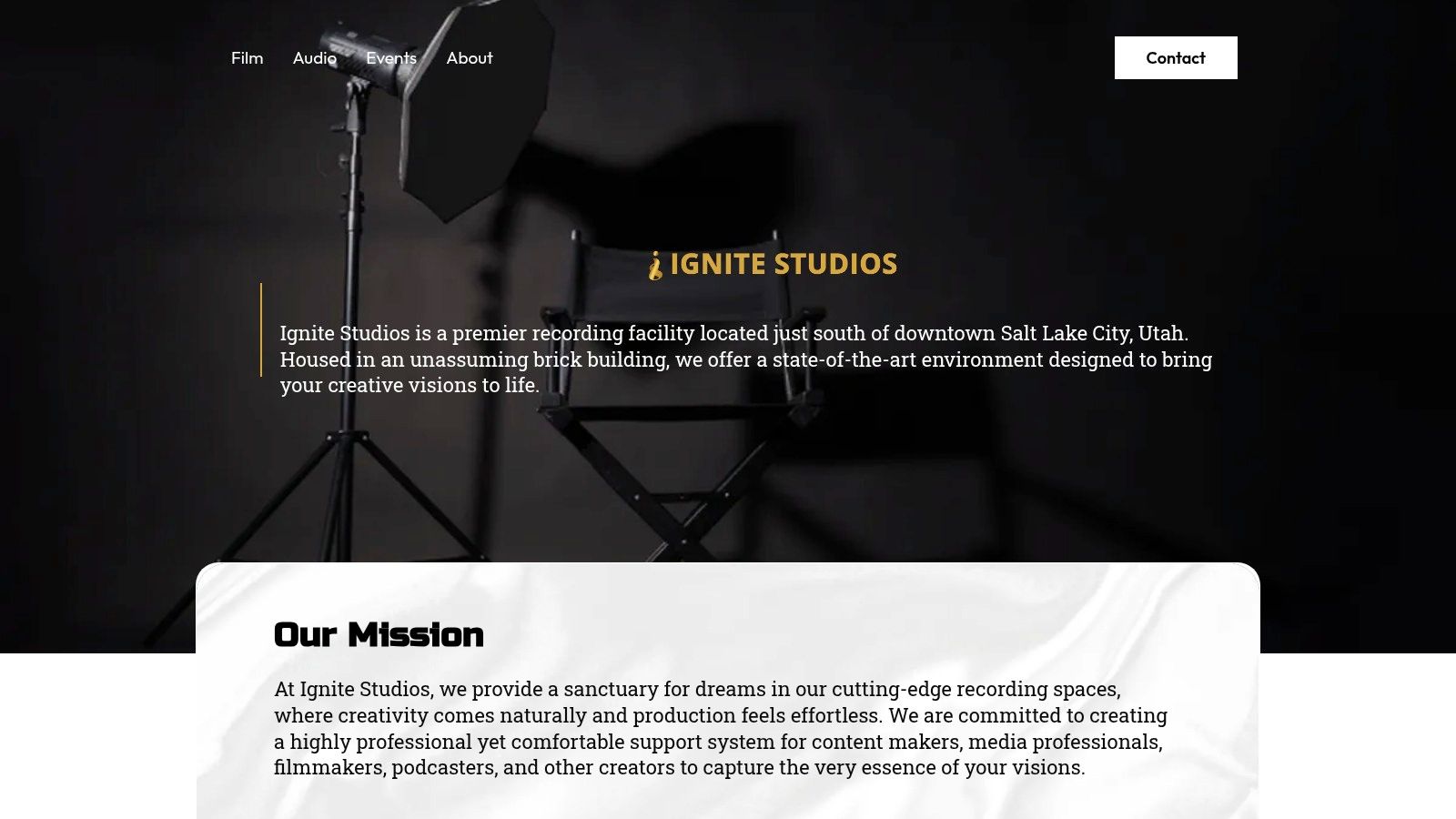
5. Ignite Studios

Ignite Studios is the strongest local option on this list for teams prioritizing polished video podcasts. If your content strategy depends on full-length YouTube episodes, multi-camera clips, executive social content, and a more premium on-screen brand presentation, Ignite stands out.
The facility setup matters here. A treated audio suite, soundstage capability, remote session support, and post-production access make it better suited than a simple audio booth for brands that want one production day to feed several channels.
Best for video-first B2B shows
Many B2B marketers say they want a podcast when they really want a content engine. Ignite fits that model well because video capture expands what the session can become afterward. One interview can feed long-form episodes, shorts, social clips, customer nurture assets, and speaker reels.
The gap is strategic distribution. Ignite looks like a strong production environment, but production isn't the same thing as audience growth. If your internal team can't turn recorded material into an ongoing promotional system, the studio value will top out early.
Selection rule: Choose a video-capable studio when your repurposing plan is already defined. Don't choose it just because multi-cam looks impressive in a pitch.
If video is central to your show design, compare studio capability against a broader video podcast production workflow so you know what part the facility solves and what still sits with your team.
Website: Ignite Studios
6. Creators Cave
Creators Cave is a flexible choice for teams that want repeated access to a creator-style environment without paying for a full agency relationship. That's useful for in-house marketers who already know how they want to run the show and need a controlled place to capture episodes, clips, and related visual content.
The business case is straightforward. If your company plans to publish often, a membership model can be easier to manage than booking ad hoc studio sessions every time. It also supports a practical content workflow where one recording block yields a podcast episode plus several short-form assets.
Why recurring access matters
Podcasting rewards cadence. The broader U.S. market has large reach, but listener habit still matters. One cited market-research reference notes that monthly listening is meaningfully below ever-listening, which reinforces the operational point for brands: awareness doesn't automatically become repeat consumption, so you need consistent release and retention systems (podcast listening habit context).
That's why Creators Cave can work for disciplined teams. If you already have host prep, editorial planning, and post-production covered, recurring studio access supports consistency. If you don't, access alone won't create momentum.
- Good fit for in-house marketers: Strong option for teams producing shows internally.
- Useful for clip-heavy workflows: The space supports podcast and social capture in one place.
- Confirm booking details: The membership page should be checked carefully before committing, especially if hourly access matters to your workflow.
Website: Creators Cave
7. SLC Podcasting
SLC Podcasting is a technical service provider in the most direct sense. If you want a simple setup, engineering support, remote recording help, and editing, this is the kind of vendor that keeps things moving without overcomplicating the process.
That simplicity can be a real advantage. Many companies don't need a large agency to get started. They need a dependable operator who can make the host sound good, manage recording logistics, and deliver finished episodes on schedule.
Straightforward, but intentionally narrow
SLC Podcasting is best for teams that already own the strategic side. Think founder-led shows, niche expert interviews, or internal marketing teams with a clear editorial direction and distribution plan.
It's less compelling for buyers who are specifically searching for the best Salt Lake City podcast agency in the strategic sense. A technical production partner can execute. It usually won't define positioning, source ideal guests, or connect the show to ABM and pipeline goals.
Website: SLC Podcasting
8. 801 Family Studios
801 Family Studios is a boutique option for smaller teams that need help beyond audio capture but don't need a full growth agency. The combination of recording services, mixing, mastering, and adjacent digital asset support can simplify launch work for lean B2B teams.
That matters more than it sounds. Early-stage shows often stall because the company can record an episode, but can't get the supporting pieces over the line. Show art, a landing page, guest materials, and a basic publishing setup all take time.
A practical launch partner for smaller teams
This studio is most useful when your team is trying to get a credible branded podcast off the ground without building everything from scratch. If you need a “good enough and moving” partner, a boutique shop like this can be more efficient than coordinating several freelancers.
The trade-off is scale. This doesn't appear to be a full podcast growth partner, so once the show is live, your audience development process still needs a home somewhere.
- Good for launch support: Helpful if your team needs audio plus lightweight digital assets.
- Good for smaller companies: Easier fit for firms that don't need enterprise-level production complexity.
- Ask direct questions: Confirm workflows, turnaround, and support details during outreach.
Website: 801 Family Studios
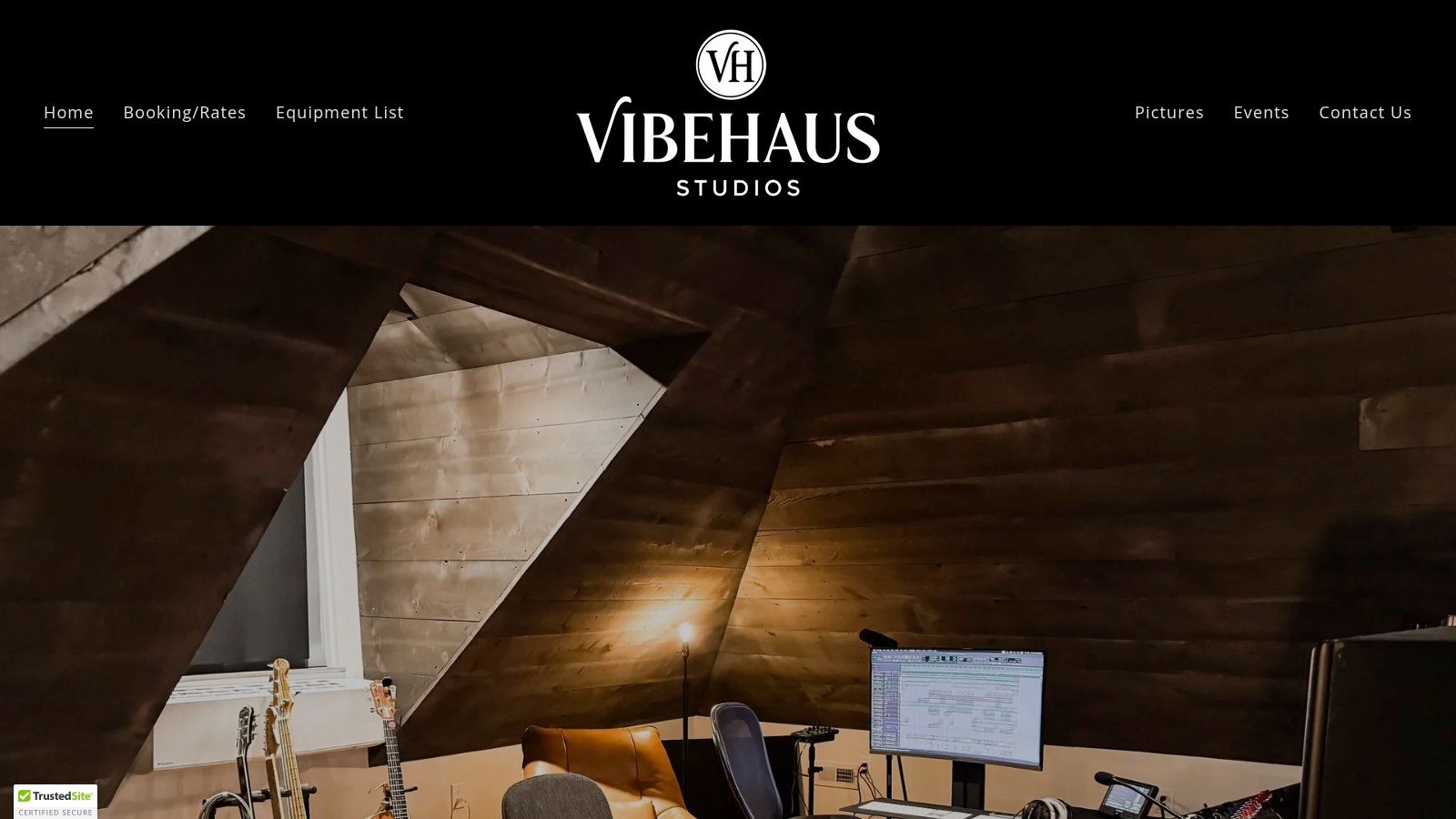
9. Vibehaus Studios
Vibehaus Studios is a strong option when your buying criteria start with sound quality and budget clarity. It's music-oriented in presentation, but that doesn't disqualify it for spoken-word work. In fact, some of the same strengths that matter in music recording matter in podcast capture too, especially microphone quality, signal chain, room treatment, and engineering standards.
What I like here is transparency. Public rate visibility helps teams estimate whether a studio-first approach is financially sensible before they get into a sales process. That makes Vibehaus useful for pilot seasons, executive test sessions, and audio-first shows where the team wants a premium sound without a full-service agency retainer.
Best for brands that know exactly what they need
This is a good fit when you already have your format, host, and promotion plan figured out. It's not ideal if you're still trying to answer foundational questions like who the show is for, what role it plays in marketing, or how guests will be sourced.
One broader industry point supports why this distinction matters. In podcasting, ad load is still relatively light compared with streaming audio, with IAB/PwC reporting about 6% of total listening time in 2024 according to a cited market-research reference. That suggests there's still room for brands to build presence, but differentiation depends more on positioning and placement quality than flooding the channel (podcast ad load context).
Website: Vibehaus Studios
10. Funk Studios
Funk Studios is the premium facility choice for brands that want an acoustically refined environment and have more complex recording needs. It supports voiceover, podcast, ADR, and film-style workflows, which makes it better suited to high-touch branded storytelling than a basic interview booth.
This kind of facility is rarely necessary for standard B2B interview shows. But there are exceptions. Narrative series, executive roundtables, multi-guest recordings, and heavily produced branded content can benefit from the extra capability.
Where premium facilities earn their keep
If your podcast includes multiple speakers, remote integrations, advanced post needs, or higher production ambition, Funk Studios becomes easier to justify. It's also practical when guests are traveling, since location convenience can matter for tight schedules.
The bigger strategic question is whether local presence should drive your decision at all. A useful local-market lens is that most podcast listening happens on major platforms and production workflows are increasingly remote, which reduces the inherent advantage of choosing a vendor because they're nearby. That's why local studio access should be weighed against distributed flexibility, time-zone coordination, and guest booking needs, especially for multi-city B2B teams (local versus remote podcast production fit).
A local studio is valuable when it removes friction from recording. It's not automatically valuable when the rest of your workflow is distributed.
Website: Funk Studios
Top 10 Salt Lake City Podcast Agencies Comparison
| Provider | Implementation complexity 🔄 | Resource requirements ⚡ | Expected outcomes 📊 | Ideal use cases 💡 | Key advantages ⭐ |
|---|---|---|---|---|---|
| Fame | Moderate, full-service, strategic onboarding and coordination | High, premium fees, client commitment, remote collaboration tools | Guaranteed growth (≥10% monthly downloads), pipeline and authority building | B2B tech & professional services seeking measurable revenue-driven podcast programs | End-to-end B2B system, proprietary platforms, performance-based accountability |
| LaunchPod Media (Kiln SLC) | Low–Moderate, studio access plus agency services | Low–Moderate, free local studio slots (availability), agency packages by consultation | Local audience growth, packaged business offerings (no public guarantees) | Local businesses wanting low-barrier entry and business-focused podcasting | Free studio access for locals, downtown location, business-oriented products |
| Counterweight Media | Low, focused on strategy and production workflows | Moderate, boutique agency capacity | Polished episodes that clarify messaging and build thought leadership | Business leaders and organizations prioritizing clear messaging | Strong focus on messaging, high-quality production for leaders |
| The Pod Mill (Downtown SLC) | Low, turnkey on-site recording and post support | Moderate, on-site studio booking (inquiry for pricing) | Professional in-person capture; limited built-in distribution | Executives/SMEs needing a professional downtown studio experience | Purpose-built podcast rooms, convenient guest logistics |
| Ignite Studios | Moderate–High, supports multi-cam video and complex workflows | High, treated soundstage, video crews, post resources | High-production audio+video podcasts and multi-camera shoots | Video-first shows, polished branded productions requiring studio shoots | Full audio/video facility, treated soundstage, remote session support |
| Creators Cave (South SLC) | Low, membership/hourly access with predictable workflows | Moderate, membership tiers or hourly rental costs | Scalable video-first content and short-form social clips | Teams producing frequent video podcasts and repurposed content | Clear membership pricing, cyclorama wall, turnkey video/photo gear |
| SLC Podcasting | Low, simple hourly rentals with engineer support | Low, transparent hourly pricing and basic packages | Reliable recordings and standard post-production | Podcasters needing dependable studio time and editing services | Transparent pricing, engineer included, straightforward booking |
| 801 Family Studios | Low–Moderate, recording plus lightweight web/asset support | Moderate, studio time plus web/EPK services | Faster branded show launches with basic digital assets | Small teams that need audio plus show pages/EPKs without large agencies | One-stop audio + basic web/EPK support for launches |
| Vibehaus Studios | Low, recording-focused with pro gear and clear rates | Moderate, posted rate card and pro equipment available | High-fidelity voice capture suitable for spoken-word and video | Voice-first shows needing premium microphones and predictable costs | Transparent rates, pro-grade signal chain, strong voice fidelity |
| Funk Studios | High, multi-room routing and advanced post workflows | High, premium facility, higher project minimums | Cinematic-quality audio, complex multi-guest or scored productions | High-profile or complex narrative/brand productions requiring scale | Multiple studios/isolation booths, extensive post-production capabilities |
From Studio Time to Strategic Growth
Salt Lake City gives buyers a real spread of options. You can rent a room, hire a boutique producer, work with a video-capable studio, or choose a specialist agency built around B2B outcomes. The right choice depends on what problem you're trying to solve.
If your problem is capture quality, a local studio is enough. The Pod Mill, Ignite Studios, Vibehaus, and Funk Studios all make sense in different production scenarios. They help when your team already knows the format, has guests lined up, and can manage publishing and promotion internally.
If your problem is operational consistency, mid-scope partners like LaunchPod Media, SLC Podcasting, Creators Cave, and 801 Family Studios can be more useful. They reduce friction. They make it easier to get episodes produced repeatedly. For many teams, that alone is a meaningful upgrade over trying to piece together freelancers.
But a lot of B2B marketers searching for the best Salt Lake City podcast agency aren't really looking for studio time. They're looking for a content channel that can build trust with buyers, give executives a platform, create reusable demand-gen assets, and support business development. That requires more than recording.
The strongest buying filter is simple:
- Choose a studio if your team already owns strategy, guest pipeline, publishing, and promotion.
- Choose a production partner if you need reliable execution but can still lead the editorial and growth side internally.
- Choose a strategic agency if the podcast needs to support authority, audience growth, and revenue-facing marketing outcomes.
That's also why local presence shouldn't dominate the decision. Salt Lake City has a meaningful podcast culture and a healthy local supply of studios and creators, but many B2B podcast workflows are now distributed. If your host is in Utah, your customers are national, and your guests are scattered across time zones, the best partner may not be the closest one. It may be the one with the clearest process for strategy, production, and distribution.
Podcasting works best when it's treated as part of a broader content system. If you're trying to drive business results with content, start by deciding what the show has to do for the business, then pick the partner that closes that gap. For some companies, that will be a local room with a great engineer. For others, it will be a specialist agency like Fame that manages the full B2B podcast engine.
If you want a partner that handles B2B podcast strategy, production, guest outreach, and promotion in one system, take a look at Fame. It's built for companies that want their podcast to support authority, audience growth, and pipeline, not just publish episodes.
