March 22, 202622 min read9 sections
7 Content Marketing Thought Leaders to Follow in 2026
By Fame Team
Key Takeaways
- Content marketing is a strategic business function that builds authority and drives revenue.
- Following content marketing thought leaders can help you develop effective strategies.
- Studying real-world applications of thought leadership content can help you apply their strategies to your work.
Content marketing is no longer just about blogging or social media updates. It's a strategic business function that, when executed correctly, builds authority, drives revenue, and creates a lasting brand moat. But with countless voices offering advice, who should you actually listen to? The answer lies in following true practitioners: the content marketing thought leaders who not only talk the talk but walk the walk.
They've built successful media brands, scaled B2B companies, and developed frameworks that deliver repeatable results. To truly grasp the power of influential voices in the industry, delve into specific thought leadership content examples that showcase their impact. By studying real-world applications, you can better understand how to apply their strategies to your own work.
This article cuts through the noise to introduce you to the most influential minds in the space. For each leader, we provide their core philosophies, direct links to their best work, and actionable takeaways your team can implement today. We will also explore the one content format that acts as the ultimate engine for modern content strategy: the B2B podcast. This single asset can be repurposed into social clips, blog posts, newsletters, and more, amplifying your message across all channels. By learning from these experts, you can move beyond generic tactics and build a content machine that genuinely performs and delivers measurable ROI.
1. Ann Handley: The Champion of Ridiculously Good Writing
Ann Handley is one of the most respected content marketing thought leaders because she champions a simple, yet powerful, idea: writing quality is a direct reflection of customer empathy. As the Chief Content Officer of MarketingProfs, she argues that B2B brands must abandon robotic, jargon-filled corporate-speak and instead adopt a genuine, human voice. Her philosophy isn't about chasing algorithms but about building real connections through clarity and personality.
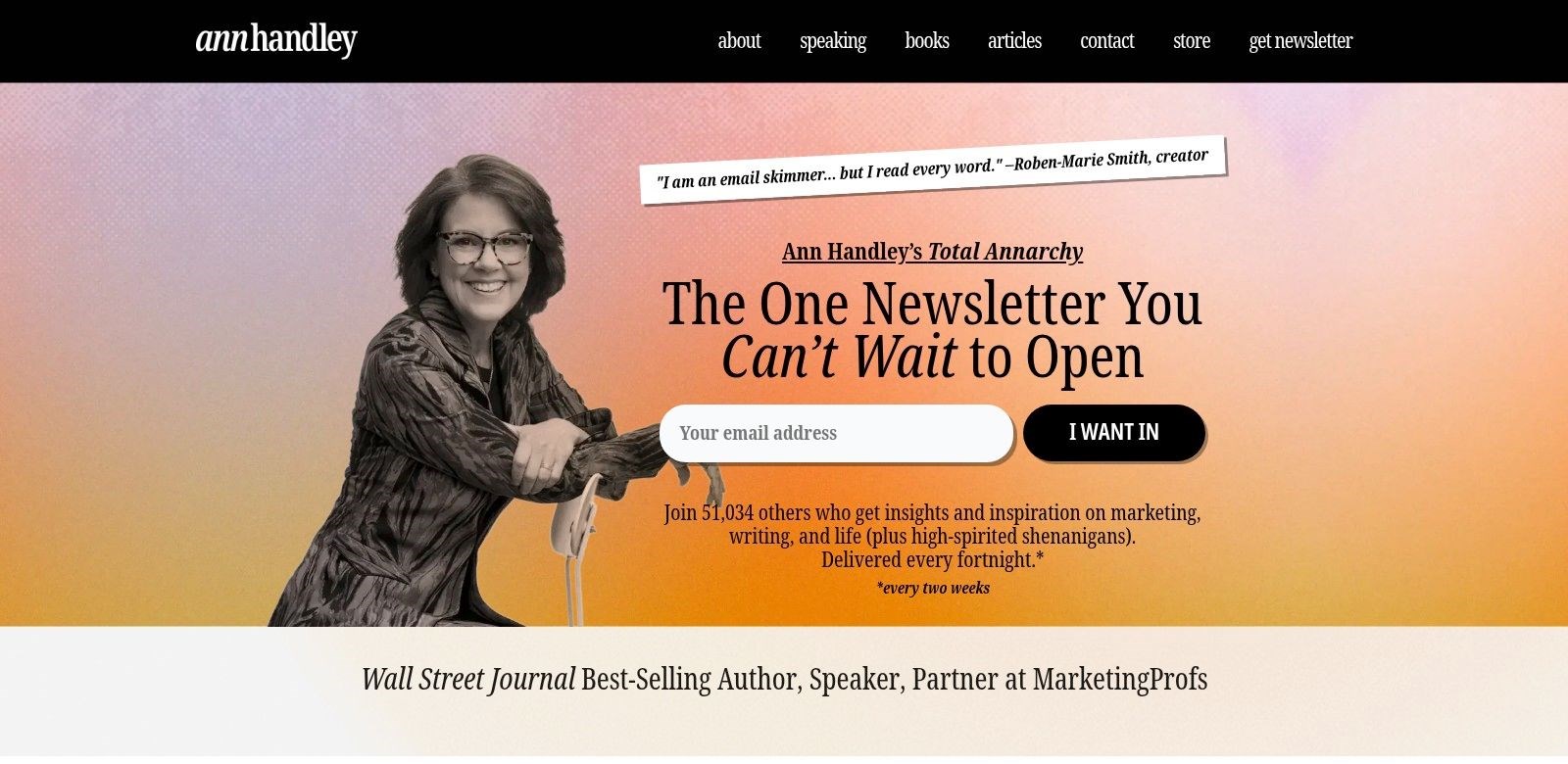
Handley's work provides a direct path for B2B marketers to elevate their craft. Her website, annhandley.com, is a free hub of resources, but her core teachings are most accessible through her landmark book, Everybody Writes, and her biweekly newsletter, Total Annarchy. The newsletter itself is a masterclass, demonstrating how to deliver value, personality, and a call-to-action in a format that people eagerly anticipate.
How B2B Teams Can Apply Handley's Insights
Ann's approach is especially useful for professional services firms and tech companies whose expertise is often trapped behind dense, technical language. By applying her frameworks, these businesses can make their complex solutions accessible and engaging. This builds brand authority far more effectively than another dry white paper. For those interested in the foundational steps of this journey, exploring how to become a thought leader provides a solid starting point for building influence.
Here are actionable steps for B2B teams:
- Conduct a "Voice Audit": Review your last five blog posts, emails, and social media updates. Read them aloud. Do they sound human? Or do they sound like a legal document? Rewrite one of them using Handley's "The More the Tofu, the More It Tastes Like the Chicken" rule, where your brand's voice (the chicken) should infuse even the most basic content (the tofu).
- The subject line and opening hook.
- How she weaves a personal story into a business lesson.
- The "P.S." section and its call-to-action.
"In an online world, our online words are our emissaries. They tell the world who we are." - Ann Handley
While Handley's work doesn't offer direct playbooks for paid acquisition or technical SEO, her principles are the foundation upon which all successful content, including podcasts and video, is built. A B2B podcast filled with authentic, clear conversation is a direct extension of her philosophy. Her focus on editorial excellence ensures your message resonates, regardless of the distribution channel.
2. Joe Pulizzi: The Architect of the Company-as-Media Model
Joe Pulizzi is often called the "godfather of content marketing," and for good reason. As the founder of the Content Marketing Institute (CMI), he professionalized the discipline, giving it a framework, a community, and a vocabulary. His core philosophy is that for content to truly succeed, businesses must stop thinking like marketers and start acting like media companies. This "Content Inc." mindset argues for building a loyal audience around a specific niche before asking for the sale, treating content as a business asset that drives revenue, not just a marketing expense.
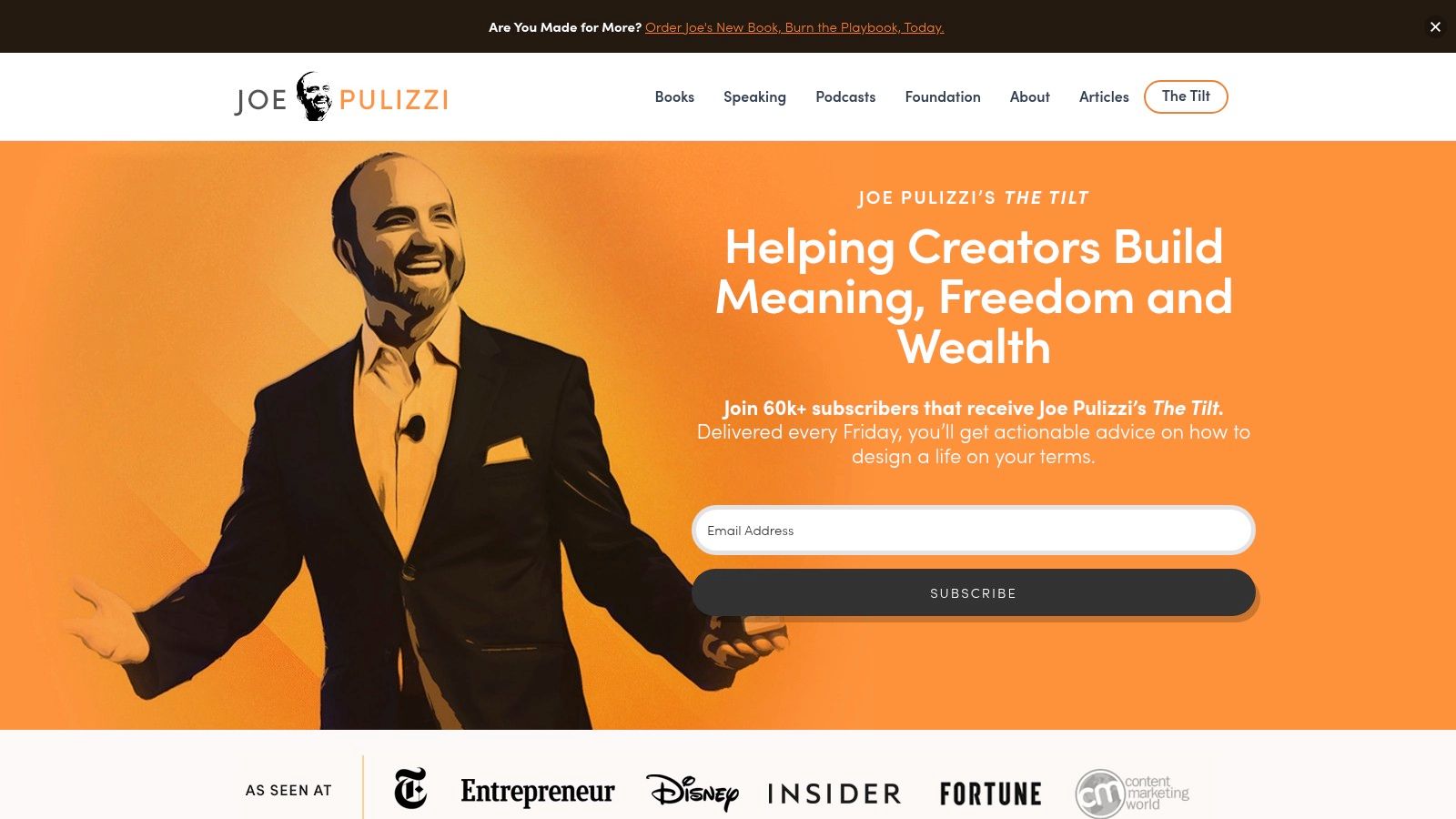
Pulizzi’s teachings are practical and proven, drawn from his experience launching and successfully exiting CMI. His website, joepulizzi.com, serves as a hub for his current projects, including The Tilt newsletter, which focuses on helping content creators build their own businesses. For B2B marketers, his most valuable ongoing resource is the This Old Marketing podcast, co-hosted with Robert Rose. Each episode provides sharp analysis of industry news, putting today's trends into historical context.
How B2B Teams Can Apply Pulizzi's Insights
Pulizzi’s model is a powerful guide for B2B firms that want to build a defensible moat around their brand. By becoming the primary media source for their industry, they own the audience and the conversation. This is especially true for building a comprehensive B2B content marketing strategy where an owned media asset, like a podcast, can fuel an entire ecosystem of content. His work offers a strategic roadmap rather than tactical, in-the-weeds channel advice, making it ideal for leadership buy-in.
Here are actionable steps for B2B teams:
- Define Your Content Tilt: Identify an area of expertise where you can become the leading expert. It must be a niche you can own that has a large enough addressable audience. For example, instead of "cybersecurity," your tilt could be "cybersecurity compliance for regional banks."
- Build Your "Base" Asset: Following the Content Inc. model, choose one primary format (e.g., a podcast, a newsletter, a video series) and commit to consistent delivery. A B2B podcast is an ideal base, as each episode can be repurposed into blog posts, social clips, audiograms, and newsletter content, maximizing your investment.
- How they frame industry news to provide a unique perspective.
- The "Rants and Raves" segment and how it generates engagement.
- The "Example of the Week" and how it provides a concrete case study.
"Your customers don't care about you, your products, or your services. They care about themselves. Your content should be about them." - Joe Pulizzi
While Pulizzi’s approach requires a long-term commitment and patience, it provides a battle-tested blueprint for moving beyond sporadic campaigns. His focus on building an audience asset first and monetizing second is a direct counterpoint to the pressure for short-term lead generation. By adopting this media-centric mindset, a B2B company can build a lasting competitive advantage that is difficult for competitors to replicate.
3. Robert Rose: The Architect of Strategic Content Operations
Where many focus on the what of content creation, Robert Rose stands out as one of the essential content marketing thought leaders for his focus on the how. As the longtime Chief Strategy Advisor for Content Marketing Institute and founder of The Content Advisory, he helps large B2B organizations move content from a siloed marketing function to a core, strategic business operation. His work is for leaders who recognize content’s potential but struggle with the governance, team structure, and measurement needed to scale it effectively.
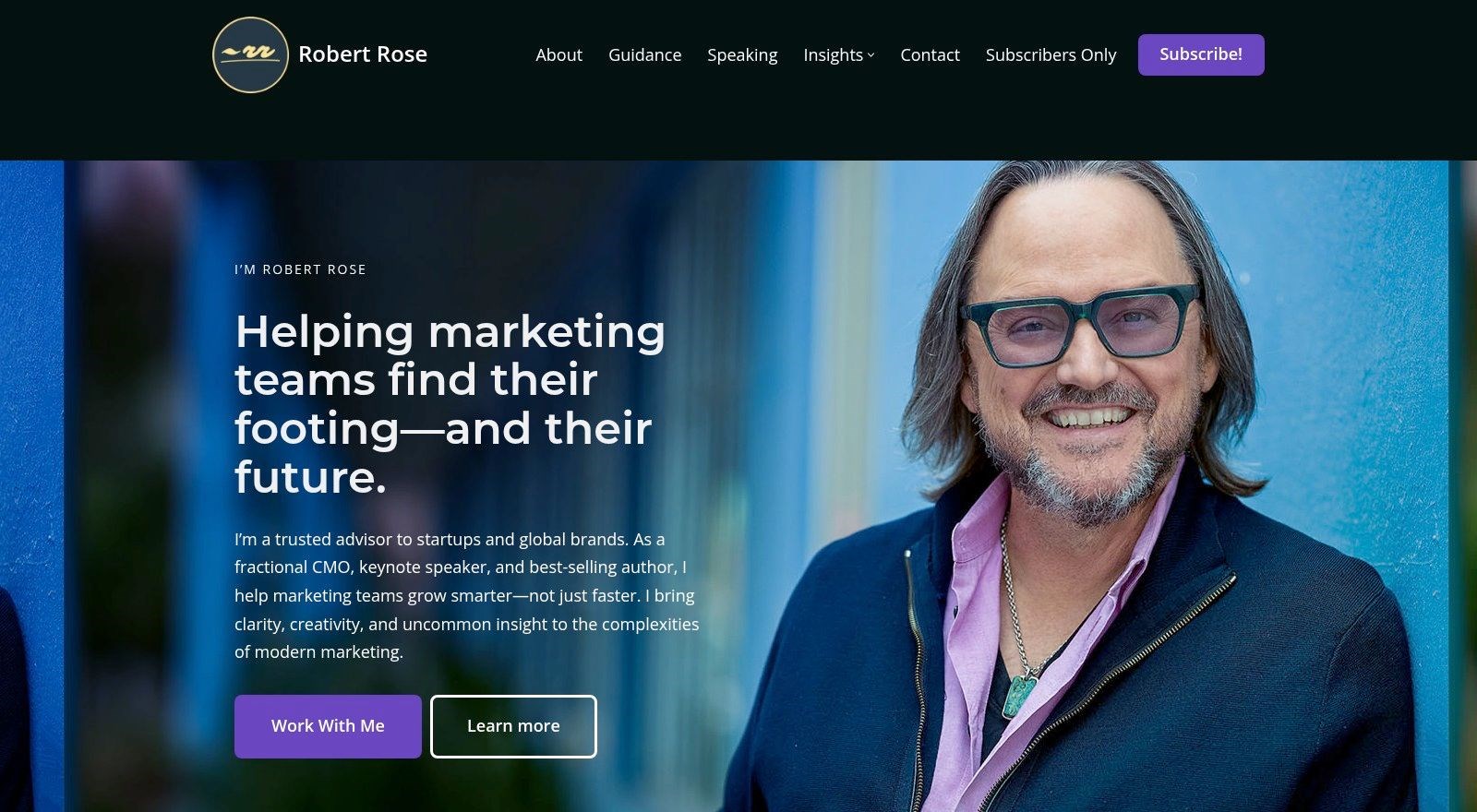
Rose’s perspective is most clearly articulated through his consultancy, Seventh Bear, and his weekly newsletter on robertrose.net. He co-hosts the influential podcast This Old Marketing, which provides weekly commentary on industry news, keeping senior marketers aligned with current trends. His approach is less about writing a better headline and more about building the "content engine" that can consistently produce and measure high-value assets, like a B2B podcast, that feed the entire marketing ecosystem.
How B2B Teams Can Apply Rose's Insights
Rose's frameworks are perfect for mid-market and enterprise companies feeling the pain of "random acts of content." Professional services and tech firms with multiple product lines or business units can use his models to create cross-functional alignment and prove ROI to the C-suite. His advisory engagements are custom, but his public work offers a clear path for building a more mature content function.
Here are actionable steps for B2B teams:
- Map Your Current Content Operating Model: Use a whiteboard to sketch out who requests content, who creates it, who approves it, where it's published, and how it’s measured. The chaotic result will highlight the exact pain points Rose addresses and build the case for a more formal content marketing team structure.
- Create a "Measurement Narrative": Stop reporting on vanity metrics. For your next major content initiative (e.g., a new webinar or report), define one primary business goal it supports (e.g., "accelerate sales pipeline for Product X"). Build a one-page narrative that connects the content’s performance metrics directly to that business outcome, just as Rose advises for gaining executive buy-in.
- Conduct a Content Governance Role-Play: Gather stakeholders from marketing, sales, product, and legal. Present a hypothetical content idea, like a new industry report. Ask each person to describe their role, concerns, and approval requirements. This exercise will immediately reveal your governance gaps and the need for a documented process.
"Our job is not to create more content. Our job is to create the minimum amount of content for the maximum amount of results." - Robert Rose
While Rose’s advisory work is aimed at larger organizations and lacks public pricing, his core principles are universally applicable. His focus on treating content as a strategic asset provides the justification for investing in high-effort, high-return formats. For example, launching a podcast for content marketing becomes a logical strategic decision, not just another creative project, when viewed through Rose’s operational lens. The podcast serves as a "pillar" asset that can be systematically repurposed, proving its value across the business.
4. Ross Simmonds: The Master of Distribution Systems
Ross Simmonds stands out among content marketing thought leaders for his relentless focus on one often-neglected area: distribution. While many experts concentrate on creation, Ross, founder of the B2B content agency Foundation, champions the mantra, "Create once. Distribute forever." His core philosophy is that even the best content is worthless if no one sees it, and he provides systematic, repeatable playbooks for ensuring it reaches the right audience.
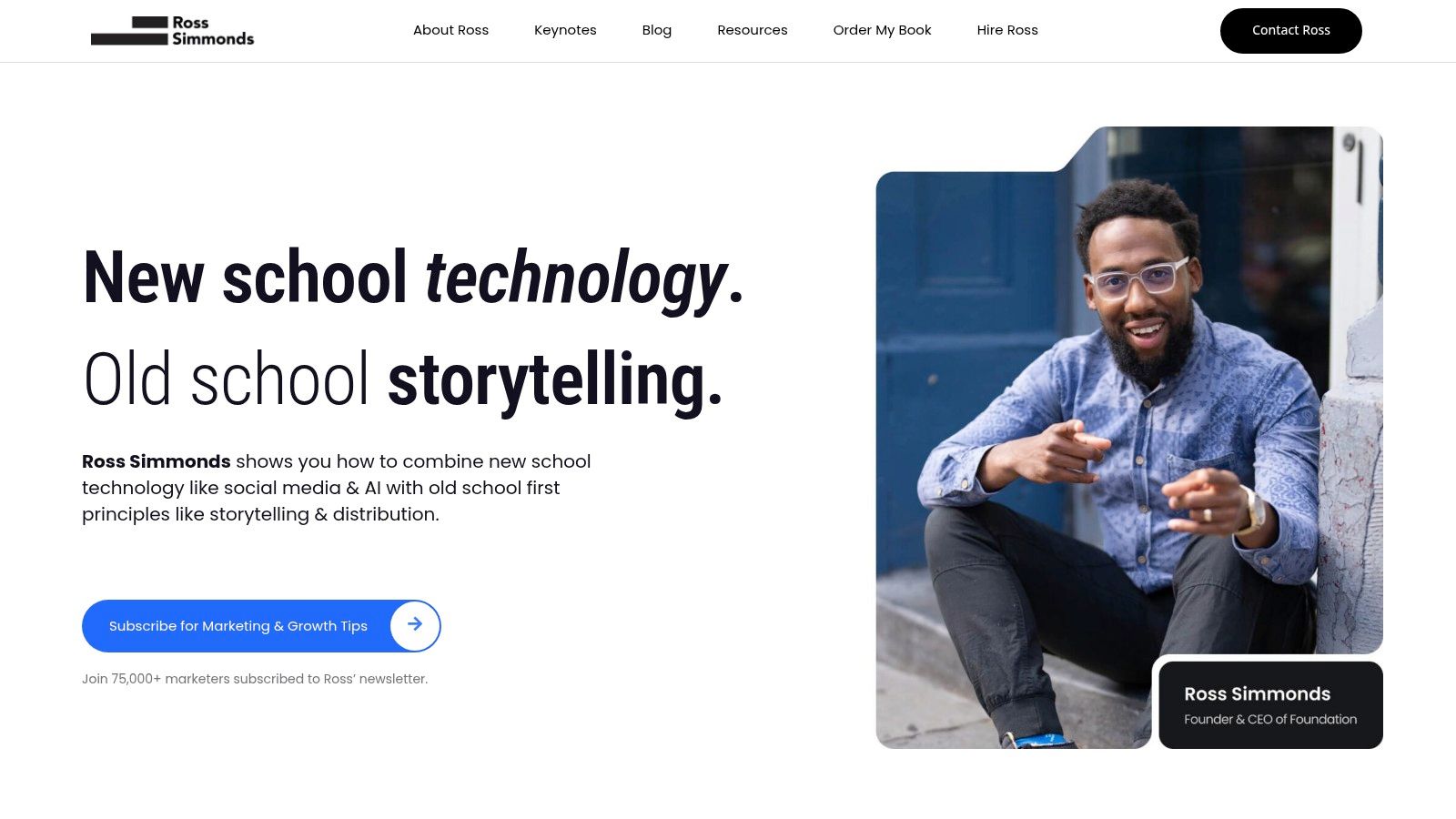
Simmonds transforms distribution from a hopeful afterthought into a strategic operation. His website, rosssimmonds.com, and his agency's blog are treasure troves of channel-specific checklists and templates for social media, online communities, and content syndication. He offers concrete frameworks that B2B SaaS and enterprise teams can use to move beyond the "publish and pray" approach and build a scalable content promotion engine. While his courses and toolkits have varying availability, his free content provides immediate, actionable value.
How B2B Teams Can Apply Simmonds' Insights
Ross's methods are a game-changer for B2B tech firms that invest heavily in cornerstone assets like white papers, case studies, and webinars but see limited engagement. By applying his distribution playbooks, these companies can maximize the ROI of every single piece of content they produce. This approach is especially powerful when combined with a central content pillar, as many of the best B2B podcasts for content marketing and thought leadership are used, which can be atomized into dozens of assets for distribution.
Here are actionable steps for B2B teams:
- A 3-5 point bulleted list for a LinkedIn text post.
- A single key statistic turned into a visual graphic for Twitter.
- A short video clip of a key insight for LinkedIn and YouTube Shorts.
- A longer-form answer to a related question on Quora or Reddit.
"The reality is, the best content doesn't always win. The best-promoted content does." - Ross Simmonds
While Simmonds' work is heavily focused on the distribution phase, it fundamentally changes how you should approach content creation. Knowing you have a powerful distribution system in place encourages the creation of higher-value, pillar assets like B2B podcasts, because you have a reliable machine to guarantee a return on that upfront investment.
5. Andy Crestodina: The Data-Driven Content Optimizer
Andy Crestodina is among the most practical content marketing thought leaders for B2B teams who need to connect content directly to business results. As the Co-founder and Chief Marketing Officer of Orbit Media, he demystifies the relationship between content, SEO, and lead generation. His approach is less about abstract philosophy and more about scientific testing, measurement, and optimization. Crestodina provides the data-backed frameworks that prove great content isn't just written, it's engineered.
His platform is the Orbit Media blog, a treasure trove of actionable guides and original research. The annual blogging survey he publishes is an industry benchmark, giving marketers concrete data to guide their strategies. Unlike others who focus broadly on brand voice, Crestodina provides specific templates for on-page SEO, user experience, and conversion rate optimization that teams can implement immediately. His website, Orbit Media, is a free university for evidence-based content marketing.
How B2B Teams Can Apply Crestodina's Insights
Crestodina's tactical approach is perfect for B2B tech and professional services firms that are accountable for generating qualified leads from their website. His work is essentially a playbook for turning a company blog into a predictable pipeline. For those looking to implement his data-first mindset, a crucial step is learning how to build custom SEO dashboards to track the metrics that actually matter.
Here are actionable steps for B2B teams:
- Conduct an "Optimal" Content Audit: Use Crestodina's "7-Point Content Marketing Checklist" to grade your top 10 traffic-driving articles. Are they keyword-focused? Do they include contributor quotes and images? Do they have strong internal linking? This audit provides a clear roadmap for what to update.
- Create a "Question-Answer" Content Hub: Identify the top 5 questions your sales team hears from prospects. Using Crestodina's "SEO for questions" framework, create a detailed article answering each one. This directly aligns your content with bottom-of-funnel search intent, a core part of an effective content marketing strategy.
- Implement the "Go Big or Go Home" Update Strategy: Instead of writing dozens of short, low-impact posts, identify your five best-performing but outdated articles. Dedicate your team's resources to rewriting and republishing them with new data, expert quotes, and visuals. Track the before-and-after performance to prove ROI.
"A great page isn't just a great answer. It's the best presentation of the best answer." - Andy Crestodina
While Crestodina’s expertise is heavily focused on written website content and SEO, his principles of demonstrating expertise and measuring impact are universal. Applying his data-driven mindset to a B2B podcast, for instance, means tracking listener demographics, episode completion rates, and website visits from show notes. His focus on analytics provides the accountability needed to justify any content format, ensuring that every effort, from blog post to podcast episode, contributes to the bottom line.
6. Amanda Natividad: The Architect of Zero-Click Content
Amanda Natividad has become one of the most practical content marketing thought leaders by focusing on efficiency and impact, especially for lean B2B teams. As the Chief Evangelist at SparkToro, she champions "Zero-Click Content," a philosophy centered on delivering value directly within social feeds (like LinkedIn and X) without demanding a click. Her approach redefines thought leadership as a system of distributing expertise in bite-sized, audience-centric formats that build authority and demand over time.
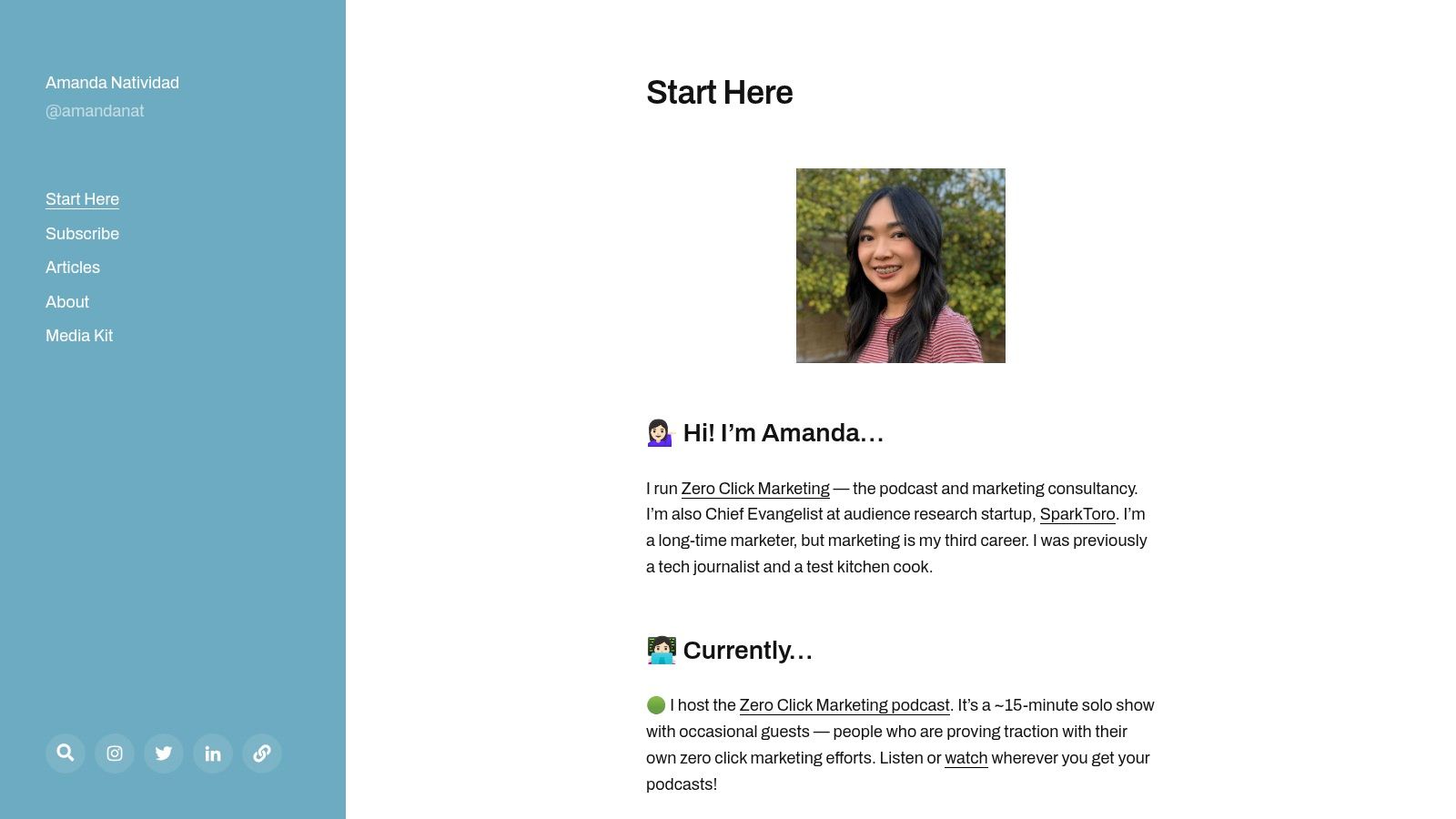
Natividad’s core ideas are accessible through her newsletter, The Menu, and her website, amandanat.com. She translates high-level strategy into concrete playbooks, such as how to turn one podcast episode into weeks of social content. Her private workshops and the Content Marketing 201 course offer structured curricula for companies ready to move beyond basic content creation and build a true thought leadership engine. This is ideal for B2B teams that have limited bandwidth but need to generate significant market presence.
How B2B Teams Can Apply Natividad's Insights
Amanda's framework is a lifeline for startups and professional services firms that can't afford to wait six months for a blog post to rank. By adopting Zero-Click Content, they can immediately start conversations, test messaging, and build brand affinity in the channels where their audience already spends time. It's a method that prioritizes demonstrating expertise over chasing vanity metrics. For teams wondering how to prove the value of these activities, understanding the nuances of measuring content marketing ROI is a crucial next step.
Here are actionable steps for B2B teams:
- Implement the "Content Atomization" Model: Take your next B2B podcast episode or webinar recording and commit to creating 10 "zero-click" assets from it. This includes quote graphics, short video clips with captions, text-based posts summarizing a key takeaway, and polls related to the topic.
- Run a "Message-Market Fit" Test: Before writing a long-form blog post, create a LinkedIn post or X thread outlining the core argument. Use the engagement and comments (or lack thereof) as data to decide if the topic is worth a larger content investment.
- Create a "Founder Thought Leadership" System: Dedicate one hour per week to interviewing an internal subject matter expert. Record the conversation and use the transcript to fuel a week's worth of that person's social media content, positioning them as an authority. This directly applies Natividad's principle of distributing expertise efficiently.
"The goal of content is not to get a click. The goal is to build a brand that people trust, prefer, and want to buy from." - Amanda Natividad
While her methods are more focused on organic distribution and brand building than on paid acquisition, they create the foundational assets and audience trust that make paid campaigns more effective. A B2B podcast, when atomized using her strategy, becomes the central pillar of a brand's entire content ecosystem, feeding social channels, newsletters, and sales enablement materials with authentic, expert-driven insights.
7. Dave Gerhardt: The Practitioner's Playbook for B2B Marketing
Dave Gerhardt stands out among content marketing thought leaders for his unapologetically direct, practitioner-focused approach. As the former marketing leader at Drift and Privy, he built his reputation on creating demand through brand, not just chasing MQLs. His core philosophy, now the foundation of his platform Exit Five, is that the best B2B marketing feels like a conversation and is deeply rooted in understanding the customer's actual problems, not just your product's features. He champions aligning sales and marketing through clear, authentic founder-brand messaging.
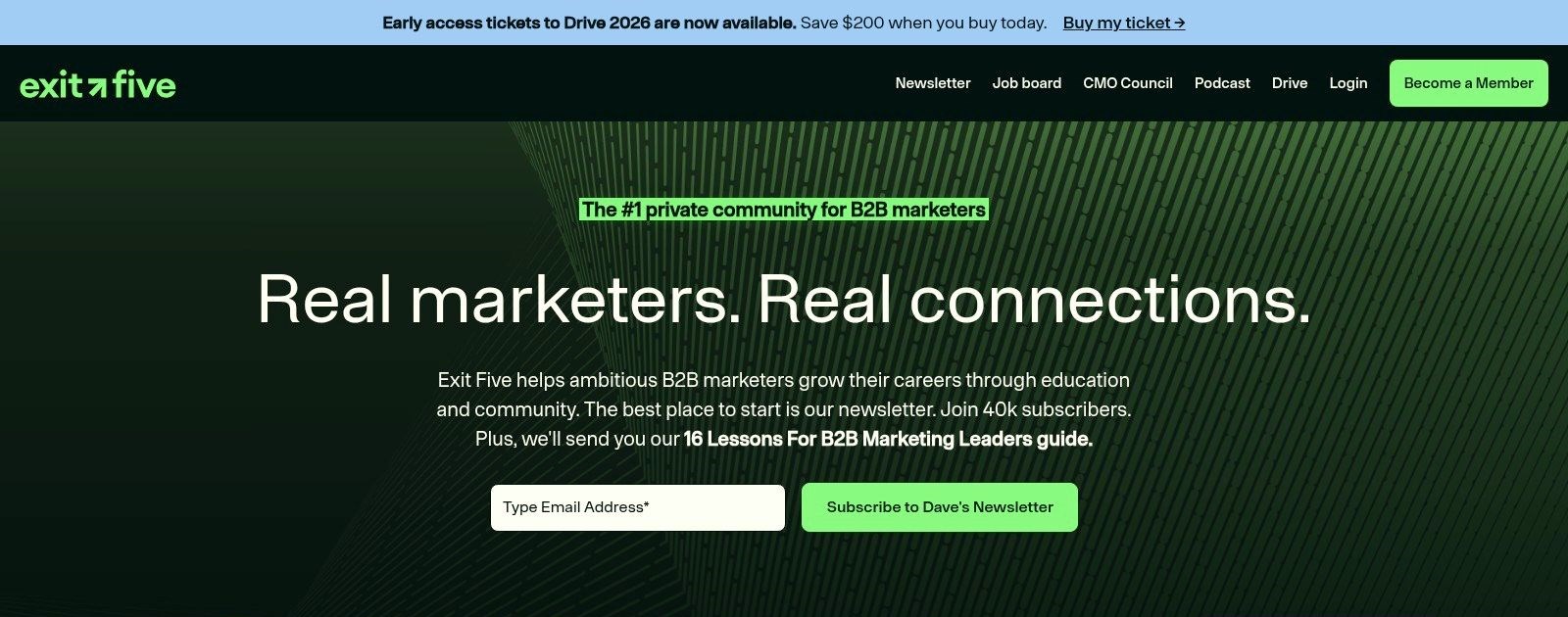
Gerhardt's insights are consolidated within Exit Five, a paid community and media company for B2B marketers. It serves as a real-time hub for what's working now, featuring a private community, job board, training courses, and a podcast. While the free newsletter and podcast offer valuable glimpses, the most potent playbooks and peer support are inside the paid membership. This model ensures the advice is current and community-validated, moving beyond academic theory to on-the-ground tactics that drive pipeline.
How B2B Teams Can Apply Gerhardt's Insights
Gerhardt's methods are ideal for B2B tech and startup teams who need to generate demand and build a brand with limited resources. His focus on creating a powerful narrative and distributing it effectively makes his work a go-to for companies aiming for market leadership. The emphasis on podcasts as a central content engine is particularly relevant, as they provide a direct line to your audience and a deep well of derivative assets like clips, articles, and social posts.
Here are actionable steps for B2B teams:
- Adopt the "Steal My Winning Plays" Mentality: Join the Exit Five community (or subscribe to the free newsletter) and identify one specific campaign or tactic discussed. Task your team with adapting and launching a version of it within 30 days. This could be a new ad creative format, a LinkedIn post style, or a landing page messaging structure.
- Run a "Copy Teardown" Session: Take your homepage copy and compare it against Gerhardt's "Problem, Solution, How it Works" framework. Does your messaging clearly articulate the pain you solve before you introduce your product? Rewrite the first 100 words of your homepage focusing on the customer's problem.
- Create a "Minimum Viable Podcast": Following Gerhardt's advice, don't over-engineer your podcast launch. Record five episodes with friendly industry contacts, focusing on genuine conversation over-scripted questions. Use these recordings to create at least 10 short-form video clips for social media, proving the value of podcast content marketing as a content engine before committing to a larger production budget.
"Your job in marketing is to be the expert on the customer. You have to know them better than anyone else in the company, including the CEO and the head of product." - Dave Gerhardt
The primary drawback to Gerhardt's ecosystem is that the most detailed, step-by-step guides are behind the Exit Five paywall. His advice is also intensely practical and may lack the high-level strategic frameworks some enterprise teams require. However, for B2B marketers who need to connect brand-building directly to revenue, Gerhardt provides one of the most honest and actionable roadmaps available today.
Top 7 Content Marketing Thought Leaders Comparison
| Expert | Implementation complexity (🔄) | Resource requirements (⚡) | Expected outcomes (📊) | Ideal use cases (⭐) | Key advantages (💡) |
|---|---|---|---|---|---|
| Ann Handley | Low–Medium - editorial process and training | Low - small teams, time for writing | Improved writing quality, newsletter engagement | B2B teams improving long‑form and email content | Actionable frameworks and scalable editorial standards |
| Joe Pulizzi | Medium–High - building owned media and community | Medium–High - content ops, events, long horizon investment | Long‑term audience growth and monetizable owned channels | Companies aiming to be media or monetize content over time | Company‑as‑media methodology and proven playbooks |
| Robert Rose | High - enterprise operating models and governance | High - cross‑functional teams, executive time, advisory budgets | Strategic alignment, governance, measurable enterprise capability | Mid‑market/enterprise needing content as a strategic function | Deep change‑management experience and measurement narratives |
| Ross Simmonds | Medium - systemizing distribution and channel ops | Medium - templates, training, distribution tooling | Scalable reach, repeatable distribution, better channel ROI | B2B SaaS teams focused on scaling content distribution | Channel‑specific checklists and syndication playbooks |
| Andy Crestodina | Low–Medium - tactical SEO and on‑page processes | Low–Medium - writers, SEO tools, analytics | Improved search visibility, lead gen, measurable SEO gains | Teams prioritizing web content, blogging, and organic leads | Evidence‑based SEO templates and benchmarking research |
| Amanda Natividad | Low–Medium - lightweight audience testing and systems | Low - lean research methods, workshops | Better message‑market fit and higher organic resonance | Small B2B teams/founders testing positioning and thought leadership | Zero‑Click Content concept and practical audience research |
| Dave Gerhardt | Medium - community operations and peer programs | Medium - community platform, time, membership fees | Rapid practitioner insights, aligned messaging, tactical wins | Marketers seeking peer support and founder‑brand playbooks | Active community, curated swipe files, practitioner‑validated tactics |
The Unifying Thread: Why Your B2B Podcast is the Ultimate Content Engine
Throughout this guide, we've explored the brilliant minds shaping modern B2B marketing. From Ann Handley’s insistence on empathetic, quality writing to Ross Simmonds’ mastery of content distribution, a clear picture emerges. The most effective marketing isn't about creating more; it's about creating smarter and building genuine connections.
These content marketing thought leaders, while distinct in their specializations, all contribute to a single, powerful idea: authority is built through consistent, valuable, and audience-centric content. The challenge for busy B2B teams isn't understanding this principle, it's executing it efficiently. How can you embody Handley’s quality, Pulizzi’s media-first mindset, and Simmonds’ distribution savvy without burning out your team?
From Theory to Action: The Podcast as a Content Flywheel
The answer lies in a format that naturally integrates every key principle we've discussed: the B2B podcast. Think of it not just as a piece of audio, but as the central hub of your entire content operation. It’s the most direct path to putting the wisdom of these experts into practice.
Consider how a single weekly podcast episode aligns with their core teachings:
- Ann Handley & Quality: A podcast is a conversation. It forces you to be human, tell stories, and create the "ridiculously good" content Handley advocates for, moving beyond robotic corporate speak.
- Joe Pulizzi & The Media Company Mindset: Launching a show immediately positions you as a media entity, not just a vendor. You are creating appointment-based content, building a subscribed audience loyal to your brand's voice.
- Robert Rose & Strategic Purpose: A successful podcast demands a content strategy. It forces you to answer the "why" before the "what," ensuring every episode supports your primary business objectives, just as Rose would advise.
- Andy Crestodina & Data-Driven Insights: Your episode downloads, listener questions, and guest conversations are a goldmine of data. They tell you exactly what topics resonate, providing the "original research" Crestodina champions for creating top-performing articles.
- Dave Gerhardt & Brand-First Marketing: Podcasting is a powerful tool for building a distinct brand personality. Gerhardt built his reputation through authentic, opinionated content, and a podcast is the ideal stage for your company to do the same.
Activating the Content Engine: A Practical Workflow
The true power of a podcast is its ability to be repurposed. This is the concept of content atomization, a cornerstone of efficiency championed by experts like Ross Simmonds and our own founder, Tom Hunt. One 45-minute recording session doesn't just produce one asset; it seeds an entire week’s worth of marketing activity.
Here’s a practical look at how one podcast episode becomes a multi-channel campaign:
- The Core Asset: The full audio episode is published on platforms like Spotify and Apple Podcasts, serving your core subscriber base.
- The SEO Foundation: A full transcript is published on your blog. This single document can rank for dozens of long-tail keywords, capturing search intent around the specific problems discussed in the episode.
- The Pillar Blog Post: Your content team writes a 2,000-word article summarizing the episode's key takeaways, embedding the audio player, and linking to relevant resources. This becomes a cornerstone piece of content.
- The Social Media Goldmine: Your team clips 4-6 short video highlights (30-90 seconds) from the recording. These are perfect for sharing on LinkedIn, X, and TikTok, driving awareness and engagement with powerful quotes and insights.
- The Newsletter Heartbeat: The episode's main theme becomes the central topic for your weekly newsletter, providing immense value to your email list and driving traffic back to your site.
Instead of your team struggling to brainstorm separate ideas for the blog, social media, and your newsletter, they now have a single, rich source to draw from. The podcast becomes the engine, and the repurposed assets are the fuel driving your entire content marketing strategy forward. This is how you stop chasing trends and start building a sustainable system for thought leadership and demand generation.
Ready to build a content engine that puts the advice of these top content marketing thought leaders into action? At Fame, we specialize in producing turn-key B2B podcasts that drive authority and revenue, handling everything from strategy to production and promotion. Stop brainstorming and start building your media brand by visiting Fame to learn how we can help.
Want us to run this for you?
Fame starts and grows B2B podcasts that generate pipeline. Tell us who you are trying to reach and we will send a costed proposal within 48 hours.
Related content
- Read moreFame Team · July 16, 2026
10 Account Based Marketing Tactics For B2B Growth In 2026
Discover 10 actionable account based marketing tactics for B2B tech. Learn to use podcasts, data, and targeted content to close high-value accounts. - Read moreFame Team · July 16, 2026
The 8 Best Brighton Podcast Agency Picks For 2026
Find the best Brighton podcast agency for your B2B brand. Our 2026 guide reviews top 8 agencies for production, growth & ROI. Expert analysis here - Read moreJune 10, 2026
20 Best Podcast Production Agencies For 2026 (And Why Should You Hire One)
Global podcast and vodcast ad revenues are on track to hit $5 billion in 2026 , up 20% year-on-year. - Read moreApril 13, 2026
Leadership In Marketing: The B2B Podcast Playbook
Most companies still confuse leadership in marketing with job titles, org charts, and budget control. That's outdated.