December 23, 202521 min read12 sections
12 Essential Types of Podcasts To Launch Your B2B Brand In 2025
By Fame Team
Key Takeaways
- Launching a B2B podcast requires a strategic marketing decision, including choosing the right format to achieve thought leadership, demand generation, and brand authority.
- The B2B interview format is a cornerstone of B2B podcasting, effective for building networks and authority by featuring industry experts, key customers, or thought leaders in structured conversations.
- To implement a successful B2B podcast, it's essential to have a clear understanding of the best-fit use case, recommended length and frequency, and guest strategy to drive tangible results and align with critical business goals.
Launching a B2B podcast is more than just hitting 'record' and talking into a microphone; it's a strategic marketing decision. The format you choose is the architectural blueprint for your entire audio strategy. It dictates your content style, production workflow, guest acquisition process, and ultimately, the return on your investment. Get it right, and you build a powerful engine for thought leadership, demand generation, and brand authority. Get it wrong, and you risk producing content that fails to connect, draining resources without delivering measurable business impact.
This guide moves beyond generic descriptions to provide a tactical breakdown of the most effective types of podcasts for B2B organizations. We will dissect each format, providing a clear blueprint that includes pros and cons, ideal use cases, and specific key performance indicators (KPIs) to track. You will learn which formats are best suited for building an executive's personal brand, which excel at generating a qualified sales pipeline, and how to align your choice with critical business goals like securing a funding round or positioning your company for a successful exit.
Our goal is to equip you with the strategic clarity needed to select the perfect podcast format. We will examine everything from the classic interview show to more complex narrative styles, offering actionable advice to ensure your podcast not only captures attention but also drives tangible results. Let’s dive into the structures that will amplify your brand’s voice and transform your audio content into a core pillar of your marketing efforts.
1. The B2B Interview: Building Networks and Authority
The interview is a cornerstone of B2B podcasting, and for good reason. This format features a host engaging in a structured conversation with an industry expert, a key customer, or a thought leader. Unlike broad, consumer-focused interviews, a B2B interview zeroes in on solving specific, high-stakes business challenges relevant to a niche professional audience.
This is one of the most effective types of podcasts for B2B because it doubles as a powerful networking and relationship-building tool. Inviting a high-profile guest from a target account or a potential partner organization creates a genuine connection, transforming a cold outreach into a collaborative content creation opportunity.
Implementation and Strategy
- Best-Fit Use Case: Excellent for thought leadership and lead generation. By featuring dream clients or partners, you build rapport and gain invaluable insights into their challenges.
- Recommended Length & Frequency: 30-45 minutes per episode, published weekly or bi-weekly to maintain audience engagement and a consistent pipeline of new guests.
- Guest Strategy: At Fame, we treat guest outreach like a targeted sales process. We build a list, create personalized outreach, and highlight the value for the guest: exposure to a new audience and a professionally produced asset they can share. This approach is key to landing A-list guests.
- Actionable Tip: Instead of generic questions, use the 'Problem-Agitate-Solve' framework. Define a common pain point, have the guest elaborate on the consequences, and guide them to present their unique solution. Asking the right questions is crucial; crafting them well can turn a good episode into a great one. Explore some examples of good podcast questions to elevate your interviews.
- Brand Mention: Streamline your guest booking with scheduling software. A partner like SavvyCal, a scheduling tool for professionals, simplifies coordinating with high-profile guests, reducing friction and making the process feel seamless.
2. The Solo Commentary: Establishing a Strong, Singular Voice
The solo commentary or monologue format places the host center stage, establishing them as the undisputed authority and voice of the brand. This intimate approach involves a single speaker delivering expert analysis, opinions, or deep dives into industry news and trends without a co-host or guest. For B2B, this format is ideal for building a powerful personal brand for a key executive or founder.
This is one of the most direct types of podcasts for conveying a specific viewpoint and demonstrating deep subject matter expertise. Unlike conversational formats, the solo show allows for complete control over the narrative, ensuring your company's core message is delivered precisely as intended, making it a potent tool for market positioning and thought leadership.
Implementation and Strategy
- Best-Fit Use Case: Perfect for building the personal brand of a CEO or subject matter expert and for establishing a unique, authoritative perspective in a crowded market.
- Recommended Length & Frequency: 15-25 minutes per episode, published weekly. The shorter format respects the busy schedules of a B2B audience and makes the solo narrative more digestible.
- Guest Strategy: N/A. The focus is entirely on the host's expertise. The primary strategy is to develop compelling, well-researched scripts that feel authentic and conversational, not robotic.
- Actionable Tip: To avoid a monotonous delivery, structure your episode like a story with a clear beginning (the problem), middle (the analysis), and end (the key takeaway or solution). Vary your vocal tone, pace, and use strategic pauses to emphasize key points and maintain listener engagement. High-quality audio is non-negotiable here; explore our guide to the best podcasting setup to ensure your voice is clear and professional.
- Brand Mention: A high-quality microphone is crucial for a solo show. Our partner Rode provides industry-leading microphones like the PodMic that deliver broadcast-quality sound, ensuring your expert commentary is heard with crystal clarity.
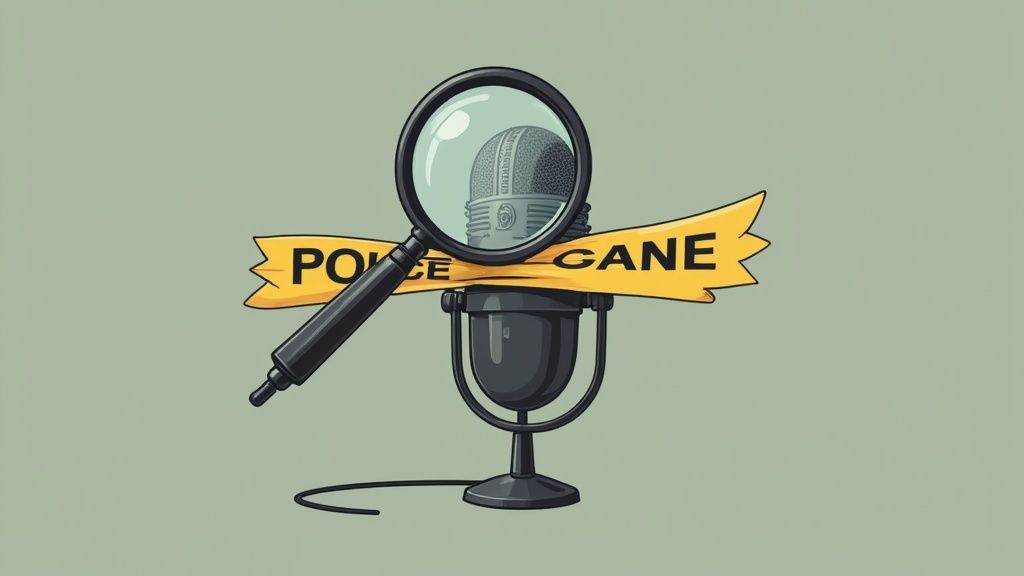
3. The True Crime Format: Investigative Storytelling
The true crime format leverages deep investigative research and narrative storytelling to explore real crimes, legal battles, and their societal impact. Popularized by shows like Serial, this format captivates listeners by weaving together facts, interviews, and suspense. While seemingly consumer-focused, its principles of meticulous investigation and compelling narrative can be adapted for B2B, particularly in sectors like cybersecurity, finance, or corporate law, by dissecting major industry "crimes" like data breaches, financial fraud, or intellectual property theft.
This is one of the more unique types of podcasts for a B2B context, but its power lies in its ability to transform complex, dry subjects into gripping stories. By framing a business challenge as a case to be solved, you can explain intricate problems, highlight the stakes, and position your company as the expert investigator offering the solution, captivating a professional audience in an entirely new way.
Implementation and Strategy
- Best-Fit Use Case: Excellent for brand differentiation and thought leadership. A cybersecurity firm could create a series investigating famous data breaches, or a financial compliance company could dissect major corporate fraud cases.
- Recommended Length & Frequency: 40-60 minutes per episode. This format requires depth, so longer episodes work well. A seasonal or monthly release schedule is often best due to the high production effort.
- Guest Strategy: Guests aren't just interviewees; they are expert witnesses. Seek out industry analysts, legal experts, or even individuals directly involved in a relevant business case (anonymously, if needed) to provide firsthand accounts and authoritative analysis.
- Actionable Tip: Structure your episode like a detective's case file. Start with "The Incident" (the business problem), introduce "The Evidence" (data, market trends), bring in "The Witnesses" (expert guests), and conclude with "The Verdict" (the key takeaway or solution). This narrative framework keeps listeners hooked.
- Brand Mention: High-quality production is non-negotiable for this format's immersive feel. A production partner like Lower Street, a full-service podcast production agency, can help manage the complex sound design, editing, and narrative pacing required to create a professional, broadcast-quality investigative series.
4. The Educational/How-To: Building Expertise Through Teaching
The educational or how-to format positions your brand as a trusted guide by teaching your audience something valuable. This approach breaks down complex topics, processes, or skills into digestible, actionable lessons. Unlike formats focused on news or interviews, this style is designed to deliver a specific learning outcome, making your podcast an indispensable resource for professional development.
This is one of the most powerful types of podcasts for B2B because it directly demonstrates your company’s expertise. By teaching your audience how to solve a problem that your product or service also addresses, you build immense trust and qualify leads. Listeners who master the concepts you teach are prime candidates to become customers who can leverage your solution at an advanced level.
Implementation and Strategy
- Best-Fit Use Case: Excellent for product marketing and audience nurturing. It educates prospects on the problem your solution solves, making the sales conversation much easier.
- Recommended Length & Frequency: 15-25 minutes per episode, published weekly. Shorter episodes are ideal for focused learning and can be structured as a mini-series or sequential curriculum.
- Production Strategy: Structure episodes like a lesson plan: introduce a concept, explain the steps, and provide a clear summary of takeaways. For complex narratives, leveraging a modern AI voice actor can provide high-quality narration without needing multiple voice talents.
- Actionable Tip: Create a content flywheel by turning each episode into a blog post, a social media carousel, and a section in your B2B email newsletter. Offer downloadable checklists or worksheets related to the episode’s topic to capture leads and provide tangible value.
- Brand Mention: After recording, clean audio is crucial for a professional feel. A service like Podcastle, an AI-powered audio and video creation platform, can remove background noise and enhance audio quality, ensuring your lessons are clear and easy to follow.
5. The News/Current Affairs Format: Establishing Timely Authority
The News/Current Affairs format delivers timely updates, analysis of current events, and commentary on industry-specific breaking news. For B2B, this isn't about general world events but about becoming the go-to source for what's happening right now in your niche, from new legislation and market shifts to major technology releases. Think of it as your industry's version of The Daily.
This is one of the more demanding types of podcasts due to its production cadence, but it positions your brand as an indispensable, authoritative voice. By consistently providing context beyond the headlines, you build trust and become a daily or weekly habit for decision-makers who need to stay informed to stay competitive.
Implementation and Strategy
- Best-Fit Use Case: Ideal for building brand authority and establishing market leadership. This format is perfect for companies in fast-moving industries like FinTech, cybersecurity, or AI, where staying current is a business imperative.
- Recommended Length & Frequency: 10-20 minutes per episode, published daily or weekly. The key is a predictable schedule that aligns with your audience's routine, like a morning briefing.
- Production Strategy: This format lives and dies on efficiency. You need a streamlined process for sourcing stories, scripting, recording, and rapid-turnaround editing. Establish clear editorial standards and a rigorous fact-checking process to maintain credibility.
- Actionable Tip: Create recurring segments to structure your episodes. For example, open with the "Top 3 Industry Headlines," followed by a "Deep Dive" on one key story, and end with "What to Watch This Week." This predictability makes production easier and keeps listeners engaged.
- Brand Mention: Promoting timely content requires a robust distribution engine. Our B2B Social Media Agency services at Fame can ensure your news-focused episodes reach your target audience on platforms like LinkedIn the moment they go live, maximizing their impact.
6. The Narrative/Storytelling Format: Crafting Immersive Brand Experiences
The narrative or storytelling format transforms your podcast from a simple discussion into an immersive audio experience. This approach uses techniques borrowed from radio dramas and documentaries, employing narration, sound design, and scripted scenes to tell a compelling story. For B2B, this doesn't have to mean fiction; it can be used to document a customer's success journey, explore the history of an industry innovation, or investigate a major market shift.

While production-intensive, this is one of the most powerful types of podcasts for building a deep emotional connection with an audience. It allows a brand to move beyond feature-and-benefit discussions and create content that is genuinely entertaining and memorable, associating your company with high-quality, engaging media.
Implementation and Strategy
- Best-Fit Use Case: Excellent for brand affinity and market education. Use it to tell the origin story of your company, break down a complex technological shift through a case study, or create a limited series around a major industry event.
- Recommended Length & Frequency: 20-30 minutes per episode. Due to high production costs, a seasonal or limited-run series (6-8 episodes per season) is more manageable than a weekly schedule.
- Guest Strategy: Guests are treated as characters or subjects in a story. This involves pre-interviews to identify key narrative beats and recording sessions focused on capturing specific anecdotes. It’s less of a conversation and more of a directed interview to gather the raw material for your story.
- Actionable Tip: Storyboard your episode before you hit record. Create a clear outline with a beginning, middle, and end, identifying where you'll use narration, interview clips, and sound effects. This "paper edit" saves immense time in post-production.
- Brand Mention: High-quality audio is non-negotiable for this format. Engaging a production partner like Cashflow Podcasting, a company specializing in done-for-you podcast production for business owners, can provide the audio engineering and sound design expertise needed to create an immersive, professional-sounding narrative.
7. The Comedy/Humor Format: Disarming Audiences and Building Memorability
While it might seem unconventional for B2B, a comedy or humor-based format is a powerful way to cut through the noise of a saturated market. This approach uses witty banter, comedic storytelling, or satirical takes on industry norms to entertain and engage a professional audience. The goal isn't just to make people laugh; it's to create a memorable, human connection that makes your brand more approachable and relatable.
This is one of the more daring types of podcasts for B2B, but its high-risk nature comes with a high reward. A genuinely funny show, like Conan O'Brien Needs a Friend, demonstrates how humor can build an intensely loyal following. In a B2B context, it disarms prospects and makes complex topics more digestible, differentiating you from dry, formal competitors.
Implementation and Strategy
- Best-Fit Use Case: Excellent for brand building and audience loyalty. This format is ideal for companies targeting creative or tech-savvy industries where a less corporate, more authentic voice resonates strongly.
- Recommended Length & Frequency: 20-30 minutes per episode, published weekly. The shorter format keeps the content punchy and highly shareable, which is key for a humor-based show.
- Guest Strategy: Bringing on industry personalities known for their wit or guest comedians can add variety and new energy. The key is ensuring the humor aligns with your brand voice and doesn't alienate your core professional audience.
- Actionable Tip: Don't force the humor. Instead of writing scripted jokes, build the show around the natural chemistry of charismatic hosts. Create a loose structure based on industry pain points or absurd corporate jargon, and let the comedic conversation flow spontaneously. Authenticity is funnier than a punchline.
- Brand Mention: Promoting a humor-based podcast requires a different touch. Distribute the best clips on social media using a service like Fame's B2B Social Media Agency to capture attention and drive listeners back to the full episode.
8. The Business/Entrepreneurship Format: Inspiring Action and Strategy
This format focuses on the stories behind successful ventures, offering listeners a blend of inspiration and actionable business advice. Shows like How I Built This and Masters of Scale deconstruct the journeys of founders and leaders, covering everything from startup struggles to market domination. For B2B audiences, these narratives are incredibly compelling, providing blueprints and cautionary tales from those who have navigated similar challenges.
As one of the most aspirational types of podcasts, the business/entrepreneurship format excels at building a community around shared professional goals. It positions the host and brand as a hub for innovation, attracting ambitious professionals, potential investors, and future industry leaders who are hungry for proven strategies and lessons learned.
Implementation and Strategy
- Best-Fit Use Case: Excellent for brand building and community engagement. This format attracts a loyal, motivated audience, making it ideal for companies selling to startups, founders, or business leaders.
- Recommended Length & Frequency: 45-60 minutes per episode to allow for deep, narrative-driven storytelling. A bi-weekly or monthly schedule works well, giving each high-value story room to breathe.
- Guest Strategy: Focus on founders or executives with a compelling and verifiable story. Look for individuals who can share specific metrics, critical decision points, and hard-earned lessons. The goal is authenticity, not just a high-level success story.
- Actionable Tip: Structure episodes around a clear narrative arc: the "before" (the problem), the "during" (the struggle and key pivots), and the "after" (the outcome and lessons). This storytelling approach is far more engaging than a standard Q&A. A strong podcast requires a solid foundation; explore how to create a business plan for a podcast to ensure your series aligns with strategic goals.
- Brand Mention: Promoting these in-depth episodes is crucial. Using a dedicated B2B social media agency like Fame can help repurpose key story moments into engaging clips and carousels, maximizing reach and attracting the right listeners.
9. The Sports/Gaming Format: Building Passionate Communities
The Sports/Gaming format leverages the intense passion of fan communities by delivering timely news, deep-dive analysis, and personality-driven commentary. While seemingly consumer-focused, B2B brands in relevant sectors (e.g., SaaS for esports teams, analytics for sports franchises) can adopt this style to connect with a highly engaged, niche audience. Think of it as a Trojan horse for B2B messaging, wrapped in content the audience already loves.
This is one of the more creative types of podcasts for B2B because it builds an audience based on shared interest rather than professional need. It fosters a genuine community and positions the brand as an authentic participant in the industry culture, not just a vendor selling to it. Shows like The Bill Simmons Podcast prove the power of a strong voice in a crowded space.
Implementation and Strategy
- Best-Fit Use Case: Excellent for community building and brand awareness in niche B2B verticals like sports tech, gaming infrastructure, or ad-tech for streaming platforms.
- Recommended Length & Frequency: 25-40 minutes per episode. Frequency should be tied to industry events: daily during major tournaments or weekly for regular season coverage.
- Guest Strategy: Feature industry insiders, former pro players turned entrepreneurs, or the founders of tech companies serving the sports/gaming world. Frame guests as expert commentators who can offer a unique behind-the-scenes perspective.
- Actionable Tip: Anchor your content calendar to major industry events, product launches, or game releases. Plan a "pre-game" episode to build anticipation, a "live-reaction" style episode, and a "post-game" analysis to capture the full conversation cycle and maximize engagement.
- Brand Mention: Promoting these highly topical episodes requires speed. Use a powerful social media management tool to share clips and commentary in real-time. A partner like Taplio, an AI-powered content tool for LinkedIn, can help you schedule and distribute content, ensuring your analysis reaches your audience while it's still relevant.
10. The Self-Help/Wellness Format: Nurturing Your Niche Audience
While often associated with consumer markets, the self-help and wellness format is a surprisingly potent tool in B2B. This approach focuses on the professional behind the title, addressing challenges like burnout, productivity, leadership psychology, and work-life balance. It builds a deeply loyal audience by providing tangible value for their personal and professional growth.
In a B2B context, this format humanizes your brand. Instead of just discussing industry trends, you’re helping your ideal customer profile become better leaders, more effective managers, and more resilient professionals. Among the various types of podcasts, this one builds trust on a uniquely personal level, associating your brand with positive transformation.
Implementation and Strategy
- Best-Fit Use Case: Excellent for community building and brand affinity. This format is ideal for companies targeting high-stress roles (like founders, sales leaders, or executives) and wanting to build a relationship that transcends a simple vendor-customer dynamic.
- Recommended Length & Frequency: 20-30 minutes per episode, published weekly. Shorter, more frequent episodes work well, as listeners often integrate them into daily routines like commutes or workouts.
- Guest Strategy: Feature certified coaches, psychologists, productivity experts, and successful executives who can speak authentically about their own struggles and growth. The key is credibility; guests must have verifiable expertise in their field. Always include disclaimers for any health-related advice.
- Actionable Tip: Structure episodes around a single, actionable takeaway. Start by defining a common professional challenge (e.g., "imposter syndrome in a new leadership role"), share a personal story or expert insight, and conclude with 3-5 concrete steps the listener can implement immediately.
- Brand Mention: After recording, use a tool like Descript to easily edit the audio and create shareable video clips. Highlighting a powerful quote about overcoming a challenge makes for excellent, highly-engaging social media content that promotes the episode.
11. The Niche/Hobbyist Format: Cultivating Passionate Communities
While seemingly consumer-focused, the niche/hobbyist format can be a powerful B2B play. This approach involves creating a show dedicated to a specific, passionate interest that overlaps with a professional persona. Think of a podcast for CIOs who are avid cyclists or a show for fintech developers who are also passionate about speculative fiction.
This is one of the more creative types of podcasts for B2B because it builds an audience based on shared identity rather than just a job title. It allows a brand to connect with its ideal customer profile on a human level, fostering a deep sense of community and loyalty around a common interest. When executed authentically, the brand becomes a valued part of a subculture, not just another vendor.
Implementation and Strategy
- Best-Fit Use Case: Excellent for community building and brand affinity. It's a long-term strategy for creating an audience that trusts and champions your brand because you "get" them on a personal level.
- Recommended Length & Frequency: 25-40 minutes per episode, published weekly or bi-weekly. Consistency is crucial for building a loyal following within a niche community.
- Guest Strategy: Guests should be respected figures within the niche, who also happen to fit your ideal customer profile. For example, a cybersecurity firm might host a podcast about vintage watch collecting and invite CISOs who are known enthusiasts to discuss their hobby.
- Actionable Tip: Identify a niche where your target audience congregates. Conduct "watering hole" research on platforms like Reddit, specialized forums, or LinkedIn groups to find authentic passion points. The key is genuine interest; if the host isn't truly passionate, the audience will know. Get inspiration by exploring some of the best podcast topics that can be adapted for a niche audience.
- Brand Mention: Promoting a niche show requires a dedicated content engine. Fame's Social and Newsletter services can help amplify each episode, ensuring your content reaches the right subculture across multiple channels and builds a dedicated community.
12. The Panel Discussion: Sparking Dynamic Industry Conversations
The panel discussion, or round-table, brings together multiple experts to debate, discuss, and dissect a specific topic. This format moves beyond a one-on-one conversation to create a dynamic and multi-faceted dialogue. In a B2B context, it’s a powerful way to explore complex industry trends from diverse viewpoints, offering a richer, more comprehensive analysis than a single perspective can provide.
This is one of the more engaging types of podcasts because it mirrors the lively, unscripted debates that drive innovation in boardrooms and at conferences. It allows your brand to act as a facilitator, bringing key industry voices together under your banner and positioning your company at the center of critical conversations.
Implementation and Strategy
- Best-Fit Use Case: Ideal for brand awareness and community building. This format is excellent for tackling broad, nuanced topics like "The Future of AI in SaaS" or "Navigating New Data Privacy Regulations," where multiple perspectives add significant value.
- Recommended Length & Frequency: 45-60 minutes to allow each panelist adequate speaking time. A monthly or quarterly frequency works well, as these episodes often require more coordination and can be positioned as "tentpole" content.
- Guest Strategy: The key is curating a balanced panel. Aim for diverse yet complementary viewpoints: an industry analyst, a C-suite executive, a hands-on practitioner, and even a contrarian voice. A strong, well-prepared moderator is non-negotiable to guide the conversation and ensure everyone contributes.
- Actionable Tip: Structure the discussion with clear segments. Start with brief introductions, move to a foundational topic everyone can weigh in on, then introduce more contentious points for debate. End with a "final thoughts" or "key takeaways" segment from each guest to provide a clear conclusion for your listeners.
- Brand Mention: High-quality audio is critical when managing multiple speakers. A tool like Riverside.fm, a remote recording platform, is designed for multi-guest recordings, capturing separate audio and video tracks for each participant to ensure a polished, professional final product.
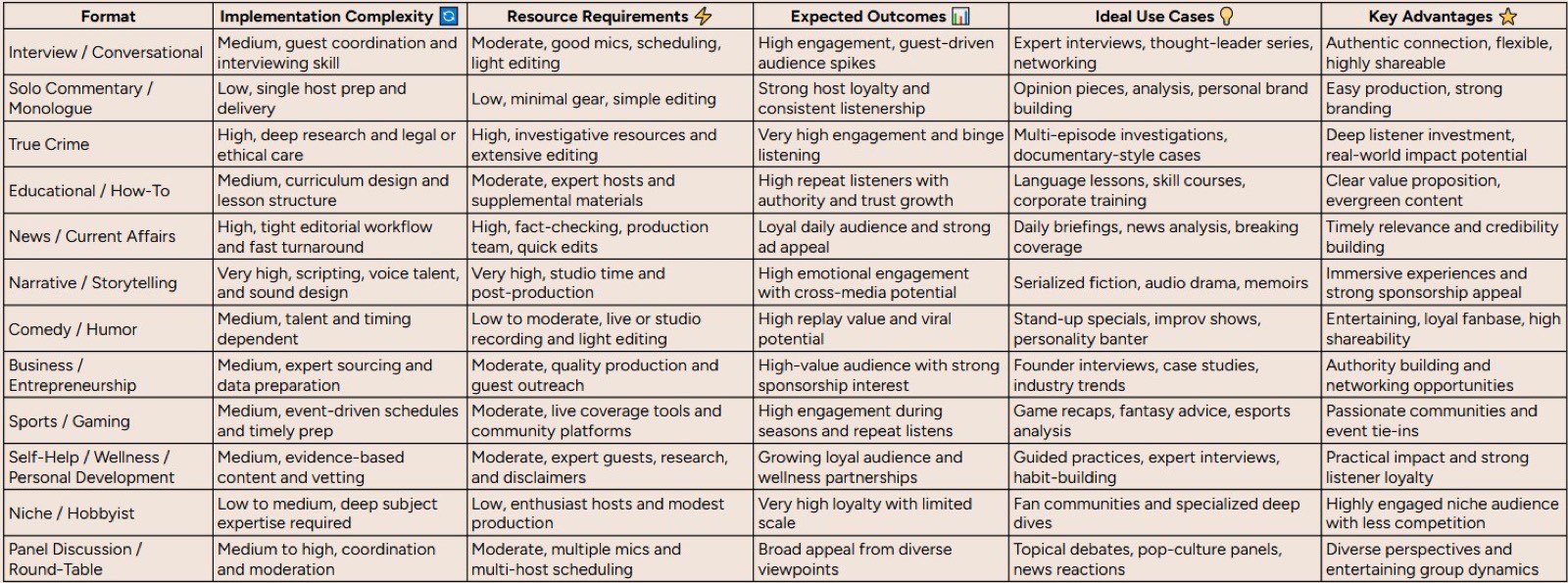
Comparison of 12 Podcast Formats
From Format to Fame: Your Next Actionable Steps
We've journeyed through a comprehensive landscape of podcast formats, from the intimate authority of the Solo Commentary to the dynamic energy of a Panel Discussion. You now have a strategic blueprint for understanding the various types of podcasts and, more importantly, how to align each with specific B2B objectives like lead generation, thought leadership, or positioning for a major company event like an IPO.
The core takeaway is that your format choice is not merely a creative decision; it is a fundamental business strategy. An Interview/Conversational show is a powerful networking and ABM tool, transforming your podcast into a relationship engine. A Narrative/Storytelling format can differentiate your brand in a crowded market, building an emotional connection that data sheets never will. An Educational format positions you as the definitive guide in your industry, creating a durable asset that attracts high-intent prospects for years.
From Blueprint to Building Blocks: Your Action Plan
Understanding these formats is the first step. Translating that knowledge into a successful B2B podcast requires a deliberate, methodical approach. The gap between a great idea and a pipeline-driving show is bridged by execution.
Here are the immediate, actionable steps to take your B2B podcast from concept to reality:
- Solidify Your Core Objective: Before anything else, define what success looks like. Is it booking 10 sales meetings with C-level executives from your top 50 target accounts? Is it earning 5 keynote speaking invitations in your niche? Is it a 20% increase in inbound demo requests? Your primary goal dictates your format, content, and promotion strategy. A lead-gen goal may favor an interview show, while a thought-leadership goal might be better served by solo commentary.
- Match Format to Audience and Resources: Re-evaluate the formats we've discussed through the lens of your ideal customer profile (ICP). What format best respects their time and delivers information in a way they prefer? A busy CEO might prefer short, insightful solo episodes, while a technical expert may appreciate deep-dive educational content. Be brutally honest about your available resources-time, budget, and in-house expertise. A high-production narrative show is compelling but demands significantly more resources than a solo format.
- Develop a Content "Pillar" Strategy: Don't just think in terms of individual episodes. Plan your first 10-12 episodes around a central theme or "pillar" that directly addresses a major pain point for your ICP. This creates a cohesive and binge-worthy experience for new listeners and establishes your authority on a key topic from day one. This library of content becomes a powerful asset for your sales and marketing teams.
- Map Your Distribution and Amplification Ecosystem: A podcast cannot succeed in a vacuum. How will you repurpose each episode? Consider creating audiograms for social media, detailed show notes for your blog, and video clips for YouTube and LinkedIn. To effectively maximize your podcast's reach, especially when distributing video versions, consider engaging a specialized YouTube Content Analyst to optimize your presence on the platform. Furthermore, integrating your podcast into other marketing channels, like a dedicated B2B newsletter or social media campaign, creates a flywheel effect that multiplies your reach and impact.
Choosing from the many types of podcasts is your foundational decision, but consistent, high-quality execution is what separates a business asset from a digital paperweight. The right format, tailored to your B2B goals, becomes a powerful engine for building authority, opening doors to key accounts, and creating a library of valuable intellectual property. The goal isn't just to produce episodes; it's to produce measurable business results.
Choosing the right format is crucial, but executing it professionally is what drives results. At Fame, we specialize in turning B2B expertise into professionally produced, strategically marketed podcasts that build real pipeline. We handle the entire process-from strategy and guest booking to production and multichannel promotion-so you can focus on sharing your vision. If you're ready to build a podcast that becomes a cornerstone of your marketing, talk to us today.
Want us to run this for you?
Fame starts and grows B2B podcasts that generate pipeline. Tell us who you are trying to reach and we will send a costed proposal within 48 hours.
Related content
- Read moreFame Team · July 16, 2026
10 Account Based Marketing Tactics For B2B Growth In 2026
Discover 10 actionable account based marketing tactics for B2B tech. Learn to use podcasts, data, and targeted content to close high-value accounts. - Read moreFame Team · July 16, 2026
The 8 Best Brighton Podcast Agency Picks For 2026
Find the best Brighton podcast agency for your B2B brand. Our 2026 guide reviews top 8 agencies for production, growth & ROI. Expert analysis here - Read moreJune 10, 2026
20 Best Podcast Production Agencies For 2026 (And Why Should You Hire One)
Global podcast and vodcast ad revenues are on track to hit $5 billion in 2026 , up 20% year-on-year. - Read moreApril 13, 2026
Leadership In Marketing: The B2B Podcast Playbook
Most companies still confuse leadership in marketing with job titles, org charts, and budget control. That's outdated.