November 3, 20267 min read16 sections
15 Financial Technology And Insurance Companies To Follow In 2027
By Fame Team
Financial services technology is often discussed in terms of speed. The more useful conversation asks what is moving faster, which risks are being assessed and how the decision can be explained afterwards. An onboarding check, an insurance price and a payment dispute each require a different answer.
The companies in this editorial selection work across banking, insurance, payments, accounting and wealth management. They are listed alphabetically, with equal treatment and no ranking. Their inclusion brings different operating problems into view; it is not a claim that they belong in one procurement shortlist.
Alongside a short overview of each company, we include a question for buyers thinking about 2027. These are editorial discussion prompts based on the company’s stated area of work, rather than predictions about its future performance.
Chargebacks911
Chargebacks911 provides chargeback management and loss recovery services for businesses handling payment disputes. Its offering addresses work such as investigating disputes, assembling evidence and managing the processes around chargebacks. For buyers, this is a useful place to examine how operational information travels across teams: the details needed to understand a disputed payment may sit in payment, fulfilment and customer service systems.
Question for 2027: Can the business assemble the right evidence for a dispute without losing the context of the customer’s actual experience?
Cogitate

Cogitate provides insurance technology through its DigitalEdge platform, covering policy, billing and claims workflows for property and casualty insurance. Its offering connects the systems used to administer insurance products and their ongoing operations. The relevant conversation extends beyond a single transaction to the continuity of information as a policy is issued, changed, billed and eventually involved in a claim.
Question for 2027: Where do policy, billing and claims teams still need to reconstruct information that should already be available in the insurance workflow?
ComplyAdvantage
ComplyAdvantage develops financial crime risk intelligence and applications for fraud and anti money laundering work. Its offering includes screening, monitoring and AI supported workflows. For buyers, the company’s area of work highlights the connection between risk information and investigation: a signal must be interpreted in context, and the process needs to support the people responsible for reviewing and explaining the resulting action.
Question for 2027: How will investigators understand and challenge an automated risk decision when the underlying information or customer context changes?
Curinos
Curinos provides data, analytics and decision intelligence for financial institutions. Its work includes areas such as deposits, customer relationships and pricing. This makes it relevant to conversations about how banks connect market information with their own commercial decisions. A useful discussion examines the assumptions behind a recommendation and how teams will recognise when changing customer behaviour requires a different response.
Question for 2027: How can a bank connect pricing and relationship decisions while keeping a clear view of the assumptions driving each recommendation?
Dext
Dext provides accounting automation software for capturing and organising information from receipts, invoices and other financial documents. Its offering supports bookkeeping workflows and connections with accounting systems. For finance and accounting teams, this makes exceptions an important discussion point: reducing manual entry is useful, but the operating process still needs a clear way to review incomplete, unusual or inconsistent information.
Question for 2027: How will accountants spend less time moving information while retaining a clear review process for entries that need human judgement?
Earnix
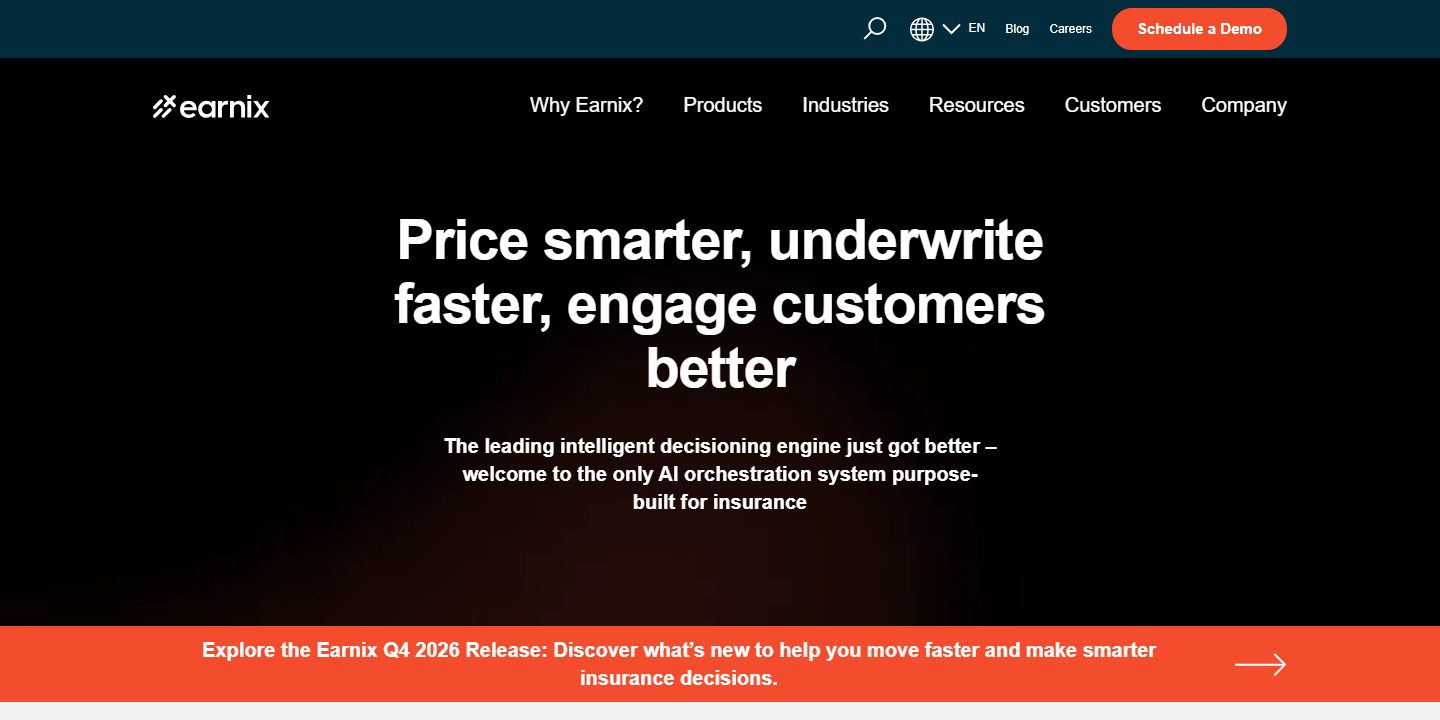
Earnix provides software for insurance pricing, rating and underwriting decisions. Its platform brings modelling and operational decision processes into the same area of work, alongside capabilities for customer engagement. For insurance buyers, the relevant issue is how a change moves from analysis into use, including the controls and explanations needed by the teams responsible for maintaining and reviewing the decision process.
Question for 2027: What must be documented and tested before a new pricing or underwriting model is put into an insurer’s live workflow?
Fenergo
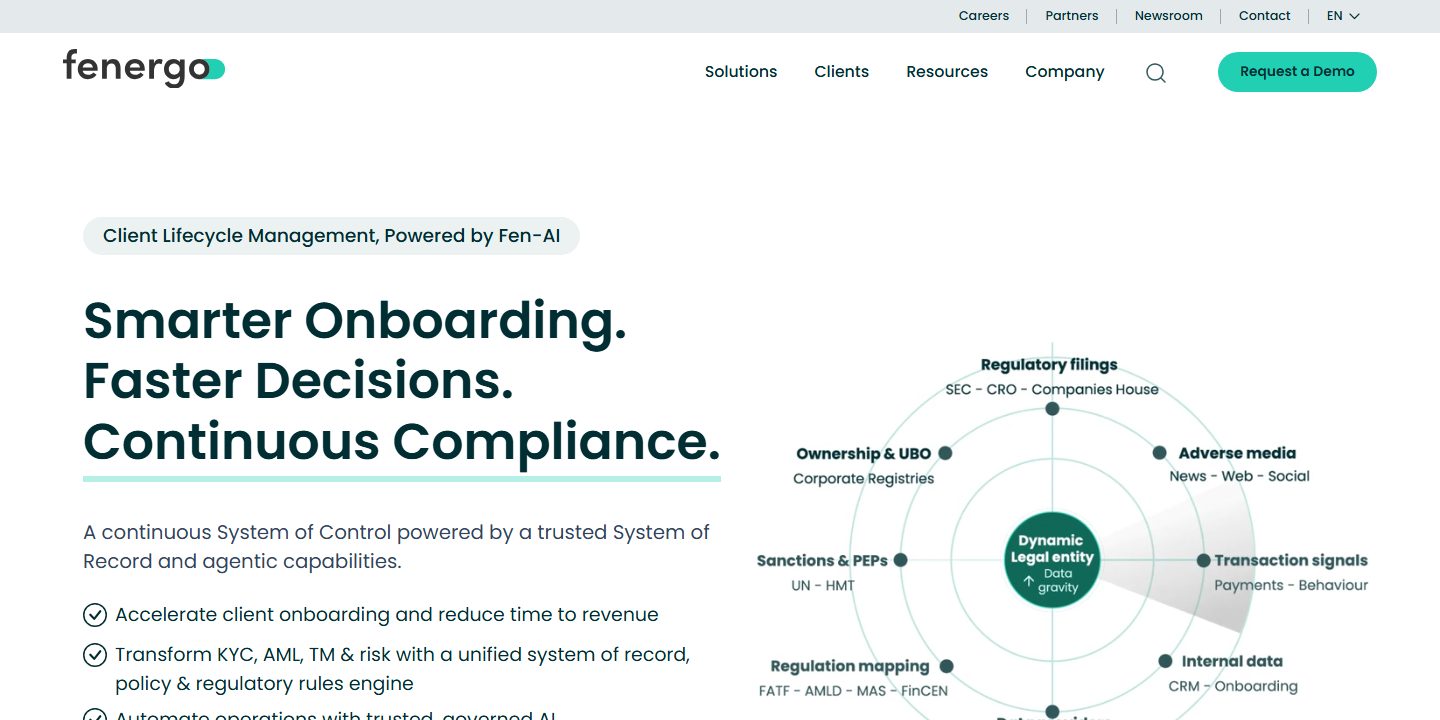
Fenergo provides client lifecycle management and financial compliance software. Its offering spans onboarding, know your customer processes, risk assessment and ongoing monitoring. The company’s work is relevant to the continuity of a client relationship: information collected at onboarding needs to remain usable as circumstances change, without forcing teams to repeat work or rely on a record that no longer reflects the client.
Question for 2027: How should a financial institution update its understanding of a client continuously while keeping review responsibilities and decision records clear?
IDnow
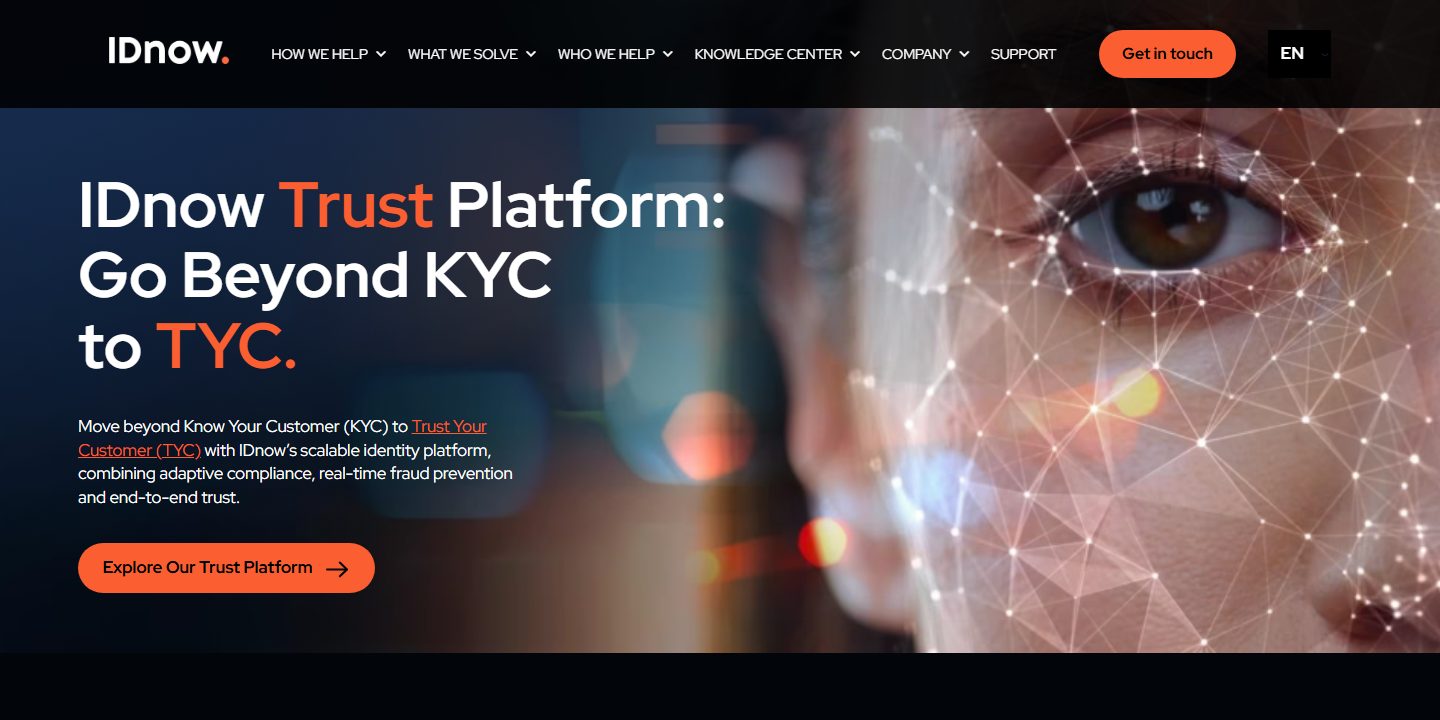
IDnow provides identity verification technology for digital onboarding and related compliance workflows. Its offering covers different verification methods and the information needed to assess identity and fraud risk. For buyers, this makes the user journey and the review process closely connected: an onboarding check needs to fit the person’s circumstances while giving the business a defensible basis for the decision.
Question for 2027: How will the business handle legitimate applicants who cannot complete the standard verification journey without weakening its review process?
OneVest
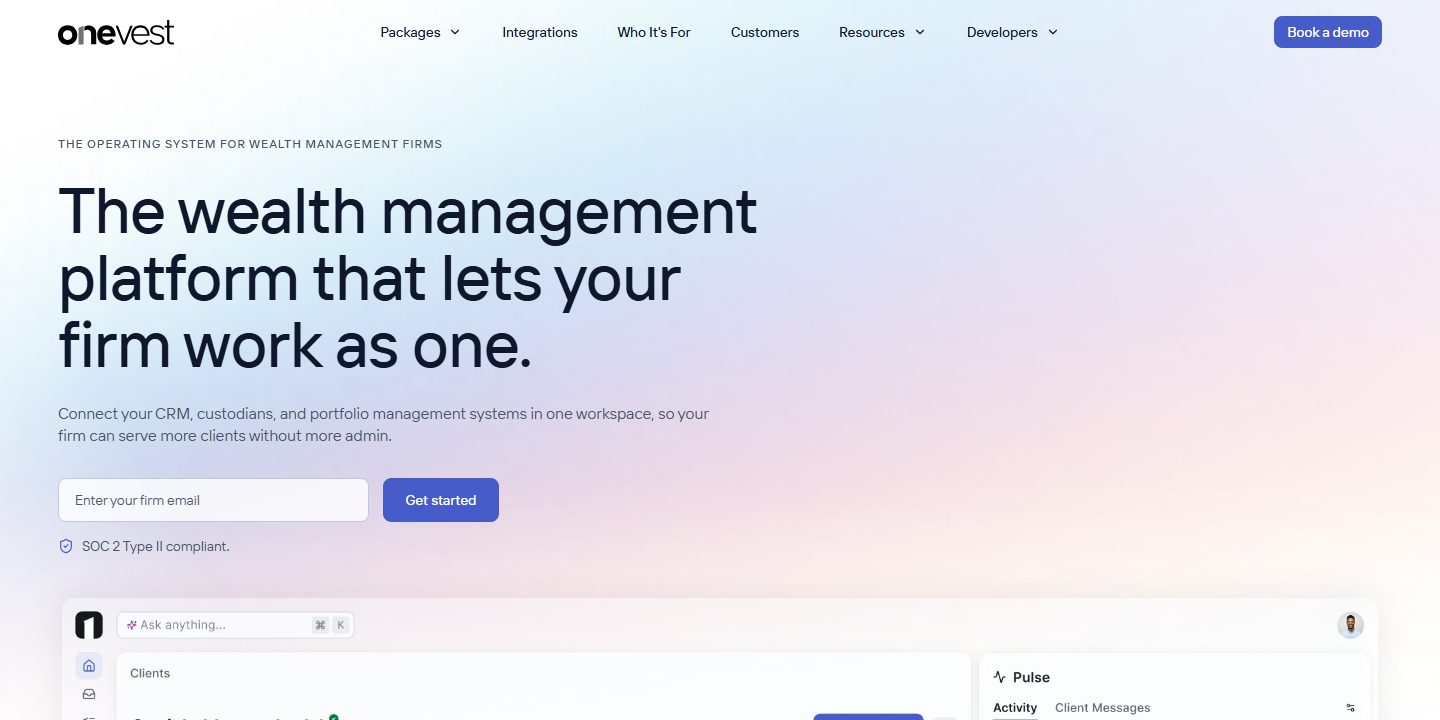
OneVest provides a modular wealth management platform covering areas including onboarding, portfolio operations and advisor and client experiences. Its offering is designed to connect activities across the front, middle and back office. That scope creates a useful discussion about how firms modernise a wealth workflow: a better interface still depends on the information, responsibilities and integrations underneath it working together.
Question for 2027: Which information and approvals should follow an advisor or client through onboarding so the next team can continue the work without repetition?
Payrails
Payrails provides modular payment infrastructure covering orchestration, analytics, reconciliation and related financial workflows. Its offering is relevant to businesses managing payments across providers and markets. For buyers, the operating question is how those components stay connected: choosing a route for a transaction is one part of a process that also needs a reliable explanation of what happened after the payment was attempted.
Question for 2027: Can the payments team follow a transaction from routing through reconciliation without rebuilding its history across separate provider systems?
Sardine
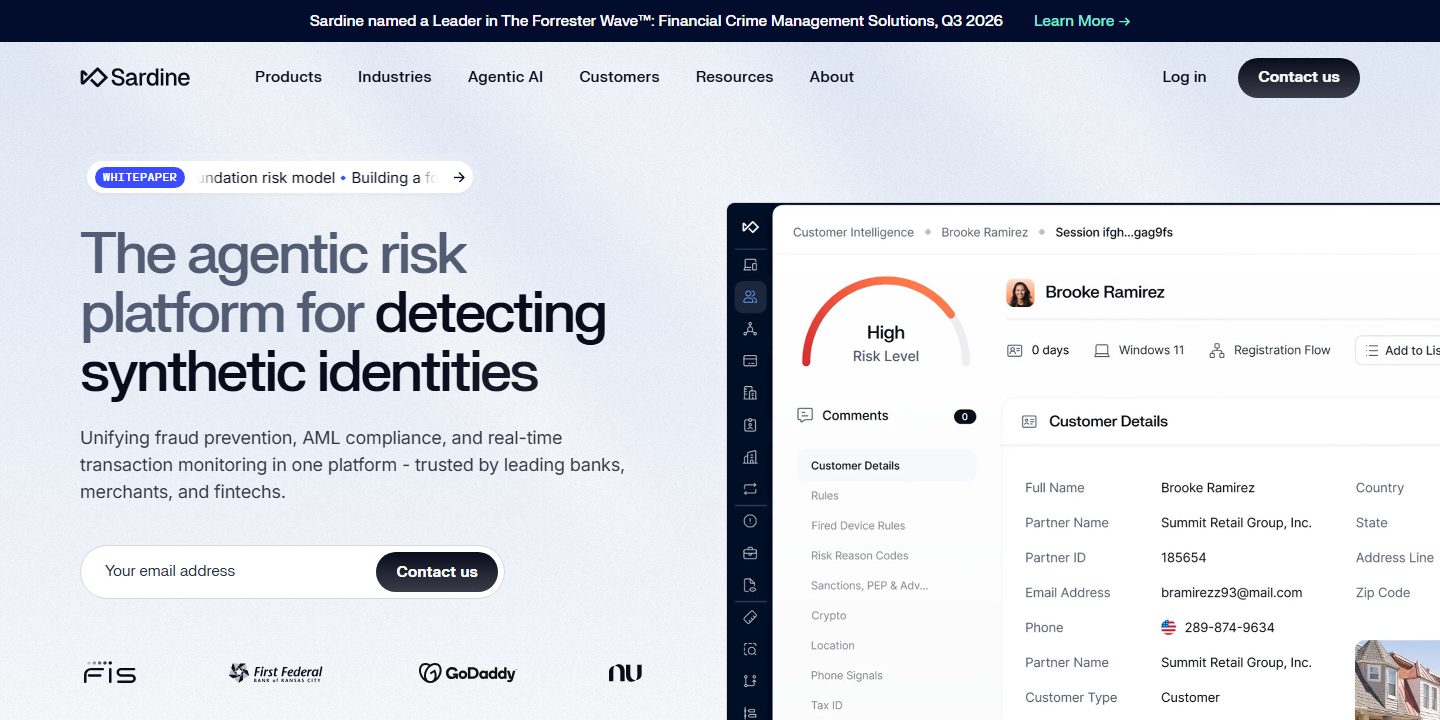
Sardine provides technology for fraud prevention and financial crime compliance, including device and behavioural intelligence, transaction monitoring and AI supported investigation. Its platform connects signals across parts of the customer journey. For buyers, this creates a discussion about context: a single interaction may look different when considered alongside activity elsewhere, and investigators need to understand the information behind that interpretation.
Question for 2027: How will the organisation combine behavioural and transaction signals while keeping its risk decisions understandable to the people reviewing them?
Shift Technology
Shift Technology develops AI software for insurance processes, including fraud detection, claims and subrogation. Its offering applies analysis and automation to decisions made across the insurance lifecycle. For buyers, the practical issue is connecting a recommendation to an accountable workflow: the system needs to fit the evidence available and the decisions that claims professionals are authorised and equipped to make.
Question for 2027: Where should AI support a claims decision, and where must the workflow preserve an explicit review or escalation by a person?
Silent Eight
Silent Eight develops AI technology for financial crime compliance decision making. Its Iris platform supports investigation and adjudication work involving areas such as sanctions and anti money laundering alerts. The company’s focus is relevant when institutions examine repetitive investigation tasks, where an automated action must still leave enough reasoning and supporting information for reviewers to assess how the decision was reached.
Question for 2027: What information should an automated investigation preserve so a compliance team can review, challenge and explain the resulting decision?
Socure
Socure provides digital identity verification, fraud risk and compliance technology. Its RiskOS platform brings decisioning and orchestration into workflows involving customer identity and related risk signals. For buyers, the company’s area of work raises a practical issue about the whole journey: onboarding controls, ongoing activity and investigation processes need to work together when the nature of a customer’s risk changes.
Question for 2027: How can identity and transaction risk decisions share context without making the review process harder for customers or operational teams?
ZestyAI
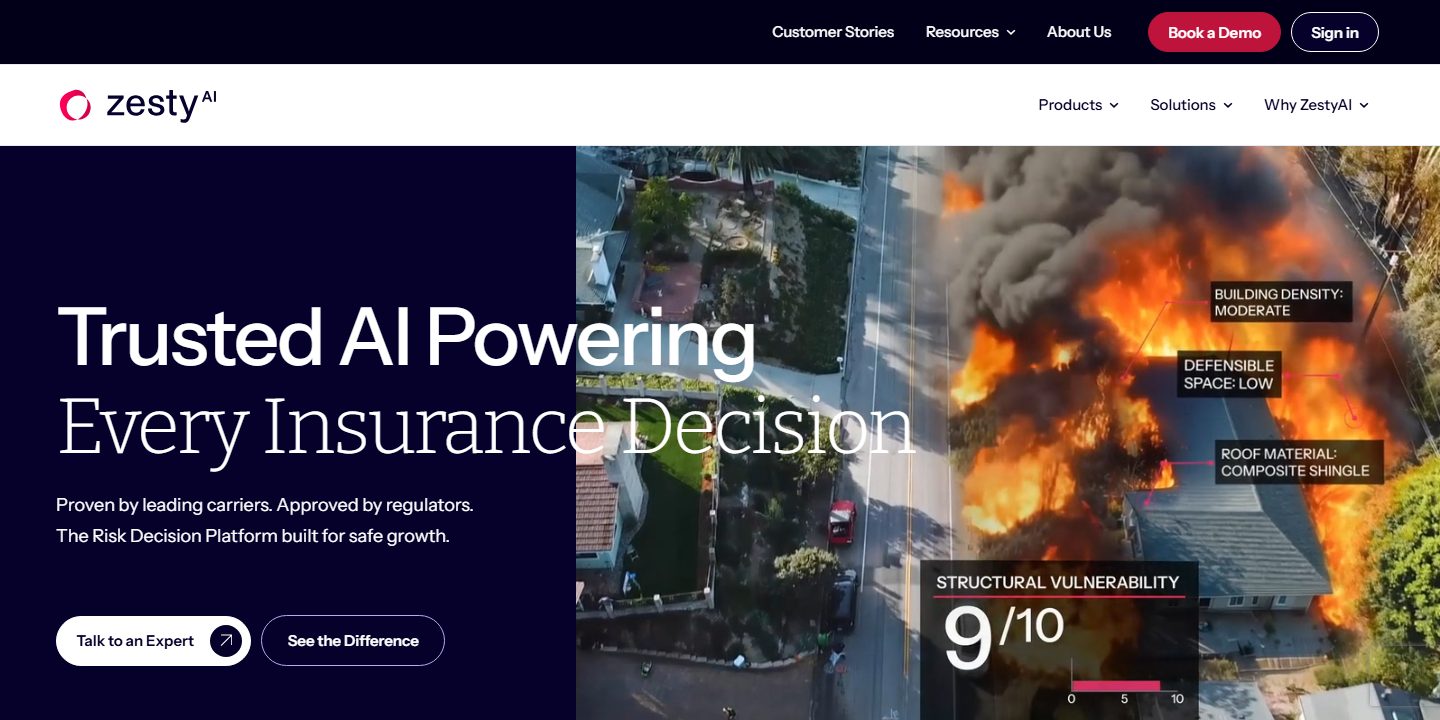
ZestyAI provides AI supported property risk intelligence for insurance decisions. Its offering uses property level information to support areas such as underwriting and pricing. That makes the quality and interpretation of an individual property’s data a useful buyer topic, particularly when a broad geographic classification does not explain the specific characteristics an insurer needs to assess or communicate to a customer.
Question for 2027: How will an insurer explain which property characteristics informed a risk decision and how updated information could change that assessment?
A Useful Test For Financial Technology
Ask the team to trace a decision from the information it receives to the action it takes. Then examine exceptions, human review and the record left behind. That exercise can reveal whether a proposed improvement will fit the organisation’s operating model, rather than simply move a difficult task into another system.
Want to turn your team’s expertise into regular conversations with your buyers? Explore Fame’s B2B podcast services.
Want us to run this for you?
Fame starts and grows B2B podcasts that generate pipeline. Tell us who you are trying to reach and we will send a costed proposal within 1 working day.