November 3, 20267 min read16 sections
15 Data Infrastructure And Cybersecurity Companies To Follow In 2027
By Fame Team
Data infrastructure and cybersecurity meet wherever an organisation needs to decide what information it can trust and who or what should be able to use it. A new application, an AI agent or a growing analytics workload can bring both questions into the same project.
This editorial selection brings together 15 companies working on different parts of that problem. Some focus on physical infrastructure and storage; others address data quality, identity, application security or security operations. The companies appear alphabetically. There are no scores, positions or implied winners.
Each profile links to the company’s own description of its work and includes a question for 2027 planning. These questions are intended to open a more specific buyer conversation, not to suggest that every organisation needs every type of platform.
Aikido Security
Aikido Security provides application security tools covering code, cloud environments and runtime. Its platform brings scanning, prioritisation and remediation work into an environment designed for development teams. This makes the relationship between finding a risk and acting on it a useful topic for buyers: a security finding needs enough context to become a practical engineering task with an understood owner and priority.
Question for 2027: How can security and engineering teams agree which findings need action first without creating a separate queue of unresolved alerts?
Anomalo
Anomalo provides software for monitoring data quality and identifying unexpected changes in enterprise datasets. Its offering also includes capabilities around data observability and documentation. The company’s work is relevant to discussions about trusting downstream outputs: an analytics report or AI application may appear to operate normally even when the information entering it has changed in a way that deserves investigation.
Question for 2027: Which data changes should stop a downstream workflow, and who is responsible for deciding whether the information is safe to use?
BeyondTrust
BeyondTrust provides identity and access security technology, including privileged access management. Its offering addresses how organisations discover, control and monitor powerful access across their environments. As organisations consider access for both people and software, the practical issue is understanding the permissions behind an activity and being able to change them when the task, identity or level of risk changes.
Question for 2027: How will the organisation review and limit privileged access for software agents as carefully as it does for human users?
Bugcrowd
Bugcrowd connects organisations with security researchers through its platform for crowdsourced security testing. Its services include bug bounty programmes and penetration testing. That model brings external investigation into the security process and raises an operational question for buyers: the value of a discovered issue depends on how it is validated, communicated and addressed by the teams responsible for the affected systems.
Question for 2027: What process turns an external researcher’s finding into a well understood fix and a useful lesson for the wider engineering team?
DataBank
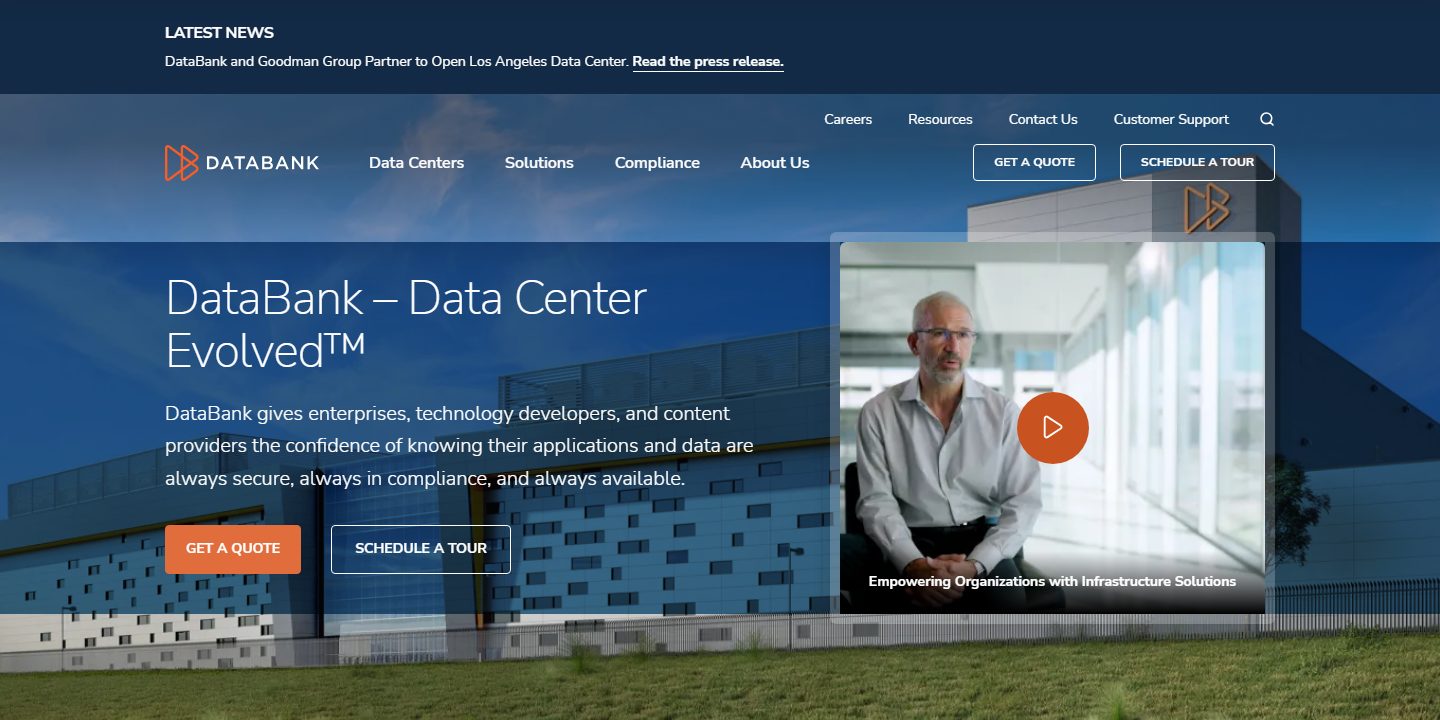
DataBank provides data centre infrastructure, colocation and related cloud services. Its role sits beneath the applications and information services that businesses need to run. For teams planning data or AI projects, the company’s area of work brings physical requirements into the conversation, including where workloads will operate and how infrastructure decisions connect to capacity, availability and the organisation’s operating responsibilities.
Question for 2027: How will location, power requirements and operational resilience affect the infrastructure choices behind a new data or AI workload?
DDN
DDN develops data storage and infrastructure technology for demanding AI and high performance computing workloads. Its offering addresses how information moves through systems that need to support substantial processing activity. The relevant conversation is about more than nominal capacity: a buyer needs to understand how data preparation, movement and access will interact with the compute resources used by a particular workload.
Question for 2027: Where will data movement become a constraint as an AI workload moves from a demonstration to sustained production use?
Everpure
Everpure, formerly Pure Storage, provides enterprise data storage and management technology. Its platform spans requirements across applications, analytics and AI, bringing storage operations into a broader data infrastructure discussion. For buyers, the name change does not remove the underlying operating question: how to manage information consistently as its uses, access requirements and performance needs change across the organisation.
Question for 2027: Can the organisation manage its data across different workloads without creating separate operating practices for every new application?
Hitachi Vantara
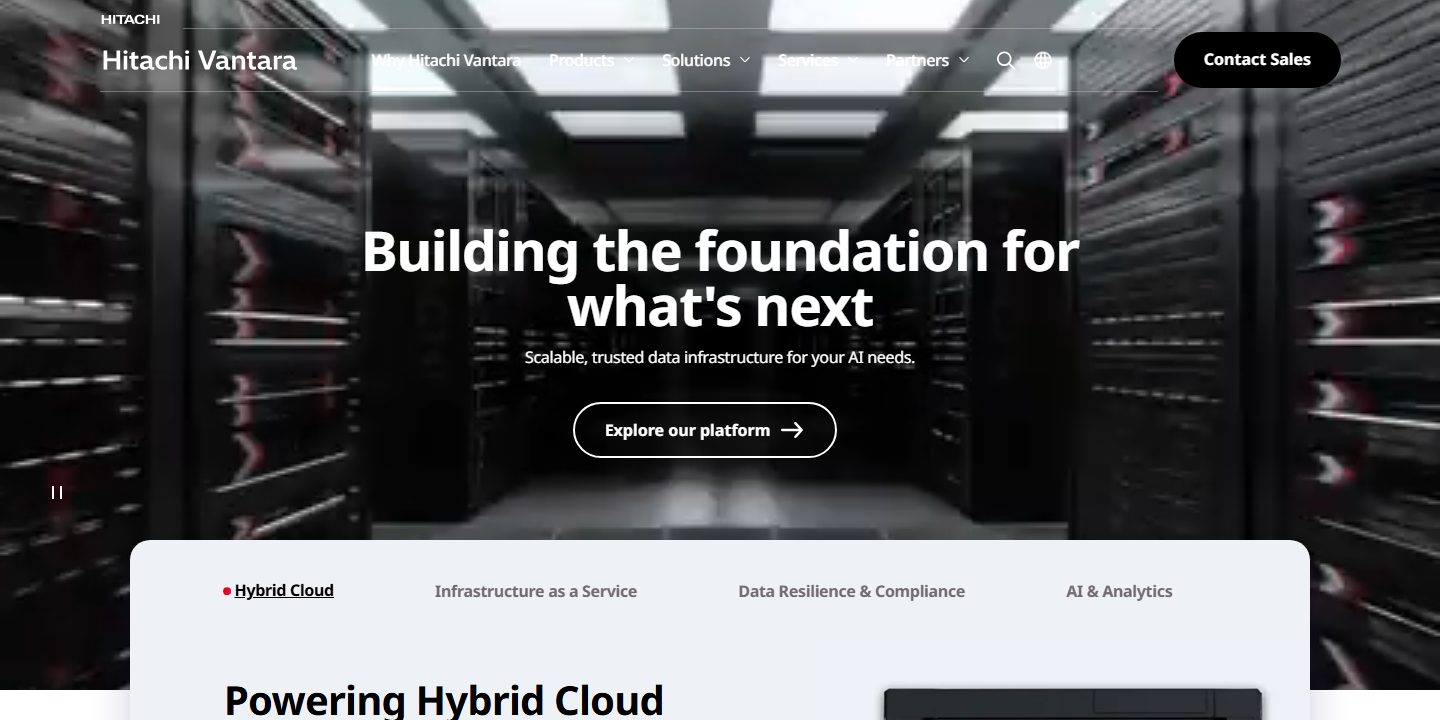
Hitachi Vantara provides data storage and infrastructure technology for enterprise environments, including hybrid deployments. Its offering addresses the systems that support data availability, management and use across business workloads. The company’s area of work is relevant when a project needs to connect existing infrastructure with new demands, rather than assuming the organisation can replace its operating environment each time a new use case appears.
Question for 2027: How will new data and AI requirements be supported alongside the applications and infrastructure the business already depends on?
Island
Island develops an enterprise browser and related capabilities for controlling how work happens through the browser. Its offering brings access, security and user experience into a layer where employees interact with business applications and information. This creates a useful discussion about the point of control: policies need to remain workable for the person completing a task as well as understandable to the team enforcing them.
Question for 2027: Which controls belong at the point where people access information, and how will the business assess their effect on everyday work?
Obsidian Security
Obsidian Security focuses on protecting enterprise SaaS applications and the identities, permissions and data flows around them. Its offering also addresses the security of AI applications and agents. The company’s work is relevant to a familiar operating gap: separate applications can each appear controlled while the connections between them create access paths and information flows that no single application owner sees.
Question for 2027: Can the security team explain how an application or agent obtained access and where the information it uses can travel next?
Radiant Logic
Radiant Logic provides technology for unifying identity data across enterprise systems. Its platform helps organisations work with information about identities and their relationships rather than leaving that information fragmented across directories and applications. This makes identity context a useful conversation for buyers, particularly when an access decision depends on understanding who or what an identity represents across several systems.
Question for 2027: What identity information must be reconciled before an organisation can make dependable access decisions for people and nonhuman accounts?
Seclore
Seclore provides data security technology intended to help organisations discover, classify and control sensitive information. Its approach focuses on the information itself and how it is used across users, systems and AI related workflows. For buyers, that creates a discussion about what happens after a document moves: a location based control may not answer every question about continuing access or permitted use.
Question for 2027: How should protection and access decisions follow sensitive information as it moves between teams, partners and AI enabled tools?
Sekoia
Sekoia provides a security operations platform combining threat intelligence with detection and response capabilities. Its offering includes automation and AI supported work for security teams. The company’s area of work makes the quality of operational context important: responding faster is useful only when the system and the people supervising it understand the activity, its significance and the consequences of the proposed response.
Question for 2027: Which response actions can be automated safely, and what evidence should remain available when an analyst reviews the decision?
Swimlane
Swimlane provides security automation technology for connecting tools, orchestrating workflows and supporting security operations. Its offering includes AI assisted capabilities and agents alongside established automation processes. For buyers, this creates a practical discussion about the work between systems: a response may need to collect evidence, follow approval rules and update several tools before an investigation can be considered complete.
Question for 2027: How will an automated security workflow handle an exception that requires judgement, approval or information from another team?
Wherobots
Wherobots provides a cloud platform for spatial data engineering and analysis. Its technology builds on Apache Sedona and supports work with information tied to the physical world, including geospatial datasets. The company’s area of work brings location into enterprise data discussions, where a useful result may depend on combining spatial context with the operational information a business already holds.
Question for 2027: What decisions become possible when location data can be analysed alongside the business information that gives it operational meaning?
Questions That Connect Infrastructure And Security
A productive review follows the information through the system. Where does it originate, how is its quality checked, which identities can access it, and what happens when that access changes? Infrastructure and security teams can use those questions to identify gaps between separate tools and to define ownership before adding another layer of automation.
Want to turn your team’s expertise into regular conversations with your buyers? Explore Fame’s B2B podcast services.
Want us to run this for you?
Fame starts and grows B2B podcasts that generate pipeline. Tell us who you are trying to reach and we will send a costed proposal within 1 working day.