Logan Lawler’s media page
Empowering Next-Gen AI & Creative Workflows with High-Performance Infrastructure
Dell Technologies executive Logan Lawler guides organizations through the future of enterprise computing – from edge AI and hybrid cloud to the creative frontier of AI-enhanced media.
Featured In
- Media outlet 1
- Media outlet 2
- Media outlet 3
- Media outlet 4
- Media outlet 5
- Media outlet 6
- Media outlet 7




Who is Logan?
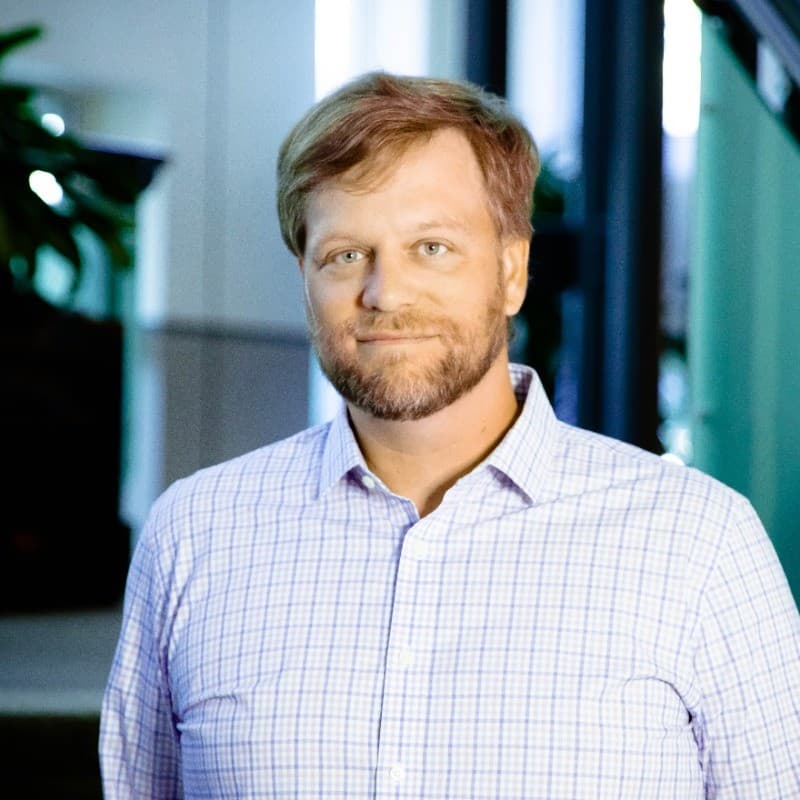
Logan Lawler is a Senior Director at Dell Technologies, where he currently leads the Precision/Pro Max AI Solutions business. He has worked across sales, marketing and e-commerce during his 16-year Dell career. As head of Dell’s high-performance AI workstation practice, Logan specializes in helping enterprises and creative studios leverage powerful desktop AI servers.
He regularly speaks on how GPU-accelerated PCs (with NVIDIA RTX and Blackwell GPUs) and hybrid cloud storage solutions transform industries from film and animation to healthcare research. Raised in Missouri and a University of Missouri alumnus, Logan now lives in Texas with his family. He is the host of Dell’s “Reshaping Workflows” podcast series and a frequent media guest on AI infrastructure topics.
Highlights
- Senior Dell Technologies lead with 16 years in sales, marketing and solutions for AI and HPC
- Architect of Dell’s Precision AI Workstations and Pro Max AI solutions partnering with NVIDIA to drive local AI development.
- Host of Dell’s Reshaping Workflows podcast on AI/GPU innovation featured guest on industry shows (e.g. The Neuron: AI Explained, All-In Podcast).
- Thought leader in edge computing, hybrid cloud, and enterprise storage – helping businesses integrate powerful workstations with cloud and on-prem systems
Book Logan Now!
Logan is looking forward to sharing his story and message with your audience. Simply reply to the email you’ve just received from Fame Connect to arrange an interview.
Media Appearances
Listen to Logan's previous interviews
Listen
Watch
2 VideosTopics
What Your Audience Could Learn
Edge Computing & AI at the Edge
With AI workloads increasingly moving out of the datacenter and onto devices, edge computing is a critical topic for enterprises today. Logan can discuss Dell’s edge solutions, including compact AI servers that enable real-time inference in fields such as autonomous vehicles, smart cities, and industrial IoT. He brings deep insight into how businesses can scale computers to the edge while maintaining security and manageability. Drawing on his experience leading Dell’s Precision and Pro Max AI workstation platforms, Logan provides practical guidance on implementing high-performance edge AI systems that deliver both speed and reliability.
AI Infrastructure and Data-Driven Workflows
Building AI models requires both local computational power and cloud-scale resources. Logan covers the full stack – from workstation GPUs for model training to enterprise AI data centers and cloud integration. He can explain Dell’s AI Factory approach, designed in partnership with NVIDIA, and how a unified workstation and cloud strategy accelerates innovation. Logan emphasizes seamless workflows that allow developers to prototype locally and scale globally, bridging the gap between high-performance desktop computing and enterprise AI infrastructure. His extensive experience in shaping Dell’s AI solutions makes him uniquely qualified to advise on practical, future-ready AI infrastructure for organizations of all sizes.
Enterprise Storage & Data Management
Large-scale AI and HPC projects generate massive amounts of data, requiring storage solutions that are fast, scalable, and secure. Logan can speak to Dell’s storage portfolio, including PowerScale and PowerStore, which support hybrid databases, unstructured data like video and medical imaging, and AI workloads. He provides guidance on designing storage-rich environments that keep AI data available and performant, while integrating seamlessly with computational pipelines. Drawing from his hands-on experience with Dell’s HPC and enterprise storage platforms, Logan helps organizations optimize both performance and reliability, demonstrating how infrastructure decisions impact business outcomes.
Hybrid Cloud Strategy
Modern enterprises operate across private datacenters and public cloud environments, creating challenges in consistency, security, and efficiency. Logan can discuss how companies maintain a hybrid architecture, enabling local AI servers to feed into cloud analytics or implementing seamless backup and disaster recovery with Dell APEX and PowerProtect services. He highlights strategies for simplifying hybrid and multi-cloud environments while maintaining performance and control. With his experience bridging edge, core, and cloud infrastructure at Dell, Logan is able to provide actionable insights into integrating on-prem hardware with cloud resources to create scalable, resilient enterprise architectures.
AI Starts on Your Desk, Not in the Cloud
Across the AI industry, there is a widespread belief that the only credible place to begin an AI journey is in the cloud. Logan argues that this mindset has created unnecessary complexity, inflated costs, and slowed innovation for thousands of teams. The real work of AI still happens locally, where developers can iterate quickly, maintain control of their data, and avoid the trap of cloud credits that feel cost-free at first but eventually function like a timeshare. Logan makes the case that everything foundational in AI, from cleaning data to fine-tuning to kernel modification, is faster, safer, and more efficient when anchored in powerful local workstations. He draws attention to the fact that the most advanced practitioners in the world already operate this way, even if the broader conversation has not caught up.
Logan explains how companies lose creative momentum when every workflow must route through centralized systems or cloud infrastructure that they cannot fully control. He breaks down why local computers are not a step backward but a necessary counterbalance to the exploding scale of AI workloads. This includes secure RAG implementations, privacy-preserving experimentation and hybrid approaches that pair high compute workstations with enterprise systems in a way that keeps intellectual property in house. He addresses the misconception that local computers limit collaboration, revealing instead how it unlocks it by giving end users full freedom to explore and test without barriers.
This topic resonates because Logan brings a rare blend of strategic clarity and hands-on understanding. With twenty years at Dell and direct leadership of Dell Promax's AI go to market strategy, he has a front row seat to how real AI builders actually work. He partners daily with ISVs, creators, data scientists and machine learning engineers who depend on high compute workstations to bring their ideas to life. Logan’s perspective reframes the entire cloud versus local debate and gives audiences a grounded, practical view into what the next generation of AI development will really look like.
The Toolbox Behind Modern Intelligence
The biggest mistake companies make when adopting AI is trying to standardize everything on a single model or platform. Logan describes this as bringing one knife to a kitchen that requires a full set. AI succeeds when teams define the specific use case first and select the right model, workflow and hardware configuration for that problem. He dispels the belief that getting started with AI is expensive, complicated or limited to a certain type of hardware. He also pushes back on the industry narrative that Mac hardware is the only valid option for AI development, highlighting how diverse and flexible modern AI tooling has become.
Logan brings this philosophy to life through vivid real world examples. At an animation studio, he helped fine tune a model on past episodes to automate roughly 80 percent of initial character design work, giving artists more time for high value creative thinking. In another case, he worked with a rock quarry using computer vision to measure rock size with precision and protect revenue previously lost due to load misclassification. These stories show how multi model workflows have an impact across industries, from media and entertainment to infrastructure and industrial operations.
This topic works because Logan understands AI from every angle. He has spent years inside Dell working directly with creators, developers and technical teams building their own mixed model workflows. His philosophy is practical, not theoretical, and grounded in what he sees every day among end users who push boundaries with Dell’s high compute Promax workstations. Logan helps audiences understand that AI is not one tool but a toolbox, and he brings the expertise to show them how to choose the right tool for every job.
The End User Is the Real Decision Maker
Most companies still believe AI adoption begins with IT leaders, but Logan argues the opposite. The real momentum comes from the end users themselves, the people who are actually building models, modifying kernels, cleaning data sets and running high compute workloads. Logan explains that these users need flexibility and control, not layers of approval and rigid infrastructure. They want the ability to experiment freely and test ideas locally before pushing them into larger systems. When organizations ignore this, they slow their own transformation.
Logan speaks directly to the needs and pain points of data scientists, machine learning engineers, simulation specialists, 3D modelers and creators who rely on powerful desktop compute. He shows how giving these users the right hardware accelerates innovation and reduces reliance on cloud cycles that can stall projects. He also explores how high compute local systems work alongside enterprise environments to create a hybrid workflow that is secure, efficient and future proof. Logan understands the cultural and operational friction that arises when IT leaders limit hardware choices, and he highlights why this tension grows as AI workloads become larger and more complex.
This topic works because Logan engages with this audience every day. His role at Dell Promax places him in constant collaboration with developers, creators and technical practitioners who drive AI adoption from the ground up. He brings both empathy and expertise to conversations about their workflows, their barriers and the tools that genuinely move them forward. Logan gives hosts an inside view into the real engine behind AI progress and shows how empowering end users unlocks the outcomes businesses want most.
AI Should Encourage Thinking, Not Replace It
Beyond technical and business applications, Logan brings a thoughtful and personal lens to the long term implications of AI. He shares his concerns about how AI may impact the next generation’s ability to think critically, especially as tools become more capable of giving immediate answers. Logan believes AI should spark inquiry rather than eliminate it, and he applies this philosophy at home by encouraging his daughter to use AI for exploration but never as a shortcut for homework or learning. He argues that reducing struggle in the learning process risks weakening the very skills that define human intelligence.
Logan extends this idea to a broader societal conversation about how AI should be designed. He advocates for tools that present alternatives, offer context and help users reason through choices rather than simply returning definitive conclusions. He believes the future of responsible AI will depend on building systems that support cognition, not override it. This perspective introduces an essential human dimension in a field often dominated by technical and economic narratives.
This topic resonates because Logan lives at the intersection of AI innovation and practical ethics. His work at Dell gives him deep visibility into the pace of AI advancement, while his role as a parent grounds his perspective in lived experience. Logan does not approach this topic from fear but from nuance, encouraging audiences to think about AI in ways that preserve curiosity, creativity and intellectual rigor. He brings both authority and authenticity to a conversation that is becoming increasingly urgent.
Your Suggestion...
If there is a specific topic you would like Logan to focus on during the interview that is not listed here, please do let us know.
We would be more than happy to run this by Logan to see if he was able to talk in detail and deliver value to your audience.
Want to interview Logan?
To schedule an interview with Logan Lawler, please reply to the email you’ve received from the Fame Connect team or click the button below.
Email Us