Benjamin Seelos’s media page
Turning Frontline Teams into Measurable Revenue Engines
Benjamin Seelos is transforming everyday hotel guest interactions into measurable revenue opportunities through coaching, incentives, and performance insights.
Featured In
- Media outlet 1
- Media outlet 2


Watch this short video about Benjamin
Who is Benjamin?
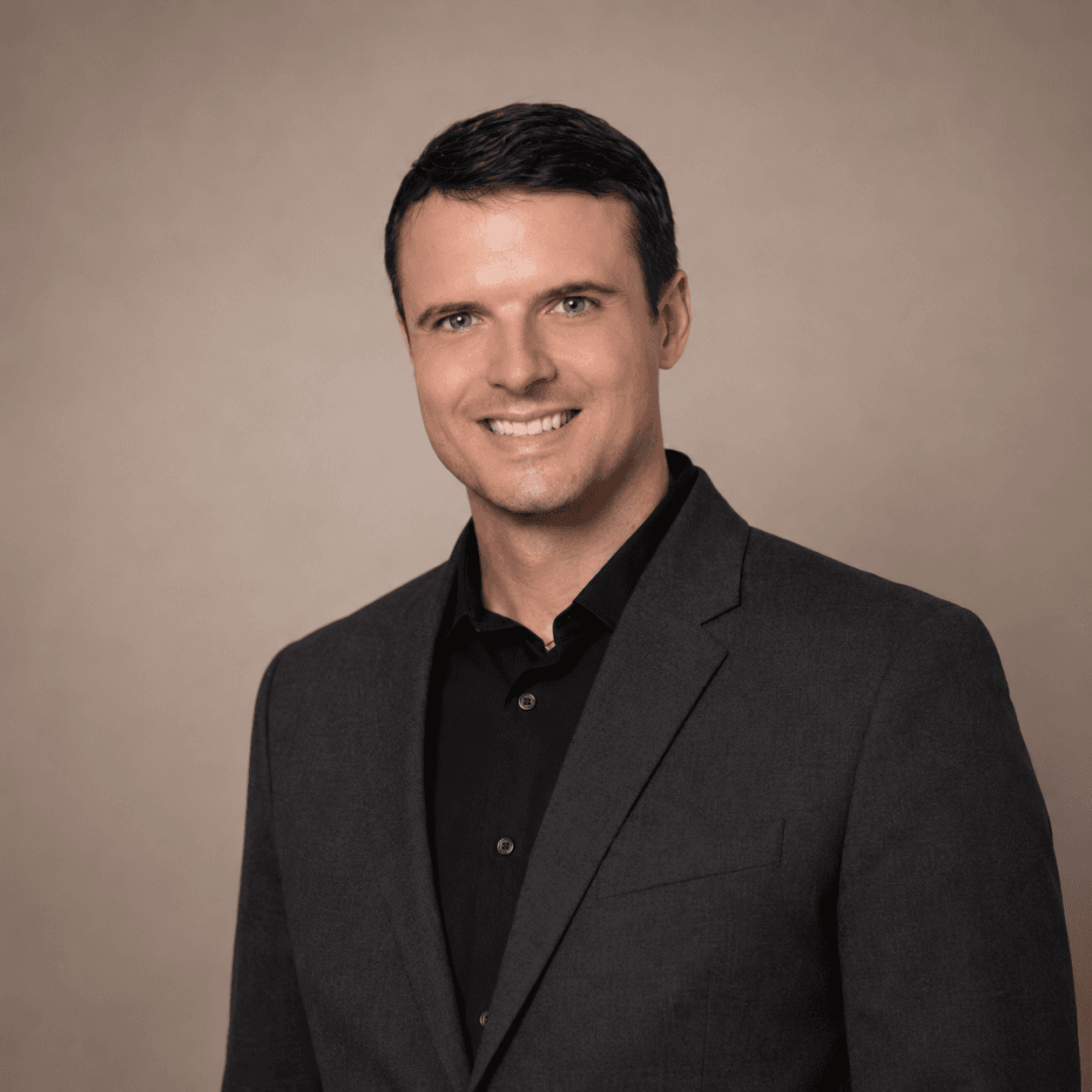
Benjamin Seelos is Vice President, Client Solutions APAC at Frontline Performance Group, a global hospitality performance company partnering with over 2,500 hotels across 124 countries. Originally from Austria, Benjamin built his career across South America, China, Singapore and Thailand.
He has run restaurants in Shanghai, led F&B at the Four Seasons, and sold luxury expedition cruises across Asia and Europe, before moving into hospitality tech.
Today he helps hotels across Asia-Pacific turn frontline teams into revenue engines through clear goals, smart incentives, coaching, and AI-powered performance tools that let teams grow guest spend while improving the guest experience.
Though his background is in hospitality, his expertise in performance, team optimization, and growth translates across industries, particularly for businesses operating or expanding across the Asia-Pacific region.
A certified business coach and Master NLP Practitioner, Benjamin is known for combining commercial strategy with frontline psychology. He's fluent in English, German and Spanish and is currently attempting Thai.
Highlights
- Helps hotels build structured upselling systems that can drive up to 8% RevPAR uplift at the front desk.
- Certified PBCA Business Coach, ICF Certified Coach, and Master NLP Practitioner
- Panelist at the THINC Indonesia 2023 conference
- Attended the Marriott Greater China Commercial & Customer Conference 2026
- Attended the Accor Greater China Operations Think Lab 2026 in Shanghai
Book Benjamin Now!
Benjamin is looking forward to sharing his story and message with your audience. Simply reply to the email you’ve just received from Fame Connect to arrange an interview.
Media Appearances
Listen to Benjamin's previous interview
Watch
Topics
What Your Audience Could Learn
Everyone Optimizes RevPAR. The Real Money Is in TRevPAR, and It’s Walking Out the Door
Benjamin sees a major blind spot in hospitality and service businesses across Asia. Companies pour budget into marketing, distribution, revenue management, and technology to drive demand, all of which optimize RevPAR, a rooms-only number, while the guest’s total value goes unmanaged.
That total value is TRevPAR, and it isn’t decided at the time of booking. It’s decided on property: the suite upgrade offered at check-in, the bottle of wine recommended at dinner, the spa treatment, the late checkout, and the experience added at the table. These are the highest-margin moments in the entire guest journey, and they live almost entirely in the hands of the front desk and F&B teams.
For foreign businesses expanding into Asia and Asian operators scaling across the region, this is where revenue quietly leaks, guest by guest, shift by shift. Benjamin has watched valuable upsell moments pass untouched simply because frontline teams lacked structure, clear targets, and performance visibility.
To address this, Benjamin helps operators, GMs, and revenue leaders across APAC turn their front desk and F&B teams into a measurable driver of TRevPAR. Through Frontline Performance Group, he implements a structured framework of tailored coaching, e-learning, and clear targets so that growing total revenue per guest becomes a consistent, team-wide habit, not a reactive afterthought.
His approach ensures those recommendations feel less like a sales push and more like a natural extension of great hospitality.
The Automation Trap: Why Software Alone Can’t Lift Your TRevPAR
Benjamin sees a costly mistake among businesses across Asia. Leaders are trying to automate the entire customer journey through apps, emails, QR menus, and kiosks, and expecting margins to follow.
He’s a strong advocate for AI and automation in service. But relying on software to drive upselling and total guest spend is a losing strategy because digital tools are blind to the moment. A kiosk can’t see that a guest arrived exhausted and would happily pay for early check-in. A QR menu can’t sense that a table is celebrating an anniversary and ready for champagne. Those are exactly the moments where TRevPAR is won, and they require a human who can read the room.
Benjamin helps business and operational leaders use technology to support their teams, not replace them. Platforms work behind the scenes to give front desk and F&B staff the exact data, coaching, and targets they need, while the actual recommendation remains human.
Instead of spamming guests with automated offers that get ignored or deleted, frontline teams are equipped to use their own judgment to make personal, well-timed suggestions that feel like great service. It’s a human-first approach that produces consistent commercial results across the whole team.
Stop Apologizing for Upselling: Why Customers Actually Hate Your “Polite” Service
Benjamin sees a stubborn misconception across customer-facing businesses in Asia: the belief that upselling harms the guest experience.
Many leaders fear that offering an upgrade or an add-on makes the business feel transactional and pushes guests away. Benjamin challenges this directly. It isn’t upselling that does the damage. It’s clumsy, unmanaged upselling. Without structure and support, staff fall back on generic, awkward, scripted offers that annoy guests instead of helping them.
Done well, it’s the opposite of a hard sell. Picture two servers: one takes the order and walks away. The other notices the table is celebrating, asks one good question, and suggests the perfect pairing. The second server didn’t “sell.” They read the moment and made the experience better. The same is true at the front desk, where the right read turns a routine check-in into a genuinely better stay.
Benjamin trains front desk and F&B teams to shift from transactional order-takers to intuitive experience creators, reading real-time buying signals and body language, asking better questions, and uncovering what each guest actually values. The result isn’t a forced sale. It’s a guest who leaves having gotten more of what they wanted, and a business that captures the revenue it was leaving on the table.
Your Team Doesn’t Need Another Training Session. It Needs an Operational System
Benjamin notes that many leaders across Asia treat frontline performance as a one-time training event rather than a managed business process. A workshop fires everyone up for a week, and then performance drifts back to baseline.
The deeper problem is consistency. When teams run on occasional workshops, clunky spreadsheets, and gut instinct, only a handful of naturally confident people ever sell, and everyone else quietly opts out. That leaves most of your TRevPAR potential sitting untapped across the very people who interact with guests all day. For operators scaling across multiple markets, that inconsistency compounds fast.
Benjamin’s answer is to replace short-lived training with an operational system that lifts every member of the team, not just the naturals. That means ongoing micro-coaching, targeted e-learning, and clear daily goals built into the normal rhythm of a shift, at the desk and in the outlets alike.
Through Frontline Performance Group, he implements data-driven tools like IN-Gauge and CheckMax to capture performance in real time, monitor KPIs, and track total revenue per guest with full visibility and recognition. Leaders can finally see where revenue is leaking, who needs coaching, and which behaviors actually move the numbers.
The outcome is a frontline that performs predictably across the whole team, turning everyday guest interactions into a reliable engine for TRevPAR growth.
Your Suggestion...
If there is a specific topic you would like Benjamin to focus on during the interview that is not listed here, please let us know.
We would be more than happy to run this by Benjamin to see if he would be able to discuss it in detail and deliver value to your audience.
Want to interview Benjamin?
To schedule an interview with Benjamin Seelos, please reply to the email you’ve received from the Fame Connect team or click the button below.
Email Us