
Go To Masters Show · 2026-06-20 · 35 min
Key moments - from our scoring
Substance score
42 / 100
Five dimensions, 20 points each
Caroline Rocha, manager of Global Services Compensation at Just Eat Takeaway, draws on 15+ years across multiple continents to address how comp teams should design incentive plans across culturally diverse markets while maintaining profitability under margin pressure. Her core thesis: transparency and over-communication are non-negotiable regardless of geography, but execution style must adapt to local hierarchies, feedback norms, and decision-making cultures. She recommends Erin Meyer's Culture Map as essential reading for practitioners entering multicultural roles. On financial planning, Rocha emphasizes that comp cannot be a black box - CFOs, market leaders, and sellers must all understand how budgets translate into commissionable targets. She offers a critical cautionary note on AI: while modeling tools can explore future scenarios, companies should wait for actual behavioral evidence before raising targets or budgets based on efficiency gains. One real-world example: a company projected AI would free 30% of seller time for 10 additional customer visits monthly, but observed zero new visits - because sellers had been working nights and weekends, and AI simply improved work-life balance. This episode is essential for comp practitioners at all levels, especially those scaling internationally or seeking to elevate comp from operational backwater to strategic growth lever.
Hosted by Conversations with GTM experts by Everstage. The show scores 69.8/100 on substance across its analysed episodes. See the full show profile.
While transparency and clear communication of strategy-to-KPI alignment remains constant across all cultures, execution must adapt to local norms around hierarchy, feedback directness, and decision-making style. Rocha recommends studying Erin Meyer's Culture Map to understand cultural dimensions and avoid assumptions based on your own cultural background.
Set targets based on historical behavior and trends, but constantly reiterate and communicate how budgets became targets to all stakeholders - CFO, market leaders, and sellers alike. Maintain predictability through clear forecasting and sensitivity modeling, and ensure budget decisions aren't treated as a black box that sellers and finance can't see into.
Companies often project targets and budgets based on expected efficiency gains before seeing real behavioral evidence. Rocha shares an example where AI freed 30% of seller time but resulted in zero additional customer visits because sellers had been working nights and weekends; the efficiency translated to better work-life balance, not more activity. Wait for actual data before raising targets.
Mature comp teams (typically at larger companies) see incentives as a strategic growth lever aligned to company strategy, whereas smaller or younger teams often treat comp as an operational checkbox. Even solo practitioners can raise comp's profile by directly linking their KPI designs and plan tweaks to measurable company strategic outcomes.
The higher you go, the smaller your slides and less detailed your message - executives have limited time and need direct, summary-level strategic insights. Operations and technical staff need more context, supporting arguments, and granular detail. Respect each audience's time constraints while maintaining rigor at all levels.
Our reviewer’s read on each dimension, with quotes from the episode.
There are a handful of genuine takeaways - notably the counterintuitive AI/work-life-balance anecdote and the principle of never adjusting targets on AI expectations alone - but they are surrounded by large amounts of generic advice about transparency, communication, and linking comp to strategy that most practitioners already know. The host's frequent restating of points further dilutes the signal.
AI may help us predict what is happening but never uh, increase targets, let's say based on predictions, increase targets or increased budget or whatever that you're doing to your financial side of it. Once you have evidence of AI it's going to play a role in your company. Not based on expectations.
cannot be a black box. I guess that's my point.
The standout original moment is the real-world finding that AI efficiency gains went to seller work-life balance rather than increased customer visits - a genuinely counterintuitive result that challenges conventional AI-productivity assumptions. Everything else (transparency, stakeholder communication, linking comp to strategy) is fairly standard comp-industry wisdom with no fresh framing.
those sellers actually Were doing that whole work that now AI is doing during their weekends, during their nighttimes. So actually AI came and it's giving a little bit more work life balance to those people. It's not translating into 10 more meetings per month.
how is AI influencing and changing what the sellers do and how it will make us sales incentives professionals think about the KPIs
Caroline is a genuine 15-year practitioner with meaningful multicultural operational experience (Brazil, Japan, Netherlands) and five dedicated years in comp financial planning - she has clearly done the work. However, she is a manager-level individual contributor at a mid-tier delivery brand, not a VP, CHRO, or founder who has built and scaled comp systems at exceptional scope, which caps the ceiling.
I've been working with sales incentives and compensation for 15 years plus now huge uh companies, smaller uh companies so navigated a lot through strategy, go to market plan design.
I worked specifically into financial and planning dedicated to incentives and compensation for about five, uh, five years.
The episode is almost entirely abstract - there are no named plan designs, real dollar figures, actual company metrics, or concrete timelines from Caroline's own work. The most specific-seeming data point (30% free time, 10 more visits, 0 visits) is explicitly flagged as invented: 'I just saying random numbers here for the confidentiality.' The iFood book is a named reference but is not evidence of operational specifics.
I just saying ah, random numbers here for ah, for, for to keep up obviously the, the confidentiality. But let's say that the sellers would have 30% more free time
if there's a new product or if there's something that is going to happen to a market where you operate or something like that. How do we properly um, translate that into targets
The host makes a genuine effort to steer the conversation with follow-up angles (international preparation, stakeholder communication styles, AI's impact on buyers) and asks some useful clarifying questions. However, no claims are ever challenged, the host frequently restates the guest's point back at length before asking the next question, and the overall tone remains promotional and uncritical throughout.
Was there, I'm just asking because there might be people in our audience here that are going through something similar or are getting ready to play at a more global stage. Uh, what was useful for you as you were preparing
So maybe lean on AI uh for things like sensitivity analysis, just planning possible futures, understanding impact. But then maybe just, just wait for reality to actually catch up
Computed from the transcript - who did the talking, and the words that came up most.
A 30% productivity gain from AI delivered zero more customer visits. Caroline Rocha knows a comp team that lived through that exact outcome - the hours just moved to weekends and evenings, where the sellers had quietly been working all along. Caroline is Manager of Global Services Compensation at Just Eat Takeaway, with 15+ years designing sales incentives across Brazil, Japan, and the Netherlands. She joins GoToMasters to unpack what international comp design actually looks like, and where most companies misread both culture and AI. She gets into the cultural calibration behind global comp plans, why comp can never become a black box reps can't see into, and why teams should base decisions on evidence of what AI actually does - not what it should do. If you're designing comp across markets or figuring out where AI fits in the comp function, this one's worth your time.
Transcribed and scored by The B2B Podcast Index.
Host: Hello and welcome to a new episode of Everstage's Go to Master Show Season 3 where we converse with rev ops and go to market leaders from some of the most successful companies today and learn from their unique stories. Joining us today is Caroline Rocha, manager Global Services compensation at Just Eat Takeaway. Caroline, thanks for joining us. Could you start by telling your listeners a little bit about yourself?
Caroline Rocha: Yes, absolutely. Glad to be here. Thanks um for hosting me. So I'm Carolyn. I've been working with sales incentives and compensation for 15 years plus now huge uh companies, smaller uh companies so navigated a lot through strategy, go to market plan design. The financial aspect of incentives and compensation as well the operation obviously as again guess all of us tooling uh and now surfing this whole AI era and how this is going to shape our future. So looking forward to our conversation today.
Host: Yes, you have a ton of experience across different industries and incentives, compensation, finance, tooling. Let's start with what, what your origin story, what brought you into this space and what has kept it so interesting um and strategic for you over this period that you've, you've stuck around in the discipline.
Caroline Rocha: Okay. Well I guess I started an incentives compensation as most people do. I just, I just got here you know I just an opportunity and join incentives and compensation um team and um, I would say that I honestly I quite liked it from the beginning. I never thought it was boring. Obviously it has its operational share, it's manual share but I think it's such a tremendous um and important aspect and um, operation of every company. And um, I feel nowadays um more and more companies look at incentives and compensation for the strategic lever it is right it is an operation part of the company but it has such a tremendous impact on the company's strategy and on people's lives. I guess this is what always kept me so interest uh interested on, on this job. And I guess there are so many possibilities within this career. Right. So you can be on a more high level strategic go to market um aspect of that or you can be more into improving the operation side of it. You know I just, just keeping the day to day working or you can be more in a technical aspect of tooling of everything else. So I was always quite um, uh passionate about it and I still am 15 years later.
Host: Yeah, that's, that's a really good observation. It's, it's a very interesting field. There's always something going on um, and there's always where to point your attention at depending on the circumstances that can make a big Impact. And I think you're right. I think we're seeing as an incentive compensation management vendor there seems to be a lot more recognition now about the strategic importance and more and more companies are just seeing that we use the term. It should be a growth lever which is very close to what you used. And yeah, when deployed correctly it is a tremendous tool for the company to really achieve its goals. So that's a really good answer and I think that's what keeps a lot of us interested. The more you do this type of work, the more you go deeper into the implications of it. So you can sort of get more just embedded into the. How important the operation is.
Caroline Rocha: Absolutely.
Host: A little bit about your, your international experience. I know you've worked in Brazil, Japan, Europe. How does this play out when you're designing incentive for different markets, different cultures? What are some of the things you've learned about that along your career?
Caroline Rocha: Yeah. So just for context for our listeners and viewers, I've um, so I'm, I'm Brazilian, born in Brazil, but I've worked uh, abroad in a few places. So obviously Brazil working with the um, Americas um, continent market. Um, I had the opportunity to live two years in Japan and Tokyo so dealt with the Asia market based in the Netherlands. So I'm now handling the European market. And I would say there are things that are the same across every market I worked and things that are quite different. And also I guess the company size and the comp. Uh the company. How mature the company is in the sales incentives process also plays a big role in that culture wise I would say what doesn't change the importance of us over communicating just and being transparent in our communication. So how is the company strategy, how is the go to market being translated into sales incentives plan? Uh design and the KPIs. Right. So this is something that regardless of the culture it needs to be transparent. And key is sales incentives, uh, practitioners and, and career working uh, in this career we need to make sure that the strategy aligns and everyone understand how it aligns. How is their payout being calculated based on the bigger strategy. So that I would say it's a must regardless of where we are working. I feel it changes a lot is that there are cultures where things are a little bit more tops down versus other cultures where you require a little bit more um, um, talking to different uh, stakeholders. Right. Take a little bit more of convincing if I may say.
Host: Mm.
Caroline Rocha: So this perhaps has been the biggest takeaway from, from the cultures. Obviously there are cultures which are amazing at Being organized like in Japan, that was incredible how people are organized and you know, like sticking to deadlines. There are other cultures that are amazing at, you know, like just bringing solutions. There's a problem and they think of solutions. Ah, um, quite, um, naturally. So there's also the beauty, um, and the challenges to the places I've worked so far.
Host: So interesting. Did you find you have to adapt your style as a leader and as a communicator to cater to the local culture or just you rely on the over communication. Transparency still works.
Caroline Rocha: No, we need to adapt. I had to adapt and it wasn't, it wasn't an easy learn. I would say. Um, we need to adapt our communication style and more than that, I guess we need to understand the different aspects of the culture and how that's playing right over there. Because otherwise we may feel like uh, if you have very uh, indirect feedback. Let's, let's use this example. Right. Some cultures, we have some not very direct feedback. Uh, and then I might think I'm being clear on what I'm asking because I have, I, perhaps from my cultural um, background I have a more indirect way of giving feedback but depending on who I'm speaking to. Right. This may be totally different in his understanding. So when we work in multicultural environments, I guess it's really important that we understand who are we speaking, speaking and how those different, the different cultures may be playing a role in our communication. The uh, hierarchy style, the feedback giving and all of that.
Host: Yeah. Was there, I'm just asking because there might be people in our audience here that are going through something similar or are getting ready to play at a more global stage. Uh, what was useful for you as you were preparing to take on these new challenges? Did you rely on local leaders and managers to learn? Were there any resources you looked at? How do you prepare for uh, international
Caroline Rocha: assignment like this for the people out there going through that? I'm going to say prepare, but be ready that you face challenges you'll never have that you didn't prepare, uh, before. Right. So some things I've done, the leaders of course talk to someone who has been through that and they will for sure be able to give you some advice. But there's a book which I absolutely love. And um, having been on such tremendous and extreme, uh, situations at times, that book helped me tremendously. Which is the culture map from Erin Mayer where she mapped uh, culture. She grouped cultures into eight different groups, if I'm not wrong, and she compared. Right. So if, if you're from uh, A culture. And you will have a certain communication style or you will have certain, certain uh, way of doing business. Right. Which is more personal or is more you know, like strictly business, uh, oriented. And then you understand who you're talking to, who is your team or your peer or your um, your customer. And then this book, honestly for me that have lived abroad a few times, that's like a bible for me in this aspect.
Host: Uh, pick it up. That's very interesting. Yeah. So they, to and from not only where you're going but where you're coming from. Right. They'll give you those biases and those maybe filters we have we don't even. We're not aware of all the time. Excellent, great rabbit hole to get into that. I think it's going to be super valuable. Um, back to our main theme here of strategy and the importance of comp. Um, we're seeing a lot of pressure uh now across the world, across many industries on margin. There are things that the business world is getting a little bit tougher with everything that's going on. Um, how do you think about or how should sales compensation teams think about motivating sellers but still protecting profitability and targets and just looking after this financial reality now that for many industries there's margin compression and other pressures.
Caroline Rocha: Well, I worked specifically into financial and planning dedicated to incentives and compensation for about five, uh, five years. So that was my dedicated role. So how do we come up with what proper targets. Right. Which is probably one of the biggest challenge in this profession. How do we come up with targets that are a balance of fair. Uh which they must be but uh, pushing for growth, which they also must uh, you know, uh, be. This is one aspect of it. And, and the other aspect, how do we keep our budget and planning, financial planning, accruals, forecasting, giving the company the predictability that it also it's necessary. Especially as you said in this very uh, fast shifting world. Right. Um, I say there are a few things historically understanding the historical uh, behavior, the historical revenue, being able to properly then anticipate what's coming and that perhaps it's the. One of the uh, the toughest pieces of it. Right. If there's a new product or if there's something that is going to happen to a market where you operate or something like that. How do we properly um, translate that into targets or how this will affect our budget or how this will affect a budget that we've worked on but we didn't have this information when we work. Worked on. Right. Um, and constantly Reiterating. And again, I will come back and I don't want to sound repetitive, but in communicate. Right. So if we've done a budget or if we set a target, have we talked to every stakeholder, do we have the full control of those numbers? Right. So did we get that from budget? Are we all clear on how that budget became a commissionable target for the sellers? The sellers inclusive, Right. Are they understanding of what that, what, what that was? And from a, uh, more financial, um, and planning aspect, if we've worked on a budget, that's how much we plan on spending, uh, on incentives and compensation for the sales population. And then something changed. Are the CFOs, are the financial representatives for the markets or the, the brands, et cetera, Is everyone aware that they may have an overspend or perhaps an underspend that they can perhaps reallocate to something else? So having clear understanding of how that number was built and keep communicating. Right. It's not something that was done. That's it. So perhaps my experience, that's my main takeaways.
Host: Yeah, no, that resonates a lot. Um, there's sometimes people that say, well, there's this information, that part of the process that happens between CFO management and maybe commission leadership. And then there's some things they choose to communicate away through the sellers and sometimes not especially around targets. And then what you said resonated this clarity on how that budget became targets that are some, some roles and some people would want to keep that a little bit close to the chest because there might be some assumptions in there that are tough conversations with sellers. Uh, but I think your approach is more, whenever possible, just disclose as much as you can, be upfront about it. And then you push for fairness while balancing. That has to be fair, but it also needs to lead to growth and it needs to be predictable. So, so that's, I guess one of the things that keeps this, this job interesting.
Caroline Rocha: Um, cannot be a black box. I guess that's my point. Right. So obviously there will be, um, sometimes decisions and things that are very high level, very strategic and cannot be openly, openly disclosed to everyone, even for competition reasons or everything like that. But it cannot be a black box that you look and you're like, where does this number come from?
Host: From at all?
Caroline Rocha: Right. So.
Host: Yeah, yeah, no, makes a ton of sense. Um, and coming back to the, to the predictability part, have you used any sort of modeling in the past? What's your go to set of tools to try to have a plan and then just measure sensitivity around changes in the industry and just try to guess at what might be the impact on your plan and costs.
Caroline Rocha: Yes, oh yes, I've used some modelings, quite a few modelings in the past, both um, from companies and also independent uh, and now we do have AI in our hands, right, that could play such a tremendous and potential uh, part. And so I mean looking at the future, how AI could perhaps play a role into this, I would say I'll try to be humble to say I don't even know all the possibilities that AI have in this space. So right now we have historical, right? And for us it's a historical trend and we may say, okay, so if we've been growing 2% quarter over quarter, month over month or whatever is the cycle for the company, okay, let's assume then it's going to be 2% then AI can give us so much more insights right now. So um, and especially now that AI, it's embedded and integrated in so much that we do. So yeah, it, it, it could potentially be a 2% growth. In our example, let's say using a lot of examples here, right, because of um, a plan design or because of products rollout or because of perhaps a merger and acquisition or something that, that is um, coming out of our portfolio. The, the potential for growth is 4%, not 2%. Right. But then here I want to make a caveat that as I was trying to explore this new AI um impacts into incentives and compensation, I was speaking to another company and some people, peers from incentives and compensation that are already further along the AI journey. Um, and then they said something that it, it was very important, uh, to me. They've done all of that, right? They've launched the A, uh, AI to improve their processes, to speed things up. And then they projected that because of that the seller would have uh, and I just saying ah, random numbers here for ah, for, for to keep up obviously the, the confidentiality. But let's say that the sellers would have 30% more free time and they were expecting that because of that they would be able to increase the number of visit to, to, to customers in uh, um, let's say 10 more customers a month. Right? And in the end it turned out to be 0 more customer visits per month. And they were like, but how come? Because the, the efficiency gain from AI it's real, we are seeing it. Right? So where did that go? And they started uh, trying to understand, talking to people and really researching that. And one of the big hypothesis they came up is that those sellers actually Were doing that whole work that now AI is doing during their weekends, during their nighttimes. So actually AI came and it's giving a little bit more work life balance to those people. It's not translating into 10 more meetings per month. Right. So coming back to what I just said, AI may help us predict what is happening but never uh, increase targets, let's say based on predictions, increase targets or increased budget or whatever that you're doing to your financial side of it. Once you have evidence of AI it's going to play a role in your company. Not based on expectations.
Host: That's a really good distinction. So maybe lean on AI uh for things like sensitivity analysis, just planning possible futures, understanding impact. But then maybe just, just wait for reality to actually catch up before you make fundamental changes on just assumptions that are probably premature. Um, yeah, no, that sounds very reasonable and uh, it's still a positive story. Maybe those are sellers that would have been burned out and would have left the company and now they're not. So there's a lot of layers here. Um, I want to pick your brain on how you see comp maturity across the companies you work for and across different scenarios. Um, what do you think differentiates a ah, comp team that's say more mature than one that's younger. And what are some of the signs that you see across the different scenarios
Caroline Rocha: how the company itself sees incentives and compensation? I think it already says uh, a lot and we started this conversation saying how we are seeing companies more and more um, use um, incentives and sales incentives as like I said, the growth lever it is um, I guess that's already set the standard. Right. Because a lot of people that might be listening to us, they're just doing sales incentives as a part time of their job. They do something else but then they run some commission for the sellers on a.
Host: Someone has to do it.
Caroline Rocha: Someone has to do it. Hey, can you do it? Just run some um, sheets over there, some Excel sheets and then calculate people payment. Unfortunately I guess that's a reality for a lot of companies out there still. Happily I, I do think that is changing. So for those out there in this career, I do believe it's a career that will have more opportunities in the future. But it's a career that's also changing with the whole um, AI but changing for good. Right. We uh, we can leverage AI to be more efficient on the operation side of it and focus more on the strategic, the growth lever that incentives should be. I would say mature companies, bigger companies already see probably incentives as the Importance it has. Whereas smaller companies perhaps are starting to see that now. But uh, regardless, for the people out there that are on this career, want to be in this career, that is such a tremendous opportunity to, to make a change for both the company and for the sellers that you are supporting. Right. With um, fair go to market with clear plan designs, with continuous improvement, with reduction of operation part of it. Right. Um, so the matureness of the companies, I get it, already set the standard of the, the incentives and compensation teams, I would say. Um, but even for those out there that might not be big teams or just beginning, there's still a lot of opportunity to professionalize um, our jobs.
Host: How would you suggest someone that's say maybe on a smaller company, maybe even a solo operator that sees the value of what we do and is trying to sort of raise that profile of comp in their own company, what uh, would you guide them to do or to say to just sort of help raise that awareness of comp as a strategic piece of the business.
Caroline Rocha: If you're not doing that already, um, I would highly recommend you to link uh, your job and I'm talking directly to that person right there. Right. That it's um, working perhaps in the smaller setup. Link your job, what you're doing directly to the strategy of your company. So if your company strategy, it's xyz, I am pretty sure you are able to link to your KPIs or how the sellers may be able to steer the company results. If you would, if you were to tweak the sales incentives, the design or the KPIs in um, one way or another. So make sure that if it's your manager or another stakeholder, they understand how the bigger strategy and if you need to just go to the company website, understand what is those strategy, understand what are those core values and translate that into what you're doing. Because if the companies are not yet understanding how sales incentives it's important to achieving their uh, strategic results. This is already a step one of what you can do to increase awareness of your job.
Host: Yeah, love it. I think that's exactly the right direction. And yeah, even if you have to go research the strategy or have conversations, talk to your stakeholders, sometimes there's obviously levels to the strategy. There might be. What gets published on the website is one level. Maybe what happens on um, the uh, management meeting and the board level. But, but just find out what are those things and yeah, connect the dots. Everyone should be able to do that. Even if you can't connect the dots. That in itself might be an interesting conversation. If you're finding that you're going in a completely different direction, that might be something to flag. Um, but yeah, it's got to start with us and communicate and just showing up with that curiosity to just connect the dots totally resonates. Um, as another thing I think might be useful for us to get into is, uh, adjusting your style. You talked about your style for different cultures and different types of how people react to communication. Uh, let's tackle the same question, but really now, in terms of the different stakeholders, if you're preparing to talk to a CFO versus a CRO versus an admin, any guidelines you have. I know we're generalizations here, but how do you think about approaching different roles and communicating clearly to them?
Caroline Rocha: The higher you go up, the smaller your slides need to get, right? So people, uh, if you're talking to a CFO or you're talking to a vp, um, an executive slide, a summary that shares the more strategic pieces of what you are trying to say, right? They won't have time to go through a huge email or attend slide presentation. They won't, so be able to, um, summarize what is important to them. But if you're talking more, um, to someone in operations or in IT or technical, then you do. You actually need to have more of context, right, to your conversations and what you're asking and be able to support whatever conversation request or, or arguments that you're having. So in the end, I would say give everyone the, um, the respect they need. So it's not because it's the CFO that I'm not gonna give the proper attention and a focus that I need to whatever level I'm talking to. But understand, um, the way that you pass on the message to each one is totally different because of really the time that those people have available, right? So the higher you go, less time, less slides, more direct communication, for sure.
Host: Uh, that makes a ton of sense. And that's another thing that AI is actually quite good at. Even, um, helping you rephrase your. You can have your draft and say, well, now I'm going to take this message to this role. Help me understand is this too much, too little? Just, uh, even use it as a, almost like a conversation partner. Like, is this too much? What, what, what are they needs? And ask me questions about this. Uh, anticipate questions you might get from the audience. That's something pretty, um, helpful as well. Not that it's going to be perfect, but, uh, it'll give you Some basis to just not show up there. Completely surprised at the first question.
Caroline Rocha: And for sure, I guess hopefully everyone is already evolving to a point where we understand that AI is. It's a colleague to work with us. Right. And not something we've all probably started with. Help me write an email that kind of prompts to AI. And now hopefully like you said. Exactly, spot on. Right. So it should be something that is helping you think. So I have this presentation I have. This is my argument, this is what I want to do. Let's think along. Okay. What are the type of counter arguments I might get? You know the questions I might get. What are the pushbacks? Where's the flaw in my thinking? Right. Help me see what I'm not seeing. So that for sure, spot on.
Host: Yeah. That's the last great question because as we know AIs can tend to be pretty uh, willing to please and everything you do is fantastic and genius. So you specifically need to ask for those uh, areas for improvement for sure. So back to AI here. We've talked a little bit about that already. Just very open ended question. What do you see coming down the path for us? What excites you about what AI is bringing to our profession? What scares you? Just the whole thing, it's just open conversation. What are the things they're looking forward to? Or maybe not so much to break
Caroline Rocha: this down into at least two aspects of it. Because I think AI bringing so much possibilities to, to make our lives in incentives and compensation easier. Because all of us, we all have a lot of manual workload still, right? Um, some more depending on how mature their incentive compensation management tools are or not. But AI has such a tremendous power to identify outliers, right? Some payouts out there that may be wrong or um, analysis. Analysis that we must put together a huge data set or a data set that we already have. But because it's so massive, we're lacking to see the message that this data has to us. So I think helping us on the operational side is a tremendous um, um possibility for our UM job. But I like to say this is the group one, right? And all of us should be already exploring even if we are already on very mature incentives and compensation management tool or if you're working on Excel, Google sheet based, that's fine both we have a lot of opportunities there. But that's group one, the group two I would say how is AI influencing and changing what the sellers do and how it will make us sales incentives professionals think about the KPIs right? Because if AI is starting to do part of what a seller used to do before. So even if it is, um, preparing, uh, for meetings or, uh, whatever that. Well, possibilities are endless. But if AI is starting to jump a little bit on what a seller used to do, how do we rethink how we motivate the seller? Right. How we fairly reward the seller? Um, so, and I would say perhaps this is the more. The most exciting piece of it and the. The most challenging piece of it. Right? Because we don't know the operation part. We have a lot of colleagues and, um, um, uh, things we can check and resources to understand. But how is AI shaping what a seller does? And how are we going to properly reward those sellers or motivate the behaviors of those sellers is something that I guess a lot of companies are trying to navigate now. And I guess this is also circles back to what I said to that other company, the conversation I had to understand how AI was already influencing the sellers, and then they told me that whole other story, um, of always make sure that you're based on facts. Right. And not the expectation of what AI will do.
Host: Yeah, no, that, that, that resonates a ton. Um, and then let me put it a bit beyond then once you get a handle on that, how is AI influencing what buyers are doing and how they approach the process? And then how will that change the interaction with our sellers, with how they approach? Uh, I mean, there. There may be. Again, back your example. Maybe site visits are less important now because buyers now have access to tools they didn't have before, where they can approximate much closer. So the whole landscape is changing. And I think that the big takeaway for me here is not only, yes, start looking inwards. How will this change our role, our team's job, but then start broadening that bubble, because if it's impacting you, it's probably going to impact everyone else. And how do you adapt? And I think the teams that are first to recognize that macro impact are going to be much more effective at all levels.
Caroline Rocha: Yes, absolutely.
Host: Excellent. All right, well, thank you. We've covered a ton of topics and deep dive into AI and culture. Super interesting. Um, before we let you go, and I know you've shared a great resource, the book for Cultures, but is there anything else you'd like to share? Resources, books, podcasts, any general life advice for people, especially coming up through the ranks?
Caroline Rocha: Yes. Well, I said the culture map from Erin Meyers for those who are navigating has nothing to do with incentives and compensation for those who are navigating, culture or for those looking forward to living abroad or you're just working with a new customer or whatever that is from a different, um, culture. That's amazing. The other book I read recently was the Scientist and the Executive. That was written by Ifood, the delivery from company from Brazil. Um, it was written by, um, his name is Diego Barreto and Sandor Caetano. If I'm not wrong, they were from Ifood. This book is already from 2023, so three years ago. But they were speaking about how AI was already helping them back then on massive issues they had. And I guess back then it was a lot of fraud issues and how AI was helping them, um, with this massive lost, uh, money loss they were having because of fraud. So obviously since this was from three years ago, AI has already changed tremendously and the possibilities are huge. But I guess this book opened up my, my mind to really the endless possibilities of AI and it's um, we need to be on top of that and ahead of that as much as we can because it's coming. We're not stopping. We need to be ready for our sellers, for our companies and for ourselves. It's also our careers. Right? So we need to be able to leverage that, um, and learn from it. So we, we, we also stay relevant.
Host: Excellent. Well, thanks for that. And uh, this brings us to the end of this insightful episode of GoToMasters. Big thanks for Carolyn for sharing her experience and valuable insights. And remember, you can tune each. Remember you can tune in every week to learn more from game changers driving hyper growth companies across the globe. GoToMasters is brought to you by EverStage, your trusted partner for transforming the way businesses handle sales compensation. I'm Jose, your host, signing off. Thank you all.
Other episodes covering the same guests and topics, from across The B2B Podcast Index.
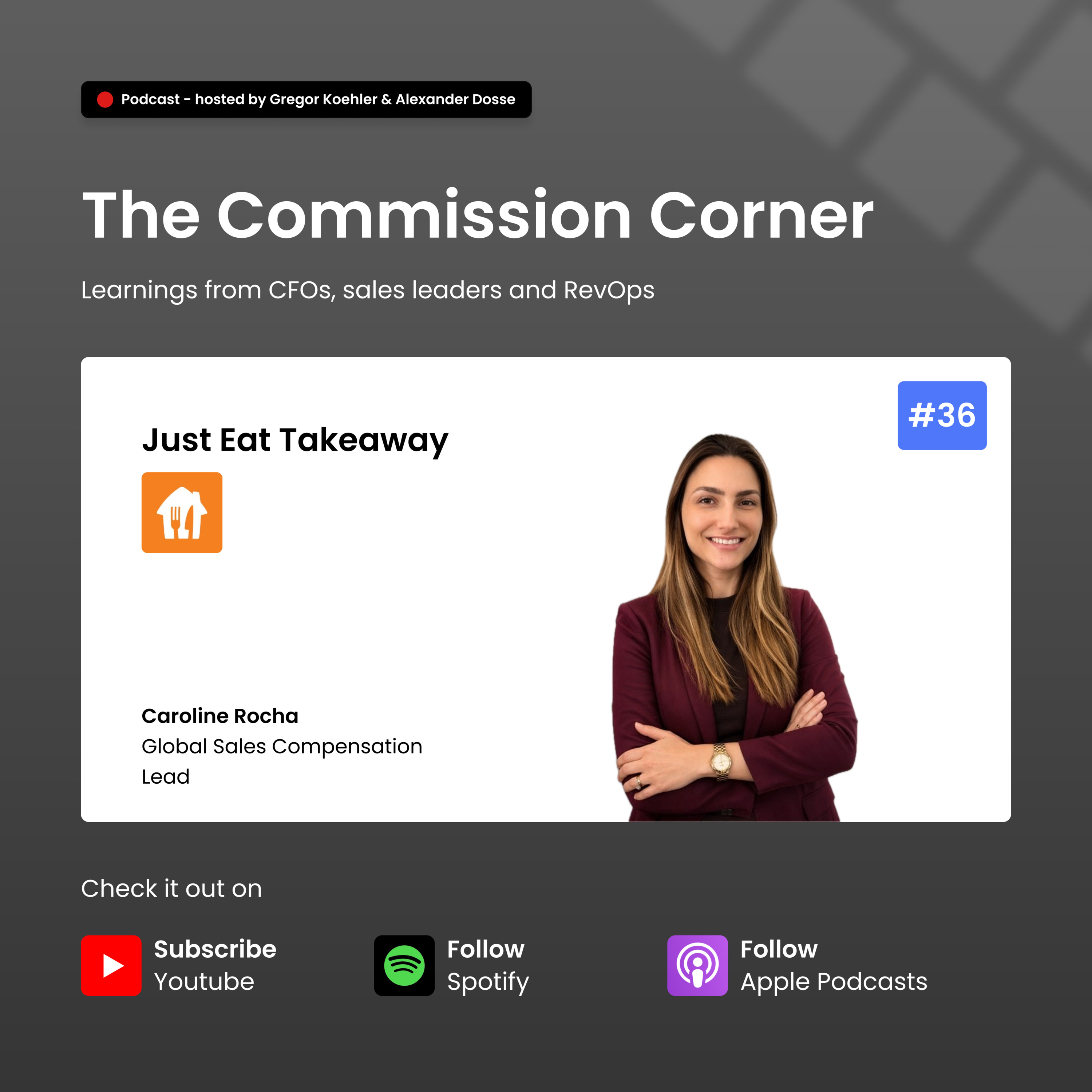 🇬🇧 #36 - More Performance Through AI? The Future of Incentives & Sales with Caroline RochaThe Commission Corner · features Caroline Rocha56 / 100
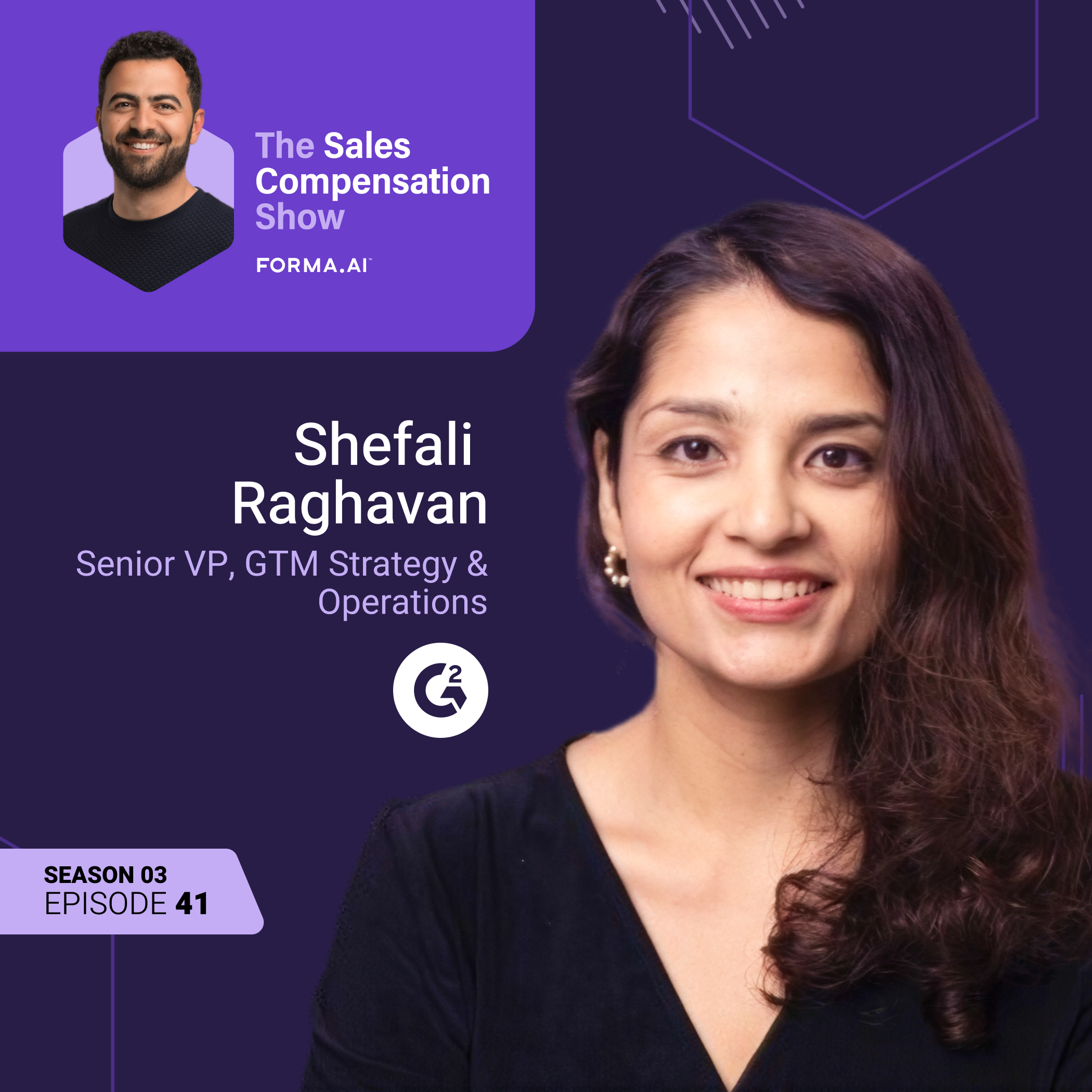 How G2's SVP of GTM Strategy evaluates sales comp plans, scales teams & runs M&AThe Sales Compensation Show · on Sales compensation design86 / 100
 Engineering Culture from Zero to ScaleSphereCast · on The Culture Map by Erin Meyer61 / 100
 Built by Humans - Stop Managing. Start Leading. | Zhenya Rozinskiy, Giorgos AmpavisBuilt by Humans · on Multicultural team management55 / 100
 Stacey Mangold (Axway) on If a Rep Can't Explain Their Comp Plan in Two Minutes, Something's Broken88 / 100Hadas Sheinfeld (Sisense) on Leading the Energy, Hiring for Grit & Acting Like a Director First60 / 100Why the Person Running Your Comp Plan Should Be the One Closest to the Pipeline69 / 100
 Jelle Berends (Oyster) on Building RevOps From 1 to 65, Why Playbooks Don't Travel & Comp Design
